
Creatine and Collagen: Stacking for Muscle, Tendons, and Joint Recovery
By The Creatine Canada Research Team — Evidence-based supplement analysts
Yes — you can take a creatine and collagen supplement together, and for many people it is a smart stack. Creatine mainly supports high-intensity performance, muscle gain, and recovery, while collagen peptides are used to support connective tissue targets such as tendons, ligaments, cartilage, and sometimes joint comfort, so the two supplements do different jobs rather than competing.
Evidence-based · Cites 4 sources · Editorial standards
Key Takeaways
- Creatine and collagen can be taken together safely for most healthy adults because they work through different mechanisms.
- Use 3-5 g/day of creatine monohydrate; use collagen based on the product and goal, often around 10-15 g/day of collagen peptides.
- Creatine is best thought of as a daily saturation supplement, while collagen is often paired with regular rehab, impact, or resistance training for connective tissue support.
- Timing is flexible for creatine, but collagen is often taken 30-60 minutes before tendon or joint-focused training if that is your main goal.
- The stack makes the most sense for lifters, field and court athletes, runners with tendon issues, older adults, and anyone in rehab who wants both muscle and connective tissue support.
- Do not expect collagen to replace complete protein for muscle growth or creatine to directly rebuild tendons; each supplement has a narrower primary role.
- In Canada, look for clear ingredient dosing, an NPN where applicable, and ideally third-party testing if you compete in sport.
Yes, you can take creatine and collagen together — and they solve different problems
Yes, you can take creatine and collagen together, and there is no known reason the two supplements should cancel each other out or become unsafe when combined in healthy adults. Creatine and collagen act on different tissues and pathways, which is exactly why a creatine collagen stack can make sense for people who want both performance and connective-tissue support.
Creatine is a compound stored in muscle largely as phosphocreatine, the rapid-energy form that helps regenerate ATP, your cells' immediate fuel for short, hard efforts. The 2017 ISSN position stand concluded that creatine monohydrate is the most effective ergogenic nutritional supplement currently available for increasing high-intensity exercise capacity and lean mass during training. That is why creatine is usually chosen for strength, power, repeated sprint ability, training quality, and over time, muscle gain.
Collagen is different. Collagen peptides provide amino acids, especially glycine, proline, and hydroxyproline, that are prominent in connective tissue such as tendons, ligaments, cartilage, skin, and other structural tissues. Collagen is not a direct replacement for whey or other complete proteins for muscle protein synthesis because it is not a complete, leucine-rich protein, but it is often used when the target is joints, tendons, or soft tissue support.
That means creatine and collagen together is not really a redundancy stack. It is a muscle-and-connective-tissue stack. If your goals include lifting heavier, maintaining muscle during rehab, improving training quality, or supporting tendons that take a beating from running, jumping, hockey, basketball, tennis, or heavy lifting, the pairing is logical.
The more important nuance is expectation setting. Creatine has far stronger and broader evidence for exercise performance and lean mass than collagen does. Collagen has a more specialised evidence base, with the most plausible use cases around connective tissue support rather than dramatic body composition changes. If you want the evidence-backed core of the stack, make creatine monohydrate the non-negotiable and treat collagen as the goal-specific add-on.
If you are brand new to supplementation, start by learning the basics in our complete beginner's guide to creatine, then use a creatine dosage calculator to set the right daily amount.
How a creatine collagen stack works: muscle energy on one side, tendon building blocks on the other
A creatine collagen stack works because creatine mainly supports energy availability inside muscle cells, while collagen mainly supplies raw materials relevant to connective tissue turnover. In plain English, creatine helps you train harder and recover better from high-intensity work, while collagen is used to support the tissues that attach and stabilise the system.
Creatine's mechanism is well established. Supplemental creatine increases intramuscular creatine and phosphocreatine stores, which helps resynthesise ATP faster during short, intense efforts like heavy sets, sprint repeats, jumps, and explosive intervals. More available phosphocreatine usually means you can squeeze out an extra rep, hold bar speed better, or maintain power deeper into a session. Over weeks and months, that improved training quality is one of the main ways creatine helps build muscle and strength. The ISSN position stand and the IOC consensus on supplements both support creatine as one of the most evidence-based performance supplements available.
Collagen's mechanism is less about acute performance and more about tissue substrate. Tendons and ligaments are collagen-rich tissues that adapt slowly because blood flow is lower than in muscle and turnover is slower. When you ingest collagen peptides, you provide amino acids used heavily in collagen-containing tissues. On its own, collagen is not magic. The important practical idea is that connective tissue responds to loading. A collagen supplement is best viewed as nutritional support layered on top of a good mechanical stimulus, such as progressive resistance training, rehab exercises, plyometrics, or return-to-running work.
This is why creatine and collagen peptides can complement each other in athletes and active adults. Creatine may help preserve or build the muscle that drives force production, while collagen may support the tissues that have to tolerate that force. For someone with patellar tendon irritation, Achilles stiffness, cranky shoulders, or high weekly impact volume, that difference matters.
There is also a useful rehab angle. During injury recovery, muscle often detrains faster than tendon symptoms fully resolve. Creatine can help support training capacity and muscle retention, while collagen may be included as part of a broader tendon or joint recovery plan. That is not proof of a dramatic synergy, but it is a sensible stack with low overlap and clear role separation.
For the bigger performance picture, see our guides on creatine benefits and creatine for injury recovery and rehab.
Who should consider creatine and collagen together — and who probably does not need both
The people most likely to benefit from creatine and collagen together are those who need both muscle support and connective-tissue support at the same time. The stack is not mandatory for everyone, but it fits several very common real-world situations.
Beginners in the gym: Creatine usually makes sense earlier than collagen because the evidence for strength, training capacity, and lean mass is stronger. A beginner who simply wants better workouts can start with creatine alone. Add collagen later if joint comfort, tendon soreness, or a rehab issue becomes relevant.
Lifters and bodybuilders: Creatine is the foundation supplement here. Collagen can be a useful add-on if elbows, knees, shoulders, or tendons limit training quality. If your joints feel fine and your protein intake is already excellent, collagen is more optional than essential.
Runners, jump-sport athletes, and field/court athletes: This is one of the best use cases for a creatine collagen stack. Sports with high sprint, cut, jump, and deceleration loads stress both muscle and connective tissue. Think hockey, soccer, basketball, volleyball, tennis, and track sprinters.
Older adults: Older adults often care about preserving strength, muscle, mobility, and joint function rather than chasing a huge pump. Creatine has good rationale here, especially when paired with resistance training. Collagen may also be appealing for joint and tendon goals, though expectations should stay practical rather than dramatic. Our guide on creatine for older adults covers this in depth.
Women: Women can absolutely use both supplements. Creatine is not just for men, and it does not inherently make women "bulky." Many active women choose this stack when they want better gym performance plus support for tendons, knees, or postpartum and perimenopausal training transitions. See creatine for women for details.
Vegetarians and vegans: Creatine is often especially relevant because dietary creatine intake tends to be lower without meat or fish. Collagen is usually animal-derived, so it may not fit vegan preferences; marine collagen may fit pescatarians but still is not vegan.
Who may not need both: If you only want strength and muscle, creatine alone likely gives you more value. If you only want a beauty-oriented collagen routine and do not train, creatine may be unnecessary unless you also care about muscle preservation or cognitive/healthy aging angles. If you have a medical condition, take nephrotoxic medication, or have been told to restrict supplements, check with your clinician first.
The exact dosing protocol: how much creatine and collagen to take, by goal and body size

The simplest effective protocol is 3-5 g of creatine monohydrate every day plus a collagen dose that matches your product and goal, commonly around 10-15 g per day of collagen peptides. Creatine dosing is far more standardised than collagen dosing, so treat creatine as the precise part of the stack and collagen as the more goal-dependent part.
For creatine, mainstream sports nutrition guidance is straightforward. A standard maintenance intake is 3-5 g/day. A loading phase is optional: about 20 g/day split into 4 doses for 5-7 days, followed by 3-5 g/day maintenance. Loading saturates muscles faster; it is not required for the supplement to work. The ISSN position stand supports both approaches.
Body size matters mainly at the margins. A 55 kg person often does well on 3 g/day, while a 90 kg strength athlete may prefer 5 g/day. If you want the easiest default, use 5 g/day unless a clinician has told you otherwise. You can calculate a more personalised intake with our creatine dosage calculator or read how much creatine per day.
| Goal / Body Size | Creatine Dose | Collagen Approach | Best Use Case |
|---|---|---|---|
| Smaller adult, general fitness | 3 g/day | 10 g/day peptides | Basic muscle and joint support |
| Average adult, lifting or sport | 5 g/day | 10-15 g/day peptides | Performance plus tendons/joints |
| Fast saturation wanted | 20 g/day for 5-7 days, then 3-5 g/day | Continue usual daily collagen dose | Need quicker creatine effect |
| Rehab / tendon-focused phase | 3-5 g/day | Daily collagen, often before rehab loading | Maintain muscle while supporting tendon work |
For collagen, follow the product label because collagen types, serving sizes, and scoop sizes vary widely. Most people using a creatine and collagen supplement together do well with a practical daily serving in the 10-15 g range of collagen peptides, but the important part is consistency and matching intake to a real training or rehab plan.
Marine collagen can be used if you prefer a fish-derived product, but it is not clearly superior for sports outcomes. Choose based on tolerance, diet preference, and product quality rather than marketing language.
If you are comparing forms, remember that for creatine the gold standard remains monohydrate. See our best type of creatine guide and best creatine rankings before paying extra for flashy blends.
Best timing, mixing, and daily routine: what actually matters and what does not
The most important timing rule is simple: take creatine daily, and take collagen consistently in a way you will actually stick to. For creatine, total daily intake matters more than exact timing. For collagen, pre-training timing is often used when the goal is connective tissue support, but the evidence and effect size are much less definitive than creatine's saturation model.
Creatine works by gradually increasing muscle stores, so it is not a classic "feel it immediately" pre-workout. You can take it in water, a shake, with breakfast, after training, or on rest days at any convenient time. If you want to go deeper on that, read when to take creatine and whether to take creatine on rest days.
Collagen is often taken 30-60 minutes before tendon, plyometric, running, or rehab loading when the user is targeting tendons or joints. The practical idea is to have relevant amino acids available around the time you mechanically load the tissue. If that timing is inconvenient, taking collagen at another consistent daily time is still more useful than skipping it.
You can mix the two together in the same shaker if you like. There is no evidence that creatine and collagen peptides become incompatible when combined in the same drink. In fact, many people find the stack easiest in one of these three routines:
- Morning routine: 5 g creatine plus collagen in coffee, a smoothie, or water.
- Pre-training routine: Collagen 30-60 minutes before lifting or rehab, creatine at the same time or later with a meal.
- Post-workout shake: Creatine mixed into your usual post-training drink, with collagen added if texture and taste work for you.
If you get grit or clumping, use lukewarm water, shake hard, and let it sit briefly before shaking again. Micronised creatine usually dissolves better. For practical mixing help, see how to mix creatine.
Two timing myths to ignore: first, you do not need to take creatine with a huge sugar hit for it to work; second, you do not need to separate creatine and collagen by hours. The boring answer is also the correct one: consistent daily use beats perfect supplement timing.
What results to expect from creatine and collagen together, week by week
You should expect creatine to produce noticeable training benefits faster and more reliably than collagen, while collagen is more of a slow-burn support supplement for connective tissue goals. If you judge the stack correctly, you are less likely to quit too soon or expect the wrong outcome.
Week 1: If you use a loading phase, you may notice a small body-weight increase from intracellular water and a quicker "fuller" muscle feel. If you do not load, you may notice very little yet. Collagen usually produces no dramatic acute effect in the first week.
Weeks 2-4: This is when many people start noticing creatine's practical effect: one more rep at a given load, slightly better repeat sprint quality, or less drop-off across hard sets. Without loading, this is also around the time full creatine saturation becomes more realistic. Collagen still tends to be subtle; improvement, if it happens, is usually noticed as better tolerance to training or less annoyance in tendons/joints over time rather than a sudden transformation.
Weeks 4-8: Creatine's value should now show up more clearly in performance logs and gym progression, especially if protein intake and training are solid. If collagen is helping, this is a more plausible window to notice connective-tissue benefits, though those changes are harder to quantify and depend heavily on the quality of the rehab or training stimulus.
Weeks 8-12: The real payoff is cumulative. Creatine helps because better sessions stacked over months produce better strength and hypertrophy outcomes. Collagen, if useful for you, is still supporting a slower tissue adaptation process.
How do you tell it is working? For creatine, track objective markers: reps at a fixed weight, sprint repeat quality, jump power, body composition trend, or training volume. For collagen, track tendon pain scores during specific movements, morning stiffness, tolerance to volume, and whether you are able to progress rehab exercises more consistently.
A common mistake is saying "creatine and collagen didn't work" when sleep, calories, protein, and training progression were poor. Creatine is not a substitute for hard training, and collagen is not a substitute for a progressive tendon-loading plan. If creatine seems ineffective, our guides on how long creatine takes to work and why creatine may not be working can help troubleshoot.
Creatine and collagen for joints and tendons: when this stack makes the most sense
Creatine and collagen for joints or tendons makes the most sense when your training is limited by connective tissue stress, not just muscle fatigue. This includes recurring Achilles soreness, patellar tendon pain, irritated elbows from pressing and pulling, shoulder overload, plantar fascia grumbling, or joints that struggle to tolerate impact volume.
Collagen gets most of the attention here because tendons, ligaments, cartilage, and joint structures are collagen-rich tissues. But creatine still belongs in the conversation. Injury and pain often reduce training load, and reduced training load often means reduced muscle stimulus. Creatine can help preserve performance capacity and support training quality around the problem area, especially during modified training or rehab phases.
Think of it this way: collagen may support the material side of connective tissue nutrition, while creatine helps the engine side by supporting muscle energy and force production. That does not prove a special synergy unique to the pair, but it explains why athletes commonly use them together.
For tendon-focused use, build the stack around a plan like this:
- Take creatine every day at 3-5 g.
- Take your collagen serving daily, often 30-60 minutes before rehab or loading.
- Use a progressive tendon-loading programme such as eccentrics, isometrics, heavy slow resistance, or graded plyometrics, depending on the issue.
- Track pain during and after sessions, next-morning stiffness, and weekly workload tolerance.
- Stay patient; tendon adaptation is slower than muscle adaptation.
For general joint comfort, the picture is less precise. Some people report that a creatine and collagen supplement routine helps them move and train more comfortably, but that should not be oversold as a cure for arthritis or a guaranteed fix for chronic pain. If a joint is swollen, unstable, locking, giving way, or not improving, get assessed.
Marine collagen deserves a quick note here because some buyers specifically search for creatine and marine collagen. Marine collagen can fit if you prefer fish-derived ingredients, but do not assume it is automatically better for tendons than bovine collagen peptides. Product transparency and actual collagen dose matter more than the species story.
Safety, side effects, and what to look for on labels in Canada
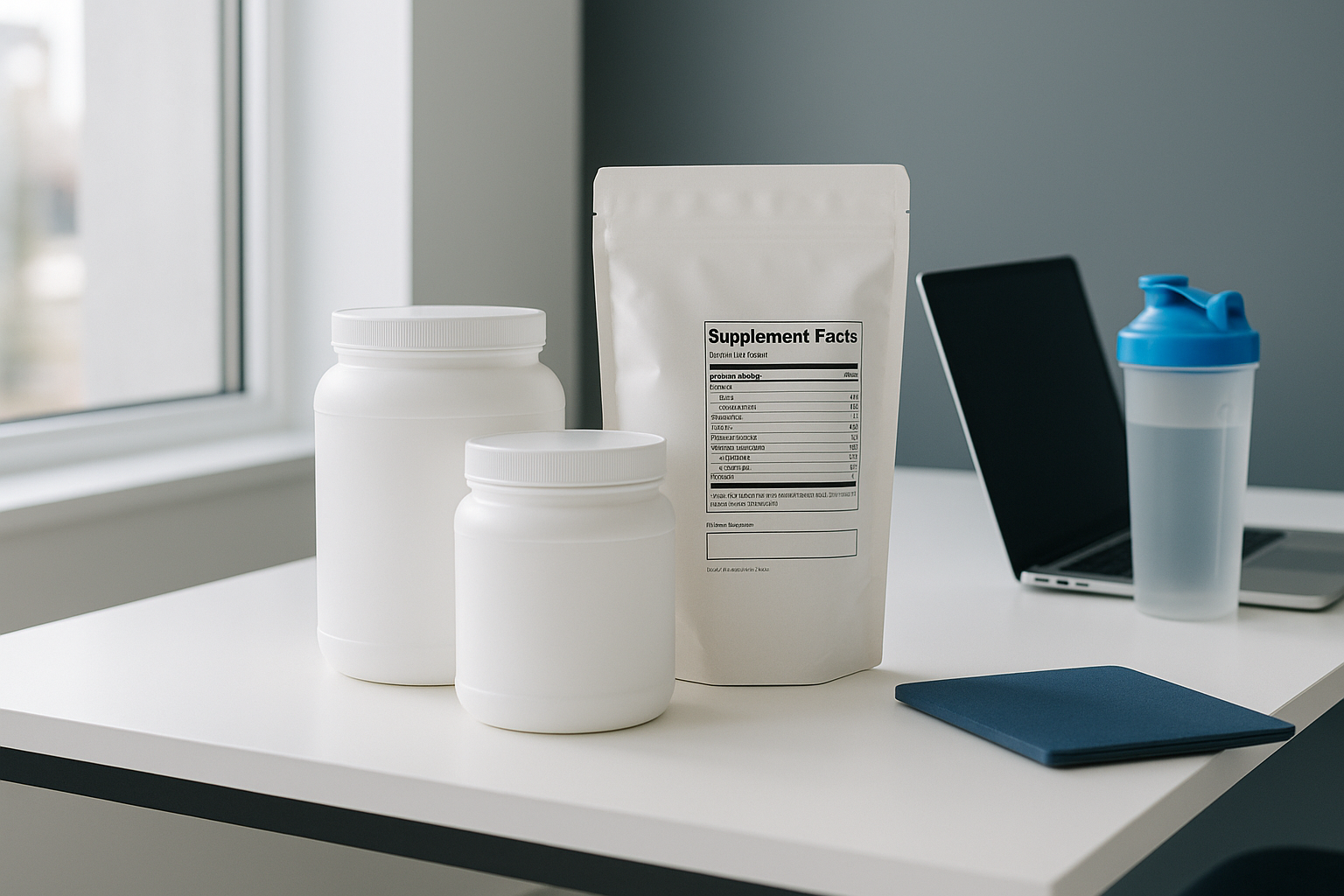
For most healthy adults, taking creatine and collagen together is considered low risk, provided you use sensible doses and choose reputable products. The stronger safety literature exists for creatine, particularly creatine monohydrate.
The 2017 ISSN position stand and the 2021 JISSN paper on creatine misconceptions both support creatine as safe for healthy individuals when used appropriately, including longer-term use in common supplemental doses. A key point from the 2021 review is that creatine does not inherently damage healthy kidneys, although blood creatinine can rise because creatinine is a breakdown product and a lab marker, not proof of injury. If this topic worries you, read the kidney myth explainer.
The most common creatine side effects are practical, not dangerous: stomach upset if you take too much at once, water-weight gain from increased intracellular water, or occasional bloating in some users. These are often fixed by splitting doses, using micronised monohydrate, or skipping the loading phase. See creatine digestive side effects for troubleshooting.
Collagen is generally well tolerated, but it can cause mild digestive issues in some people, and it is not suitable for those with allergies to its source material, such as fish for marine collagen. It is also worth checking sodium, sweeteners, flavour systems, and added botanicals in blended collagen products if you have a sensitive stomach.
In Canada, label quality matters. Look for:
- Creatine monohydrate listed clearly, with grams per serving stated plainly.
- A practical serving size, not pixie-dusted proprietary blends.
- An NPN, or Natural Product Number, where applicable, which indicates the product has been licensed by Health Canada for sale as a natural health product.
- Third-party testing or sport certification if you are drug-tested.
- Minimal extras unless you specifically want flavouring or a combo formula.
If you are shopping in Canada, our creatine brand reviews and creatine product catalog can help compare clean-label options. If you are an athlete, favour reputable brands and verified testing rather than chasing the cheapest blend with the loudest promises.
External references: Kreider et al. (2017), ISSN Position Stand, Antonio et al. (2021), creatine misconceptions, and IOC consensus on dietary supplements.
Common mistakes and myths: what people get wrong about creatine and collagen together
The biggest mistake with a creatine collagen stack is expecting one supplement to do the other's job. Creatine is not a tendon-builder, and collagen is not a top-tier muscle-building protein. When people misunderstand that distinction, they either oversell the stack or conclude it is useless when their expectations were off.
Myth 1: You cannot mix creatine and collagen together. False. You can mix them in the same drink. There is no established interaction showing they cancel each other out.
Myth 2: Collagen replaces whey or your daily protein target. False. Collagen is not a complete, leucine-rich protein source for maximising muscle protein synthesis. If muscle growth is your main goal, collagen is an add-on, not your main protein plan.
Myth 3: Creatine causes dangerous water retention. Misleading. Creatine commonly increases intracellular water inside muscle, which is part of why muscles may look fuller. That is different from becoming puffy in a harmful sense.
Myth 4: If you take collagen, your joints will heal without rehab or training changes. False. Connective tissue responds to loading and recovery management. A supplement cannot replace an appropriate exercise programme.
Myth 5: More is better. Usually false. Taking 10 g of creatine every day when 3-5 g would saturate you anyway mostly increases cost and the chance of stomach upset. Taking very large collagen doses does not guarantee better tendon outcomes.
Myth 6: Fancy creatine blends are better for stacking with collagen. Usually false. Monohydrate is still the benchmark for evidence and value. Blend marketing often adds cost, not results.
Myth 7: Women should avoid creatine because it causes bulking. False. Creatine supports performance and lean mass potential; it does not override your training style or magically create excessive size.
Another frequent mistake is inconsistent use. People take creatine only on training days or only remember collagen when they are sore. That is not how either habit works best. Creatine depends on saturation, and collagen works best as part of a daily routine tied to consistent loading and recovery practices.
For more myth-busting, see creatine myths debunked and common beginner creatine mistakes.
How to choose the best creatine collagen stack without overpaying for hype
The best creatine collagen stack is usually not a flashy all-in-one formula. For most people, the smartest buy is a plain creatine monohydrate product plus a separate collagen product that matches your diet preferences, tolerated flavour, and intended dose.
Why separate products? Because combo products often underdose one ingredient, inflate the serving size with fillers, or make comparison shopping harder. With separate products, you can keep creatine at the proven 3-5 g/day level and adjust collagen independently.
Here is a practical buyer's framework:
- For creatine: choose plain creatine monohydrate, ideally micronised if you want better mixability.
- For collagen: choose a product that clearly states the grams of collagen per serving and the source, such as bovine or marine.
- For athletes: prioritise third-party tested options.
- For Canadians: check for an NPN where applicable and avoid vague imported listings with poor labelling.
- For value: compare cost per effective daily dose, not cost per tub.
If you are considering creatine and marine collagen, choose it because you prefer the ingredient source or digestibility profile, not because you were told it is a superior sports supplement by default. If you are choosing a best stack creatine collagen routine for strength sport, the creatine quality matters far more than whether the collagen came from fish or bovine sources.
A good minimalist stack might look like this: one unflavoured creatine monohydrate tub, one collagen peptides tub, one scoop of each, and a shaker bottle. That is usually more evidence-based and more affordable than a branded "joint and muscle matrix" with underdosed actives.
If you need help narrowing options, browse our best creatine rankings, creatine brand reviews, and creatine product catalog. If you want to compare creatine against collagen directly rather than stack them, read creatine vs. collagen.
Bottom line: a simple, effective way to stack creatine and collagen
Yes, taking creatine and collagen supplement together is a reasonable and often useful strategy, especially if you want muscle and performance support from creatine plus tendon, ligament, or joint-focused support from collagen. The stack works because the supplements do different jobs, not because they create some exotic synergy.
If you want the simplest evidence-based setup, do this:
- Buy plain creatine monohydrate.
- Take 3-5 g every day, including rest days.
- Use a separate collagen product that provides a clear daily serving, often around 10-15 g of collagen peptides.
- Take collagen consistently, and if tendons or joints are the goal, consider taking it 30-60 minutes before rehab or training.
- Keep expectations realistic: creatine should help training performance and long-term muscle outcomes more clearly than collagen will.
- Support the stack with resistance training, adequate total protein, sleep, and workload management.
If you only have room in your budget for one supplement, creatine monohydrate is the stronger evidence-based priority for most active people. If you already use creatine and have a legitimate connective-tissue goal, adding collagen is a reasonable next step. That is the honest answer to the question of creatine and collagen together: safe for most people, practical for the right goals, and best used as a simple daily routine rather than a miracle fix.
For your next step, use our creatine dosage calculator, read how to take creatine, and learn the bigger picture in the complete creatine guide.
Creatine + Collagen Stack at a Glance
- 3-5 g/day Standard creatine maintenance dose — Creatine monohydrate is the evidence-based default for most adults.
- ~20 g/day Optional creatine loading dose — Usually split into 4 doses for 5-7 days, then reduced to maintenance.
- 5-7 days Typical loading phase length — Used only if you want faster saturation.
- 30-60 min Common collagen pre-training window — Often used when tendons or joint-support goals are the priority.
Frequently Asked Questions
Can I take creatine and collagen together in the same shake?
Yes, you can take creatine and collagen together in the same shake. There is no established issue with mixing creatine monohydrate and collagen peptides in one drink, and many people do it for convenience. The more important factor is hitting an effective daily creatine dose consistently and using collagen regularly if joints or tendons are your target.
Is a creatine collagen stack good for joints?
A creatine collagen stack can be useful for joints, but collagen is the more directly relevant part of the pair. Collagen is commonly used for connective-tissue support, while creatine mainly helps maintain training quality, muscle, and recovery around joint-limited phases. It is best viewed as support for a good exercise and rehab plan, not a cure by itself.
Does taking creatine and collagen together build more muscle?
Creatine is much more likely than collagen to directly improve muscle gain over time. Creatine helps by improving high-intensity training capacity and supporting better gym performance, while collagen is not a complete, leucine-rich protein optimised for muscle protein synthesis. The stack may help indirectly if healthier tendons and joints let you train more consistently.
When should I take creatine and collagen together?
Take creatine whenever you can take it daily and consistently, because total intake matters more than exact timing. If collagen is being used for tendon or joint goals, many people take it 30-60 minutes before training or rehab loading. If that timing is awkward, daily consistency matters more than perfection.
What is the best dose for creatine and collagen peptides together?
A practical default is 3-5 g/day of creatine monohydrate plus a collagen serving that matches your product, commonly around 10-15 g/day of collagen peptides. Smaller adults may do well on 3 g of creatine, while larger or harder-training people often prefer 5 g. Collagen labels vary more, so check grams per serving carefully.
Can women take creatine and collagen together?
Yes, women can absolutely take creatine and collagen together. Creatine is not only for men, and it does not automatically make women bulky. Many active women use creatine for strength and recovery and add collagen when they want extra support for tendons, joints, or connective-tissue-heavy training.
Is marine collagen better with creatine than regular collagen peptides?
Marine collagen is not clearly better with creatine than regular collagen peptides for sports performance or tendon support. It can be a good option if you prefer a fish-derived ingredient or tolerate it better, but the bigger factors are total collagen dose, product quality, and whether you are pairing it with appropriate training or rehab.
Do creatine and collagen interact or cancel each other out?
No, creatine and collagen do not appear to cancel each other out. Creatine mainly works by increasing muscle creatine and phosphocreatine stores, while collagen provides amino acids used heavily in connective tissues. Because they act through different mechanisms, the combination is generally considered compatible.
Should beginners use creatine and collagen, or just creatine?
Most beginners should prioritise creatine first if the goal is gym performance, strength, or muscle. Creatine has much stronger evidence and a clearer payoff for new lifters. Collagen becomes more worth considering when a beginner has tendon irritation, joint discomfort, a return-to-training issue, or a specific connective-tissue goal.
Is it safe to take creatine and collagen every day?
For most healthy adults, taking creatine and collagen every day is a reasonable routine. Creatine is commonly used daily because muscle saturation depends on consistent intake, and collagen is also generally used as a daily habit. People with medical conditions, allergies to collagen source materials, or medication concerns should check with a clinician first.