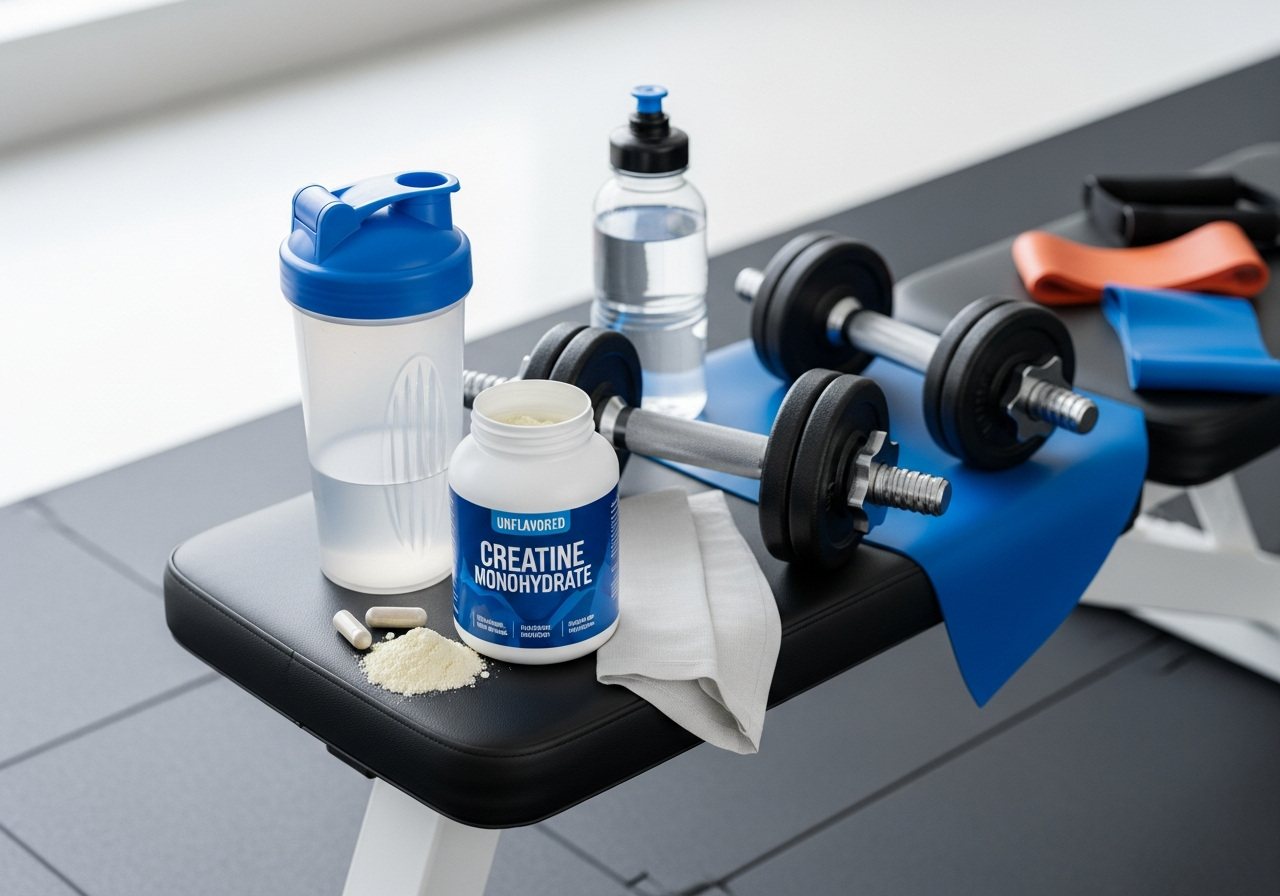
Creatine and Bone Health: What the Research Shows
By The Creatine Canada Research Team — Evidence-based supplement analysts
Creatine may support bone health indirectly, but the research does not show that creatine alone reliably increases bone mineral density. The strongest evidence in older adults suggests creatine is most relevant when it is paired with progressive resistance training, where it may help some people train harder, preserve lean mass, and potentially support bone over time.
Evidence-based · Cites 4 sources · Editorial standards
Key Takeaways
- Creatine alone has shown little consistent effect on bone mineral density in humans.
- Creatine plus resistance training is the most evidence-based strategy if your goal is creatine for bones.
- Typical study doses are 3-5 g per day or about 0.1 g per kg of body weight per day.
- Bone changes are slow, so expect months, not weeks, and judge progress by training performance first.
- Post-menopausal women and older adults are the groups most often studied for creatine bone density questions.
- Monohydrate is still the best-studied, most cost-effective form for bone-related use cases.
- If you have osteoporosis, osteopenia, kidney disease, or take bone-active medication, discuss supplements with your healthcare provider.
Does creatine help bone health? Here is the honest answer
Creatine and bone health is a promising but still qualified topic: creatine does not have strong evidence as a stand-alone bone-building supplement, but it may help bone indirectly when combined with resistance training. That distinction matters because many people search for “creatine bone density” expecting a direct osteoporosis treatment effect, while the human research is more nuanced than that.
Bone is living tissue that responds to mechanical loading, meaning the strain created when muscles pull on bone during activity such as lifting, carrying, jumping, and climbing stairs. Creatine’s best-established effect is that it increases muscle phosphocreatine stores, which helps the body regenerate ATP, the cell’s immediate energy currency, during short, intense efforts. In plain terms, creatine can help you do a bit more high-quality work in training, and that extra work is one plausible route by which creatine may support bone.
For people asking whether creatine for bones works, the best answer is this: creatine monohydrate can be a useful add-on to a bone-supportive training plan, but it is not a substitute for resistance exercise, adequate protein, calcium, vitamin D, medical assessment, or osteoporosis treatment when needed. The 2017 International Society of Sports Nutrition position stand concluded that creatine monohydrate is the most effective ergogenic nutritional supplement for increasing high-intensity exercise capacity and lean body mass, which helps explain why bone research often studies creatine alongside training rather than in isolation. See Kreider et al. (2017), ISSN Position Stand.
This matters most with age. Bone mineral density naturally tends to decline over time, and the decline often accelerates after menopause because lower oestrogen increases bone turnover. If that is your main concern, also read our deeper guides on creatine for older adults and creatine and menopause, because those contexts shape whether creatine is worth considering.
If you want the short version: use creatine as a performance-support tool inside a broader bone-health plan. If you want the long version, the rest of this guide explains the mechanism, who may benefit most, how to dose it, what the trials actually show, and where the limitations are.
How creatine could affect bones: the mechanisms that make sense
Creatine could influence bone health through both direct cellular pathways and indirect training-related pathways, but the indirect pathway is better supported in real-world humans. That is why discussions of creatine osteoporosis research need to separate plausible biology from proven clinical outcomes.
The direct theory starts with cell energy. Bone-forming cells called osteoblasts need energy to build bone matrix and support mineralisation. Creatine and phosphocreatine form an intracellular energy buffer system that helps rapidly regenerate ATP in tissues with fluctuating energy demand. Because that energy system exists beyond skeletal muscle, researchers have proposed that better cellular energy availability could support osteoblast function. This is a mechanistically reasonable idea, but mechanistic plausibility is not the same thing as a clinically meaningful rise in bone mineral density in people.
The indirect pathway is more compelling. Creatine improves performance in repeated high-intensity efforts, which can increase total training volume, training quality, and strength gains over time. Stronger muscles place greater force on bone, and that force is a primary signal for bone remodelling. In other words, creatine may help bone because it helps you train in a way that helps bone. The International Olympic Committee consensus on dietary supplements recognises creatine as one of the few supplements with robust evidence for performance use in appropriate settings, which supports this indirect pathway logic. See the IOC consensus on dietary supplements.
There is also a body-composition angle. In older adults, preserving or increasing lean mass can help maintain mobility, balance, and loading capacity. That matters because frailty and inactivity are both bad for bone. If creatine helps an older adult maintain muscle and perform progressive resistance training more effectively, the downstream effect may be meaningful even if the supplement is not directly acting like a bone medication.
That said, the evidence is mixed because bone changes slowly, study designs vary, exercise programmes are not identical, and many trials are relatively short for a bone outcome. Bone mineral density is also only one part of the story. Falls risk, strength, function, and lean mass all affect fracture risk in the real world, even when a DXA scan does not show a dramatic change right away.
So the mechanism is credible, especially for “creatine and resistance training bone” questions, but the practical claim should stay modest: creatine is best viewed as a support for the training stimulus that drives bone adaptation.
What the human research actually shows on creatine bone density and osteoporosis
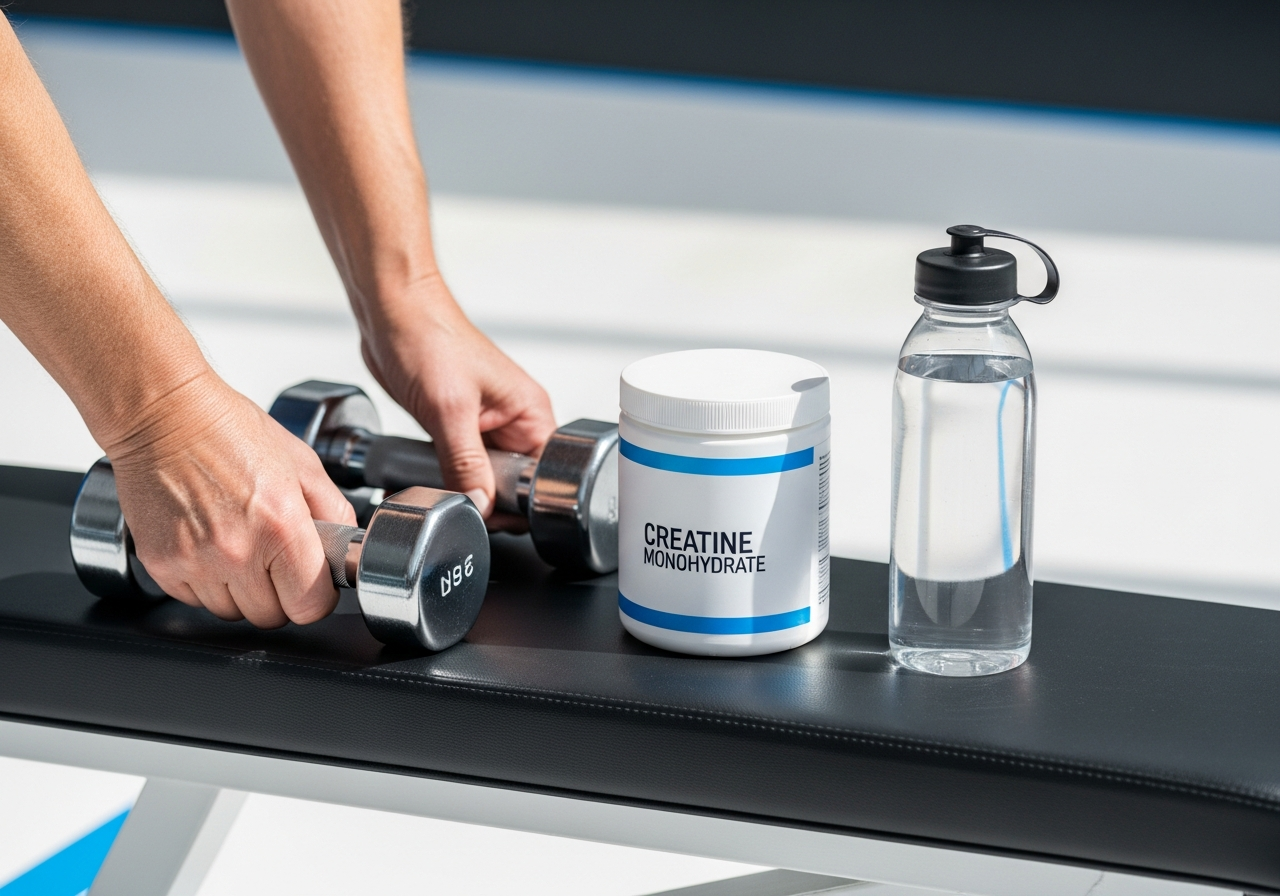
The human evidence on creatine and bone mineral density is mixed, and the clearest pattern is that creatine alone usually does very little for bone outcomes while creatine plus resistance training shows more promise. That is the most important takeaway from the creatine osteoporosis research literature.
Studies in older adults, especially post-menopausal women and adults over 50, are the most relevant because they are the groups at greater risk of bone loss. In these trials, creatine is commonly used alongside a structured resistance training programme for several months. Some studies have reported favourable effects on measures related to bone, such as attenuation of bone loss at certain sites, improved bone geometry markers, or improvements in lean mass and strength that are relevant to bone health. Other trials have found no significant difference versus placebo for bone mineral density despite improvements in training-related outcomes.
This inconsistency is not surprising. Bone is slower to adapt than muscle, and a trial long enough to detect a meaningful change in DXA-measured bone mineral density is harder and more expensive to run than a typical strength study. Training design also matters. If the exercise programme does not provide enough progressive loading, creatine has little reason to help bone. Likewise, if calcium, vitamin D status, protein intake, and baseline activity are not addressed, the bone signal can be diluted.
For beginners, the practical reading is simple: if your plan is to take creatine without lifting or without another bone-loading exercise plan, do not expect reliable changes in bone density. If your plan is to use creatine to support a well-designed programme that includes progressive resistance training, then creatine becomes more reasonable.
The broader creatine literature is still useful context here. The 2021 review on common questions and misconceptions about creatine reaffirmed that creatine monohydrate is well studied and broadly supported for muscle and performance outcomes, but it did not establish creatine as a stand-alone therapy for bone disease. See Antonio et al. (2021).
If you already have osteopenia or osteoporosis, the evidence-based move is not to treat creatine as a replacement for medical care. It is better framed as a potential adjunct to exercise and overall healthy ageing. That is why any serious discussion of creatine for bones should include a conversation with your healthcare provider, especially if you have fracture history, low body weight, long-term corticosteroid use, or you are using prescription bone medications.
Who should consider creatine for bones, and who should keep expectations modest
Creatine for bones is most worth considering for older adults who are resistance training, especially women after menopause, but expectations should be modest for anyone hoping for a direct bone-density effect. The people most likely to benefit are the ones who can actually use creatine’s training-support effect.
Older adults are the most obvious group because they face age-related losses in muscle, strength, and bone. If creatine helps an older adult perform more total work in training or better preserve lean mass, it may support the broader goal of reducing frailty and maintaining bone-loading activity. Our guide on creatine for older adults covers that wider healthy-ageing context in more detail.
Post-menopausal women are also a priority group because bone loss tends to speed up after menopause. Creatine is not a hormone therapy and not a replacement for osteoporosis care, but it can fit inside a strategy built around lifting, protein, and medical monitoring. If menopause is the main lens through which you are reading this, go next to creatine and menopause.
Beginners can use creatine, but beginners should not make the common mistake of focusing on supplements before the training stimulus exists. If you are new, first establish a consistent programme with squats to a chair, step-ups, rows, presses, carries, or machine-based resistance work. Creatine becomes useful once that base is in place. Our creatine for beginners guide helps with the basics.
Athletes may care about bone support secondarily, especially in sports with repetitive impact or heavy loading, but the main reason athletes take creatine remains performance. Any bone benefit is usually a bonus, not the primary reason to use it.
Vegetarians and vegans may respond especially well to creatine supplementation because dietary creatine intake is lower when you do not eat meat or fish. Better response can mean larger effects on training performance, which may indirectly matter for bone if you are lifting consistently.
Who should keep expectations low? People taking creatine without exercising, people looking for a fast DXA scan improvement, and people expecting creatine to function like calcium, vitamin D, hormone therapy, bisphosphonates, or other prescribed osteoporosis treatments. Those are different tools with different jobs.
How to use creatine for bone support: the practical step-by-step plan
If your goal is creatine and bone health, the best practical plan is to take creatine monohydrate daily while following a progressive resistance training routine for months, not days. That gives you the highest chance of benefiting from the mechanism the evidence supports.
- Choose creatine monohydrate. It is the most studied, most cost-effective form, and the form used in the bulk of the evidence. If you want help comparing products, see our best creatine rankings, creatine brand reviews, and creatine product catalog.
- Take it every day. Consistency matters more than fancy timing. Daily use is what raises and maintains intramuscular creatine stores.
- Pair it with training that loads bone. Good examples include machine or free-weight squats, hip hinges, rows, chest press, overhead press, leg press, loaded carries, step-ups, and impact work if appropriate for your joints and health status.
- Progress the work gradually. Add a little weight, a rep, or a set over time. Bone responds to meaningful loading, and muscles need progression too.
- Support the basics. Adequate protein, calcium intake, vitamin D sufficiency, and enough overall calories all matter more for bone than creatine alone.
- Track useful signs. In the first few weeks, look for easier completion of sets, slightly better reps, improved training tolerance, or a small increase in body weight from intracellular water. Do not expect your bones to “feel different.”
- Stay patient. Bone remodelling is slow. A reasonable early marker is improved training performance within weeks; a bone-density discussion is a longer-term conversation measured in months or years.
A simple beginner template is two to three full-body resistance sessions per week. For example, do one lower-body push, one hip hinge, one upper-body push, one upper-body pull, and one carry pattern each session. Start with two sets per exercise, then build gradually.
If you want help nailing the basics of daily use, read how to take creatine and how long creatine takes to work. If you have diagnosed osteoporosis, severe joint pain, or a recent fracture, get medical clearance before starting impact or heavier resistance training.
Best dose for creatine and bone health: by body weight, goal, and routine
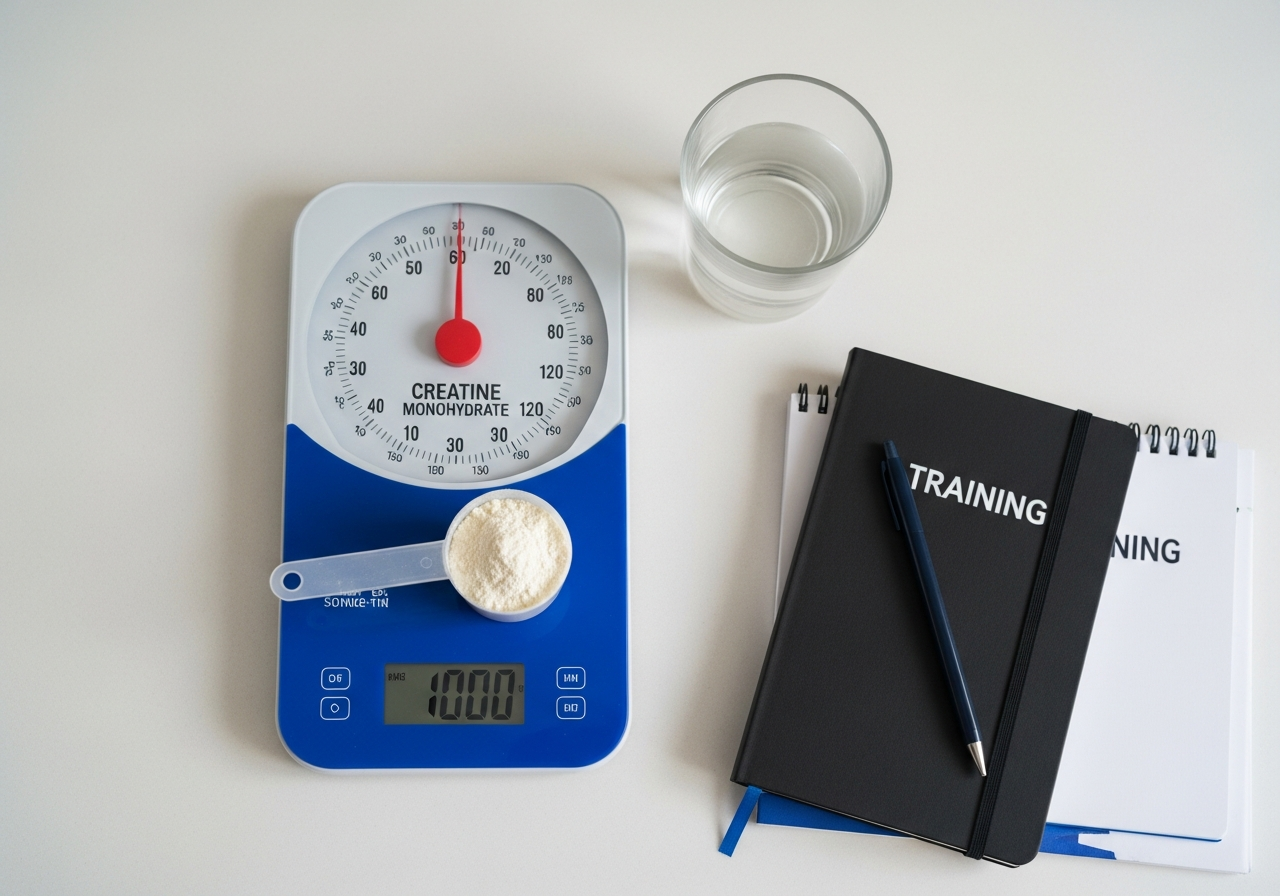
The best dose for creatine and bone health is usually the same dose used for general creatine maintenance: 3-5 g per day, or about 0.1 g per kg of body weight per day in some trials. There is no special high-dose bone protocol with strong evidence behind it.
For most adults, the simplest choice is a flat daily dose of 3-5 g creatine monohydrate. Smaller adults often do well at the lower end, while larger adults or those using a body-weight-based approach may land nearer 5 g. You can also calculate a more tailored amount with our creatine dosage calculator or read our full guide on how much creatine per day.
| Body weight | Simple daily dose | 0.1 g/kg reference | Best use case |
|---|---|---|---|
| 50-59 kg | 3 g/day | 5.0-5.9 g/day | Smaller adults, beginners, cautious start |
| 60-79 kg | 3-5 g/day | 6.0-7.9 g/day | Most adults using creatine with training |
| 80-99 kg | 5 g/day | 8.0-9.9 g/day | Larger adults or athletes |
| 100+ kg | 5 g/day | 10+ g/day | Often still fine at 5 g unless guided otherwise |
Why the difference between the two approaches? The flat 3-5 g range is practical, widely used, and enough for most people to maintain saturation over time. The 0.1 g/kg/day approach appears in some research, especially in older adults, but it can produce higher daily intakes than many people need in practice. For a bone-support context, there is not strong evidence that pushing far above standard maintenance produces better bone outcomes.
What about loading? A standard loading phase is about 20 g/day split into four doses for 5-7 days, followed by maintenance. Loading can saturate muscles faster, but it is optional. For bone health, where expectations should be measured over months, loading is mostly a convenience tool, not a necessity. If you want the details, read creatine loading phase and creatine maintenance dose.
If you are prone to stomach upset, start with 3 g/day and take it with food or split the dose. That slower approach is usually easier to tolerate and works fine over time.
Timing, timeline, and how to tell if it is working for your bone-related goal
For creatine and bone health, timing matters far less than daily consistency, and the first signs it is working will usually show up in your training, not in your bones. That is because creatine’s immediate effect is on muscle energy availability, while bone adaptation takes much longer.
You can take creatine any time of day that you will actually remember. Some people take it after training, some with breakfast, and some on rest days with lunch. There is no strong bone-specific reason to take it at a special time. If attaching it to an existing habit improves consistency, that is the best timing strategy. For more detail, see when to take creatine and creatine on rest days.
A realistic timeline looks like this:
- Week 1: If you load, muscle saturation rises quickly. If you do not load, changes are subtler.
- Weeks 2-4: You may notice slightly better repeat effort performance, one extra rep, less drop-off across sets, or easier completion of planned volume.
- Weeks 4-12: If your programme is progressive, you may see better strength and lean-mass progress than you would have had otherwise.
- Months 3+: This is the more realistic horizon for bone-related conversations, though even this may be too short to see clear DXA changes in many people.
How do you know creatine is helping? The best markers are practical:
- Your lifts are progressing more steadily.
- You recover better between short hard efforts in a session.
- You maintain training quality on later sets.
- Your body weight increases slightly without a rise in body fat, usually from intracellular water.
How do you know it is not enough on its own? If you are not resistance training, not eating enough protein, not meeting calcium and vitamin D needs, or not addressing a medical bone condition, creatine cannot fill those gaps. That is why bone support should be judged as a whole plan rather than a scoop-by-scoop supplement effect.
If you miss a day, do not panic. Just resume the next day. Saturation falls gradually, so a single missed dose is not a meaningful problem.
Safety, side effects, and what to buy in Canada
Creatine monohydrate is generally considered safe for healthy people at recommended doses, but bone-health users should still think practically about side effects, medical context, and product quality. If you have kidney disease, are pregnant, are breastfeeding, take multiple medications, or have a diagnosed bone disorder, involve your healthcare provider before starting.
The best-known side effects are mild and manageable. Some people get stomach upset, loose stools, or bloating, especially when they take too much at once or do a loading phase. A small increase in body weight is common because creatine draws water into muscle cells. That is not body fat. For deeper safety reading, see is creatine safe, creatine digestive side effects, and creatine and kidneys.
In Canada, check the label for an NPN, which stands for Natural Product Number. An NPN indicates the product has been licensed by Health Canada as a natural health product. An NPN is not a guarantee of athletic certification or purity testing beyond what you personally may want, but it is a useful legitimacy check in the Canadian market. If you want more on this, read our guide to is creatine approved in Canada.
For buying, keep it simple:
- Choose creatine monohydrate first unless you have a specific reason not to.
- Look for transparent labelling with grams per serving clearly stated.
- Prefer third-party testing when available, especially for competitive athletes.
- Micronized powder can mix more easily, but it is still monohydrate at heart.
- Avoid overpaying for forms marketed as superior without strong evidence.
The 2017 ISSN position stand and the 2021 misconceptions review both reinforce that monohydrate remains the reference form for efficacy and safety. Mayo Clinic also notes creatine appears safe for many people when used appropriately, while reminding users to be cautious with underlying medical conditions. See Mayo Clinic — Creatine.
For most Canadians, a plain monohydrate powder from a reputable brand is still the smart buy for a bone-support plan.
Common mistakes and myths about creatine for bones
The biggest mistake with creatine and bone health is expecting creatine to act like a direct osteoporosis treatment. It does not. The evidence supports creatine primarily as a training-support supplement, not as a stand-alone therapy that reliably increases bone mineral density.
- Myth: Creatine directly builds bone in everyone.
Reality: Human results are mixed, and the strongest case is creatine plus resistance training, not creatine alone. - Myth: If creatine helps muscle, it must automatically improve bone density.
Reality: Better training capacity can support the conditions for bone adaptation, but bone outcomes still depend on age, hormones, nutrition, programme design, and time. - Myth: You need an expensive creatine form for bone health.
Reality: Monohydrate is still the best-studied and most cost-effective form. - Myth: If you do not load, creatine will not work.
Reality: Loading only speeds saturation. Daily maintenance still works. - Myth: Creatine is only for young male gym users.
Reality: Some of the most relevant creatine bone mineral density research is in older adults and post-menopausal women. - Myth: Bone support means any exercise counts equally.
Reality: Walking is useful for health, but progressive resistance training generally provides a stronger bone-loading stimulus than casual activity.
The second major mistake is using the wrong success metric. People often ask after two weeks whether creatine is “working for bones.” That is too soon. Bone adapts slowly, and the near-term markers are better training performance, preserved lean mass, and improved strength.
The third mistake is ignoring the rest of the plan. Bone health depends on adequate protein, energy intake, calcium, vitamin D, resistance training, and medical follow-up when indicated. A supplement cannot rescue a weak training plan or untreated low bone density.
Finally, be honest about the literature’s limits. Trial durations vary. Not every study uses the same dose or exercise protocol. Bone measurements differ by site. Some outcomes look positive while others do not. That uncertainty does not mean creatine is useless; it means the right conclusion is measured rather than absolute.
If you want a broader myth-busting primer, see creatine myths debunked and creatine myths vs. facts.
Why interest in creatine and bone health is rising in Canada
Interest in creatine and bone health is rising because creatine has moved beyond a pure bodybuilding audience and into healthy ageing, women’s health, and longevity conversations. In market terms, bone-related interest is part of a broader shift: consumers increasingly want evidence-based supplements that support function across the lifespan, not just gym performance.
That trend makes sense. As more adults think about ageing well, they start connecting muscle, balance, training capacity, and bone density. Creatine sits at the centre of that discussion because it is one of the few supplements with unusually strong performance evidence and a long safety record in healthy populations. Once people understand that bone responds to muscle-generated force, the search path from “creatine benefits” to “creatine for bones” becomes very natural.
In practice, this trend is especially visible among women in midlife and later life, people starting strength training after 50, and adults who want practical ways to support resilience rather than chase sports-specific performance. That is also why bone-health content should not be siloed from menopause and older-adult topics. For many readers, the real question is not “Does creatine cure osteoporosis?” but “Can creatine help me keep lifting, stay stronger, and support my bones as I age?”
From a Canadian buying perspective, this trend has also increased demand for simpler, cleaner products: plain monohydrate, transparent dosing, and products with an NPN and reputable quality control. Consumers are getting better at ignoring flashy “bone matrix” marketing language unless the formula is backed by an evidence-based rationale.
The important caution is that market interest can outpace science. Just because creatine is trending in healthy ageing does not mean every bone-related claim is established. The evidence-backed position is still the same: creatine may support bone health mainly by helping appropriate users train better and preserve lean mass, while direct effects on bone density remain mixed.
That is exactly why this topic deserves careful coverage rather than hype. Rising consumer interest is real, but the responsible message remains non-prescriptive: creatine may be a useful piece of a bone-health plan, and anyone with a bone condition should discuss supplements and exercise changes with a healthcare provider.
Bottom line: when creatine is worth using for bone health
Creatine is worth using for bone health when you understand what it can and cannot do. It can support the training and lean-mass side of the equation; it cannot replace the fundamentals of bone care or reliably act as a stand-alone bone-density supplement.
If you are an older adult, a post-menopausal woman, or simply someone trying to protect long-term bone and muscle health, creatine monohydrate is a reasonable evidence-based addition to a progressive resistance training plan. The strongest practical case is this: take 3-5 g per day of creatine monohydrate, lift consistently, eat enough protein, and think in months, not days.
If you are hoping creatine alone will reverse osteoporosis, the evidence does not support that expectation. If you are using creatine to help you train harder, maintain muscle, and build a lifestyle that supports bone, the rationale is much stronger.
A simple decision rule works well:
- Yes, consider creatine if you resistance train or are starting a supervised strength programme.
- Maybe, but keep expectations modest if you are active but not strength training yet.
- No, do not rely on it alone if you have diagnosed osteoporosis and are avoiding medical assessment or evidence-based treatment.
For most people, the best form remains plain creatine monohydrate. The best “timing” is whenever you will remember it every day. The best proof it is helping is better training quality first, with bone support treated as a long-term downstream goal.
If you want to build your next steps properly, start with how to take creatine, how much creatine per day, and is creatine safe. And if bone density, osteopenia, or osteoporosis is your main concern, discuss your plan with a qualified healthcare provider who can place creatine in the right overall context.
Creatine and Bone Health: The Evidence in Practical Numbers
- 3-5 g/day Typical daily creatine monohydrate maintenance dose — A practical evidence-based dose used by most adults.
- 0.1 g/kg/day Common body-weight-based dose used in some trials — Often seen in older-adult research, including bone-related studies.
- 5-7 days Standard loading phase length — About 20 g/day split into 4 doses; optional, not required for bone goals.
- Months, not weeks Realistic timeframe for bone-related expectations — Training effects appear first; bone mineral density changes are slower.
Frequently Asked Questions
Does creatine increase bone density?
Creatine does not reliably increase bone density on its own. The human evidence is mixed, and the best-supported use is creatine combined with resistance training, where it may indirectly support bone by improving strength, lean mass, and training quality over time.
Is creatine good for osteoporosis?
Creatine is not a proven treatment for osteoporosis, but it may be a useful adjunct to exercise in some people. If it helps you do progressive resistance training more effectively, it can fit into a broader bone-health plan, but it should not replace medical care or prescribed treatment.
Can creatine help post-menopausal women with bone health?
Creatine may help post-menopausal women mainly by supporting resistance training, not by acting like a direct bone drug. This group is often studied because bone loss accelerates after menopause, but the results on bone mineral density itself are still mixed.
What is the best creatine dose for bone health?
The best practical dose is usually 3-5 g of creatine monohydrate per day. Some trials use about 0.1 g/kg/day, but there is no clearly superior high-dose bone-specific protocol, so standard daily monohydrate remains the sensible default.
Should you take creatine if you are not lifting weights?
You can take creatine without lifting, but do not expect much for bone health if you are not doing resistance training or another meaningful bone-loading activity. The strongest rationale for creatine and bone health depends on the exercise stimulus that bone needs to adapt.
How long does creatine take to help bone health?
Creatine’s training effects can show up within weeks, but bone-related effects take much longer. If creatine is helping, you will usually notice better training performance first, while bone density changes, if they occur, are a months-long or even years-long conversation.
Is creatine monohydrate the best form for bone health?
Yes, creatine monohydrate is the best form to use for bone health because it is the most studied and most cost-effective. There is no strong evidence that HCL, buffered creatine, gummies, or other premium forms are better for bone outcomes.
Can older adults take creatine safely?
Many older adults can take creatine safely at standard doses, but individual medical context matters. If you are older and have kidney disease, multiple medications, osteoporosis, or other chronic conditions, discuss creatine with your healthcare provider before starting.
Does creatine replace calcium or vitamin D for bones?
No, creatine does not replace calcium or vitamin D. Creatine’s role is mainly to support muscle energy and potentially improve training quality, while calcium and vitamin D remain fundamental nutrients in bone health.
What is the best workout to pair with creatine for bone health?
The best workout to pair with creatine for bone health is progressive resistance training. Exercises such as squats, leg press, rows, presses, hip hinges, carries, and step-ups create the kind of muscle-generated loading that bones respond to most strongly.