Creatine vs. Mass Gainer: Which Is Better for Bulking?
By The Creatine Canada Research Team — Evidence-based supplement analysts
For bulking, creatine is better for improving training performance and lean mass gain, while a mass gainer is better only if you struggle to eat enough calories to gain weight. In practice, this is not really creatine vs. mass gainer because they do different jobs: creatine helps you train harder, and mass gainer helps you hit a calorie surplus.
Evidence-based · Cites 4 sources · Editorial standards
Key Takeaways
- Choose creatine if you already eat enough but want more strength, power, and lean muscle gain.
- Choose a mass gainer only if you consistently miss your calorie target for bulking.
- Creatine monohydrate at 3 to 5 g daily is the evidence-based standard.
- Mass gainers add calories, carbs, and protein; they do not replace hard training or good food habits.
- You can take mass gainer and creatine together safely because they work through different mechanisms.
- If your goal is lean bulking, creatine plus mostly whole-food calories usually beats relying on a high-sugar gainer.
- Beginners often need more total calories before they need more supplements.
Creatine vs. mass gainer: the short answer for bulking
Creatine is better for performance-driven muscle gain, and mass gainer is better for solving an appetite or calorie problem. If you are asking which is better, creatine wins when your diet already supports growth, while a mass gainer wins only when you cannot reliably eat enough to stay in a calorie surplus.
This is the most important point in the whole creatine vs mass gainer debate: creatine and weight gainer are not substitutes for each other. Creatine is a non-caloric performance supplement that increases your muscle phosphocreatine stores. Phosphocreatine is stored creatine bound to phosphate inside muscle, and it helps regenerate ATP, the cell's immediate energy currency, during short, hard efforts such as sets of squats, sprints, jumps, and repeated explosive reps. More stored creatine usually means slightly better performance in high-intensity training, which can lead to better strength and lean mass gains over time.
A mass gainer does something completely different. A mass gainer is essentially a calorie-delivery product, usually built from protein plus a large amount of carbohydrate and sometimes fats. It helps you gain body weight by making it easier to consume more calories quickly. That weight can include muscle, glycogen, water, and fat depending on your training, protein intake, total calorie surplus, and how aggressive the bulk is.
For most people, the smartest answer is simple:
- If you cannot gain weight because you under-eat: use food first, and consider a mass gainer if convenience is the barrier.
- If you already eat enough and want better gym performance: take creatine monohydrate.
- If both are true: you can use both together.
The evidence base is also much stronger for creatine than for mass gainers as a category. The 2017 ISSN position stand concluded that creatine monohydrate is the most effective nutritional supplement currently available for increasing high-intensity exercise capacity and lean body mass during training. There is no similar evidence hierarchy showing that mass gainers themselves have unique muscle-building properties beyond helping you consume energy and protein.
If you are new to creatine, start with what creatine is and use a creatine dosage calculator to set an evidence-based daily dose.
How creatine and mass gainer actually work in the body
Creatine works by improving your capacity to perform hard training, while a mass gainer works by raising your calorie intake. One changes training output; the other changes energy balance.
Creatine's main mechanism is straightforward. Your muscles store creatine partly as phosphocreatine. During short bursts of intense exercise, phosphocreatine helps rapidly regenerate ATP so you can sustain force output for a little longer or repeat high-effort bouts with slightly less drop-off. That may sound small, but in the gym it can mean an extra rep, a bit more load, or better quality across multiple working sets. Over weeks and months, those small improvements compound into a better hypertrophy stimulus.
Creatine also tends to increase intracellular water, meaning more water is stored inside muscle cells rather than under the skin. That is why many people look fuller after starting it. This is not the same as gaining fat. Over time, creatine may support greater training volume, improved recovery between sets, and better long-term lean mass gains. For a deeper explanation, see how creatine supports ATP and the mechanisms behind hypertrophy.
A mass gainer works far less elegantly but often very effectively: it gives you a large, easy-to-drink amount of calories. If you need a calorie surplus to bulk, and you repeatedly fail to eat enough through meals alone, a gainer can close that gap. Most formulas do this mainly with carbohydrate because carbs are cheap, digestible, and useful for restoring glycogen. Protein is included to support muscle protein synthesis, but the calorie payload is the real feature.
That difference matters because creatine can help you build more muscle without adding calories, but it cannot create muscle tissue out of nothing if your total energy and protein intake are inadequate. Likewise, a mass gainer can help the scale go up, but it does not directly improve the phosphocreatine system, strength output, or repeated sprint ability.
The practical takeaway is this:
- Creatine is a performance and lean-mass support supplement.
- Mass gainer is a calorie and macronutrient convenience supplement.
- Neither replaces progressive overload, adequate protein, sleep, and consistency.
If your training quality is poor, creatine may help more than extra shake calories. If your training is good but your body weight is flat for weeks, more calories may matter more than any ergogenic aid.
Which is better: creatine or mass gainer for your exact goal?
The better choice depends on whether your bottleneck is training performance or calorie intake. Asking 'which is better creatine or mass gainer' only makes sense after you identify what is actually holding back your bulk.
Choose creatine first if your goal is:
- Lean bulking: you want more muscle with minimal unnecessary fat gain.
- Strength and power: your priority is adding reps, load, sprint power, or repeated effort capacity.
- Better value: creatine monohydrate is typically one of the cheapest evidence-based supplements per effective dose.
- Low appetite issues are not the problem: you already eat enough or can reasonably do so with food.
Choose a mass gainer first if your goal is:
- Simply getting the scale moving: you have been stuck at maintenance because you do not eat enough.
- Convenience: school, shift work, travel, or long workdays make high-calorie meals difficult.
- High energy expenditure: you are naturally very active, play sport, and struggle to recover calorie-wise.
Choose both mass gainer and creatine together if:
- You train hard and want the performance benefits of creatine.
- You also need help reaching a consistent surplus.
- You want an easy post-workout or between-meal shake that includes 3 to 5 g of creatine.
For many beginners, the answer is surprisingly unglamorous: food habits come before specialised supplements. If you are 68 kg, train four times weekly, and say you cannot gain weight, but you skip breakfast and eat one light lunch, a mass gainer may help more than creatine in the short term because the main issue is low energy intake. On the other hand, if you are already eating enough protein and steadily gaining 0.25 to 0.5% of body weight per week, creatine is more likely to improve the quality of that gain.
Women, older adults, and many plant-based athletes often do especially well with creatine because baseline dietary creatine intake may be lower and preserving or building lean mass is valuable across the lifespan. If that is you, see creatine for women and creatine for older adults.
Bottom line: creatine or mass gainer for bulking is not an either-or question unless your budget forces a choice. If you have to choose one, pick the supplement that fixes your main limiting factor.
Creatine vs. mass gainer side by side: benefits, downsides, and best use cases
Creatine and mass gainer differ in calories, mechanism, body-composition impact, and who should use them. This side-by-side view makes the decision easier.
| Feature | Creatine monohydrate | Mass gainer |
|---|---|---|
| Main job | Increase muscle creatine stores to support high-intensity performance | Increase daily calorie and macronutrient intake |
| Calories | Effectively none | High, often hundreds per serving depending on brand and scoop size |
| Best for | Strength, power, repeated efforts, lean bulking | Hardgainers, low appetite, busy schedules, easy surplus |
| Evidence strength | Very strong; among the most studied sports supplements | Indirect; works mainly by helping you eat more calories and protein |
| Typical dose | 3 to 5 g daily, or about 20 g daily split into 4 doses for 5 to 7 days as a loading phase | Brand-dependent; enough to close your calorie gap without overshooting badly |
| Expected early weight change | Often a small increase from water stored in muscle in the first 1 to 2 weeks | Can be rapid if it creates a large surplus; includes glycogen, water, fat, and potentially muscle |
| Main downside | Some people get stomach upset if they take too much at once | Easy to overshoot calories, add excess sugar, or gain fat faster than intended |
| Best timing | Any time daily; consistency matters more than timing | Whenever it helps you meet calories, often post-workout or between meals |
| Can they be stacked? | Yes | Yes |
The biggest mistake people make with mass gainer vs creatine comparisons is expecting equal outcomes from unequal tools. Creatine can improve the quality of your training stimulus, while a mass gainer only improves your ability to eat more. That means the wrong choice can waste money in different ways:
- If you buy a mass gainer when you already eat enough, you may just gain fat faster.
- If you buy creatine when your real problem is low calorie intake, your scale weight may barely move.
For most Canadians buying supplements, the best creatine purchase is still a plain creatine monohydrate powder with a clear ingredient list and compliant labelling. Look for an NPN, which is the Natural Product Number used on many Health Canada-licensed natural health products, and ideally third-party testing if you compete. Our best creatine rankings, creatine brand reviews, and product catalog can help you compare options available in Canada.
If you are only comparing on price, remember that a basic homemade weight-gain shake using milk or a fortified alternative, oats, fruit, Greek yogurt, and nut butter is often better nutritionally than a sugary gainer. Creatine, by contrast, is difficult to replicate cheaply through food alone because typical dietary creatine intake is modest unless you eat a lot of meat or fish.
How to use creatine and mass gainer together for a smarter bulk
Yes, you can take mass gainer and creatine together, and the simplest approach is to use creatine daily and use a gainer only when food alone will not cover your calorie target. This is the most practical solution for many hardgainers.
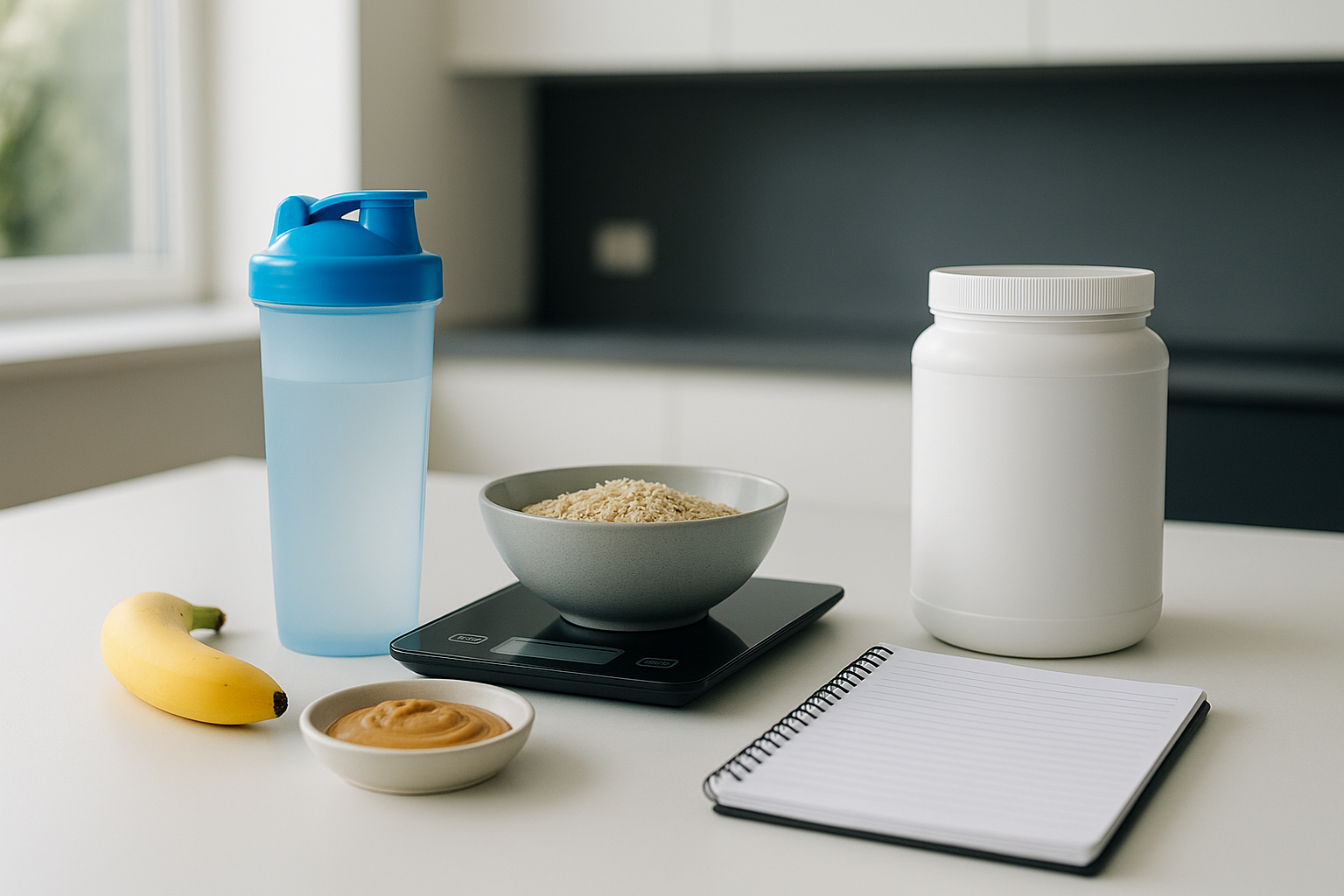
- Set your calorie target. Aim for a modest surplus rather than a reckless one. A lean bulk generally works best when body weight rises slowly and training numbers trend upward.
- Set your protein intake. Ensure each day includes enough protein from meals and shakes combined.
- Add creatine monohydrate daily. Take 3 to 5 g every day, including rest days. For faster saturation, you can use a loading phase of about 20 g daily split into 4 doses for 5 to 7 days, then drop to 3 to 5 g daily. If you want a detailed setup, see how to take creatine and creatine loading.
- Use mass gainer strategically, not automatically. Drink it after training or between meals only if your usual food intake leaves you short on calories.
- Track body weight and waist change weekly. If body weight is not moving after 2 weeks, increase calories slightly. If your waist is rising much faster than strength or body weight, reduce the calorie surplus.
A beginner example:
- 70 kg lifter, poor appetite, wants size: 5 g creatine daily plus one 400 to 700 calorie shake on training days if meals are falling short.
- 85 kg lifter, good appetite, wants lean bulk: 3 to 5 g creatine daily, no mass gainer unless travel or schedule makes meals impossible.
- 60 kg student athlete with two practices and a lift: 3 to 5 g creatine daily plus a shake after sessions for convenience and recovery calories.
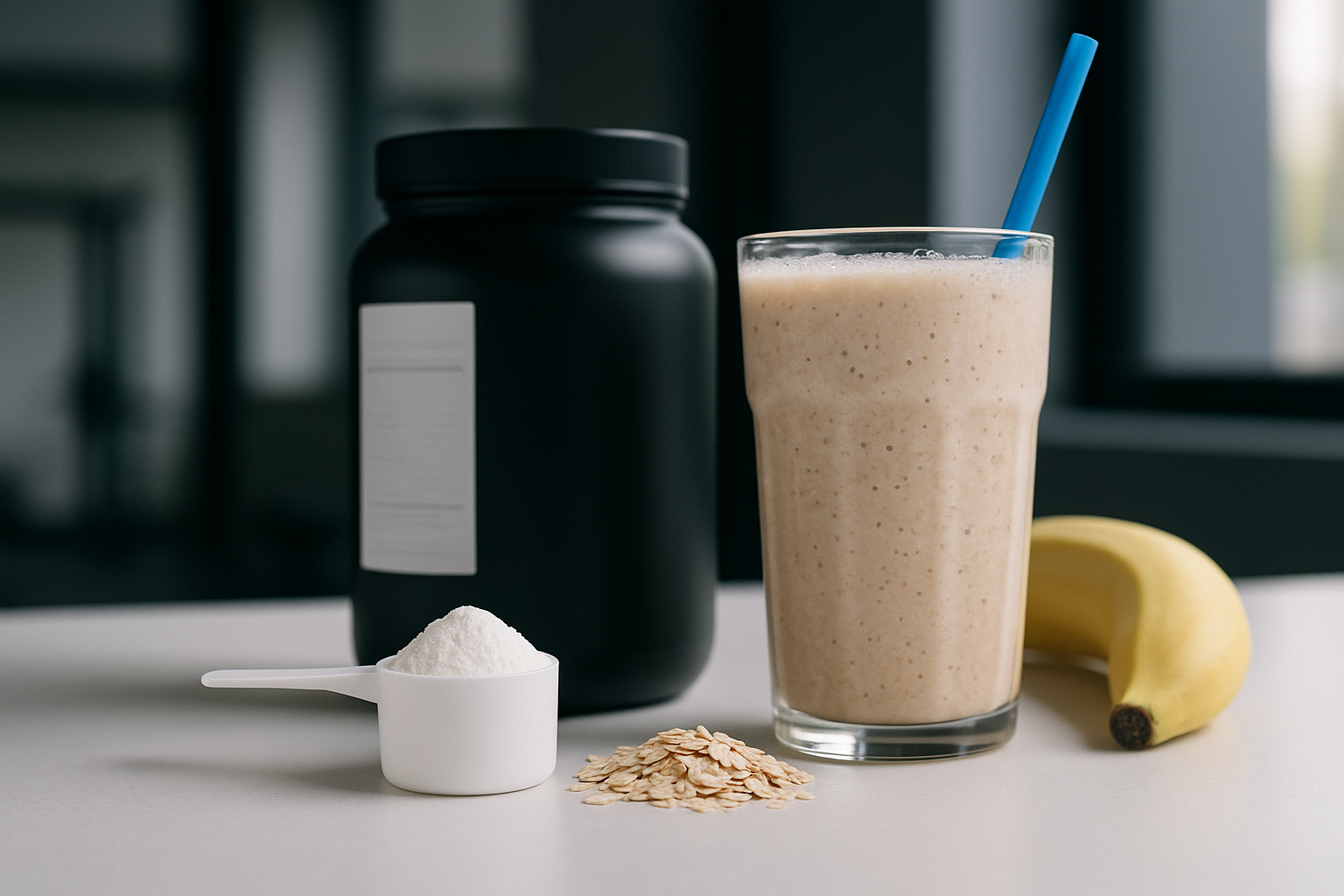
You do not need a special 'anabolic window' to combine them. Creatine timing matters far less than daily consistency, and a mass gainer works whenever it helps you meet your intake target. Some people simply mix their creatine into the gainer shake for convenience. That is perfectly reasonable.
What should you expect? In week 1 to 2, creatine may increase scale weight slightly from water stored in muscle, especially if you load. Over 3 to 8 weeks, you may notice better rep quality, more total training volume, and gradually improved gym performance. The gainer's effect depends entirely on whether it actually creates a surplus. If it does, body weight should start trending upward within 1 to 2 weeks.
If you want a simpler alternative to commercial gainers, build your own shake and stir in creatine. It is often cheaper, easier on digestion, and easier to customise.
Exact dosing: creatine, mass gainer, and calorie targets by body size and goal
Creatine dosing is simple and evidence-based, while mass gainer dosing should be based on your calorie gap, not the scoop count printed on the tub. That difference matters because one supplement saturates a physiological system and the other just contributes to your total intake.
For creatine monohydrate, the mainstream evidence-based protocol is:
- Maintenance: 3 to 5 g daily.
- Optional loading: about 20 g daily, split into 4 doses, for 5 to 7 days, then 3 to 5 g daily.
- Larger bodies or very high lean mass: some lifters prefer the upper end of the range consistently.
That is enough for most people. You do not need fancy forms, cycling, or megadoses. The 2021 JISSN review on common questions and misconceptions about creatine reinforces that monohydrate remains the reference form with the best support. If you want more help, use our daily creatine dose guide.
For mass gainer, ignore marketing language like 'hardcore mass' and start with your actual calorie shortfall. Ask one question: How many calories am I missing on most days?
- If you are short by a small amount, a full mass gainer serving may be excessive.
- If you are short by a lot and hate large meals, a bigger shake may be useful.
Practical examples:
- 60 kg beginner, wants slow lean bulk: creatine 3 to 5 g daily; add a 250 to 400 calorie shake only if scale weight is flat.
- 75 kg lifter, active job, appetite inconsistent: creatine 5 g daily; add a 400 to 600 calorie shake on busy days.
- 90 kg athlete in heavy training: creatine 5 g daily; use a larger shake only when meals do not cover training demand.
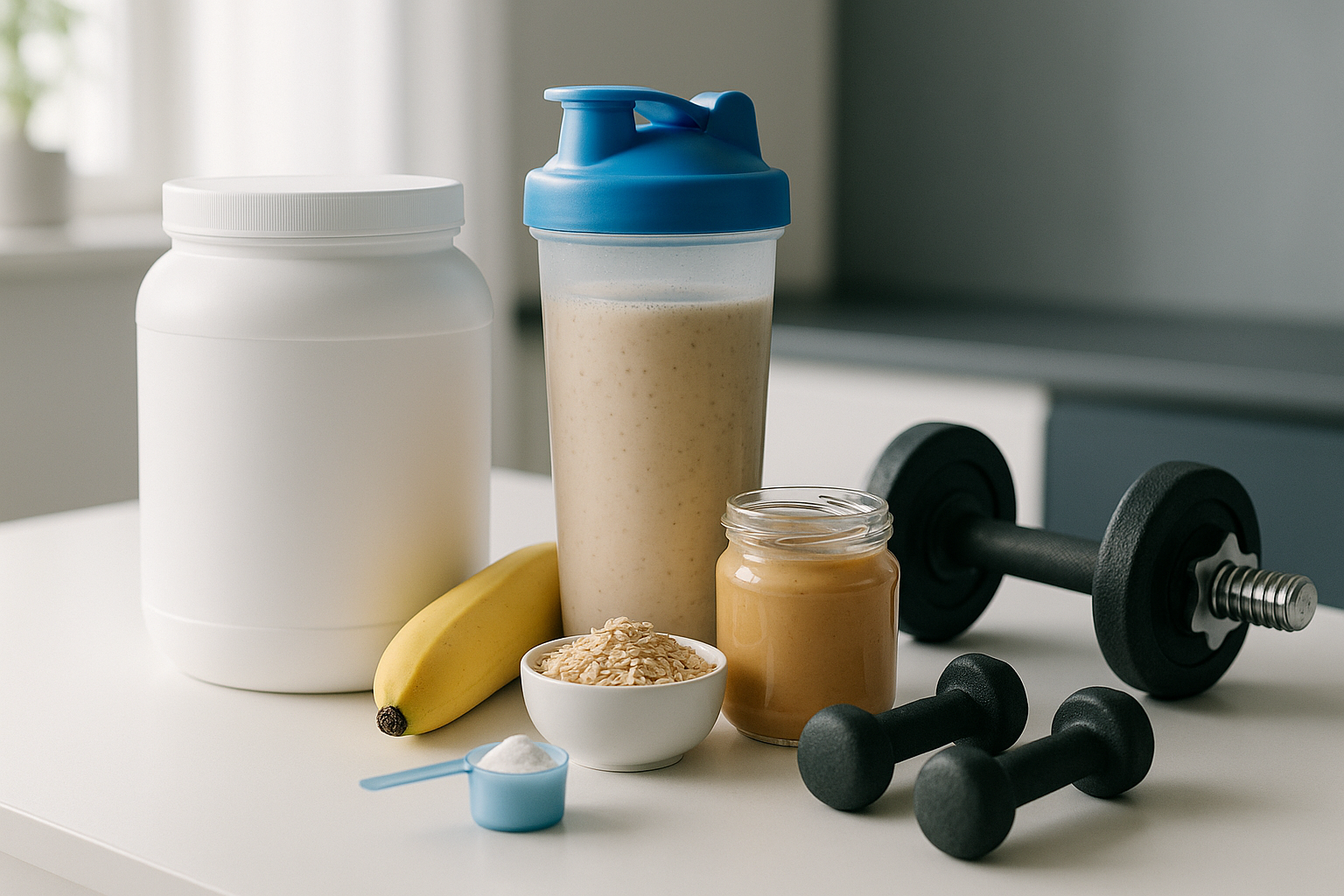
A smart homemade gainer often includes:
- Milk or a higher-protein alternative
- Oats
- Banana or berries
- Greek yogurt or whey
- Nut butter
- Optional olive oil if you need more calories and tolerate it well
- 3 to 5 g creatine monohydrate mixed in
This approach lets you control protein quality, fibre, sugar, and total calories much better than many commercial formulas. It also lets you scale the shake up or down based on your weekly progress.
The rule of thumb is simple: dose creatine to saturate your muscles, and dose a gainer to close your calorie gap. They are not measured for the same purpose, so do not choose your protocol by scoop size alone.
Timing, results, and what to expect week by week
Creatine timing is not very important, but taking it every day is; mass gainer timing matters only insofar as it helps you consistently hit your calories. That means the best schedule is the one you can repeat for months.
For creatine, the practical timing rules are simple:
- Take 3 to 5 g daily at any time you will remember.
- With food is fine, without food is also fine if your stomach tolerates it.
- Rest days still count because muscle saturation depends on consistency, not workout timing.
If you like detail, our guide on when to take creatine covers the timing evidence. Most people can stop overthinking it.
For a mass gainer, timing is mostly about appetite management and digestion:
- Post-workout: useful if training suppresses your appetite for solid food but you can drink calories.
- Between meals: often best for hardgainers who need more total intake without replacing real meals.
- Before bed: can work if you tolerate it well, but very large shakes may cause reflux or poor sleep.
What results should you expect?
Week 1: If you load creatine, you may notice a quick increase in scale weight and muscle fullness. If you start a mass gainer and it creates a real surplus, scale weight may also begin rising quickly.
Week 2 to 4: Creatine users often report better performance on repeated sets, especially for compound lifts or sprint-style work. A mass gainer user should now know whether the shake is truly raising average intake, because body weight should be trending up if calories are high enough.
Week 4 to 8: This is where creatine's real value shows up: better training quality over time. You may add reps at a given load, recover better between hard sets, and see slightly faster lean mass progress. With a gainer, results depend on whether your surplus is appropriately sized. Too small and nothing happens; too large and body fat rises faster than you want.
Beyond 8 weeks: Creatine remains useful as long as you train. A mass gainer should remain optional. Ideally, you rely mostly on real food and use a gainer only when life gets in the way.
How do you know it is working? For creatine, look for better training output and a fuller muscular look, not a miracle scale jump. For a mass gainer, the proof is simply whether your weekly average body weight is rising at a controlled pace.
Who should choose creatine, who should choose a gainer, and who should skip both
Creatine suits far more people than mass gainer does, while mass gainers are mainly for people who cannot meet calorie needs with food alone. That is why creatine is the more broadly useful supplement.
Best candidates for creatine:
- Beginners: yes, provided they are resistance training consistently. Beginners respond well to better training quality, and creatine is one of the few supplements with a strong evidence base.
- Women: yes. Creatine does not 'bulk women up' in the way people fear. It supports strength, performance, and lean mass goals just as it does in men. See our women-specific guide.
- Older adults: yes, especially when paired with resistance training, because maintaining muscle and function matters more with age.
- Vegetarians and vegans: often especially good candidates because baseline dietary creatine intake may be lower.
- Power and team-sport athletes: often excellent fit because repeated high-intensity effort is central to their sport.
Best candidates for mass gainer:
- Hardgainers with low appetite: the classic use case.
- Busy students and shift workers: convenience can matter when meals are inconsistent.
- Athletes with huge daily energy output: especially in-season when recovery calories are hard to keep up with.
Who should be cautious with mass gainers:
- Anyone who already gains fat easily in a surplus
- Anyone prone to digestive upset from very large shakes
- Anyone who mistakes 'more calories' for 'more muscle' and overshoots badly
Who may want to skip both for now:
- People not resistance training at all
- People who have not yet established basic eating habits
- People with medical conditions requiring individual review before supplementation
Creatine is generally considered safe for healthy individuals when used at recommended doses, but anyone with kidney disease, significant medical issues, or medication concerns should speak with a qualified healthcare professional first. If safety is your main concern, read is creatine safe and the kidney myth explained.
In short, most lifters can benefit from creatine, but only a minority truly need a commercial mass gainer. Many people who think they need a gainer actually just need two better meals and one consistent snack every day.
Safety, side effects, and what Canadians should look for when buying
Creatine monohydrate is one of the best-studied sports supplements for safety, while mass gainers are usually safe but vary more in ingredient quality, sugar load, and digestive tolerance.
According to the ISSN position stand, creatine monohydrate is not only effective but also well supported for safety in healthy populations when used appropriately. The Mayo Clinic overview also notes that creatine appears to be safe for many people when used as directed, though people with pre-existing medical conditions should seek medical advice.
Common creatine side effects are usually minor and manageable:
- Stomach upset or loose stool: most often from taking too much at once, especially during loading.
- Temporary weight gain: usually from increased water stored in muscle, not fat.
- Perceived bloating: some people report it, though true gastrointestinal bloating is often dose or product related. See our bloating guide.
Common mass gainer side effects include:
- Feeling too full to eat regular meals
- Gas or stomach discomfort from large bolus servings
- Fast fat gain if the calorie surplus is too aggressive
- Blood-sugar swings or energy crashes in formulas very high in rapidly digested carbs
For Canadian buyers, creatine is a category where label quality matters. Practical checks include:
- Look for an NPN on products sold as natural health products in Canada when applicable.
- Prefer plain creatine monohydrate with minimal extra ingredients.
- Consider third-party testing such as NSF Certified for Sport or Informed Sport if you are a tested athlete.
- Check dose honesty so a serving actually provides an evidence-based amount.
For mass gainers, read labels even more carefully. Compare:
- Protein amount per serving
- Total sugar versus complex carbohydrate sources
- Number of scoops required for the stated calories
- Whether the ingredient list is basically cheap filler plus flavouring
In Canada, many people are better off buying a high-quality plain creatine from a reputable brand and making their own gainer from grocery ingredients. That approach often gives better ingredient control, lower cost, and fewer digestive surprises.
The biggest mistakes people make with creatine vs. gainer
The biggest mistake is treating creatine and mass gainer as interchangeable muscle-building products when they solve different problems. Once you understand that, most confusion disappears.
Mistake 1: Taking a mass gainer when you do not need extra calories.
If you are already in a calorie surplus, adding a large gainer often just speeds up fat gain. More calories are not automatically better for bulking.
Mistake 2: Expecting creatine to replace a calorie surplus.
Creatine can improve training performance and support lean mass gains, but it cannot override chronically inadequate food intake.
Mistake 3: Judging creatine only by body weight in the first week.
Early weight change can reflect water stored in muscle. The real test is whether your training quality improves over several weeks. For more on this, read does creatine make you gain weight.
Mistake 4: Buying flashy creatine blends instead of plain monohydrate.
Monohydrate remains the most-studied and most cost-effective form. Fancy forms often cost more without better outcomes. Our creatine myths debunked page covers this in detail.
Mistake 5: Using a full mass gainer serving straight away.
Many labels suggest extremely large servings. Start smaller, assess digestion, and scale up only if needed.
Mistake 6: Thinking mass gainers are 'dirty bulking in a tub' and therefore always bad.
That is too simplistic. A gainer can be useful if appetite, time, or logistics are the real bottleneck. The issue is not the format; it is whether the formula and serving size fit your goal.
Myth: Creatine is only for advanced bodybuilders.
False. Beginners, women, older adults, and team-sport athletes can all benefit.
Myth: Creatine causes kidney damage in healthy people.
Current evidence does not support that claim in healthy individuals using recommended doses, though people with existing kidney disease need medical supervision.
Myth: Mass gainer builds muscle better than food because it is 'engineered'.
False. It builds nothing on its own; it only helps you consume the calories and macros needed to support growth.
If your progress has stalled, ask two honest questions before buying anything: Am I training hard enough to benefit from creatine, and am I eating enough to benefit from a bulk? Those answers will tell you what to fix.
Bottom line: what most people should do
For most people bulking, creatine monohydrate is the first supplement to buy, and a mass gainer is only worth adding if food alone is not enough to create a consistent calorie surplus.
If your budget allows only one choice, this is the simplest decision framework:
- Pick creatine if you already eat reasonably well, want better training performance, and care about lean mass more than just scale weight.
- Pick a mass gainer if your body weight will not move because you repeatedly fail to hit your calorie target.
- Use both if you want creatine's proven performance benefits and you also need an easier way to get enough calories.
The strongest evidence supports creatine monohydrate at 3 to 5 g daily as the default recommendation for healthy lifters and athletes. A mass gainer, by contrast, should be treated as a convenience food product, not a magic muscle formula.
The best bulking stack for many people is actually boring:
- Progressive resistance training
- A modest calorie surplus
- Adequate daily protein
- Creatine monohydrate every day
- Whole-food meals first, with a shake only when needed
If you want the most practical next step today, do this:
- Weigh yourself three mornings this week and average it.
- Track your food intake for 5 to 7 days.
- If calories are low, add one real-food shake or a carefully chosen gainer.
- Start creatine monohydrate at 3 to 5 g daily.
- Reassess body weight, strength, and waist measurement after 2 weeks.
That is the real answer to creatine vs gainer, mass gainer vs creatine, and creatine or mass gainer for bulking: use the tool that fixes your bottleneck, and do not expect one supplement to do the other one's job.
Creatine vs. Mass Gainer at a Glance
- 3-5 g/day Standard creatine maintenance dose — The evidence-based daily dose for most healthy adults using creatine monohydrate.
- ~20 g/day Typical loading protocol — Usually split into 4 doses daily for 5-7 days, then reduced to maintenance.
- 5-7 days Fast saturation window with loading — Loading helps raise muscle creatine stores faster than maintenance-only dosing.
- 0 kcal Creatine's calorie contribution — Creatine supports performance without directly adding calories to a bulk.
Frequently Asked Questions
Which is better for bulking, creatine or mass gainer?
Creatine is better for improving training performance and supporting lean mass gain, while a mass gainer is better only if you cannot eat enough calories to gain weight. If your diet is already in a surplus, creatine is usually the smarter buy; if your weight is not moving because intake is too low, a gainer may solve the real problem faster.
Can I take mass gainer and creatine together?
Yes, you can take mass gainer and creatine together safely because they work through different mechanisms. Creatine helps saturate muscle stores for better high-intensity performance, and a mass gainer simply helps you consume more calories, carbs, and protein when food alone is not enough.
Should beginners use creatine or a mass gainer first?
Beginners should usually fix food intake first and then add creatine as the first supplement. If you are under-eating and failing to gain body weight, a gainer may help, but if your meals are already solid, creatine monohydrate is the more evidence-based and broadly useful starting supplement.
Does creatine help you gain weight like a mass gainer does?
Creatine can increase body weight, but not in the same way a mass gainer does. Creatine often causes a small early increase from water stored inside muscle and may support more lean mass over time, whereas a mass gainer raises scale weight mainly by increasing total calorie intake.
Is mass gainer necessary if I take creatine?
No, mass gainer is not necessary if you take creatine and already eat enough calories to bulk. Creatine does not require a gainer to work, and many people get better results from creatine plus mostly whole-food meals than from relying on a large commercial shake.
Can I mix creatine into my mass gainer shake?
Yes, you can mix creatine into a mass gainer shake for convenience. As long as your daily creatine dose reaches the usual 3 to 5 g range, it does not matter much whether it is mixed with water, a shake, or taken with a meal.
Will a mass gainer make me fat faster than creatine?
Yes, a mass gainer can increase fat gain faster than creatine if it pushes your calorie surplus too high. Creatine has virtually no calories and does not directly create fat gain, while a mass gainer can overshoot your needs very easily if you use large servings without tracking progress.
What is the best creatine dose when bulking?
The best creatine dose when bulking is usually 3 to 5 g of creatine monohydrate per day. If you want faster saturation, you can use about 20 g per day split into 4 doses for 5 to 7 days, then return to the standard daily dose.
Are mass gainers better than food for hardgainers?
Mass gainers are not inherently better than food, but they can be more convenient for hardgainers with low appetite or hectic schedules. A homemade shake made from oats, milk, yogurt, fruit, nut butter, and added creatine often gives better ingredient quality and better control over calories than many commercial gainers.
Do women need a mass gainer or creatine for bulking?
Women usually benefit more broadly from creatine, while a mass gainer is only useful if total calorie intake is too low to support weight gain. Creatine can help women improve strength, training output, and lean mass without being a 'bulking' supplement in the exaggerated sense many people fear.