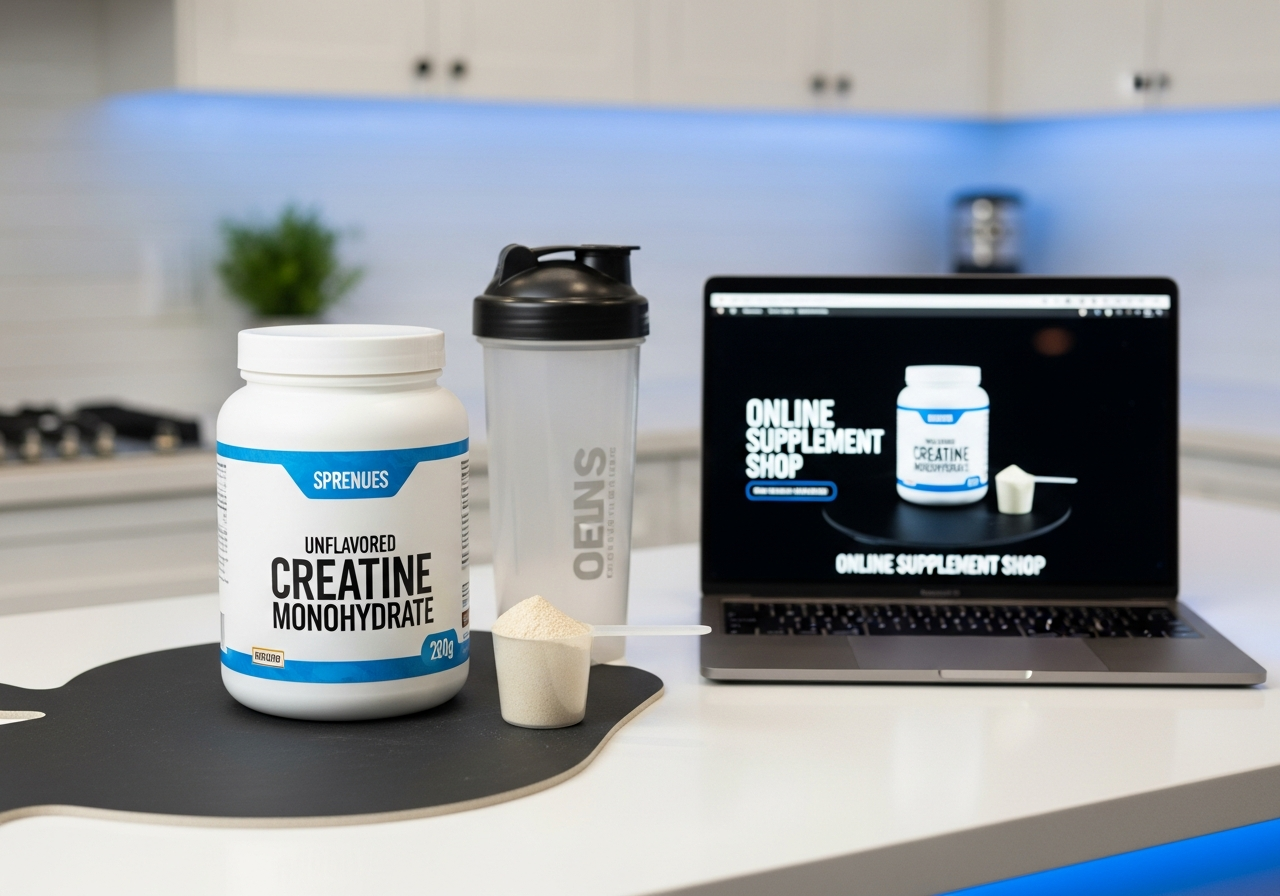
Where to Buy Creatine in Saskatchewan: Best Stores and Online Options
By The Creatine Canada Research Team — Evidence-based supplement analysts
You can buy creatine in Saskatchewan from local supplement stores in Saskatoon and Regina, major fitness-nutrition retailers, and reputable Canadian online shops, but the best choice for most people is plain creatine monohydrate with a Natural Product Number and transparent testing. If you want the safest, most cost-effective option, buy a simple monohydrate powder, confirm the label, and use 3 to 5 g daily.
Evidence-based · Cites 4 sources · Editorial standards
Key Takeaways
- The best creatine in Saskatchewan for most buyers is unflavoured creatine monohydrate powder, not fancy blends.
- Look for a Canadian-compliant label with an NPN and a clear serving size in grams.
- Local options exist for creatine in Saskatoon and creatine in Regina, but online often gives better stock, value, and label transparency.
- A standard maintenance dose is 3 to 5 g per day; loading is optional at 20 g per day split into 4 doses for 5 to 7 days.
- Micronized monohydrate can mix more easily, but standard monohydrate works just as well.
- Third-party testing, lot numbers, and simple ingredient lists matter more than branding or influencer claims.
- If creatine causes stomach upset, reduce the dose per serving, take it with food, and avoid oversized scoops.
Where to buy creatine in Saskatchewan right now
You can buy creatine in Saskatchewan from local supplement retailers, selected gyms, some pharmacies and health stores, and reputable Canadian e-commerce sites, but the best buy for most people is still a plain creatine monohydrate powder with a compliant Canadian label. If your goal is strength, muscle, repeated sprint performance, or simply getting a dependable product without overpaying, start by looking for monohydrate first and brand hype second.
For people searching where to buy creatine in Saskatchewan, there are really two practical routes. The first is buying locally in Saskatoon or Regina when you want the product today and are willing to pay a bit more for convenience. The second is buying online from a Canadian supplement retailer when you want more format options, easier comparison shopping, and a better chance of finding transparent testing information.
If you are shopping in person for creatine Saskatoon or creatine Regina, ask staff four simple questions before you buy:
- Is this plain creatine monohydrate, or is it part of a proprietary blend?
- How many grams of creatine are in one serving?
- Does the label show a Natural Product Number, or NPN, which is Health Canada’s product licence identifier for approved natural health products?
- Is there any third-party testing or identity testing information?
If you are shopping online, use a stricter checklist because the selection is larger and the marketing is louder. Compare the price per 100 g, confirm that the ingredient list says creatine monohydrate, check whether the tub size actually delivers a full month or more at 3 to 5 g daily, and review shipping costs to Saskatchewan before you reach checkout. A cheap tub can become an average deal once freight is added.
Most Saskatchewan buyers do not need exotic forms like HCl, buffered creatine, or gummies unless a specific format solves a real compliance problem. The evidence base still strongly favours monohydrate as the most-studied and most cost-effective form, as outlined in the 2017 ISSN position stand. If you want a fast shortlist before you shop, see our best creatine rankings, compare labels in the creatine product catalog, and use the creatine dosage calculator to estimate how long a tub will last you.
The best creatine to buy in Saskatchewan is almost always monohydrate
The best creatine in Saskatchewan for nearly everyone is creatine monohydrate because it has the strongest evidence, the most predictable dosing, and usually the lowest cost per effective gram. This is not a trendy answer, but it is the evidence-based one.
Creatine monohydrate is the form used in the vast majority of high-quality sports nutrition research. The reason that matters is simple: when a product claims better absorption, less bloating, or faster strength gains, the question is whether it actually outperforms monohydrate in well-controlled studies, not whether the label sounds advanced. So far, monohydrate remains the benchmark that other forms are measured against.
There are a few buying variations worth understanding:
- Standard creatine monohydrate: effective, affordable, and ideal for most users.
- Micronized monohydrate: the same core ingredient, but with smaller particles that can improve mixability for some people.
- Capsules: useful for travel or taste avoidance, but often much more expensive per gram.
- Gummies or RTD formats: convenient, but often pricier and sometimes underdosed.
- HCl, buffered, ethyl ester, nitrate: interesting marketing categories, but not proven superior for real-world outcomes.
The 2021 JISSN review on common creatine questions and misconceptions notes that many claims around newer forms are overstated relative to the evidence. In practice, if a Saskatchewan buyer asks what to put in the cart today, the answer is a monohydrate powder from a reputable Canadian seller with a clean label and a realistic price per gram.
Choose unflavoured first unless you know you dislike it. Flavoured creatine can be fine, but sweeteners, acids, and extra ingredients add cost and can complicate digestion for some users. A one-ingredient powder gives you the most control.
Good buying priorities, in order, are:
- Creatine monohydrate as the form.
- Clearly stated grams per serving, ideally 3 to 5 g.
- NPN or otherwise compliant Canadian label information where applicable.
- Transparent manufacturing or testing details.
- Reasonable cost per effective daily dose.
If you want help comparing labels and forms, our creatine brand reviews break down how different products stack up, and our guide on best creatine rankings explains why monohydrate still wins in 2026.
How to judge a Saskatchewan creatine product label before you buy
The fastest way to avoid wasting money on creatine in Saskatchewan is to read the label like a filter, not like an advertisement. A good creatine label should make the form, dose, and compliance details obvious within a few seconds.
Start with the ingredient panel. The simplest and most dependable label usually says just one active ingredient: creatine monohydrate. If the front of the tub says “strength matrix”, “cell volumizer”, or “performance complex”, flip it over and check whether the actual creatine dose is still a full 3 to 5 g per serving. Many blends make the label look impressive while giving you less creatine than a plain powder.
For Canadian buyers, the NPN matters. An NPN, or Natural Product Number, is Health Canada’s authorization number for a natural health product sold with approved conditions of use. An NPN is not a guarantee that a product is perfect, but it is a useful legitimacy signal in the Canadian market and helps distinguish properly labelled products from questionable listings. If you want more on this, our guide to is creatine approved in Canada covers the details.
Also look for these practical details:
- Serving size in grams: avoid labels that hide the real amount behind scoop sizes only.
- Number of servings per container: this tells you the real monthly cost.
- Lot number and expiry: basic traceability matters.
- Third-party testing language: useful when clearly stated, though not all brands provide equal detail.
- Minimal extras: fewer fillers, dyes, and proprietary blends usually means better value.
Be cautious with marketplace listings that have vague supplement facts, no rear-label photos, no batch information, or inflated promises like “10x absorption” without named evidence. The Mayo Clinic overview and the IOC consensus on supplements both reinforce a basic rule that matters as much in Saskatchewan as anywhere else: product quality and contamination risk matter, especially for competitive athletes.
If you play varsity, junior, university, high-level club, or tested sport, give extra weight to transparent sourcing and testing. That may cost slightly more, but it is usually cheaper than dealing with uncertainty later.
Creatine in Saskatoon and Regina: when local stores win and when online is better
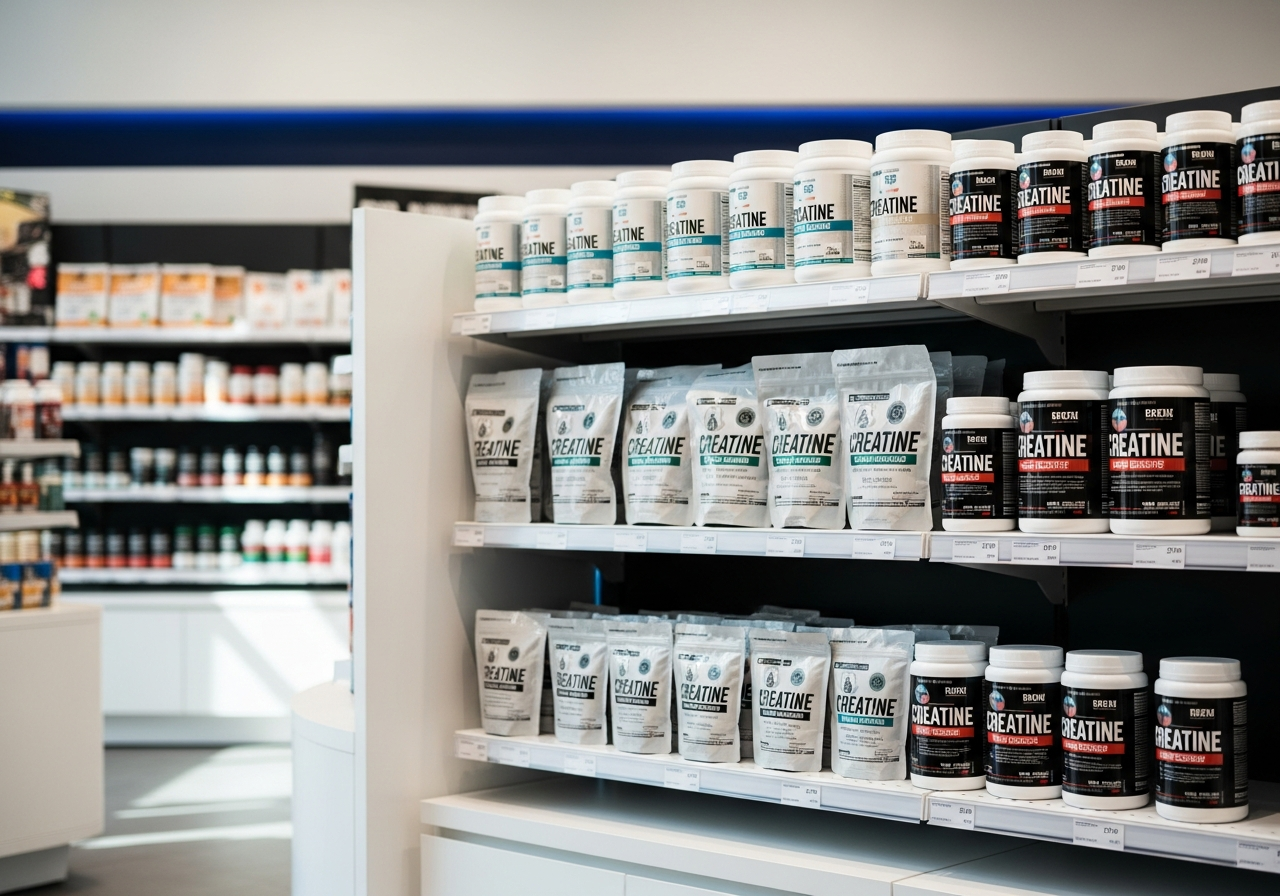
If you need creatine today in Saskatoon or Regina, local stores win on speed, but online usually wins on selection, stock depth, and value. That trade-off is the core decision for most Saskatchewan buyers.
Local supplement shops are useful when you want to inspect the tub, verify the label in person, and avoid shipping delays. They can also help beginners who want a staff member to explain the difference between monohydrate, capsules, and pre-workout blends. In cities like Saskatoon and Regina, you can often find creatine at dedicated supplement retailers, some large-format fitness chains, and occasionally pharmacies or health-focused nutrition stores. The local downside is that stock can be inconsistent, especially during periods of high demand, and the cheapest plain monohydrate tubs may sell out first.
Online buying is often the better option when you are comparison shopping or trying to find the best creatine Saskatchewan buyers can actually verify. Online listings let you compare price per gram, ingredient lists, customer photos, tub sizes, and shipping thresholds without driving across the city. A good Canadian seller also tends to provide more complete label images and may offer easier access to lot and testing information.
| Buying option | Best for | Main advantage | Main drawback |
|---|---|---|---|
| Local supplement store | Same-day purchase | Immediate pickup and in-person label check | Higher price and smaller selection |
| Gym retail counter | Convenience after training | Fast and easy | Often limited to premium or blended products |
| Pharmacy or health store | Basic mainstream options | Trusted retail environment | May not stock the best-value sports formats |
| Canadian online retailer | Best overall value | Broader selection, easier comparison, better stock visibility | Shipping time and minimums may apply |
A simple Saskatchewan strategy works well for most people: buy your first tub locally if you want to start immediately, then reorder online once you know the form and tub size you prefer. That lets you avoid overthinking your first purchase while still optimizing long-term value.
If you are comparing online products, our creatine product catalog and creatine brand reviews can help narrow your shortlist before you check out.
Why creatine works: the simple science behind the purchase
Creatine works because it helps your muscles regenerate adenosine triphosphate, or ATP, the immediate energy currency used for short, intense efforts such as lifting, sprinting, jumping, and repeated high-power intervals. That mechanism is why buying the right creatine form matters more than buying the most heavily marketed one.
Inside muscle, creatine is stored partly as phosphocreatine, which is creatine bound to phosphate. During hard efforts lasting only seconds, phosphocreatine donates that phosphate to help rapidly remake ATP. More stored creatine usually means a better ability to sustain force output across repeated bouts of high-intensity work. In practical terms, that can mean one more rep, slightly more training volume, better repeated sprint quality, or more total quality work over time.
The important word is over time. Creatine is not a stimulant and does not work like caffeine. You do not feel it as a sudden buzz. Instead, it increases muscle creatine stores until you reach saturation, meaning your muscles are holding near-maximal practical levels. Once saturated, training quality often improves enough over weeks to contribute to greater strength and lean mass gains.
The ISSN position stand concluded that creatine monohydrate is the most effective nutritional supplement currently available for increasing high-intensity exercise capacity and lean body mass during training. That sentence is one of the clearest summaries in sports nutrition, and it is the main reason Saskatchewan buyers should not get distracted by expensive alternatives that lack comparable evidence.
Creatine may also have relevance beyond pure bodybuilding. Research has explored benefits for older adults doing resistance training, some cognitive applications, and certain clinical settings, but those areas are more nuanced and not as uniformly strong as the performance evidence. For the average gym-goer in Saskatoon, Regina, Moose Jaw, Prince Albert, or elsewhere in Saskatchewan, the best-supported reason to buy creatine is still better performance in short-duration, high-intensity work and the training adaptations that follow.
If you want the deeper beginner version, our guides on what creatine is and creatine benefits explain the full evidence base in plain English.
A step-by-step Saskatchewan buyer’s plan: from shelf to first scoop
The easiest way to buy and start creatine in Saskatchewan is to choose a plain monohydrate powder, verify the dose and label, and begin with 3 to 5 g daily. You do not need a complicated loading protocol unless you want faster saturation.
- Choose the form. Buy creatine monohydrate powder first. If you travel often or hate mixing powders, capsules are acceptable, but they usually cost more per gram.
- Check the label. Confirm the serving gives a real creatine dose in grams. Ideally, the ingredient list is just creatine monohydrate. Look for an NPN on Canadian-labelled products when applicable.
- Pick a practical tub size. At 5 g per day, a 300 g tub lasts about 60 days. At 3 g per day, it lasts about 100 days. Do that math before comparing prices.
- Measure accurately. Use the included scoop only if the label states how many grams it holds. Better yet, use a kitchen scale if you want precision. Our creatine dosage calculator helps simplify this.
- Mix it. Stir into water, juice, or a protein shake. Warm liquid can improve dissolving, though it is not necessary. For more practical tips, see how to mix creatine.
- Take it daily. Consistency matters more than timing. Training day, rest day, morning, evening, all can work as long as you stick with it.
- Track what changes. Look for gym performance improvements over 2 to 4 weeks with loading or 3 to 6 weeks without loading. Useful markers include extra reps at a given weight, slightly better sprint repeatability, or modest body-weight increase from intracellular water.
Beginners often ask whether they should load. Loading means taking about 20 g per day, split into 4 doses of 5 g, for 5 to 7 days, then switching to 3 to 5 g daily. This saturates muscle stores faster, but it is optional. If you would rather keep things simple, just take 3 to 5 g daily from day one.
A realistic first-month expectation is not dramatic transformation. The first noticeable changes are usually better training tolerance, a small increase on the scale from water stored inside muscle, and gradually stronger sessions. If nothing at all changes after several weeks, check the basics: are you taking the right dose, taking it every day, and training hard enough to notice the benefit?
Creatine dose by body weight and goal: practical numbers that actually help
For most Saskatchewan adults, the right creatine dose is 3 to 5 g per day, with larger or more muscular people generally leaning toward the higher end. Body weight matters somewhat, but your main goal should still be reaching and maintaining muscle saturation consistently.
There are two mainstream evidence-based ways to dose creatine monohydrate:
- Maintenance-only approach: 3 to 5 g once daily, every day.
- Loading approach: about 20 g per day split into 4 doses for 5 to 7 days, then 3 to 5 g per day.
Some sports nutrition guidance also uses roughly 0.3 g/kg/day for loading and around 0.03 g/kg/day for maintenance. That approach is useful if you are very light, very heavy, or simply want a more individual estimate.
| Body weight | Simple daily maintenance | Optional loading for 5-7 days | Best use case |
|---|---|---|---|
| 50-65 kg | 3 g/day | 15-20 g/day split into 3-4 doses | General fitness, beginners, smaller-framed users |
| 66-85 kg | 3-5 g/day | 20 g/day split into 4 doses | Most gym-goers and team-sport athletes |
| 86-105 kg | 5 g/day | 20-25 g/day split into 4-5 doses | Larger lifters and field athletes |
| 106 kg+ | 5 g/day | 25-30 g/day split into 5-6 doses | Very large athletes using body-weight-based loading |
Goal also influences how much urgency you should place on saturation:
- Strength and muscle gain: 3 to 5 g daily is enough; loading just speeds the start.
- Sport tournament or pre-season block: loading can make sense if you want quicker saturation before repeated high-intensity efforts matter.
- Older adults starting resistance training: 3 to 5 g daily is usually the simplest, most sustainable plan.
- Vegetarians or vegans: standard dosing still works, but they may notice stronger response because baseline muscle creatine stores can be lower.
The best dose is the one you will actually take every day. If 5 g bothers your stomach, split it into 2.5 g twice daily. If you keep missing doses, attach it to a routine you already follow, such as breakfast or your post-workout shake. For a more personalized estimate, use our creatine dosage calculator or read how much creatine per day.
When to take creatine, how long it takes to work, and who benefits most
Creatine timing matters far less than daily consistency, and most people will notice its effects over weeks, not hours. If you buy creatine in Saskatchewan today, the most important thing is not whether you take it before or after your workout, but whether you keep taking it every day.
Without loading, many users need about 3 to 4 weeks to approach saturation, though some notice training differences sooner and some later. With loading, muscle stores rise faster, so effects may become more noticeable within about 1 week, especially in repeated sprint or lifting performance. A small body-weight increase can happen early because creatine draws more water into muscle cells, which is not the same as gaining fat.
Who tends to benefit most?
- Beginners: yes, especially if they are starting resistance training and want a simple supplement with a strong evidence base.
- Women: yes. Creatine is not a men-only supplement, and the idea that it automatically causes undesirable “bulk” is a myth. Our guide on creatine for women covers this in more detail.
- Older adults: yes, particularly when combined with resistance training. The training piece still matters.
- Athletes in hockey, football, soccer, sprinting, CrossFit, and power sports: often strong candidates because repeated high-intensity efforts are central to performance.
- Vegetarians and vegans: often good candidates because dietary creatine intake is lower when meat and fish are absent.
Endurance athletes can still use creatine, but the trade-off is more nuanced because any increase in body mass may be helpful, neutral, or occasionally inconvenient depending on the event. Team-sport athletes in Saskatchewan, especially those doing repeated hard efforts, often benefit more clearly than pure long-distance athletes.
As for timing, take it when you remember it. Post-workout with a meal or shake is a common habit because it is easy to repeat. Morning with breakfast works too. Rest days still count. For deeper timing guidance, read when to take creatine and how long creatine takes to work.
Is creatine safe to buy and use in Saskatchewan? What the evidence actually says
Creatine monohydrate is generally considered safe for healthy individuals when used at recommended doses, and that conclusion is supported by decades of research. The main real-world issues are usually digestive tolerance, label quality, and confusion over lab tests rather than serious side effects from normal use.
The 2017 ISSN position stand and the 2021 JISSN review both support the safety and efficacy of creatine monohydrate in healthy populations when taken appropriately. That does not mean every person should take it blindly. It means the evidence base is stronger than many people realize, especially compared with far less studied supplements that are sold with louder claims.
Common side effects and realities include:
- Water-weight gain: common early on, usually from more water stored inside muscle, not from fat gain.
- Stomach upset: more likely with large single doses, poor mixing, or loading too aggressively.
- No stimulant effect: creatine should not feel like caffeine.
- Creatinine confusion: blood creatinine can rise with creatine use because creatinine is a breakdown product, which can complicate lab interpretation without necessarily indicating kidney damage.
People who should be more cautious include anyone with known kidney disease, anyone under direct medical evaluation for kidney function, and anyone who has been told by a clinician to avoid certain supplements. In those cases, speak to a qualified health professional before starting. Pregnancy and breastfeeding are also situations where people should seek individualized medical guidance because the evidence base is not broad enough for casual blanket advice.
Competitive athletes should think about safety in two layers: ingredient safety and product purity. Creatine itself is permitted in sport, but contamination risk from poorly controlled products is a separate issue. That is why transparent brands and straightforward ingredient lists matter.
If you are worried about side effects, start with 3 g daily, take it with food, and drink to thirst as you normally would rather than force excessive water. For deeper myth-busting, read our creatine myths debunked, is creatine safe, and kidney guide.
The biggest creatine buying mistakes and myths Saskatchewan shoppers still fall for
The biggest mistakes Saskatchewan shoppers make are buying the wrong format, underdosing, expecting an immediate buzz, and paying extra for claims that have little evidence behind them. Most creatine disappointment comes from poor buying and usage decisions, not from creatine failing to work.
Here are the most common mistakes:
- Buying a blend instead of pure creatine. Many pre-workouts and “mass” products include creatine, but often not enough to reliably saturate muscle.
- Not checking grams per serving. One scoop is meaningless if the scoop only provides 1 or 2 g.
- Skipping rest days. Creatine works by saturating muscle over time, so daily use matters.
- Assuming expensive forms are better. Monohydrate keeps winning because evidence, not novelty, decides the standard.
- Taking huge single doses. That is a common way to create stomach problems you did not need.
- Judging it after only a few days. Unless you loaded, you probably are not saturated yet.
Now the myths:
- “Creatine is a steroid.” False. Creatine is a naturally occurring compound involved in cellular energy metabolism, not an anabolic steroid.
- “Creatine damages healthy kidneys.” The best current evidence does not support that claim in healthy people using recommended doses, though people with kidney disease need individualized guidance.
- “Creatine causes bloating everywhere.” The typical effect is increased intracellular water in muscle, not generalized puffiness.
- “Women should avoid creatine.” False. Women can benefit from creatine for strength, training capacity, and body-composition support just as men can.
- “You have to cycle creatine.” False for most users. Continuous daily use is standard.
If you bought creatine in Saskatoon or Regina and think it is not working, troubleshoot the basics before giving up: verify the product is monohydrate, confirm the dose is 3 to 5 g daily, use it consistently for long enough, and train with enough effort to create an effect worth noticing. If you want a full myth-by-myth breakdown, see creatine myths vs facts and why creatine may not seem to work.
Bottom line: the smartest way to buy creatine in Saskatchewan
The smartest way to buy creatine in Saskatchewan is to choose a reputable plain creatine monohydrate product with a clear dose, Canadian-compliant labelling, and a sensible cost per gram, then take 3 to 5 g daily. That answer is simple because the evidence is simple.
If you need creatine today, local supplement stores in Saskatoon or Regina are a practical option. If you want better comparison shopping, broader stock, and often better value, use a reputable Canadian online seller. In either case, your winning checklist is the same:
- Buy creatine monohydrate.
- Prefer a one-ingredient formula.
- Confirm the dose in grams, not just scoop size.
- Look for an NPN and sensible Canadian labelling where applicable.
- Check the cost per effective month, not just the sticker price.
- Use it every day for at least several weeks before judging results.
For most people, that means ignoring flashy forms, avoiding proprietary blends, and resisting the assumption that premium packaging equals better science. The best creatine Saskatchewan buyers can choose is usually the most boring-looking tub on the shelf: plain monohydrate, correctly dosed, from a reputable seller.
If you are still comparing options, start with our best creatine rankings, browse the creatine product catalog, and use the creatine dosage calculator to figure out exactly how much you need. If you want to go deeper after buying, our guides on how to take creatine and the loading phase will help you get the most from it.
For Saskatchewan shoppers, the highest-value creatine is usually plain creatine monohydrate bought from a reputable Canadian retailer, taken at 3 to 5 g daily, and used consistently long enough to reach saturation.
Creatine in Saskatchewan: the numbers that matter
- 3-5 g/day Standard maintenance dose — Works for most adults using creatine monohydrate.
- 20 g/day Typical loading dose — Usually split into 4 doses for 5-7 days.
- 5-7 days Time to load faster — Loading reaches saturation more quickly than maintenance only.
- 3-4 weeks Typical time without loading — Many users approach saturation with daily maintenance-only use.
Frequently Asked Questions
Where can I buy creatine in Saskatchewan?
You can buy creatine in Saskatchewan from local supplement stores, some gyms, selected pharmacies or health stores, and reputable Canadian online retailers. For most buyers, the best option is whichever source gives you plain creatine monohydrate, a clear dose in grams, and a compliant Canadian label without unnecessary add-ons.
What is the best creatine in Saskatchewan?
The best creatine in Saskatchewan for most people is plain creatine monohydrate powder. It has the strongest research support, is usually the most cost-effective form, and makes it easiest to get a full 3 to 5 g daily dose without paying extra for weakly supported marketing claims.
Can I find creatine in Saskatoon stores?
Yes, you can usually find creatine in Saskatoon at dedicated supplement retailers and some fitness-focused stores. The key is not just finding any tub on the shelf, but checking that it is monohydrate, properly dosed, and not hidden inside a proprietary blend that gives less creatine than you expect.
Can I find creatine in Regina stores?
Yes, creatine in Regina is commonly available at supplement stores and sometimes at larger health or fitness retailers. Local buying is great for same-day convenience, but online buying often provides more stock, easier price comparison, and better access to full label photos and product details.
Is it better to buy creatine online or in-store in Saskatchewan?
It is better to buy creatine online in Saskatchewan if you want the best selection and value, but in-store is better if you need it immediately. The product criteria do not change: buy monohydrate, confirm the grams per serving, and favour transparent Canadian labelling and reputable sellers.
How much creatine should I take after I buy it?
Most people should take 3 to 5 g of creatine monohydrate per day after they buy it. If you want faster saturation, you can use an optional loading phase of about 20 g per day split into 4 doses for 5 to 7 days, then continue with 3 to 5 g daily.
Do I need an NPN on creatine sold in Saskatchewan?
An NPN is a useful sign that a creatine product is authorized as a natural health product in Canada, so it is worth looking for when buying in Saskatchewan. It is not the only quality signal, but it helps confirm the product is being sold with Canadian-compliant labelling and approved conditions of use.
Is creatine safe for beginners?
Yes, creatine monohydrate is generally considered safe for healthy beginners when used at recommended doses. The main issues beginners encounter are mild stomach upset from taking too much at once, inconsistent use, or confusion about normal water-weight changes rather than serious side effects.
What should I avoid when buying creatine supplements in Saskatchewan?
Avoid creatine products that hide the dose in a blend, use vague marketing instead of clear grams per serving, or provide poor label transparency. In Saskatchewan, as anywhere in Canada, a simple monohydrate powder with a straightforward label is usually a safer and better-value buy than a flashy formula.
How do I know if my creatine is working?
You know creatine is working if, over a few weeks, you notice better training output such as more reps, slightly better repeated sprint performance, or improved work capacity at the same effort. Some people also see a small increase in scale weight early on from more water stored inside muscle cells.