Buying Creatine in Prince Edward Island: Local Stores and Online Options
By The Creatine Canada Research Team — Evidence-based supplement analysts
Yes—you can buy creatine in Prince Edward Island both locally and online, but the smartest PEI purchase is usually a plain creatine monohydrate powder from a reputable Canadian retailer or a trusted Charlottetown supplement shop. For most Islanders, the best combination of price, stock reliability, and delivery speed is a Health Canada-compliant product with an NPN and clear third-party testing or raw-material quality signals.
Evidence-based · Cites 4 sources · Editorial standards
Key Takeaways
- The best creatine to buy in PEI is usually unflavoured creatine monohydrate, not fancy blends.
- A standard maintenance dose is 3-5 g daily; loading is optional at 20 g daily split into 4 doses for 5-7 days.
- Charlottetown shoppers can check local supplement and health stores, but online often wins on price per gram and stock consistency.
- For creatine delivery in PEI, prefer Canadian sellers with clear shipping policies, sealed tubs, lot numbers, and an NPN where applicable.
- Women, beginners, older adults, and athletes can all use the same core creatine form; the main difference is dose strategy and expectations.
- Creatine works by increasing muscle phosphocreatine stores, which helps regenerate ATP during short, hard efforts.
- If creatine causes stomach upset, reduce the dose per serving, use micronized monohydrate, and take it with food or more fluid.
Where to buy creatine in Prince Edward Island right now
You can buy creatine in Prince Edward Island from local supplement retailers, some health-food shops, certain pharmacies, and Canadian online stores that ship to PEI. If your priority is convenience in Charlottetown, local shopping can work well; if your priority is best value, wider brand choice, or dependable stock, online usually wins.
For most buyers searching buy creatine PEI, creatine Prince Edward Island, or creatine Charlottetown, the ideal product is simple: creatine monohydrate powder with a transparent label. Monohydrate is the form with the strongest evidence, the longest safety record, and typically the lowest cost per effective dose. The 2017 ISSN position stand concluded that creatine monohydrate is the most effective ergogenic nutritional supplement currently available for increasing high-intensity exercise capacity and lean mass gains during training.
In practical terms, Prince Edward Island buyers should use a shortlist when shopping:
- Form: choose creatine monohydrate first.
- Label clarity: look for a serving size stated in grams, ideally 3 g, 5 g, or similar.
- Ingredients: one ingredient is often best for value and simplicity.
- Regulatory signals: in Canada, a natural health product may carry an NPN, which means Natural Product Number, showing it has been licensed by Health Canada under that category.
- Quality signals: lot numbers, sealed packaging, manufacturing details, and third-party testing or raw-material sourcing disclosure.
If you are comparing options, start with our creatine product catalog, then narrow by purity, format, and value. If you want a faster shortlist, our best creatine rankings and creatine brand reviews help separate basic, reliable monohydrate from overmarketed products.
Local PEI shopping is best when you need creatine today, want to inspect the tub before purchase, or prefer in-person help. Online shopping is best when you want better cost per gram, easier repeat ordering, and access to brands that small Island shelves may not always carry. For many people in PEI, the most efficient strategy is simple: buy locally once if you need it immediately, then reorder online once you know the exact product you tolerate and like.
What creatine PEI buyers should choose, not just where they should buy it
The best creatine for PEI shoppers is usually plain creatine monohydrate, because it delivers the same proven active ingredient without paying extra for weak claims. Many products compete on flavour, branding, or exotic forms, but the evidence still favours monohydrate as the default choice in 2026.
Creatine is a compound stored in muscle partly as phosphocreatine, which is creatine bound to phosphate and used to rapidly regenerate ATP, the cell's immediate energy currency. Supplementing with creatine raises muscle creatine and phosphocreatine stores, which helps you perform more total work in repeated short, intense efforts such as lifting, sprinting, jumping, and high-intensity intervals.
When buying supplements PEI creatine, avoid assuming that “advanced” means better. In most cases, it does not. The review by Antonio et al. in the Journal of the International Society of Sports Nutrition addresses many common misconceptions and supports the long-standing view that newer forms have not consistently outperformed monohydrate in meaningful outcomes. You can read that summary directly here: Antonio et al. (2021), common questions and misconceptions about creatine.
Here is the practical buying hierarchy:
- First choice: unflavoured creatine monohydrate powder.
- Second choice: micronized creatine monohydrate if you want easier mixing.
- Third choice: capsules only if convenience matters more than price.
Be more cautious with:
- proprietary blends that do not clearly disclose grams of creatine;
- under-dosed gummies and chewables that make it hard to reach an effective daily dose;
- pre-workouts that include creatine but not enough to replace a daily standalone dose;
- premium forms marketed as “no water retention,” “better absorption,” or “zero bloating” without stronger real-world evidence.
If you are unsure which format to choose, compare products against our guides on best creatine rankings and creatine product catalog. If you want the broader science first, the foundational explainer what creatine is and what it does is the best starting point. In PEI, where shipping and shelf space can both matter, buying the simplest proven form usually saves money and reduces the chance of ending up with a flashy product that does less than a basic tub.
Local stores in Charlottetown vs. online creatine delivery in PEI
For creatine delivery in PEI, online stores usually offer better selection and value, while local Charlottetown shops offer same-day access and easier returns. The right choice depends less on the province itself and more on your urgency, budget, and confidence reading supplement labels.
Prince Edward Island buyers face a common trade-off: local inventory can be narrower than in larger provinces, but shipping to PEI is still straightforward from established Canadian retailers. That means online buying is often the better long-term play if you know exactly what you want.
| Buying option | Best for | Main advantages | Main drawbacks |
|---|---|---|---|
| Local supplement store in Charlottetown | Need it today | Immediate pickup, inspect packaging, ask questions in person | Higher price per gram, smaller selection, stock-outs |
| Health-food shop | Clean-label shoppers | Often carries simpler wellness-focused products | May stock fewer sports brands and less bulk sizing |
| Pharmacy or big-box retailer | Convenience errand shopping | Easy access, trusted retail environment | Limited forms and inconsistent availability |
| Canadian online supplement retailer | Best overall value | More brands, better cost per gram, repeat ordering, reviews | Wait for delivery, shipping minimums may apply |
When ordering online to PEI, check these details before you buy:
- Seller location: Canadian fulfillment is usually easier for shipping speed and fewer import headaches.
- Sealed packaging: tubs should arrive factory sealed and intact.
- Lot and expiry details: these are basic quality markers.
- Return policy: especially important for first-time flavoured purchases.
- Cost per gram: the number that matters most, not the sticker price alone.
Do not overlook the Canadian regulatory angle. A compliant natural health product may list an NPN, and athletes may prefer products with stronger quality assurance or banned-substance testing signals. The IOC consensus on dietary supplements emphasises that athletes should manage contamination risk by choosing products carefully: International Olympic Committee consensus on dietary supplements.
If you are comparing online options specifically, see our broader Canadian buying guides on buying creatine online in Canada, creatine shipping in Canada, and where to buy creatine in Canada. For PEI residents, those general rules apply almost exactly: buy from reputable Canadian sellers, choose monohydrate, and judge value by grams of actual creatine delivered to your door.
Why creatine works: the simple science behind the purchase
Creatine works because it helps your muscles restore ATP faster during short, hard efforts, which can improve training quality over time. That mechanism is why a cheap tub of monohydrate can be far more useful than many trendier supplements.
Your body stores creatine in muscle, mostly as phosphocreatine. During explosive work such as a heavy set of squats, a sprint, or repeated hockey shifts, ATP is used very quickly. Phosphocreatine donates a phosphate to help regenerate ATP, allowing you to maintain force output a little longer or recover a little better between repeated bouts. This does not turn creatine into a stimulant. It supports cellular energy availability during high-intensity work.
That matters because better repeated performance can add up over weeks and months. A slightly better final rep, a bit more total training volume, or less drop-off between intervals can help drive strength and lean-mass gains when your programme and nutrition are already in place. The ISSN position stand is still one of the strongest summaries on this point: Kreider et al. (2017), ISSN Position Stand.
Creatine also has context-specific benefits outside classic bodybuilding. It can help athletes in sports that require repeated bursts. It may be useful for older adults training to preserve muscle and function. Vegetarians and vegans often respond especially well because baseline dietary creatine intake is typically lower. None of that changes the buying advice for PEI shoppers: the same basic monohydrate still usually makes the most sense.
What creatine does not do is equally important:
- It does not build muscle by magic without training stimulus.
- It is not a steroid and does not work through anabolic hormones.
- It does not need to be cycled in healthy users.
- It is not primarily a fat burner.
If you are brand new, the best way to think about creatine is as a foundational performance supplement, not a pre-workout buzz product. It is boring in the best way: low drama, highly researched, and effective when taken consistently. That is exactly why buying the right creatine in Prince Edward Island matters more than chasing the fanciest one.
A step-by-step buying checklist for PEI shoppers
The safest and simplest way to buy creatine in Prince Edward Island is to use a short checklist before you ever compare prices. Most bad purchases happen because people choose marketing first and label quality second.
- Choose the form: start with creatine monohydrate powder unless you have a specific reason to prefer capsules.
- Read the ingredient line: ideally it says only creatine monohydrate, or creatine monohydrate plus flavouring/sweetener if flavoured.
- Check the dose per serving: make sure the label clearly tells you how many grams of creatine you get.
- Look for Canadian compliance signals: an NPN can be a useful sign for products sold as natural health products in Canada.
- Assess quality: sealed tub, lot number, expiry, manufacturer details, and any third-party testing or sourcing disclosure.
- Calculate value: compare cost per gram, not just tub price.
- Choose the seller: local if urgent, online if price and selection matter more.
Here is a useful example. Suppose one tub is cheap but only gives vague scoop sizes, proprietary ingredients, or buried creatine totals. Another tub costs slightly more but clearly states 5 g creatine monohydrate per serving, has a plain formula, and comes from a reputable Canadian seller. The second product is usually the better buy, because label transparency lowers your risk of under-dosing or paying for filler.
For beginners, a small to medium tub is often smartest for the first order. Once you know you tolerate it well and will use it daily, larger containers usually deliver better value. Our creatine dosage calculator can help you estimate how long a tub will actually last based on your daily dose.
If you want to be especially careful, compare a product against our guides on how to choose creatine, how to read a creatine label, and third-party tested creatine in Canada. These are particularly relevant for PEI buyers shopping online, where product photos and listing titles can hide important details.
The key principle is simple: buy for evidence, clarity, and value. In PEI, that usually means a basic monohydrate from a trusted Canadian retailer, not the most exciting-looking tub on the shelf.
Exactly how much creatine to take after you buy it
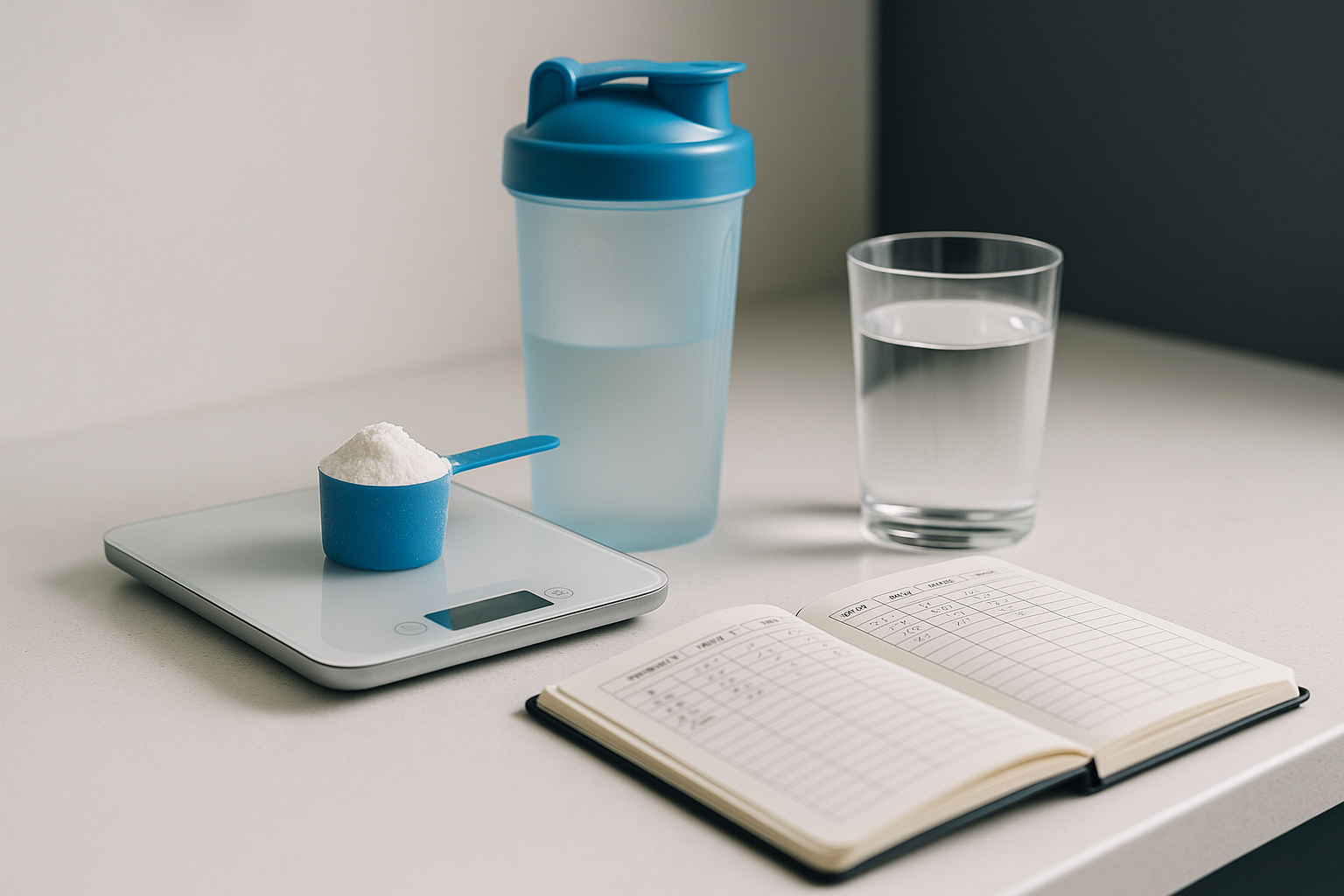
Most people in PEI should take 3-5 g of creatine monohydrate daily after purchase, with an optional loading phase of 20 g daily split into 4 doses for 5-7 days if faster saturation matters. The maintenance dose is what matters most long term; loading is just a shortcut.
Saturation means filling muscle creatine stores to an elevated level. Once your muscles are saturated, day-to-day benefits come from keeping stores topped up. If you skip loading and simply take 3-5 g daily, you will still reach saturation; it just takes longer, often roughly a few weeks instead of one week.
| Body weight / goal | Practical daily dose | Loading option | Best use case |
|---|---|---|---|
| Smaller adult, general fitness | 3 g/day | 20 g/day split into 4 doses for 5-7 days, then 3 g/day | Low-cost, low-fuss daily use |
| Average adult, strength or muscle gain | 5 g/day | 20 g/day split into 4 doses for 5-7 days, then 5 g/day | Most common protocol |
| Larger athlete or heavy training block | 5 g/day, sometimes guided by body size and intake consistency | 20 g/day split into 4 doses for 5-7 days, then 5 g/day | Power, sprint, repeated high-intensity efforts |
| Older adult using creatine with resistance training | 3-5 g/day | Optional, often not necessary | Strength, function, lean mass support |
Week-by-week, here is what to expect:
- Week 1 with loading: possible small scale-weight increase from intracellular water; some people feel better gym endurance quickly.
- Weeks 2-4 without loading, or after loading: training quality improvements become easier to notice.
- Weeks 4-8: strength progression and rep retention often become clearer if training and protein are in place.
- Beyond 8 weeks: the benefit is cumulative through better training, not a sudden “kick.”
If you want a more personalised estimate, use our creatine dosage calculator or read how much creatine per day. If you are deciding whether a faster approach is worth it, see the creatine loading phase guide. The main thing PEI buyers need to know is that an expensive product does not change the core dosing rules. The right dose of basic monohydrate beats the wrong dose of a premium formula every time.
When to take creatine, what to mix it with, and how to use it daily
The best time to take creatine is the time you will remember every day, because consistency matters far more than precise timing. For most PEI buyers, taking 3-5 g once daily with water, a shake, or a meal is the easiest effective routine.
Creatine is not like caffeine. You do not need to feel it “kick in” before a workout for it to work. Once muscle stores are elevated, creatine supports performance regardless of whether you took today's dose in the morning, before training, after training, or on a rest day. If a schedule helps, tie it to something repeatable such as breakfast, your post-workout protein shake, or brushing your teeth after dinner.
Mixing is straightforward:
- Water is fine.
- Protein shakes are fine.
- Juice is fine.
- Coffee is usually fine, though taste and stomach comfort vary.
If your powder feels gritty, use more liquid, stir longer, or choose a micronized product. Taking it with food can reduce stomach upset for sensitive users. You also do not need excessive water, but you should maintain normal good hydration habits, especially if you train hard, sweat heavily, or are using a loading phase.
Useful daily rules:
- Take the full daily dose even on rest days.
- Do not dry-scoop; it adds zero benefit and can irritate the throat.
- If you miss one day, simply resume the next day; do not panic and do not double up unnecessarily.
- Store the tub sealed and dry to prevent clumping from moisture.
If you want a complete daily protocol, read how to take creatine, when to take creatine, and how to mix creatine. Those guides cover the details, but the short version is reassuringly simple: buy a good monohydrate, take it daily, and let time and training do the work. For PEI shoppers, that simplicity matters because it makes reordering and sticking to the plan much easier than hopping between trendy formulas.
Who creatine is for: beginners, women, older adults, and athletes in PEI
Creatine is appropriate for many healthy adults in PEI, including beginners, women, older adults, vegetarians, and athletes, provided they want the benefits relevant to training, muscle function, or repeated high-intensity performance. The form does not need to change dramatically between these groups; the expectations and use case do.
Beginners can absolutely start with creatine. In fact, new lifters often benefit from building simple habits early: train consistently, hit protein targets, sleep well, and take creatine daily. If you are just starting, creatine will not replace fundamentals, but it can support them.
Women can use the same monohydrate and the same core daily dosing range as men. The common fear of “bulking” is misplaced. Early weight changes are usually water drawn into muscle, not fat gain, and many women value creatine for strength, training capacity, and body-composition support. If that is your concern, our guides on creatine for women and does creatine make you gain weight are useful.
Older adults may benefit when creatine is paired with resistance training, especially for maintaining muscle and function. Creatine is not a substitute for training, but it can make a sensible evidence-based addition to a healthy ageing programme.
Athletes in hockey, rugby, football, sprint sports, CrossFit, and other repeated-effort disciplines are classic creatine users. The IOC has recognised creatine as one of the few supplements with a strong performance evidence base in appropriate contexts. Competitive athletes in PEI should place extra weight on product quality assurance and contamination risk management.
Vegetarians and vegans often see solid benefits because dietary creatine intake is lower when meat and fish are absent. Synthetic creatine supplements themselves are generally suitable for plant-based users, but always check the full label for other ingredients if that matters to you.
Who should pause before buying? Anyone with a relevant kidney condition, on medications with potential interaction concerns, pregnant or breastfeeding, or under medical supervision for a health issue should speak with a qualified clinician first. Creatine has a strong safety record in healthy populations, but individual context always matters more than internet generalities.
Safety, side effects, and what Canadian labels actually tell you
Creatine monohydrate is well supported as safe for healthy people when used at recommended doses, but mild side effects and label confusion still trip up buyers. In Canada, reading the package correctly helps you separate a trustworthy product from a merely flashy one.
The strongest short answer on safety is this: healthy adults taking standard doses of creatine monohydrate generally tolerate it well. The ISSN position stand and the 2021 JISSN review both support creatine's favourable safety profile in healthy users, while also noting that myths around kidneys, cramping, and dehydration are often overstated or misunderstood. Mayo Clinic also provides a mainstream summary for general readers: Mayo Clinic — Creatine.
Common side effects are usually manageable:
- Water-weight increase: often seen early, especially with loading, due to water moving into muscle.
- Stomach upset: more likely with large single doses, poor mixing, or taking it on an empty stomach when sensitive.
- Bloating sensation: often improved by splitting doses or switching to a simpler monohydrate powder.
Practical fixes include reducing each serving size, taking it with meals, using micronized powder, and avoiding giant single scoops during loading. If you have ongoing digestive issues, our guides on creatine digestive side effects and creatine bloating go deeper.
For Canadian buyers, understand these label terms:
- NPN: Natural Product Number, a Health Canada licensing identifier for natural health products.
- Serving size: how much powder is in one scoop; verify this in grams.
- Medicinal ingredient: the active ingredient, ideally creatine monohydrate.
- Non-medicinal ingredients: flavours, sweeteners, anti-caking agents, or capsule materials.
An NPN is helpful, but it is not the only quality marker. Competitive athletes should still consider third-party certification and contamination risk. General fitness buyers should still prefer transparent labels and reputable sellers. The smartest PEI shoppers combine Canadian compliance, simple formulas, and sensible dosing. That gives you the best chance of an effective product without unnecessary cost or confusion.
Common creatine buying mistakes and myths PEI shoppers should ignore
The biggest creatine mistake in PEI is paying extra for marketing claims instead of buying a proven monohydrate and using it consistently. Most disappointment comes from poor product choice, inconsistent dosing, or unrealistic expectations—not from creatine failing.
Here are the errors we see most often:
- Buying a proprietary blend: if the label hides the exact grams of creatine, skip it.
- Choosing exotic forms first: HCL, buffered, esterified, and other niche forms usually do not have better real-world evidence than monohydrate.
- Stopping after one week: creatine works through saturation and training accumulation, not instant transformation.
- Only taking it on workout days: daily consistency matters more than workout timing.
- Confusing water weight with fat gain: early weight changes are often intracellular water, not body-fat gain.
- Assuming side effects are inevitable: many people tolerate standard doses perfectly well, and common issues are often fixable.
Now for the myth busting:
Myth: creatine is a steroid.
False. Creatine is a naturally occurring compound involved in cellular energy metabolism, not an anabolic steroid.
Myth: creatine ruins your kidneys in healthy people.
The evidence does not support that claim in healthy users taking recommended doses, though people with kidney disease or specific medical concerns should get medical advice.
Myth: you must cycle creatine.
False for healthy adults. There is no standard requirement to cycle on and off.
Myth: creatine makes everyone bloated.
Not true. Some users notice transient water-related changes, but many do not, and dose/form adjustments often help.
Myth: if you do not feel anything, it is not working.
Also false. Creatine is often noticed in performance logs and training output before it is “felt” subjectively.
For a deeper myth-by-myth breakdown, see creatine myths debunked and creatine myths vs. facts. If your main issue is that results seem underwhelming, creatine not working? explains the usual causes. In PEI, where you may want to avoid trial-and-error shipping costs, getting these basics right before buying saves time and money.
How to get the best value in PEI without sacrificing quality
The best creatine value in Prince Edward Island comes from comparing cost per gram, quality signals, and reorder convenience together, not from chasing the lowest sticker price. A “cheap” tub is not a bargain if it under-doses, uses vague labelling, or costs more per effective serving.
Start with value math. If two products both contain plain monohydrate and similar quality signals, the better buy is usually the one with the lower cost per gram of creatine. Bigger tubs often improve value, but only if you know you will use them consistently and can store them dry.
Then assess quality. Good signs include:
- plain, transparent ingredient list;
- clear grams per serving;
- sealed packaging and lot coding;
- Canadian retailer credibility;
- third-party testing, athlete certification, or strong raw-material sourcing disclosure where relevant.
For many PEI buyers, the sweet spot is a medium or large unflavoured monohydrate ordered from a reputable Canadian seller with reliable shipping to the Island. That gives you enough supply to build a consistent habit without overpaying for convenience formats like capsules or under-dosed gummies. If you want help comparing options, our guides on creatine cost per gram, cheapest creatine in Canada, and best creatine monohydrate in Canada are directly relevant.
Reordering strategy matters too. If you train regularly, do not wait until the tub is almost empty. PEI delivery is generally straightforward, but weather, weekends, and holiday shipping can still create delays. Ordering your next tub when you have roughly two to three weeks left is a simple way to avoid accidental gaps.
The bottom line on buying angle is straightforward: prioritize monohydrate, transparent labelling, Canadian compliance, seller reputation, and cost per gram. If a local Charlottetown shop offers that at a fair price, great. If an online Canadian retailer does it better, that is usually the smarter long-term play for Islanders.
Bottom line: the smartest way to buy creatine in Prince Edward Island
The smartest way to buy creatine in Prince Edward Island is to choose a reputable creatine monohydrate product, verify label clarity and quality signals, and then buy either locally in Charlottetown for speed or online for better value and selection. That is the direct answer for almost every searcher looking for buy creatine in Prince Edward Island, creatine delivery PEI, or supplements PEI creatine.
If you want the simplest possible decision, do this:
- Buy plain creatine monohydrate.
- Take 3-5 g daily.
- Use loading only if you want faster saturation.
- Keep taking it on rest days.
- Judge results over weeks, not days.
Expect the most noticeable benefits in training quality, repeated high-intensity effort, strength progression, and, over time, lean-mass support when paired with resistance training. Expect nuance too: creatine is excellent, but it is not magic. It works best as part of a solid routine that includes progressive training, sufficient protein, hydration, and sleep.
If you are still deciding between products, start with our best creatine rankings and creatine product catalog. If you already bought a tub and want perfect setup, go next to how to take creatine, how much creatine per day, and how long creatine takes to work.
For PEI residents, the good news is that buying creatine is not complicated once you filter out the noise. The best answer is usually the boring one: a basic, proven monohydrate from a trustworthy Canadian source, used consistently enough to let the science do its job.
Buying and Using Creatine in PEI: The Numbers That Matter
- 3-5 g/day Standard maintenance dose — Effective daily range for most healthy adults using creatine monohydrate.
- 20 g/day Typical loading dose — Usually split into 4 doses for 5-7 days to saturate muscle faster.
- 5-7 days Loading timeline — Common duration used to reach elevated muscle creatine stores quickly.
- 4 doses/day How loading is usually split — Dividing the total can improve tolerance compared with one large serving.
Frequently Asked Questions
Where can I buy creatine in Prince Edward Island?
You can buy creatine in Prince Edward Island from local supplement shops, some health-food stores, certain pharmacies, and Canadian online retailers that ship to PEI. For most people, local stores are best for immediate pickup, while online retailers are usually better for price, stock reliability, and wider brand choice.
Can I buy creatine in Charlottetown locally?
Yes, you can often buy creatine in Charlottetown locally from supplement and wellness retailers. The main advantage is same-day access, but selection may be narrower than online, so check that the product is plain creatine monohydrate with clear grams per serving before you buy.
What is the best creatine to buy in PEI?
The best creatine to buy in PEI is usually plain creatine monohydrate powder. It is the most studied form, the most consistently effective form, and typically the best value per dose compared with capsules, blends, or newer forms marketed as superior.
Is creatine delivery to PEI reliable?
Yes, creatine delivery to PEI is generally reliable when you order from established Canadian retailers. The safest approach is to choose sellers with clear shipping timelines, sealed products, lot numbers, and strong customer support in case weather or holiday delays affect delivery.
Do I need an NPN when buying creatine in Canada?
An NPN is not the only thing that matters, but it is a useful Canadian compliance signal when present. NPN stands for Natural Product Number, and it shows the product has been licensed by Health Canada as a natural health product under that framework.
How much creatine should I take after buying it?
Most people should take 3-5 g of creatine monohydrate daily after buying it. If you want faster saturation, you can use a loading phase of 20 g daily split into 4 doses for 5-7 days, then continue with a 3-5 g daily maintenance dose.
Is creatine safe for beginners in PEI gyms?
Yes, creatine is generally safe for healthy beginners when used at recommended doses. Beginners should still choose a reputable product, read the label carefully, and speak with a healthcare professional first if they have kidney disease, relevant medical conditions, or medication concerns.
Should women in Prince Edward Island take creatine?
Yes, women in Prince Edward Island can absolutely take creatine if it fits their goals. Women use the same core evidence-based form and similar daily dosing as men, and creatine does not inherently cause fat gain or unwanted “bulk” when used properly.
Is online creatine cheaper than local PEI stores?
Online creatine is often cheaper than local PEI stores when you compare cost per gram rather than tub price alone. Local stores can still be worth it if you need creatine immediately or want to inspect the packaging and label before purchasing.
How do I know if the creatine I bought is working?
You know creatine is working by tracking training outcomes over several weeks, not by waiting for a stimulant-like feeling. Common signs include better rep retention, improved repeated-effort performance, gradual strength progression, and sometimes a small early increase in body weight from water stored in muscle.