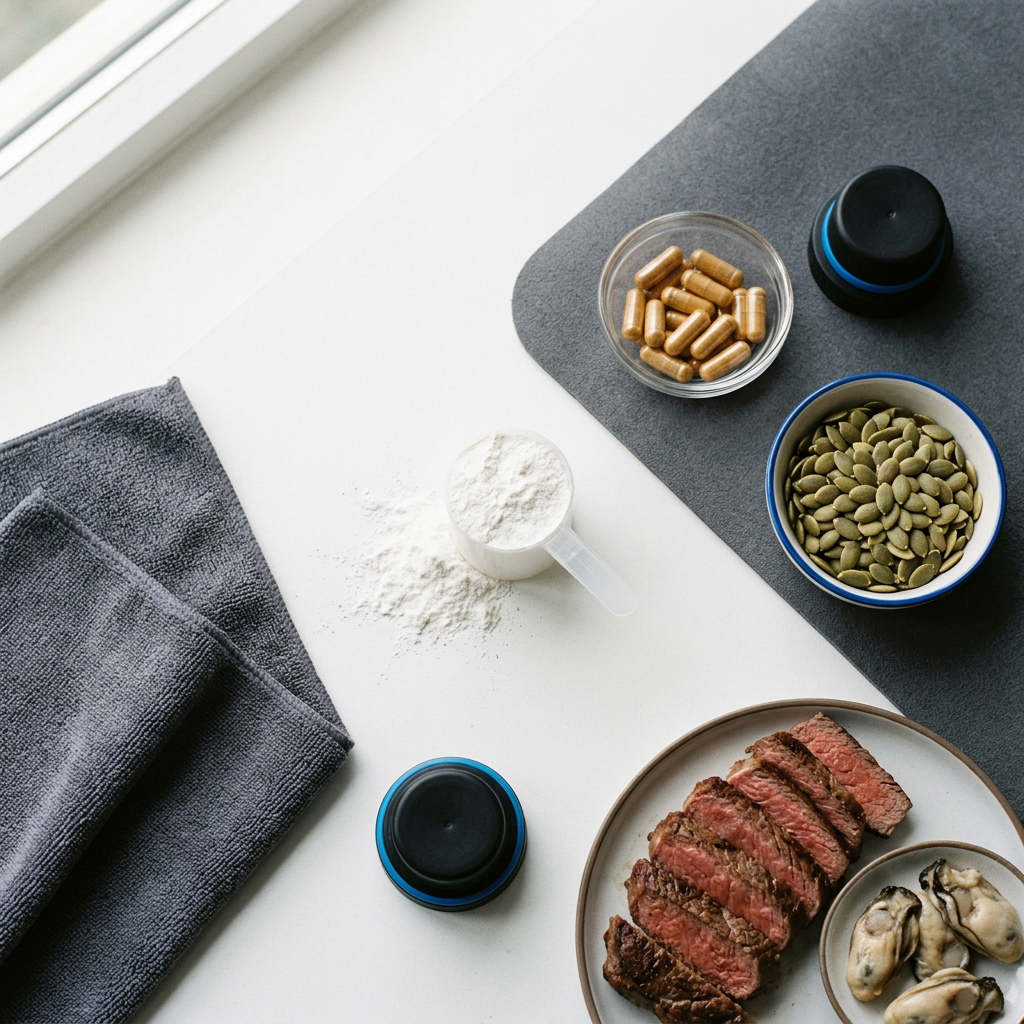
Creatine and Zinc: Performance Pairing or Pointless Combination?
By The Creatine Canada Research Team — Evidence-based supplement analysts
Creatine and zinc can be taken together, but they do different jobs and zinc does not meaningfully “boost” creatine in people who already get enough zinc. Creatine monohydrate is the proven performance supplement for strength, power, and lean mass, while zinc is mainly worth adding if your diet, sweat losses, or bloodwork suggest you may be low.
Evidence-based · Cites 4 sources · Editorial standards
Key Takeaways
- Yes, you can safely take creatine with zinc at the same time for most healthy adults.
- Creatine improves high-intensity performance by increasing muscle phosphocreatine stores; zinc does not replicate that effect.
- Zinc may matter more for athletes who are deficient, dieting hard, plant-based, or losing a lot of zinc through sweat.
- A practical baseline is 3-5 g/day of creatine monohydrate plus zinc only as needed from food or a modest supplement.
- Do not expect a creatine-zinc combination to raise testosterone if your zinc status is already normal.
- The biggest mistake is buying a flashy creatine zinc supplement instead of first fixing dose, consistency, and product quality.
Creatine and zinc: the direct answer most people actually need
Yes, you can take creatine and zinc together, but the combination is only useful when each supplement solves a different problem. Creatine helps by increasing muscle phosphocreatine, the stored form of creatine phosphate that rapidly helps regenerate ATP, your cells’ immediate energy currency during short, hard efforts. Zinc is an essential mineral involved in enzyme function, immunity, protein synthesis, and hormone health, but it is not a proven ergogenic replacement for creatine.
For most gym-goers, the real question is not whether creatine with zinc is safe; it is whether a creatine zinc combination adds anything beyond plain creatine monohydrate. In most cases, the answer is no unless zinc intake is low. The 2017 ISSN position stand concluded that creatine monohydrate is the most effective nutritional supplement currently available for increasing high-intensity exercise capacity and lean body mass during training, which is why creatine should be the foundation if performance is your goal. Zinc simply does not have that level of direct evidence for strength or power enhancement in zinc-replete people. See Kreider et al. (2017), ISSN Position Stand.
A better way to think about a zinc and creatine stack is this:
- Creatine is the performance tool.
- Zinc is a nutrient adequacy tool.
- Together, they make sense if you train hard and also have a realistic reason to suspect zinc insufficiency.
Who might fit that description? People eating low-calorie diets, some vegetarians and vegans, athletes with high sweat losses, people who avoid red meat and shellfish, or anyone with medically confirmed low zinc status. For everyone else, plain creatine is usually the better buy.
If you are brand new, start with 3-5 g/day of creatine monohydrate and do not overcomplicate it. Our creatine dosage calculator can help you dial in a sensible daily amount, and our guide on creatine product catalog can help you compare formats before you pay extra for a combo formula.
Bottom line: creatine and zinc are compatible, but zinc does not meaningfully “activate” creatine, supercharge absorption, or guarantee better results.
How creatine and zinc work in the body, and why they are not interchangeable
Creatine and zinc work through different biological systems, which is why they can complement each other without doing the same job. Creatine primarily supports rapid energy turnover in muscle, while zinc supports hundreds of enzymes and normal cellular function.
Creatine is stored in muscle as free creatine and phosphocreatine. During repeated sprints, heavy sets, jumps, throws, or other maximal efforts lasting only seconds, phosphocreatine donates a phosphate group to help regenerate ATP. More stored phosphocreatine generally means a slightly better ability to repeat high-output efforts, sustain training quality, and accumulate more productive volume over time. That is the mechanism behind creatine’s practical benefits for strength, power, sprint work, and muscle gain.
Zinc, by contrast, is a trace mineral involved in DNA synthesis, cell signalling, antioxidant enzymes, immune function, and normal hormone production. Zinc is necessary for life and athletic recovery, but “necessary” does not automatically mean “performance-enhancing above adequacy.” If you are low in zinc, restoring normal status can improve health and may indirectly improve training quality. If you are already sufficient, taking more zinc usually does not create a new engine for performance.
This distinction matters because many creatine zinc supplement labels imply synergy that is stronger than the evidence. There is no established mainstream finding that zinc substantially increases creatine absorption or muscle saturation in healthy adults compared with taking creatine alone. The stronger, more reproducible driver of creatine results is simply reaching and maintaining full muscle saturation through consistent dosing. For a primer, see what creatine is and what it does and how creatine saturation works.
Zinc may still matter in a practical sense because low zinc can show up as poor appetite, reduced immunity, lower recovery capacity, or low-normal testosterone in deficiency states. But that is a deficiency correction issue, not a special creatine and zinc testosterone effect unique to the stack.
In simple terms:
- Creatine helps you produce hard effort repeatedly.
- Zinc helps your body run normally.
- The stack only shines when both needs are real.
The 2021 JISSN review on common creatine questions also reinforces a key point: many assumptions about creatine interactions and exaggerated claims are not supported once you separate mechanism from marketing. See Antonio et al. (2021).
Does zinc help creatine work better? Here is what the evidence does and does not support
Zinc does not appear to make creatine work better in any reliably proven way if your zinc intake is already adequate. That is the cleanest answer to “does zinc help creatine?”
What the evidence strongly supports is creatine’s standalone effect. According to the 2017 ISSN position stand, creatine monohydrate is the most studied and most effective form of creatine for improving high-intensity exercise capacity and lean mass gains with training. What the evidence does not strongly support is a special performance advantage from adding zinc to creatine in already well-nourished people.
Where zinc might matter is in indirect ways:
- Zinc deficiency can impair normal physiology, so correcting it may improve your baseline readiness to train.
- Zinc supports normal protein synthesis and immune function, which can matter during hard training blocks.
- Zinc is involved in endocrine health, so low zinc status can coincide with poorer hormone function.
But those points should not be overread. A zinc and creatine stack is not a shortcut to bigger lifts if the real issue is that you have not taken creatine daily long enough, your dose is too low, or your training quality is inconsistent.
The claim around creatine and zinc testosterone needs extra caution. Zinc supplementation can help restore testosterone toward normal in people who are zinc deficient, but that is not the same as saying zinc boosts testosterone above normal in zinc-sufficient athletes. Creatine itself is also not a reliable testosterone booster. If your goal is muscle and strength, you will usually get far more return by pairing creatine with progressive resistance training, sufficient protein, and adequate sleep than by chasing a hormone stack.
So when is zinc worth considering alongside creatine?
- If you have a medically identified low zinc intake or deficiency.
- If you follow a plant-based diet and may be getting less highly bioavailable zinc.
- If you are cutting calories hard and food variety is poor.
- If you are an athlete with large sweat losses and a restricted diet.
If none of those apply, plain creatine monohydrate remains the evidence-based play. If you want a deeper look at what creatine does and does not change hormonally, see does creatine increase testosterone? and our creatine myths debunked resource.
Who should consider creatine with zinc, and who probably does not need the combo
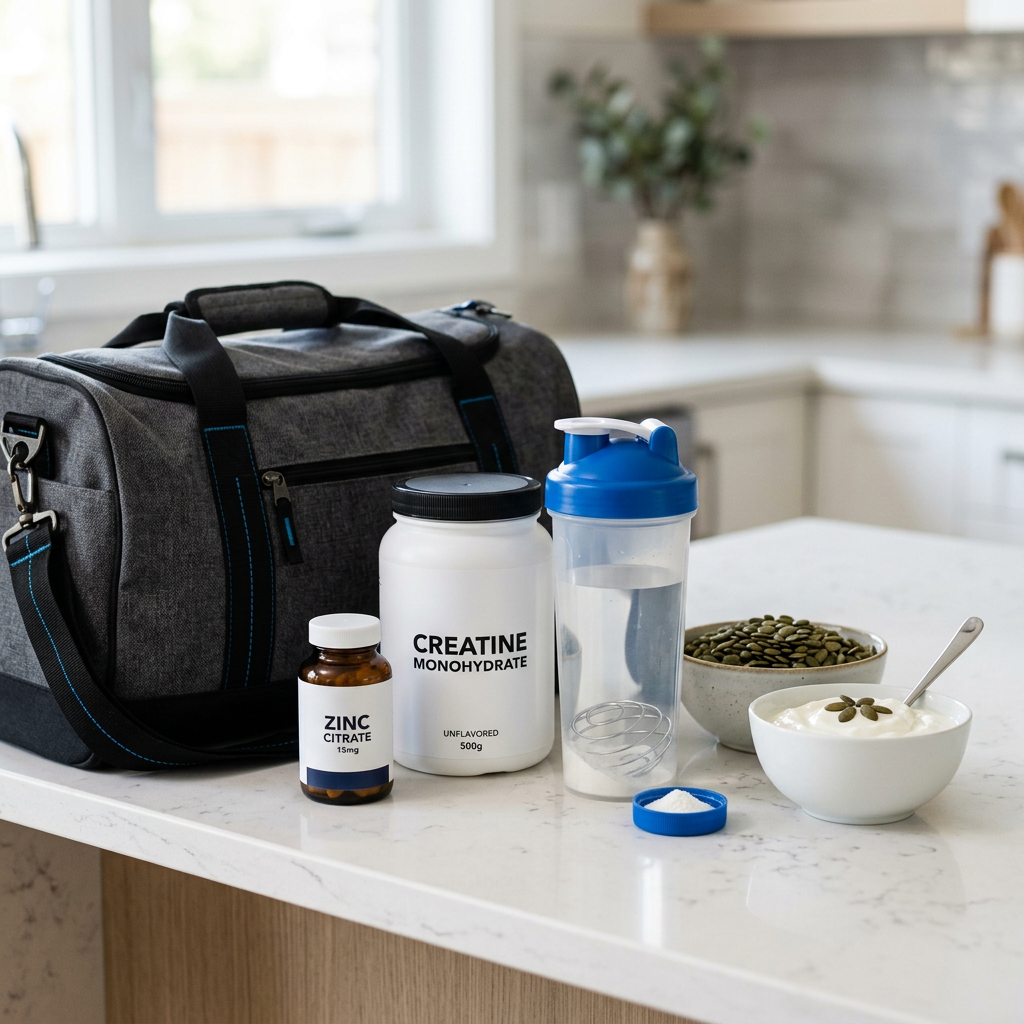
Creatine with zinc makes the most sense for people who would benefit from creatine and also have a credible reason to pay attention to zinc status. Everyone else can usually keep things simpler.
Beginners: New lifters often ask whether a special creatine zinc supplement is a smarter first purchase. Usually it is not. A beginner gets the biggest payoff from a basic routine: creatine monohydrate every day, enough protein, and progressive training. Start there before adding minerals you may not need.
Women: Women can absolutely use creatine and, if needed, zinc. The same creatine rules apply: daily consistency matters more than timing. Zinc can be relevant if dietary intake is low or if a restrictive eating phase is limiting nutrient intake. If this is your lane, our guide to creatine for women adds context on dosing and common myths.
Older adults: Older adults may benefit from creatine because maintaining muscle, strength, and training quality becomes more important with age. Zinc status can also matter because reduced appetite or low food variety sometimes shows up later in life. In this group, the “stack” is less about sports hype and more about supporting good basics.
Athletes in heavy training: Team-sport athletes, combat athletes, and endurance athletes doing a lot of intervals or gym work may benefit from creatine. Zinc becomes more relevant if there is high sweat loss, repeated travel, illness risk, or restricted intake. The IOC consensus on dietary supplements recognises creatine as one of the supplements with useful evidence in specific sporting contexts, but zinc is better viewed as part of overall nutrition status than as a direct ergogenic aid. See International Olympic Committee consensus on dietary supplements.
Vegetarians and vegans: This is one group where the pairing can be more logical. Plant-based athletes often start with lower muscle creatine stores and may respond very well to creatine supplementation, while zinc intake and bioavailability can also require more attention. That still does not mean everyone needs a combined product, but the underlying rationale is stronger.
Who probably does not need the combo:
- People already eating a varied diet rich in zinc-containing foods.
- Anyone assuming zinc will “supercharge” creatine.
- People who have not yet tried plain creatine monohydrate consistently.
If you suspect a deficiency, the best next step is not guessing with mega-doses. It is to review diet, symptoms, and, where appropriate, get professional guidance.
Exact dosing for creatine and zinc by body weight, training goal, and real-world use
The practical creatine dose for most adults is 3-5 g/day of creatine monohydrate, while zinc should be individualized and should not be mega-dosed casually. Creatine dosing is straightforward; zinc dosing is more context-dependent because it is a micronutrient, not a performance powder.
For creatine, mainstream sports-nutrition practice is either:
- Maintenance-only approach: 3-5 g once daily.
- Loading approach: about 20 g/day split into 4 doses for 5-7 days, then 3-5 g/day.
Loading saturates muscle faster, but it is not required. If you prefer less fuss or tend to get stomach upset, just take the maintenance route and wait a few extra weeks. Our daily creatine dose guide and creatine dosage calculator can help you fine-tune based on body size and preferences.
For zinc, a food-first approach is usually best unless you have a reason to supplement. If you do use supplemental zinc, keep the amount sensible and avoid assuming more is better. Long-term excessive zinc can create problems, including interfering with copper balance. This is why creatine is a daily performance supplement, while zinc is a nutrient to correct or cover thoughtfully.
| Goal / Situation | Creatine approach | Zinc approach | Best practical note |
|---|---|---|---|
| General strength and muscle | 3-5 g/day | Only if diet is low or deficiency risk is present | Creatine matters far more than zinc here |
| Need faster saturation | 20 g/day split into 4 doses for 5-7 days, then 3-5 g/day | No special change | Split doses to reduce stomach upset |
| Plant-based athlete | 3-5 g/day, loading optional | Pay closer attention to intake and bioavailability | This is one of the stronger cases for both |
| Hard calorie cut | 3-5 g/day | Consider diet review; supplement only if needed | Restricted diets raise zinc risk more than creatine needs |
| Older adult training for function | 3-5 g/day | Assess overall diet quality first | Consistency beats timing perfection |
Simple body-weight examples for creatine:
- 60 kg person: 3 g/day is often enough.
- 75 kg person: 3-5 g/day works well for most.
- 95 kg person: 5 g/day is a practical default.
If you are buying a combo formula, check whether it actually delivers a full creatine dose. Many underdose creatine to make room for extras.
Best timing, mixing, and daily routine for a creatine-zinc stack

You can take creatine and zinc together at any convenient time, and consistency matters more than exact timing. Creatine works by gradually saturating muscle stores, so it is not a stimulant-like supplement that depends heavily on the clock. Zinc timing is also usually flexible, though some people tolerate it better with food.
Here is a simple step-by-step routine that works for most people:
- Pick your creatine dose: use 3-5 g/day of creatine monohydrate.
- Choose a regular anchor habit: breakfast, post-workout shake, or dinner all work.
- If using zinc, take it with a meal if it bothers your stomach on an empty stomach.
- Drink normally and stay well hydrated, especially if you train hard or sweat heavily.
- Repeat daily, including rest days.
You can mix creatine into water, a protein shake, or another cold or room-temperature drink. If you want more detail on dissolving, taste, and convenience, see how to take creatine and how to mix creatine. If your combo product comes in capsules, the main issue is not absorption; it is whether you are willing to swallow enough capsules to hit a full creatine dose.
Does post-workout timing matter? Maybe a little in theory, but not enough to matter more than daily use. If you train in the morning, take it in the morning. If you always remember at night, take it at night. The best creatine timing strategy is the one you will actually sustain for months.
What should you expect week by week?
- Week 1 with loading: muscle stores rise quickly; some people notice a small body-weight increase from more intracellular water.
- Weeks 2-4 without loading: saturation gradually increases; training sets and repeat efforts may start to feel a bit stronger.
- Weeks 4-8: the effect usually shows up more clearly as better training quality and slightly improved strength progression.
Zinc does not have a comparable “you feel it kick in” timeline unless you were deficient and correcting a real problem. That is another clue that zinc is not the main performance driver here.
If you miss a day of creatine, do not double up dramatically the next day. Just resume your normal dose and move on.
Safety, side effects, and when to be careful with creatine and zinc together
For healthy adults, creatine and zinc can usually be taken together safely, but both still deserve sensible use. Creatine has one of the stronger safety records in sports nutrition when used at recommended doses, while zinc is safe when used appropriately but easier to overdo because it is a mineral.
The 2017 ISSN position stand and the 2021 JISSN review both support the view that creatine monohydrate is generally safe for healthy individuals when used responsibly. Creatine’s most common side effects are practical rather than dangerous: temporary water-weight gain, occasional stomach upset if doses are too large at once, and gritty texture if mixed poorly. If you want a deep dive, see is creatine safe?, creatine digestive side effects, and kidneys and creatinine confusion.
Zinc side effects are more likely to involve nausea or stomach discomfort, especially when taken on an empty stomach or in unnecessarily high doses. The bigger long-term issue is that excessive zinc intake can disrupt copper status. That is exactly why people should stop treating zinc like a harmless extra scoop and instead view it as a nutrient that should fit a real need.
Use more caution if you:
- Have kidney disease or another significant medical condition.
- Take medications or mineral supplements that may interact with zinc timing.
- Are pregnant or breastfeeding and are considering any non-essential supplement routine.
- Plan to use high-dose zinc long term without medical guidance.
For athletes subject to testing, the main risk is not creatine or zinc themselves; it is contaminated products. In Canada, look for products with a valid Natural Product Number, or NPN, which is Health Canada’s licence identifier for many natural health products. Also look for reputable third-party testing when possible, especially in competitive sport. Our creatine brand reviews and best creatine rankings can help you screen for quality signals.
Short version: creatine is usually the lower-risk, more predictable supplement; zinc is safe when justified and dosed sensibly, but not something to take aggressively just because it appears in a stack.
Creatine, zinc, and testosterone: what is real, what is marketing, and what to expect
The claim that creatine and zinc together meaningfully raise testosterone in already healthy, zinc-sufficient adults is not well supported. This is one of the most overhyped reasons people look for a creatine zinc combination.
Zinc is essential for normal reproductive and endocrine function. If someone is genuinely zinc deficient, correcting that deficiency can help restore normal hormone function. That is real and biologically plausible. But restoring normal is different from pushing testosterone higher than normal in someone who already has adequate zinc status.
Creatine is even more misunderstood in this area. Creatine’s muscle and strength benefits come primarily from energy metabolism, training quality, cell hydration, and downstream support for better long-term training adaptations. It is not known as a reliable testosterone booster. If a supplement label or influencer is framing creatine and zinc testosterone as the main reason to buy the stack, that is usually a sign to be sceptical.
What should you expect instead?
- From creatine: slightly better repeated high-intensity performance, more training volume tolerance, and better odds of strength and lean mass gains over time.
- From zinc if deficient: improved nutritional adequacy and possibly better general wellbeing, recovery, or normal hormone function.
- From the stack overall: no magical anabolic surge.
A useful reality check is this: if your squat, sprint, or training log is not improving, the limiting factor is more likely to be programming, total calories, protein, sleep, or plain creatine consistency than a missing zinc add-on.
If your goal is building muscle, the stronger evidence-based sequence is:
- Train hard with progressive overload.
- Hit protein and total calorie targets.
- Take creatine daily long enough to saturate muscle.
- Address micronutrient gaps, including zinc, if they actually exist.
That order reflects evidence strength. For more on realistic creatine outcomes, see does creatine build muscle? and how long creatine takes to work.
Bottom line: the performance case for creatine is strong; the testosterone case for adding zinc is conditional on deficiency, not a universal effect.
7 common mistakes with a zinc and creatine stack, plus the myths to ignore
The biggest mistakes with creatine and zinc are underdosing creatine, overdosing zinc, and expecting the combo to do jobs it cannot do. Most disappointing results come from bad execution, not from some hidden interaction problem.
- Buying a combo product with too little creatine. Many blends sound advanced but hide a weak creatine dose. If the product does not deliver a full effective daily amount, the fancy stack is the problem.
- Assuming zinc increases creatine absorption dramatically. There is no strong mainstream evidence that zinc turns a normal creatine dose into a superior one.
- Using zinc “just in case” at high doses. Zinc is not a harmless flavouring. More is not better.
- Taking huge single doses of creatine. This is a common cause of stomach upset. Split loading doses if you load.
- Judging creatine too early. Without loading, full effects take time as muscle stores rise.
- Confusing water gain with fat gain. Early scale changes with creatine are usually water in muscle, not body fat. See water weight vs. muscle gain explained.
- Ignoring product quality. Cheap, under-tested blends create more problems than plain monohydrate ever does.
Now for the myths:
- Myth: Zinc and creatine together are dangerous.
Reality: For healthy adults, they are usually compatible at sensible doses. - Myth: Zinc makes creatine “kick in” instantly.
Reality: Creatine works by saturation over days to weeks, not by an acute zinc-triggered mechanism. - Myth: This stack is mainly for men chasing testosterone.
Reality: Creatine works well for women too, and zinc is about adequacy, not masculinity. - Myth: You need a proprietary blend for better results.
Reality: Plain creatine monohydrate remains the benchmark for efficacy, cost-effectiveness, and research support.
If you want a fast self-audit, ask yourself three questions:
- Am I taking 3-5 g/day of creatine consistently?
- Do I have any real reason to suspect low zinc intake or status?
- Did I choose a quality product instead of a marketing-driven blend?
If you answer yes only to the first and third, you may not need extra zinc at all. For more myth-busting, visit creatine myths debunked.
How to choose a creatine-zinc supplement in Canada without wasting money
If you are buying creatine and zinc in Canada, the smartest move is usually a quality creatine monohydrate product first, then zinc only if your diet or needs justify it. Combination products are not automatically bad, but they need to clear a higher bar because they often cost more while doing less well.
Start with the creatine checklist:
- Form: creatine monohydrate should be the default choice.
- Dose transparency: look for a label that clearly gives a full daily serving in grams.
- Minimal extras: fewer gimmicks usually means better value.
- Quality markers: reputable manufacturing, third-party testing where possible, and a valid NPN where applicable in Canada.
Then evaluate the zinc side:
- Is the zinc amount clearly listed?
- Is the formula trying to sell “testosterone support” more than actual evidence?
- Would separate products be cheaper and easier to dose properly?
In many cases, separate products are better because you can keep creatine constant at 3-5 g/day and only use zinc when appropriate. Combo products can also create awkward dosing: if the creatine amount is right, the zinc may be too much for your needs, or vice versa.
| Option | Best for | Pros | Cons |
|---|---|---|---|
| Plain creatine monohydrate | Almost everyone | Best evidence, lowest cost, easiest dosing | No zinc included if you need it |
| Separate creatine + zinc | People with specific zinc needs | Flexible dosing, easier to personalize | Two products instead of one |
| Combined creatine-zinc formula | People who value convenience and find a well-dosed product | Simple routine, fewer containers | Often more expensive or underdosed |
Canadian shoppers should be especially alert to legitimacy, since imported marketplace listings can vary widely in quality control. If you want help comparing options, browse our best creatine rankings, creatine brand reviews, and creatine product catalog. If a label is vague, proprietary, or built around testosterone hype, keep scrolling.
Buying rule of thumb: never sacrifice proper creatine dosing for a trendy zinc add-on.
Bottom line: is the creatine and zinc pairing worth it?
Creatine and zinc are a reasonable pairing, but for most people it is a practical combination rather than a powerful synergy. If your goal is better gym performance, more productive training, and improved strength or lean mass over time, creatine monohydrate does the heavy lifting. Zinc is worth adding only when your diet, training context, or lab-confirmed status suggests you may need it.
That means the smartest default approach is simple:
- Take 3-5 g/day of creatine monohydrate.
- Use a loading phase only if you want faster saturation.
- Keep taking it on rest days.
- Add zinc only if there is a good nutritional reason.
- Choose transparent, well-dosed products over proprietary stacks.
If you are searching for a creatine zinc supplement because you hope zinc will amplify creatine’s muscle-building effect, lower your expectations. The evidence does not show a meaningful boost for already zinc-adequate people. If you are searching because you are plant-based, dieting hard, training heavily, or worried your nutrition is falling short, then the stack can make sense, but mostly because you are covering two separate needs.
In other words, creatine with zinc is not pointless, but it is often oversold. Creatine has robust evidence for performance and training adaptation. Zinc has a clear role in human nutrition and can matter when intake is insufficient. Put those together and you get a sensible stack for the right person, not a universal upgrade for everyone.
If you want to build the rest of your routine well, the next best reads are when to take creatine, how to take creatine, creatine for beginners, and creatine safety.
Final verdict: take creatine daily; take zinc intentionally; do not confuse a useful nutrient with a proven performance multiplier.
Creatine and Zinc: The Numbers That Actually Matter
- 3-5 g/day Standard creatine maintenance dose — Effective for most adults once taken consistently.
- 20 g/day Typical loading dose — Usually split into 4 doses for 5-7 days, then reduced to maintenance.
- 5-7 days Time for a standard loading phase — This speeds muscle saturation compared with maintenance-only dosing.
- Weeks, not hours How long results realistically take — Creatine works through saturation; zinc has no proven acute “booster” effect on creatine.
Frequently Asked Questions
Can you take creatine and zinc together?
Yes, most healthy adults can take creatine and zinc together safely at sensible doses. Creatine supports high-intensity performance by increasing muscle phosphocreatine stores, while zinc supports normal nutrition and enzyme function, so they do not conflict. The main caution is avoiding unnecessary high-dose zinc and choosing a product that still delivers a full effective creatine dose.
Does zinc help creatine absorb better?
No, there is no strong mainstream evidence that zinc meaningfully improves creatine absorption in healthy adults who already get enough zinc. The main determinant of creatine results is reaching muscle saturation through consistent daily use, not adding zinc. If zinc helps at all, it is more likely by correcting a deficiency than by changing creatine transport in a major practical way.
Is a creatine zinc supplement better than plain creatine monohydrate?
Usually no, plain creatine monohydrate is still the better default choice for performance and value. A creatine zinc supplement only makes more sense if you also have a good reason to supplement zinc, such as low intake, a restrictive diet, or medically identified deficiency risk. Many combo products cost more while underdelivering on creatine dose.
Does creatine and zinc increase testosterone?
Not reliably in people who already have normal zinc status and normal hormone function. Zinc can help restore normal testosterone if someone is deficient, but that is deficiency correction, not a universal hormone boost. Creatine’s main benefits are performance and training quality, not testosterone elevation.
When should I take creatine with zinc?
Take creatine with zinc whenever you are most likely to be consistent, because timing matters less than daily adherence. Creatine can be taken before or after training, or with any regular meal. Zinc is often best taken with food if it causes stomach discomfort on an empty stomach.
Who benefits most from a zinc and creatine stack?
People who benefit most are those who already have a clear reason to use creatine and also may be at risk of low zinc intake. That can include plant-based athletes, heavy sweaters with restricted diets, people in hard calorie deficits, and some older adults with lower food variety. For well-fed lifters with no zinc issue, plain creatine is often enough.
Can women take creatine with zinc?
Yes, women can take creatine with zinc using the same evidence-based logic as men. Creatine supports strength, training performance, and lean mass regardless of sex, and zinc is only worth adding if intake is low or needs are higher. The idea that this stack is mainly a male testosterone product is marketing, not physiology.
What dose of creatine and zinc should I use?
For creatine, the practical evidence-based dose is 3-5 g/day of creatine monohydrate, with an optional loading phase of about 20 g/day split into 4 doses for 5-7 days. Zinc is more individual and should not be mega-dosed casually. Use food first when possible, and supplement zinc thoughtfully rather than assuming everyone needs extra.
Are there side effects from taking creatine with zinc?
Yes, side effects are possible, but they are usually manageable and dose-related. Creatine can cause temporary water-weight gain or stomach upset if taken in very large single doses, while zinc can cause nausea or digestive discomfort, especially on an empty stomach. The larger concern is long-term excessive zinc intake, not the combination itself.
Should athletes in Canada look for anything special when buying creatine and zinc?
Yes, Canadian athletes should prioritize transparent labels, a valid NPN where applicable, and third-party testing when possible. The biggest real-world risk is not the creatine-zinc pairing itself but poor product quality or contamination. For tested athletes, brand reputation and independent verification matter more than trendy stack marketing.