Creatine and Fertility: Safety, Evidence, and What to Know Before Conceiving
By The Creatine Canada Research Team — Evidence-based supplement analysts
Creatine does not appear to reduce fertility in men or women, but it also has not been studied well enough around conception to call it clearly proven safe for everyone trying to get pregnant. If you are healthy and using standard doses, the main evidence suggests creatine is unlikely to harm reproductive function, yet anyone actively trying to conceive should weigh the limited fertility-specific data with their clinician.
Evidence-based · Cites 4 sources · Editorial standards
Key Takeaways
- Current evidence does not show that creatine harms male or female fertility at standard doses.
- Male fertility data are limited but generally reassuring; creatine has not been shown to worsen testosterone, sperm quality, or sperm count in healthy men.
- Female fertility data are sparse; there is no strong evidence that creatine impairs ovulation or conception, but direct human trials are lacking.
- If you are trying to conceive, the cautious evidence-based approach is to avoid unnecessary high doses and stick to 3 to 5 g/day if you and your clinician decide to use it.
- Creatine monohydrate is the best-studied form and the one most experts would choose if supplementation is appropriate.
- Stop assuming 'natural' means automatically safe in preconception; the issue is not known toxicity, but limited direct fertility research.
- In Canada, choose products with an NPN and preferably third-party testing for identity and purity.
The direct answer: creatine and fertility is mostly reassuring, but not fully settled
Creatine does not currently appear to harm fertility, but the evidence is much stronger for general safety and exercise performance than it is for conception-specific outcomes. That is the most accurate short answer to the question "creatine and fertility".
Creatine is a compound your body makes from amino acids and stores largely in muscle as phosphocreatine, a rapid energy reserve that helps regenerate ATP, the cell's immediate energy currency. Because creatine is naturally present in the body and in foods like meat and fish, people often assume it must be harmless in every life stage. That conclusion goes too far. A better reading of the evidence is that creatine is one of the best-studied sports supplements overall, yet research directly measuring time-to-pregnancy, ovulation, implantation, miscarriage risk, sperm DNA integrity, or live birth outcomes in supplement users is still limited.
The broad safety record is reassuring. The 2017 ISSN position stand concluded that creatine monohydrate is effective and generally safe for healthy individuals when used appropriately. The 2021 JISSN review on common creatine questions and misconceptions similarly argued that many long-standing fears about kidney damage, dehydration, cramps, and other side effects are overstated or unsupported in healthy users. What those papers do not prove is fertility-specific safety in people actively trying to conceive.
For practical decision-making, split the question into two parts:
- Does creatine seem likely to damage fertility? Current evidence says probably not.
- Has creatine been proven safe specifically during the preconception period? No, not to the same standard as its use for sport performance.
If you are a healthy recreational lifter, runner, or team-sport athlete trying to conceive, the decision usually comes down to how valuable creatine is to your training versus your comfort with uncertainty. If improving training quality matters to you, review the basics in what creatine is and what it does and pair that with a clinician discussion if conception is an active goal. If you already take creatine and are anxious about whether to continue, the evidence gives more reason for calm than panic, but not enough reason for blanket reassurance in every case.
How creatine could affect reproductive health in theory: energy metabolism, not a hormone shortcut
Creatine works through cellular energy metabolism, not by directly raising sex hormones, and that matters when evaluating fertility concerns. Many people worry that a muscle supplement must somehow disrupt testosterone, estrogen, or reproductive signalling. Creatine is not an anabolic steroid, and its primary known mechanism is different.
Phosphocreatine acts like a rapid energy buffer. In tissues with high or fluctuating energy needs, creatine helps recycle ATP so cells can keep doing work. That is why it improves repeated high-intensity exercise. The same energy system exists beyond muscle, including in the brain and reproductive tissues. In theory, that means creatine could be either neutral or supportive in energy-demanding reproductive processes rather than disruptive.
For men, sperm cells are highly energy-dependent. Sperm motility, which is the ability of sperm to swim effectively, relies on continuous energy turnover. Creatine kinase, the enzyme system tied to phosphocreatine, is present in sperm and reproductive tissues. That mechanistic fact is one reason the idea of creatine and sperm quality keeps coming up. Mechanism alone is not proof of benefit, but it does not point toward obvious harm.
For women, reproductive physiology is also energy-intensive. Follicle development, ovulation, implantation, and early embryonic development all require tightly regulated cellular energy. Again, that does not prove creatine improves female fertility, but it helps explain why creatine is not automatically a red flag. The main concern is not a known toxic mechanism; the concern is a lack of direct trials in women trying to conceive.
Hormone concerns are often overblown. The available literature does not support the idea that standard creatine supplementation reliably increases testosterone into some abnormal range or suppresses female reproductive hormones. If this myth is part of your worry, it helps to separate internet speculation from evidence and to review creatine myths debunked or our guide on creatine and testosterone.
The bottom line on mechanism is simple: creatine is best understood as an energy substrate helper, not an endocrine disruptor. That makes fertility harm biologically less plausible than many people assume, but fertility decisions should still be guided by direct human evidence where available, and that evidence remains incomplete.
Creatine, male fertility, and sperm quality: what the evidence actually suggests
There is no strong evidence that creatine reduces male fertility, and the biology gives at least a plausible reason it could be neutral or even supportive for sperm function, but human outcome data remain limited. That is the most honest answer for searches like creatine male fertility and creatine sperm quality.
When men ask whether creatine lowers sperm count, hurts motility, or damages testosterone, the current evidence does not support a clear negative effect at standard doses. The general creatine safety literature, including the ISSN position stand and later reviews, has not identified male reproductive toxicity as an established issue in healthy users. That is important because if creatine were consistently impairing male fertility, it likely would have surfaced more clearly by now given how widely the supplement is used by athletic men.
That said, absence of strong evidence of harm is not the same as proof of benefit. Fertility clinics measure things like:
- sperm concentration
- total sperm count
- motility
- morphology
- semen volume
- sperm DNA fragmentation
Creatine has not been tested across all of those markers in large, definitive trials of men trying to conceive. So if someone claims that creatine definitely boosts sperm quality, that claim is ahead of the evidence. Mechanistically, sperm cells need energy for movement, and creatine-related energy systems are involved in that process, but real-world fertility outcomes are still under-studied.
For practical use, a healthy man trying to conceive can usually frame the decision like this:
- If you already tolerate creatine well, there is no good evidence-based reason to assume it is hurting your fertility.
- If you have known male-factor infertility, do not self-prescribe creatine as a fertility treatment.
- If you are undergoing semen testing, mention all supplements to your clinician, including creatine.
- If you want to minimize variables for 2 to 3 months before testing, some couples choose to hold non-essential supplements simply for clarity, not because creatine is proven harmful.
Remember that sperm development takes roughly 2 to 3 months, so any meaningful change in semen parameters usually would not be judged after just a few days. If male fertility is a central concern, lifestyle factors such as sleep, body composition, alcohol intake, heat exposure, smoking, and overall diet are much more established levers than creatine.
Creatine fertility in women: limited data, no clear warning signal, and more uncertainty than men
There is no strong evidence that creatine impairs female fertility, but direct research in women trying to conceive is sparse, so the uncertainty is real. For the query creatine fertility women, that nuance matters more than confident internet hot takes.
Most female creatine research has focused on exercise performance, lean mass, recovery, ageing, and sometimes cognition, not on conception outcomes. That means we can say a fair bit about general creatine safety in healthy women, but much less about whether supplementation changes ovulation quality, menstrual regularity, implantation, or time to pregnancy. Importantly, there is also no established mechanism showing that creatine disrupts ovarian function.
Women often worry about three things that are separate from fertility itself:
- Water retention: Creatine can increase intracellular water, meaning water inside muscle cells, which is not the same thing as hormonal bloating or infertility.
- Weight gain: Early scale increases are usually water-related, not fat gain.
- Hormones: Standard creatine use has not been shown to meaningfully disrupt female sex hormones in a way known to reduce fertility.
If you are trying to conceive, the main question is whether the performance or training benefit is worth using a supplement that lacks robust preconception-specific research. For some women, especially serious athletes or vegetarians who may respond well to creatine, the answer may still be yes after discussing it with a clinician. For others, especially if conception is the top priority and training goals are secondary, pausing a non-essential supplement until pregnancy status is clear may feel simpler.
Special cases deserve more caution. If you have PCOS, irregular cycles, recurrent pregnancy loss, infertility treatment underway, kidney disease, or you are taking multiple supplements and medications, you should not rely on generic internet advice. Bring the exact product and dose to your physician, fertility clinic, or pharmacist.
For broader context, women considering creatine for strength and training can also read our guide to creatine for women. But if your immediate question is "is creatine safe when trying to get pregnant?", the evidence-based answer is: probably not harmful, but not proven enough to dismiss the question entirely.
Is creatine safe when trying to get pregnant? A practical risk-benefit framework
Creatine is probably low-risk for many healthy adults trying to conceive, but because direct preconception studies are limited, the safest evidence-based recommendation is individualized rather than universal. That is the clearest answer to is creatine safe when trying to get pregnant.
Risk-benefit decisions work better when you stop treating every supplement question as all-or-nothing. Consider four filters:
- How necessary is creatine for your current goal? If you are a power athlete, hard-training lifter, or vegetarian relying on it for training quality, the benefit may be meaningful.
- How active is your conception timeline? If you are casually planning for the future, your decision may differ from someone in an active fertility treatment cycle this month.
- How medically simple is your situation? A healthy person with no fertility diagnosis is different from someone with PCOS, endometriosis, male-factor infertility, or recurrent pregnancy loss.
- Can your clinician review your full supplement stack? The total stack matters more than creatine alone.
Here is a sensible middle-ground approach:
- If you are healthy, use only creatine monohydrate, and want to continue while trying to conceive, keep the dose conservative and standard.
- If you are taking multi-ingredient pre-workouts, stimulant blends, fat burners, or poorly labelled products, those deserve more concern than plain creatine monohydrate.
- If you are in active fertility care, ask before continuing. Clinics may prefer minimizing non-essential supplements simply because data are limited.
This is also where product quality matters. In Canada, look for a Natural Product Number, or NPN, which means the product has been licensed under Health Canada's natural health product framework. An NPN is not a guarantee of perfect quality, but it is a useful legitimacy check. Third-party testing for identity, purity, and contaminants adds another layer of confidence. If you need buying help, see best creatine rankings, creatine brand reviews, or our creatine product catalog.
The decision point is straightforward: if creatine is important to your training and your clinician has no specific concern, continuing a standard monohydrate dose is a reasonable option. If you want the most conservative route because conception is your top priority, pausing temporarily is also a rational choice. The evidence supports calm, not certainty.
Best dosing, timing, and form if you decide to use creatine before conception
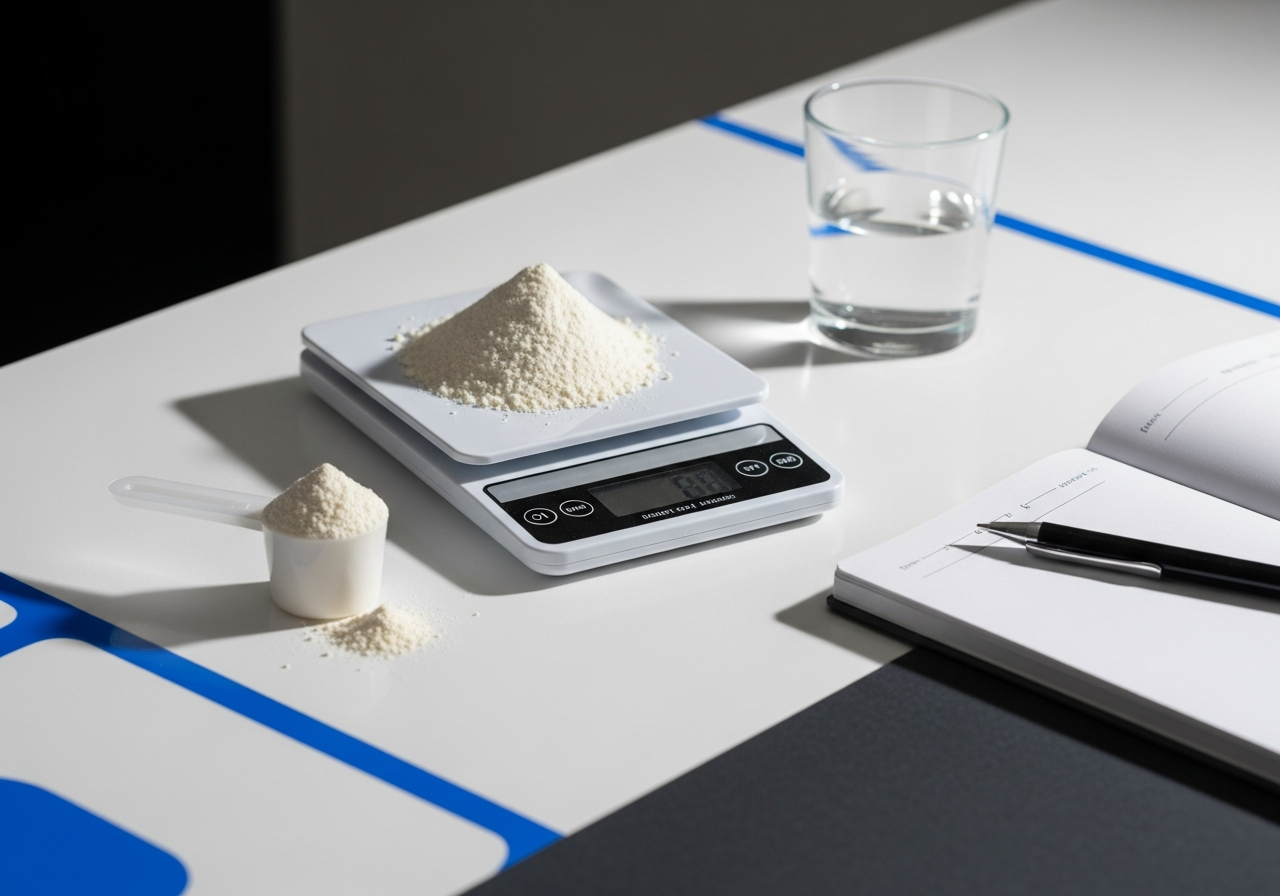
If you and your clinician decide to use creatine while trying to conceive, creatine monohydrate at 3 to 5 g/day is the standard evidence-based choice. You do not need a fancy form, and you usually do not need an aggressive loading phase.
The main goal of creatine supplementation is muscle creatine saturation, which means filling tissue stores over time so more phosphocreatine is available when needed. Saturation can happen quickly with loading or gradually with daily maintenance dosing.
| Goal | Suggested approach | What to expect |
|---|---|---|
| Most people trying to conceive who still want creatine | 3 to 5 g creatine monohydrate once daily | Fuller muscle stores over roughly 3 to 4 weeks without loading |
| Large athlete who already uses creatine and wants faster saturation | About 20 g/day split into 4 doses for 5 to 7 days, then 3 to 5 g/day | Faster saturation, but more chance of stomach upset or transient water-weight gain |
| Very cautious user minimizing side effects | 3 g/day with food | Slower saturation, usually easier on digestion |
Body weight can guide dose selection, although simple fixed dosing works well for most adults:
- Under 60 kg: 3 g/day is often sufficient.
- 60 to 90 kg: 3 to 5 g/day suits most people.
- Over 90 kg or very muscular: 5 g/day is a practical maintenance target.
Timing matters less than consistency. The research consensus is that daily adherence matters far more than whether you take creatine pre-workout, post-workout, or with breakfast. If it helps you remember, take it with a habitual meal or shake. For more detail, see when to take creatine and how to take creatine.
What to avoid:
- mega-dosing beyond standard protocols
- multi-ingredient blends with stimulants or proprietary doses
- switching to expensive forms marketed as gentler or more 'advanced' without evidence
If you are unsure of the right amount, use our creatine dosage calculator or read how much creatine per day. Around conception, the smartest plan is boring: plain monohydrate, standard dose, consistent use, and no supplement theatrics.
What to expect week by week, and how to tell if creatine is working without overthinking fertility
If creatine is going to help you, you will usually notice training-related effects within days to weeks, not dramatic changes in fertility signs. Creatine is not a conception supplement, so the most realistic markers are exercise performance, recovery, and body-water changes.
Here is a practical timeline for standard daily monohydrate use:
- Days 1 to 7 without loading: Usually no dramatic feeling yet; some people notice slightly better training output or mild water-weight change.
- Week 2: Repeated sprint work, top-end sets, or final reps may feel a bit stronger or more repeatable.
- Weeks 3 to 4: Muscle creatine stores are more likely approaching saturation if you take 3 to 5 g/day consistently.
- After 4 weeks: Benefits are usually easier to judge through training logs, not vibes.
The most reliable signs it is working are practical:
- you maintain power better across repeated efforts
- you get an extra rep at a given load
- your sprint or interval quality holds up longer
- you recover between sets a bit better
Common troubleshooting points:
- Stomach upset? Split the dose, take it with food, or use 3 g/day rather than loading. See creatine digestive side effects.
- Scale jumped up? Early weight gain is commonly water in muscle, not fat. See does creatine make you gain weight.
- Not noticing anything? Give it at least 3 to 4 weeks without missing doses, especially if you skipped loading.
- Concerned about hydration? Keep normal fluid habits and review how much water to drink with creatine.
If your main worry is fertility, do not try to infer anything from changes in libido, body weight, or gym pumps. Those are poor proxies for reproductive health. If you are actively trying to conceive, track the things that matter: cycle regularity, ovulation timing if relevant, semen analysis if indicated, and advice from your fertility clinician. Creatine can be evaluated like any other non-essential supplement: useful for training, probably neutral for fertility, but not a substitute for proper reproductive care.
Side effects, safety, and when trying-to-conceive athletes should pause or stop
For healthy adults, creatine's most common side effects are mild digestive upset and temporary water-weight gain, not reproductive problems. The main fertility-related caution is uncertainty, not a known toxic effect.
The broad safety literature is reassuring. The ISSN and subsequent reviews have repeatedly concluded that creatine monohydrate is one of the most studied and generally safe sports supplements in healthy people. The Mayo Clinic summary also notes that creatine appears safe for many people when used appropriately, while still encouraging medical guidance in people with underlying conditions.
Common side effects include:
- stomach discomfort, especially with large single doses
- looser stools when loading too aggressively
- small early increases in body mass from water retention
Who should be more cautious before or during conception planning?
- people with kidney disease or unexplained abnormal kidney labs
- people with complex fertility diagnoses under specialist care
- those using many supplements, stimulants, or herbal products at once
- anyone who becomes pregnant and needs a fresh risk-benefit review
When to pause or stop creatine and get advice:
- you develop persistent gastrointestinal symptoms
- you have a new medical issue affecting kidneys, blood pressure, or fluid balance
- you are advised by your fertility clinic to simplify supplements during evaluation or treatment
- you receive a positive pregnancy test and want individualized guidance on whether to continue
One recurring confusion involves creatinine, a breakdown product measured on blood tests. Creatine supplementation can modestly affect creatinine lab interpretation without meaning kidney damage, which is why context matters. If you are getting preconception labs, tell your clinician you use creatine and read creatine vs. creatinine.
The practical takeaway is simple: plain creatine monohydrate is usually low-risk for healthy adults, but active conception planning is a reasonable time to be more deliberate about any supplement. That does not mean fear; it means cleaner labels, standard doses, and better communication with your healthcare team.
Myths about creatine and fertility that deserve to be retired
Most fertility fears about creatine come from confusion with steroids, hormone boosters, or poor-quality supplement blends rather than from evidence on creatine itself. If you understand that distinction, most of the internet noise becomes easier to dismiss.
Myth 1: Creatine lowers sperm count.
There is no established evidence that standard creatine supplementation lowers sperm count in healthy men. Male fertility data are limited, but a clear harmful signal has not emerged.
Myth 2: Creatine messes up female hormones and ovulation.
There is no strong evidence that creatine monohydrate disrupts ovulation or female reproductive hormones in healthy women. The limitation is sparse direct research, not proven endocrine harm.
Myth 3: Creatine is basically a steroid.
Creatine is not a steroid and does not work like one. It helps regenerate ATP through phosphocreatine; it does not act as an anabolic hormone.
Myth 4: Water retention means fertility problems.
Creatine mainly increases intracellular water in muscle. That can nudge the scale up, but it is not evidence of hormonal imbalance or reproductive dysfunction.
Myth 5: If there is no proof of harm, it is proven safe while trying to conceive.
This is the opposite error. Lack of evidence of harm is reassuring, but it is not the same as robust fertility-specific safety proof.
Myth 6: Special creatine forms are safer for fertility than monohydrate.
There is no good evidence that HCl, buffered creatine, gummies, or proprietary blends are better choices for conception planning than plain monohydrate. In fact, monohydrate is usually the safest bet because it has the deepest evidence base.
To avoid being misled, keep two questions in mind whenever you read a claim: Was the product actually plain creatine monohydrate, and was fertility directly measured? If the answer to either is no, be cautious with conclusions. For a broader reality check, see creatine myths vs. facts and our full creatine safety guide.
How to buy creatine in Canada when purity matters more than marketing
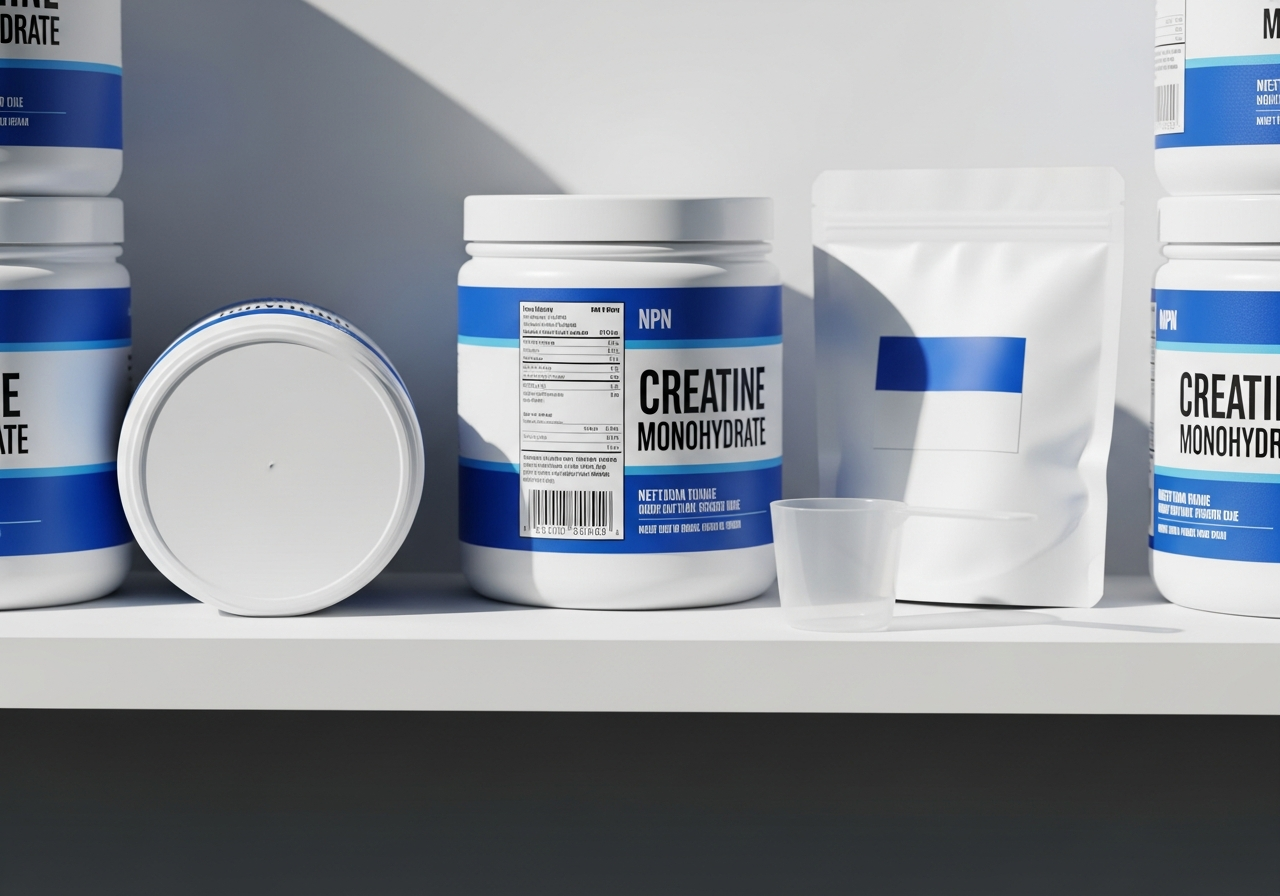
If fertility is on your mind, the best creatine product is the simplest, cleanest, and most transparent one you can find in Canada. That usually means unflavoured creatine monohydrate with a Natural Product Number and ideally third-party testing.
Why buying standards matter: concerns around fertility are more likely to involve contamination, undisclosed ingredients, or unnecessary add-ons than the creatine molecule itself. A plain single-ingredient product reduces those risks.
| What to look for | Why it matters | Best practical choice |
|---|---|---|
| Form | Monohydrate has the strongest evidence base | Plain creatine monohydrate powder |
| NPN | Shows the product is licensed under Health Canada's natural health product system | Choose products with a visible NPN on label |
| Third-party testing | Improves confidence in identity and purity | Look for brand transparency on testing |
| Ingredient list | Fewer ingredients means fewer variables | Ideally only creatine monohydrate |
| Serving transparency | Reduces dosing confusion | Label should clearly state grams per serving |
What to avoid if you are trying to conceive:
- pre-workouts with proprietary blends
- fat burners or stimulant-heavy stacks
- products making hormone or fertility claims without evidence
- imported products with unclear labelling or no regulatory transparency
If you need help choosing, compare options in best creatine monohydrate in Canada, check where to buy creatine in Canada, or browse the product catalog. If you are new to labels, our guide to whether creatine is approved in Canada explains NPNs in plain English.
The key buying rule for fertility-conscious users is simple: do not let 'women's blend', 'fertility support', or 'advanced absorption' branding distract you from what actually matters. The safest evidence-based purchase is usually the least exciting tub on the shelf.
Who might reasonably keep using creatine before conception, and who should probably skip it
Some people trying to conceive can reasonably continue creatine, while others should pause simply because the benefit is modest and the data gap is annoying. The right call depends on your goals, health status, and appetite for uncertainty.
People who may reasonably continue with clinician agreement:
- healthy strength trainees and team-sport athletes using plain monohydrate at standard doses
- vegetarians or vegans who often have lower dietary creatine intake
- older adults training for strength and function who value performance and recovery support
People who may prefer pausing until pregnancy status is clear:
- casual gym-goers who are not getting much meaningful benefit from it
- anyone using multiple supplements and wanting to simplify variables
- people in active fertility treatment cycles who want the most conservative plan
People who should get direct medical clearance first:
- those with kidney disease, unusual renal labs, or complex medical histories
- men with known severe male-factor infertility undergoing workup
- women with infertility diagnoses, recurrent loss, or significant menstrual irregularity
Beginners often overestimate how essential creatine is. It is helpful, but it is not foundational in the way sleep, protein intake, calories, training quality, or body composition are. If stopping it for a month or two would greatly reduce your anxiety while trying to conceive, that is a reasonable trade-off. If stopping it would noticeably hurt your training and you are otherwise healthy, continuing standard monohydrate may also be reasonable.
Two context points matter. First, lifestyle basics drive fertility more strongly than creatine does. Second, fertility-specific evidence is weaker than general safety evidence, so your decision should reflect your tolerance for imperfect data. If you are new to the supplement, start with creatine for beginners and who should not take creatine before deciding.
Bottom line: what to do today if you are worried about creatine and fertility
Creatine is not known to harm fertility, but it is not backed by enough direct conception-specific research to deserve a blanket "absolutely safe" label for everyone trying to get pregnant. That is the fairest final answer.
If you want a practical next step, use this checklist:
- Identify your goal. Are you taking creatine for meaningful training performance, or just because everyone else does?
- Simplify the product. If you use creatine, choose plain monohydrate only.
- Keep the dose standard. Stick to 3 to 5 g/day unless you have a specific reason to load.
- Review your full supplement stack. The more extra ingredients, the less clear the risk picture.
- Tell your clinician. This is especially important if you are in fertility care or getting lab work.
- Reassess once pregnant. Preconception and pregnancy are different questions.
What the evidence supports most strongly is reassurance against exaggerated fear. Creatine is not a steroid. It is not a proven fertility toxin. It does not have a known mechanism that clearly disrupts conception. But the evidence also does not justify pretending the topic is fully settled, especially for women actively trying to conceive or couples already dealing with infertility.
If you want the most conservative route, pause it until pregnancy status is clear. If you want the most performance-friendly evidence-based route, continue plain creatine monohydrate at a standard dose after discussing it with your clinician. Either way, focus first on the big rocks that matter more for fertility and performance alike: sleep, nutrition, training quality, body composition, alcohol moderation, and medical follow-up when needed.
For adjacent questions, you may also want to read can you take creatine while pregnant, can you take creatine while breastfeeding, and is creatine safe.
Creatine and Fertility: The numbers that matter
- 3-5 g/day standard daily maintenance dose — The usual evidence-based daily amount for creatine monohydrate.
- 20 g/day common loading protocol — Typically split into 4 doses for 5 to 7 days, then reduced to maintenance.
- 3-4 weeks time to near-saturation without loading — Daily maintenance dosing fills muscle stores gradually.
- 2-3 months rough sperm development window — Useful context when judging changes in semen parameters.
Frequently Asked Questions
Does creatine affect fertility?
Current evidence does not show that creatine harms fertility in healthy men or women at standard doses. The main limitation is that fertility-specific research is limited, so the answer is reassuring but not absolute.
Is creatine safe when trying to get pregnant?
Creatine is probably low-risk for many healthy adults trying to conceive, but it has not been studied enough in the preconception period to say it is definitively proven safe for everyone. If conception is an active goal, use plain monohydrate only and review it with your clinician.
Can creatine lower sperm count?
There is no strong evidence that creatine lowers sperm count in healthy men. Male fertility data are not robust enough to claim a fertility benefit, but they do not show a clear harmful effect either.
Does creatine improve sperm quality?
Creatine has not been proven to improve sperm quality in large human fertility trials. There is a plausible energy-related mechanism for neutral or supportive effects on sperm function, but that is not the same as established clinical benefit.
Can women take creatine while trying to conceive?
Some healthy women may reasonably continue creatine while trying to conceive, but the evidence is thinner than many people realize. If you choose to use it, stick to creatine monohydrate at a standard dose and avoid unnecessary multi-ingredient products.
What form of creatine is best if fertility is a concern?
Creatine monohydrate is the best choice if fertility is a concern because it is the most studied form and usually the simplest ingredient profile. Fancy forms are not better supported for fertility or general safety.
Should men stop creatine before a semen analysis?
Men do not automatically need to stop creatine before a semen analysis because it is not known to distort sperm results the way some medications can. Still, tell your clinician about all supplements, and if you want to minimize variables for interpretation, pausing is a reasonable personal choice.
Could creatine affect ovulation or menstrual cycles?
There is no strong evidence that creatine disrupts ovulation or menstrual cycles in healthy women. The bigger issue is a lack of direct studies in women actively trying to conceive, not a proven negative effect.
How much creatine should you take when trying to conceive?
If you and your clinician decide to use creatine, 3 to 5 g/day of creatine monohydrate is the standard evidence-based range for most adults. A conservative 3 g/day approach is reasonable if you want to avoid loading and reduce the chance of stomach upset.
Should you stop creatine once you get a positive pregnancy test?
You should reassess creatine once you get a positive pregnancy test because pregnancy is a separate decision from preconception. Do not assume preconception reassurance automatically carries over; discuss the new context with your healthcare provider.