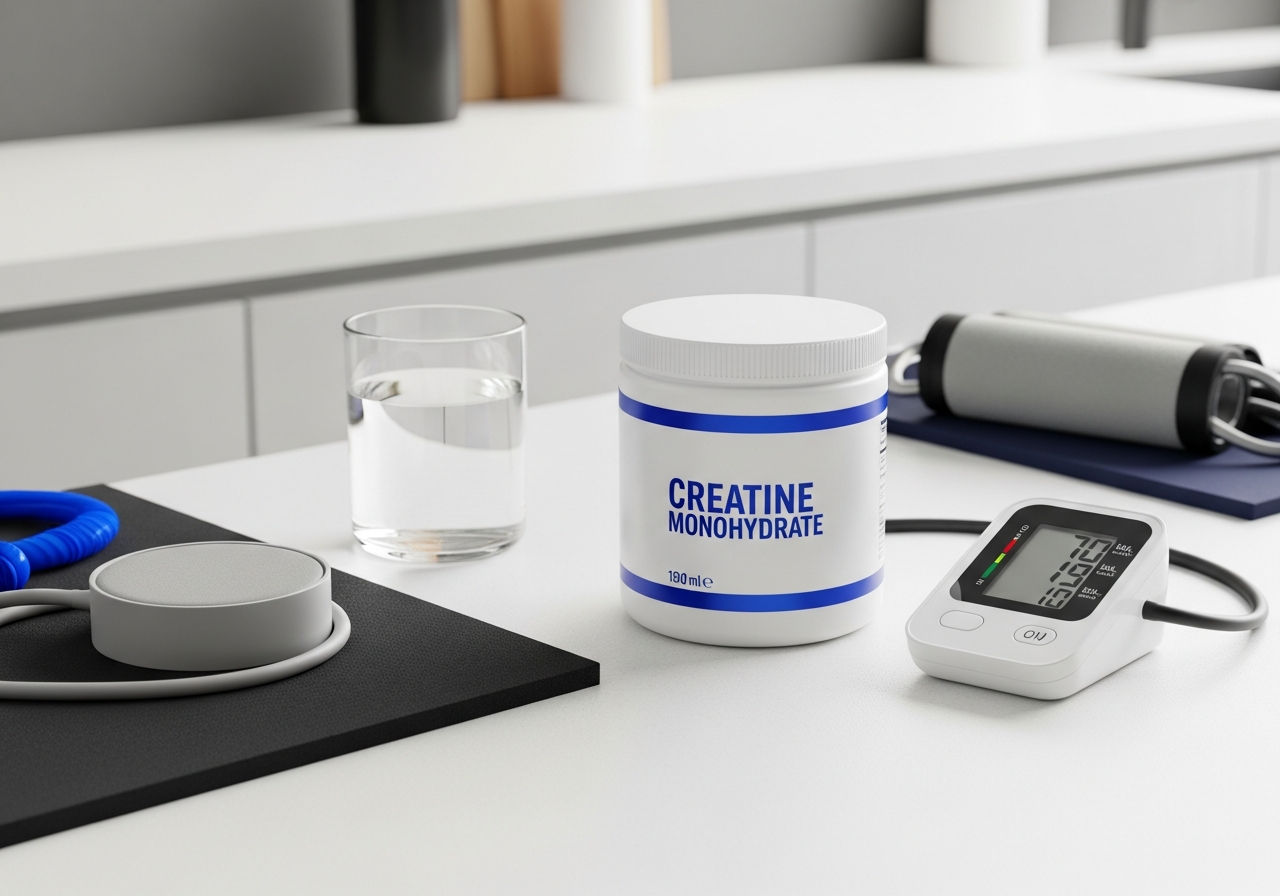
Does Creatine Raise Blood Pressure? What the Research Shows
By The Creatine Canada Research Team — Evidence-based supplement analysts
Creatine does not appear to raise blood pressure in healthy people when taken at standard doses, and current evidence does not support creatine as a cause of hypertension. If you already have high blood pressure, heart disease, kidney disease, or take blood pressure medication, the smart move is to use creatine monohydrate conservatively and check with your clinician before starting.
Evidence-based · Cites 4 sources · Editorial standards
Key Takeaways
- Current research does not show that creatine monohydrate reliably increases blood pressure at recommended doses.
- The standard evidence-based dose is 3-5 g/day, with an optional loading phase of 20 g/day split into 4 doses for 5-7 days.
- Creatine pulls water into muscle cells, but that intracellular water shift is not the same thing as raising blood pressure.
- If you have hypertension or take blood pressure medication, monitor your readings closely when starting and discuss creatine with your pharmacist or physician.
- Fast heart rate is not a typical creatine effect; if it happens, look first at caffeine, pre-workout stimulants, dehydration, anxiety, or intense training.
- Choose plain creatine monohydrate with clear dosing, an NPN when sold as a Canadian natural health product, and preferably third-party testing.
Does creatine raise blood pressure? The short answer is no for most healthy adults
Creatine does not appear to raise blood pressure in most healthy adults when used at normal doses, and that is the direct answer to the question. The best current overview papers and position statements do not identify creatine monohydrate as a proven cause of high blood pressure, hypertension, or chronically elevated heart rate.
The reason this question comes up so often is simple: creatine increases the amount of water stored inside muscle cells, and people understandably assume that more body water must mean higher blood pressure. That is not how it usually works in practice. Creatine's main effect is to increase intramuscular phosphocreatine, which is stored energy in muscle used to rapidly regenerate ATP, the body's immediate energy currency during short, hard efforts. The water shift that often happens with creatine is primarily intracellular, meaning inside muscle cells, not necessarily a harmful expansion of blood volume that drives blood pressure upward.
The 2017 ISSN position stand concluded that creatine monohydrate is the most effective ergogenic form of creatine and is safe when used appropriately. The 2021 JISSN review on common questions and misconceptions also addressed safety concerns and did not identify elevated blood pressure as an established adverse effect in healthy users.
That said, “does not appear to raise blood pressure” is not the same as “nobody should ever think about it.” If you have diagnosed hypertension, cardiovascular disease, kidney disease, are pregnant, or use prescription drugs that affect blood pressure or fluid balance, creatine should be treated as a supplement worth discussing with a clinician. People respond differently, and your overall stack matters. A scoop of plain creatine is very different from a high-stimulant pre-workout that contains creatine plus caffeine and other ingredients.
If you want the practical takeaway, it is this: plain creatine monohydrate at 3-5 g/day is unlikely to raise your blood pressure, but your blood pressure cuff matters more than internet anecdotes. If you are concerned, take baseline readings for a week, start with a standard dose, and recheck your numbers under consistent conditions.
Why creatine is unlikely to increase blood pressure: the mechanism people usually misunderstand
Creatine is unlikely to increase blood pressure because its core mechanism is improved cellular energy buffering in muscle, not stimulation of the cardiovascular system. Creatine works by increasing muscle phosphocreatine stores, which helps regenerate ATP during repeated high-intensity efforts such as sprints, sets of lifting, jumps, and hard intervals.
Here is the key physiology. Blood pressure is influenced by factors such as vessel stiffness, nervous system activation, sodium balance, kidney function, body size, hydration status, medication use, and overall cardiovascular health. Creatine does not act like a stimulant, does not directly constrict blood vessels, and does not operate through the same pathways as compounds that typically raise blood pressure, such as high-dose caffeine, yohimbine, certain decongestants, or anabolic drugs.
The common confusion comes from water retention. Creatine can increase total body water, especially in the first days to weeks, but much of that increase is stored inside muscle cells. Intracellular water retention is different from oedema, puffiness from sodium-heavy foods, or the haemodynamic effects of drugs that alter fluid balance in the bloodstream. In other words, “creatine makes muscles hold a bit more water” does not automatically translate to “creatine raises blood pressure.”
Another reason creatine gets blamed unfairly is stack confusion. Many people first use creatine inside pre-workouts, fat burners, or “strength blends” loaded with caffeine and stimulants. If your heart rate jumps or your blood pressure reading is high after that drink, creatine is often the least likely culprit. If you want to isolate effects properly, use plain monohydrate by itself for several weeks. Our guides on creatine myths debunked and creatine product catalog can help you separate pure creatine from kitchen-sink formulas.
There is also a training effect to remember. Hard resistance training and intense intervals can acutely raise blood pressure during the session itself, which is normal. If you check your blood pressure right after squats, sled pushes, or a stressful commute, that number tells you very little about creatine. To evaluate whether creatine affects blood pressure, compare morning seated readings taken at rest, not gym-floor readings after a brutal set.
The practical conclusion is that creatine's known mechanism does not give us a strong reason to expect higher blood pressure in healthy users, and the human research broadly matches that expectation.
What the research actually shows on blood pressure, heart rate, and hypertension
The research does not support creatine as a consistent cause of elevated blood pressure or increased resting heart rate in healthy adults. That is the most evidence-based summary you can give without overselling certainty.
Large narrative reviews and position statements are helpful here because they synthesise many trials rather than cherry-picking one study. The ISSN position stand by Kreider and colleagues and the JISSN review by Antonio and colleagues both support creatine monohydrate's safety profile when used at recommended intakes. They discuss common concerns around cramping, dehydration, kidneys, and fluid retention, but elevated blood pressure is not established as a typical adverse effect. Examine's evidence summary and the Mayo Clinic overview also do not list high blood pressure as a common expected effect of creatine monohydrate in healthy users.
What the literature tends to show is this:
- In healthy adults, standard creatine use has not been shown to reliably raise resting blood pressure.
- Creatine is not known to increase resting heart rate in a predictable way.
- Short-term scale weight gain during the first 1-3 weeks is common, but this does not mean blood pressure will rise.
- People with medical conditions are underrepresented in supplement studies, so extra caution is still sensible.
It is also important to state what the evidence does not prove. It does not prove that every person in every health state will have zero blood pressure change. Nutrition, medication interactions, body composition changes, training stress, sleep, sodium intake, alcohol, and stimulant use can all move blood pressure around at the same time. That is why anecdotes vary.
If you have high blood pressure and are trying to answer “can creatine increase your blood pressure?” the honest answer is: the evidence does not suggest it usually does, but you should still monitor your own response. A personal monitoring plan beats speculation.
For a deeper safety overview, see is creatine safe and is creatine bad for your kidneys. Those topics matter because kidney disease and blood pressure problems often overlap clinically, even though creatine itself is not the same thing as kidney damage.
How to start creatine safely if you care about your blood pressure
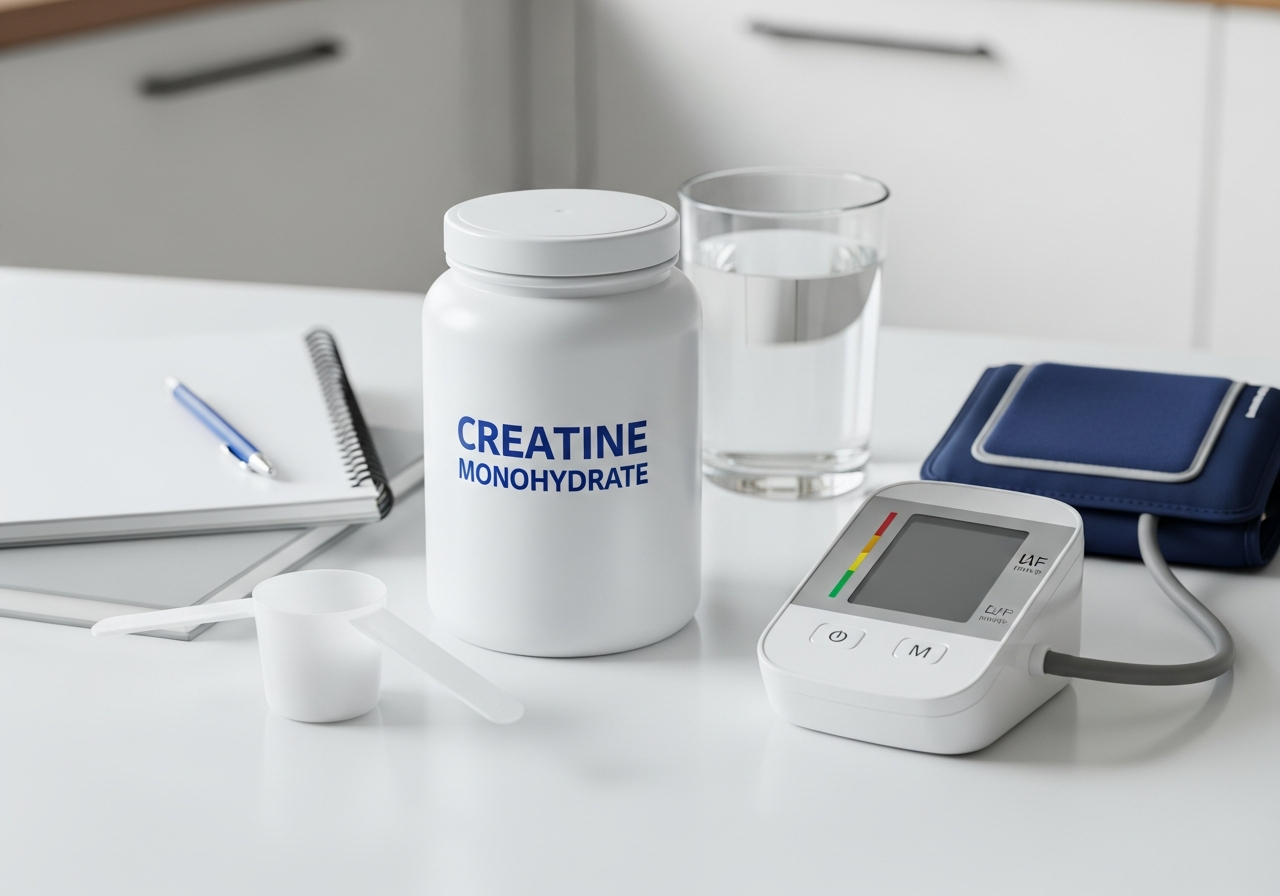
If you want to minimise risk and answer the question for your own body, start with plain creatine monohydrate, track your blood pressure, and change only one variable at a time. That approach is far more useful than guessing.
- Take a baseline first. Measure your blood pressure for 5-7 days before starting creatine. Use a validated home cuff, sit quietly for 5 minutes, keep your feet flat, support your arm at heart level, and record readings at the same time each morning.
- Use plain monohydrate. Choose an unflavoured or simply flavoured creatine monohydrate, not a stimulant pre-workout. This isolates whether creatine itself affects you.
- Start with 3 g/day or 5 g/day. A maintenance-only approach is ideal if you are cautious. Mix it in water or with a meal and take it daily. You can use our creatine dosage calculator if you want a more personalised estimate.
- Keep the rest of your routine stable. Do not simultaneously increase caffeine, start a fat burner, change blood pressure medication timing, or begin a crash diet. Too many changes make your results impossible to interpret.
- Monitor for 2-4 weeks. Check your blood pressure 3-4 mornings per week under the same conditions. Also note body weight, hydration, training load, and stimulant intake.
- Judge trends, not single readings. One high reading after poor sleep, alcohol, illness, or a stressful day does not mean creatine is the cause.
- Stop and reassess if needed. If your blood pressure rises meaningfully and repeatedly after starting creatine, stop the supplement and speak with a clinician. The culprit may still be something else, but repeated changes deserve real follow-up.
This simple process also helps answer related questions such as “does creatine affect blood pressure,” “will creatine increase blood pressure,” and “can creatine cause fast heart rate.” If symptoms appear only when you use a pre-workout, the stimulant blend is the obvious suspect.
Beginners often overcomplicate creatine. You do not need a special cycle, a proprietary transport matrix, or a mega-dose. If you want a complete beginner setup, pair this article with how to take creatine and creatine for beginners.
Best creatine dose if you are worried about blood pressure
The best creatine dose if you are worried about blood pressure is usually a simple 3-5 g/day of creatine monohydrate, not an aggressive loading protocol. That dose is enough for most adults to increase muscle creatine stores over time while keeping the routine easy to tolerate and easy to monitor.
Loading works, but it is optional. A typical loading phase is 20 g/day split into 4 doses of 5 g for 5-7 days, followed by 3-5 g/day maintenance. This saturates muscle stores faster, but it can also produce a quicker jump in body water and body weight, which may make anxious users think something is going wrong even when it is not. If blood pressure is your concern, skipping the loading phase is a reasonable choice.
| Goal / situation | Suggested approach | What to expect |
|---|---|---|
| Healthy beginner, low concern | 5 g/day monohydrate | Gradual saturation over about 3-4 weeks |
| Cautious beginner or hypertension concern | 3 g/day monohydrate | Slower saturation, easier tolerance and monitoring |
| Need faster saturation | 20 g/day for 5-7 days, split into 4 doses, then 3-5 g/day | Faster effects, more early water-weight gain possible |
| Smaller body size or sensitive stomach | 3 g/day or 2 split doses | Less GI discomfort, steadier routine |
| Larger athlete with high lean mass | 5 g/day maintenance is still standard | Often sufficient without overthinking body weight |
Body weight matters less than many supplement labels imply because muscle saturation is the real target, and standard maintenance dosing works for most people. If you want a more tailored plan, see how much creatine per day and creatine maintenance dose.
Take creatine with enough fluid to make it comfortable to drink, but do not force extreme water intake. Normal hydration habits are usually sufficient. If you are unsure, our guide on how much water should you drink with creatine covers the practical side.
The blood-pressure-specific takeaway is simple: lower, steady, consistent dosing makes it easier to evaluate your own response than loading, cycling, or mixing creatine into stimulant-heavy products.
Does creatine increase heart rate or cause palpitations? Usually, no
Creatine does not usually increase resting heart rate, and it is not a recognised stimulant. If you notice a fast heart rate, pounding heartbeat, or palpitations after taking a supplement that contains creatine, other ingredients or other factors are usually more likely explanations.
The first suspects are caffeine, synephrine, yohimbine, large doses of beta-alanine that create a stressful tingling sensation, dehydration from training, poor sleep, anxiety, illness, or simply checking your pulse when you are already amped up. Many “creatine” products are not just creatine. They are pre-workouts, pump products, thermogenics, or sports-drink hybrids. That distinction matters.
If you are searching “does creatine increase heart rate,” “can creatine cause fast heart rate,” or “can creatine increase your heart rate,” the evidence-based answer is that plain creatine monohydrate is not expected to do that in a consistent way. A scoop of unflavoured monohydrate has no stimulant action. It does not work through adrenaline or central nervous system excitation.
Here is the easiest troubleshooting test:
- Use plain creatine monohydrate only for 2 weeks.
- Avoid taking it inside pre-workout.
- Keep caffeine intake stable and moderate.
- Measure resting heart rate on waking, before coffee.
- Note whether symptoms happen at rest or only around workouts.
If palpitations happen only with pre-workout, the problem is probably not creatine. If they happen with plain monohydrate at rest, that is unusual enough to stop and get medical advice. The same applies if symptoms include chest pain, shortness of breath, dizziness, fainting, or a known arrhythmia.
This is also why product choice matters. If cardiovascular comfort is a priority, compare labels carefully in our best creatine rankings and creatine brand reviews. The “safest” creatine product for blood pressure questions is usually the most boring one: single-ingredient creatine monohydrate, clearly dosed, without stimulants.
Can you take creatine if you are on blood pressure medication?
You may be able to take creatine while on blood pressure medication, but you should not treat that as automatic clearance. The correct answer is to ask your physician or pharmacist, because the bigger issue is not that creatine is known to spike blood pressure, but that your overall medical picture and medication list matter.
There is no famous universal “creatine versus blood pressure drug” interaction that applies to everyone, but there are several practical reasons to be careful:
- Hypertension itself changes the risk discussion. If your blood pressure is already hard to control, any new supplement deserves monitoring.
- Kidney function matters. Some people on blood pressure medicines also have kidney disease, diabetes, or both. Creatine can raise blood creatinine, which is a breakdown marker often used in kidney labs, and that can confuse interpretation even when kidney function is unchanged.
- Fluid-management drugs matter. Diuretics and other medications that alter fluid balance or hydration deserve extra caution.
- Combination products matter. Many users blame creatine when the real issue is the stimulant blend taken with it.
If you take an ACE inhibitor, ARB, beta-blocker, calcium channel blocker, diuretic, or multiple medications, the practical plan is straightforward: bring the exact label or product link to your pharmacist and ask whether any ingredient besides creatine is a concern. In Canada, this is especially useful because pharmacists are often the fastest accessible medication experts.
If your clinician says yes, start low and monitor. Use 3 g/day of plain monohydrate, maintain your usual sodium and caffeine intake, and track your morning blood pressure for 2-4 weeks. Do not start with a stimulant pre-workout.
For the related concern about lab work, see creatine vs creatinine. Many people panic when creatinine changes on a blood test, but that does not automatically mean creatine harmed the kidneys. Interpretation depends on the full clinical picture.
The bottom line is cautious permission, not blind reassurance: creatine is not generally known to raise blood pressure, but anyone on blood pressure medication should personalise the decision with a clinician.
Who should be most cautious with creatine, even though it is generally safe?
The people who should be most cautious with creatine are those with uncontrolled hypertension, kidney disease, significant cardiovascular disease, complex medication regimens, or unexplained symptoms such as persistent palpitations. Creatine is generally safe, but “generally safe” still leaves room for smart caution in higher-risk groups.
For healthy beginners, women, older adults, and athletes, the evidence on creatine monohydrate is reassuring when the dose is standard and the product is plain. In fact, some groups may benefit substantially from creatine's effects on high-intensity performance, lean mass, and healthy ageing. If you want group-specific guidance, our related resources on creatine for women and creatine for older adults go deeper.
Still, the risk conversation changes in the following situations:
- Uncontrolled high blood pressure: If your readings are regularly elevated or medication is still being adjusted, stabilise that first.
- Known kidney disease: Kidney issues require a clinician's input because creatine can complicate lab interpretation.
- Heart rhythm concerns: If you have arrhythmias or unexplained palpitations, any supplement change should be conservative.
- Heavy stimulant use: Energy drinks, fat burners, and strong pre-workouts can confuse the picture.
- Pregnancy or breastfeeding: Routine supplement use should be discussed with a qualified clinician.
What about teenagers? Creatine has a stronger safety profile than many parents realise, but younger users should still avoid stimulant-heavy products and use evidence-based doses only. What about endurance athletes? They may notice the scale move up early from water retention, but that is not the same thing as high blood pressure. What about people cutting weight? If you are dehydrating yourself for a weigh-in or using saunas aggressively, your hydration and cardiovascular responses matter more than creatine alone.
This is the right level of nuance: creatine monohydrate is not a recognised cause of hypertension, but the less healthy or more medically complex you are, the more your plan should involve actual monitoring and professional advice.
Myths that muddy the waters: water retention, dehydration, and “creatine causes hypertension”
Several persistent myths make people think creatine causes high blood pressure, but those myths do not hold up well against the evidence. The biggest one is that any water retention must be bad for blood pressure. That is too simplistic.
Myth 1: Creatine causes dangerous water retention. Creatine often increases water stored inside muscle cells, especially early on. That can make muscles look fuller and body weight rise slightly, but intracellular water is not the same thing as pathological fluid overload.
Myth 2: Creatine dehydrates you, so your heart rate goes up and blood pressure goes haywire. This is not supported by the mainstream evidence. Creatine is not considered a diuretic, and it is not known to cause dehydration when taken normally. In practice, people sometimes feel worse because they train hard, sweat, undereat, or use stimulants, then blame creatine.
Myth 3: Creatine causes hypertension because bodybuilders use it. Hypertension in some strength athletes can be linked to body size, sleep apnoea, stimulant use, anabolic drug use, high sodium bulks, or genetics. Creatine gets lumped in because it is common, not because it is proven guilty.
Myth 4: If the scale goes up, blood pressure must be going up too. Short-term weight gain from creatine is often water-related and not automatically harmful. Blood pressure depends on much more than scale weight over a few days.
Myth 5: All creatine products are the same. A single-ingredient monohydrate is completely different from a proprietary blend. If a product contains large stimulant doses, do not blame creatine first.
If you are trying to separate facts from gym lore, the simplest framework is this: plain monohydrate is the reference product, standard doses are the reference protocol, and blood pressure should be judged by actual readings, not vibes. For more myth-busting, see creatine myths vs. facts and does creatine make you gain weight.
When the myths are stripped away, the core answer remains steady: creatine itself is not well supported as a cause of high blood pressure in healthy people.
How to choose a creatine product in Canada if safety is your priority
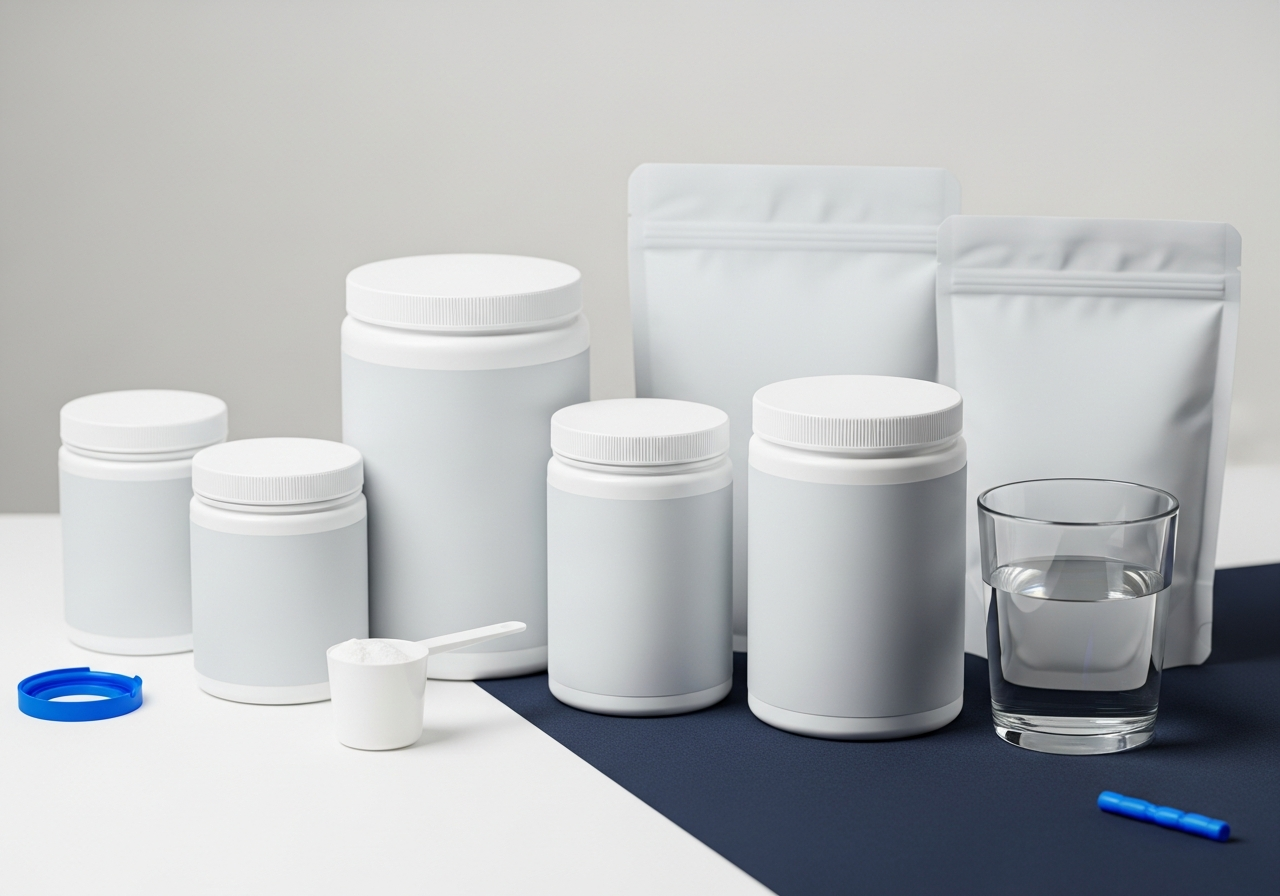
If safety is your priority, the best creatine product in Canada is usually plain creatine monohydrate with a simple ingredient list, clear gram dosing, and strong quality signals such as an NPN or third-party testing. That is a more useful rule than chasing flashy claims about exotic forms.
In Canada, many supplements are sold as natural health products and may carry an NPN, which stands for Natural Product Number. An NPN means the product has been authorised by Health Canada within the natural health product framework. It is not a magic guarantee of perfection, but it is a meaningful legitimacy signal. Third-party testing for purity is another strong plus, especially if you compete or simply want fewer unknowns.
| What to look for | Why it matters for blood pressure concerns |
|---|---|
| Single-ingredient creatine monohydrate | Lets you isolate creatine from stimulants and other confounders |
| Clear serving size in grams | Makes 3-5 g/day dosing accurate and consistent |
| NPN on Canadian product label | Signals Health Canada natural health product authorisation where applicable |
| Third-party testing or strong quality reputation | Reduces contamination and labelling concerns |
| No proprietary stimulant blend | Avoids the ingredients most likely to affect heart rate or blood pressure |
| Unflavoured or minimally flavoured option | Usually simpler, cheaper, and easier to tolerate |
Forms matter too. Monohydrate remains the most studied and most cost-effective form. Claims that HCL, buffered creatine, or fancy blends are inherently “safer” for blood pressure are not established. If anything, simplicity wins here.
To compare options, browse our best creatine rankings, creatine brand reviews, and creatine product catalog. If you specifically want help evaluating monohydrate options sold in Canada, related guides like best creatine monohydrate in Canada and Canadian supplement regulations are worth reading next.
The short Canadian buying answer is: buy boring, buy tested, buy clearly dosed, and avoid stimulant-heavy blends if blood pressure is your concern.
Bottom line: should you worry about creatine and blood pressure?
Most healthy adults do not need to worry that creatine monohydrate will raise blood pressure when taken at standard doses. That is the bottom line, and it matches the best overall evidence we have today.
If you are healthy, the low-drama approach is best: take 3-5 g/day of plain creatine monohydrate, stay normally hydrated, and ignore myths that equate muscle water retention with hypertension. If you want faster saturation, loading at 20 g/day split into 4 doses for 5-7 days works, but it is optional and not necessary for safety or effectiveness.
If you have high blood pressure, use blood pressure medication, have kidney disease, or experience palpitations, do not panic, but do personalise. Use plain monohydrate, start conservatively, track real readings, and speak with a clinician or pharmacist. That is especially important if you also use pre-workouts, fat burners, or high caffeine doses, because those products are much more plausible causes of blood pressure and heart-rate issues than creatine itself.
One final practical point: creatine works gradually unless you load, so there is no prize for being reckless. A consistent, boring routine beats a complicated stack every time. If your goal is to gain the performance and training benefits of creatine while staying cautious, a simple monohydrate protocol gives you the best evidence base and the cleanest self-test.
So, does creatine raise blood pressure? For most healthy users, no, not in any reliable or clinically expected way. The smartest answer for everyone else is equally clear: monitor, simplify, and let your own measured response guide the decision.
Creatine and Blood Pressure: The Numbers That Matter
- 3-5 g/day Standard maintenance dose — Typical daily creatine monohydrate dose used long term
- 20 g/day Typical loading dose — Usually split into 4 doses for 5-7 days
- 5-7 days Loading phase length — Optional if you want faster muscle saturation
- 3-4 weeks Time to saturate without loading — Approximate timeline at normal daily maintenance dosing
Frequently Asked Questions
Can creatine raise blood pressure?
Creatine does not appear to raise blood pressure in most healthy people when taken at standard doses. The best-supported concerns are usually about confusion with stimulant-containing products, training stress, or pre-existing hypertension rather than creatine monohydrate itself.
Does creatine increase blood pressure during a workout?
Creatine itself is not known to increase blood pressure during a workout beyond the normal rise caused by intense exercise. Heavy lifting and hard intervals can acutely elevate blood pressure on their own, so a post-set reading is not a useful way to judge creatine's effect.
Can creatine cause high blood pressure over time?
Current evidence does not support creatine as a common cause of chronic high blood pressure over time in healthy adults. If your readings climb after starting creatine, review caffeine, pre-workout ingredients, sodium intake, sleep, stress, and medication changes before assuming creatine is to blame.
Can you take creatine if you're on blood pressure medication?
You may be able to take creatine on blood pressure medication, but you should check with your physician or pharmacist first. The key issues are your underlying condition, kidney function, and whether the product also contains stimulants or other ingredients that could complicate blood pressure control.
Does creatine increase heart rate?
Creatine does not usually increase resting heart rate because it is not a stimulant. If you notice a fast heart rate after a supplement, caffeine, yohimbine, dehydration, anxiety, illness, or the workout itself are more likely explanations than plain creatine monohydrate.
Can creatine cause palpitations or a fast heartbeat?
Plain creatine monohydrate is not a typical cause of palpitations or a fast heartbeat. If those symptoms occur, stop the product and look closely at stimulant ingredients, hydration, and medical causes, especially if symptoms happen at rest or come with dizziness, chest pain, or shortness of breath.
Can creatine cause low blood pressure?
Creatine is not known as a typical cause of low blood pressure either. If you feel light-headed after starting a supplement, consider dehydration, calorie restriction, heat, alcohol, illness, medication timing, or a hard training block before blaming creatine alone.
Will a loading phase make blood pressure more likely to change?
A loading phase may make body weight and water retention change more noticeably in the first week, but that does not mean blood pressure will rise. If you are cautious or already have hypertension concerns, skipping loading and using 3-5 g/day is a sensible approach.
Can creatine help blood pressure or lower it?
Creatine should not be viewed as a blood pressure treatment, and the evidence does not support using it specifically to lower blood pressure. Its main proven role is supporting high-intensity performance and training adaptation, not managing hypertension.
What is the safest type of creatine if I have blood pressure concerns?
The safest starting point is usually plain creatine monohydrate from a reputable brand with clear dosing and no stimulants. In Canada, an NPN and third-party testing are useful quality signals, but the simplest formula is often the best choice for monitoring your own response.