Can You Take Creatine While Pregnant? What the Evidence Says
By The Creatine Canada Research Team — Evidence-based supplement analysts
No one can currently say creatine is proven safe during pregnancy, so you should not start taking creatine while pregnant unless your obstetrician, midwife, or other prenatal clinician specifically advises it. Creatine is well studied in healthy adults, but direct human pregnancy safety data are too limited to make a routine recommendation, including in the first trimester.
Evidence-based · Cites 3 sources · Editorial standards
Key Takeaways
- The safest evidence-based answer is that creatine is not routinely recommended during pregnancy because human pregnancy safety data are limited.
- If you are already taking creatine and discover you are pregnant, contact your prenatal clinician before continuing rather than guessing.
- Creatine monohydrate is the most studied form in adults, but adult sports-nutrition data do not automatically establish safety in pregnancy.
- Animal and theoretical research on creatine in pregnancy is interesting, but it is not strong enough to replace clinical guidance for pregnant humans.
- The first trimester deserves extra caution because that is when many people and clinicians avoid non-essential supplements.
- If a clinician does approve creatine for your situation, use a simple single-ingredient product, avoid proprietary blends, and follow their exact dose.
- In Canada, look for products with a Natural Product Number and reputable third-party testing, but remember product quality is not the same as pregnancy safety.
Can you take creatine while pregnant? The direct answer is: not routinely, and not without your prenatal clinician
No, creatine should not be treated as a routine pregnancy supplement because there is not enough direct human evidence to confirm that taking creatine while pregnant is safe across pregnancy stages. That is the practical answer to searches like can you take creatine while pregnant, is creatine safe during pregnancy, and creatine first trimester.
Creatine is one of the best-studied sports supplements in non-pregnant adults, and the adult data are generally reassuring for healthy people. The 2017 ISSN position stand concluded that creatine monohydrate is effective and has a strong safety record in healthy populations when used at standard doses. The problem is that pregnancy is a different physiologic state, with different risk tolerance, different nutrient priorities, and an unborn baby whose safety must be considered separately.
That distinction matters. A supplement can be reasonable for a healthy athlete and still be inappropriate to self-prescribe in pregnancy. During pregnancy, the question is not only whether the mother tolerates creatine, but whether taking extra creatine changes placental transfer, fetal exposure, fluid balance, lab results, kidney monitoring, or pregnancy management in ways we have not adequately studied in humans.
If you are trying to conceive, are newly pregnant, or are in the first trimester, the most conservative evidence-based move is to avoid starting creatine on your own. If you have already been taking creatine and then find out you are pregnant, do not panic. Standard creatine doses in adults are typically 3 to 5 g per day for maintenance, and accidental early-pregnancy exposure is not the same thing as proven harm. The right next step is simply to ask your obstetrician, family physician, nurse practitioner, or registered midwife whether to continue or stop based on your health history.
If you want a broader primer on what creatine is and how it works in general, see what creatine is. If your main question is product safety overall outside pregnancy, our guide to whether creatine is safe covers the adult evidence base in more detail.
- Do not self-start creatine in pregnancy based on gym advice or adult sports studies.
- Do ask your clinician if you are already using it, especially if you train regularly or have a medical reason you think it may help.
- Do treat the first trimester cautiously, because non-essential supplements are usually scrutinized most closely then.
Why creatine and pregnancy are even being discussed: the mechanism is plausible, but the proof is incomplete
Creatine is discussed in pregnancy because it helps cells rapidly regenerate ATP, the body’s immediate energy currency, and that mechanism is biologically relevant to both maternal tissues and the developing fetus. That said, a plausible mechanism is not the same as proven clinical benefit or proven safety.
Creatine is made from the amino acids arginine, glycine, and methionine, and it is stored mostly in muscle as free creatine and phosphocreatine. Phosphocreatine is the stored form that donates a phosphate group to help remake ATP during short bursts of high energy demand. In sports, that helps with repeated sprints, heavy sets, and power output. In theory, tissues under metabolic stress may also benefit from having more creatine available.
This is why researchers have been interested in creatine beyond the gym. Pregnancy involves major metabolic demands, placental transport, and periods where oxygen or energy delivery can matter greatly. Some preclinical work has explored whether maternal creatine status could be relevant during fetal stress or birth-related hypoxia, but preclinical research does not answer the everyday question most people are asking: should a pregnant person take over-the-counter creatine for routine health, fitness, or fetal benefit?
At this point, that answer remains no unless a clinician overseeing the pregnancy recommends it. The evidence gap is not because creatine is known to be harmful; it is because pregnancy-specific human trials are limited enough that routine use cannot be recommended with confidence. The 2021 JISSN review on common creatine questions and misconceptions reinforces a broader point that many creatine myths are overstated in healthy adults, but that paper does not establish creatine as standard care in pregnancy.
In plain language, the science sits in three layers:
- Established: creatine monohydrate works well for performance and lean mass support in healthy adults.
- Interesting but not definitive: creatine may have roles outside sports, including neurologic or cellular-energy contexts.
- Not established for routine use: self-supplementing with creatine during pregnancy.
If you are a recreational lifter wondering whether your usual supplement stack carries over to pregnancy, it usually does not. Pregnancy changes the standard from “effective and generally safe in adults” to “shown to be appropriate in pregnancy,” and that is a much higher bar.
What the evidence actually says in 2026: strong adult data, limited pregnancy-specific human data
The evidence in 2026 supports creatine’s safety and effectiveness in healthy non-pregnant adults, but it still does not support a blanket recommendation for creatine during pregnancy. That distinction is the key fact most articles blur.
Here is the evidence hierarchy that matters. Creatine monohydrate has been studied for decades in athletes, active adults, older adults, and some clinical populations. Standard dosing is well established: a loading phase of about 20 g per day split into 4 doses for 5 to 7 days, or a slower approach of 3 to 5 g per day with no loading. For most healthy adults, the main expected effect is increased intramuscular creatine stores, often with small early water-weight gain and improved high-intensity training capacity over days to weeks.
However, pregnancy-specific data are not nearly as robust. There is interest in maternal-fetal creatine biology, but there are not enough high-quality human data to say routine supplementation is safe throughout pregnancy, safe in the first trimester, safe near delivery, or beneficial for fetal outcomes in a way that justifies unsupervised use. The Mayo Clinic’s creatine overview also takes a cautious approach and notes that people who are pregnant or breastfeeding should consult a healthcare professional before use.
That cautious wording matters. It does not mean “creatine is proven dangerous in pregnancy.” It means “the evidence is insufficient to make a routine recommendation.” In evidence-based practice, insufficient evidence should lead to caution, not assumption.
For readers who want a quick summary:
- Known: creatine monohydrate is the best-studied creatine form and works well in non-pregnant adults.
- Known: adult doses are usually 3 to 5 g daily for maintenance, with optional loading.
- Not known well enough: whether routine over-the-counter creatine use during pregnancy is safe and beneficial across the full course of pregnancy.
- Practical implication: pregnancy is not the time to freestyle your supplement plan.
If you want help understanding standard non-pregnancy dosing so you can discuss your previous use clearly with your clinician, our guides on how much creatine per day and the creatine dosage calculator explain typical adult protocols.
Creatine in the first trimester: why extra caution makes sense early in pregnancy
Creatine in the first trimester should be approached with extra caution because early pregnancy is when many clinicians advise avoiding non-essential supplements unless there is a clear reason to use them. If your search was specifically for creatine first trimester, that is the shortest accurate answer.
The first trimester is a period of rapid embryonic development, organ formation, and often the highest general caution around unnecessary medications and supplements. Even when a product has a strong safety reputation in other adults, the threshold for “worth taking” is far higher in early pregnancy because the evidence needs to address fetal development, not just maternal tolerance.
From a sports-nutrition perspective, creatine is not a prenatal essential nutrient in supplement form. You can obtain small amounts from foods such as meat and fish, and your body also synthesizes creatine naturally. That does not mean supplemental creatine is dangerous; it means there is usually no urgent reason to add it on your own in the first trimester when nausea, food aversions, hydration issues, constipation, and changing medical plans are already common.
There are also practical issues. Pregnancy commonly changes kidney-related bloodwork interpretation, hydration habits, body mass, and gastrointestinal tolerance. Creatine can modestly raise serum creatinine in some contexts because creatinine is a breakdown product related to creatine metabolism, and that can complicate interpretation if your care team is monitoring labs. That does not automatically indicate kidney damage, but in pregnancy you want your clinician to know exactly what supplements you are taking so they can interpret tests properly. For more on that confusion in general, see our guide to creatine vs creatinine.
If you are in the first trimester, a practical rule set looks like this:
- Do not start creatine because a trainer, influencer, or friend said it is “natural.”
- List every supplement you take, including powders, gummies, pre-workouts, and hydration mixes.
- Bring that list to your prenatal appointment.
- Ask specifically whether to continue, stop, or modify anything.
When the evidence is incomplete, caution in the first trimester is not fear-mongering. It is simply good prenatal decision-making.
Already taking creatine and just found out you’re pregnant? Here’s exactly what to do next
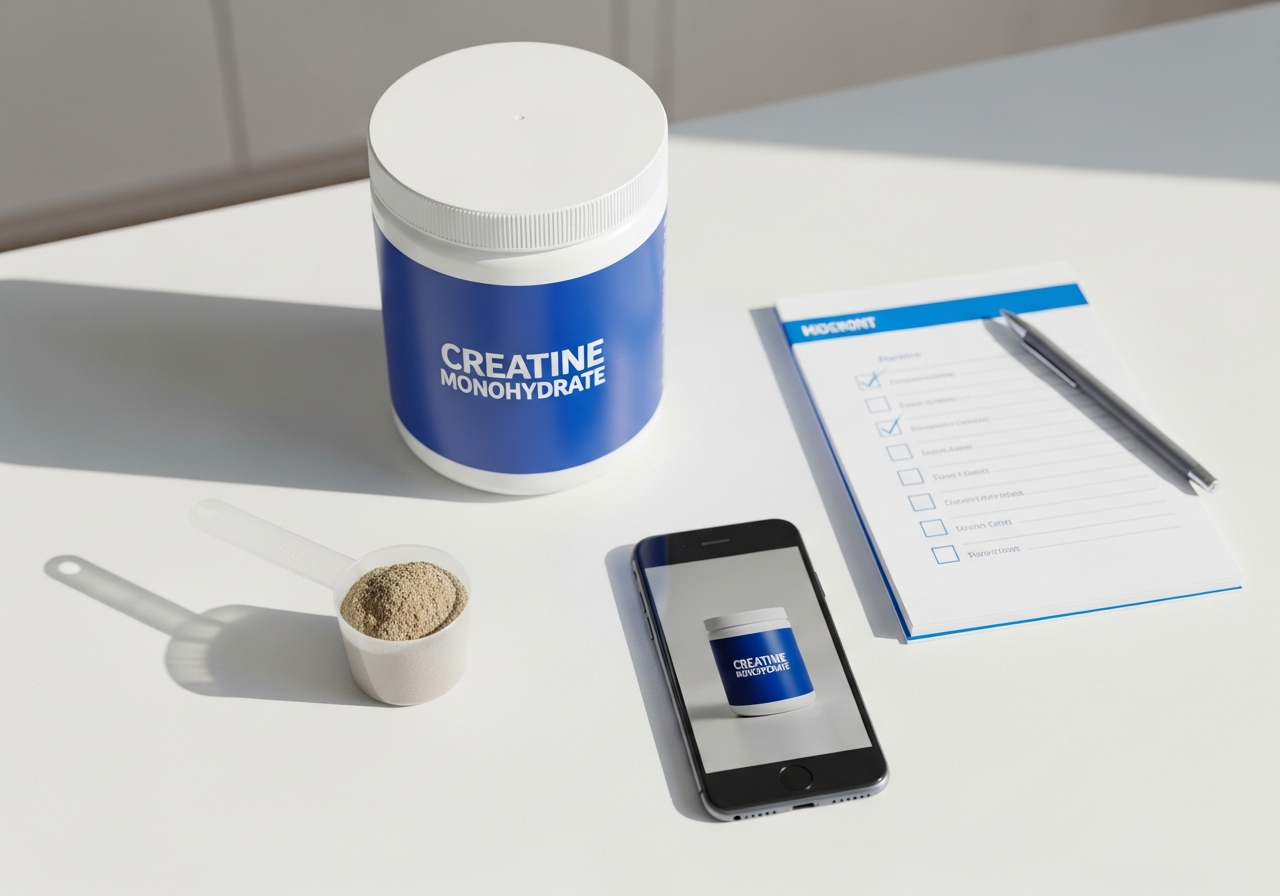
If you were already taking creatine before learning you were pregnant, the best next step is to contact your prenatal clinician and review your specific product, dose, and timing rather than making assumptions. In most cases, this is a calm logistics issue, not an emergency.
Many active women use creatine monohydrate at a standard maintenance dose of 3 to 5 g per day, sometimes alongside protein powder, caffeine, or pre-workout products. If that was you, your clinician will want to know four things: what form you used, how much you took, how often you took it, and what else was in the product.
Use this step-by-step checklist:
- Pause and gather the details. Take a photo of the front and back label. Include the ingredient list and any Natural Product Number if you bought it in Canada.
- Write down your dose. Examples: 5 g daily, 10 g daily, or a loading phase of 20 g daily split into 4 doses.
- Check for extra ingredients. A plain creatine powder is simpler to assess than a pre-workout with caffeine, stimulants, botanicals, and sweeteners.
- Message or call your clinician. Ask, “I’ve been taking creatine monohydrate at X grams per day. Should I stop now, or is there any reason to continue?”
- Stop guessing based on internet anecdotes. Individual stories do not replace prenatal medical advice.
What not to do:
- Do not continue a loading phase while waiting for advice.
- Do not switch to a “women’s” blend, gummy, or influencer product assuming it is safer.
- Do not hide supplement use from your prenatal team.
If your goal was maintaining training performance, understand that stopping creatine is unlikely to create a dramatic immediate change overnight. Muscle creatine stores decline gradually, not instantly. If your goal was muscle retention during a training block, your programme, total protein intake, sleep, and simply staying active during pregnancy will matter more than squeezing in a supplement with uncertain pregnancy relevance.
If you need background on practical use outside pregnancy, see how to take creatine and creatine for women. But during pregnancy, clinical supervision outranks generic supplement best practices.
If a clinician specifically approves creatine in pregnancy, keep the plan conservative and simple
If a qualified prenatal clinician specifically approves creatine for your situation, the most sensible approach is usually a plain, single-ingredient creatine monohydrate product and a conservative dose, not a loading phase or a flashy multi-ingredient formula. The key point is that any dose in pregnancy should come from your clinician, not a generic sports-supplement template.
Why avoid a loading phase? In healthy adult sports use, loading about 20 g per day for 5 to 7 days can saturate muscle stores faster. But speed is rarely important in pregnancy, and higher doses are more likely to cause stomach upset, temporary water-weight changes, and unnecessary confusion around hydration and tolerance. A slower adult-style dose of 3 to 5 g daily is the standard maintenance range in non-pregnant adults, but again, pregnancy requires individual sign-off.
The table below is not a self-prescribing guide. It is a discussion tool so you can talk clearly with your clinician if the topic comes up.
| Scenario | Typical non-pregnant adult approach | Pregnancy practical note |
|---|---|---|
| Healthy adult maintenance | 3 to 5 g creatine monohydrate daily | Do not assume this is appropriate in pregnancy without approval. |
| Rapid saturation for sport | 20 g daily split into 4 doses for 5 to 7 days, then 3 to 5 g daily | Usually not a sensible self-directed choice in pregnancy. |
| Large athlete using body-weight logic | Sometimes estimated around 0.1 g/kg/day for maintenance in some contexts | Body-weight formulas are not pregnancy-specific guidance and should not be self-applied. |
| Multi-ingredient pre-workout | Varies widely | Avoid in pregnancy unless your clinician has reviewed every ingredient. |
If a clinician says yes, ask these exact follow-up questions:
- What dose in grams per day do you want me to use?
- Should I take it every day or only on training days?
- Should I avoid it in the first trimester or near delivery?
- Do you want it stopped before any lab work or if nausea worsens?
- Should I avoid mixing it with caffeine-heavy products?
For standard adult education on dose selection, our guides on creatine maintenance dose and creatine loading phase explain why loading is optional even outside pregnancy.
Safety, side effects, and pregnancy-specific red flags: what matters most
The main safety issue in pregnancy is not that creatine is known to be toxic; it is that normal adult side-effect expectations do not answer pregnancy-specific safety questions. That is why the right lens is caution, not panic.
In non-pregnant adults, creatine monohydrate’s most common issues are fairly mundane: mild stomach upset, loose stools if too much is taken at once, water retention inside muscle, and small scale-weight increases early on. The adult literature does not support many popular fears, such as creatine causing dehydration or guaranteed kidney damage in healthy users. The 2021 JISSN review specifically addresses several of these misconceptions.
But pregnancy changes the context in three important ways:
- Gastrointestinal tolerance matters more. If you already have nausea, vomiting, reflux, or constipation, even a mild supplement side effect may not be worth it.
- Fluid shifts matter more. Pregnancy already affects body water, swelling, blood volume, and scale weight, so you want fewer variables, not more.
- Lab interpretation matters more. Anything that may affect creatinine interpretation or hydration habits should be disclosed to your clinician.
Contact your care team promptly if you have any of the following while taking any supplement in pregnancy:
- Persistent vomiting or inability to keep fluids down
- New swelling, severe headaches, or unusual blood pressure concerns
- Reduced urine output or signs of significant dehydration
- Abdominal pain, confusion about a product’s ingredients, or accidental use of a stimulant-heavy formula
Also remember that “natural” does not mean pregnancy-safe. Some supplement blends marketed for fitness contain caffeine, green tea extracts, adaptogens, nitric-oxide boosters, or herbs with less pregnancy-specific data than creatine itself. In practice, those extra ingredients are often the bigger concern.
If your real question is broader than pregnancy and you want the adult evidence on kidneys, bloating, digestion, or water retention, our related guides on creatine digestive side effects, creatine and kidneys, and creatine and weight gain break those topics down in detail.
If your clinician says yes, how to choose a creatine product in Canada without adding avoidable risk
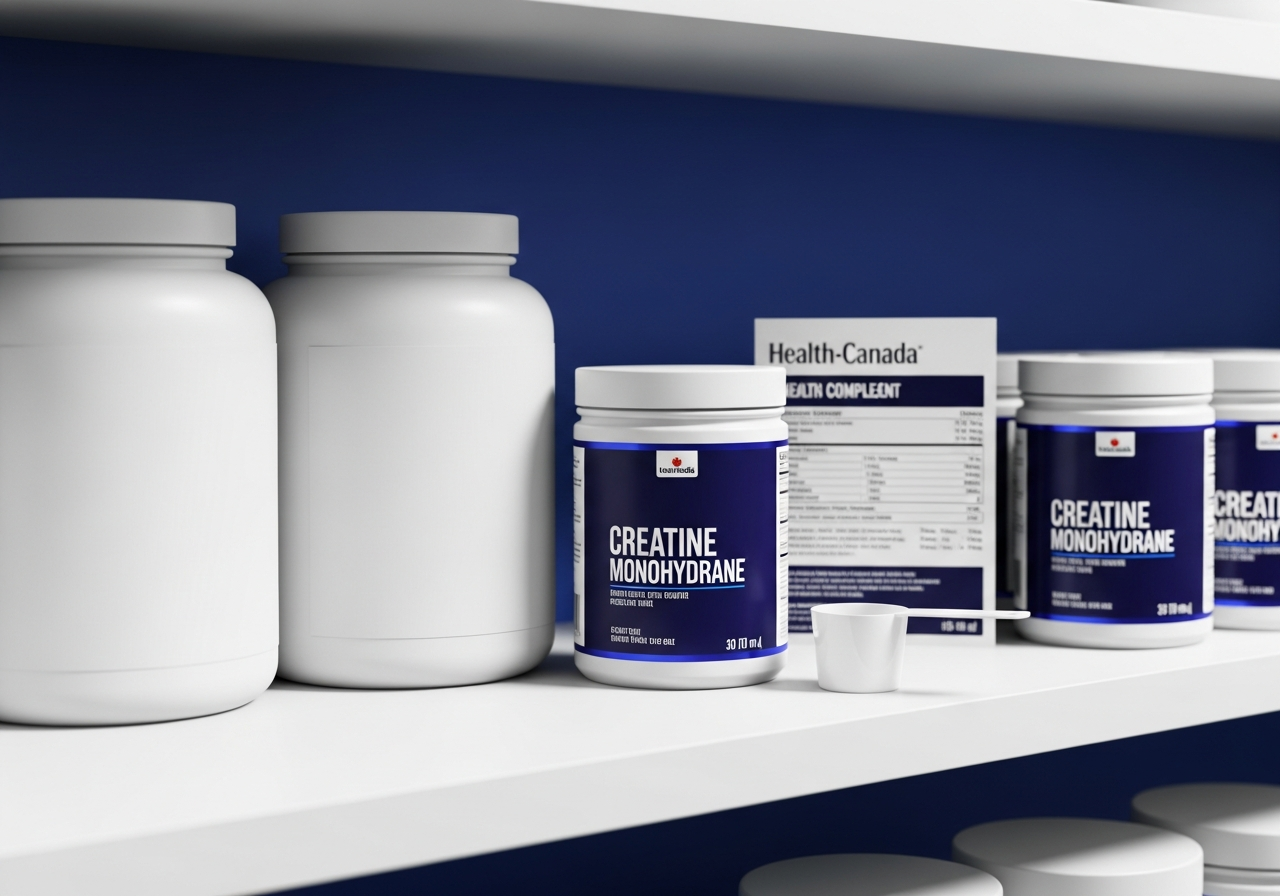
If a clinician approves creatine during pregnancy, choose the simplest product possible: plain creatine monohydrate with minimal ingredients, clear labelling, and reputable quality controls. In pregnancy, simplicity beats novelty.
In Canada, many supplements are sold as natural health products and may carry an NPN, or Natural Product Number, which is Health Canada’s product-licensing identifier for approved natural health products. An NPN is useful because it means the product has gone through a regulatory process, but it does not by itself prove the product is appropriate for pregnancy. That distinction is important.
Use this buying checklist:
- Choose creatine monohydrate. It is the most studied and usually the most cost-effective form.
- Prefer one ingredient. The ingredient list should ideally say only creatine monohydrate.
- Check for an NPN if applicable. This can add confidence in Canadian regulatory compliance.
- Look for third-party testing. Independent testing for purity and contaminants matters more than flashy claims.
- Avoid proprietary blends. You should know the exact grams of creatine per serving.
- Skip stimulant products. Pre-workouts are a poor fit for pregnancy unless specifically reviewed by your clinician.
| Product type | Better choice in pregnancy context? | Why |
|---|---|---|
| Plain creatine monohydrate powder | Yes, if clinician-approved | Simple ingredients, easiest to review, strongest adult evidence base. |
| Micronized monohydrate | Usually reasonable if otherwise plain | Same core ingredient, may mix more easily. |
| Creatine gummies | Less ideal | Often include sugars, acids, flavours, or less transparent dosing. |
| Pre-workout with creatine | No, generally avoid | Too many extra ingredients to assess casually in pregnancy. |
| Novel forms like HCL or blends | Usually not necessary | Less reason to experiment when monohydrate is the standard. |
If you are comparison shopping, our best creatine rankings, creatine brand reviews, and creatine product catalog can help you assess labels. For a deeper Canada-specific explainer, the related guide on whether creatine is approved in Canada is useful context.
Common myths about creatine and pregnancy, debunked carefully
Most creatine and pregnancy myths fail in one of two ways: they either exaggerate adult dangers or overstate pregnancy benefits. The truth sits in the cautious middle.
Myth 1: “Creatine is unsafe because it damages kidneys.”
In healthy non-pregnant adults, standard creatine use is not supported by evidence as a cause of kidney damage. What often causes confusion is creatinine, a lab marker related to creatine metabolism. Still, pregnancy is not the place to self-interpret labs, so your clinician should know you are taking it.
Myth 2: “Creatine is perfectly safe in pregnancy because the body makes it naturally.”
Natural production does not automatically make supplemental doses pregnancy-safe. The body also produces many compounds that behave differently when taken as concentrated supplements.
Myth 3: “If it helps muscles, it must help the baby.”
Not necessarily. Adult exercise performance benefits do not automatically translate to fetal benefit, and pregnancy recommendations require direct evidence.
Myth 4: “Creatine in the first trimester is fine if the dose is small.”
Dose matters, but the main issue is lack of pregnancy-specific evidence, especially in early pregnancy, not just the number of grams.
Myth 5: “A women’s creatine or gummy is gentler than powder.”
Marketing words like “women’s,” “clean,” or “gentle” do not establish pregnancy safety. Some of those products are actually less transparent because they add flavours, sweeteners, or multiple actives.
Myth 6: “If my trainer used creatine during pregnancy and was fine, that proves it’s safe.”
Anecdotes can be reassuring emotionally, but they are weak evidence. Pregnancy safety guidance should come from human data and your own clinician.
For a broader breakdown of creatine misconceptions in sports nutrition, see our guides to creatine myths debunked and creatine myths vs facts. The broader adult literature is generally pro-creatine; the pregnancy question remains cautious because the evidence base is narrower, not because the supplement is uniquely suspicious.
What to focus on instead if your goal is strength, muscle retention, or energy during pregnancy
If your goal is staying strong, active, and resilient during pregnancy, the biggest wins usually come from training, protein, hydration, sleep, and prenatal care rather than adding creatine on your own. Those basics have a far better evidence-to-risk ratio.
For strength and muscle retention, the first priority is continuing appropriate resistance training if your clinician has cleared you to exercise. That usually means 2 to 4 sessions per week of manageable, well-controlled lifting or body-weight work, with room to adjust for symptoms, fatigue, balance changes, and trimester-specific comfort. You do not need creatine to preserve a great deal of fitness during pregnancy.
For energy and recovery, sleep, iron status, total calorie intake, hydration, and nausea management matter far more than any ergogenic supplement. Creatine helps with rapid ATP regeneration in muscle, but pregnancy fatigue is often driven by broader physiologic demands that creatine is unlikely to solve by itself.
Practical priorities to discuss with your care team:
- Prenatal vitamin adherence rather than optional sports supplements
- Protein intake spread across the day from foods or clinician-approved supplements
- Hydration, especially if nausea or vomiting are reducing intake
- Iron, B12, and vitamin D questions if fatigue is prominent
- Training modifications that let you keep moving safely
If you are an athlete or serious lifter, it can feel frustrating to set a familiar supplement aside. But this is a phase where doing fewer things, more intentionally, is often the smartest move. After pregnancy, your creatine plan can be revisited with much more confidence. If you want to understand timing and return-to-use basics for later, our guides on when to take creatine and how long creatine takes to work are useful to bookmark.
In other words, during pregnancy the performance mindset should shift from optimisation at all costs to risk-aware consistency. That approach is not less disciplined; it is more appropriate.
Bottom line: the safest evidence-based recommendation right now
You should not routinely take creatine while pregnant unless your obstetrician, midwife, or other prenatal clinician specifically recommends it for your situation. That is the clearest evidence-based bottom line in 2026.
The reason is not that creatine is known to be dangerous in pregnancy. The reason is that the adult evidence base is much stronger than the pregnancy-specific human evidence base, so routine self-supplementation is ahead of the proof. That is especially true in the first trimester, when caution around non-essential supplements is most justified.
If you are already taking creatine, the best next step is simple:
- Identify the exact product and dose.
- Check whether it is plain creatine monohydrate or a blend.
- Tell your prenatal clinician.
- Follow their advice on whether to continue or stop.
If your clinician does approve it, keep the product simple, the dosing conservative, and the ingredient list short. In Canada, favour transparent labels, reputable brands, and products that are easy to verify, but remember that product quality control does not replace pregnancy-specific safety data.
For most pregnant readers, the practical move is to focus on the proven fundamentals: prenatal care, appropriate exercise, adequate protein, hydration, sleep, and a supplement routine that has actually been reviewed for pregnancy. Creatine can be an excellent supplement in many non-pregnant contexts; pregnancy just is not a situation where you should improvise.
Creatine During Pregnancy: The Numbers That Matter
- 3-5 g/day Typical adult maintenance dose — Standard non-pregnant dosing range for creatine monohydrate.
- 20 g/day Typical adult loading protocol — Usually split into 4 doses for 5-7 days in non-pregnant sports use.
- 5-7 days Time for a loading phase — Faster way to saturate muscle creatine stores in adults.
- 2 facts Strong adult evidence, limited pregnancy evidence — Creatine is well studied in healthy adults, but pregnancy-specific human data remain limited.
Frequently Asked Questions
Can you take creatine while pregnant?
Not routinely, no. The best evidence-based answer is that you should not start or continue creatine during pregnancy unless your obstetrician, midwife, or prenatal clinician specifically advises it, because human pregnancy safety data are too limited to support a blanket recommendation.
Is creatine safe during pregnancy?
Creatine is not proven routinely safe during pregnancy in the way it is considered generally safe for many healthy non-pregnant adults. The limitation is not strong evidence of harm; it is the lack of enough direct human pregnancy data to confidently recommend it throughout pregnancy.
What about creatine in the first trimester?
Creatine in the first trimester deserves extra caution. Early pregnancy is when clinicians are usually most careful about non-essential supplements, so unless your prenatal care provider has reviewed your situation and said yes, it is wiser not to self-supplement.
I was taking creatine before I knew I was pregnant. What should I do?
The right move is to contact your prenatal clinician and tell them the exact product and dose. Standard adult use is often 3 to 5 g daily, and accidental early exposure is not the same as proven harm, but your care team should decide whether you should continue or stop.
Can creatine hurt the baby?
There is not enough human pregnancy evidence to say creatine definitely harms the baby, but there is also not enough to say routine supplementation is clearly safe or beneficial. That uncertainty is exactly why self-prescribing creatine in pregnancy is not recommended.
If my doctor says yes, what type of creatine is best during pregnancy?
If a clinician approves creatine, plain creatine monohydrate is the most rational choice. It is the most studied form in adults, usually the simplest ingredient profile, and easier to review than blends, gummies, or pre-workout products with many extra actives.
Should pregnant athletes or lifters keep taking creatine?
Not automatically. Even for athletes, pregnancy changes the risk-benefit calculation, so sports-performance routines should be re-checked with a prenatal clinician rather than carried over unchanged from pre-pregnancy training.
Does creatine cause water retention during pregnancy?
Creatine can increase intracellular water in muscle in non-pregnant adults, which may slightly raise body weight early on. During pregnancy, where fluid shifts and scale changes already occur, that is another reason to avoid self-supplementing without guidance.
Can you take creatine while trying to conceive?
Trying to conceive is not identical to being pregnant, but it is still a reasonable time to review supplements with a clinician if pregnancy is likely soon. If you want to minimise uncertainty, simplifying your supplement stack before conception is often sensible.
Is creatine monohydrate better than other forms in pregnancy?
If creatine is used at all in pregnancy, monohydrate is the form with the strongest adult evidence and the simplest rationale. Newer forms are not better established for pregnancy, so there is little reason to choose them over plain monohydrate.