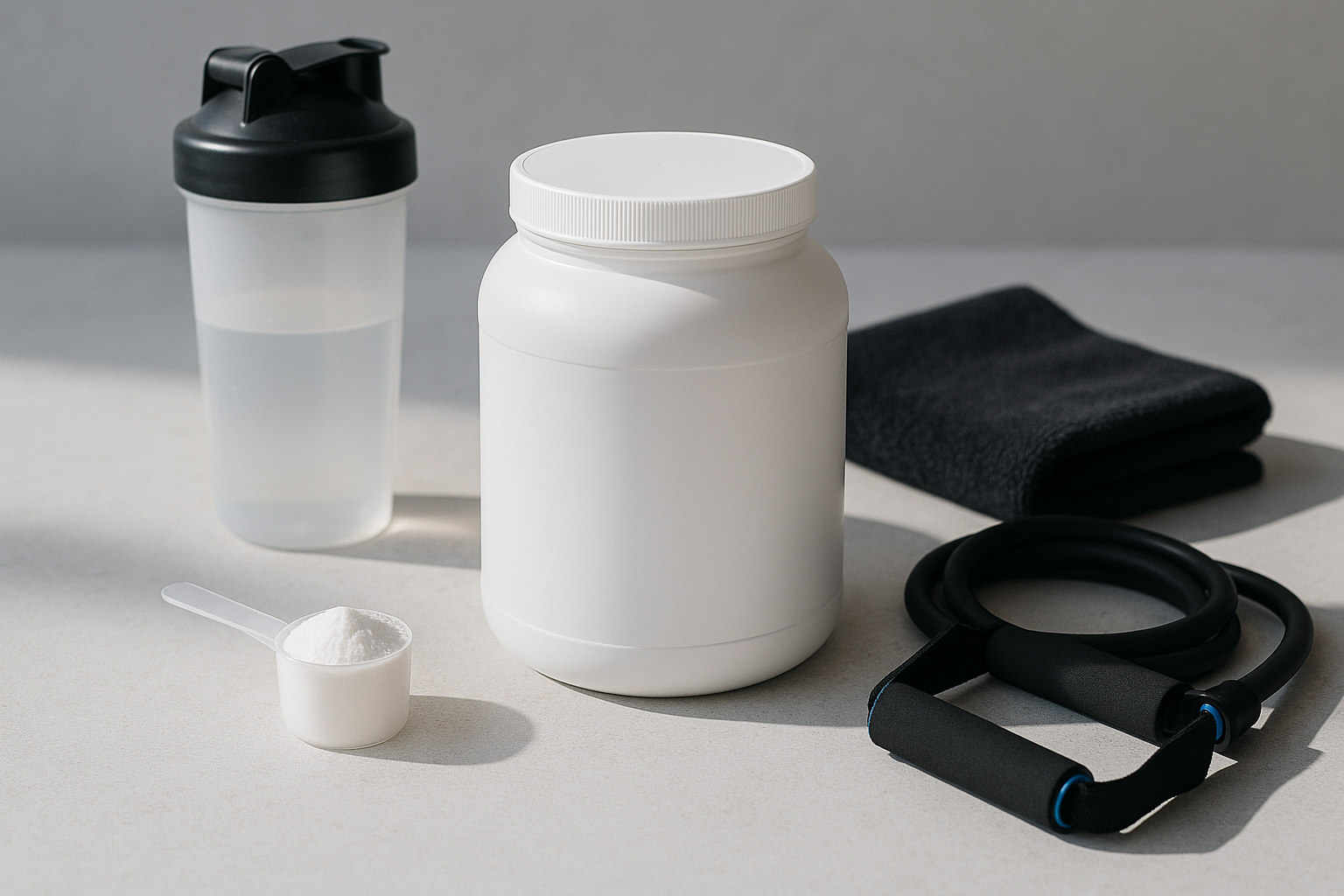
Vega Creatine Review: Plant-Based, Certified, and Is It Worth the Premium?
By The Creatine Canada Research Team — Evidence-based supplement analysts
Vega creatine is a good, credible choice if you want a simple vegan creatine monohydrate from a well-known Canadian-friendly brand, but it is rarely the best value. In most cases, Vega Sport Creatine should work just as well as any other pure monohydrate at the same dose, so the real question is whether its certification, branding, and buying experience justify the premium price.
Evidence-based · Cites 4 sources · Editorial standards
Key Takeaways
- Vega creatine is typically just creatine monohydrate, which is the most studied and most evidence-backed form.
- If the label gives 3-5 g of creatine monohydrate daily, the performance benefits should be comparable to other pure monohydrate products.
- Vega's main advantages are brand trust, vegan positioning, and often cleaner-label appeal, not a unique performance edge.
- Plant-based athletes often benefit more from creatine supplementation because baseline muscle creatine stores can be lower.
- A loading phase of 20 g/day for 5-7 days works faster, but 3-5 g/day without loading also works if you are patient.
- For Canadian buyers, check for an NPN, lot details, and any third-party sport certification before paying a premium.
- If price per gram matters most, plain monohydrate from other reputable brands often beats Vega on value.
Vega Creatine Review in One Sentence: Good product, standard formula, premium price
Vega creatine is good if you want a trustworthy vegan creatine monohydrate from a mainstream brand, but it is not inherently more effective than any other well-made monohydrate powder. That is the core answer to any Vega creatine review, Vega Sport creatine review, or is Vega creatine good query.
Creatine works because the molecule itself works, not because of flashy branding. If Vega's tub provides pure creatine monohydrate at an evidence-based dose, then its job is straightforward: help raise muscle creatine stores so you can regenerate adenosine triphosphate, or ATP, more quickly during short, intense efforts. That can translate into better training quality, a few more reps, more total volume over time, and eventually better strength and muscle gains.
What Vega is really selling is not a special creatine technology. It is selling a package: plant-based branding, generally simple formulas, broad retail availability, and a reputation many Canadian shoppers already know from protein powders and sports nutrition. For some buyers, that matters. For others, it means paying more for the same active ingredient.
So how should you evaluate it? Use this simple framework:
- Formula: Is it just creatine monohydrate, or are there unnecessary add-ins?
- Dose: Does one serving give a full 3-5 g?
- Quality signals: Is there an NPN, clear ingredient transparency, and ideally third-party testing?
- Price: How much are you paying per effective gram?
- Fit: Do you specifically want a vegan or sport-positioned product?
If you want a benchmark for broader comparison, see our best creatine rankings and our full library of creatine brand reviews. If you already own Vega and want to know whether to use it, the answer is simple: yes, if it is standard monohydrate and dosed properly, it should work.
What Vega Creatine Actually Is: vegan branding around the gold-standard form
Vega creatine is generally best understood as a vegan creatine monohydrate product rather than a novel creatine form. For anyone searching vega creatine monohydrate review or vegan creatine Vega, that distinction matters because monohydrate is still the reference standard in 2026.
Creatine monohydrate is the form used in the vast majority of research on strength, power, lean mass, and training performance. The 2017 International Society of Sports Nutrition position stand concluded that creatine monohydrate is the most effective ergogenic, or performance-enhancing, nutritional supplement currently available for increasing high-intensity exercise capacity and lean body mass during training. In practical terms, if Vega uses monohydrate, it is using the form with the deepest evidence base, not a trendy alternative. You can review that position stand directly here: Kreider et al. (2017), ISSN Position Stand.
The vegan angle is also real, but often misunderstood. Creatine itself is not a plant extract. Commercial supplemental creatine is typically synthesised rather than derived from animal tissue, which is why plain creatine monohydrate can be suitable for vegans. That means Vega is not unique in offering vegan-compatible creatine, though it does make that compatibility more explicit and shopper-friendly.
What you should expect from a clean Vega formula:
- One active ingredient: creatine monohydrate.
- Little or no flavour system: plain powders are often easier to dose and compare.
- Simple scoop math: ideally 3 g, 5 g, or another clearly stated amount per serving.
- Canadian labelling compliance: if sold in Canada, look for an NPN, or Natural Product Number, on the label where applicable.
Do not assume a "sport" label means the creatine is stronger. In most cases, sport branding signals audience, flavour system, or testing standard rather than a fundamentally different physiological effect. If the active ingredient is the same monohydrate powder at the same dose, the body does not care whether the tub says sport, vegan, plant-based, or performance.
If you want background on why monohydrate remains the safest buying default, our guides on creatine product catalog and creatine dosage calculator are useful next stops.
How Vega creatine works in your body, and why plant-based athletes often notice it more
Vega creatine works by increasing intramuscular phosphocreatine, the stored form of creatine that helps rapidly regenerate ATP during hard, short-duration efforts. That mechanism is the same whether you buy Vega, another vegan brand, or a bare-bones monohydrate tub.
ATP is your muscle's immediate energy currency, but stored ATP runs out quickly during maximal or near-maximal work such as sprinting, jumping, heavy lifting, or repeated hard intervals. Phosphocreatine donates a phosphate group to help restore ATP fast enough to keep performance from falling off as sharply. More stored creatine means a better buffer for those repeated bursts.
The benefits are most obvious where training is explosive or repeat-effort based:
- Strength training sets of roughly 1-12 reps
- Sprinting and team-sport bursts
- CrossFit-style repeated power work
- Powerlifting, weightlifting, hockey, football, and similar sports
Creatine also tends to support better long-term adaptations because it lets you do slightly more quality work across weeks and months. A small improvement in each session can add up to more total training volume, and more training volume is one of the main drivers of muscle and strength gain.
Why do vegans and vegetarians often respond well? People who eat little or no meat typically have lower baseline dietary creatine intake, so their starting muscle stores may be lower. When those lower stores are topped up with supplementation, the relative change can be larger. That does not mean omnivores cannot benefit. It means plant-based athletes may have more room to improve. This is one reason a vega sport creatine review often lands well with vegan athletes in particular.
The 2021 JISSN paper on common questions and misconceptions about creatine also reinforces that creatine is one of the most studied and misunderstood sports supplements, especially around safety and water retention. See: Antonio et al. (2021), Common questions and misconceptions about creatine supplementation.
What it will not do is act like a stimulant. You should not expect a caffeine-style rush, tingles, or instant gym energy. Creatine is a saturation supplement, not a buzz supplement. If you want the science foundation before judging one brand against another, read creatine myths debunked and our beginner-friendly dosing tools on /calculator.
Vega creatine quality in Canada: what to check beyond the label claims
Vega creatine quality should be judged by ingredient transparency, label compliance, and testing signals, not by plant-based branding alone. For Canadian buyers searching vega creatine Canada or Vega Sport creatine quality, this is where the review gets practical.
Start with the label. In Canada, many supplements fall under Natural Health Products rules, and an NPN, or Natural Product Number, indicates the product has been licensed for sale by Health Canada within that framework. An NPN is not a guarantee that a supplement is superior, but it is a meaningful compliance signal for products sold in Canada.
Then look at the ingredient deck. A high-quality creatine product should be boring:
- Creatine monohydrate as the main or only active ingredient
- No proprietary blend hiding how much creatine you actually get
- Clear serving size stated in grams
- Lot code and expiry or best-before details for traceability
For athletes subject to anti-doping rules, certification matters more than marketing. Third-party testing programmes such as NSF Certified for Sport or Informed Sport are not mandatory for every gym-goer, but they are meaningful if you compete. The International Olympic Committee consensus on dietary supplements emphasises that contamination risk is a real issue in the broader supplement market, which is why independent testing can matter more than brand popularity. See the IOC paper here: International Olympic Committee consensus on dietary supplements.
Quality is also about what is not in the tub. You do not need digestive enzymes, mushrooms, greens powders, or underdosed performance extras bundled into your creatine. Pure monohydrate is easier to evaluate and cheaper to use consistently.
For a Canadian shopper, a good quality checklist looks like this:
- Confirm the product is creatine monohydrate.
- Check the dose per scoop in grams.
- Look for NPN and full label transparency.
- If you compete, prioritise third-party sport certification.
- Compare cost per gram against other reputable options.
Vega often scores well on transparency and mainstream retail trust. Where it may score less well is value. That does not make it a bad buy. It just means you should know what you are paying for.
How to take Vega creatine for results: the simplest step-by-step plan

The best way to take Vega creatine is to use it daily at a consistent dose until muscle stores are saturated, then keep taking it every day. If you already bought it and just want results, this is the practical section that matters most.
- Check your scoop size. Do not guess. Read the label and confirm how many grams of creatine monohydrate each scoop provides.
- Choose your protocol. Either load with 20 g/day split into 4 doses for 5-7 days, then switch to 3-5 g/day, or skip loading and take 3-5 g/day from day one.
- Mix it in water or a shake. Plain creatine works in water, juice, or protein shakes. It does not need a fancy carrier.
- Take it every day. Workout days and rest days both count. Consistency beats timing.
- Track what changes. Look for small increases in reps, training volume, body mass, or sprint repeatability over the next several weeks.
If you load, many people feel performance changes within about a week because muscle stores rise faster. If you do not load, expect a slower build, often around 3-4 weeks before the full effect is obvious. For a deeper timeline, our guide on how long creatine takes to work is helpful.
Here is a straightforward beginner routine with Vega creatine:
- Morning lifter: 5 g in your breakfast smoothie or water after brushing your teeth
- Post-workout routine: 3-5 g in your post-workout shake
- Rest day routine: take the same 3-5 g with any meal you reliably remember
What should you feel? Usually not much acutely. Creatine is subtle day to day. What you notice is that hard efforts feel a touch more repeatable, you hold performance better from set to set, and your bodyweight may rise modestly from increased intracellular water, meaning water stored inside muscle cells rather than under the skin.
Common troubleshooting:
- Stomach upset: split the dose into smaller servings
- Forgetting doses: anchor it to the same meal daily
- Gritty texture: stir longer or use warmer liquid
- Think it is not working: give it 3-4 weeks if you skipped loading
If you want a precise routine, use our creatine dosage calculator and the full how to take creatine guide.
Vega creatine dosage by body weight and goal: exact numbers that actually matter
The right Vega creatine dose for most adults is 3-5 g per day, regardless of whether the tub is marketed to athletes, vegans, men, or women. That is the evidence-based maintenance range supported across mainstream creatine research.
Loading is optional, but it is the fastest route to saturation. The standard protocol is 20 g/day for 5-7 days, split into four 5 g doses, followed by 3-5 g/day as maintenance. Another common evidence-based approach is roughly 0.3 g/kg/day during loading, followed by about 0.03 g/kg/day for maintenance, though in the real world most people can use simple scoop-based dosing.
| Body weight | Maintenance dose | Optional loading dose | Best for |
|---|---|---|---|
| Under 60 kg | 3 g/day | ~18 g/day for 5-7 days | Smaller athletes, beginners, women with lower body mass |
| 60-90 kg | 3-5 g/day | 20 g/day for 5-7 days | Most gym-goers and field/court athletes |
| Over 90 kg | 5 g/day | 20-25 g/day for 5-7 days | Larger lifters and high-muscle-mass athletes |
Goal matters too:
- General fitness: 3-5 g/day is enough.
- Fast results: use loading, then maintenance.
- Sensitive stomach: skip loading and take 3 g/day to start.
- Older adults: 3-5 g/day is commonly used, ideally alongside resistance training.
- Vegetarians and vegans: standard dosing still applies, but benefits may be more noticeable.
Do not overcomplicate female dosing. Women do not need a special "pink" creatine protocol. They generally use the same evidence-based dose range as men, adjusted only for body size and tolerance. Likewise, beginners do not need half-doses forever. If the scoop provides 5 g and you tolerate it, that is entirely normal.
If Vega's label uses a 2.5 g or 3 g scoop, that does not mean the product is weak. It just means you may need one full serving or slightly more, depending on your target dose. Read the label carefully instead of assuming one scoop automatically equals the standard 5 g.
For personalised math, see how much creatine per day or use our calculator.
When to take Vega creatine, how long it takes to work, and what results are realistic
The best time to take Vega creatine is the time you will actually remember every day, because total daily intake matters more than precise timing. That is the evidence-based answer to one of the most common buyer questions.
Some people prefer post-workout because it fits their routine better, while others mix it into a morning smoothie. Both are fine. Creatine is not like caffeine, where timing can sharply change the immediate effect. The goal is to build and maintain muscle saturation over time.
Here is a realistic results timeline:
- Days 1-7 with loading: muscle stores rise quickly; some people notice a small bodyweight bump and better repeated effort performance.
- Weeks 2-4 without loading: muscle stores gradually rise; performance changes become more noticeable.
- Weeks 4-8: better training quality may show up as extra reps, slightly heavier loads, or less drop-off across sets.
- Weeks 8-12: the indirect payoff becomes clearer as better training accumulates into strength and lean mass progress.
What counts as "working" is often misunderstood. Creatine is not judged by whether you feel stimulated. It is judged by whether performance in repeated high-intensity work improves, whether training quality stays higher, and whether body composition trends favour more muscle over time.
Three good signs Vega creatine is doing its job:
- You recover better between hard sets or short sprints.
- You can squeeze out slightly more total reps or load over several weeks.
- Your scale weight rises modestly without a matching increase in body fat, especially early on.
One common fear is water retention. Yes, creatine often increases body mass early, but this is usually due to more water inside muscle tissue. That is part of the mechanism, not proof of fat gain. For more on that, see our guide on does creatine make you gain weight.
If you train for endurance only, the benefit picture is more mixed. Creatine is strongest for strength, power, sprinting, and repeated intense efforts. Pure marathon-style performance is not its headline use case, although some hybrid and team-sport athletes still benefit.
For deeper timing detail, read when to take creatine and creatine on rest days.
Who Vega creatine is best for: beginners, women, older adults, and tested athletes

Vega creatine is best for people who want a simple vegan creatine from a familiar brand and are willing to pay a bit more for that reassurance. It can be a strong fit for several groups, but not for exactly the same reasons.
Beginners often do well with Vega because the product concept is easy to understand. A plain monohydrate powder is far less confusing than a multi-ingredient pre-workout blend. If you are just learning the basics, a simple product reduces dosing mistakes and helps you judge results more clearly.
Women can use Vega creatine exactly as effectively as men. The old bulking myth is overstated. Creatine may raise scale weight a little at first, but that is typically water inside muscle cells, not sudden fat gain. Many women value Vega's cleaner positioning and broader retail trust, especially if they are new to supplements.
Vegetarians and vegans are arguably the most natural fit. Lower dietary creatine intake can make supplementation especially worthwhile, and a brand that clearly communicates vegan compatibility removes guesswork. If that is your priority, this is where Vega may justify its place.
Older adults may benefit from creatine as part of resistance training aimed at maintaining muscle and function with age. The evidence is strongest when creatine is paired with training rather than treated as a stand-alone anti-aging shortcut. A simple, tolerable powder is usually better than a complicated performance stack.
Competitive athletes should judge Vega less by lifestyle branding and more by certification and traceability. If the specific product carries meaningful third-party sport testing, that can justify the premium. If it does not, a cheaper certified monohydrate from another reputable brand may be the smarter buy.
Vega may be less ideal for:
- Price-sensitive buyers who only care about cost per gram
- People who prefer bulk unflavoured tubs with minimal branding markup
- Athletes who need a very specific certification standard and cannot confirm it on the exact SKU
If you are comparing options in this category, our guides on best creatine rankings and creatine brand reviews can help narrow the field quickly.
Safety, side effects, and the biggest myths in any Vega Sport creatine review
Vega creatine is generally safe for healthy adults when used at standard doses, and the common fears around kidney damage, dehydration, cramping, and hair loss are often overstated or misunderstood. That is the evidence-based starting point for any honest safety review.
The ISSN position stand and later reviews consistently support creatine monohydrate as one of the best-studied sports supplements available. In healthy people, standard creatine use has not been shown to harm kidney function. The confusion often comes from creatinine, a breakdown product measured on blood tests. Creatinine can rise without indicating kidney damage, which is why interpretation matters. If you already have kidney disease or another medical condition, talk to your clinician before using creatine.
Potential side effects are usually manageable and dose-related:
- Stomach upset or loose stools: more likely with large single doses, especially during loading
- Temporary weight gain: often due to increased intracellular water, not fat
- Bloating: sometimes reported, but usually improved by smaller divided doses
Myths worth clearing up:
- "Creatine is not vegan." Most supplemental creatine is synthesised and suitable for vegans.
- "Creatine is a steroid." It is not. It is a naturally occurring compound involved in cellular energy metabolism.
- "You need to cycle off." Routine cycling is not required for most people.
- "Creatine dehydrates you." The evidence does not support the idea that creatine inherently causes dehydration when normal fluid intake is maintained.
- "It only works for bodybuilders." It is useful for many athletes and recreational lifters, not just physique sports.
The Mayo Clinic summary is more conservative than sports-nutrition position papers, but it also recognises creatine as a commonly used supplement with generally safe short-term use in healthy adults when used appropriately: Mayo Clinic — Creatine.
If side effects are a concern, start with 3 g/day rather than loading, take it with food, and drink to thirst as normal. For deeper issue-specific reading, see our guides on is creatine safe, creatine digestive side effects, and creatine and kidneys.
Vega creatine vs other brands: where it wins, where it does not, and how to judge the premium
Vega creatine usually wins on brand familiarity and plant-based positioning, but it often loses on raw value per gram compared with simpler monohydrate products. That is the fairest answer to the Vega creatine price question.
When comparing creatine brands, you are really comparing four things:
- Active ingredient equivalence: is it still just monohydrate?
- Certification and testing: does the product offer meaningful quality assurance?
- Mixability and user experience: micronized powders can feel nicer, though they do not necessarily work better.
- Cost per effective gram: the metric most people ignore and should not.
Here is a practical comparison framework:
| Factor | Vega creatine | Typical budget monohydrate | What matters most |
|---|---|---|---|
| Form | Usually monohydrate | Usually monohydrate | Equal if pure and properly dosed |
| Vegan positioning | Strong selling point | May be less explicit | Useful for plant-based shoppers |
| Retail availability in Canada | Often widely available | Varies by brand | Convenience can matter |
| Third-party sport testing | Product-specific, verify carefully | Product-specific, verify carefully | Critical for tested athletes |
| Price per gram | Often higher | Often lower | Major factor for long-term use |
Ask yourself one blunt question: if both tubs contain the same amount of creatine monohydrate and both meet your quality threshold, what exactly am I paying extra for? If the answer is brand trust, cleaner packaging, easier access, or a vegan-first shopping experience, that may be valid. If you assumed you were getting superior muscle-building chemistry, that assumption is usually wrong.
For Canadian buyers, it can make sense to compare Vega against trusted local and international options in our best creatine rankings and narrower pages like product catalog. If value is your obsession, do not skip cost-per-gram analysis. Over months of daily use, that matters more than almost any front-label slogan.
Should you buy Vega creatine in Canada? The bottom line for real shoppers
You should buy Vega creatine if you value vegan positioning, mainstream brand trust, and a simple monohydrate formula more than getting the absolute lowest cost per gram. You should skip it if price efficiency is your top priority and you are comfortable buying another reputable pure monohydrate instead.
That makes Vega neither overrated nor essential. It is a solid product category fit for a certain buyer profile:
- Yes, buy it if you want a straightforward plant-based creatine from a brand you already trust.
- Yes, buy it if the exact product has the testing or certification standard you need.
- Maybe if it is on sale and the price gap narrows.
- No, skip it if another reputable monohydrate gives the same dose and quality signals for materially less money.
Before checkout, run this final Canadian buyer checklist:
- Confirm it is creatine monohydrate.
- Confirm the serving gives an effective 3-5 g daily dose.
- Check for NPN and any relevant testing claims.
- Compare the total grams per tub, not just the sticker price.
- Decide whether the premium aligns with your actual priorities.
If you already own Vega, the practical answer is easy: take it consistently and do not overthink it. It should work like other well-made monohydrate powders. If you have not bought yet, compare it against our best creatine rankings and buyer guides such as best creatine monohydrate in Canada and how to choose creatine.
Final verdict: this Vega creatine review comes out positive on quality and practicality, neutral on uniqueness, and cautious on price. Vega Sport creatine is likely a good product, but because pure creatine monohydrate is a highly standardised category, the real buying question is not whether it works. It is whether Vega's branding, convenience, and trust are worth the premium to you.
Vega Creatine Review: the numbers that matter most
- 3-5 g/day Standard maintenance dose — Appropriate for most healthy adults using creatine monohydrate.
- 20 g/day Typical loading protocol — Usually split into 4 doses for 5-7 days to saturate muscles faster.
- 5-7 days Time to faster saturation — Loading reaches effective muscle saturation much sooner than maintenance-only use.
- 3-4 weeks Typical timeline without loading — Daily maintenance dosing works too, but results build more gradually.
Frequently Asked Questions
Is Vega creatine good?
Yes, Vega creatine is good if it provides pure creatine monohydrate at an effective dose and the price fits your budget. Its main strengths are simplicity, vegan positioning, and brand trust, while its main weakness is that it often costs more than other monohydrate products that should work just as well.
Is Vega Sport creatine just creatine monohydrate?
Usually, yes, Vega Sport creatine is essentially a creatine monohydrate product rather than a unique creatine form. That is good news, because monohydrate is the most studied, most proven, and generally most cost-effective form of creatine on the market.
Does Vega creatine work as well as other creatine brands?
Yes, Vega creatine should work as well as other brands if the active ingredient is the same pure creatine monohydrate and the daily dose is equivalent. Brand differences matter more for testing, mixability, and price than for the basic physiological effect of creatine itself.
Why is Vega creatine more expensive?
Vega creatine is often more expensive because you may be paying for brand positioning, broader retail presence, plant-based marketing, and sometimes added quality assurance. That does not automatically make it better for results; it just means the premium may reflect shopping experience and trust rather than superior performance.
Is Vega creatine vegan?
Yes, Vega creatine is marketed as vegan, and supplemental creatine monohydrate is generally synthesised rather than sourced from animal tissue. In practice, many plain creatine monohydrate products are also vegan-compatible, even if they do not market themselves as strongly around that point.
How much Vega creatine should I take per day?
Most people should take 3-5 g of Vega creatine per day as a maintenance dose. If you want faster saturation, you can optionally load at 20 g/day split into four doses for 5-7 days, then continue with 3-5 g/day afterward.
When should I take Vega creatine?
You can take Vega creatine any time of day, and consistency matters more than exact timing. Many people take it after training or with a daily meal simply because that makes it easier to remember and sustain long term.
Can women take Vega creatine?
Yes, women can absolutely take Vega creatine, and the evidence-backed dose is generally the same 3-5 g/day used by men, adjusted for body size and tolerance if needed. It does not cause instant fat gain, and early scale changes are usually due to water being stored inside muscle.
Is Vega creatine safe for kidneys?
For healthy adults, standard-dose creatine monohydrate is generally considered safe and has not been shown to damage kidneys in the research base. If you have existing kidney disease, abnormal kidney labs, or relevant medical conditions, you should speak with a healthcare professional before starting it.
Is Vega creatine worth the premium in Canada?
Vega creatine is worth the premium in Canada if you specifically value vegan branding, mainstream retail trust, and a simple buying experience. If your goal is strictly the lowest cost per effective gram of creatine monohydrate, another reputable brand will often offer better value.