Does Creatine Cause Hair Loss? What the DHT Research Actually Shows
By The Creatine Canada Research Team — Evidence-based supplement analysts
No, creatine has not been proven to cause hair loss. The concern comes from one small 2009 study that found a rise in dihydrotestosterone (DHT) after a loading phase, but direct evidence that creatine makes hair fall out, speeds balding, or causes permanent hair loss in men or women is currently lacking.
Evidence-based · Cites 4 sources · Editorial standards
Key Takeaways
- Creatine has not been shown in human trials to directly cause hair loss or balding.
- The hair-loss concern mainly traces back to one small rugby study that reported higher DHT after creatine loading.
- A temporary hormone change is not the same thing as proven hair shedding, and no study has shown creatine causing measurable hair loss.
- If you are genetically prone to male or female pattern hair loss, creatine is a plausible concern to monitor, but the evidence is still indirect and uncertain.
- A standard 3 to 5 g daily dose is the evidence-based maintenance range and is not known to be riskier for hair than any other creatine dose.
- If hair loss worries you, skip loading, track shedding for 8 to 12 weeks, and change only one variable at a time.
- Creatine monohydrate remains the most studied, most effective, and most cost-effective form to use if you decide the benefits outweigh the uncertainty.
Does creatine cause hair loss? The direct answer most people actually need
No, creatine has not been proven to cause hair loss, balding, or faster male pattern baldness in humans. If you are asking does creatine cause hair loss, can creatine cause balding, or will 5 g of creatine cause hair loss, the most evidence-based answer is that direct proof does not exist, but a theoretical concern remains because one small study found increased DHT, a hormone linked to androgenetic alopecia.
That distinction matters. Hair loss is an outcome. DHT, or dihydrotestosterone, is one possible input. A supplement can change a blood marker without causing a visible real-world effect, and right now that is exactly where the creatine-hair debate sits. The 2017 International Society of Sports Nutrition position stand concluded that creatine monohydrate is effective and safe for healthy people, and hair loss is not established as a supported side effect. You can read that review directly at Kreider et al. (2017), JISSN.
Here is the practical interpretation:
- If you have no personal or family history of pattern hair loss, there is currently no strong reason to expect creatine to make your hair fall out.
- If you are already genetically predisposed to hair thinning, it is reasonable to be cautious, because even a possible DHT-related effect may matter more to you than to someone without that predisposition.
- If you notice shedding after starting creatine, that does not automatically prove causation. Stress, dieting, illness, thyroid issues, low iron, postpartum shifts, seborrheic dermatitis, and male or female pattern hair loss are all more common explanations.
For most healthy adults, the performance upside of creatine is much better established than any hair-loss risk. Creatine helps raise phosphocreatine, the stored form of creatine in muscle that helps regenerate ATP, the cell's immediate energy currency during short, hard efforts. That is why it is widely used for strength, power, sprint performance, lean mass, and training quality. If you need a full primer first, see what creatine is and what it does.
The short version is simple: creatine does not have good evidence showing it causes hair loss, but people with strong hair-loss susceptibility may still choose to monitor closely or avoid it because the DHT question is not fully closed.
Why people think creatine causes balding: it mostly comes from one DHT study
People think creatine causes hair loss because one small 2009 study in college-aged rugby players reported a rise in DHT after creatine supplementation. If you have seen threads like does creatine cause hair loss Reddit or does creatine cause balding Reddit, almost all of them eventually point back to that single paper.
In that study, participants used a classic loading phase of 25 g per day for 7 days, followed by 5 g per day for 14 days. The researchers reported that DHT rose after loading and remained above baseline during maintenance, while testosterone itself did not significantly increase. Because DHT is an androgen involved in androgenetic alopecia, many people interpreted that result as proof that creatine causes hair loss. It was not proof.
There are several reasons that finding should be interpreted carefully:
- The study was small. Small studies are more vulnerable to chance findings and harder to generalize.
- It measured hormones, not hair loss. No hair counts, scalp photos, shedding rates, or dermatology assessments were performed.
- The participants were young male rugby players. That does not tell us whether women, older adults, casual gym-goers, or non-loaders would respond the same way.
- Later creatine studies have not consistently reproduced a DHT rise. The broader literature does not show a clear, repeated androgen-elevating effect from creatine.
This is why the 2021 review on common creatine questions and misconceptions noted that concerns about hair loss remain speculative rather than established. That review is worth reading because it puts the DHT question in context: Antonio et al. (2021), JISSN.
A useful way to think about it is this: one indirect signal is not the same as a demonstrated side effect. Plenty of supplement debates get stuck because a marker changes and people assume the final clinical outcome must follow. With creatine and hair, we do not yet have convincing human evidence showing that normal supplemental doses make people bald faster.
That said, the concern is not ridiculous. DHT is biologically relevant to hair follicles in susceptible people, so the question deserves nuance rather than dismissal. The fair conclusion is that the theory exists, the evidence is thin, and the internet usually states the claim more confidently than the research allows.
What the DHT mechanism actually means for your hair follicles
Creatine does not attack hair follicles directly; the concern is that it might indirectly influence DHT, which can shrink hair follicles in genetically susceptible people over time. If you are asking does creatine increase DHT or can creatine accelerate hair loss, that mechanism is the entire reason the question exists.
DHT, or dihydrotestosterone, is a potent androgen made when the enzyme 5-alpha-reductase converts testosterone into DHT. In people with androgenetic alopecia, hair follicles in specific scalp regions are genetically sensitive to DHT. Over time, that sensitivity can shorten the growth phase of hair, miniaturize follicles, and produce thinner, shorter hairs until visible recession or thinning occurs.
Here is the key nuance: DHT sensitivity matters more than DHT alone. Two people can have similar hormone levels and very different hair outcomes because follicle genetics, local scalp enzyme activity, age, sex, and family history all influence the result.
That is why even if creatine did raise DHT slightly in some users, several things would still need to be true before hair loss became noticeable:
- You would need to be genetically susceptible to androgen-related hair loss.
- The change would need to be large enough and sustained long enough to matter at the follicle level.
- The follicles would need to be in scalp areas vulnerable to miniaturization.
- The effect would need to exceed all the other factors affecting your hair at the same time.
In other words, a theoretical pathway is not a confirmed outcome. This also explains why many people take creatine for years without noticing any change in hair density, while others become anxious after seeing a few extra hairs in the shower.
Hair biology is also slow. Pattern hair loss usually unfolds over months to years, not days. So searches like how fast does creatine cause hair loss are based on the wrong model. Even if creatine did accelerate hair loss in a susceptible person, it would not be expected to make hair suddenly fall out within a week. Sudden shedding is more consistent with telogen effluvium, an abrupt shift in hair cycling often triggered by stress, illness, weight loss, or hormonal change, not by a proven direct creatine effect.
If you want the simplest rule, it is this: creatine is not known to cause hair loss on its own, but if you already have androgen-sensitive follicles, the unresolved DHT question is the only biologically plausible reason to monitor your response.
What the full evidence shows in 2026, not just the study everyone cites
The full evidence in 2026 does not support saying that creatine causes hair loss as a proven side effect. The best-supported position is that creatine monohydrate is well studied for performance and general safety, while the specific claim that it makes you bald faster remains unproven and based on limited indirect evidence.
The strongest broad reviews of creatine safety and efficacy have not established hair loss as a confirmed adverse effect. The ISSN position stand and later reviews discuss kidney myths, dehydration myths, cramping myths, and various safety concerns in depth, but they do not conclude that creatine causes measurable hair shedding or baldness. For a high-level evidence summary, Examine's creatine review also reflects the same overall picture: lots of support for efficacy, but no strong direct evidence for hair loss.
What the evidence does support:
- Creatine monohydrate reliably increases intramuscular phosphocreatine stores.
- Typical maintenance dosing is 3 to 5 g per day.
- Loading at about 20 g per day split across 4 doses for 5 to 7 days saturates muscles faster.
- Creatine is among the most researched sports supplements for strength, power, and lean mass support.
What the evidence does not support:
- That creatine consistently raises DHT across studies.
- That creatine directly causes hair shedding in men.
- That creatine directly causes hair shedding in women.
- That 5 g per day has been shown to make people bald faster.
That last point answers several common searches at once: will creatine cause hair loss, do creatine supplements cause hair loss, does creatine affect hair loss, and can creatine increase hair loss. The honest answer is not a simple yes or no for every individual, but the research base is nowhere near strong enough to claim a causal effect.
If you are a beginner deciding whether to start, the most rational approach is to weigh a known benefit against an uncertain, theoretical downside. If hair preservation is one of your highest priorities and you are already noticing recession or thinning, being conservative is reasonable. If your main goal is better training performance and you are not especially hair-loss prone, current evidence does not give a strong reason to avoid creatine.
For a broader safety overview, see our complete guide to creatine safety and creatine myths debunked.
Will 5 g of creatine cause hair loss? Here is the practical dose-by-dose reality
No one can say that 5 g of creatine will cause hair loss, because that outcome has not been demonstrated in controlled human research. A standard 5 g daily dose is the most common maintenance intake, and there is no direct evidence showing that this amount causes balding in men or women.
Most people use one of two evidence-based dosing strategies:
- Maintenance only: 3 to 5 g once daily.
- Loading plus maintenance: about 20 g daily for 5 to 7 days, split into 4 doses, then 3 to 5 g daily.
If hair risk worries you, maintenance-only is the lower-drama option because it avoids the short-term large loading dose used in the study that triggered the DHT discussion. Muscle creatine saturation simply takes longer without loading, usually about 3 to 4 weeks rather than about 1 week. If you want the detailed strategy, read our loading phase guide and how much creatine per day.
| Goal | Typical dose | Time to near-saturation | Hair-concern take |
|---|---|---|---|
| General fitness | 3 to 5 g/day | About 3 to 4 weeks | Most cautious option if you still want creatine |
| Fast start | 20 g/day for 5 to 7 days, then 3 to 5 g/day | About 5 to 7 days | Avoid if the DHT question makes you uneasy |
| Larger athletes | 5 g/day maintenance is common | About 3 to 4 weeks without loading | No direct hair-loss proof, but monitor if predisposed |
| Very cautious trial | 3 g/day | Often slightly slower than 5 g/day | Reasonable self-test dose for anxious users |
Body weight can help with context, even though fixed dosing works well for most adults:
- Under 60 kg: 3 g daily is often sufficient.
- 60 to 90 kg: 3 to 5 g daily is typical.
- Over 90 kg or very muscular athletes: 5 g daily is a common practical target.
If you want a more personalised range, use our creatine dosage calculator. But remember, there is no special dose threshold where research suddenly shows hair loss begins. The question is not whether 5 g is a known hair-loss dose; it is whether any realistic creatine dose meaningfully affects hair in susceptible individuals, and that remains unresolved.
How to try creatine cautiously if you are worried about thinning or shedding
If you want creatine's benefits but are worried it might affect your hair, the best approach is a slow, controlled self-test with tracking. That means no loading, no stacking changes, and no guessing.
- Start with creatine monohydrate only. Use a plain single-ingredient product, ideally one that is third-party tested. In Canada, look for a Natural Product Number, or NPN, on the label when applicable and choose brands with transparent testing. Our best creatine rankings and creatine brand reviews can help you compare options.
- Use 3 g daily for the first 2 weeks. This is a conservative starting point that still moves you toward saturation over time.
- Take it consistently. Timing matters less than daily adherence, though taking it with a meal can be easier on the stomach. See how to take creatine for mixing and routine tips.
- Do not change other major variables. Avoid starting a harsh calorie deficit, a new hair product, a testosterone booster, finasteride, minoxidil, or a new training block at the same time.
- Track hair objectively for 8 to 12 weeks. Take scalp photos under the same lighting, note shower shedding, and watch for changes at the temples, crown, or part line.
- If nothing changes and you want the full standard dose, move to 5 g daily. Many people stop here and simply continue.
- If you notice a clear change, stop creatine and keep tracking for another 6 to 8 weeks. Hair cycles are slow, so immediate conclusions are unreliable.
This process matters because many people expect to "feel" creatine working within days and may over-attribute any change they notice. In reality, without a loading phase, performance benefits often build over a few weeks. Hair changes, if they occur for any reason, also tend to unfold gradually. That means you need a baseline and enough time to see a pattern.
Signs your caution-first trial is going well:
- Body weight may rise by about 0.5 to 1.5 kg early on from intracellular water, not fat.
- Sets of repeated hard efforts may feel slightly stronger or more repeatable.
- You recover better between short explosive efforts.
- You do not see clear progressive changes in shedding or density over the tracking period.
If you are highly anxious about hair loss, it is completely reasonable to decide that even a theoretical risk is not worth it for you. Supplements are tools, not obligations.
Can creatine cause hair loss in men or women? Who should pay closer attention
Creatine has not been shown to directly cause hair loss in either men or women, but people with strong genetic susceptibility to pattern hair loss have the most reason to monitor closely. That is the fairest answer to can creatine cause hair loss in men, can creatine cause hair loss in women, and does creatine cause hair loss women.
Men are usually asking about androgenetic alopecia, often called male pattern baldness. In men with a strong family history, early temple recession, crown thinning, or ongoing miniaturization, the DHT question can feel more personally relevant. Even then, there is still no direct proof that creatine speeds balding. But if preserving hair is a top priority, a cautious self-trial or avoidance strategy is understandable.
Women can also experience androgen-sensitive hair loss, but female hair thinning has a broader list of common contributors, including iron deficiency, thyroid issues, postpartum hormone shifts, polycystic ovary syndrome, crash dieting, and chronic stress. If a woman notices increased shedding after starting creatine, it is especially important not to assume creatine is the sole cause without considering these factors.
Older adults may already be experiencing age-related thinning, which can overlap with supplement timing and create false attribution. If you start creatine at the same time that age-related hair change becomes visible, the supplement can get blamed unfairly.
Athletes in aggressive cuts are another group that often misread the situation. Rapid weight loss, low energy intake, low iron, and high training stress are classic triggers for shedding. Creatine frequently gets added during cutting phases because it helps preserve performance, but the diet itself may be the more likely hair culprit.
You should be more careful with creatine if most of these apply:
- Strong family history of early pattern baldness
- You are already noticing ongoing miniaturization or progressive thinning
- You are highly risk-averse about cosmetic changes
- You plan to use a loading phase and multiple new supplements together
You can also discuss the issue with a physician or dermatologist if you are already being treated for hair loss. Creatine is not a replacement for therapies aimed at DHT-sensitive hair loss, and it should not be treated as one.
For broader context by sex and age, our guides on creatine for women and creatine for older adults can help you decide whether the benefits fit your goals.
How fast would creatine-related hair loss happen, if it happened at all?
If creatine were to accelerate hair loss in a susceptible person, it would most likely be a gradual process over weeks to months, not a sudden dramatic event in a few days. That is the most evidence-based answer to how fast does creatine cause hair loss and does creatine make your hair fall.
Hair follicles cycle through growth, transition, rest, and shedding phases. Because of that biology, visible changes in density usually lag behind whatever triggered them. This is why internet stories that say "I took creatine for three days and my hair started falling out" should be treated cautiously. The timing is usually too fast to fit a classic pattern-hair-loss mechanism.
A more realistic timeline looks like this:
- Week 1: With loading, muscle water retention and body-weight changes may appear. Hair changes would not be expected to be clearly visible from a pattern-baldness mechanism this fast.
- Weeks 2 to 4: Performance benefits become easier to notice, especially if you loaded or are responding well. Hair observations are still difficult to interpret because daily shedding naturally fluctuates.
- Weeks 4 to 8: If you are sensitive to any factor affecting the hair cycle, this is when consistent photos and notes become more useful.
- Weeks 8 to 12: This is a better window to judge whether there is a real trend versus random variation.
What to watch for:
- More hair on the pillow, in the drain, or in the brush compared with your usual baseline
- Wider part line or more scalp show-through in the same lighting
- Faster temple recession or crown visibility in side-by-side photos
- Changes continuing even after you remove other obvious triggers
What not to over-interpret:
- One bad wash day
- A shedding spike during a diet, exam period, illness, breakup, or sleep-deprived training block
- Normal seasonal fluctuation
If you stop creatine because of concern, do not expect an overnight reversal. Hair cycles remain slow in both directions. This is another reason objective tracking matters more than emotion in the moment.
On the training side, if you want to know when the supplement itself should start helping performance, see how long creatine takes to work. That timeline is much better established than any hair timeline.
Before you blame creatine, rule out the causes of hair loss that are far more common
Most new hair shedding after starting creatine is more likely to have another cause. If you are asking does creatine causes hair fall or does creatine have hair loss, the practical answer is to investigate more common explanations first.
The big one is androgenetic alopecia, the usual genetic form of male or female pattern hair loss that often becomes noticeable in the late teens through middle age. Many people start creatine around the same time they also start training harder, dieting, and paying closer attention to their appearance, so normal progression suddenly gets noticed.
Another common cause is telogen effluvium, which is diffuse shedding that often appears a few months after a stressor. Typical triggers include:
- Rapid weight loss or aggressive calorie restriction
- Low protein intake
- Low iron or ferritin
- Illness or fever
- Childbirth or stopping hormonal contraception
- High psychological stress
- Sleep disruption
- Thyroid problems
Gym culture adds a few more confounders. Some people start creatine at the same time they begin fat burners, stimulant-heavy pre-workouts, anabolic drugs, testosterone replacement, or "test boosters." Those can have very different hormonal implications than plain creatine monohydrate.
If you notice shedding, a sensible checklist is:
- Ask whether the pattern is recession/miniaturization or diffuse shedding.
- Review the last 3 months for dieting, illness, stress, or medications.
- Look at family history.
- Consider a medical review if the shedding is significant, patchy, or sudden.
- Then decide whether a creatine stop-and-rechallenge experiment is worth doing.
This matters because the wrong conclusion can cost you twice: you may stop a helpful supplement unnecessarily, and you may also miss the real reason your hair is changing. In men, early pattern loss can sometimes be managed more effectively when addressed sooner. In women, identifying issues such as low iron or thyroid dysfunction can be especially important.
Bottom line: creatine is an easy target because it is visible and new, but new hair loss usually deserves a broader lens before you decide creatine is to blame.
Best creatine choice if hair loss is your concern: simple formula, simple plan
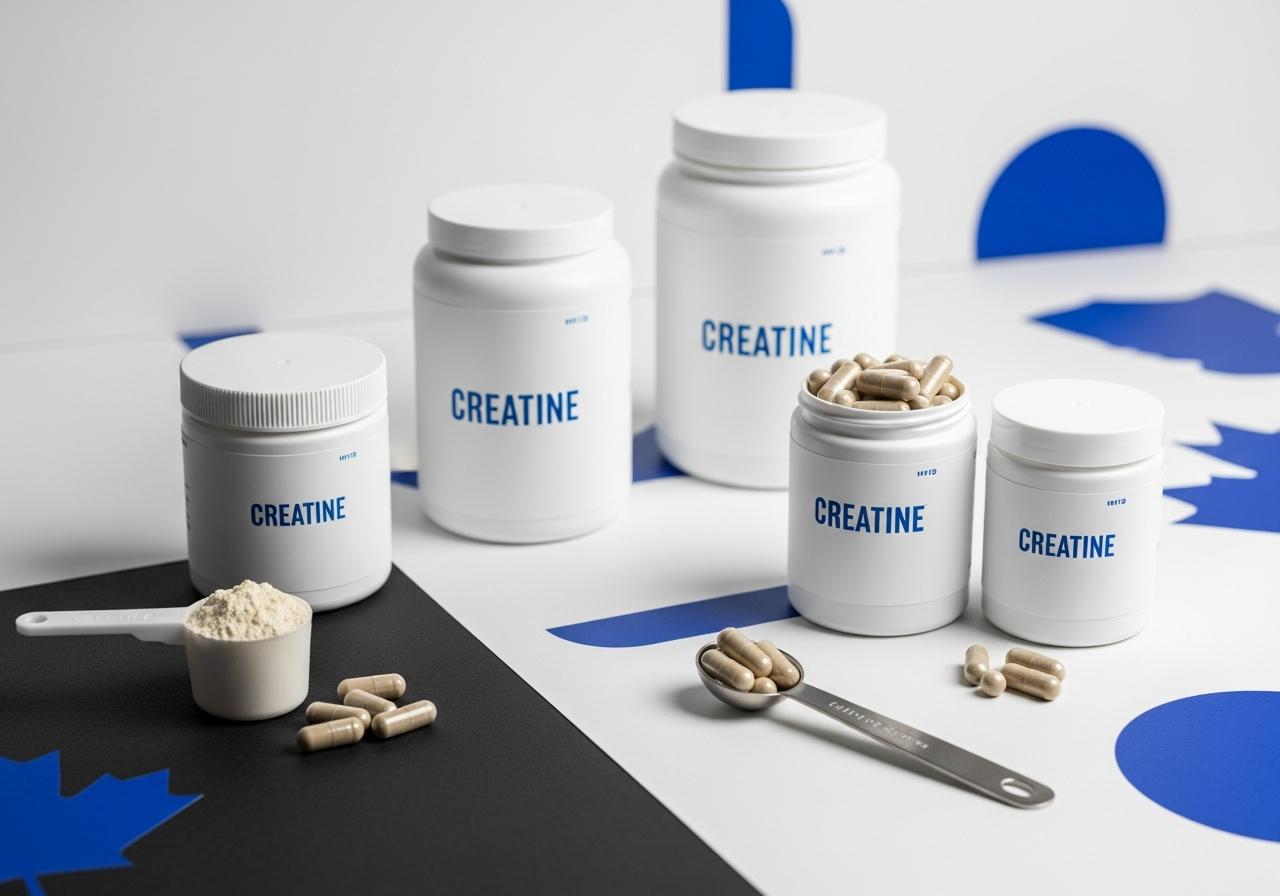
If you decide to use creatine despite the hair-loss debate, the best choice is usually a plain creatine monohydrate product with transparent quality control. There is no evidence that fancy forms such as HCl, buffered creatine, gummies, or blends are safer for hair than monohydrate.
Creatine monohydrate remains the most studied and most cost-effective form. The International Olympic Committee consensus on supplements supports the use of evidence-based products in sport, and creatine is one of the most established performance supplements in that category. See the IOC consensus here: International Olympic Committee consensus on dietary supplements.
For Canadians, a smart buying checklist includes:
- Single ingredient: Choose plain creatine monohydrate, not a proprietary blend.
- Third-party testing: Look for independent purity testing where possible.
- NPN awareness: In Canada, an NPN is a Natural Product Number that indicates Health Canada product licensing for applicable natural health products.
- Clear serving size: You want a label that tells you exactly how many grams per scoop.
- No unnecessary add-ons: Avoid hormone-related add-ons or stimulant stacks if hair is already a worry.
| Option | Pros | Cons | Best use case |
|---|---|---|---|
| Creatine monohydrate powder | Most studied, affordable, easy to dose | Needs mixing | Best default for almost everyone |
| Micronized monohydrate | Mixes a bit easier, same core ingredient | Sometimes costs more | Good if texture matters |
| Capsules | Convenient, no taste | Usually pricier per gram, many pills needed | Travel or no-mix users |
| Blends and “advanced” forms | Marketing appeal | Less evidence, often more expensive | Usually unnecessary |
If you want product comparisons, start with our creatine product catalog, best creatine monohydrate in Canada, and why monohydrate still wins.
The simplest rule is the best one: if you are nervous about hair, do not complicate the experiment. Use one ingredient, one fixed dose, one consistent routine, and enough time to judge your response properly.
Creatine hair-loss myths, Reddit claims, and what they get wrong
Most online claims that creatine definitely causes balding overstate what the research actually shows. If you have been searching Reddit threads, TikToks, or forums, you have likely seen anecdotes treated like proof and mechanisms treated like outcomes.
Here are the most common myths, answered directly:
- Myth: Creatine causes hair loss in everyone.
Fact: No human evidence shows a universal hair-loss effect from creatine. - Myth: If creatine raises DHT once, that proves it makes you bald.
Fact: A blood marker change does not automatically translate into visible clinical hair loss. - Myth: More water retention means hair follicles are being damaged.
Fact: Creatine's water effect is primarily intracellular in muscle and has no established direct link to hair shedding. - Myth: Low creatine causes hair loss, so taking creatine should help hair.
Fact: There is no good evidence that low creatine is a common cause of hair loss or that creatine supplementation treats balding. - Myth: Alternative forms like HCl avoid the hair issue.
Fact: There is no direct evidence that non-monohydrate forms are safer for hair.
Anecdotes still matter at the personal level, but they need context. If 1,000 people take creatine, some will naturally enter a phase of hair thinning while using it, because pattern hair loss is common and often age-related. That timing can feel convincing even when the supplement is not the driver.
There is also a selection bias online: people who think a supplement harmed them are much more likely to post than people who took it for a year without any hair issue. Reddit can be useful for seeing what concerns real users have, but it is weak evidence for causation.
The most rational takeaway from the forum noise is this:
Creatine hair-loss stories are best viewed as signals to monitor, not as proof that creatine makes people bald.
If you want a broader reality check on recurring supplement claims, see creatine myths vs. facts and does creatine affect testosterone. Both help separate hormone panic from what the literature actually supports.
Bottom line: should you take creatine if you are worried about hair loss?
If you are worried that creatine will cause hair loss, the best evidence-based answer is that it probably will not for most people, but the question is not fully settled for those genetically prone to pattern baldness. That is the honest middle ground between dismissing the concern and exaggerating it.
Here is the decision framework:
- Take creatine normally if you want the performance and muscle benefits, have no meaningful hair-loss history, and are comfortable with a theoretical but unproven risk.
- Take a cautious approach if you have a strong family history, already see thinning, or are very appearance-sensitive. Use 3 g daily, skip loading, document your baseline, and review after 8 to 12 weeks.
- Skip it if any possible DHT-related uncertainty is unacceptable to you. That is a valid personal choice even if the evidence is weak.
It is also important to keep perspective. Creatine is one of the best-supported sports supplements we have for short-duration high-intensity performance, strength, and lean mass support. Hair loss, by contrast, remains a debated hypothesis rather than a demonstrated side effect. Those two evidence levels are not equal.
If you do use creatine, keep the rest of your plan boring and consistent: plain monohydrate, a measured daily dose, adequate hydration, and no unnecessary stacks. If you do not use it, you are not missing a health essential; you are simply passing on a useful ergogenic aid because your risk tolerance is lower. That is reasonable.
The final answer to does creatine cause hair loss is this: current research does not show that creatine directly causes hair loss, but people already vulnerable to DHT-sensitive balding may still prefer a cautious trial or avoidance until better research exists.
If you want to continue your research, the most useful next reads are is creatine safe, creatine for beginners, and how to take creatine.
Creatine and Hair Loss: The Numbers That Matter
- 1 small human study sparked most of the DHT concern — The hair-loss debate largely traces back to one 2009 rugby-player study measuring DHT, not hair counts.
- 20 g/day typical loading dose used for 5 to 7 days — Usually split into 4 doses to saturate muscle creatine faster.
- 3 to 5 g/day standard evidence-based maintenance dose — This is the common long-term daily range for creatine monohydrate.
- 8 to 12 weeks reasonable self-monitoring window for hair concerns — Hair changes are slow, so a few days is too short to judge cause and effect.
Frequently Asked Questions
Does creatine cause hair loss?
No, creatine has not been proven to cause hair loss in humans. The concern comes from a small study showing higher DHT after creatine loading, but no controlled trial has shown that creatine directly increases hair shedding, causes balding, or speeds visible pattern hair loss.
Can creatine increase DHT?
Possibly, but the evidence is limited and inconsistent. One small study found a rise in DHT after a loading phase, yet later research has not clearly confirmed a consistent DHT-raising effect from creatine across different populations and study designs.
Will 5 g of creatine cause hair loss?
There is no evidence that a standard 5 g daily dose causes hair loss. Five grams per day is a common maintenance dose for creatine monohydrate, and no study has shown that this amount makes people bald faster or directly causes hair to fall out.
Can creatine cause balding in men?
Creatine has not been shown to cause balding in men, but men with androgenetic alopecia may still worry about the DHT question. If you have strong genetic susceptibility, a cautious trial without loading and with photo tracking is a reasonable compromise.
Can creatine cause hair loss in women?
Creatine has not been shown to directly cause hair loss in women. If a woman notices shedding after starting creatine, more common causes such as low iron, thyroid issues, stress, postpartum changes, or dieting should be considered before blaming the supplement.
How fast does creatine cause hair loss?
If creatine were to affect hair at all, it would likely be gradual rather than immediate. Hair biology moves slowly, so visible changes from any DHT-sensitive mechanism would be more likely to appear over weeks to months than within a few days.
Does low creatine cause hair loss?
No, low creatine is not an established common cause of hair loss. Creatine is important for cellular energy, especially in muscle, but there is no good clinical evidence showing that low creatine status is a typical reason people lose scalp hair.
Can creatine help with hair loss?
No, creatine is not a proven treatment for hair loss. There is no good evidence that creatine supplementation regrows hair, reduces shedding, or improves pattern baldness, so it should not be used as a hair-health intervention.
Does creatine make you bald faster if baldness runs in your family?
It has not been proven to do so, but family history is the main reason some people remain cautious. If you are already predisposed to androgen-sensitive hair loss, even an unproven DHT-related concern may matter enough to justify slower dosing or avoiding creatine entirely.
Should I stop creatine if I think it is making my hair fall out?
Yes, stopping is reasonable if you think creatine might be contributing and hair preservation matters to you. The best way to judge is to stop creatine, keep other variables stable, and track shedding and scalp photos for several weeks because hair changes are not immediate.