
Creatine vs. Vitamin D: Why Canadian Athletes Often Need Both
By The Creatine Canada Research Team — Evidence-based supplement analysts
Creatine vs vitamin D is not an either-or choice for most active Canadians: creatine and vitamin D do completely different jobs, and many athletes benefit from using both. Creatine primarily supports high-intensity performance, strength, lean mass, and recovery capacity, while vitamin D primarily supports bone health, calcium regulation, muscle function, and correcting a common deficiency risk in northern climates like Canada.
Evidence-based · Cites 4 sources · Editorial standards
Key Takeaways
- Creatine and vitamin D are not substitutes; they target different systems and can complement each other.
- Creatine monohydrate is the best-studied form, with 3-5 g/day as the standard maintenance dose.
- Vitamin D is most useful when intake is low or blood levels are insufficient, which is common in Canada during low-sun months.
- You can take creatine and vitamin D together safely; there is no meaningful absorption conflict for most healthy adults.
- Choose creatine for strength, power, repeated sprint performance, and lean mass support; choose vitamin D for deficiency correction, bone support, and broader musculoskeletal health.
- Older adults, women, plant-based athletes, and indoor athletes often have especially good reasons to consider both.
- For Canadian buyers, look for clear dosing, an NPN when applicable, and preferably third-party testing or sport certification.
Creatine vs. vitamin D: the short answer is that most athletes do better with both, not one or the other
Creatine vs vitamin D is usually a false choice because they are not competing supplements. Creatine is an energy-support compound stored in muscle as phosphocreatine, which helps regenerate ATP, the cell’s immediate energy currency, during short, hard efforts. Vitamin D is a fat-soluble vitamin and hormone-like nutrient that helps regulate calcium, supports bone health, and influences muscle and immune function.
That means the better question is not usually creatine or vitamin D? but rather which problem are you trying to solve? If your goal is better gym performance, more strength, improved repeated sprint output, or easier lean-mass gains, creatine is the more direct tool. If your goal is correcting low vitamin D, supporting bone health, or addressing a likely winter deficiency in Canada, vitamin D is the more direct tool. If you care about both performance and long-term musculoskeletal health, creatine and vitamin D together often make sense.
The evidence for creatine is especially strong for high-intensity exercise performance and training adaptations. The 2017 ISSN position stand concluded that creatine monohydrate is the most effective ergogenic nutritional supplement currently available for increasing high-intensity exercise capacity and lean body mass during training. Vitamin D has a different evidence profile: it is essential for health, and supplementation is most clearly helpful when intake or status is inadequate.
For Canadians, this distinction matters. Many people train indoors, work indoors, cover skin for much of the year, and get limited UVB exposure in winter. So vitamin D vs creatine is not a strength-vs-strength comparison. It is more like comparing a powertrain upgrade to fixing a common nutrient gap.
- Choose creatine first if your main goal is performance, strength, power, muscle fullness, or training output.
- Choose vitamin D first if you have known low intake, low blood levels, low sun exposure, or a bone-health priority.
- Choose both if you are an active Canadian who wants to cover both performance and foundational musculoskeletal support.
If you are brand new to supplementation, start with plain creatine monohydrate and a sensible vitamin D routine rather than a flashy proprietary stack. Our creatine dosage calculator and guide on best creatine rankings can help you build the creatine side properly.
How creatine and vitamin D work: different mechanisms, different outcomes
Creatine and vitamin D work through separate biological pathways, which is exactly why a creatine vitamin D combination can be logical. Creatine works mainly inside muscle and other high-energy tissues by increasing phosphocreatine stores. Phosphocreatine donates a phosphate to help remake ATP during explosive efforts such as heavy lifts, sprints, jumps, and repeated intervals. Better phosphocreatine availability can improve training quality, and better training quality is one reason creatine helps with strength and muscle gain over time.
Vitamin D does not refill phosphocreatine stores. Instead, vitamin D is converted in the body into active forms that help regulate calcium and phosphorus balance, support bone mineralization, and affect muscle tissue and neuromuscular function. In plain English, vitamin D helps the body maintain a healthier environment for bones and muscles to function properly. If vitamin D status is poor, muscle function and general health can suffer, but correcting that is not the same thing as getting the direct performance boost seen with creatine.
There is also a practical timing difference in how results appear:
- Creatine tends to work by saturating tissues over days to weeks, depending on whether you use a loading phase.
- Vitamin D works more like restoring or maintaining nutrient status over time, especially if you were low to begin with.
This is why people asking vitamin d vs creatine often feel confused: both can influence muscle-related outcomes, but they do so for different reasons. Creatine is a performance supplement with robust sports-nutrition evidence. Vitamin D is an essential nutrient whose benefits are most meaningful when it corrects insufficiency or supports a genuine need.
The International Olympic Committee consensus on dietary supplements places creatine among the supplements with strong evidence for specific performance uses. That is not how vitamin D is usually framed in sport; vitamin D is more often discussed as a health and deficiency-management priority rather than a universal ergogenic aid.
If you want the cleanest mental model, use this one:
- Creatine helps you do more quality work in training.
- Vitamin D helps your body maintain the conditions needed for healthy bones and normal muscle function.
That distinction should drive your supplement decisions more than marketing ever will. For a deeper primer, see creatine product catalog and our beginner guide to creatine brand reviews when comparing product formats.
Creatine or vitamin D? Choose based on your actual goal, not the label on the bottle
If you are deciding between creatine or vitamin D, the right pick depends on whether your priority is performance adaptation or nutrient sufficiency. A lot of poor supplement choices happen because people compare products that solve different problems.
Creatine is the better first choice if your main goal is any of the following:
- Increase strength in the gym
- Improve repeated sprint or interval performance
- Support lean mass gains during resistance training
- Maintain better training quality during hard blocks
- Support power-based sports such as hockey, football, sprinting, CrossFit, or powerlifting
Vitamin D is the better first choice if your main need is any of the following:
- You get very little sun exposure for much of the year
- You live in Canada and spend most of winter indoors
- You have known low vitamin D intake or confirmed insufficiency
- You are focused on bone health or broader nutritional foundations
- Your clinician has told you your vitamin D status is low
Take creatine and vitamin D together if you are an active person who trains hard and also has a realistic risk of low vitamin D status. That is a common scenario for recreational lifters, team-sport athletes, shift workers, students, and office workers in Canada.
Beginners often ask whether creatine somehow “covers” vitamin D because both are discussed for muscle. It does not. Creatine does not replace an essential nutrient. The reverse is also true: vitamin D does not replace the training-performance role of creatine.
Here is the blunt, useful version:
- If you lift weights or do repeated high-intensity sport, creatine is usually worth serious consideration.
- If you are indoors most of the year or have reason to suspect low vitamin D, vitamin D is also worth serious consideration.
- If both descriptions fit you, using both is often more rational than trying to pick a “winner.”
For most healthy adults, creatine monohydrate is the best place to start on the performance side because it is the most studied and most cost-effective form. The 2021 JISSN review on creatine misconceptions also reinforces that creatine monohydrate remains the reference form rather than newer premium-priced alternatives. If you need help starting, read creatine myths debunked and browse our best creatine rankings before buying.
Can you take creatine and vitamin D together? Yes, and for most people the stack is straightforward

Yes, you can take creatine and vitamin D together, and there is no well-established reason that the combination reduces the effectiveness of either supplement in healthy adults. They do not meaningfully compete for the same transport system or “cancel each other out,” which is why the common search for a creatine and vitamin d stack is reasonable.
From a practical standpoint, the easiest way to run a creatine vitamin d combination is this:
- Take creatine daily, because muscle saturation matters more than exact clock timing.
- Take vitamin D consistently, ideally in a routine you will actually remember.
- Take vitamin D with a meal that contains some fat if that helps adherence, since it is a fat-soluble vitamin.
- Mix creatine in water, a shake, or with a meal, whichever is easiest on your stomach.
You do not need a special synergy protocol. You do not need to separate them by hours. You do not need to buy a hybrid product to make them “work together.” In fact, separate products often make dosing more precise and buying simpler.
What might the stack feel like in real life? Creatine may show up as better training output, extra reps, small strength increases, better sprint repeatability, and sometimes a modest bump in scale weight from increased intracellular water. Vitamin D is less likely to create a dramatic day-to-day feeling unless you were low before. Its role is usually quieter: supporting a healthier baseline rather than acting like a pre-workout.
Who benefits most from taking both?
- Indoor athletes who train hard but get little winter sun
- Older adults focused on muscle and bone support
- Women concerned with strength, training quality, and long-term musculoskeletal health
- Vegetarians and vegans who may respond well to creatine and may also need to pay attention to micronutrient status
- Beginners who want one evidence-based performance supplement plus one foundational nutrient
If your goal is simply to build a sensible first stack, creatine plus vitamin D is more evidence-based than many trendy multi-ingredient blends. For creatine timing specifics, see when to take creatine, and for the bigger picture, our guide on how to take creatine covers the daily routine in detail.
Exact dosing: how much creatine and vitamin D to take, by goal and body size
For creatine, the evidence-based maintenance dose for most adults is 3-5 g per day, while vitamin D dosing should follow product directions and ideally your clinician’s guidance if you have a known deficiency. Creatine dosing is much more standardized than vitamin D dosing in sports nutrition, so it makes sense to be precise on the creatine side and more individualized on the vitamin D side.
For creatine monohydrate, mainstream protocols are:
- Maintenance-only approach: 3-5 g daily
- Loading approach: about 20 g daily, split into 4 doses, for 5-7 days, then 3-5 g daily
- Relative-dose loading option: about 0.3 g/kg/day for 5-7 days, then about 0.03 g/kg/day
Body size can help you decide where to sit within the maintenance range. A smaller adult may do fine at 3 g/day, while a larger athlete often chooses 5 g/day.
| Body weight | Creatine maintenance | Loading option | Best for |
|---|---|---|---|
| Under 60 kg | 3 g/day | 20 g/day split for 5-7 days if rapid saturation is desired | Smaller adults, beginners sensitive to GI upset |
| 60-90 kg | 3-5 g/day | 20 g/day split for 5-7 days | Most gym-goers and field/court athletes |
| Over 90 kg | 5 g/day | 20 g/day split for 5-7 days or weight-based loading | Larger strength and power athletes |
Vitamin D dosing is different because need varies more by diet, sun exposure, season, body size, skin coverage, and actual blood status. A person with normal status may just need a routine maintenance intake, while someone with low levels may need a clinician-directed plan. That is why it is a mistake to force vitamin D into the same one-size-fits-all logic used for creatine.
Two practical rules help:
- Use creatine like a saturation supplement. Daily consistency matters more than tinkering.
- Use vitamin D like a nutrient-status supplement. Individual need matters more than copying an influencer’s dose.
If you want help calculating creatine precisely, use our creatine dosage calculator and read how much creatine per day. If you experience stomach issues with larger doses, splitting creatine into smaller servings usually solves the problem better than abandoning it entirely.
Timing and realistic expectations: what happens in week 1, week 2, and beyond
Creatine timing matters far less than daily consistency, while vitamin D timing mainly matters for adherence and routine. If you take creatine at a time you can repeat every day, you have already solved most of the timing question. The same is true for vitamin D, especially if you pair it with a regular meal.
For creatine, here is the realistic timeline:
- With loading: muscle saturation rises quickly, so some people notice fuller muscles, slight scale-weight increases, or better gym performance within about a week.
- Without loading: taking 3-5 g/day usually reaches a similar place more gradually, often over roughly 3-4 weeks.
- After saturation: the noticeable benefit is usually better training capacity over time, not a dramatic stimulant-like feeling.
How do you know creatine is working? Most people should not expect fireworks. Better signs are:
- An extra rep on hard sets
- Slightly better repeated sprint output
- More stable performance deep into a workout
- Small upward trends in strength over several weeks
- Sometimes a modest increase in body weight from intracellular water
Vitamin D is different. If you were low, restoring status may support better overall function, but the timeline is less obvious and the outcome may not feel acute. Think of it as maintaining the terrain rather than pressing a turbo button.
For the average active Canadian using a creatine and vitamin D stack, a sensible expectation is this:
- Week 1: creatine may cause mild water-weight gain, especially if loading; vitamin D is mostly just becoming part of your routine.
- Weeks 2-4: creatine’s performance effects become more noticeable in training logs; vitamin D remains a background support play.
- Weeks 4-12: better training quality from creatine can contribute to improved strength and lean-mass progress if your program and diet are solid.
The biggest mistake is quitting creatine after a few days because you do not “feel energy.” Creatine is not caffeine. It improves the energy system that supports repeated high-output efforts. For more on timelines, see how long does creatine take to work and creatine loading phase.
Who should seriously consider both: beginners, women, older adults, and indoor athletes
The people most likely to benefit from creatine and vitamin D together are active adults who want performance support and also have a realistic risk of low vitamin D status. In Canada, that group is large.
Beginners often benefit because simple, evidence-based supplements are better than complicated stacks. A novice lifter can use creatine to support training output and vitamin D to cover a common nutritional weak point, especially during low-sun months. Neither supplement replaces training, protein, sleep, or calories, but both can fit a solid foundation.
Women are often underserved by old-school supplement marketing, yet both creatine and vitamin D can be relevant. Creatine supports training quality, lean mass retention, and strength work without being a steroid or a “bulking” hormone product. Vitamin D matters for general musculoskeletal health, and the combination can be especially appealing for active women focused on strength, body composition, and long-term healthy aging. Our guide on creatine for women goes deeper.
Older adults may have one of the strongest cases for considering both. Creatine can support resistance-training adaptations and muscle function, while vitamin D remains important for bone and broader musculoskeletal health. This pairing becomes especially relevant when people are trying to preserve independence, training capacity, and lean mass after 50. See creatine for older adults for specifics.
Vegetarians and vegans may respond especially well to creatine because dietary creatine intake is lower when meat and fish are absent. That does not automatically mean vitamin D is low, but it does reinforce the value of checking whether basic nutrient intake is covered. Plant-based athletes should think carefully about both performance nutrition and micronutrient sufficiency.
Indoor athletes and office workers may be the most Canadian example of all. Hockey players, students, lifters, and shift workers can train hard while still getting very little effective sun exposure for much of the year. In that scenario, the question creatine or vitamin d misses the point. The smart answer may be both.
One final note: if you have a medical condition, a history of kidney disease, disorders affecting calcium metabolism, or you use medications that interact with supplements, get personalized guidance before adding either one. The general advice here is for otherwise healthy adults.
Safety, side effects, and interactions: what is well established and what deserves caution
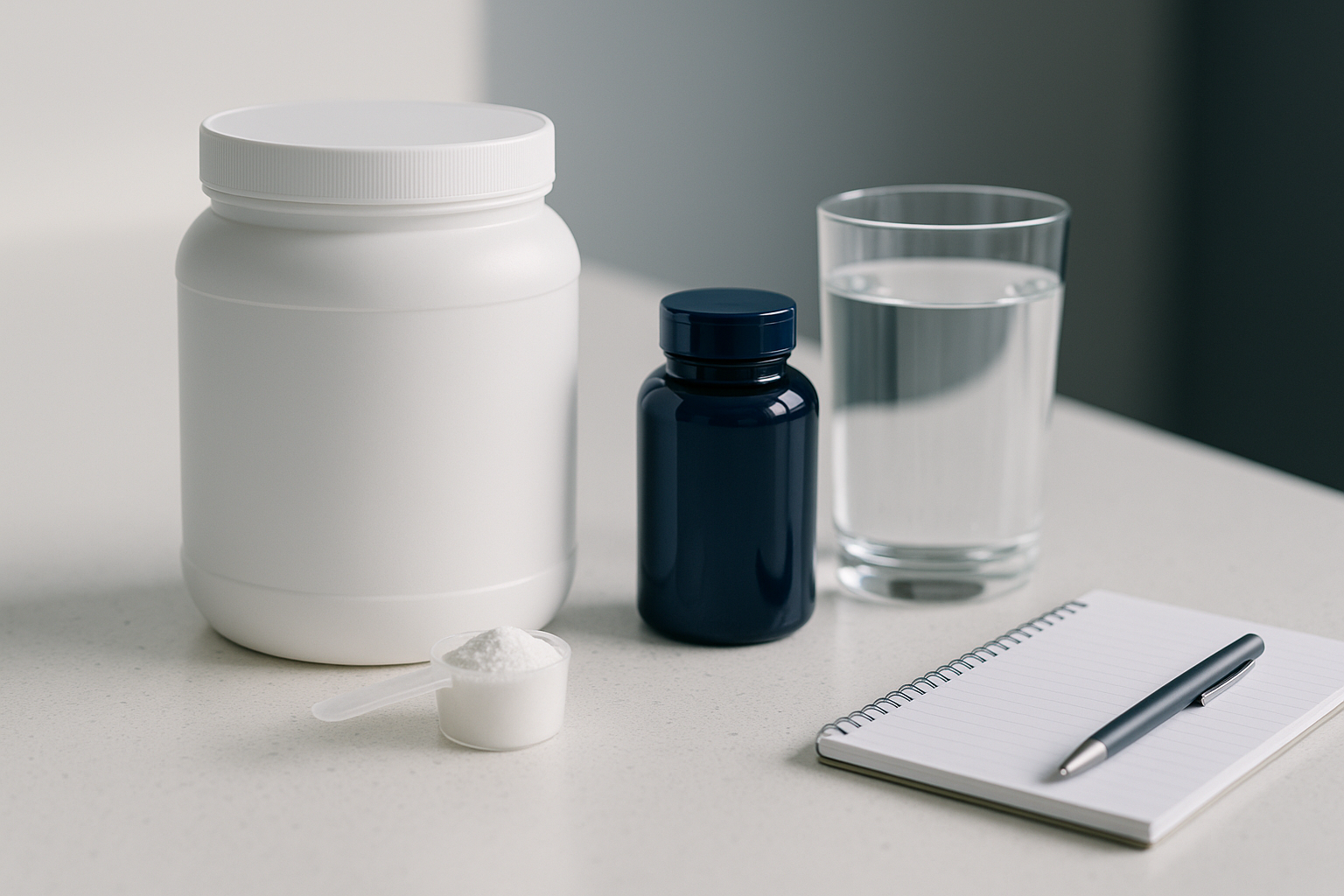
Creatine is well supported as safe for healthy adults when used appropriately, while vitamin D is also safe when used appropriately but becomes more individualized because excessive intake can be harmful. This is one of the biggest practical differences between the two.
Creatine has been studied extensively. The 2021 JISSN review on common questions and misconceptions about creatine supplementation concluded that many common fears are not supported by the evidence, including myths that creatine inherently damages kidneys in healthy users, causes dehydration, or acts like an anabolic steroid. The Mayo Clinic also notes that creatine appears to be safe for up to several years when used as directed in healthy people.
Common creatine side effects are usually manageable rather than dangerous:
- Stomach upset from taking too much at once
- Temporary bloating or GI discomfort during aggressive loading
- Modest body-weight increase from water drawn into muscle
Vitamin D is different because it is a nutrient that can be overdone, especially if people stack multiple products or use very high doses without medical guidance. More is not always better. If you have a known deficiency, a clinician may recommend a structured repletion plan, but that is different from freelancing large doses indefinitely.
Use extra caution with vitamin D if you have:
- Disorders of calcium metabolism
- Certain kidney conditions
- Granulomatous diseases or other conditions affecting vitamin D metabolism
- A supplement routine that already includes multiple fortified products
Use extra caution with creatine if you have:
- Known kidney disease
- A clinician who is actively monitoring a renal condition
- Medical instructions to avoid certain supplements
There is no strong evidence that creatine and vitamin D together create a special interaction problem in healthy adults. The bigger risks are boring ones: using too much vitamin D without guidance, buying low-quality supplements, or confusing water-weight changes from creatine with fat gain.
If you want a deeper dive, our guides on is creatine safe, is creatine bad for your kidneys, and creatine digestive side effects cover the usual concerns in detail.
Common mistakes and myths: where people go wrong with creatine vs. vitamin D
The biggest mistake in the creatine vs vitamin D debate is treating them like interchangeable muscle supplements. They are not interchangeable, and most confusion starts there.
Myth 1: Vitamin D is basically the same as creatine because both affect muscles.
False. Creatine directly supports rapid ATP regeneration in muscle, while vitamin D supports broader physiological functions including calcium regulation and bone health. Shared relevance to muscle does not mean shared mechanism or effect size.
Myth 2: If I take vitamin D, I do not need creatine.
False. Vitamin D does not replace creatine’s role in high-intensity performance and training adaptation.
Myth 3: If I take creatine, I can ignore vitamin D.
Also false. Creatine is not an essential vitamin and cannot correct low vitamin D status.
Myth 4: You need a special creatine and vitamin D stack product.
Usually false. Separate products are often simpler, cheaper, and easier to dose correctly.
Myth 5: Creatine causes kidney damage in healthy people.
This is not supported by the bulk of evidence in healthy users when creatine is used appropriately, though people with kidney disease should get medical guidance.
Myth 6: More vitamin D is always better.
False. Vitamin D is not a “more is more” supplement, and excessive intake can create real problems.
The most common real-world mistakes are:
- Using creatine inconsistently and then calling it ineffective
- Taking huge creatine doses at once and blaming the supplement for GI issues
- Ignoring wintertime vitamin D risk in Canada
- Buying proprietary blends instead of plain creatine monohydrate
- Assuming feeling nothing means nothing is happening
- Confusing normal creatine water retention with fat gain
A cleaner approach is simple: use plain creatine monohydrate daily, treat vitamin D as a nutrient-status issue rather than a performance hack, and judge creatine by your training log rather than by a stimulant-like feeling. If you are still sorting fact from fiction, start with creatine myths vs. facts and creatine not working for troubleshooting.
Buying in Canada: what to look for on the label, and how to avoid overpaying
In Canada, the best creatine choice is usually a plain creatine monohydrate product with clear dosing, while vitamin D should come from a reputable product with straightforward labelling and sensible serving information. Fancy branding matters far less than ingredient quality and label transparency.
For creatine, prioritize:
- Creatine monohydrate as the ingredient
- Clear grams per serving, ideally with no underdosed blend games
- Minimal extras unless you specifically want flavouring
- Third-party testing or sport certification if you are a tested athlete
- Good cost per gram, because monohydrate should not be overpriced
For vitamin D, prioritize:
- Clear dosage per serving
- Reputable manufacturing and retailer sourcing
- Simple ingredients if you want to avoid unnecessary fillers
- An NPN, which stands for Natural Product Number, when the product is regulated as a licensed natural health product in Canada
For athletes subject to doping control, third-party testing matters more than marketing claims. A supplement can be legal and still be contaminated in manufacturing, so NSF Certified for Sport or Informed Sport-style screening can add confidence when relevant.
| What to compare | Creatine | Vitamin D |
|---|---|---|
| Best starting form | Creatine monohydrate | Simple vitamin D product from a reputable brand |
| Main quality cue | Clear grams of monohydrate, minimal fluff | Clear dosage and straightforward label |
| Canadian label cue | NPN may be present depending on product category and compliance | NPN commonly relevant for natural health products |
| Third-party testing | Especially useful for competitive athletes | Helpful, though sport contamination risk is a bigger issue with performance supplements |
| Overpay risk | High with exotic forms and blends | High with branded “wellness” packaging |
If you are shopping now, compare products by simplicity and value before being swayed by claims of better absorption or “advanced” delivery. For creatine specifically, our creatine brand reviews, creatine product catalog, and best creatine rankings are the best places to narrow down legitimate Canadian options.
Bottom line: creatine vs. vitamin D is the wrong debate for most active Canadians
The best answer to creatine vs vitamin D for most active Canadians is that they do different jobs, and many people have good reasons to use both. Creatine is the better evidence-based choice for strength, power, repeated high-intensity performance, and lean-mass support. Vitamin D is the better choice for addressing low intake or low status and supporting bone and musculoskeletal health, especially in a northern climate.
If your question is creatine or vitamin d, decide based on your primary need:
- Pick creatine if performance and training progress are the priority.
- Pick vitamin D if nutrient sufficiency and bone-health support are the priority.
- Pick both if you train hard and also have a realistic reason to support vitamin D status.
The most practical setup for most healthy adults is simple:
- Use plain creatine monohydrate.
- Take it every day at 3-5 g/day, unless you are using a short loading phase.
- Use vitamin D consistently according to the label or clinician guidance if your status is a known issue.
- Do not expect vitamin D to feel like a performance supplement.
- Judge creatine by improved training quality over weeks, not by a one-day sensation.
There is no prize for making supplementation more complicated than it needs to be. The evidence-backed move is to match the supplement to the problem. In 2026, that still means creatine monohydrate remains the gold standard performance supplement in its category, while vitamin D remains a foundational nutrient that matters even more when you are actually low.
If you want to act today, start by choosing a plain monohydrate product from our creatine product catalog, verify your dose with the creatine dosage calculator, and keep the rest of your routine boring and consistent. Boring is often what works best.
Creatine vs. Vitamin D at a Glance
- 3-5 g/day Standard creatine maintenance dose — Evidence-based daily amount for most adults using creatine monohydrate.
- 20 g/day Typical creatine loading dose — Usually split into 4 doses for 5-7 days to saturate muscles faster.
- 5-7 days How fast loading can work — A loading phase can raise muscle creatine stores much faster than maintenance-only dosing.
- 3-4 weeks Typical no-loading timeline — Daily 3-5 g creatine can reach a similar saturation point more gradually.
Frequently Asked Questions
Is creatine better than vitamin D for building muscle?
Yes, creatine is generally more directly useful than vitamin D for building muscle because it improves phosphocreatine availability and supports higher-quality training. Vitamin D can matter for muscle function if you are low, but it is not a substitute for creatine’s well-established performance and training benefits.
Can I take creatine and vitamin D together every day?
Yes, most healthy adults can take creatine and vitamin D together every day. Creatine works best when taken consistently to maintain muscle saturation, and vitamin D works best when taken regularly enough to maintain or restore adequate status.
Creatine or vitamin D for beginners: which should I start with?
For a beginner focused on gym performance, creatine is usually the more noticeable first supplement. If you have very low sun exposure, known low vitamin D, or a bone-health concern, vitamin D may be equally important, and many beginners in Canada have valid reasons to use both.
Does vitamin D help gym performance like creatine does?
No, vitamin D does not help gym performance in the same direct way creatine does. Creatine improves the rapid energy system used in hard sets and repeated efforts, whereas vitamin D mainly supports nutrient sufficiency, bone health, and normal muscle function.
Is a creatine and vitamin D stack worth it?
Yes, a creatine and vitamin D stack can be worth it if you want both performance support and nutritional coverage. The stack makes the most sense for active people who train hard and also have a realistic chance of low vitamin D status, which is common in Canada.
Do creatine and vitamin D interact with each other?
There is no well-established harmful interaction between creatine and vitamin D in healthy adults. They act through different mechanisms, so the main practical issue is not interaction but using appropriate doses and choosing quality products.
Should athletes in Canada take vitamin D as well as creatine?
Many Canadian athletes have a good case for taking vitamin D as well as creatine, especially if they train indoors or get little winter sun. Creatine addresses performance and training adaptation, while vitamin D helps cover a common nutrient-status concern in northern climates.
When should I take creatine and vitamin D?
Take creatine whenever you can be consistent, because total daily intake matters more than exact timing. Take vitamin D at a regular time you will remember, often with a meal, especially since many people find that easiest for routine.
Which is safer, creatine or vitamin D?
Both are generally safe when used appropriately, but they require different kinds of caution. Creatine is well studied in healthy adults at standard doses, while vitamin D is also safe when used sensibly but can be overdone more easily if people take excessive amounts without guidance.
Do I need bloodwork before taking vitamin D or creatine?
You do not usually need bloodwork before taking standard-dose creatine if you are a healthy adult, but you may want individualized medical advice if you have kidney disease or another relevant condition. For vitamin D, bloodwork can be especially useful if you suspect deficiency or want dosing tailored to your actual status.