Creatine for Cheerleading: Stunt Strength, Tumbling Power, and Routine Endurance
By The Creatine Canada Research Team — Evidence-based supplement analysts
Yes—creatine for cheerleading can help many cheer athletes improve stunt strength, tumbling power, repeated explosive effort, and training quality, especially in routines built on short, intense bursts. The best-supported option is creatine monohydrate at 3–5 g daily, because it raises muscle phosphocreatine stores and helps you regenerate ATP faster during jumps, tumbling passes, basket tosses, and repeated practice reps.
Evidence-based · Cites 4 sources · Editorial standards
Key Takeaways
- Creatine can help cheerleading by supporting short, explosive efforts like tumbling, jumps, stunts, and repeated routine run-throughs.
- Creatine monohydrate is the most studied, most effective, and usually most cost-effective form for cheer athletes.
- A simple maintenance dose of 3–5 g per day works for most athletes; loading is optional, not required.
- Expect faster results in 5–7 days with loading, or in roughly 3–4 weeks with daily maintenance only.
- Small scale-weight increases are usually water inside muscle, not body fat, and may matter more for flyers than bases.
- Creatine is generally considered safe for healthy people when taken as directed, but athletes with kidney disease or relevant medical conditions should speak to a clinician first.
- For Canadian buyers, choose a plain creatine monohydrate product with an NPN and, ideally, third-party sport testing if you compete.
Does creatine help cheerleading? Yes—especially for stunts, tumbling, jumps, and repeated hard practices
Yes, creatine for cheerleading is a smart evidence-based option for many athletes because cheer is not purely an endurance sport—it is a repeated explosive sport. Cheer routines demand short bursts of maximal or near-maximal effort: tumbling passes, jumps, partner stunts, basket tosses, rebounds, sprint-like transitions, and repeated full-outs in practice. Creatine helps most in exactly that kind of work.
Creatine works by increasing your stored phosphocreatine, the high-energy compound your muscles use to rapidly regenerate ATP, which is the immediate energy currency for intense contractions. When phosphocreatine stores are higher, you can often produce force a little better, repeat explosive efforts a little longer, and recover a little faster between short bouts. That matters in cheer when the quality of rep 8, 12, or 20 affects skill progress and safety.
For a cheer athlete, the most realistic benefits are:
- Better stunt support strength for bases and back spots during repeated lifts and catches.
- More pop in tumbling and jumps because explosive lower-body output is a key driver of height and speed.
- Improved repeated-effort capacity during long practices with multiple routine run-throughs.
- Higher training quality over time, which is where many of creatine’s biggest payoffs appear.
What creatine does not do is instantly teach skills, fix poor technique, or replace conditioning. It also is not a magic endurance booster for long, steady aerobic work. Its sweet spot is repeated high-intensity effort.
The 2017 ISSN position stand concluded that creatine monohydrate is the most effective nutritional supplement currently available for increasing high-intensity exercise capacity and lean mass during training. That conclusion matters for cheer because high-intensity capacity, not just muscle size, is central to sport performance. If you want a broader primer, see what creatine is and what it does and our guide to creatine for competitive athletes.
Bottom line: if your cheerleading involves strength, power, sprint-like effort, and repeated hard practices—which it almost certainly does—creatine is one of the few supplements with a strong evidence base and a clear sport-specific rationale.
How creatine works in a cheer athlete’s body: faster ATP recovery for explosive skills
Creatine helps cheerleading by improving the energy system that powers brief, intense efforts lasting only a few seconds at a time. Those efforts include a tumbling takeoff, a jump series, the dip-and-drive of a basket toss, a heavy stunt reload, or the catch phase of a pyramid.
Your muscles store creatine mostly as phosphocreatine. During all-out effort, ATP is broken down quickly to release energy. The problem is that ATP stores are tiny and can be depleted within seconds. Phosphocreatine donates a phosphate group to help rebuild ATP rapidly, letting the muscle keep producing force. Supplementing with creatine increases the amount of phosphocreatine available, so your body has a larger short-burst energy reserve.
That mechanism matters in cheer in three practical ways:
- More power per effort: Higher phosphocreatine availability can help support forceful muscle contractions in jumping, tumbling, and lifting.
- Better repeatability: Between stunt sets or tumbling attempts, creatine can help you restore high-energy phosphates faster, which may help later reps stay sharper.
- Better long-term adaptation: If training quality goes up, strength and power gains can improve over weeks and months.
Creatine may also increase water content inside muscle cells. That is often misunderstood. Intramuscular water can make muscle feel fuller and may support training adaptations, but it is not the same as body-fat gain. For a base trying to get stronger, that may be helpful. For a flyer who is highly sensitive to scale changes, it may require more planning and expectation-setting.
Research summaries such as Examine.com’s creatine evidence summary and the ISSN position stand both support creatine’s role in high-intensity performance. The evidence is strongest for strength, power, repeated sprint-type work, and gains during resistance training—not for directly improving choreography, flexibility, or balance.
In plain English: creatine does not energize you like caffeine. It helps your muscles recycle their own fastest fuel source more efficiently. That is why creatine for stunts and creatine for tumbling make physiological sense even though cheerleading is a mixed sport with strength, power, and endurance elements all at once.
Who benefits most in cheer? Bases, back spots, tumblers, jump-focused athletes, and many flyers too
Creatine is most useful for cheer athletes whose performance depends on repeated explosive force, and that includes more roles than many people think. Bases and back spots are the clearest fit because they repeatedly produce force to lift, stabilize, dip, press, and absorb landings or catches. Tumblers are also strong candidates because tumbling rewards speed, power, and the ability to repeat hard attempts without performance dropping off.
For different cheer roles, the likely use cases look like this:
- Bases: Often benefit from improved strength, repeated lifting capacity, and better quality across long stunt sessions.
- Back spots: May benefit similarly, especially for repeated explosive assistance and overhead support work.
- Tumblers: Are good candidates because run, hurdle, punch, block, and rebound mechanics all depend on explosive output.
- Jump specialists: May benefit when higher-quality power training translates to more height and snap.
- Flyers: Can benefit too, particularly if they tumble, jump, and do significant strength work—but body-mass sensitivity matters more.
Flyers are where nuance matters. Creatine can still help a flyer, but even a modest increase in scale weight from water retained inside muscle may feel important in a role where partners lift your body. This does not mean flyers should avoid creatine automatically. It means they should decide based on their priorities, calendar, and response. A flyer in an off-season strength block may love creatine. A flyer just before a major event, where any scale change is psychologically or practically disruptive, may prefer to delay starting.
Women and girls often ask whether creatine is “for male strength sports.” It is not. Creatine’s mechanism is sex-neutral: muscles use phosphocreatine regardless of sex. If the athlete performs short explosive efforts, the rationale is there. For more on this, our creatine for women guide goes deeper into the evidence and the common bulking myth.
Beginners can benefit because better training quality early on often compounds over time. Vegetarian and vegan athletes may sometimes notice stronger responses because they often start with lower creatine intake from diet. If that sounds like you, our creatine for vegetarians guide is worth reading.
So, does creatine help cheerleading across the board? Not equally for every athlete, but for many cheerleaders—especially those focused on stunts, tumbling, jumps, and strength-based roles—the fit is very good.
Exactly how to take creatine for cheerleading: the simplest protocol that works
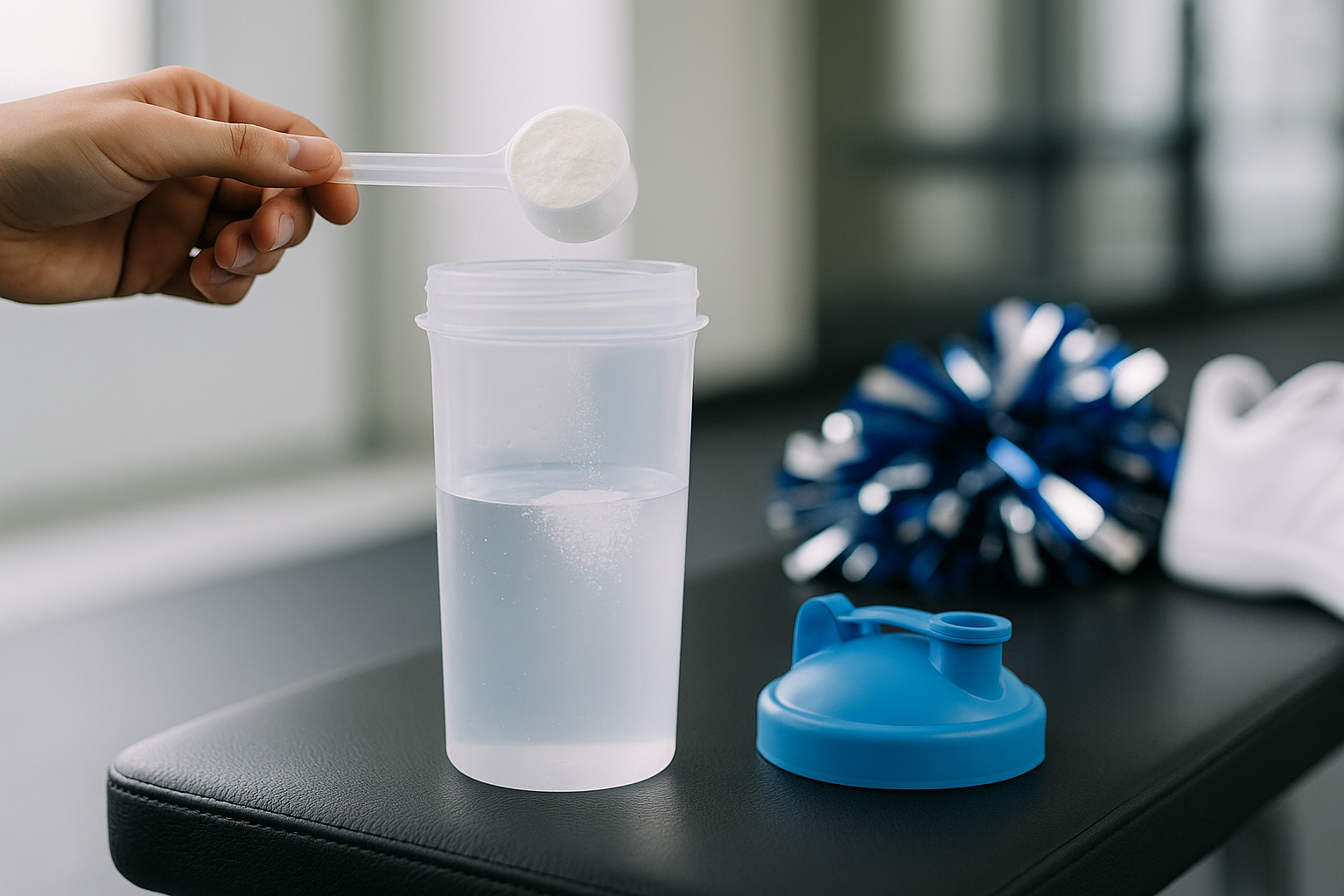
The simplest effective way to take creatine for cheerleading is 3–5 g of creatine monohydrate every day, including rest days. You do not need a complicated stack, a proprietary “sports blend,” or a pre-workout to make it work.
Here is the step-by-step approach most cheer athletes should follow:
- Choose creatine monohydrate. It is the most studied form and the one supported by the strongest evidence. If you are comparing products, start with our best creatine rankings or browse the creatine product catalog.
- Decide whether to load. If you want faster saturation, use a loading phase of about 20 g per day split into 4 doses of 5 g for 5–7 days. If you prefer a gentler approach, skip loading and take 3–5 g daily; you will usually reach effective saturation in roughly 3–4 weeks.
- Take it daily. Consistency matters more than perfect timing. Muscle saturation is the goal.
- Mix it in water or a shake. Creatine can be mixed with water, juice, or protein. If texture bothers you, warm water can help it dissolve better. See how to mix creatine for practical tips.
- Keep training normally. Creatine supports your training; it does not replace a strength and skill plan.
- Track your response for 4–8 weeks. Monitor gym lifts, jump quality, tumbling pop, late-practice fade, and body weight.
If you are unsure about the right amount, use our creatine dosage calculator. As a rule, 3 g daily is often enough for smaller athletes, while 5 g daily is a common maintenance dose for average-to-larger athletes or those with high training volume.
One practical tip for cheerleaders: if you are nervous about scale changes, start in an off-season or lower-stakes block. That gives you time to learn how your body responds before important performances.
Another practical tip: take creatine with a regular meal or post-workout shake if that improves adherence. The best protocol is the one you will actually follow for months. Missing an occasional day is not a disaster, but daily consistency is what builds and maintains full muscle creatine stores.
Creatine dosage for cheerleaders by body weight and goal
Most cheerleaders do well with 3–5 g of creatine monohydrate per day, but body size, role, and goal can help you fine-tune the plan. The main decision is not about finding a fancy formula—it is about whether you want faster saturation, slower saturation, or a cautious start.
Use this practical dosing table as a starting point:
| Cheer athlete profile | Daily maintenance dose | Optional loading phase | Best use case |
|---|---|---|---|
| Smaller athlete, cautious start, flyer sensitive to scale changes | 3 g/day | Usually skip loading | Slow, steady saturation with less chance of noticeable early water-weight change |
| Average-size cheer athlete | 3–5 g/day | 20 g/day split into 4 x 5 g for 5–7 days | General strength, tumbling, jumps, and routine support |
| Larger base or back spot, high training volume | 5 g/day | 20 g/day split into 4 x 5 g for 5–7 days | Faster saturation and robust maintenance for repeated lifting work |
| Athlete with sensitive stomach | 3 g/day, or split dose | Skip loading or use smaller split doses | Reduce GI discomfort while still reaching saturation over time |
The classic loading protocol comes from longstanding creatine research: about 20 g per day for 5–7 days, divided into smaller doses, followed by a maintenance dose of 3–5 g daily. The maintenance-only approach works too; it just takes longer. If you want more detail, read how much creatine per day and our loading phase guide.
What about weight-based dosing? In research settings, loading is often expressed relative to body weight, but for everyday use most athletes can safely simplify to the standard protocols above. The difference between 3 g and 5 g matters less than taking it consistently for long enough to saturate muscle.
Goal-specific guidance for cheer athletes:
- For stunts and general strength: 5 g/day is a very practical default.
- For tumbling and jump power: 3–5 g/day works well; loading if you want faster results.
- For flyers worried about body mass: start at 3 g/day and evaluate over several weeks.
- For in-season maintenance: keep the same daily dose; do not cycle off just because the season started.
Exact perfection is not required. The big win is building saturation and keeping it there.
When to take it, how long it takes to work, and what cheerleaders should expect week by week
Creatine timing matters far less than daily consistency, and most cheerleaders should simply take it at the time they are most likely to remember. Pre-practice, post-practice, with breakfast, or with a shake are all reasonable options.
The reason timing is secondary is that creatine works through saturation, not through an acute stimulant effect. You do not “feel” it kick in like caffeine. Instead, muscle creatine stores gradually rise until your phosphocreatine reserve is higher more of the time.
Here is a realistic timeline:
- Days 1–7 with loading: Saturation rises quickly. Some athletes notice a small body-weight increase and early improvements in training repeatability.
- Weeks 2–4 with maintenance only: Many athletes begin noticing better gym performance, less drop-off across sets, and more stability in repeated explosive efforts.
- Weeks 4–8: This is when cheer-specific carryover often becomes clearer—better late-practice output, more confident tumbling power, stronger stunt sessions, and improved training quality.
- Beyond 8 weeks: The main value becomes accumulated adaptation from more productive training.
Good signs that creatine is helping a cheer athlete include:
- More total quality reps before power drops off
- Steadier strength in later stunt sets
- Better pop or snap in tumbling and jumps
- Improved progress in the weight room
- Less “flat” feeling during multiple routine run-throughs
What if you do not feel anything? That is common. Creatine is often subtle subjectively, especially outside the gym. Its effects show up better in performance logs than in dramatic sensations. Track broad jump, vertical jump, squat or trap-bar numbers, push press, med-ball throw, tumbling quality, or simply how many hard full-outs you can perform before timing and snap decline.
If you want deeper timing guidance, read when to take creatine and how long creatine takes to work. The short version is simple: take it every day, do not overthink the clock, and judge results over weeks, not one workout.
Safety, side effects, and the ‘weight gain’ question every cheerleader asks
Creatine monohydrate is generally considered safe for healthy people when used as directed, and the strongest evidence base among sports supplements supports that conclusion. The 2017 ISSN position stand and the 2021 JISSN review on common questions and misconceptions both conclude that creatine is well supported for safety in healthy populations. Mayo Clinic also notes that creatine appears safe for many people when used appropriately.
The most common side effects are practical, not dangerous:
- Small body-weight increase: Often due to more water stored inside muscle, especially early on.
- GI upset: More likely with large single doses, poor mixing, or loading done too aggressively.
- Temporary bloated feeling: More common when people start with high doses or use flavoured blends with extra ingredients.
For cheerleaders, the scale question matters. Creatine can increase body mass slightly, but that does not mean it adds fat. This is one of the most important distinctions for flyers and aesthetic-sensitive athletes. Water retained inside muscle is not the same as looking soft or getting heavier from body fat. For some athletes, that change is minor and irrelevant. For others, especially flyers, it may change how they feel in the air or how teams think about role fit. That is a planning issue, not a sign creatine is “bad.”
How to reduce side effects:
- Use plain creatine monohydrate.
- Take smaller doses, especially if loading.
- Mix it well and take it with food if your stomach is sensitive.
- Stay normally hydrated; you do not need extreme water intake.
Who should be cautious? Anyone with known kidney disease, significant medical conditions, or medication concerns should talk to a qualified healthcare professional before using creatine. That is especially important if you have already been told to monitor kidney function. For healthy athletes, the common internet fear that creatine “damages kidneys” is not supported by the mainstream evidence base, but context matters. Our guides on creatine safety and creatine and weight gain cover this in more depth.
In short: creatine is one of the better-studied, better-supported supplements available, but every cheer athlete still needs to weigh performance benefits against role-specific concerns like early water-weight changes.
Creatine myths in cheerleading: bulking, dehydration, cramps, steroids, and other bad advice
Most creatine fears in cheerleading come from myths, not from the actual evidence. The fastest way to make a good decision is to separate what creatine really does from what locker-room talk says it does.
Myth 1: Creatine is basically a steroid.
False. Creatine is not an anabolic steroid and does not work like one. It is a naturally occurring compound involved in energy metabolism. If you need the full breakdown, see creatine myths debunked and our guide on whether creatine is a steroid.
Myth 2: Creatine automatically makes cheerleaders bulky.
False. Creatine does not force large muscle gain on its own. It supports training performance, which can help muscle and strength gains over time, but physique changes depend on training, food intake, genetics, and time. Many athletes become stronger without looking dramatically larger.
Myth 3: Creatine causes dehydration and cramps.
This is not supported by the broader creatine literature. The 2021 JISSN misconceptions review directly addressed hydration concerns and noted that many common fears around cramps and dehydration are not backed by the evidence. In fact, the issue is usually poor overall hydration habits, hard training, heat, or electrolyte issues—not creatine itself.
Myth 4: You need to cycle creatine.
False for most people. There is no standard need to cycle on and off if you tolerate it well. Daily maintenance is the normal evidence-based use pattern.
Myth 5: If you do not feel a buzz, it is not working.
False. Creatine is not a stimulant. You judge it by training performance, not by a rush.
Myth 6: Fancy forms are better than monohydrate.
Usually false. The research still supports monohydrate as the reference standard. Other forms are often marketed as cleaner, more absorbable, or bloat-free, but they generally do not outperform monohydrate in a way that justifies the higher cost for most users.
The 2021 review by Antonio et al. is especially useful here because it tackles the exact misconceptions athletes still hear online and in gyms. If your decision has been shaped by rumours rather than data, start there: Common questions and misconceptions about creatine supplementation.
For cheer athletes, the real question is not “Is creatine scary?” It is “Do the likely benefits in explosive training outweigh possible small early scale changes for my role?” That is a much smarter question.
Best creatine for cheerleading in Canada: what to buy, what to skip, and how to read the label
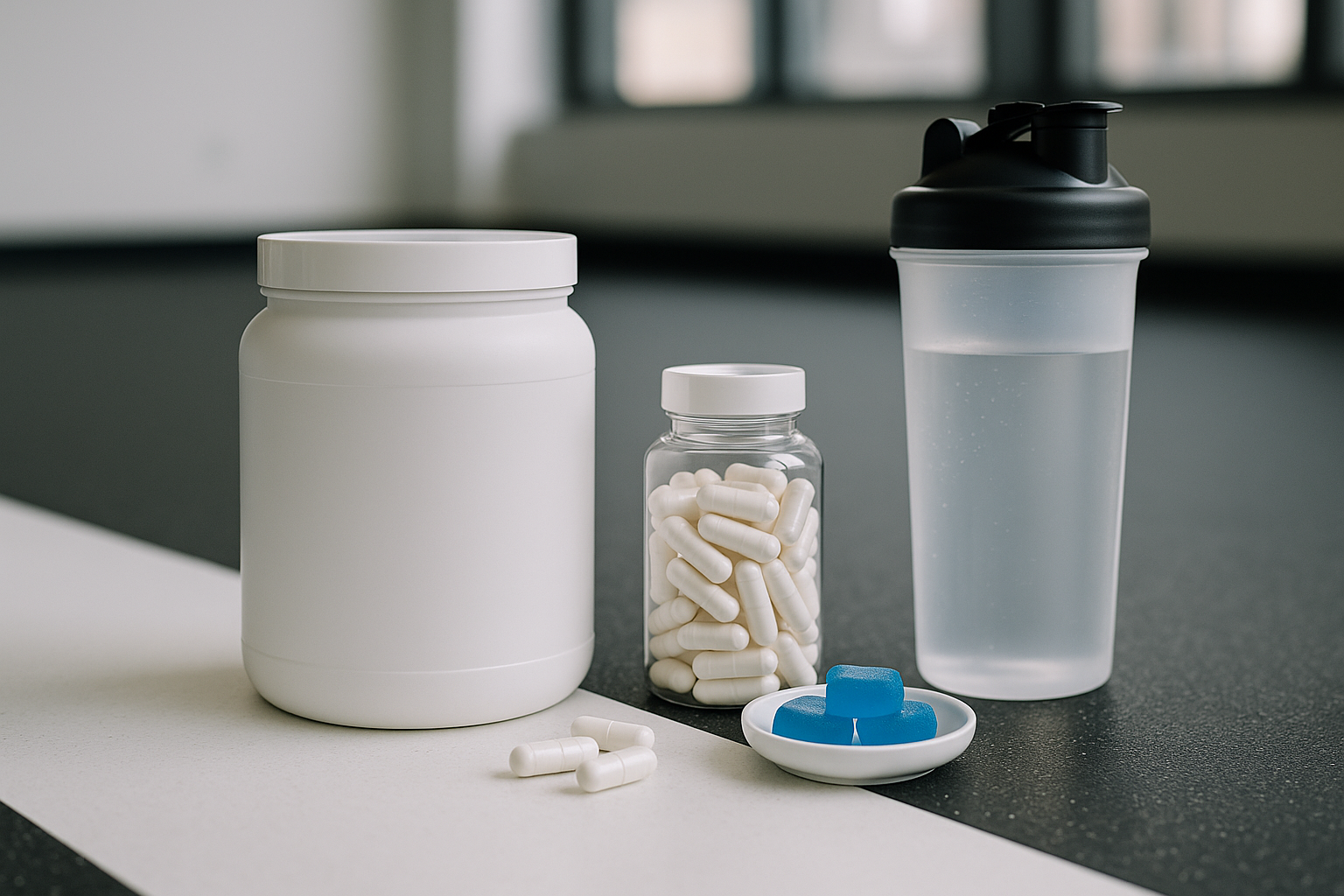
The best creatine for cheerleading is usually a plain creatine monohydrate powder from a reputable brand, ideally with a Health Canada Natural Product Number, or NPN, and, if you compete, third-party sport testing. In Canada, that combination gives you the best mix of evidence, value, and quality control.
What to look for on the label:
- Ingredient: Creatine monohydrate as the main and ideally only active ingredient.
- Dose clarity: A serving that clearly states how many grams of creatine you get.
- NPN: A Natural Product Number indicates the product is licensed for sale as a natural health product in Canada.
- Third-party testing: Useful for competitive athletes who want reduced contamination risk.
- Minimal extras: Fewer fillers, stimulants, sugars, or trendy add-ons usually means fewer problems and better value.
| Option | Pros | Cons | Best for |
|---|---|---|---|
| Unflavoured creatine monohydrate powder | Best evidence, best value, easy to dose | Can feel gritty if not mixed well | Most cheer athletes |
| Micronized monohydrate | Often mixes a bit better | Usually similar results to regular monohydrate | Athletes who dislike texture |
| Capsules | Convenient for travel and exact serving count | More expensive per gram; many capsules needed | Athletes who hate powder |
| Flavoured blends or pre-workouts with creatine | Taste and convenience | Often underdosed or loaded with extras | Only if label and dose are excellent |
For Canadian buyers, comparing cost per gram is smarter than looking at the tub price alone. Our creatine brand reviews and best creatine rankings can help you narrow it down. If you want broader buying guidance, the International Olympic Committee’s 2018 consensus statement on supplements is a useful reminder that athletes should prioritise safety, efficacy, and low contamination risk: IOC consensus on dietary supplements.
What should you skip? Products that hide the dose, use proprietary blends, make extreme claims about zero bloat or instant energy, or cost dramatically more without offering better evidence. In 2026, monohydrate still wins because the science still points there.
Why creatine may seem ‘not to work’ for a cheer athlete—and how to fix it
Creatine usually fails in practice for simple reasons: the dose is inconsistent, the product is poor, expectations are unrealistic, or the athlete is judging it by the wrong markers. If you think creatine is not helping your cheerleading, troubleshoot the basics first.
Here are the most common mistakes:
- Not taking it daily: Creatine relies on saturation. Using it only on practice days is a common error.
- Stopping too soon: Without loading, it may take 3–4 weeks before the benefits are obvious.
- Using too small a dose: Tiny doses hidden in a pre-workout may not be enough.
- Expecting a stimulant effect: No buzz does not mean no benefit.
- Judging only by body weight: A small increase on the scale can happen even while performance improves.
- Ignoring training quality: Creatine cannot rescue poor sleep, poor programming, or under-fuelling.
If you have stomach issues, the fix is usually easy:
- Reduce to 3 g/day temporarily.
- Split the dose into smaller servings.
- Take it with food.
- Choose plain monohydrate rather than a heavily flavoured blend.
If you are a flyer and dislike early scale changes, your options include:
- Starting with 3 g/day and skipping loading
- Beginning in the off-season
- Monitoring body weight, stunt feel, and performance together rather than reacting to one weigh-in
If your main goal is tumbling power, make sure you are also doing appropriate strength and plyometric work. Creatine helps the engine; it does not build the whole car by itself.
There is also a normal range of response. Some athletes notice more than others. People with higher baseline muscle creatine stores may feel less dramatic change. That does not mean creatine is useless; it may simply mean the benefit is smaller or more visible in objective training data than in sensation. Our guides on creatine not working and creatine non-responders go deeper if you want a full checklist.
Before you give up, ask four questions: Am I taking 3–5 g daily? Have I done it long enough? Am I using monohydrate from a solid brand? Am I tracking the right outcomes for cheer performance? Most problems show up in those answers.
Special cases: teen cheerleaders, flyers, women, vegan athletes, and tested competitors
Creatine can make sense for several cheer-athlete subgroups, but the decision should reflect age, role, diet, and competition context. The best creatine plan for a college base is not always the best plan for a teen flyer preparing for tryouts.
Teen cheerleaders: Creatine is commonly discussed in youth sport because many teens train seriously and perform highly explosive work. Parents and athletes should be cautious, informed, and ideally involve a qualified healthcare professional or sports dietitian, especially for younger athletes. Product quality matters even more here. If this applies to you, read creatine for teenagers.
Flyers: Flyers may still benefit, especially if they tumble and strength train, but they should think carefully about timing, role demands, and psychological comfort with any small body-mass change. Starting at 3 g/day without loading is a sensible strategy.
Women: Women absolutely can use creatine effectively. The evidence does not support the old idea that creatine is only for male lifters. Female athletes use the same basic daily dosing range as men in everyday practice. See our women’s guide for deeper context.
Vegetarian or vegan cheer athletes: These athletes may be especially good candidates because dietary creatine intake is often lower. Creatine supplements themselves are typically synthetically produced rather than animal-derived, so many are suitable for plant-based users. Our is creatine vegan? guide covers this.
Drug-tested or elite competitors: Creatine itself is not a banned substance, but contaminated products are a separate issue. If you compete in a tested environment, favour brands with robust third-party testing and clear lot traceability. This is where paying a bit more for quality control may be worth it.
Older masters athletes involved in all-star coaching, performance, or return-to-sport: Creatine remains useful because the same phosphocreatine system supports explosive effort across age groups, and there is additional interest in preserving muscle as athletes age.
The main principle across all special cases is simple: match the protocol to the athlete, not the internet trend. Cheerleading is too role-specific for one-size-fits-all advice, but the basic evidence on creatine remains highly relevant.
Bottom line: is creatine for cheerleading worth it?
Yes—creatine for cheerleading is worth considering for many athletes because cheer performance relies heavily on explosive power, repeated high-intensity effort, and the ability to maintain output across hard practices. If your goals include better stunt strength, stronger tumbling sessions, more jump pop, or less fade during repeated routine work, creatine monohydrate is one of the few supplements with a genuinely strong evidence base behind it.
The ideal starting protocol is straightforward:
- Buy a reputable creatine monohydrate product.
- Take 3–5 g daily.
- Use an optional 5–7 day loading phase only if you want faster results.
- Stay consistent for at least 4 weeks before judging it.
- Track cheer-relevant outcomes, not just the scale.
For bases, back spots, tumblers, and jump-focused athletes, the upside is usually clear. For flyers, the decision is more individual because small early water-weight changes may matter more, even when performance improves. That does not make creatine a bad choice for flyers; it just means timing and dose strategy matter more.
If you want the shortest possible answer to “does creatine help cheerleading?” it is this: creatine can help a cheer athlete perform and train better when the sport demands short, explosive, repeatable efforts, and that describes much of modern cheer. The evidence is strongest for creatine monohydrate, daily use, and long-term consistency.
To get started today, use our creatine dosage calculator, compare options in the product catalog, and review our best creatine rankings if you want a shortcut to reliable picks. Keep the plan simple, keep expectations realistic, and let your training log—not myths—tell you whether it is working.
Creatine for Cheerleading: the numbers that matter
- 3–5 g/day Standard daily maintenance dose — Works for most cheer athletes using creatine monohydrate.
- 20 g/day Classic loading dose — Usually split into 4 doses for 5–7 days to saturate muscle faster.
- 5–7 days Time to faster saturation with loading — Useful if you want results sooner before a training block.
- 3–4 weeks Typical time to work without loading — Daily maintenance alone still works; it just takes longer.
Frequently Asked Questions
Does creatine help cheerleading?
Yes, creatine can help cheerleading by improving the short-burst energy system used in stunts, tumbling, jumps, and repeated routine efforts. It is most likely to help with explosive power, repeated hard reps, and training quality over time rather than with technique or choreography directly.
Is creatine good for stunts?
Yes, creatine can be good for stunts because stunt work depends on repeated force production, especially for bases and back spots. By increasing muscle phosphocreatine stores, creatine may support stronger lifts, better repeated efforts, and less drop-off across multiple stunt sets in practice.
Does creatine help tumbling?
Yes, creatine may help tumbling when the athlete’s limiting factor is explosive power and repeated quality attempts. It will not teach tumbling technique, but it can support the energy demands behind powerful takeoffs, rebounds, and hard training sessions where repeated explosive output matters.
What is the best creatine for cheerleading?
The best creatine for cheerleading is usually plain creatine monohydrate from a reputable brand. In Canada, look for a product with a clear gram dose, an NPN where applicable, and ideally third-party testing if you compete in a tested environment.
How much creatine should a cheer athlete take?
Most cheer athletes should take 3–5 g of creatine monohydrate per day. A loading phase of 20 g per day split into 4 doses for 5–7 days is optional if you want faster saturation, but daily maintenance alone also works when used consistently.
Will creatine make a flyer gain weight?
Creatine can make a flyer gain a small amount of scale weight, but that is usually water stored inside muscle rather than fat gain. Whether that matters depends on the athlete’s role, body size, timing in the season, and how sensitive their stunting situation is to even small weight changes.
Should cheerleaders take creatine during season?
Yes, many cheerleaders can continue taking creatine during season because it works by maintaining muscle saturation, not by cycling on and off. In-season use often makes sense for athletes who want to support repeated practice quality, strength retention, and explosive performance.
Is creatine safe for female cheerleaders?
Yes, creatine is generally considered safe for healthy female cheerleaders when taken as directed. The evidence does not show that women need a different type of creatine; the same monohydrate form and basic 3–5 g daily dosing approach work for most.
Do cheerleading supplements need to be third-party tested?
Third-party testing is not mandatory for every recreational cheer athlete, but it is strongly preferred for competitive athletes. Third-party sport testing can reduce contamination risk and adds confidence that the product contains what the label says without unwanted banned substances.
When should I take creatine for cheer practice?
You can take creatine before or after cheer practice, or at another convenient time, because daily consistency matters more than exact timing. The key is to take it every day long enough to saturate muscle, not to time it perfectly around one session.