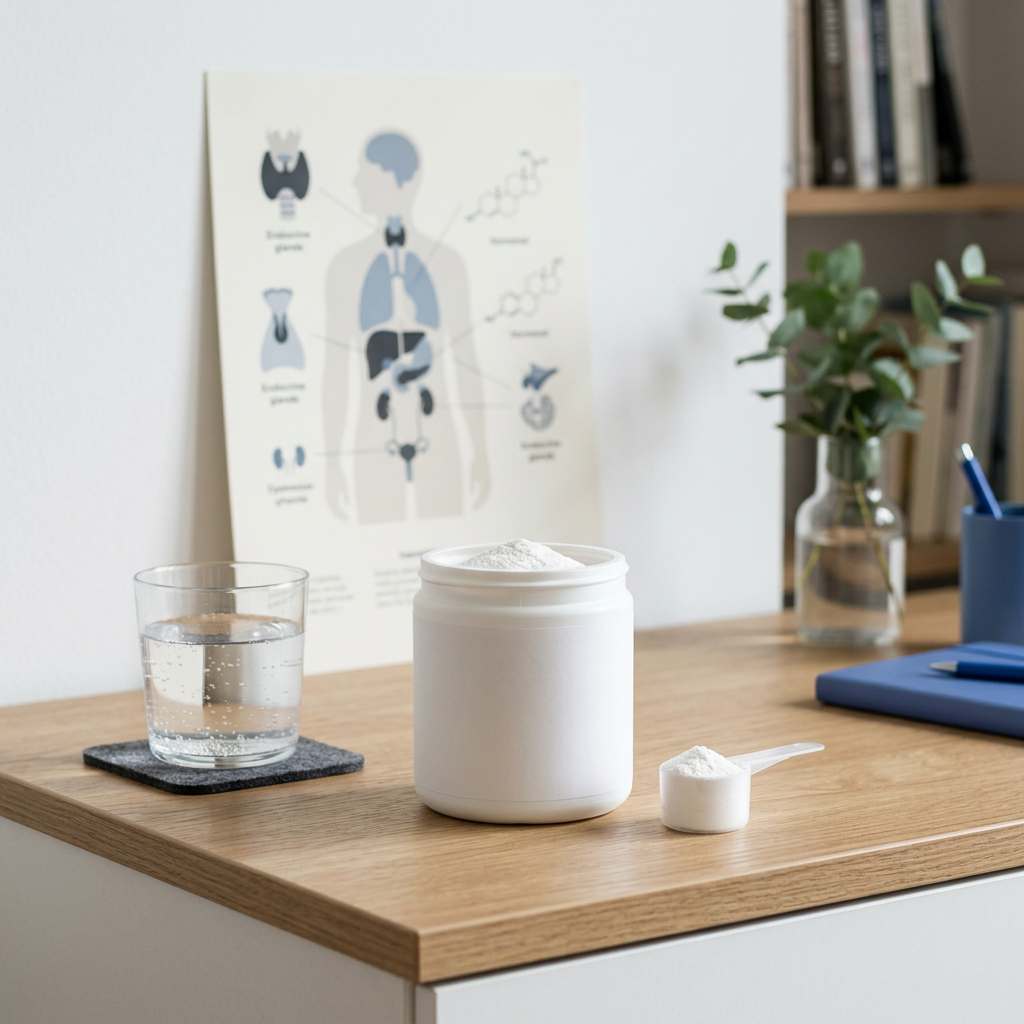
Creatine and Hormones: What It Does and Doesn't Do to Your Endocrine System
By The Creatine Canada Research Team — Evidence-based supplement analysts
Creatine does affect hormones, but not in the way many people assume: it is not a steroid, it does not meaningfully “boost testosterone” for most users, and its main benefits come from improving cellular energy rather than directly changing your endocrine system. In healthy adults, creatine’s hormonal effects appear modest, inconsistent, and secondary to better training performance, recovery, and body-composition changes.
Evidence-based · Cites 4 sources · Editorial standards
Key Takeaways
- Creatine works primarily by increasing phosphocreatine stores, not by acting like a hormone.
- The best current evidence does not show a reliable rise in testosterone from creatine supplementation.
- Creatine may influence some hormone-related markers indirectly by helping you train harder and recover better.
- Claims that creatine dramatically changes cortisol, IGF-1, estrogen, or overall hormone balance are not strongly supported.
- A standard maintenance dose of 3 to 5 g/day is enough for most adults; loading is optional.
- Women, men, older adults, vegetarians, and athletes can all use creatine, but expectations should stay grounded in what the evidence actually shows.
- If hormone symptoms are your main concern, get medical testing; creatine is not a treatment for endocrine disorders.
Does creatine affect hormones? Yes, but usually only a little
Creatine can affect hormones and hormone-related markers, but in healthy people those effects are usually small, inconsistent, and not the main reason creatine works. The primary job of creatine is to increase muscle phosphocreatine, which is stored creatine bound to phosphate and used to rapidly regenerate ATP, the body’s immediate energy currency during short, hard efforts.
That distinction matters because many people search for creatine and hormones assuming creatine behaves like testosterone boosters, prohormones, or anabolic steroids. It does not. Creatine is a naturally occurring compound made from amino acids and found in foods like meat and fish. Supplementing with creatine raises muscle creatine stores, which supports force production, repeated sprint ability, training volume, and over time often more lean mass. Those performance effects can indirectly influence the hormonal environment around exercise, but that is very different from directly “hacking” the endocrine system.
The strongest consensus documents support this view. The 2017 ISSN position stand concluded creatine monohydrate is the most effective ergogenic nutritional supplement currently available for increasing high-intensity exercise capacity and lean body mass during training. That same paper does not present creatine as a meaningful hormone manipulator. Likewise, the 2021 JISSN review on common creatine misconceptions reinforces that creatine’s core role is energy support and that many exaggerated claims around side effects and mechanisms are misplaced.
So, if your real question is does creatine change hormone balance? the practical answer is this:
- Testosterone: no reliable meaningful increase in most users.
- Cortisol: possible context-specific changes around training stress, but not a dependable lowering effect.
- IGF-1: some studies report changes, especially alongside resistance training, but evidence is mixed and not strong enough to call it a direct effect.
- Estrogen, thyroid, insulin, reproductive hormones: no strong evidence of harmful disruption in healthy users at normal doses.
If you want the basic supplement foundation first, start with creatine product catalog options built around plain monohydrate and then use a creatine dosage calculator to set your intake correctly.
How creatine actually works in the body, and why that matters for hormones
Creatine works by supporting rapid energy turnover inside cells, not by directly signalling your glands to secrete more hormones. After you take creatine, it is transported into tissues, especially skeletal muscle, where some of it is stored as phosphocreatine. During short, explosive exercise, phosphocreatine donates a phosphate group to help regenerate ATP so you can sustain high power output for a few more seconds or recover faster between hard bouts.
This mechanism explains why creatine improves performance in lifting, sprinting, jumping, repeated intervals, and other high-intensity efforts. It also explains why any hormonal effects are usually secondary. When you can do an extra rep, use slightly more load, maintain output across sets, or recover better between sessions, you create a stronger training stimulus. Over weeks and months, that can translate into more muscle gain, better strength progress, and in some cases small changes in biomarkers associated with training adaptation.
That is very different from a supplement that directly binds hormone receptors or alters steroidogenesis, the process by which the body makes steroid hormones such as testosterone and estrogen. Creatine is not known to act that way in a clinically meaningful sense for healthy adults. The International Olympic Committee consensus on dietary supplements includes creatine as one of the few supplements with good evidence for performance, but not because it meaningfully changes endocrine function.
It helps to think about creatine in three layers:
- Direct effect: higher intramuscular phosphocreatine and better ATP regeneration.
- Training effect: slightly better power output, repeated-effort capacity, and quality volume.
- Downstream adaptation: more favourable gains in lean mass and strength, which can alter body composition and sometimes shift exercise-related biomarkers.
This is why people sometimes mistake body-composition changes for “hormone effects.” If you look fuller, gain strength faster, or recover better, it is tempting to assume testosterone rose. In most cases, the simpler explanation is that creatine improved the quality of training.
For a broader primer, see what is creatine and creatine and ATP. Those guides make the energy-system piece easier to understand, which is the key to interpreting creatine hormonal effects correctly.
Creatine and testosterone levels: what the evidence says, and what it does not
Creatine does not reliably increase testosterone in healthy men or women, and that is the most important takeaway if you are searching for creatine and testosterone levels. Across the broader literature, testosterone changes are generally absent, inconsistent, or too small and context-dependent to treat as a dependable benefit.
This point gets confused because one small study often gets discussed in relation to DHT, or dihydrotestosterone, a potent androgen made from testosterone. That study helped fuel the belief that creatine raises male hormones broadly, but the wider body of evidence has not established a consistent, clinically meaningful testosterone-boosting effect. The 2021 JISSN review on creatine misconceptions specifically notes that the idea creatine causes major hormonal disturbances is not supported by the totality of evidence.
Here is the practical interpretation:
- If your goal is strength or muscle: creatine can help even if testosterone does not rise at all.
- If your goal is to correct low testosterone: creatine is not a treatment for hypogonadism or endocrine dysfunction.
- If you notice better gym performance: that does not prove hormones changed; it more likely reflects improved phosphocreatine availability.
The same caution applies to DHT. A possible signal in one small trial is not the same thing as a settled conclusion. If hair loss is a specific concern, the most honest answer is that the evidence is limited and inconclusive, not that creatine clearly raises DHT in everyone. We cover that in more detail in does creatine cause hair loss and creatine and DHT.
It is also worth separating hormone levels from hormone symptoms. Energy, libido, mood, and muscle gain are influenced by sleep, calorie intake, body fat, training load, stress, alcohol, illness, and medications. Creatine can support performance, but it should not be used as a proxy test for your endocrine health.
If you specifically want the short answer to does creatine affect testosterone? it is this: not in a reliable, meaningful way for most users. If your lab work or symptoms suggest a true hormonal issue, speak to a physician rather than trying to supplement your way to a diagnosis.
Creatine and cortisol, IGF-1, insulin, and other hormone-related markers
Creatine may affect cortisol, IGF-1, insulin sensitivity, or other hormone-related markers in specific settings, but the evidence is mixed and these are not its primary or most reliable effects. This is where nuance matters, because people often turn isolated findings into sweeping claims about the entire endocrine system.
Cortisol is a stress hormone that rises with physical and psychological stress. Some studies suggest creatine may alter the cortisol response to certain training or competition demands, potentially by reducing energy strain or helping maintain performance under fatigue. But that does not mean creatine is a general cortisol-lowering supplement. If you are asking about creatine and cortisol, the safest evidence-based answer is: any effect seems context-dependent and secondary to training, not a universal lowering of stress hormones.
IGF-1, or insulin-like growth factor 1, is involved in growth and tissue adaptation. Some training studies have reported increases in IGF-1 or related anabolic signals when creatine is combined with resistance training, especially in people who then gain more lean mass. The problem is that this does not prove creatine directly stimulates IGF-1 production. It may simply reflect more effective training adaptation. So for creatine and IGF-1, the current evidence supports possibility, not certainty.
Insulin is worth mentioning because it can help drive creatine into muscle, which is why creatine is often taken with meals or carbohydrates. But creatine is not an insulin drug, and using insulin-related language too casually can mislead beginners. For most people, consistent daily intake matters more than trying to engineer a perfect insulin spike.
Other hormones and systems often asked about include estrogen, thyroid hormones, and reproductive hormones. At standard doses in healthy users, there is no strong evidence that creatine disrupts these in a harmful way. That does not mean every possible population has been studied equally well; it means the routine “creatine wrecks your hormones” narrative is not evidence-based.
If you want a clearer view of realistic effects beyond hype, compare this guide with creatine myths vs. facts and is creatine safe. Both help put biomarker findings into the bigger picture of real-world use.
Who may notice more from creatine: beginners, women, older adults, vegetarians, and athletes
Creatine may feel more noticeable in some groups, but that does not necessarily mean it is changing their hormones more. The people who often get the biggest practical benefit are those with lower baseline creatine stores, high training demands, or more to gain from improved power and training quality.
Beginners often notice creatine quickly because almost any well-run training plan creates visible progress, and creatine can slightly amplify that by supporting more productive workouts. New lifters sometimes misread those early changes as a testosterone surge. In reality, they are usually seeing a mix of increased intramuscular water, better performance, and newbie training adaptations. If that sounds like you, start with creatine for beginners.
Women can benefit from creatine just as men can, and the supplement does not “mess up female hormones” based on current evidence. Women may experience differences across the menstrual cycle, pregnancy, postpartum, perimenopause, and menopause, but those topics are still being studied and should be discussed with a clinician when medically relevant. For day-to-day use in healthy active women, creatine remains one of the most evidence-backed sports supplements. See creatine for women for a dedicated guide.
Older adults may benefit because age-related muscle loss makes every training advantage more valuable. Creatine, especially when combined with resistance training, can support strength and lean mass retention. That is a musculoskeletal effect first, not a hormone replacement strategy. Our creatine for older adults guide goes deeper.
Vegetarians and vegans often have lower baseline creatine intake from food, so supplementation may have a larger noticeable effect. Again, this is about restoring tissue stores, not altering endocrine function.
Athletes in sprint, power, team, and repeated-effort sports may also notice more because creatine’s mechanism matches their demands closely. Better repeated sprint ability or heavier training blocks can change how recovered you feel, which can be mistaken for a hormonal shift when it is really improved energy availability.
In short, some groups get more visible results from creatine, but visible results are not the same as major hormone changes.
How to use creatine if you are worried about hormones: a practical step-by-step plan
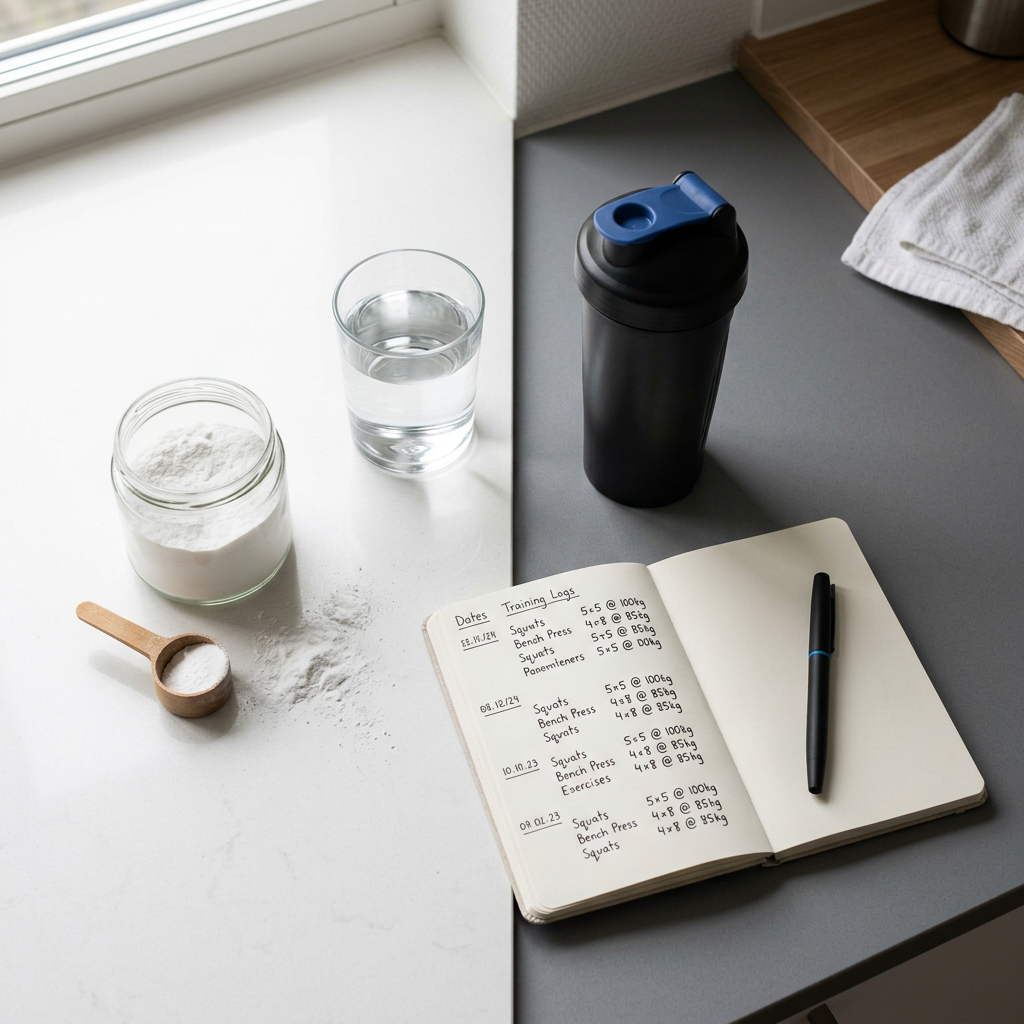
If you want to use creatine while keeping an eye on possible hormone effects, the best approach is to use a simple, evidence-based protocol and track real outcomes rather than guessing. Most people do best with plain creatine monohydrate, a consistent daily dose, and a short checklist of what to watch.
- Choose creatine monohydrate. Creatine monohydrate is the most studied and most cost-effective form. Fancy forms are not proven better for hormone safety or effectiveness. Use our best creatine rankings or creatine brand reviews if you need help choosing.
- Decide whether to load. A loading phase of about 20 g/day split into 4 doses for 5 to 7 days saturates muscles faster. If you prefer simplicity or have a sensitive stomach, skip loading and take 3 to 5 g/day instead. Full saturation just takes longer.
- Take it daily. Creatine works by saturation, so consistency beats perfect timing. Take it with water or a meal, and keep using it on rest days.
- Track useful markers. For 4 to 8 weeks, record body weight, gym performance, training volume, recovery, and any digestive issues. Do not assume normal day-to-day mood or libido changes are caused by creatine.
- Only use lab tests if there is a real reason. If you already have symptoms of low testosterone, thyroid issues, menstrual irregularity, or other endocrine concerns, ask a physician for proper testing before blaming or crediting creatine.
- Troubleshoot side effects logically. If you get stomach upset, split the dose, take it with food, or use smaller servings. If the scale goes up quickly, remember this is often intracellular water, not fat gain.
What should you expect week by week?
- Week 1: if loading, you may notice a quick body-weight increase and fuller muscles.
- Weeks 2 to 4: training quality may improve, especially on repeated sets or explosive efforts.
- Weeks 4 to 8: strength progress and lean-mass changes become easier to notice if training and diet are in place.
This step-by-step approach tells you far more than obsessing over vague ideas about “hormone balance.” If you want a complete protocol, see how to take creatine and how long creatine takes to work.
Best creatine dose for hormone-neutral results: by body weight, goal, and timing
The best creatine dose for most adults is still 3 to 5 g/day, because the goal is to saturate muscle stores, not to chase bigger hormonal effects. Taking more than you need does not turn creatine into a hormone booster; it mostly increases the chance of stomach upset or unnecessary expense.
| Goal | Body weight | Suggested protocol | What to expect |
|---|---|---|---|
| General fitness | Under 70 kg | 3 g/day | Gradual saturation over several weeks |
| General fitness | 70-100 kg | 3-5 g/day | Standard maintenance for most adults |
| Larger athletes or high lean mass | Over 100 kg | 5 g/day | Often the most practical maintenance dose |
| Fast saturation | Any | 20 g/day in 4 doses for 5-7 days, then 3-5 g/day | Quicker rise in muscle stores, more chance of GI discomfort |
| Sensitive stomach | Any | 2-3 smaller doses adding to 3-5 g/day | Same end result with better tolerance |
Timing matters less than consistency. Whether you take creatine pre-workout, post-workout, or with lunch, the long-term goal is the same: keep muscle stores elevated. If taking it with food helps you remember and reduces stomach upset, that is a smart choice. If you train early and prefer it in a shake, that works too.
Use these simple rules:
- Missed a day? Do not double up aggressively; resume your normal dose.
- Rest day? Still take it.
- Cutting fat? Keep taking it; it helps preserve training quality.
- Trying to “avoid hormone effects”? There is no special low-hormone timing trick; standard daily dosing is already the evidence-based approach.
If you want a more customised number, use our creatine dosage calculator or read how much creatine per day and when to take creatine. Those guides will help you match dose to body size and routine without overcomplicating it.
Safety, side effects, and when hormone concerns deserve a real medical workup
Creatine is generally considered safe for healthy people at recommended doses, and current evidence does not show that it causes broad hormonal disruption. According to the ISSN position stand and subsequent reviews, creatine monohydrate has one of the strongest safety profiles in sports nutrition when used appropriately.
Common non-hormonal side effects are more mundane than the internet suggests:
- Water retention: often an early increase in intracellular water, especially during loading.
- Digestive upset: more likely with large single doses or poor mixing.
- Scale weight increase: not the same as fat gain.
What creatine usually does not do in healthy users:
- It does not act like an anabolic steroid.
- It does not reliably suppress natural testosterone production.
- It does not have strong evidence for causing infertility or endocrine collapse.
- It does not require cycling to “protect your hormones.”
Where caution is appropriate is not ordinary hormone fear-mongering, but real medical context. Talk to a healthcare professional before supplementing if you have kidney disease, complex chronic illness, are pregnant or breastfeeding, or take medications where individual medical oversight makes sense. Also talk to a clinician if you have symptoms that sound hormonal regardless of creatine use, such as persistent low libido, menstrual irregularity, erectile dysfunction, unexplained fatigue, galactorrhea, heat or cold intolerance, or major hair shedding.
In other words, do not let creatine become the scapegoat for symptoms that deserve proper diagnosis. If you start creatine and one week later feel off, review the basics first: sleep, hydration, calorie intake, training load, caffeine, alcohol, illness, and stress. Creatine can be part of the picture, but it is often not the main driver.
For more context, see is creatine safe, creatine digestive side effects, and creatine vs creatinine if bloodwork is confusing you.
Myths debunked: creatine is not a steroid, not a testosterone hack, and not a hormone wrecking ball
Most myths about creatine and hormone levels come from confusing visible physique changes with endocrine changes. Let’s clear up the biggest ones directly.
Myth 1: Creatine is basically a steroid.
False. Creatine is a naturally occurring nitrogen-containing compound involved in energy metabolism. Steroids are hormone-related drugs with completely different structures and mechanisms.
Myth 2: If creatine helps build muscle, it must raise testosterone.
False. Muscle gain can happen because creatine helps you train harder and recover better, even when testosterone stays the same.
Myth 3: Creatine throws off hormone balance in women.
Not supported by current evidence. Women can use creatine, and the main expected effects are on performance, lean mass, and sometimes cognition or recovery, not endocrine disruption.
Myth 4: Creatine lowers cortisol so it is an anti-stress supplement.
Overstated. Any effects on cortisol appear context-specific and are not strong enough to treat creatine as a general stress-hormone regulator.
Myth 5: You need to cycle creatine so your hormones recover.
False for most healthy users. Creatine works through tissue saturation, and there is no standard evidence-based reason to cycle it for hormone protection.
Myth 6: Water retention means your hormones are messed up.
False. Early weight gain is usually from water drawn into muscle cells, which is part of creatine’s normal physiology.
These myths persist because creatine gives results people can feel, and the human brain likes dramatic explanations. But the reality is actually better: creatine is useful precisely because it does not need to manipulate hormones to work. That makes it one of the more straightforward supplements in sports nutrition.
If you want a broader myth roundup, visit creatine myths debunked and is creatine a steroid. Both are good companions to this guide for people sorting facts from gym-floor folklore.
Buying creatine in Canada: what to look for if purity, labels, and testing matter to you
If you are concerned about hormones, buying a clean, accurately labelled creatine matters more than buying a flashy one. In Canada, look for straightforward creatine monohydrate products with clear serving sizes, minimal extra ingredients, and where possible strong quality signals such as third-party testing or reputable manufacturing.
One useful Canadian detail is the NPN, or Natural Product Number, which is the licence number Health Canada uses for authorised natural health products. An NPN is not a guarantee of performance superiority, but it does indicate the product is being sold within Canada’s natural health product framework. Athletes in tested sport may also prefer products with programmes such as NSF Certified for Sport or Informed Sport when available.
| What to check | Why it matters | Good sign | Red flag |
|---|---|---|---|
| Form | Most evidence exists for monohydrate | Plain creatine monohydrate | Proprietary blend hiding dose |
| Dose on label | You need a real gram amount | 3 g or 5 g serving clearly listed | “Performance matrix” with no exact creatine amount |
| Ingredient list | Simplicity helps tolerance and transparency | One ingredient or very few extras | Long stimulant-heavy formula if you only want creatine |
| Testing | Purity and contamination control matter | Third-party testing or strong brand reputation | No quality information at all |
| Canadian compliance | Useful for local buyer confidence | NPN where applicable | Questionable imported listing with vague details |
For most Canadians, the buying hierarchy is simple: purity first, monohydrate first, transparent dosing first, then price per gram. You do not need a “hormone support” creatine blend. In fact, that marketing often adds ingredients that make the product less clear, not more effective.
To compare options, browse our creatine product catalog, best creatine rankings, and creatine brand reviews. If you want the regulatory angle, our guide to Canadian labelling and NPNs is especially useful for first-time buyers.
Bottom line: creatine supports performance far more than it changes hormones
Creatine affects hormones far less than it affects muscle energy availability, training performance, and long-term adaptation. If you remember one sentence from this guide, make it this: creatine’s main benefits come from saturating muscle creatine stores and improving high-intensity work capacity, not from meaningfully changing your endocrine system.
That is why the best-supported questions around creatine are about dose, consistency, saturation, training response, and product quality, not about dramatic testosterone spikes or hormone disruption. The evidence up to 2026 supports a sober, useful conclusion:
- Creatine is one of the most studied and effective sports supplements.
- Its hormonal effects are generally modest, inconsistent, or indirect.
- It does not reliably raise testosterone.
- It is not a steroid and does not need to be treated like one.
- Standard doses of 3 to 5 g/day are appropriate for most healthy adults.
If your goal is more strength, better repeated-effort performance, or slightly better lean-mass gains over time, creatine is worth considering. If your goal is to fix low testosterone, chronic fatigue from an endocrine disorder, infertility, thyroid disease, or other medical hormone problems, creatine is not the right primary tool.
For next steps, keep it simple: pick a quality monohydrate product, take it daily, track your training, and judge results by performance and body composition rather than internet myths. If you want to go deeper after this article, the best companion reads are how much creatine per day, creatine loading phase, does creatine increase testosterone, and the complete creatine guide.
Creatine and Hormones: The Numbers That Matter Most
- 3-5 g/day Standard maintenance dose — Enough for most adults to maintain elevated muscle creatine stores.
- 20 g/day Typical loading dose — Usually split into 4 doses daily for 5-7 days to saturate faster.
- 5-7 days Fastest common saturation window — Applies when using a standard loading protocol.
- 4-8 weeks Common window to notice training-related benefits — Especially relevant without loading, assuming consistent training and intake.
Frequently Asked Questions
Does creatine affect hormones in men?
Yes, creatine may affect some hormone-related markers in men, but it does not reliably or dramatically change male hormone levels. The main effect of creatine in men is improved phosphocreatine availability for training, not a dependable increase in testosterone or a major change in endocrine function.
Does creatine increase testosterone levels?
Creatine does not reliably increase testosterone levels in most people. Some individual studies have reported changes in certain androgen-related markers, but the broader evidence does not support creatine as a consistent testosterone booster.
Does creatine lower cortisol?
Creatine is not a proven cortisol-lowering supplement in the general sense. Some research suggests it may influence the cortisol response to exercise or fatigue in specific situations, but those effects are inconsistent and should be viewed as secondary rather than guaranteed.
Does creatine increase IGF-1?
Creatine may be associated with higher IGF-1 in some resistance-training studies, but the evidence is mixed. When IGF-1 rises, it may reflect better training adaptations and lean-mass gains rather than a direct hormone-boosting action from creatine itself.
Can creatine mess up hormone balance?
Current evidence does not show that creatine broadly messes up hormone balance in healthy users at standard doses. If someone has symptoms of a hormone disorder, those symptoms deserve proper medical evaluation rather than assuming creatine is the cause.
Does creatine affect female hormones?
Creatine does not appear to broadly disrupt female hormones based on current evidence. Women may respond differently across life stages and hormonal contexts, but for healthy active women the main expected effects are performance and lean-mass support, not endocrine disruption.
Is creatine a hormone or a steroid?
No, creatine is neither a hormone nor a steroid. Creatine is a naturally occurring compound involved in cellular energy metabolism, while steroids are hormone-related compounds with completely different structures and mechanisms.
Should I stop creatine before getting hormone bloodwork?
Usually, creatine does not need to be stopped specifically for hormone bloodwork because it is not known to strongly distort most hormone panels. However, if your clinician wants the cleanest baseline for a full medical evaluation, follow their instructions and disclose all supplements you take.
Does creatine affect DHT or hair loss hormones?
Creatine’s effect on DHT remains uncertain, not settled. A small study raised concern, but the wider evidence has not confirmed that creatine consistently raises DHT or causes hair loss in the average user.
What is the safest way to take creatine if I am worried about hormones?
The safest practical approach is to use plain creatine monohydrate at 3 to 5 g/day and monitor performance, body weight, and tolerance. If you have genuine hormone-related symptoms, pair that simple protocol with medical evaluation instead of relying on supplement anecdotes.