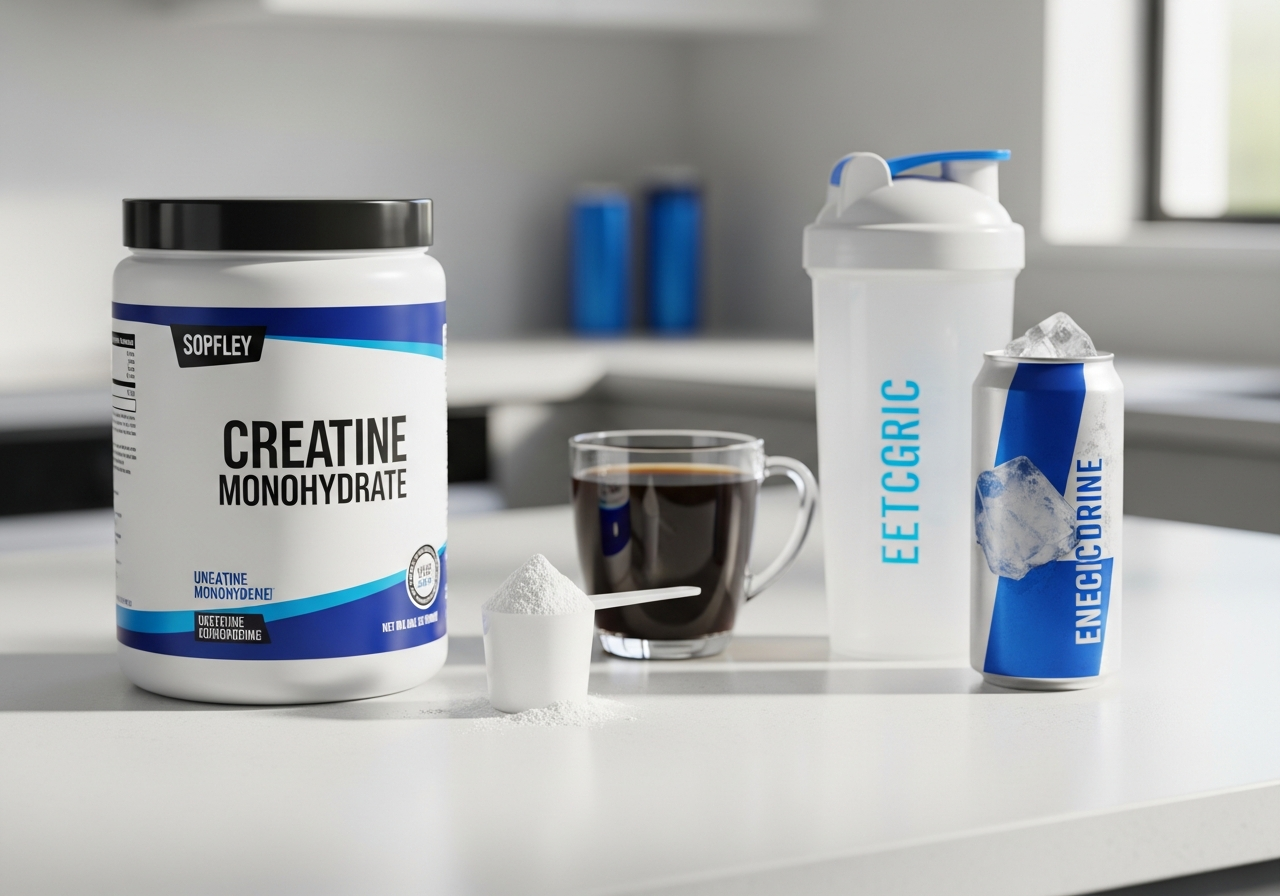
Creatine and Caffeine: Do They Cancel Each Other Out?
By The Creatine Canada Research Team — Evidence-based supplement analysts
Yes, you can take creatine with caffeine, and for most healthy adults they do not meaningfully cancel each other out. The practical takeaway is simple: take creatine monohydrate consistently every day, use caffeine when you want its alertness or pre-workout boost, and separate them only if the combination upsets your stomach.
Evidence-based · Cites 4 sources · Editorial standards
Key Takeaways
- Creatine and caffeine can be used together; current evidence does not show that caffeine reliably blocks creatine’s benefits.
- Take 3-5 g of creatine monohydrate daily whether or not you also drink coffee, pre-workout, or an energy drink.
- If you want faster saturation, load with 20 g/day split into 4 doses for 5-7 days, then continue with 3-5 g/day.
- Timing matters far less than consistency for creatine; caffeine timing matters more because its effects are acute.
- The biggest real-world issue is tolerance, not interaction: some people get jitters, reflux, or stomach upset when stacking both at once.
- Energy drinks can work with creatine, but watch the total caffeine dose, added sugar, and other stimulants in the formula.
- Choose plain creatine monohydrate from a reputable Canadian product with clear labelling, ideally an NPN and third-party testing.
Do creatine and caffeine cancel each other out? No — not in any practical way for most people
No, creatine and caffeine do not reliably cancel each other out, and most people can use them together without losing creatine’s core benefits. That is the short answer to can you take creatine with caffeine, and it matches the current mainstream view from sports nutrition: creatine works by gradually saturating muscle stores, while caffeine works acutely by stimulating the nervous system, so they act through different primary mechanisms.
Creatine helps regenerate adenosine triphosphate, or ATP, the body’s immediate energy currency, during short, hard efforts by increasing phosphocreatine, which is stored creatine bound to phosphate inside muscle. Caffeine mainly improves alertness, perceived energy, reaction time, and sometimes performance by blocking adenosine receptors in the brain. Because those jobs are different, the two supplements are not direct opposites.
Where the confusion came from is that a small amount of older research raised the possibility that caffeine might blunt some creatine-related performance effects in certain test conditions. Since then, the broader evidence and expert reviews have not supported a simple rule that caffeine “kills” creatine. The 2017 ISSN position stand concluded creatine monohydrate is effective and well-supported, and later reviews such as Antonio et al. (2021) note that many common concerns around creatine are overstated or misunderstood.
In practice, the question is less “Do they cancel each other out?” and more “Can you tolerate them together?” For many lifters, runners, team-sport athletes, and general gym-goers, the answer is yes. For others, combining a daily creatine dose with strong coffee, a high-stim pre-workout, or an energy drink can mean GI discomfort, jitters, or a racing heart. That is a tolerance problem, not proof that creatine stopped working.
If you are a beginner, the easiest plan is this: take creatine every day, then use caffeine only when you want the immediate boost. If you want more basics first, see our guides on what creatine is, how to take creatine, and when to take creatine.
Why the stack can work: creatine fills the tank, caffeine steps on the gas
Creatine and caffeine can work together because creatine improves energy availability inside muscle over time, while caffeine changes how hard, awake, and ready you feel right now. A simple way to think about it is that creatine helps fill the muscular energy reserve, and caffeine helps you access performance through the brain and nervous system.
Creatine supplementation raises intramuscular phosphocreatine stores. Phosphocreatine donates a phosphate group to help rapidly remake ATP during repeated high-intensity efforts such as sprinting, jumping, heavy sets, and explosive intervals. This is why creatine is best known for supporting strength, power, repeated sprint ability, and training volume. Those effects are not instant on the first scoop; they depend on saturation over days to weeks.
Caffeine, by contrast, works quickly. It blocks adenosine receptors, which reduces feelings of tiredness and can improve vigilance, perceived effort, and in many cases performance, especially when taken pre-workout or pre-event. You feel caffeine because it acts acutely. You do not “feel” creatine the same way because its main job is to raise tissue stores steadily.
So why did people start asking whether the two interfere? One theory was that caffeine might oppose some of creatine’s benefits on muscle relaxation time or contractile behaviour under very specific conditions. Another real-world explanation is simpler: when people combine loading-dose creatine with lots of caffeine, they may get more stomach upset, loose stools, or poor workout comfort, which can make the stack seem ineffective.
The key point is that an uncomfortable stack is not the same thing as a biologically useless stack. Current evidence does not justify telling healthy adults to avoid all caffeine while taking creatine. What it does justify is individualising the plan if you are sensitive to stimulants or GI stress. The evidence summary from Examine.com reflects that more nuanced view: creatine remains strongly supported, and any creatine-caffeine interaction appears inconsistent rather than definitive.
If you want the most evidence-based form for this purpose, stick to monohydrate. Our best creatine rankings and creatine brand reviews focus on products that prioritise purity over marketing claims.
Exactly how to take creatine with caffeine: a simple step-by-step plan that works
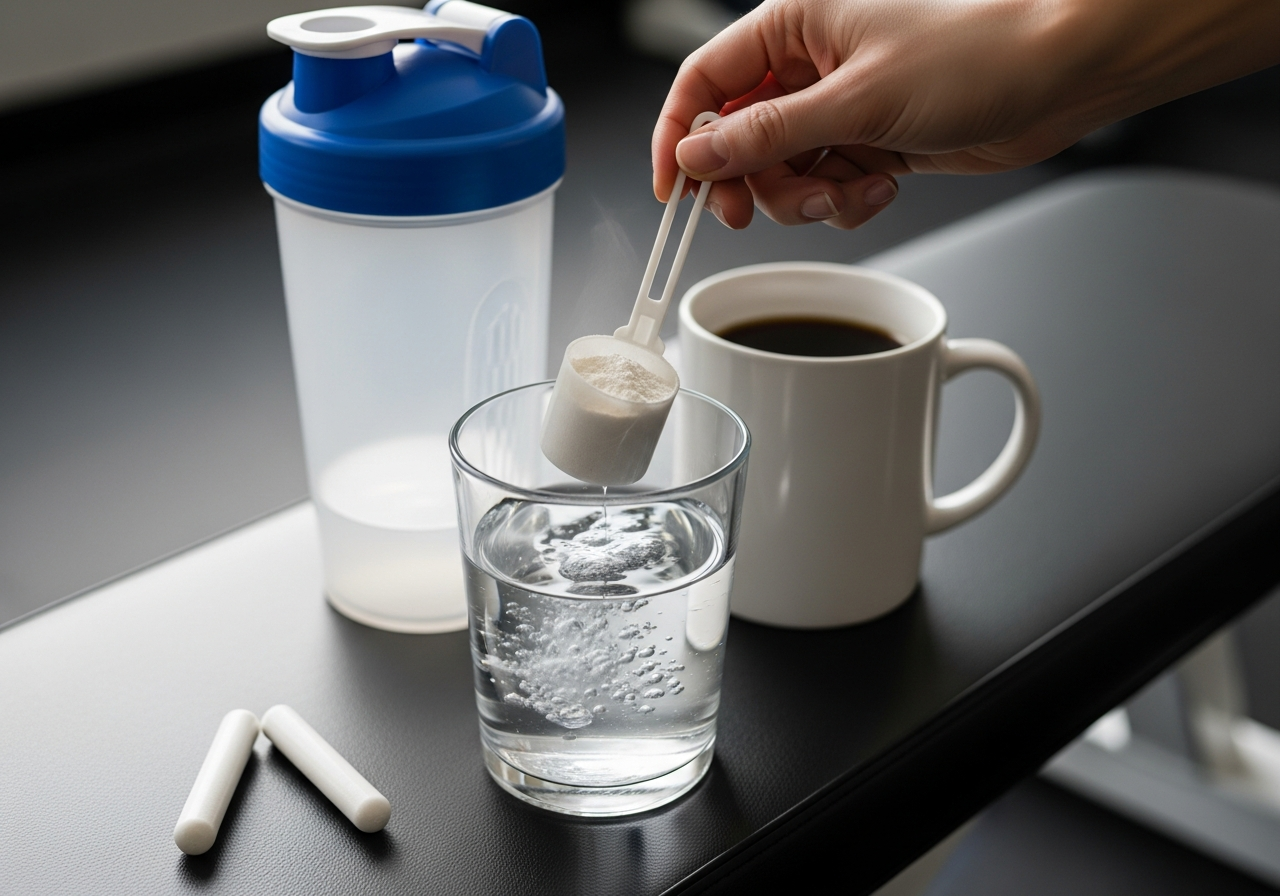
The best way to take creatine with caffeine is to make creatine a daily habit and treat caffeine as optional performance timing. That approach maximises creatine saturation without forcing you to take stimulants every day.
- Choose creatine monohydrate. Use plain creatine monohydrate powder unless you have a specific reason to choose capsules. It is the most studied, most effective, and usually the best value.
- Take 3-5 g daily. Most adults can use 3-5 g per day as a maintenance dose. Take it every day, including rest days.
- Decide whether to load. If you want quicker saturation, use 20 g per day split into 4 doses of 5 g for 5-7 days, then drop to 3-5 g per day. If you dislike large doses, skip loading and let saturation build more gradually.
- Use caffeine based on need. Have coffee, tea, pre-workout, or an energy drink when you want more alertness or pre-training drive. You do not need caffeine for creatine to work.
- Start with moderate caffeine. If you are unsure about tolerance, begin with a modest amount rather than a very high-stim drink. This is especially smart during a creatine loading phase.
- Separate them if your stomach complains. If taking both together causes nausea, reflux, or bathroom urgency, keep creatine with a meal and move caffeine to 30-60 minutes pre-workout.
- Track outcomes for 2-4 weeks. Look for better training volume, an extra rep or two on hard sets, slightly improved sprint repeatability, and sometimes a small body-mass increase from intracellular water.
For example, a beginner might take 5 g creatine with lunch every day and one coffee before training on workout days. A power athlete might load for 5-7 days, then keep 5 g daily while using caffeine before intense sessions or competition. A sensitive person might use decaf most of the day and reserve a small caffeine dose only for key sessions.
If you want a personalised daily amount, use our creatine dosage calculator. If mixing texture is your issue, our guide on how to mix creatine can help.
Best creatine dose with coffee, pre-workout, or energy drinks: by body weight and goal
The right creatine dose does not really change just because you also use caffeine; what changes is how carefully you manage stimulant intake and tolerance. For most people, the same proven creatine dosing rules apply whether you take it with coffee, pre-workout, or an energy drink.
| Body weight / goal | Creatine maintenance | Optional loading phase | Caffeine strategy |
|---|---|---|---|
| Under 60 kg, general fitness | 3 g/day | 20 g/day split into 4 doses for 5-7 days if faster results matter | Use only as needed; avoid very high-stim stacks if sensitive |
| 60-90 kg, strength or hypertrophy | 3-5 g/day | 20 g/day split into 4 doses for 5-7 days | Coffee or pre-workout around training is fine if tolerated |
| Over 90 kg, larger athletes | 5 g/day is a practical default | 20 g/day split into 4 doses for 5-7 days | Keep an eye on total stimulant load from all sources |
| Older adults focused on muscle function | 3-5 g/day | Usually optional rather than necessary | Use lower caffeine if sleep, BP, or jitters are issues |
| Endurance athletes needing repeated surges | 3-5 g/day | Optional depending on event calendar | Trial caffeine in training, not first on race day |
Two important nuances matter here. First, body weight can guide dosing, but it does not mean you need huge amounts. More is not better once muscle creatine stores are saturated. Second, caffeine is not part of creatine dosing; it is a separate tool. You can get full creatine benefits even if you train caffeine-free.
If your goal is maximum convenience, take your creatine at the same time every day, such as with breakfast or post-workout. If your goal is maximum training pop, time caffeine around the session but keep the creatine habit unchanged. That separation helps many people stay consistent.
For a deeper breakdown, read how much creatine per day, creatine maintenance dose, and creatine loading phase. If you are shopping, our creatine product catalog can help you compare plain monohydrate options rather than overpaying for flashy stimulant blends.
Timing matters more for caffeine than for creatine — including coffee and energy drinks
If you are wondering when to take creatine with caffeine, the most practical answer is this: take creatine whenever you will remember it, and time caffeine closer to the workout or event when you want the acute effect. Creatine timing is a minor detail compared with daily consistency, while caffeine timing changes whether you actually feel it.
Creatine works through saturation. Once muscle stores rise, the exact minute you took today’s dose matters far less than whether you have been taking it consistently for days and weeks. That is why many evidence-based guides recommend a simple routine over elaborate “anabolic window” rules.
Caffeine is different because it acts quickly and temporarily. If you are using coffee before lifting, sprinting, HIIT, or team-sport training, most people take it before the session rather than hours later. If you train late in the day, that same pre-workout caffeine can disturb sleep, which may hurt recovery more than it helps performance.
This is also where the search-intent variation can I take creatine and energy drink needs a direct answer: yes, you can take creatine and an energy drink, but the issue is not the creatine itself. The issue is whether the energy drink gives you more caffeine, sugar, carbonation, or extra stimulants than you tolerate well. Creatine can be mixed into an energy drink, taken beside it, or taken at a separate time, but many people find a separate dose more comfortable.
Practical examples:
- Morning trainer: 5 g creatine with breakfast, coffee 30-60 minutes before training.
- After-work lifter: 5 g creatine with lunch, smaller caffeine dose before training if sleep allows.
- Caffeine-sensitive beginner: 3-5 g creatine daily, caffeine only on hardest sessions.
- Energy-drink user: Keep creatine dose separate from the drink if carbonation or sweetness worsens digestion.
For more on schedule choices, see when to take creatine and can you mix creatine with coffee.
Who this approach suits best: beginners, women, older adults, and competitive athletes
Taking creatine with caffeine can suit many groups, but the best setup depends more on your goal and tolerance than your gender or training level. In most cases, creatine deserves to be the consistent foundation, and caffeine should be layered in only when it clearly helps performance, alertness, or adherence.
Beginners usually do best with the simplest plan: 3-5 g creatine monohydrate every day and caffeine only if they already tolerate coffee or tea well. Beginners often make the mistake of changing too many variables at once. If you start creatine, a new pre-workout, and a high-caffeine energy drink together, it becomes hard to tell what is helping and what is causing side effects.
Women can use the same creatine dosing framework as men. There is no special rule that women must avoid caffeine with creatine. The main considerations are body size, stimulant sensitivity, training time, and any goal around sleep, anxiety, or appetite. Our creatine for women guide covers those details more fully.
Older adults may benefit from creatine for muscle function and training support, but they are also more likely to care about sleep quality, medication timing, reflux, or cardiovascular comfort. For that reason, creatine is often easy to keep daily, while caffeine should be used more selectively.
Strength and power athletes are classic creatine users because repeated high-output efforts rely heavily on phosphocreatine. These athletes may also use caffeine strategically before hard sessions or competition, making the combination especially practical.
Endurance athletes can also use creatine, particularly if their sport includes surges, sprints, or gym-based strength work. But some endurance athletes dislike even small changes in body mass from creatine-related water retention, so testing during training rather than race week is smart.
Vegetarians and vegans may respond especially well to creatine because baseline dietary intake is often lower. Caffeine does not remove that advantage.
If you compete, the IOC consensus on dietary supplements supports an evidence-based, low-risk approach: use supplements with a clear rationale, buy reputable products, and avoid unnecessary proprietary blends.
Safety, side effects, and when to separate the two instead of stacking them
For healthy adults, creatine and caffeine are usually safe to use together, but side effects are more likely to come from the caffeine dose and the delivery format than from the creatine itself. The strongest evidence base supports creatine monohydrate as safe when used appropriately, including long-term use in healthy people, as reviewed by the ISSN and other major references.
Common creatine side effects are fairly manageable and usually dose-related rather than dangerous. The most typical are temporary water retention, mild stomach upset, and loose stools, especially during a loading phase or when large doses are taken at once. Common caffeine side effects include jitters, anxiety, reflux, elevated heart rate, shaky training sessions, and sleep disruption.
When people say, “Creatine and caffeine don’t mix well for me,” what they often mean is one of three things:
- They used too much caffeine along with a pre-workout or energy drink.
- They took large creatine doses too quickly during loading.
- They stacked both on an empty stomach before hard exercise.
In those cases, the fix is behavioural, not biochemical. Split the creatine dose, take it with food, reduce the stimulant load, or separate timing. If you regularly get GI problems, our guides on creatine digestive side effects and creatine bloating can help troubleshoot.
Use extra caution, or seek medical advice first, if you have kidney disease, significant cardiovascular concerns, uncontrolled hypertension, a history of arrhythmia, severe anxiety worsened by stimulants, or you are pregnant or breastfeeding. The problem there is not that creatine and caffeine form a uniquely risky pair; it is that one or both may need personalised guidance.
In Canada, check for clear label instructions and, where applicable, an NPN, which is a Natural Product Number showing a product has been licensed for sale by Health Canada as a natural health product. An NPN is not a performance guarantee, but it is a useful compliance signal. Third-party testing and transparent ingredient lists matter even more when stimulant products are involved.
The biggest mistakes and myths: coffee doesn’t destroy creatine, but bad habits can ruin the experience
The biggest myth is that coffee automatically makes creatine useless, and that claim is too simplistic to be accurate. The better evidence-based position is that creatine still works for most caffeine users, but poor dosing, bad product choices, and excessive stimulants can make the combination feel worse than it needs to.
Myth 1: “Caffeine cancels creatine.” Current evidence does not support a universal rule that caffeine blocks creatine’s benefits. If it did, regular coffee-drinking athletes would consistently fail to benefit from creatine, and that is not what the broader literature or real-world practice shows.
Myth 2: “You must take them together for a synergy boost.” Not necessary. Creatine’s main requirement is daily saturation. Caffeine’s main requirement is timing around when you want the acute effect. They do not need to be swallowed in the same drink.
Myth 3: “More caffeine makes creatine work better.” False. Higher caffeine raises the chance of jitters, poor sleep, anxiety, and digestion issues. Creatine benefit does not depend on megadoses of stimulant.
Myth 4: “Energy drinks are the same as coffee.” Not always. Energy drinks may include sugar, carbonation, taurine, herbal stimulants, and a caffeine dose that is easier to overdo. That does not make them incompatible with creatine, but it does change how the stack feels.
Mistake 1: loading with giant single doses. Taking 20 g all at once is much more likely to upset your stomach than splitting it into 4 doses.
Mistake 2: using proprietary blends. If your pre-workout hides exact caffeine or stimulant content, you cannot judge tolerance properly. Choose products with transparent labels.
Mistake 3: judging creatine after three days. Without loading, meaningful saturation takes longer. If you want realistic expectations, read how long creatine takes to work.
Mistake 4: buying fancy creatine forms to solve a caffeine problem. Usually unnecessary. Plain monohydrate remains the benchmark, as covered in our creatine myths debunked page and our guide to the best creatine.
What to buy in Canada: plain monohydrate beats flashy stimulant blends for almost everyone
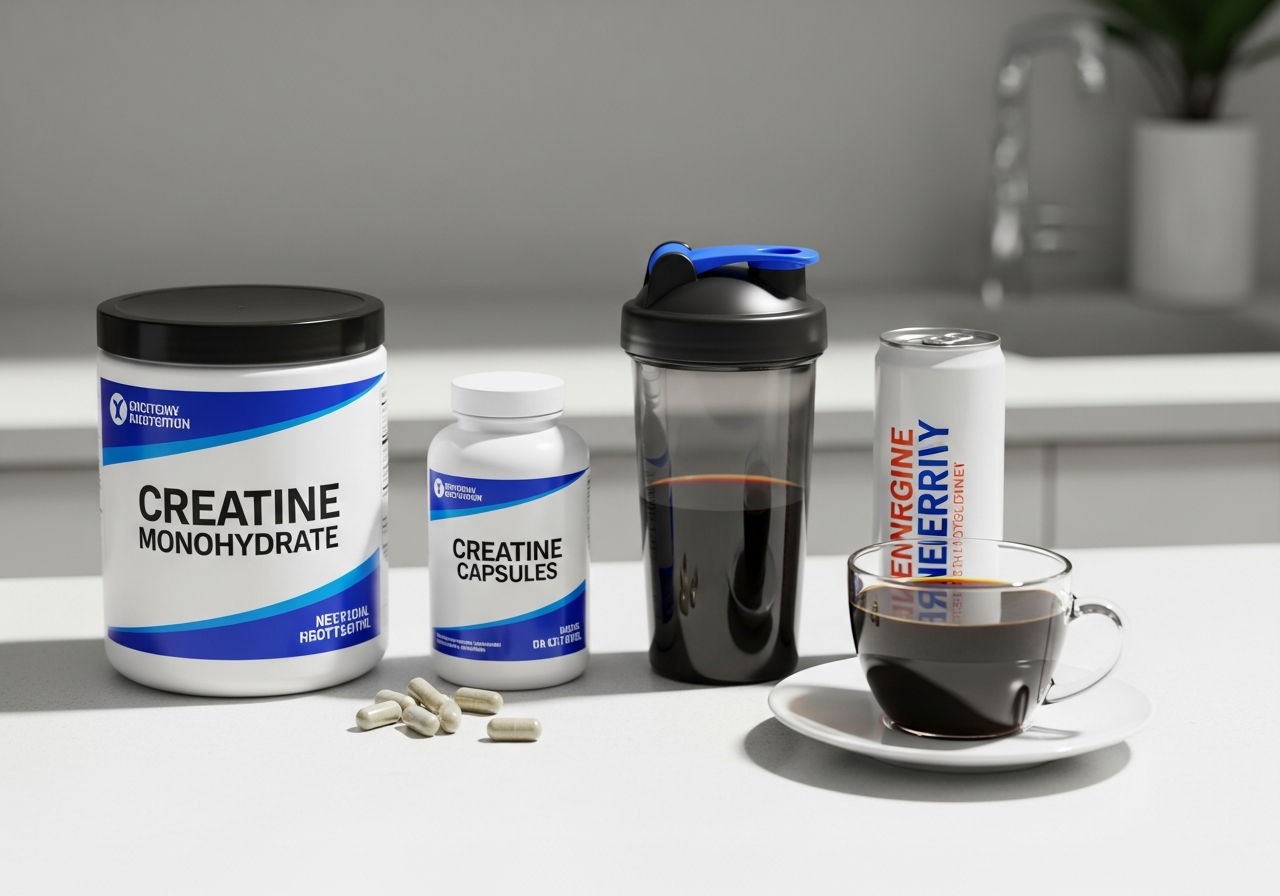
If you are buying creatine in Canada and also use caffeine, the smartest purchase is usually plain creatine monohydrate plus a separate caffeine source you can control. That setup is almost always more evidence-based, easier to dose, and easier on your wallet than a trendy all-in-one blend.
| Option | Best for | Pros | Cons |
|---|---|---|---|
| Plain creatine monohydrate powder | Almost everyone | Most studied, precise dosing, cost-effective, easy daily use | Needs mixing, mild grit in some products |
| Creatine capsules | Travel or convenience | No mixing, easy to separate from caffeine | More capsules needed to reach full dose, usually pricier |
| Pre-workout with creatine included | People who want one product | Convenient on workout days | Often underdosed for creatine, harder to use daily, stimulant-heavy |
| Energy drink plus separate creatine | People who already use energy drinks | Flexible timing, easier to adjust creatine dose | Can be expensive, easy to overdo caffeine or sugar |
| All-in-one RTD or proprietary blend | Niche convenience buyers | Grab-and-go | Often poor value, unclear ingredient logic, less dosing control |
Look for a product with a short ingredient list, a clear serving size in grams, and ideally an NPN if sold in Canada as a natural health product. Third-party testing is especially valuable when a formula also contains stimulants, because label accuracy matters more when caffeine is involved.
If you want a straightforward place to start, browse our creatine product catalog, compare labels in our creatine brand reviews, or see our guide to best creatine monohydrate choices. If you are deciding between monohydrate and more heavily marketed forms, our related guide on best creatine rankings will save you from paying extra for claims the evidence does not justify.
The bottom line on buying is simple: do not let a caffeine question push you into an inferior creatine product. Solve tolerance with timing and dose control, not with expensive hype.
Bottom line: yes, you can take creatine with caffeine — just build the stack intelligently
Yes, you can take creatine with caffeine, and for most people they do not cancel each other out in any meaningful real-world way. If you remember only one rule, make it this: creatine needs daily consistency, while caffeine needs sensible timing and dose control.
The evidence-based default is plain creatine monohydrate at 3-5 g per day. If you want faster saturation, use a loading phase of 20 g per day split into 4 doses for 5-7 days, then return to 3-5 g daily. Add caffeine only when it genuinely helps training performance, alertness, or motivation. That may be coffee before lifting, a small pre-workout before HIIT, or an energy drink before a hard session if you tolerate it well.
If the combination bothers your stomach, increases anxiety, or wrecks your sleep, separate the two instead of abandoning creatine. Put creatine with a meal, lower the caffeine dose, or reserve stimulants for key training days. Those simple adjustments solve most “interaction” complaints.
For most lifters and athletes, signs the plan is working include slightly better training volume, improved repeated-effort performance, marginally easier last reps on hard sets, and sometimes a modest increase in scale weight from intracellular water rather than fat. Those changes are more realistic than expecting a dramatic buzz from creatine itself.
So, can you take creatine with caffeine, coffee, pre-workout, or an energy drink? Yes. Just keep the creatine boring, the caffeine deliberate, and the total plan sustainable. That is what gets results.
Creatine + Caffeine: The numbers that actually matter
- 3-5 g/day Standard creatine maintenance dose — Works whether or not you also use caffeine.
- 20 g/day Common loading dose — Split into 4 doses for 5-7 days to raise stores faster.
- 5-7 days Typical loading timeline — After loading, continue with a maintenance dose.
- 2-4 weeks Practical window to judge results without loading — Look for better reps, training volume, or repeated sprint output.
Frequently Asked Questions
Can you take creatine with caffeine at the same time?
Yes, you can take creatine with caffeine at the same time, and most people do not need to separate them for effectiveness. If taking them together causes jitters, reflux, or stomach upset, separate the timing for comfort rather than assuming the stack does not work.
Does caffeine stop creatine from working?
No, caffeine does not appear to reliably stop creatine from working in most people. The older idea that caffeine universally cancels creatine is not supported strongly enough to justify avoiding all coffee or pre-workout while supplementing with creatine.
Can I take creatine and an energy drink together?
Yes, you can take creatine and an energy drink together, but your total stimulant load matters more than the pairing itself. Watch the caffeine amount, added sugar, carbonation, and any extra stimulants, because those factors are what usually cause side effects.
Can you mix creatine into coffee?
Yes, you can mix creatine into coffee, although some people prefer taking it separately for taste or texture. The more important factor is getting your full daily creatine dose consistently, not whether the powder goes into hot coffee or plain water.
Should I take creatine before or after caffeine?
It usually does not matter whether you take creatine before or after caffeine, because creatine works through long-term saturation rather than immediate timing. Caffeine timing matters more, so place caffeine closer to the workout if you want its acute performance effect.
What if creatine and caffeine upset my stomach?
If creatine and caffeine upset your stomach, the best fix is to reduce the creatine dose per serving, take it with food, or move it away from your caffeine dose. Many people tolerate the combination well once they stop taking large doses together on an empty stomach.
Can I take creatine with pre-workout that already has caffeine?
Yes, you can take creatine with a caffeinated pre-workout, but check whether the pre-workout contains enough creatine to meet the full daily target. Many pre-workouts underdose creatine, so a separate plain creatine dose is often still needed.
Do women need different rules for taking creatine with caffeine?
No, women do not need fundamentally different rules for taking creatine with caffeine. The same evidence-based approach applies: 3-5 g of creatine monohydrate daily, caffeine according to tolerance and training needs, and adjustments based on comfort and sleep.
Is it okay to take creatine with coffee every day?
Yes, it is generally okay to take creatine with coffee every day if you tolerate coffee well. Daily creatine use is the important part for muscle saturation, and daily coffee does not automatically interfere with that process.
What is the best creatine to use if I also drink caffeine?
The best creatine to use if you also drink caffeine is still plain creatine monohydrate. It is the most studied form, the most cost-effective form, and the easiest form to dose accurately whether your caffeine comes from coffee, tea, pre-workout, or energy drinks.