Unflavored Creatine Monohydrate: Why Plain Is Often Best
By The Creatine Canada Research Team — Evidence-based supplement analysts
Unflavored creatine monohydrate is often the best creatine choice because it gives you the most-studied form of creatine, with no flavouring, sweeteners, or unnecessary extras. If you want plain creatine powder that is effective, flexible to mix, and usually the best value per gram, pure unflavoured monohydrate is the benchmark.
Evidence-based · Cites 4 sources · Editorial standards
Key Takeaways
- Unflavored creatine monohydrate is simply pure creatine monohydrate powder with no added flavour, sugar, or stimulants.
- The evidence-backed maintenance dose for most adults is 3-5 g daily, every day, including rest days.
- A loading phase of about 20 g per day split into 4 doses for 5-7 days saturates muscles faster, but it is optional.
- Plain creatine powder works just as well in water, protein shakes, coffee, or juice; timing matters far less than daily consistency.
- Monohydrate remains the most studied, most cost-effective creatine form, and marketing claims for fancier forms rarely beat it.
- Minor water-weight gain and occasional stomach upset are the most common short-term effects, and both are usually manageable.
- In Canada, choose products with a Natural Product Number when applicable and favour brands with transparent purity and third-party testing.
What unflavored creatine monohydrate actually is — and why plain is often the smarter buy
Unflavored creatine monohydrate is plain creatine monohydrate powder with no added flavouring agents, sweeteners, colours, stimulants, or proprietary blends. If you are searching for unflavored creatine, unflavoured creatine monohydrate, creatine without flavor, or pure creatine powder unflavored, you are usually looking for the same thing: a simple powder whose only active ingredient is creatine monohydrate.
That simplicity matters because creatine monohydrate is the gold-standard form used in the overwhelming majority of performance and safety research. The 2017 ISSN position stand concluded that creatine monohydrate is the most effective ergogenic, meaning performance-enhancing, nutritional supplement currently available for increasing high-intensity exercise capacity and lean mass gains during training. In practical terms, plain creatine powder gives you the studied ingredient without paying extra for taste systems or trendy delivery claims. See the ISSN position stand for the full evidence review.
“Unflavored” does not mean tasteless. Most creatine monohydrate powder unflavored has a faintly chalky, slightly bitter, or mineral-like taste, especially in plain water. It also does not always dissolve perfectly clear. A little grit at the bottom of the glass is normal and does not mean the product is low quality.
For most people, plain creatine powder is best for four reasons:
- Evidence: monohydrate has the strongest research base.
- Dose accuracy: you can easily measure a true daily dose in grams.
- Flexibility: you can mix it into nearly any drink or shake.
- Value: unflavored products usually cost less per gram than flavoured powders, gummies, or capsules.
It is also the easiest format to compare across brands. If the label says only “creatine monohydrate” and gives a serving size in grams, you know exactly what you are buying. If you want a broader overview of how this form fits into the bigger picture, start with best creatine rankings or our guide to creatine product catalog.
The short version is simple: if your goal is proven results, minimal ingredients, and the best odds of getting good value, unflavored creatine monohydrate is usually the right default choice.
How plain creatine powder works in your muscles: the ATP and phosphocreatine mechanism
Unflavored creatine monohydrate works by increasing your muscle stores of creatine and phosphocreatine, which helps you regenerate ATP faster during short, hard efforts. ATP, adenosine triphosphate, is the immediate energy currency your cells use for muscular contraction. Phosphocreatine is a stored high-energy phosphate compound in muscle that helps rapidly rebuild ATP when effort spikes.
Here is the practical mechanism. During heavy sets, sprints, jumps, repeated shifts, and other high-intensity efforts lasting only a few seconds, your body burns through ATP quickly. Extra intramuscular creatine means you can restore ATP slightly faster between contractions and between repeated bouts. That can translate into:
- one or two more reps at a given load
- a small increase in peak power output
- better repeated sprint ability
- higher-quality training volume over time
Creatine does not directly build muscle on its own in the way a drug would; it improves the quality of training and cellular energy availability, which can support better long-term gains. Over weeks and months, doing a little more quality work can add up to meaningful strength and hypertrophy improvements.
Creatine also pulls some water into muscle cells. This is one reason users often notice slightly fuller muscles early on. That intracellular water, meaning water inside the muscle cell, is different from the “puffy” subcutaneous look many people fear. In fact, one common myth is that creatine causes bloating everywhere; for most people, the initial change is mostly increased water inside muscle tissue, not fat gain. For a full myth breakdown, see creatine myths debunked.
The science on this is well established. The ISSN and the 2021 JISSN review on common questions and misconceptions both reinforce that creatine’s performance effects are strongest for high-intensity exercise and repeated efforts, and that monohydrate remains the reference form. The evidence summary at Examine.com is also useful for a broad, updated synthesis.
One more important point: unflavored creatine works no differently than flavoured creatine if the active ingredient and dose are the same. The absence of flavour changes palatability, not physiology. Your muscles respond to the grams of creatine monohydrate you consistently take, not whether the powder tastes like blue raspberry.
Why creatine monohydrate unflavoured still beats flashier alternatives
Creatine monohydrate unflavoured is still the best default because no other creatine form has consistently outperformed monohydrate on results, safety, and cost at the same time. That is the core answer behind searches like best unflavored creatine, pure creatine powder unflavored, and creatine monohydrate powder unflavored.
Supplement marketing often pushes alternatives such as HCl, buffered creatine, creatine nitrate, ethyl ester, gummies, or premixed drinks. These products usually lean on one of four claims: better absorption, less bloating, smaller doses, or easier digestion. The problem is that better marketing language is not the same as better outcomes in humans.
The 2017 ISSN position stand and the 2021 JISSN misconceptions review both support the same practical conclusion: creatine monohydrate is the most studied form, and evidence does not show that newer forms are more effective when matched appropriately. In many cases, newer forms are simply more expensive ways to deliver creatine.
Here is why plain monohydrate keeps winning:
- It reaches muscle saturation reliably. Saturation means your muscle creatine stores are filled to near their practical ceiling.
- Its dose is well established. Most people know exactly how to use 3-5 g per day.
- Its effect profile is predictable. You know what to expect in terms of performance, body weight, and tolerability.
- It is cheap. Cost per effective gram is usually lower than capsules, gummies, or designer blends.
That does not mean every alternative is useless. Capsules are convenient for travel. Micronized creatine can mix a bit more smoothly. Some people prefer flavoured products if that helps consistency. But if the question is which form gives the clearest evidence-backed return on your money, plain monohydrate is still king. For a deeper comparison, explore creatine brand reviews and our related guide on best creatine rankings.
There is also a clean-label argument. Unflavoured creatine avoids extra ingredients that can complicate digestion, taste fatigue, allergen concerns, or label clutter. If your goal is “just creatine,” then creatine no flavor is not a compromise. It is often the most rational version of the supplement.
How to take unflavored creatine monohydrate step by step without overthinking it
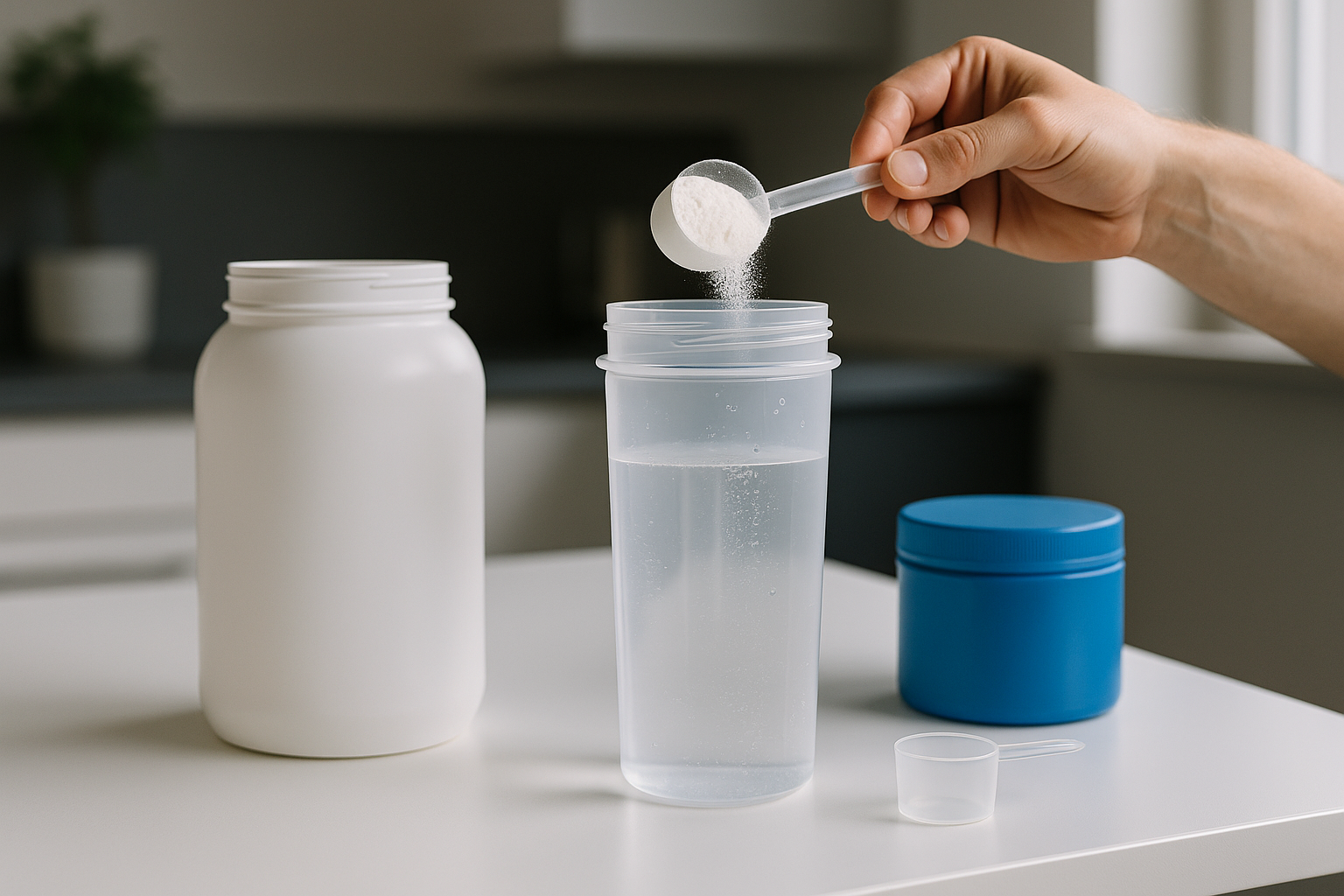
The simplest effective way to take unflavored creatine monohydrate is 3-5 g once daily, mixed into a drink you will actually finish, every day. If you are a beginner, do not let internet debates make this complicated. Consistency matters much more than hacks.
- Measure the dose accurately. Use a digital scale if possible. A scoop is convenient, but scoops vary. If your product says 1 scoop equals 5 g, use that only if the scoop is level and the brand is reliable.
- Choose your liquid. Water works. Protein shakes work. Juice works. Coffee works if you like the taste. Plain creatine powder is flexible because it contains no flavour system that clashes badly with other drinks.
- Use enough fluid to make it easy to drink. About 250-500 mL is practical for most people. Warm water can improve dissolving, though it is not required.
- Stir or shake, then drink. A little sediment at the bottom is normal. Swirl and finish the rest if some powder settles.
- Repeat daily. Take it on training days and rest days. Creatine works by building muscle stores over time, not by creating a stimulant-like feeling on the spot.
If you want faster saturation, you can use a loading phase:
- Loading option: about 20 g per day, split into 4 doses of 5 g, for 5-7 days.
- Then maintenance: 3-5 g per day.
If you prefer to skip loading, that is completely fine:
- No-loading option: 3-5 g per day from day one.
- Trade-off: results arrive more gradually because muscle saturation takes longer.
Beginners often ask whether creatine without flavor should be taken pre-workout or post-workout. The answer is that the best time is the time you will reliably remember. If a post-workout shake helps habit consistency, great. If breakfast is easier, that works too. Our step-by-step guides on creatine dosage calculator and how to take creatine can help you set up a routine.
Two final practical tips: do not dry scoop it, and do not panic if it tastes plain or slightly gritty. That is normal for creatine monohydrate powder unflavored. The goal is not a perfect beverage experience; the goal is taking the right dose consistently enough for your muscles to stay saturated.
The best dose by body weight and goal: maintenance, loading, cutting, and sport use
For most adults, 3-5 g of unflavored creatine monohydrate daily is the standard maintenance dose, while larger or more muscular people often do best near the top of that range. Body weight matters somewhat, but not enough to make dosing complicated for most users.
The classic research-based approaches are simple: either load at roughly 20 g per day split into 4 doses for 5-7 days and then maintain with 3-5 g daily, or skip loading and take 3-5 g daily until muscle stores gradually saturate. If you want more personalised help, use our creatine dosage calculator or see how much creatine per day.
| Body weight / goal | Suggested daily maintenance | Notes |
|---|---|---|
| Under 60 kg | 3 g | Often enough for smaller adults if taken consistently. |
| 60-90 kg | 3-5 g | The sweet spot for most gym-goers. |
| Over 90 kg | 5 g | Practical default for larger bodies and high muscle mass. |
| Fast saturation goal | 20 g/day for 5-7 days, then 3-5 g/day | Split into 4 doses to reduce stomach upset. |
| Cutting / fat loss phase | 3-5 g | Helps preserve training quality while dieting. |
| Strength / power sports | 5 g | Especially useful for repeated high-intensity efforts. |
Goal-specific guidance matters more than tiny body-weight tweaks:
- Beginners: 3-5 g daily is enough. Do not chase advanced protocols.
- Bodybuilders or lifters chasing size: loading can help you notice earlier fullness and training benefits.
- Team-sport athletes: 5 g daily is a sensible default due to repeated sprint demands.
- People dieting: keep taking it, because creatine can support strength and lean mass retention.
- Vegetarians and vegans: standard doses still apply, though some respond very well because baseline stores may be lower.
More is not automatically better. Taking 10 g every day when 5 g would saturate your muscles is usually just a more expensive routine and may raise the chance of digestive discomfort. The key is reaching and maintaining saturation, not mega-dosing forever.
If you miss a day, do not double or triple up in panic. Resume your normal dose the next day. Creatine works through tissue saturation over time, so one missed serving is rarely a big deal.
When to take plain creatine powder, what to mix it with, and what results to expect week by week
The best time to take plain creatine powder is whenever you can take it consistently, because daily total intake matters far more than exact timing. This is one of the least exciting but most useful truths in sports nutrition.
You can take creatine monohydrate unflavoured:
- with breakfast
- before training
- after training in a shake
- with lunch on rest days
- in water, juice, milk, coffee, or a protein shake
For many people, mixing creatine without flavor into a post-workout protein shake is the easiest habit because it piggybacks on a routine they already have. If you prefer simplicity, put 3-5 g into a glass of water at the same time each day. For more on timing, see when to take creatine and creatine with or without food.
Here is a realistic timeline if you are using a no-loading approach:
- Week 1: usually no dramatic feeling; some people notice slightly better training recovery between sets.
- Weeks 2-4: gradual increases in training quality, pumps, and perhaps a small body-weight bump from intramuscular water.
- Weeks 4-8: the benefits become clearer in performance logs, such as extra reps, steadier power, or better repeat efforts.
- Weeks 8-12: if training and nutrition are in place, the accumulated effect may show as better strength and lean mass progress than you would have had otherwise.
With a loading phase, the early timeline compresses. You may notice scale weight and muscle fullness within the first week, with training effects becoming apparent sooner.
How do you tell whether it is working? Look for objective signs:
- more reps at the same weight
- less drop-off across sprint or interval sets
- slightly fuller muscle look
- better progress over a month, not just one workout
Creatine is not supposed to feel like caffeine. If you are waiting for a buzz, you are judging the supplement by the wrong standard. Its payoff is cumulative and performance-based. If you want more detail on realistic timelines, our guide on how long creatine takes to work goes deeper.
One final mixing note: unflavored creatine may not fully disappear in cold water. That is normal. Slight grit does not reduce effectiveness.
Who should consider unflavoured creatine monohydrate: beginners, women, older adults, athletes, and plant-based eaters
Unflavoured creatine monohydrate is suitable for most healthy adults who want better high-intensity performance, more training volume, or support for lean mass, and it is not just for bodybuilders. That broad usefulness is one reason plain creatine powder remains a staple.
Beginners are often the ideal users because creatine supports the exact adaptations new lifters are chasing: better training quality, easier progressive overload, and a simple routine with very little complexity. If you are new, start with plain monohydrate rather than expensive multi-ingredient blends. Our creatine for beginners guide expands on this.
Women can benefit just as much as men from unflavored creatine. Creatine does not masculinize women, is not a hormone, and does not act like a steroid. Women using creatine for strength, performance, body recomposition, or healthy aging often do well with the same 3-5 g daily approach. See creatine for women for a full breakdown.
Older adults may find creatine particularly useful when paired with resistance training because maintaining muscle, strength, and functional capacity becomes more important with age. The evidence here is solidest when creatine is combined with exercise rather than viewed as a stand-alone anti-aging shortcut. Related reading: creatine for older adults.
Athletes in power, sprint, contact, court, and team sports are classic candidates because creatine’s strongest benefits show up in repeated high-intensity efforts. The International Olympic Committee consensus on supplements recognises creatine among the few evidence-based sports supplements with clear utility in the right context. You can review that consensus at the IOC statement.
Vegetarians and vegans are another especially relevant group because dietary creatine intake is lower when you avoid meat and fish. That does not change the recommended dose, but it can mean some users notice a stronger response.
Who should be more cautious? People with pre-existing kidney disease, those under medical supervision for major health issues, pregnant or breastfeeding individuals, and anyone taking medication who has been advised to monitor kidney-related labs should speak with a qualified healthcare professional first. For a deeper safety discussion, see is creatine safe and who should not take creatine.
The practical takeaway is simple: plain creatine powder is not a niche bodybuilding supplement; it is a broadly useful, low-complexity option for many active Canadians.
Safety, side effects, and Canadian quality checks: what matters and what does not
Creatine monohydrate is widely considered safe for healthy individuals when used at standard doses, and the most common side effects are mild water-weight gain and occasional digestive upset. This conclusion is consistent with the 2017 ISSN position stand, the 2021 JISSN review, and mainstream clinical summaries such as Mayo Clinic’s creatine overview.
The side effects people most commonly notice are:
- Scale weight increase: often due to water being drawn into muscle, especially early on.
- Stomach discomfort: more likely if you take too much at once or use a loading phase aggressively.
- Grittiness or mild nausea: usually fixed by better mixing, more water, or splitting the dose.
Creatine does not appear to dehydrate healthy users or inherently damage kidneys in healthy individuals at recommended doses. One reason confusion persists is that creatine use can raise creatinine, a breakdown marker often measured on blood tests. That can look alarming if the context is ignored, but creatinine is not the same thing as kidney injury by itself. If you are already being monitored for kidney disease, discuss supplementation with your clinician first.
How to reduce side effects:
- Take 3-5 g rather than mega-dosing.
- If loading, split into 4 smaller servings across the day.
- Mix with more fluid and take with food if your stomach is sensitive.
- Stay normally hydrated; you do not need absurd amounts of water.
For Canadians, quality control matters almost as much as dose. Look for:
- Clear ingredient list: ideally just creatine monohydrate.
- NPN: a Natural Product Number, where applicable, indicates Health Canada-authorised sale as a natural health product.
- Third-party testing: useful for purity, contamination control, and athlete reassurance.
- Transparent manufacturer details: a real company with lot information and contact details.
If you compete in tested sport, third-party certification matters even more because contamination risk is a practical concern, not a theoretical one. If you are comparing options, our creatine brand reviews and creatine product catalog can help narrow the field.
The evidence-based bottom line is this: for healthy adults using a reputable product at standard doses, unflavored creatine monohydrate has one of the strongest safety profiles in all of sports nutrition.
Mistakes and myths that make plain creatine look worse than it is
Most complaints about plain creatine powder come from bad dosing, inconsistent use, or myths that confuse creatine with completely different substances. If you understand the common errors, unflavored creatine monohydrate becomes very straightforward to use.
Myth 1: Unflavored creatine is lower quality because it tastes plain. False. A neutral or slightly chalky taste is exactly what plain creatine powder should have. Taste is not a purity test.
Myth 2: Creatine no flavor does not work as well as flavoured creatine. False. If both deliver the same grams of creatine monohydrate, the muscle effect is the same.
Myth 3: You need a loading phase or creatine is useless. False. Loading only speeds saturation. Daily 3-5 g still works.
Myth 4: Creatine causes fat gain. False. Early weight gain is usually water inside muscle, not body fat.
Myth 5: You have to cycle creatine. False for most healthy users. Standard daily use is the norm in the literature.
Myth 6: Creatine is a steroid. Completely false. Creatine is a naturally occurring compound involved in cellular energy metabolism, not an anabolic steroid hormone.
The biggest real-world mistakes are more practical than dramatic:
- Taking it only on workout days. Saturation depends on daily intake.
- Underdosing. A random half-scoop with no gram count can leave you below an effective dose.
- Overdosing. More is not better once saturation is achieved.
- Quitting too early. No-loading users often stop before the benefits have time to show up.
- Judging it by “feeling”. Creatine is not meant to feel like caffeine.
- Buying blends instead of plain monohydrate. Fancy labels often hide small doses or needless ingredients.
If your creatine seems not to be working, the first question is not whether you need a fancier form. The first question is whether you have taken 3-5 g every day for long enough while training properly. That basic compliance check solves a surprising number of “non-responder” cases. For more, see creatine myths debunked and our broader guide to best creatine rankings.
Plain creatine powder usually performs exactly as expected when the user keeps the protocol boring, accurate, and consistent. In this case, boring is a strength.
How to buy the best unflavored creatine in Canada without paying for marketing fluff
The best unflavored creatine is the one that gives you pure creatine monohydrate, accurate dosing, strong quality signals, and a fair price per gram. You do not need a luxury tub to get excellent results, but you do need to know what matters.
When comparing plain creatine powder in Canada, use this checklist:
- Ingredient simplicity: the label should ideally list only creatine monohydrate.
- Serving clarity: grams per scoop should be explicit, not hidden in a proprietary blend.
- Form confirmation: make sure it says monohydrate, not a mystery “creatine complex.”
- Testing transparency: third-party testing or sport certification is a strong plus.
- Regulatory context: an NPN can be a helpful signal that the product is sold within Health Canada’s natural health product framework.
- Value: compare cost per gram, not just tub price.
| Buying factor | What to look for | Why it matters |
|---|---|---|
| Active ingredient | 100% creatine monohydrate | Ensures you are getting the studied form. |
| Flavour profile | Unflavored / unflavoured | No sweeteners, colours, or flavour systems to pay for. |
| Dose label | 3 g, 5 g, or similar per serving | Makes daily dosing practical and accurate. |
| Quality assurance | Third-party testing, lot traceability | Improves confidence in purity and contamination control. |
| Canadian compliance | NPN where applicable | Useful for shoppers who want Canadian regulatory visibility. |
| Value metric | Cost per effective gram | The most honest way to compare products. |
Micronized products can be worth considering if you care about mixability, but do not assume “micronized” means more effective. It usually just means a finer particle size. Likewise, imported products are not automatically better than Canadian-sold ones. The smartest buyers compare labels, testing, and value rather than chasing hype terms.
If you want help shortlisting reputable options, use creatine product catalog, compare across creatine brand reviews, or start with our best creatine rankings.
The cleanest buying rule is this: if two products both provide pure creatine monohydrate, the better buy is usually the one with clearer quality signals and lower cost per gram.
Bottom line: is plain creatine powder the right choice for you?
Yes — for most people, unflavored creatine monohydrate is the best overall creatine choice because it combines the strongest evidence, the simplest ingredient profile, and the best value. If your goal is to support strength, power, muscle gain, repeated sprint performance, or training quality, plain monohydrate is usually the smartest place to start.
Its strengths are not flashy, but they are exactly what matter:
- it is the most studied form
- it works at a simple 3-5 g daily dose
- it is easy to mix into almost any routine
- it avoids unnecessary flavour systems and add-ins
- it is usually cheaper per effective gram than alternatives
It is not perfect for every single person. Some users prefer capsules for convenience. Some choose flavoured products because taste improves adherence. Some athletes want third-party certified products specifically. Those are valid use cases. But none of them change the central conclusion: if you want creatine that is proven, practical, and hard to beat on value, creatine monohydrate powder unflavored is the benchmark.
The easiest way to start today is this:
- Buy a reputable plain creatine monohydrate product.
- Take 3-5 g daily.
- Take it every day, not just on workout days.
- Track your training for at least 4-8 weeks.
- Judge results by performance and progress, not by immediate sensation.
If you want to dial in the details, the next best resources are our creatine dosage calculator, best creatine rankings, and related guides on how to take creatine and is creatine safe.
Plain is often best because plain removes distractions. With unflavored creatine monohydrate, you get the ingredient the research trusts, in the form most people can use correctly, for the lowest friction and usually the lowest cost. That is exactly why it remains the standard in 2026.
Unflavored Creatine Monohydrate: the key numbers that matter
- 3-5 g/day Standard maintenance dose — The evidence-backed daily intake for most healthy adults.
- 20 g/day Typical loading protocol — Usually split into 4 doses for 5-7 days to saturate muscles faster.
- 5-7 days Loading timeline — A practical window to raise muscle creatine stores quickly.
- 4-8 weeks Common window to notice clear training benefits — Especially with a no-loading approach and consistent resistance training.
Frequently Asked Questions
Is unflavored creatine monohydrate better than flavoured creatine?
Unflavored creatine monohydrate is usually better if you want the simplest formula and best value, but it is not physiologically more effective than flavoured creatine with the same dose. The main advantages are fewer extra ingredients, easier stacking with other drinks, and often a lower cost per gram.
Does unflavoured creatine monohydrate taste bad?
Unflavoured creatine monohydrate usually tastes mildly chalky, slightly bitter, or almost neutral rather than truly bad. Most people find it easy to hide in a protein shake, juice, or coffee, and a little grittiness is normal because creatine monohydrate does not always fully dissolve in cold water.
How much unflavored creatine should I take per day?
Most adults should take 3-5 g of unflavored creatine daily. Smaller adults can often do well on 3 g, while larger or more muscular people usually use 5 g, and a loading phase of about 20 g per day for 5-7 days is optional if you want faster saturation.
Can I mix plain creatine powder with protein shakes?
Yes, you can mix plain creatine powder with protein shakes, and this is one of the easiest ways to take it consistently. Unflavored creatine is especially convenient here because it does not add competing taste, and taking it with protein does not reduce its effectiveness.
Is creatine monohydrate powder unflavored good for beginners?
Yes, creatine monohydrate powder unflavored is one of the best forms for beginners because it is simple, well studied, and easy to dose properly. Beginners usually do best with 3-5 g daily and a focus on consistency rather than advanced timing or stacking strategies.
What is the best unflavored creatine to buy in Canada?
The best unflavored creatine in Canada is a product that contains only creatine monohydrate, clearly states grams per serving, and offers strong quality signals such as third-party testing or transparent manufacturing details. An NPN can also be a useful sign for Canadian shoppers who want Health Canada-regulated product visibility.
Does plain creatine powder work if I take it on rest days?
Yes, plain creatine powder should be taken on rest days because creatine works by maintaining saturated muscle stores over time. Skipping rest days is a common mistake, and daily intake is more important than matching the supplement precisely to workout timing.
Is pure creatine powder unflavored safe?
Pure creatine powder unflavored is generally considered safe for healthy adults when used at standard doses such as 3-5 g daily. The best-supported concerns are mild water-weight gain and occasional digestive upset, while people with kidney disease or relevant medical conditions should speak with a healthcare professional first.
How long does unflavored creatine take to work?
Unflavored creatine usually starts working as your muscle stores rise, which can happen within about a week if you load or over several weeks if you take 3-5 g daily without loading. Clear benefits are often easiest to notice in training performance over 4-8 weeks rather than from any immediate feeling.
Is creatine without flavor the same as pure creatine?
Creatine without flavor is often, but not always, the same as pure creatine. You still need to read the label, because some “unflavored” products can include extras such as electrolytes, acids, or anti-caking agents, whereas a truly pure product ideally lists only creatine monohydrate.