Creatine vs Whey Protein: Which Do You Actually Need?
By The Creatine Canada Research Team — Evidence-based supplement analysts
If your diet is low in protein, whey usually comes first; if your protein intake is already solid and you want better training performance, creatine usually gives more. Creatine and whey are not interchangeable because whey helps you hit daily protein targets for muscle repair and growth, while creatine increases stored phosphocreatine in muscle so you can do more high-intensity work and gain more from training over time.
Evidence-based · Cites 4 sources · Editorial standards
Key Takeaways
- Whey protein is food in powdered form; creatine is a performance supplement that works through a different mechanism.
- Choose whey first if you struggle to reach roughly 1.6-2.2 g of protein per kg of body weight per day.
- Choose creatine first if your protein intake is already adequate and you want more strength, power, training volume, and muscle gain over time.
- You can take creatine and whey together safely, and many people mix 3-5 g creatine into a protein shake for convenience.
- Creatine monohydrate is the most studied, most reliable, and usually the most cost-effective form of creatine.
- Daily consistency matters more than timing for creatine; total daily protein matters more than exact shake timing for whey.
- Neither supplement replaces training, sleep, and an adequate calorie intake matched to your goal.
Creatine vs whey protein: the direct answer most people actually need
Creatine vs whey protein is not an either-or question for most lifters, but if you must pick one, choose the one that solves your biggest bottleneck first. Whey protein is better if you are not consistently eating enough protein to support muscle repair and growth. Creatine is better if your protein intake is already sufficient and you want a proven boost in high-intensity performance, strength, training volume, and lean-mass gains over time.
Whey protein is a convenient protein source, while creatine is a compound that helps regenerate ATP, the cell's immediate energy currency, during short, hard efforts. That difference matters. Protein provides the amino acids your body uses to build and repair muscle tissue after training. Creatine does not supply protein, calories, or amino acids; instead, it increases intramuscular phosphocreatine, which helps you repeat powerful efforts with less drop-off.
For the average beginner asking, is creatine or whey better?, the best answer is simple: whey is better for fixing a protein shortfall, and creatine is better for improving gym performance once protein is covered. If you eat enough protein already, whey may add convenience but little extra benefit beyond helping you hit your target. If you are already hitting your protein target, creatine often adds something your diet probably does not fully provide.
For muscle gain specifically, the question creatine vs protein for muscle needs nuance. Protein is foundational because muscle tissue is made from amino acids, but creatine often helps you build more muscle indirectly by letting you train harder and recover your performance between sets better. In practice, they work best together, not against each other.
- Pick whey first if you regularly miss your protein target.
- Pick creatine first if you already eat enough protein and want better performance.
- Use both if your budget allows, because they solve different problems.
If you are new to creatine, start with our creatine dosage calculator and beginner primer on creatine product catalog options to see what a practical setup looks like.
How creatine and whey work in the body, and why they are not substitutes
Creatine and whey help muscle through different biological pathways, which is exactly why comparing them as if they do the same job causes confusion. Whey protein works by supplying essential amino acids, especially leucine, that stimulate muscle protein synthesis, the process of building new muscle proteins after training and feeding. Creatine works by increasing muscle phosphocreatine stores, which helps regenerate ATP faster during short bursts of high-effort exercise such as heavy lifting, sprinting, jumping, and repeated intervals.
Creatine does not build muscle the same way protein does, and whey does not improve rapid ATP regeneration the way creatine does. When you take creatine daily, your muscles gradually become more saturated with creatine and phosphocreatine. This stored phosphocreatine acts like a rapid backup battery for intense efforts that last only seconds. Over weeks of training, that can mean an extra rep here, slightly more load there, or less fatigue across sets. Those small performance advantages compound into better adaptations.
Whey protein's mechanism is more straightforward. Whey is a rapidly digested, high-quality complete protein that helps you reach the total daily protein intake associated with better strength and hypertrophy outcomes. If you would have eaten enough protein from food anyway, whey is mostly a convenience tool. If you would not have, it becomes a high-value supplement because it closes a real nutritional gap.
The 2017 ISSN position stand concluded that creatine monohydrate is the most effective ergogenic nutritional supplement currently available for increasing high-intensity exercise capacity and lean body mass during training, and it remains the reference form used in most research. The same paper also reinforces that creatine is not a steroid and has a distinct safety and efficacy profile when used appropriately. See Kreider et al. (2017), ISSN Position Stand: Safety and Efficacy of Creatine — JISSN.
So when people ask creatine or protein first, the answer hinges on mechanism:
- Need building blocks? Protein first.
- Need better high-intensity output? Creatine first.
- Need both? Use both, because there is no redundancy between them.
If you want the deeper physiology, our guide on what is creatine explains the phosphocreatine system in plain English.
Creatine or protein first? Use this simple decision framework
If you can only buy one supplement right now, protein comes first when your diet is underpowered, and creatine comes first when your diet is already doing its job. This is the most practical way to answer creatine or protein first without turning it into supplement tribalism.
Start by asking three questions.
- Are you hitting daily protein targets? A practical evidence-based range for lifters is about 1.6-2.2 g of protein per kg of body weight per day. If you are below that most days, whey is the more urgent fix.
- Are you training hard enough to benefit from creatine? Creatine shines most for resistance training, sprinting, repeated intervals, and sports with repeated explosive efforts.
- Is convenience or performance your main bottleneck? Whey solves convenience and intake. Creatine solves performance support.
Here is a simple rule set:
- Skinny beginner who barely eats breakfast and under-eats protein: whey first.
- Experienced lifter already eating high-protein meals: creatine first.
- Busy parent training 3 times weekly and eating inconsistently: whey first, then add creatine.
- Athlete already on point with nutrition: creatine first, unless travel or schedule makes protein difficult.
- Vegetarian or vegan athlete: both can be useful, and creatine may be especially worthwhile because baseline creatine intake from food is often lower.
For muscle gain, whey is the better first purchase when you are short on protein, but creatine is the better first purchase when your protein is already covered and your goal is to get more from each workout. That is the clearest answer to is creatine or whey better for real-world users.
If you are unsure whether you are eating enough protein, calculate it for three normal days before buying anything. A 75 kg person targeting 1.6-2.2 g/kg would aim for about 120-165 g protein daily. If that person only gets 80-100 g/day, whey is likely the more useful first supplement. If they already average 140-160 g/day, creatine is likely the better addition.
Once you know your bottleneck, use the supplement that addresses it directly rather than assuming the more popular product is automatically the better one.
Exact dosing: how much creatine and whey to take by body weight and goal
The standard evidence-based creatine dose is 3-5 g daily, while whey protein dose depends on how much protein you still need to hit your daily target. One is a fixed daily supplement for saturation; the other is a flexible food supplement used to fill a nutritional gap.
For creatine, the mainstream protocol is straightforward. Take 3-5 g of creatine monohydrate every day. A loading phase is optional: 20 g/day split into four 5 g doses for 5-7 days can saturate muscles faster, followed by 3-5 g/day for maintenance. Without loading, full saturation usually takes around 3-4 weeks. Our how much creatine per day guide goes deeper, and the creatine dosage calculator can personalize the amount.
For whey, dose based on your protein shortfall rather than taking an arbitrary shake size. Most whey servings provide roughly 20-30 g protein, which is enough to make a meaningful dent in a meal or daily deficit. If you already hit your target from food, you do not need whey at all.
| Body weight | Daily protein target range | Example whey use | Creatine dose |
|---|---|---|---|
| 60 kg | 96-132 g/day | 1 scoop if food intake is low | 3-5 g/day |
| 75 kg | 120-165 g/day | 1-2 scoops only as needed | 3-5 g/day |
| 90 kg | 144-198 g/day | 1-2 scoops only as needed | 3-5 g/day |
| 110 kg | 176-242 g/day | Often helpful if appetite is low | 5 g/day |
Goal also matters:
- Muscle gain: aim near the middle-to-upper end of your protein range and take creatine daily.
- Fat loss: keep protein high to preserve lean mass and continue creatine to support training quality.
- Strength/power sport: creatine is especially high-value; protein remains foundational.
- General fitness: 3-5 g/day creatine plus enough protein from food or whey is usually sufficient.
The biggest mistake is treating whey like a mandatory muscle-builder instead of a protein top-up, or treating creatine like something you only take on workout days. Creatine works through saturation, so daily use matters more than workout-day use.
Can you take creatine and whey together? Yes, and this is the easiest way to do it
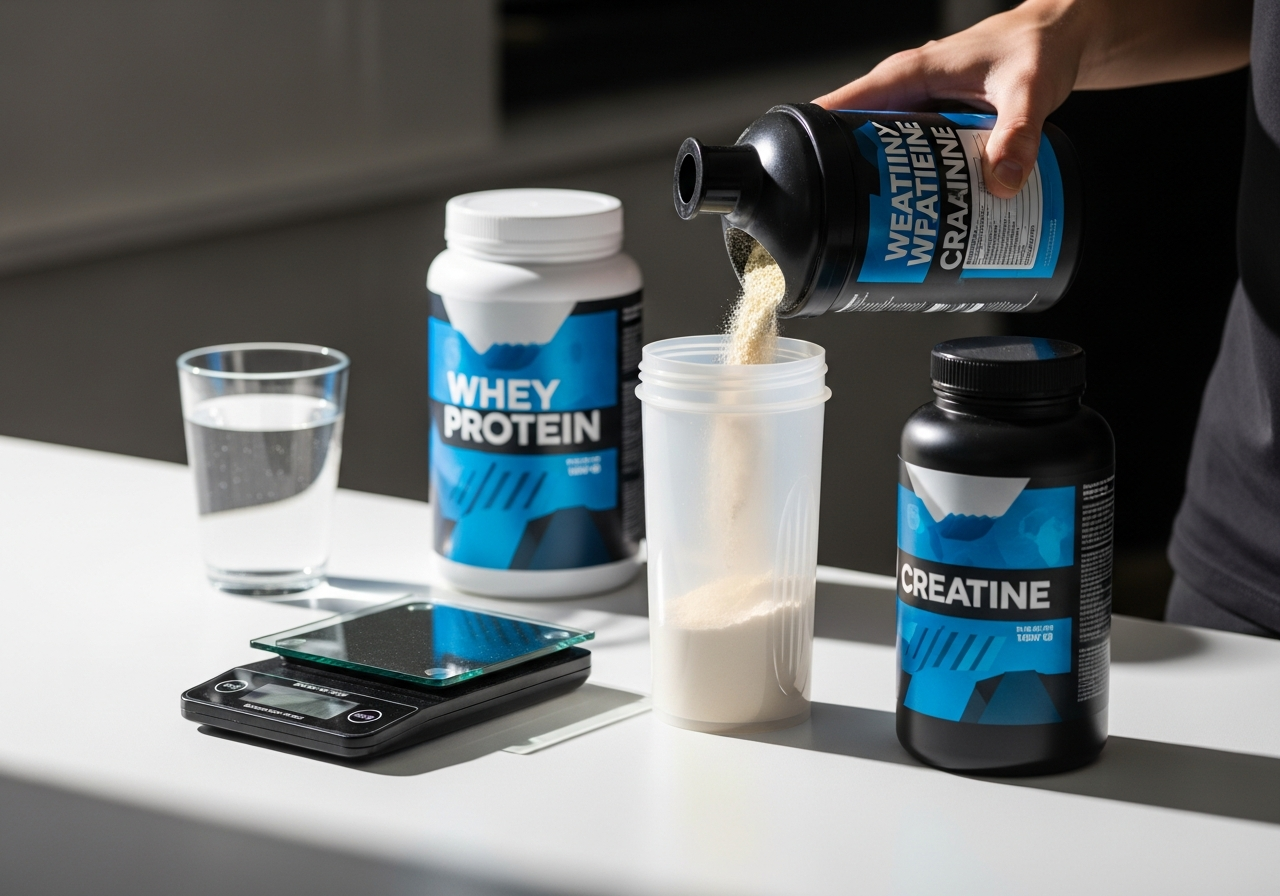
Yes, you can take creatine and whey together safely, and mixing 3-5 g of creatine monohydrate into a whey shake is one of the simplest ways to remember your daily dose. There is no meaningful downside to taking them together for most healthy adults, and the two supplements do not cancel each other out because they work through different mechanisms.
For creatine timing, daily consistency matters more than the exact minute you take it. The research does not support the idea that you must take creatine immediately pre-workout or post-workout for it to work. Taking it with a meal or shake is often smart because it improves adherence. For whey timing, post-workout is convenient, but what matters most is your total daily protein intake and sensible distribution across meals.
A practical stacking routine looks like this:
- Put 1 scoop of whey in a shaker.
- Add 3-5 g creatine monohydrate.
- Add water or milk.
- Shake well and drink whenever it best fits your routine.
- Repeat daily for creatine, including rest days.
This is especially useful for people who forget standalone creatine doses. If you train in the morning, take the combo after training or with breakfast. If you train at night, take it after training or with dinner. If you do not train that day, take creatine anyway, and use whey only if you need the protein.
For more on the combo specifically, see can you mix creatine with protein powder? and for timing details read when to take creatine.
Antonio et al. (2021) reviewed common creatine misconceptions and reinforced that many popular beliefs around ultra-precise timing, dehydration, cramps, and kidney harm in healthy individuals are overstated or unsupported by the broader evidence. See Antonio et al. (2021), Common questions and misconceptions about creatine supplementation — JISSN.
If your main concern is convenience, taking creatine and whey together is often the best real-world solution because simple routines get followed and complicated routines get skipped.
What results to expect, and how fast each one works
Whey protein can help you hit your nutrition target immediately, while creatine takes days to weeks to fully show its effect because it works by saturating muscle stores. That difference explains why one can feel instant and the other often feels subtle at first.
With whey, the immediate result is practical: you successfully consume more protein that day. The physique and performance effects still take time because muscle growth depends on repeated training, adequate total nutrition, and recovery. If whey helps you consistently reach your protein target, you may notice better recovery, less hunger during a cut, or easier meal planning within days, but visible muscle changes still usually take weeks to months.
With creatine, timelines are more predictable:
- With loading: some people notice fuller muscles, slightly better gym performance, or a small body-weight increase from intracellular water within about 5-7 days.
- Without loading: benefits usually build across roughly 3-4 weeks of 3-5 g daily use.
- Longer term: the biggest payoff is not a one-day pump but better training quality over many weeks.
A small increase in body weight after starting creatine is usually water stored inside muscle, not body fat. That is one reason muscles can look fuller. If you want the full explanation, see does creatine make you gain weight.
How do you know it is working?
- You recover a bit better between hard sets.
- You maintain reps or power better on repeated efforts.
- Your training log trends upward slightly faster.
- Your body weight may rise modestly early on.
How do you know whey is working?
- You consistently hit your daily protein target.
- You stop relying on under-proteined meals.
- Your recovery nutrition becomes easier to execute.
The mistake is expecting creatine to feel like a stimulant or whey to build muscle without sufficient training. Creatine is not pre-workout, and whey is not magic muscle dust. Both are support tools that help your plan work better when the basics are already in place.
If you want a realistic week-by-week breakdown, our guide on how long creatine takes to work covers what to expect in practical terms.
Who should choose whey, who should choose creatine, and who benefits most from both
Beginners, women, older adults, and athletes can all use creatine or whey effectively, but the better choice depends on their diet, training style, and recovery needs. The core principles stay the same across groups: whey helps close a protein gap, while creatine supports repeated high-intensity output and the adaptations that follow.
Beginners: Many beginners under-eat protein and overestimate how much they eat. For them, whey often offers the fastest practical benefit because it makes good nutrition easier. If budget allows, add creatine next because beginners also respond well to the performance support it provides.
Women: Women benefit from creatine just as men do, and the old fear that creatine is only for bulky male bodybuilders is a myth. Creatine can support strength, training capacity, and lean mass retention. Whey is also useful if meals are low in protein or appetite is inconsistent. Our creatine for women guide addresses the bulking myth directly.
Older adults: Older adults often benefit from both because protein needs remain important while appetite and total food intake may decline. Creatine may also be especially helpful alongside resistance training for maintaining strength and lean mass with age. The practical priority is usually regular protein intake plus simple daily creatine adherence.
Team-sport and power athletes: Creatine is especially valuable for sports involving sprints, collisions, jumps, and repeated explosive efforts. Whey remains useful for meeting protein needs when schedule or travel makes food intake unreliable.
Endurance athletes: Whey is often valuable for recovery and daily intake, while creatine is more situational. Endurance athletes who need sprint finishes, hills, track work, or gym strength may still benefit from creatine, but some may be cautious about any early scale-weight increase.
Vegetarians and vegans: Creatine can be particularly attractive because dietary creatine intake is typically lower when animal foods are limited or absent. Protein powders can also be useful, though whey is dairy-based and not vegan.
If you train hard and your diet is inconsistent, both supplements are often more useful than either one alone because one covers intake and the other improves performance capacity.
Safety, side effects, and the myths that confuse this comparison
Creatine monohydrate and whey protein are generally safe for healthy adults when used appropriately, but each has specific side effects and caveats worth understanding. The evidence base for creatine safety in healthy people is stronger than most internet debates suggest.
The ISSN position stand and later reviews support creatine monohydrate as safe and effective for healthy individuals at standard doses, and the IOC consensus recognises creatine among the few supplements with a strong enough evidence base to be genuinely useful in sport. See International Olympic Committee consensus on dietary supplements (2018).
Common creatine side effects:
- Mild water-weight gain, especially early on.
- Possible stomach upset if you take too much at once.
- Occasional bloating complaints, often improved by splitting doses or choosing micronized monohydrate.
Common whey side effects:
- Digestive discomfort if you are lactose sensitive, depending on the product.
- Feeling overly full if you use large shakes instead of meals.
- Acne concerns in some individuals are discussed often, but responses are highly individual and not a reason to treat whey as inherently harmful.
Important nuance: creatine can raise blood creatinine, a breakdown marker, without meaning it damaged your kidneys, because creatinine and creatine are related but not the same thing clinically. That is one reason context matters with lab interpretation. Anyone with pre-existing kidney disease, significant renal concerns, or physician-directed dietary restrictions should speak with a healthcare professional before using creatine.
Myths worth debunking:
- Myth: Creatine is a steroid. Fact: It is not; it is a naturally occurring compound involved in energy metabolism.
- Myth: Creatine causes dehydration and cramps. Fact: Broad evidence does not support that claim in healthy users when hydration is normal.
- Myth: Whey is necessary for muscle growth. Fact: Adequate total protein is necessary; whey is just a convenient way to get it.
- Myth: You must cycle creatine. Fact: Cycling is not required for healthy adults using standard doses.
For more on side effects and safety, see creatine myths debunked and is creatine safe.
What to buy in Canada: the smartest creatine and whey choices without overpaying
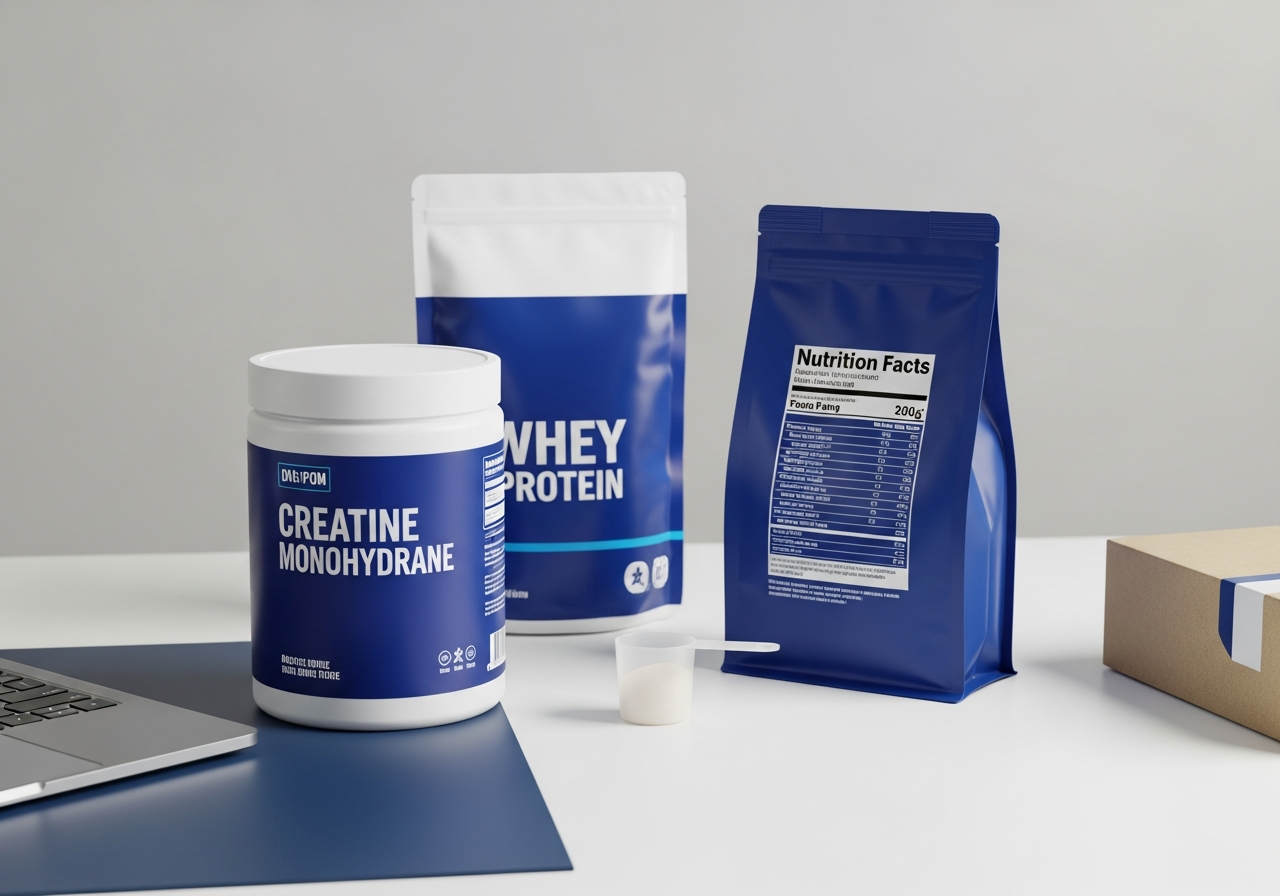
In Canada, the best creatine buy for most people is a plain creatine monohydrate powder with clear dosing, while the best whey buy is the one that fits your digestion, budget, and protein target without unnecessary extras. Fancy versions of either product are often more marketing than meaningful advantage.
For creatine, look for:
- Creatine monohydrate as the ingredient.
- 3-5 g per serving or a scoop you can measure accurately.
- Minimal add-ins unless you specifically want flavour.
- Third-party testing or strong brand quality controls where possible.
- Health Canada-compliant labelling, often including an NPN, which stands for Natural Product Number on many regulated natural health products.
For whey, look for:
- Enough protein per serving to matter, usually around 20-30 g.
- A short ingredient list if you want a simpler product.
- Isolate if lactose sensitivity is a concern, though concentrate is often more affordable.
- Taste and mixability you will actually use consistently.
| Feature | Creatine monohydrate | Whey protein |
|---|---|---|
| Main job | Improve high-intensity performance and training capacity | Help you hit daily protein intake |
| Best format | Plain powder | Powder matched to your digestion and budget |
| What matters most | Dose accuracy, purity, consistency | Protein per serving, digestibility, taste |
| When fancy versions help | Rarely | Sometimes, if isolate improves tolerance |
| Big buying trap | Paying extra for weakly supported forms | Buying giant tubs you dislike and stop using |
The best supplement is the one you will use consistently at the right dose, not the one with the flashiest label. If you are shopping now, compare reputable options in our best creatine rankings and creatine brand reviews.
Canadian buyers should also pay attention to shipping, authenticity, and whether the product clearly states the form and serving size rather than hiding them in a blend.
The biggest mistakes people make with creatine vs whey
The most common mistake is buying the supplement that sounds more exciting instead of the one that fixes the real limiting factor. Most disappointment with both creatine and whey comes from mismatched expectations, inconsistent use, or poor overall training and diet habits.
Here are the major errors to avoid:
- Using whey while still eating too little overall. A shake cannot fix chronic under-eating if total calories are far below your muscle-gain needs.
- Taking creatine only on training days. Creatine works through saturation, so skipping rest days slows or undermines the process.
- Expecting whey to outperform food. Whey is useful because it is convenient, not because it is inherently superior to chicken, Greek yoghurt, eggs, tofu, or other protein-rich foods.
- Paying extra for niche creatine forms. Monohydrate remains the reference standard because it is the most studied and most cost-effective.
- Confusing water retention with fat gain. Early scale changes from creatine are typically intracellular water, not body fat.
- Ignoring digestion. If whey bothers your stomach, try a different formula, smaller servings, or more food-based protein instead of forcing it.
Another common question is creatine vs protein for muscle. The error here is looking for a winner when the real answer is sequence and context. Protein provides the material for growth; creatine improves the training stimulus that helps drive growth. Trying to crown one as universally better misses how muscle is actually built.
If you think creatine is not working, troubleshoot the basics:
- Confirm you are taking 3-5 g daily.
- Use monohydrate, not a mystery blend.
- Give it at least 3-4 weeks if you did not load.
- Make sure your training includes hard, repeated efforts.
- Check that sleep, calories, and protein are not limiting progress first.
If you think whey is not working, the problem is usually not the powder but the fact that your full-day diet, training plan, or calorie intake still does not match your goal. Supplements amplify a good plan; they rarely rescue a bad one.
Bottom line: which do you actually need?
You need whey if your diet is not delivering enough protein, and you need creatine if your protein is already covered and you want one of the best-supported performance supplements in sports nutrition. If your budget allows both, using both is often the strongest and simplest setup for muscle, strength, and training support.
Here is the shortest honest answer:
- Choose whey first if you struggle to hit about 1.6-2.2 g/kg/day of protein.
- Choose creatine first if you already hit your protein target and want more gym performance and lean-mass support.
- Choose both if you want convenience plus performance and can afford the combination.
A simple starter plan for most healthy adults looks like this:
- Set a protein target based on body weight and training goal.
- Use whey only as needed to close the gap.
- Take 3-5 g creatine monohydrate daily, every day.
- Track body weight, protein intake, and gym performance for 4-8 weeks.
- Adjust food intake before assuming you need more supplements.
Creatine vs whey is best understood as performance support versus protein support, not as two versions of the same thing. Once you see that distinction clearly, the buying decision becomes much easier.
If you are ready to build your routine, start with our guides on how to take creatine, creatine for beginners, and the practical comparison at creatine product catalog. If you want the simplest one-line answer to remember, it is this: protein first when intake is low, creatine first when intake is already good.
Creatine vs Whey: the numbers that matter
- 3-5 g/day Standard creatine maintenance dose — Daily creatine monohydrate dose used to maintain muscle saturation.
- 20 g/day for 5-7 days Optional creatine loading phase — Usually split into 4 doses of 5 g to saturate muscle faster.
- 1.6-2.2 g/kg/day Practical daily protein target for lifters — Useful range for people training for muscle and strength.
- 3-4 weeks Typical time for creatine to fully build without loading — Consistent daily dosing matters more than exact timing.
Frequently Asked Questions
Is creatine or whey protein better for building muscle?
Neither is universally better because they do different jobs. Whey protein is better if you are not eating enough total protein to support muscle growth, while creatine is better if your protein intake is already adequate and you want to improve training performance, strength, and the long-term muscle gains that come from doing more quality work.
Should I take creatine or protein first as a beginner?
Take protein first if you are not hitting your daily protein target, and take creatine first if your protein intake is already solid. Most beginners benefit most from fixing obvious nutrition gaps first, because whey can immediately help you reach enough protein, whereas creatine adds more once the dietary foundation is in place.
Can you take creatine and whey together?
Yes, you can take creatine and whey together safely, and many people mix them in the same shake. A practical routine is 3-5 g creatine monohydrate added to a whey shake once daily, because that simplifies adherence and covers both performance support and protein intake at the same time.
Do I need whey protein if I take creatine?
No, you do not need whey protein just because you take creatine. Whey is only useful if it helps you reach your total daily protein target more easily, whereas creatine works independently by increasing muscle phosphocreatine stores and supporting repeated high-intensity efforts.
Do I need creatine if I already drink protein shakes?
Not automatically, but creatine can still be very worthwhile even if you already use protein shakes. Protein shakes help you meet protein needs, while creatine improves high-intensity performance capacity, so someone can be fully covered on protein and still benefit from 3-5 g/day of creatine monohydrate.
Can creatine replace protein powder?
No, creatine cannot replace protein powder because it does not provide protein or amino acids. Creatine supports energy regeneration during hard exercise, but protein powder contributes the building blocks needed for muscle repair and growth when food intake is insufficient.
Is creatine or whey better for weight loss?
Whey is usually more directly helpful for weight loss because it can make high-protein eating easier, which supports satiety and lean-mass retention during a calorie deficit. Creatine can still be useful during a cut because it helps preserve training quality and lean mass, even though it is not a fat burner.
Does creatine make you bigger than whey protein?
Creatine can make muscles look fuller early on because it increases water stored inside muscle, but it does not replace the need for adequate protein. Over time, the best physique results usually come from sufficient protein intake plus creatine-supported training rather than expecting one supplement alone to do all the work.
When should I take creatine and whey?
Take creatine whenever you will remember it consistently, because daily intake matters more than exact timing. Take whey whenever it helps you reach your protein target, with post-workout being convenient but not mandatory if your total daily protein intake is already well structured.
What is the best type of creatine to take with whey?
Creatine monohydrate is the best type to take with whey for most people because it is the most studied, most reliable, and usually the most cost-effective form. There is no need to buy a fancier creatine form just because you plan to mix it into a protein shake.