Creatine for College Athletes: NCAA Rules, Testing, and Performance Benefits
By The Creatine Canada Research Team — Evidence-based supplement analysts
Yes—creatine is allowed for college athletes, including NCAA athletes, because creatine is not on the NCAA banned substances list. For most student athletes, creatine monohydrate at 3 to 5 grams per day is the best-supported, legal, and affordable option for improving repeated high-intensity performance, strength training output, and lean mass gains when used alongside structured training.
Evidence-based · Cites 4 sources · Editorial standards
Key Takeaways
- Creatine is not an NCAA banned substance, so college athletes can use it.
- Creatine monohydrate is the most-studied form and the one most athletes should buy.
- A standard maintenance dose is 3 to 5 g/day; loading is optional, not required.
- Creatine helps most with repeated sprints, explosive efforts, lifting performance, and training quality over time.
- Mild scale-weight gain in the first 1 to 3 weeks is usually water inside muscle, not fat gain.
- Third-party testing matters for drug-tested student athletes because contamination risk matters more than the ingredient itself.
- If you have kidney disease, take medications affecting kidney function, or have a team physician advising otherwise, ask a clinician before starting.
Is creatine allowed in NCAA sports? Yes—and here is the rule college athletes actually need to know
Yes, creatine is allowed in NCAA sports because creatine is not on the NCAA banned substances list. That direct answer matters because many student athletes confuse a legal supplement with a banned performance-enhancer, but creatine monohydrate is a permitted dietary supplement rather than a prohibited drug.
What creates confusion is that NCAA allowed and team provided are not always the same thing. A college athlete may be allowed to use creatine, while a school, department, or team may have its own policies on whether it can purchase, distribute, recommend, or reimburse certain supplements. In practice, that means you should always check three things before you buy or use any product:
- Your sport programme's written supplement policy.
- Your athletic trainer, sports dietitian, or team physician's guidance.
- Whether the exact product is third-party tested for banned-substance contamination.
The contamination point is crucial. Creatine itself is legal, but multi-ingredient powders, proprietary blends, and low-quality imports can create risk for drug-tested athletes if the label does not match the contents. The International Olympic Committee consensus on supplements stresses that contamination is a real concern for competitive athletes, which is why plain, single-ingredient creatine monohydrate is usually the safest route.
For a Canadian buyer, that means looking for straightforward labels and, where applicable, a natural product number or NPN, which is a Health Canada product licence shown on many legal supplement products sold in Canada. An NPN is not the same thing as sports certification, but it does signal that the product is sold within Canada's supplement framework. Ideally, college athletes want both regulatory legitimacy and independent sports testing.
If you want the shortest practical answer: creatine and NCAA rules are compatible, but your safest move is plain creatine monohydrate from a reputable, tested brand. If you are new to supplementation, start with our creatine dosage calculator and compare single-ingredient options in our best creatine rankings.
The evidence-based consensus is simple: creatine is legal for collegiate athletes to use, but product quality and contamination control matter far more than flashy marketing claims.
Why creatine works for college athletes: the phosphocreatine system, ATP recycling, and repeated explosive effort
Creatine helps college athletes by increasing muscle phosphocreatine stores, which improves the rapid recycling of ATP, the body's immediate energy currency for short, intense effort. That mechanism is why creatine is most useful in sports built on repeated bursts: sprinting, jumping, cutting, tackling, lifting, and hard intervals with incomplete recovery.
Phosphocreatine is the stored form of creatine in muscle that donates a phosphate group to help remake ATP during very high-intensity work. ATP powers muscular contraction, but stored ATP runs low within seconds of maximal effort. When muscle phosphocreatine stores are higher, athletes can often maintain output slightly better from rep to rep, sprint to sprint, or set to set.
That sounds subtle, but in sport, small improvements repeated across a season matter. Creatine does not act like a stimulant, so you should not expect a dramatic buzz or instant surge of energy. Instead, the benefit usually shows up as:
- One or two more quality reps at a given load.
- Less drop-off across repeated sprints.
- Better ability to maintain power late in a session.
- Higher training volume over weeks.
- Greater strength and lean mass gains over time when training is already solid.
The 2017 ISSN position stand concluded that creatine monohydrate is the most effective nutritional supplement currently available for increasing high-intensity exercise capacity and lean body mass during training. That does not mean every athlete responds identically, but it does mean the evidence base is unusually strong compared with most sports supplements.
Creatine tends to be most relevant for football, hockey, basketball, volleyball, soccer, sprint events, rowing starts, wrestling, lacrosse, baseball, softball, and weight-room-focused off-season work. Endurance-dominant athletes may still benefit in the gym or during surges, but the performance payoff is usually smaller and the small increase in body mass can matter more.
Another reason creatine is useful for university athletes is schedule density. College sport often means practices, lifts, conditioning, travel, class stress, and inconsistent sleep. Creatine cannot fix poor recovery, but by supporting repeated high-intensity output, it can help athletes preserve training quality in demanding weeks.
If you want a deeper beginner explanation of how creatine actually functions, see what creatine is and what it does and our guide to creatine benefits.
What benefits should student athletes realistically expect—and which college sports benefit most?
College athletes should realistically expect creatine to help most with strength, power, repeated sprint ability, and training-driven lean mass gains rather than pure endurance. The athletes who usually notice the clearest payoff are those whose sport depends on repeated explosive efforts with short recovery.
In practical terms, creatine often fits best in collegiate sports such as football, hockey, basketball, soccer, volleyball, sprinting, throws, wrestling, rugby, baseball, softball, lacrosse, swimming sprints, and strength training-heavy off-season phases. It can also help field and court athletes who need to repeat accelerations and changes of direction many times per session.
Here is what athletes commonly notice after saturation, which means muscle stores have been topped up:
- Better gym performance on compound lifts and repeated sets.
- Improved ability to repeat high-output efforts in practice.
- Slightly faster recovery between short bursts.
- More "fullness" in muscle from increased intracellular water.
- Gradual improvements in lean mass if calorie and protein intake support training.
For example, a basketball player may not jump dramatically higher overnight, but may hold jump quality and sprint quality better across a dense week. A hockey player may not feel a pre-game rush, but can often benefit during repeated shifts and heavy lower-body training. A football player in the off-season may see the clearest effect in the weight room, where extra quality reps compound over months.
There are trade-offs. In sports where body mass is tightly managed, even a small early weight increase may matter. Wrestlers, rowers in certain classes, distance runners, and athletes approaching a weigh-in should think ahead. Creatine does not add fat, but it can increase body mass quickly through higher water storage inside muscle. That is usually a performance-positive effect, not a negative one, but context matters.
Evidence for direct improvements in endurance performance, agility, or sport skill execution is less consistent than evidence for strength and repeated power output. Creatine supports the engine for explosive work; it is not a substitute for sport-specific skill, conditioning, or tactical development.
The useful mindset is this: creatine is a training-quality supplement first. If it helps you train harder, recover between efforts better, and accumulate more quality work over 8 to 12 weeks, the real performance gains often show up later in your sport rather than instantly in one practice.
Student athletes comparing use cases can also read our broader guide on creatine for competitive athletes and timing guide on when to take creatine.
How to take creatine as a college athlete: the simplest step-by-step protocol that works
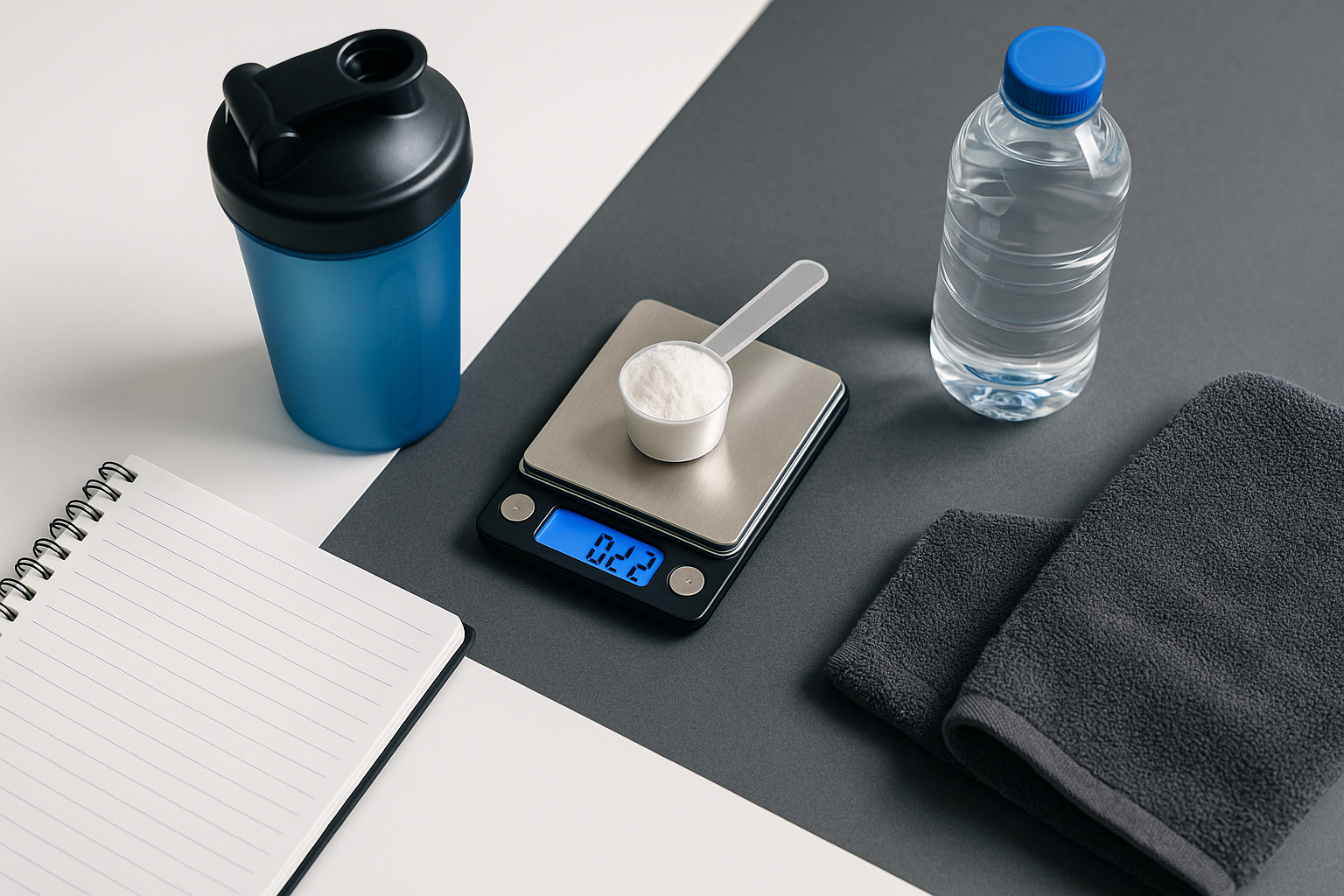
The simplest effective way to take creatine is 3 to 5 grams of creatine monohydrate once daily, every day, with no cycling required. That single sentence covers what most university athletes need to do.
- Choose plain creatine monohydrate. Single-ingredient powder is the best-studied and usually the least expensive per gram.
- Measure a real dose. Take 3 to 5 g daily; use a gram scale or the brand's measured scoop.
- Take it every day. Training day, rest day, travel day, exam week—it works through saturation, so consistency matters more than exact timing.
- Mix it in water or a shake. Water, juice, or a protein shake all work. It does not need a special transport formula.
- Keep training hard. Creatine amplifies quality training; it does not replace it.
- Track body weight and performance for 4 to 8 weeks. Look for small improvements in reps, sprint repeatability, or training tolerance.
If you want faster saturation, you can use a loading phase of about 20 g/day split into 4 doses of 5 g for 5 to 7 days, then continue with 3 to 5 g/day. Loading is optional. It works faster, but it is also more likely to cause temporary stomach upset or a sharper early increase in body weight.
For college athletes with classes, practice, and travel, habit design matters more than perfection. Good anchors include:
- With breakfast every morning.
- In your post-lift shake.
- With dinner on rest days.
- Packed in a small container for road trips.
You do not need to "cycle off" creatine after a few weeks. The 2021 JISSN review on common questions and misconceptions about creatine notes that many common fears around routine use are not supported by the evidence. You also do not need to dry scoop it, and there is no evidence that taking more than needed gives proportionally better results.
For athletes who want exact intake guidance, use our creatine dosage calculator, then see how to take creatine and how much creatine per day for a more detailed protocol.
Creatine dose by body weight and goal: maintenance, loading, and sport-specific trade-offs
Most college athletes do well on 3 to 5 grams of creatine monohydrate per day, but body size and performance goals help refine the dose. Heavier athletes and those with more lean mass often sit nearer the upper end of the range, while smaller athletes can often do well at the lower end once saturated.
| Athlete size / goal | Daily maintenance dose | Optional loading phase | Best fit |
|---|---|---|---|
| Smaller athlete under about 60 kg | 3 g/day | 20 g/day split into 4 doses for 5-7 days | Skill sports, lighter builds, cautious first-time users |
| Most athletes about 60-90 kg | 3-5 g/day | 20 g/day split into 4 doses for 5-7 days | Typical college team-sport use |
| Larger athlete over about 90 kg | 5 g/day | 20 g/day split into 4 doses for 5-7 days | Linemen, throwers, large strength-power athletes |
| Athletes minimizing sudden weight changes | 3-5 g/day, no loading | Skip loading | Weight-class athletes, endurance athletes, in-season caution |
Why not just tell everyone to load? Because loading is about speed, not superiority. A loading phase fills stores faster, usually within about a week. Taking 3 to 5 g/day without loading usually reaches similar saturation in roughly 3 to 4 weeks. If you are in pre-season and want faster uptake, loading is reasonable. If you are in-season and want to avoid abrupt scale changes or stomach issues, daily maintenance-only is often the smarter call.
A practical example:
- A 57 kg volleyball player beginning summer training could start at 3 g/day.
- A 78 kg soccer player in off-season lifting could use 5 g/day or load first, then 5 g/day.
- A 108 kg football lineman would typically use 5 g/day and may choose loading in the off-season.
There is no strong evidence that fancy forms like HCL, buffered creatine, or nitrate outperform monohydrate when dose is matched. The plain version remains the reference standard for results, cost, and evidence depth. If you want product comparisons, see our creatine brand reviews and creatine product catalog.
For athletes trying to keep dosage precise, especially when labels use odd scoop sizes, our creatine dosage calculator and guide to how much creatine per day make the math easier.
Timing, saturation, and results: when college athletes should take creatine and how fast it works
The best time to take creatine is the time you will remember to take it every day, because saturation matters far more than minute-by-minute timing. For most student athletes, once-daily consistency beats any complicated pre- or post-workout ritual.
If you load with about 20 g/day split into 4 doses, you may notice scale-weight changes or workout benefits within 5 to 7 days. If you skip loading and take 3 to 5 g/day, expect a slower ramp, with saturation and more noticeable benefits usually building over about 3 to 4 weeks. The first clear signs it is working are often not dramatic; they tend to be:
- A small increase in body weight in the first 1 to 3 weeks.
- Better repeatability in hard sets or short sprints.
- Less drop-off late in sessions.
- Gradually improving training numbers over 4 to 8 weeks.
If you are wondering whether post-workout is better than pre-workout, the evidence does not support a huge real-world difference for most people. It is reasonable to take creatine with a meal or shake that already fits your routine. Many athletes simply put it in their post-training protein shake because that habit is easy to repeat, not because creatine suddenly stops working outside a narrow window.
On rest days, keep taking it. Muscle creatine stores do not remain topped up if intake becomes random. Missing a single day is not catastrophic, but frequent gaps can slow saturation or make it harder to maintain it consistently during a season.
College athletes should also match their expectations to their calendar. If tryouts are next week, creatine is not magic. If your training block lasts 8 to 12 weeks, creatine has time to do what it does best: improve the quality of the work you can accumulate. That is why it tends to shine in off-season training, pre-season strength blocks, and dense team training phases.
If you want a deeper timing breakdown, see when to take creatine, how long creatine takes to work, and whether a loading phase is worth it.
Who should consider creatine in collegiate sports—and who should be more cautious?
Creatine is a strong fit for many college athletes, especially those doing regular resistance training or sports with repeated high-intensity efforts, but it is not equally useful for every athlete in every season. The best candidates are student athletes whose performance depends on power, strength, acceleration, repeated sprinting, or maintaining output across demanding training weeks.
Good candidates often include:
- First-year athletes starting structured strength training.
- Football, hockey, basketball, soccer, volleyball, lacrosse, baseball, softball, and sprint athletes.
- Athletes in off-season hypertrophy or strength blocks.
- Vegetarian or vegan athletes, who may begin with lower baseline muscle creatine stores and sometimes respond especially well.
- Women athletes who want strength and lean mass support without using stimulant-heavy products.
Creatine is not only for large male athletes. The evidence base supports its use across sexes, and many female student athletes benefit from the same daily 3 to 5 g approach. It is also useful for beginners. In fact, beginners often do well because they are entering a stage where consistent lifting already produces fast adaptation, and creatine can help improve training quality during that window.
More caution is warranted for athletes in situations such as:
- Weight-class sports close to weigh-ins.
- Distance-focused athletes who are highly sensitive to small body-mass increases.
- Athletes with known kidney disease or medical conditions requiring physician guidance.
- Athletes taking medications with kidney-related considerations.
- Anyone with a history of major gastrointestinal intolerance to supplements.
For a wrestler cutting to a class, timing matters. Creatine may still be useful in the off-season or far from competition, but less desirable immediately before a weight cut. For a cross-country runner, the decision is more context-specific: some may value gym support and finishing kick power, while others may not want even a modest increase in body mass.
Canadian student athletes should also remember that team environments differ. Some universities have sports dietitians who actively guide safe supplement use; others leave athletes to figure it out on their own. When you have access to a qualified practitioner, use them. Creatine is straightforward, but individual context still matters.
If you are unsure whether you are a good candidate, start with our guides on creatine for beginners and who should not take creatine.
Safety, side effects, and drug-testing reality: what student athletes need to know before the first scoop
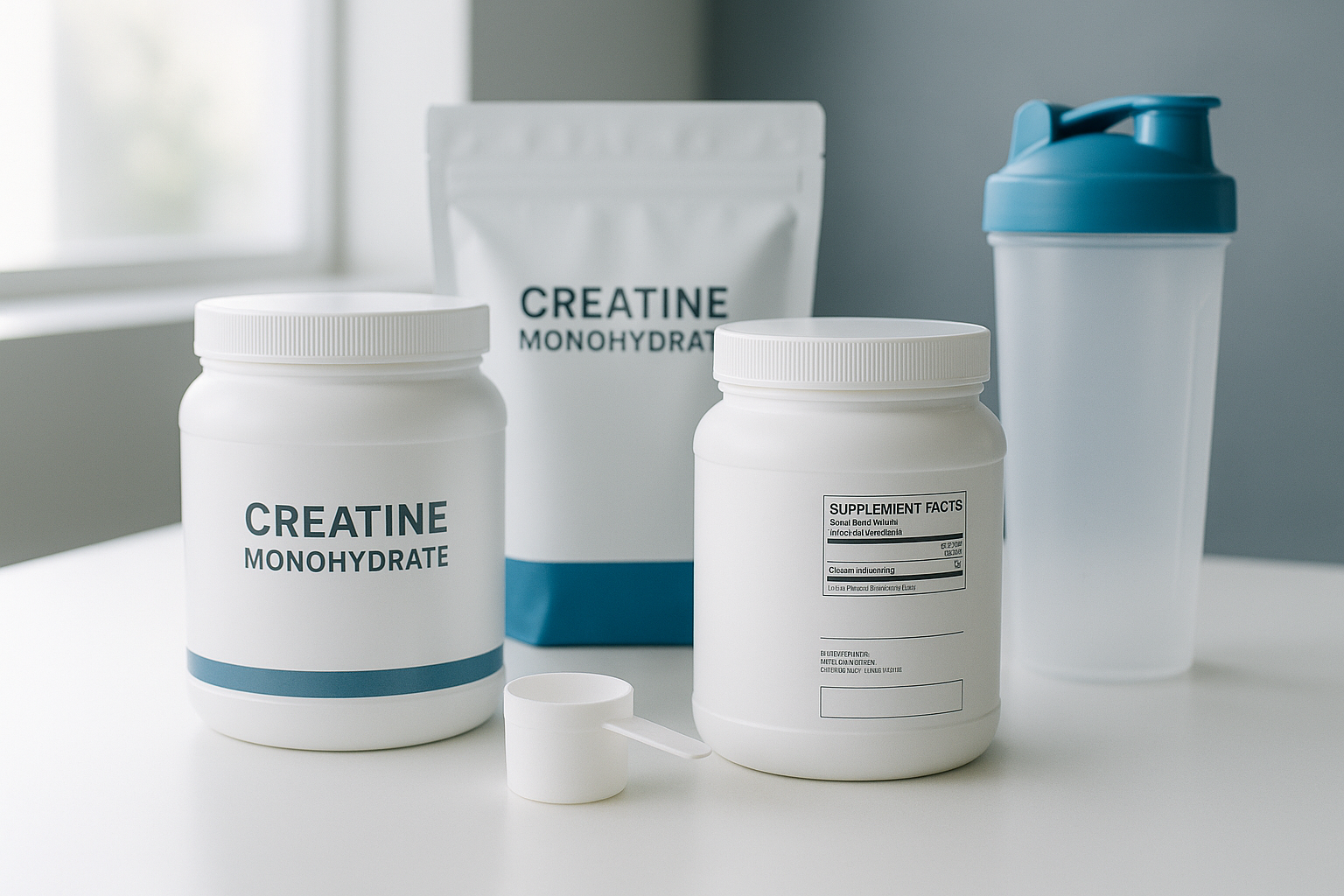
Creatine monohydrate is one of the best-studied sports supplements for safety, and for healthy athletes using recommended doses, the evidence supports a strong safety profile. The bigger practical risk for college athletes is usually not creatine itself, but poor product choice, contamination, or misunderstanding normal side effects.
The ISSN position stand and the 2021 JISSN review both reinforce that many common fears around creatine are overstated or unsupported when used appropriately in healthy people. Typical side effects are usually mild and manageable:
- Water-weight gain: often appears in the first 1 to 3 weeks as more water is stored inside muscle.
- Stomach upset: more common with large single doses, poor mixing, or loading too aggressively.
- Bloating complaints: often improved by splitting doses or skipping loading.
Creatine does not dehydrate you, is not a steroid, and does not require cycling. It also does not fail a drug test because creatine is banned; again, the issue is whether a contaminated supplement contains something else not disclosed on the label.
That is why quality control matters so much for NCAA and university athletes. Look for:
- Single-ingredient creatine monohydrate.
- A reputable manufacturer with transparent testing.
- Third-party certification where possible for competitive athletes.
- Avoidance of proprietary blends and stimulant-heavy multi-ingredient products.
One nuance many athletes miss: creatine can raise creatinine on a blood test. Creatinine is a breakdown product related to muscle metabolism and kidney function screening. A mildly higher creatinine lab value in a supplementing athlete does not automatically mean kidney damage, but it does mean you should tell your clinician that you use creatine so results are interpreted in context.
If you have kidney disease, a significant renal history, or you use nephrotoxic medications, get medical clearance first. That is not alarmism; it is basic good practice. For healthy college athletes using standard doses, though, creatine remains among the safest evidence-backed ergogenic aids available.
For more detail, read is creatine safe, creatine and kidneys, and creatine and drug testing.
Creatine myths college athletes still hear in locker rooms—and what the evidence actually says
Most creatine myths survive because they mix one small truth with a much bigger misunderstanding. For college athletes, clearing these up prevents bad decisions and wasted money.
Myth 1: Creatine is banned by the NCAA.
False. Creatine is not on the NCAA banned substances list. The real issue is product contamination, not the ingredient itself.
Myth 2: Creatine is basically a steroid.
False. Creatine is not an anabolic steroid and does not work through the same hormonal pathways. It helps regenerate ATP during high-intensity work.
Myth 3: Creatine makes you fat.
False. Early weight gain is usually increased intracellular water in muscle, not body-fat gain. Over time, any extra lean mass comes from better training support, not from the powder magically adding tissue on its own.
Myth 4: You need to cycle creatine.
False. There is no established need to cycle creatine on and off if you are healthy and using normal doses.
Myth 5: More is better.
False. Once muscle stores are saturated, extra creatine is not a shortcut to extra results. It is more likely to increase stomach issues than performance.
Myth 6: Creatine causes dehydration or cramps.
The evidence does not support creatine as a cause of dehydration in healthy users at recommended doses. Athletes still need sensible hydration, but creatine itself is not the villain it is often made out to be.
Myth 7: Only football players need creatine.
False. Creatine can benefit many women and men in sports involving repeated power output, from volleyball and soccer to swimming sprints and rowing starts.
Myth 8: Fancy forms are always better than monohydrate.
Usually false. Monohydrate remains the gold standard because it has the deepest evidence base and is typically the best value.
There is also a more subtle myth: that creatine should feel dramatic if it is working. Not true. Creatine is often a quiet, compounding supplement. You may notice an extra rep, less drop-off late in practice, or a better training block over 6 weeks. That is still real performance value.
If you want a deeper evidence check on these claims, see our creatine myths debunked and is creatine a steroid? guides.
How college athletes in Canada should choose a creatine supplement: plain monohydrate, testing, labels, and value
The best creatine for most Canadian college athletes is a plain, single-ingredient creatine monohydrate powder from a reputable brand with strong quality control. In drug-tested sport, simplicity is usually a feature, not a flaw.
When comparing products, prioritise this order:
- Form: choose creatine monohydrate first.
- Ingredient list: one ingredient is ideal.
- Testing: third-party or sport-focused testing is a major plus.
- Regulatory legitimacy: in Canada, many compliant products carry an NPN.
- Cost per gram: tubs often beat gummies, capsules, and trendy blends.
| Option | Pros | Cons | Best for |
|---|---|---|---|
| Unflavoured monohydrate powder | Best evidence, cheapest per gram, flexible dosing | Slight grit in some products | Most student athletes |
| Micronized monohydrate | May mix a bit easier, same core ingredient | Usually slightly pricier | Athletes sensitive to texture |
| Capsules | Convenient for travel | Higher cost, many capsules needed for full dose | Road trips and convenience users |
| Gummies / blends | Easy to take, flavoured | Often expensive, lower dose per serving, more additives | Athletes who prioritise convenience over value |
For university athletes, the biggest red flags are proprietary blends, "test booster" combos, extreme pre-workouts, and imported products with vague labelling. These create needless risk. A tub of monohydrate that gives you a true 3 to 5 g dose is usually all you need.
Canadian buyers should also consider shipping reliability and product freshness, especially if living on campus or ordering to residence. Powders are usually the easiest, most economical format for long-term use. If you need help comparing options, see our best creatine rankings, creatine brand reviews, and creatine product catalog. For Canada-specific regulatory context, our guide on whether creatine is approved in Canada is also useful.
The short buying rule is simple: buy boring. For collegiate athletes, the boring tub of tested monohydrate is almost always the smart choice.
Why creatine sometimes seems ‘not to work’ for student athletes—and how to troubleshoot it fast
Creatine usually "doesn't work" because the protocol, expectations, or training context is off—not because creatine monohydrate is ineffective. When college athletes troubleshoot correctly, the problem is often simple.
Mistake 1: Not taking it daily.
Creatine works by saturating muscle over time. Skipping weekends, travel days, or exam weeks slows that process.
Mistake 2: Under-dosing.
A tiny scoop that provides less than 3 g may be enough for some smaller athletes, but many college athletes do better at 3 to 5 g/day.
Mistake 3: Expecting a stimulant-like feeling.
Creatine is not caffeine. The payoff is better training output and adaptation, not a buzz.
Mistake 4: Judging it after four days without loading.
If you skip loading, give it 3 to 4 weeks.
Mistake 5: Blaming normal water retention.
A 1 to 3 week increase in scale weight often means the supplement is doing exactly what it should at the muscle level.
Mistake 6: Using a weak product format.
Low-dose gummies or flashy blends can make it harder to hit an evidence-based daily intake consistently.
Mistake 7: Poor training or nutrition.
Creatine cannot rescue an inconsistent lifting plan, low protein intake, or chronic sleep deprivation.
Here is a simple troubleshooting sequence:
- Confirm your product is plain creatine monohydrate.
- Verify you are actually getting 3 to 5 g/day.
- Take it daily for at least 4 weeks if you did not load.
- Track body weight, reps, and sprint quality in training.
- Fix obvious issues in calories, protein, and sleep.
- If stomach upset occurs, split the dose or take it with food.
There is also individual variability. Athletes with naturally higher baseline muscle creatine stores may notice less dramatic change, while vegetarians and some lower-baseline users may notice more. That does not mean one person is "immune" and another is gifted; it usually reflects different starting points.
If your goal is to know what changes are realistic over time, read creatine not working?, creatine non-responders, and realistic creatine results.
Bottom line: should college athletes take creatine?
Yes, many college athletes should strongly consider creatine monohydrate because it is legal under NCAA rules, well-supported by evidence, and especially useful for improving high-intensity training quality over time. If you play a power, sprint, collision, jumping, or repeated-effort sport, creatine is one of the few supplements with a strong enough evidence base to be worth serious attention.
The best protocol for most student athletes is straightforward: take 3 to 5 g of creatine monohydrate every day, optionally use a 5 to 7 day loading phase if you want faster saturation, and pair it with quality training, adequate food, hydration, and sleep. Expect subtle but meaningful changes rather than fireworks: perhaps a bit of early water weight, more consistent repeated effort, and better gains from a solid training block.
The biggest practical cautions are also simple. Use a reputable product, prefer third-party tested options if you are drug-tested, avoid multi-ingredient blends, and talk to a clinician first if you have kidney disease or relevant medical concerns. For weight-class or endurance athletes, decide based on timing and body-mass trade-offs rather than assuming creatine is automatically right or wrong.
If you remember only one sentence, make it this: creatine for college athletes is NCAA-legal, most useful for repeated high-intensity performance, and best taken as plain monohydrate at 3 to 5 grams per day.
To start today, use the creatine dosage calculator, compare options in our best creatine rankings, and review our practical guides on how to take creatine and creatine safety.
Creatine for College Athletes: The Numbers That Matter
- 3-5 g/day Standard daily maintenance dose — Effective for most collegiate athletes once muscle stores are saturated.
- 20 g/day Typical loading dose — Usually split into 4 doses for 5-7 days to saturate faster.
- 5-7 days How fast loading works — A loading phase can raise muscle creatine stores much faster than maintenance-only dosing.
- 3-4 weeks How long no-loading usually takes — Daily 3-5 g use without loading typically reaches similar saturation over several weeks.
Frequently Asked Questions
Is creatine allowed in NCAA sports?
Yes, creatine is allowed in NCAA sports because it is not on the NCAA banned substances list. The more important issue for student athletes is choosing a reputable product, since contamination from other undeclared ingredients is the real risk in drug-tested sport.
Is creatine a banned substance for college athletes?
No, creatine is not a banned substance for college athletes. However, a team or school may still have internal supplement policies, so athletes should confirm programme rules and ideally choose single-ingredient, third-party tested creatine monohydrate.
What is the best creatine for student athletes?
The best creatine for student athletes is plain creatine monohydrate from a reputable brand with strong quality control. It is the most studied form, usually the most cost-effective, and the easiest choice for athletes who want performance support without unnecessary ingredient risk.
How much creatine should a college athlete take?
Most college athletes should take 3 to 5 grams of creatine monohydrate per day. A loading phase of about 20 grams per day split into 4 doses for 5 to 7 days is optional if faster saturation is desired, but it is not necessary for results.
When should college athletes take creatine?
College athletes should take creatine at the time of day they can remember consistently. Daily regular use matters more than exact timing, so taking it with breakfast, after training, or with dinner are all reasonable options if they help you stay consistent.
Will creatine make a student athlete gain weight?
Yes, creatine can make a student athlete gain some scale weight, especially in the first 1 to 3 weeks, but this is usually water stored inside muscle rather than fat gain. For many power and team-sport athletes, that effect is normal and often performance-positive.
Can college athletes fail a drug test because of creatine?
Creatine itself should not cause a failed drug test because it is not banned. The risk comes from contaminated supplements, especially multi-ingredient powders or poorly controlled products that may contain undeclared banned substances.
Is creatine safe for university athletes?
Creatine is generally considered safe for healthy university athletes when used at recommended doses. Athletes with kidney disease, relevant medical conditions, or medications affecting kidney function should check with a clinician before starting.
Do college athletes need to cycle creatine?
No, college athletes do not need to cycle creatine on and off. Creatine works by maintaining higher muscle stores over time, so daily use is usually more logical than repeatedly stopping and restarting without a specific reason.
Does creatine help in-season college athletes, or is it only for the off-season?
Creatine can help both in-season and off-season college athletes, but the use case changes. Off-season athletes often use it to support hard lifting and mass gains, while in-season athletes may value better repeated-effort output and maintenance of training quality, provided body-weight changes fit the sport.