
Creatine and Kidney Stones: Is There a Real Link?
By The Creatine Canada Research Team — Evidence-based supplement analysts
No, creatine monohydrate has not been shown to cause kidney stones in healthy people when used at standard doses. The bigger issue is confusion between creatine, creatinine blood tests, hydration habits, and pre-existing kidney or stone risk factors, which can make people assume creatine and kidney stones are linked when the evidence does not show a clear causal connection.
Evidence-based · Cites 4 sources · Editorial standards
Key Takeaways
- Current evidence does not show that standard creatine supplementation causes kidney stones in healthy adults.
- Creatine can raise blood creatinine slightly, but that does not automatically mean kidney damage or stone formation.
- Kidney stones usually form from factors like low fluid intake, high urinary calcium or oxalate, low urinary citrate, genetics, and diet patterns, not from creatine itself.
- A typical maintenance dose is 3-5 g/day; loading is optional and usually 20 g/day split into 4 doses for 5-7 days.
- If you have a history of kidney stones, chronic kidney disease, or are under nephrology care, talk to your physician before using creatine.
- Choose plain creatine monohydrate from a reputable product with clear dosing and quality testing rather than exotic forms with weak evidence.
- Good hydration, sensible dosing, and medical follow-up matter more for stone prevention than supplement timing.
The direct answer: creatine has not been shown to cause kidney stones in healthy people
No, creatine has not been shown to cause kidney stones in healthy people when taken at evidence-based doses. That is the short answer to both can creatine cause kidney stones and does creatine increase kidney stone risk.
The concern usually comes from three things getting mixed together: creatine, creatinine, kidney function, and kidney stones. Creatine is a compound stored in muscle that helps regenerate ATP, your cells’ immediate energy currency, during short high-intensity efforts. Creatinine is a breakdown product measured on blood work. Kidney stones, by contrast, are solid crystals that form in the urinary tract when urine becomes overly concentrated in stone-forming compounds such as calcium, oxalate, or uric acid.
Those are related only indirectly. A mild increase in serum creatinine after starting creatine can alarm people, but it does not by itself prove kidney damage, and it is not the same thing as forming a stone. The 2017 ISSN position stand concluded that creatine monohydrate is safe and effective when used appropriately, and later reviews such as Antonio et al. (2021) addressed persistent misconceptions around renal risk.
What the evidence does not show is a clear mechanism whereby ordinary creatine monohydrate supplementation drives kidney stone formation in healthy users. Stone risk is much more strongly tied to hydration status, urine chemistry, inherited risk, diet composition, obesity, certain medications, and medical conditions.
That said, “not shown to cause” is not the same as “zero possible concern for every person.” If you already have chronic kidney disease, recurrent stones, a solitary kidney, unexplained abnormal labs, or you are under nephrology or urology care, you should get individual medical advice before supplementing. That is especially true if you have been told to limit protein, sodium, oxalate, or certain minerals for stone prevention.
If you want the broader safety context, see our guides on creatine myths debunked and is creatine bad for your kidneys. For most healthy gym-goers, athletes, and beginners, the best evidence says creatine monohydrate is not a known cause of urinary stones.
How kidney stones actually form, and why that matters to the creatine question
Kidney stones form when urine becomes concentrated enough that minerals and waste products crystallize faster than the body can keep them dissolved. That matters because understanding real stone mechanisms makes it easier to see why creatine itself is not a proven driver.
The most common stones are calcium oxalate stones. Other types include calcium phosphate, uric acid, struvite, and cystine stones. Each has somewhat different risk factors, but the usual big-picture drivers are:
- Low urine volume: not drinking enough fluid leaves urine more concentrated.
- High urinary calcium: often influenced by genetics, sodium intake, and some medical conditions.
- High urinary oxalate: influenced by diet, gut absorption, and certain bowel disorders.
- Low urinary citrate: citrate helps prevent crystal formation.
- High uric acid: linked in some people to diet pattern, metabolic issues, or gout.
- Urine pH: overly acidic or alkaline urine can favour certain stone types.
Notice what is not on that list: supplemental creatine monohydrate as a standard independent cause. Creatine is not oxalate, and there is no established evidence that taking 3 to 5 grams per day makes your urine suddenly behave like that of a classic stone former. Searches for creatine and oxalate, creatine and urinary stones, and creatine kidney stone formation often imply a direct pathway that has not been established in human evidence.
Why the confusion persists is understandable. People may start creatine, train harder, sweat more, drink inconsistently, eat differently, and then develop flank pain or get abnormal bloodwork. It is easy to blame the new supplement. But stones are often the end result of a longer pattern of concentrated urine and susceptible chemistry, not a single scoop of monohydrate.
This is also why hydration advice matters. Creatine draws water into muscle tissue as intracellular water, meaning water stored inside the muscle cell, but that does not mean it dehydrates you or directly creates stones. Hydration still matters because concentrated urine raises stone risk, whether you use creatine or not. If stone prevention is your concern, the right question is less “is creatine inherently lithogenic?” and more “does my total routine keep urine dilute and stone chemistry favourable?”
That distinction is crucial, especially for athletes, people in hot environments, and anyone with a prior history of renal stones.
What the science says about creatine, kidneys, creatinine, and stone risk
The best current evidence does not show that creatine monohydrate increases kidney stone risk in healthy users, and much of the fear comes from misunderstanding creatinine lab values. That is the central science point.
Creatine is stored largely in skeletal muscle, where some of it exists as phosphocreatine, a high-energy phosphate donor that helps rapidly regenerate ATP during hard efforts like sprinting and lifting. A small amount of creatine and phosphocreatine naturally breaks down into creatinine each day. Because creatinine is filtered by the kidneys, blood creatinine is commonly used as part of kidney function assessment.
Here is the catch: if you supplement with creatine, serum creatinine can rise modestly in some people without true kidney injury. That can make estimated glomerular filtration rate, or eGFR, look worse on paper even when actual kidney health is unchanged. This is one reason people search for links between creatine and renal stones or assume “high creatinine” means “creatine harmed my kidneys.” They are not the same issue.
The 2017 ISSN position stand and the 2021 JISSN review both reinforce that creatine monohydrate is among the most studied sports supplements and is generally safe in healthy populations when taken within established dosing ranges. The Mayo Clinic overview also notes that creatine appears safe for up to several years in healthy people when used appropriately.
What about a specific mechanism for stones? For a supplement to clearly raise stone risk, you would expect evidence that it meaningfully increases urinary calcium, urinary oxalate, uric acid load, or unfavourable urine concentration in a way that consistently translates into stone events. That causal chain has not been established for standard creatine monohydrate.
There is also no good basis for the term creatine oxalate kidney being treated like a proven clinical problem with monohydrate use. Creatine is not the same thing as oxalate, and taking creatine monohydrate is not equivalent to increasing dietary oxalate exposure. Some novel creatine salts and blends are marketed aggressively, but they do not have stronger safety or efficacy evidence than plain monohydrate.
If you are reading kidney labs while using creatine, context matters. A clinician may need to interpret creatinine, eGFR, cystatin C, urinalysis, symptoms, and your baseline muscle mass together. That is one reason our creatine dosage calculator and dosing guides favour conservative, standard protocols rather than “more is better” approaches.
Who should be more careful: recurrent stone formers, kidney disease, and high-risk cases
If you have a history of recurrent kidney stones or known kidney disease, you should not self-prescribe creatine casually, even though creatine itself is not a proven stone cause. Individual risk matters more than internet generalizations.
The highest-caution groups include:
- People with chronic kidney disease or unexplained reduced kidney function
- People with recurrent calcium oxalate, uric acid, or cystine stones
- People with a solitary kidney or structural urinary tract issues
- People under nephrology or urology care
- People using medications that can affect kidney function or stone risk
- People with bowel disease, malabsorption, or prior bariatric surgery, which can alter oxalate handling
In these cases, the question is not simply can creatine cause kidney stones. The better question is whether adding any non-essential supplement is worthwhile when your kidney or urinary system already needs tailored management. For some people, a clinician may say creatine is still reasonable; for others, the uncertainty is not worth it.
If you have had one stone before but are otherwise healthy, the practical move is to ask your clinician what type of stone it was and what your prevention plan is. That matters because calcium oxalate stones, uric acid stones, and other stone types do not have identical prevention strategies. In many cases, your bigger modifiable issues will be fluid intake, sodium, diet pattern, urine citrate, or oxalate load rather than creatine itself.
Also remember that heavy training changes the picture. Endurance athletes, hockey players, labourers, and anyone training in hot gyms or summer conditions can experience repeated mild dehydration if they under-drink. That alone can raise stone risk. If creatine gets blamed in those cases, it is often because it was the visible supplement, not because it was the biochemical cause.
Women, older adults, and beginners do not need special stone-related creatine doses solely because of age or sex. However, older adults are more likely to have medications or chronic conditions that deserve review first. If you are unsure whether you fall into a “healthy user” category, start with your physician or pharmacist rather than a forum thread.
For a broader list of situations where extra caution is wise, see who should not take creatine and is creatine safe.
A practical step-by-step protocol if you want to use creatine while minimizing kidney-stone concerns

If you want to take creatine while minimizing kidney-stone concerns, the safest practical approach is simple: use plain creatine monohydrate, stick to standard doses, and keep hydration consistent. You do not need a complicated protocol.
- Pick the form with the best evidence. Choose plain creatine monohydrate, ideally micronized if you prefer easier mixing. It is the most studied and most cost-effective form.
- Use a standard maintenance dose. Take 3 to 5 g per day. If you are smaller-bodied, 3 g is often enough. If you are larger or highly muscular, 5 g per day is the common upper end of standard maintenance.
- Decide whether to load. Loading is optional. A common loading protocol is 20 g per day split into 4 doses of 5 g for 5 to 7 days, followed by 3 to 5 g per day. If stomach comfort or stone anxiety is a concern, skip loading and just take 3 to 5 g daily.
- Take it with fluid. Mix it in water, a shake, or another beverage you tolerate well. The liquid itself does not magically improve safety, but taking it dissolved and with regular fluids supports adherence and comfort.
- Stay normally well-hydrated. You do not need extreme water chugging, but you also should not live in a chronically under-hydrated state. Pale yellow urine most of the day is a practical layperson cue, though not a perfect medical test.
- Watch your total routine. If you sweat heavily, eat very high sodium, have a past stone history, or often go hours without drinking, fix those habits first.
- Stop and get assessed if symptoms appear. Severe flank pain, blood in urine, vomiting, fever, or difficulty urinating are not “normal creatine side effects.” They require medical evaluation.
For most users, taking creatine once daily at any consistent time is enough. Timing matters far less than adherence. If you want dosing help, our creatine dosage calculator, how much creatine per day, and how to take creatine guides walk through the basics.
The key risk-management principle is this: do not overcomplicate, over-dose, or assume a fancy form is safer for the kidneys than monohydrate. The evidence does not support that leap.
Dosing by body weight and goal: enough to work, not more than you need
For kidney-stone peace of mind and performance results, the best dose is the lowest dose that reliably saturates muscle over time, which for most adults is 3 to 5 g per day. More is not automatically better.
Creatine works by increasing intramuscular creatine and phosphocreatine stores. Saturation, meaning fuller muscle creatine stores, is what matters for performance and training benefits. Standard maintenance dosing reaches that over several weeks; loading reaches it faster.
| Body size / goal | Simple daily dose | Loading option | Best use case |
|---|---|---|---|
| Smaller adults under about 60 kg | 3 g/day | Usually unnecessary | Beginners, general fitness, cautious users |
| Most adults around 60-90 kg | 3-5 g/day | 20 g/day split into 4 x 5 g for 5-7 days | Strength, hypertrophy, team sports |
| Larger or very muscular adults above about 90 kg | 5 g/day | 20 g/day split into 4 doses for 5-7 days | Bigger lifters wanting faster saturation |
| People with a past stone history who are medically cleared | Start at 3 g/day | Usually skip loading | Conservative approach with fewer variables |
Examples help. A 55 kg beginner woman lifting three times per week can reasonably start with 3 g daily. A 78 kg recreational lifter can use 5 g daily or 20 g daily for 5 to 7 days, then 5 g daily. A 102 kg rugby player may also use 5 g daily for maintenance; going far above that long term is rarely necessary.
Week by week, here is what to expect. With loading, muscles usually become meaningfully saturated within about a week. Without loading, expect roughly 3 to 4 weeks before stores are substantially topped up. In practice, many people notice slightly better training capacity, an extra rep here and there, or better sprint repeatability before they notice visible physique changes.
If you are trying to reduce variables because you worry about creatine and kidney stones, the easy answer is to skip loading. Loading is not more dangerous in healthy people when done properly, but it can cause more transient stomach upset in some users and is not required for eventual benefits.
For more dosing nuance, see creatine loading phase and creatine maintenance dose.
Hydration, oxalate, sodium, and diet: the real stone-prevention levers to focus on
If your real concern is preventing kidney stones, hydration and urine chemistry matter far more than whether you take standard-dose creatine. That is the practical takeaway for anyone searching creatine and oxalate or creatine and urinary stones.
Low urine volume is one of the most important modifiable stone risks. If you train hard, sweat a lot, work outside, or spend long hours in heated indoor environments during a Canadian winter, you can still end up under-hydrated even if you “drink water sometimes.” Creatine does not exempt you from that basic physiology.
Stone prevention usually centres on the following habits:
- Drink enough fluid across the day. Consistency matters more than panic-drinking at night.
- Moderate sodium intake. High sodium can raise urinary calcium in susceptible people.
- Do not assume all calcium is the enemy. Normal dietary calcium often helps bind oxalate in the gut; over-restricting calcium can backfire in some calcium oxalate stone formers.
- Know your oxalate context. Spinach, almonds, rhubarb, beets, and some other foods can contribute a high oxalate load in susceptible people.
- Get individualized advice if you are a recurrent stone former. Blanket online advice can miss the real cause.
Creatine monohydrate itself is not an oxalate-rich food and is not the same as dietary oxalate exposure. That is why the phrase creatine oxalate kidney is misleading when people use it as though ordinary monohydrate supplementation directly floods the body with oxalate. The available evidence does not support that framing.
From a gym perspective, the mistake is often behavioural. People start creatine, train harder, sweat more, eat more processed convenience foods, and miss meals or fluids around work and training. If a stone appears later, the supplement gets blamed because it is memorable. But the more likely contributors are concentrated urine, sodium load, prior susceptibility, and insufficient stone-specific prevention.
For users who want a practical hydration routine, pair your creatine habit with an existing routine: breakfast, post-workout shake, or dinner. If thirst, darker urine, headaches, or large day-to-day bodyweight swings are common for you, those are signs your hydration routine needs work whether you use creatine or not. Our guide on how much water should you drink with creatine goes deeper on that topic.
Myths that keep this topic confusing, from “creatinine equals kidney damage” to “creatine dehydrates you”
Most fears about creatine and kidney stones come from a handful of repeated myths, and each one needs a clean correction. Here are the big ones.
Myth 1: If creatinine goes up, creatine damaged your kidneys.
False. Creatinine is a lab marker influenced by muscle mass, meat intake, and creatine supplementation. A modest rise in creatinine after starting creatine can happen without true kidney injury. Clinicians may need better context or additional tests.
Myth 2: Creatine and kidney stones are basically the same issue.
False. Kidney function and kidney stone formation overlap only partially. A person can have normal kidney function and still form stones, or abnormal kidney labs and no stones. They are not interchangeable problems.
Myth 3: Creatine dehydrates you and therefore causes stones.
The evidence does not support creatine as a direct dehydrating agent. Creatine increases intracellular water in muscle, but it has not been shown to inherently dehydrate healthy users. Poor hydration habits can raise stone risk, but that is not the same claim.
Myth 4: Fancy forms like HCL or buffered creatine are safer for the kidneys than monohydrate.
There is no strong evidence that they are safer, and monohydrate remains the best-studied form. Marketing is not safety data. If you are comparing options, our best creatine rankings and creatine brand reviews keep the focus on evidence and quality.
Myth 5: Creatine is risky for women or older adults specifically because of stones.
False. There is no special female or older-adult kidney stone warning unique to creatine monohydrate in otherwise healthy users. The real considerations are overall medical history and hydration habits.
Myth 6: You need huge doses to get results.
False. The classic 3 to 5 g daily maintenance dose is enough for most people. High unnecessary doses only add cost and sometimes digestive discomfort.
The broader pattern is simple: creatine gets blamed for problems better explained by physiology, context, or poor interpretation. If you want a full myth breakdown, start with creatine myths vs. facts and creatine myths debunked. When you separate blood-marker noise from actual disease processes, the alleged stone link becomes much less convincing.
What to buy in Canada if safety is your priority: monohydrate, labels, NPNs, and testing
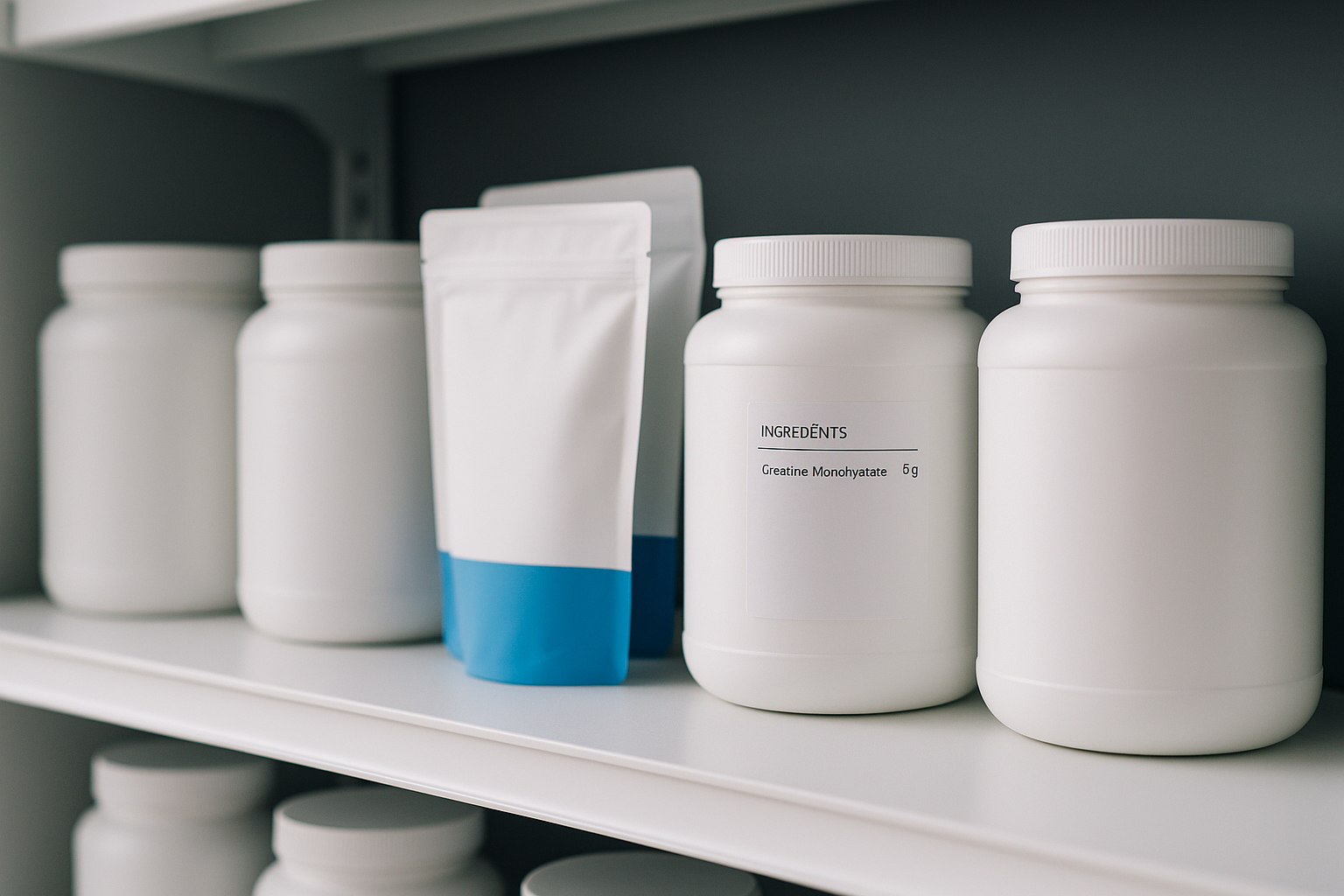
If safety is your priority, buy a plain creatine monohydrate product with transparent labelling rather than a flashy blend that promises kidney-friendly magic. In Canada, label quality and product legitimacy matter.
Start with the ingredient panel. The cleanest choice is a product listing only creatine monohydrate, with a clearly stated serving size in grams. Micronized versions are fine if you prefer easier mixing, but they are still fundamentally monohydrate. Avoid under-dosed proprietary blends, “multi-creatine matrices,” and products loaded with unnecessary stimulants if your goal is to minimize confounders.
For Canadian shoppers, look for:
- An NPN, or Natural Product Number, when applicable on regulated natural health products sold in Canada
- Third-party testing or sport certification if contamination risk matters to you
- Clear lot information and reputable retail channels
- Simple dose math so you know how many grams you are actually taking
There is no special creatine form proven to reduce kidney stone risk compared with monohydrate. That includes HCL, buffered creatine, nitrate, ethyl ester, or gummies. The gold standard remains monohydrate because it has the strongest evidence base for both efficacy and safety.
If you are buying in Canada and want to compare options, our creatine product catalog, best creatine rankings, and creatine brand reviews can help you screen for simple formulations and trustworthy manufacturing. Competitive athletes may also care about third-party testing to reduce the risk of contamination with banned substances, a point consistent with the International Olympic Committee consensus on dietary supplements.
The practical buying rule is blunt: if a product sounds dramatically more advanced than monohydrate, ask whether the evidence is actually stronger. Usually it is not. For a person worried about creatine and renal stones, the smart move is fewer ingredients, not more.
Red flags, lab questions, and when you should stop supplementing and get medical advice
If you develop symptoms of a stone or kidney problem, stop guessing and get medical advice promptly. Creatine is not a substitute for clinical assessment when warning signs appear.
Red flags that deserve medical evaluation include:
- Severe side or back pain, especially waves of pain from the flank to the groin
- Blood in the urine
- Painful urination or difficulty passing urine
- Fever, chills, or vomiting with urinary symptoms
- Sudden swelling, unusual fatigue, or major unexplained changes in urination
Those are not routine “creatine side effects.” They may signal a stone, infection, obstruction, or another medical issue. If you have them, pause the supplement and get assessed.
For bloodwork, tell your clinician you are taking creatine before they interpret serum creatinine or eGFR. That single detail matters. In some cases, a clinician may consider repeating labs off creatine, looking at trends, checking urinalysis, or using another marker such as cystatin C to get clearer context. Do not self-diagnose kidney injury from one flagged creatinine result.
If you have a previous kidney stone history and want to use creatine, it is reasonable to ask targeted questions, such as: What type of stone did I have? Do I need a 24-hour urine study? Am I on a stone-prevention plan already? Is there any reason my specific medical history makes creatine a bad bet? Those questions are more useful than asking whether creatine is “toxic.”
It is also wise to reassess if you are stacking multiple supplements, using NSAIDs heavily, cutting weight aggressively, or following a very high-protein or high-sodium diet while under-drinking. Those factors can muddy the picture and can be more relevant to urinary health than creatine itself.
If your aim is cautious, informed supplementation, keep the core principle in mind: healthy users usually do well on standard-dose creatine monohydrate, but symptoms and pre-existing disease change the decision. That is where individualized medicine matters more than generic reassurance.
Bottom line: the real link between creatine and kidney stones is weaker than the internet suggests
No, creatine monohydrate is not known to cause kidney stones in healthy people, and current evidence does not support a clear causal link between standard creatine use and urinary stone formation. That is the bottom line.
If you are healthy, the evidence-based play is straightforward: use plain creatine monohydrate, take 3 to 5 g per day, skip loading if you prefer a more conservative start, and stay consistently hydrated. That approach gives you the proven benefits of creatine without inventing risks the evidence has not established.
If you have a history of recurrent stones, chronic kidney disease, abnormal kidney labs, or specialist follow-up, get medical clearance first. In those situations, the right answer depends less on generalized supplement safety data and more on your personal stone type, urine chemistry, medications, and kidney status.
The search terms creatine and kidney stones, can creatine cause kidney stones, does creatine increase kidney stone risk, creatine and oxalate, and creatine and renal stones all point to the same core question. The strongest evidence-based answer in 2026 is that ordinary creatine monohydrate use has not been shown to be a direct cause of kidney stones in healthy adults.
So what should you do today? Buy a reputable monohydrate product, use a standard dose, pair it with sane hydration habits, and do not let a misunderstood creatinine result or old gym myth scare you away from one of the most studied supplements in sports nutrition. If you want help choosing a product or dose, start with our creatine dosage calculator and creatine product catalog.
Practical summary: For healthy adults, creatine monohydrate at 3 to 5 g per day is not a proven kidney-stone risk, but anyone with prior stones or kidney disease should get individualized medical advice before using it.
Creatine and Kidney Stones: The Numbers That Actually Matter
- 3-5 g/day Standard maintenance dose — The evidence-based daily range used by most healthy adults.
- 20 g/day Typical loading dose — Usually split into 4 doses for 5-7 days, then reduced to maintenance.
- 5-7 days Time to saturate with loading — Loading speeds muscle saturation but is optional.
- 3-4 weeks Time to saturate without loading — Daily maintenance alone reaches similar muscle stores more gradually.
Frequently Asked Questions
Can creatine cause kidney stones?
No, creatine has not been shown to cause kidney stones in healthy people when used at standard doses. Stone formation is more strongly linked to low fluid intake, urine chemistry, genetics, diet, and pre-existing medical conditions than to creatine monohydrate itself.
Does creatine increase kidney stone risk if I do not drink enough water?
Poor hydration can increase kidney stone risk, but that does not prove creatine is the cause. If creatine leads you to train harder or sweat more without replacing fluids, concentrated urine may raise stone risk, so hydration habits matter more than the supplement alone.
Is creatine bad for your kidneys or just misunderstood on blood tests?
For healthy people, creatine is more often misunderstood on blood tests than harmful to the kidneys. Supplementation can slightly raise serum creatinine, which may make kidney function estimates look worse even when actual kidney health has not changed.
What is the link between creatine and oxalate?
There is no established evidence that standard creatine monohydrate use meaningfully increases oxalate exposure or directly causes calcium oxalate stones. Creatine is not the same thing as oxalate, so the phrase 'creatine and oxalate' is often more confusing than informative.
Should I avoid creatine if I have had kidney stones before?
If you have had kidney stones before, you should speak with your physician before using creatine. Creatine is not a proven stone cause, but prior stone type, urine chemistry, medications, and kidney history can change whether supplementation is sensible for you.
What is the safest creatine dose if I am worried about kidney stones?
A conservative starting dose is 3 g per day of plain creatine monohydrate. That dose is often enough for smaller adults and cautious users, and it avoids the extra variables that come with high intakes or optional loading phases.
Does creatine HCL or another form reduce kidney stone risk compared with monohydrate?
No creatine form has stronger evidence than monohydrate for reducing kidney stone risk. Monohydrate remains the best-studied form for safety and effectiveness, while claims that HCL or other versions are more kidney-friendly are largely marketing-driven.
Can creatine cause flank pain or blood in urine?
Creatine is not known to normally cause flank pain or blood in urine. If you develop either symptom, stop supplementing and seek medical evaluation, because those signs can indicate a kidney stone, urinary infection, or another condition needing prompt care.
How do I know if creatine is working without harming my kidneys?
You usually know creatine is working by improved training performance over time, such as better repeated efforts, an extra rep, or modest increases in scale weight from intracellular water. Kidney safety is judged by symptoms, medical history, and appropriate lab interpretation, not by guesswork.
Can women and older adults take creatine without extra kidney stone risk?
Yes, healthy women and older adults can generally use creatine without any special kidney stone warning unique to their sex or age. The main exception is when kidney disease, past stones, medications, or other medical conditions make individualized review more important.