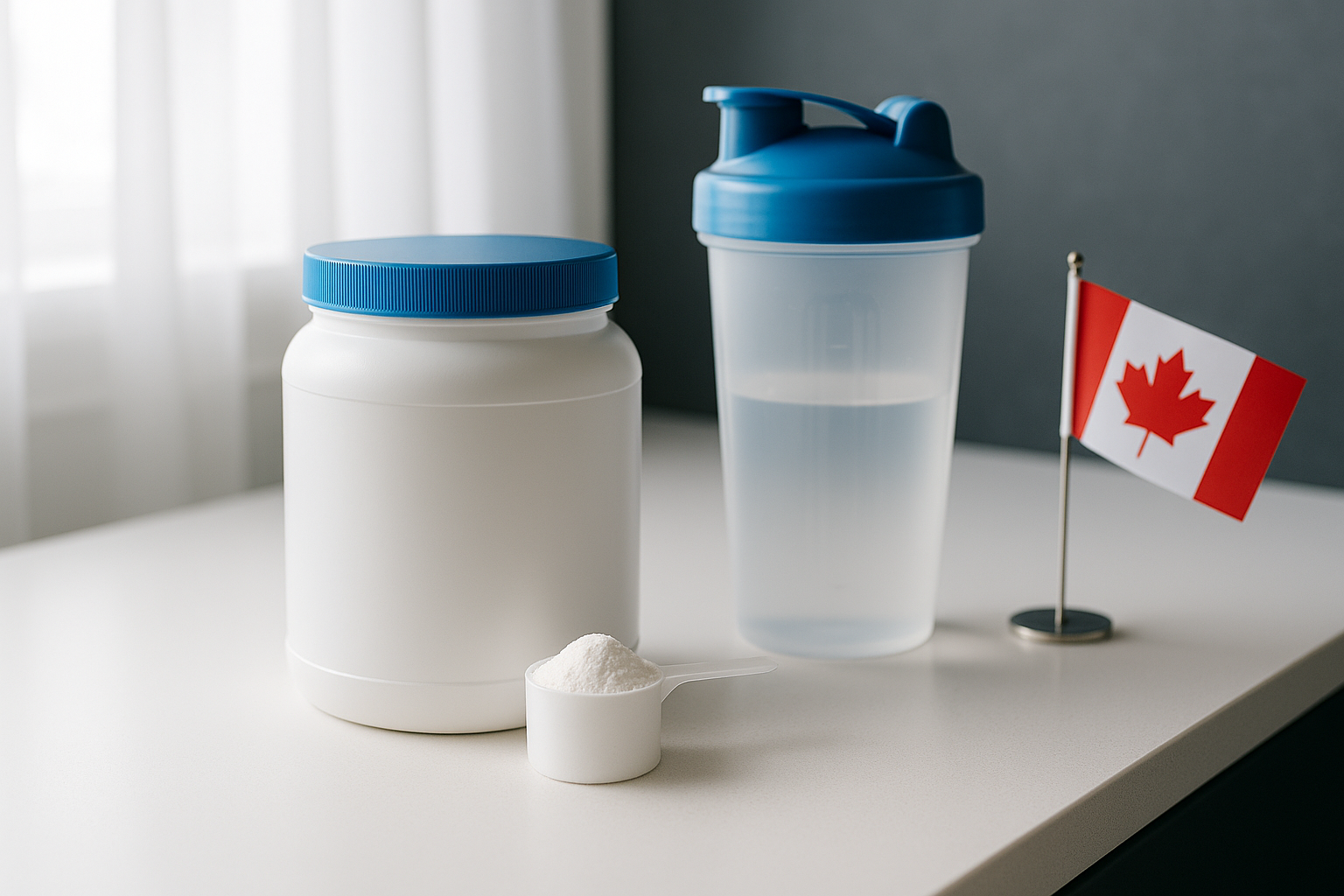
Canadian-Made Creatine: Brands Manufactured in Canada and What to Know
By The Creatine Canada Research Team — Evidence-based supplement analysts
Canadian-made creatine does exist, but most products sold in Canada use creatine raw material manufactured elsewhere and are only blended, packaged, or finished in Canada. If you want made in Canada creatine, verify exactly what the claim means on the label, prioritize creatine monohydrate, and look for an NPN, transparent manufacturing details, and preferably third-party testing.
Evidence-based · Cites 4 sources · Editorial standards
Key Takeaways
- “Canadian made” can mean packaged or finished in Canada, not necessarily that the creatine itself was synthesized here.
- Creatine monohydrate is still the best-supported form for strength, muscle, and repeated high-intensity performance.
- A standard maintenance dose is 3–5 g daily; loading is optional at about 20 g daily split into 4 doses for 5–7 days.
- In Canada, check for an NPN, full ingredient transparency, lot details, and clear company contact information.
- For competitive athletes, third-party testing such as NSF Certified for Sport or Informed Sport matters more than patriotic branding.
- If a brand claims “made in Canada,” ask whether the raw creatine is also manufactured in Canada or only packed domestically.
What “Canadian-made creatine” actually means on a label
Canadian-made creatine usually means the finished product is blended, filled, or packaged in Canada, not that the creatine molecule itself was synthesized here. That distinction matters because people searching for canadian made creatine, made in Canada creatine, or creatine manufactured in Canada often mean one of three different things: the brand is Canadian-owned, the tub is packed in Canada, or the raw creatine was truly manufactured in Canada.
In practice, many supplements sold as Canadian or locally made rely on globally sourced raw ingredients and then complete the final manufacturing steps domestically. That is not automatically a problem. Creatine monohydrate is a simple ingredient, and product quality depends more on purity, good manufacturing controls, and testing than on the country named in marketing copy. The problem is that labels and product pages often blur the difference between brand origin, packaging origin, and ingredient origin.
If you want locally made creatine Canada products for economic or supply-chain reasons, use this hierarchy:
- Best evidence of domestic production: the brand explicitly states the creatine raw material is manufactured in Canada.
- Next best: the brand says the product is manufactured, blended, or packaged in Canada and discloses where the raw ingredient comes from.
- Weakest claim: the company is Canadian, but there is no disclosure about where the actual creatine is made.
For buyers, the right question is not simply “Is this a Canadian brand?” but “What part of this product is actually Canadian?” A useful follow-up is: was the powder synthesized here, or was it imported and only put into a tub here?
From a results standpoint, you should still prioritize plain monohydrate over flashy forms. The 2017 ISSN position stand concluded that creatine monohydrate is the most effective ergogenic nutritional supplement currently available for increasing high-intensity exercise capacity and lean mass during training. So if your goal is performance, the country claim is secondary to choosing the right form and a trustworthy manufacturer.
If you are comparing options, our best creatine rankings and creatine brand reviews can help you separate marketing language from actual product quality.
How creatine works in your body, and why origin does not change the science
Creatine works by increasing muscle phosphocreatine stores, which helps you regenerate ATP faster during short, hard efforts. ATP, or adenosine triphosphate, is the immediate energy currency your muscles use for high-power work like sprinting, heavy sets, jumps, and repeated intervals. Phosphocreatine is the stored form that donates a phosphate group to help rebuild ATP quickly when demand spikes.
That mechanism does not change because a tub is Canadian-made, German-made, or imported and packed locally. If the ingredient is genuine creatine monohydrate and the dose is correct, the physiological job is the same. After supplementation, muscle creatine stores gradually rise toward saturation. Once your muscles hold more creatine, you usually perform a bit better in repeated high-intensity training, recover better between sets, and over weeks to months often build more lean mass because you can sustain higher-quality training.
The evidence base here is mature, not speculative. The ISSN position stand and the later JISSN review by Antonio and colleagues both support creatine’s safety and efficacy in healthy people when used appropriately. Examine’s evidence summary also consistently places monohydrate as the reference form because it has the largest body of supporting human data. See Antonio et al. (2021) and the Examine creatine evidence summary for the current broad view.
What should you expect in the real world?
- Within days to 1 week with loading: body mass may increase slightly as water shifts into muscle.
- Within 2–4 weeks without loading: muscle stores approach saturation and gym performance often starts to feel more repeatable.
- Within 6–12 weeks: strength, training volume, and lean mass improvements are more noticeable if training and protein intake are in place.
This is why beginners often think a domestic brand will “work better” than an imported one. It will not, unless the domestic product is simply purer, dosed correctly, and easier for you to take consistently. Consistency beats novelty.
If you want a deeper primer before buying, start with creatine product catalog to compare formats, or read related guides on what creatine is and how saturation works before you narrow down a Canadian domestic creatine option.
How to verify whether a creatine product is truly made in Canada
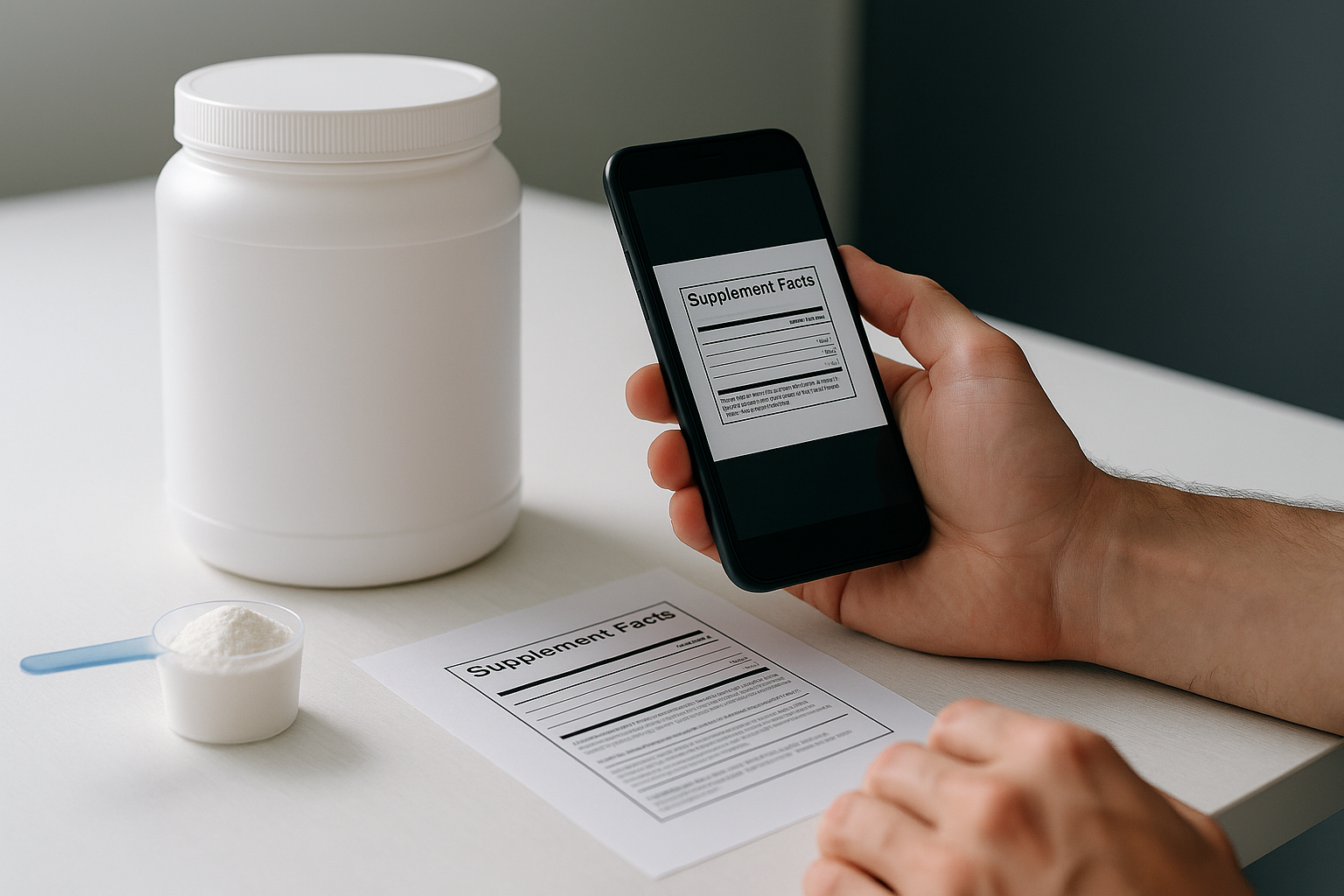
The best way to verify made in Canada creatine is to check the NPN, manufacturing language, ingredient disclosure, and then ask the company a direct raw-material question. Do not rely on a maple leaf graphic, a .ca domain, or “Canadian brand” messaging alone.
- Check for an NPN. In Canada, many natural health products carry an NPN, or Natural Product Number, showing they are licensed by Health Canada for sale under that framework. An NPN does not prove the raw creatine was made in Canada, but it does show the product is being sold within the proper Canadian regulatory system.
- Read the exact wording. “Made in Canada,” “manufactured in Canada,” “packed in Canada,” and “distributed by a Canadian company” are not interchangeable. Packed or distributed are much weaker claims than manufactured.
- Look for the ingredient line. Plain creatine monohydrate with no proprietary blend is easier to evaluate than flavoured formulas with multiple add-ins.
- Find quality signals. Third-party testing, GMP statements, batch numbers, and a real customer-service channel all matter.
- Email support. Ask: “Is the creatine raw material itself manufactured in Canada, or is it imported and only packaged here?” A serious company should answer clearly.
For competitive athletes, also ask whether the lot is screened for banned substances. The International Olympic Committee consensus on supplements notes that contamination risk, not the legal ingredient itself, is one of the biggest athlete concerns. In that context, third-party certification can matter more than whether the tub is local.
Here is a simple buyer’s filter:
- Pass: monohydrate, NPN, clear dosage, transparent origin wording, testing details.
- Caution: “Canadian company” only, no NPN shown, vague “performance blend,” no test information.
- Skip: proprietary underdosed formulas, impossible claims, no contact info, no manufacturing details.
If you want help comparing labels, our creatine dosage calculator helps confirm whether the serving actually gives an evidence-based amount, and our creatine myths debunked guide covers several red-flag marketing claims you will see in the category.
Bottom line: buy the product, not the slogan. A transparent imported monohydrate finished in Canada is often a better choice than a vague “buy Canadian creatine” listing with no evidence behind it.
The best type of Canadian creatine to buy: monohydrate first, everything else second
If you are buying creatine in Canada, creatine monohydrate should be your default choice because it is the most studied, most effective, and usually the most cost-effective form. That is true whether you want canadian domestic creatine, creatine made in Canada, or an imported raw material packed by a Canadian company.
Monohydrate works because it reliably increases intramuscular creatine stores at practical doses. Newer forms such as HCl, buffered creatine, creatine nitrate, and gummies are often marketed around convenience or digestibility, but none has displaced monohydrate as the evidence standard. In real buying terms, your decision should usually come down to purity, price per gram, transparency, and your preferred format.
| Option | Best for | Evidence level | Typical downside |
|---|---|---|---|
| Unflavoured creatine monohydrate powder | Most buyers, best value | Strongest | Slight grittiness in some products |
| Micronized monohydrate | People who want easier mixing | Strong | Often costs a bit more |
| Capsules | Travel and convenience | Strong if dose is adequate | More expensive per gram; many pills needed |
| Flavoured formulas | Taste-first buyers | Depends on actual monohydrate dose | Higher cost and extra ingredients |
| HCl, buffered, nitrate, blends | Niche preference | Weaker than monohydrate overall | Marketing premium without better outcomes |
If you are shopping Canadian brands, do not confuse “premium” with “better results.” The useful questions are:
- Does one serving give a real 3–5 g dose?
- Is it plain monohydrate?
- Does the company disclose manufacturing and testing?
- What is the cost per 5 g serving?
Many buyers also overpay for tiny tubs. Because creatine is taken daily, economics matter. A product that looks cheap upfront can be expensive once you calculate cost per gram. That is especially relevant if you use it year-round.
If you want a broader shortlist, compare options in our best creatine rankings and browse the creatine product catalog. If you are deciding between formats, related guides on monohydrate, capsules, and micronized powders can help you choose a product you will actually use consistently.
The simplest recommendation for nearly everyone in Canada is this: buy a plain, accurately dosed creatine monohydrate from a transparent brand, whether it is locally packaged or fully manufactured in Canada.
Exact dosing for Canadian-made creatine: by body weight, goal, and whether you want fast results
The standard dose for creatine monohydrate is 3–5 g per day, and a loading phase of about 20 g per day split into 4 doses for 5–7 days is optional if you want faster saturation. This dosing is based on mainstream creatine science, not on country of manufacture.
There are two evidence-based ways to start:
- No loading: take 3–5 g once daily every day. This is simple, affordable, and usually reaches near-maximal muscle saturation in roughly 3–4 weeks.
- Loading: take about 20 g daily for 5–7 days, split into 4 doses of 5 g, then continue with 3–5 g daily. This saturates muscles faster and can produce earlier noticeable effects.
Body weight can help you choose within the normal maintenance range:
- Under 60 kg: 3 g daily is often enough.
- 60–90 kg: 3–5 g daily fits most people.
- Over 90 kg or very muscular: 5 g daily is a practical default.
Goal also matters:
- General fitness or beginner lifting: 3–5 g daily.
- Strength and hypertrophy focus: 5 g daily is common after loading or instead of loading.
- Team sports, sprinting, CrossFit-style work: standard dosing still applies because the main benefit comes from saturation, not a pre-workout hit.
- Older adults: 3–5 g daily is typical, especially alongside resistance training.
Here is a practical dosing table:
| Body weight | Maintenance dose | Optional loading plan |
|---|---|---|
| < 60 kg | 3 g/day | 4 x 5 g/day for 5–7 days, then 3 g/day |
| 60–90 kg | 3–5 g/day | 4 x 5 g/day for 5–7 days, then 3–5 g/day |
| > 90 kg | 5 g/day | 4 x 5 g/day for 5–7 days, then 5 g/day |
Do not dry scoop it, and do not take random mega-doses because a label says “advanced.” More is not better once muscle stores are saturated. If you need help personalizing the dose, use our creatine dosage calculator or read the full guide on how much creatine per day.
The biggest practical rule is consistency. The best Canadian creatine brand is the one you will actually remember to take daily at an evidence-based dose.
How to take creatine made in Canada: a simple step-by-step routine that actually works
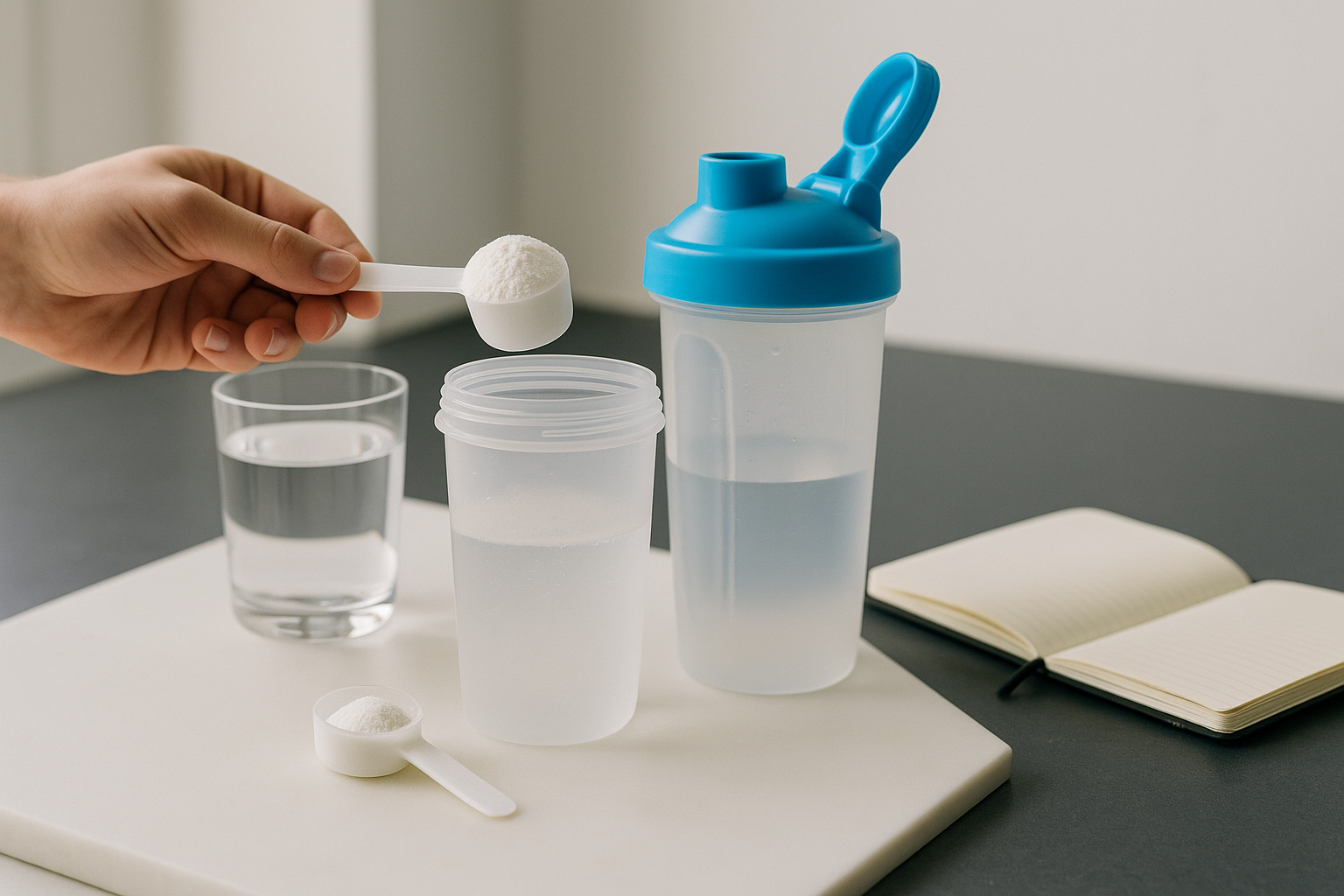
The easiest way to take creatine is to mix 3–5 g in water, a shake, or another daily drink and take it every day, including rest days. You do not need a complicated stack, and you do not need to time it perfectly for it to work.
- Pick plain monohydrate. Unflavoured powder is usually the easiest place to start.
- Measure the correct dose. Use the scoop only if the label clearly states how many grams it holds. A kitchen scale is more accurate.
- Mix it in a drink you already use. Water, a protein shake, or juice all work. Slight grit is normal with some powders.
- Take it daily. Rest days count because creatine works by maintaining saturated stores, not by acting like a stimulant.
- Stay generally hydrated. You do not need absurd amounts of water, but you should not ignore thirst or normal hydration habits.
- Give it time. Expect days to weeks, not one dramatic first workout.
For beginners, the simplest habit is attaching creatine to an existing anchor behaviour. For example:
- Take it with your post-workout shake.
- Mix it into breakfast on non-training days.
- Keep the tub beside your protein or coffee setup so you do not forget.
Common troubleshooting is straightforward:
- Stomach upset: split the dose into smaller servings or take it with food.
- Forgetting doses: leave it somewhere visible and set a daily phone reminder.
- Clumping: store it tightly sealed in a dry place; clumping from moisture does not automatically mean it is ruined.
- Grittiness: use more liquid, warm water, or a shaker bottle.
Timing questions get overblown. Taking creatine around training is fine, but the main driver of results is total daily intake over time. If you want a full breakdown, see our guide on how to take creatine and the related article on when to take creatine.
What should you notice when it is working? You may feel slightly better repeat performance on later sets, recover a bit better between efforts, or notice a small increase in scale weight early on from intracellular water. Over the next several weeks, training quality usually improves before mirror changes become obvious.
Who Canadian creatine is for: beginners, women, older adults, and athletes
Creatine is useful for far more than young men trying to bulk, and a well-made Canadian creatine product can suit beginners, women, older adults, and serious athletes alike. The ingredient works through the same phosphocreatine system across these groups, although goals and expectations differ.
Beginners: Creatine is one of the few supplements worth considering early because it is simple, affordable, and strongly supported by evidence. Beginners often see good value from 3–5 g daily because they are also improving rapidly from training itself.
Women: Women benefit from creatine too. It does not work only for men, and it is not a steroid. Concerns about “bulking overnight” are misplaced. Some women notice a small early scale increase from water inside muscle, but that is not body fat. Our broader educational content on women’s creatine use goes deeper if that is your priority.
Older adults: Older adults may benefit when creatine is combined with resistance training, especially for preserving muscle and supporting training quality. The evidence is strongest for muscular performance and lean mass support, while brain and healthy aging outcomes remain promising but more mixed depending on the endpoint.
Vegetarians and vegans: People who eat little or no meat may respond especially well because baseline creatine stores can be lower. That makes plain monohydrate a very practical supplement choice.
Athletes in tested sport: Creatine itself is legal in sport, but product contamination is a legitimate issue. If you play university sport, compete in powerlifting, or train for high-level team sport, choose a product with stronger quality assurance over a vague “locally made” appeal alone.
Who should be more cautious? People with kidney disease, complex medical conditions, or medication concerns should speak with a qualified clinician before starting. That is not because creatine is inherently dangerous for healthy people, but because individual medical context matters.
If you are not sure where you fit, start simple: plain monohydrate, 3–5 g daily, and realistic expectations. Our creatine brand reviews can help narrow products by intended user, and the creatine product catalog makes it easier to compare basic unflavoured options against athlete-targeted formulas.
The important point is that the best canadian creatine brand for you depends less on identity marketing and more on whether the dose, format, and quality controls match your needs.
Safety, side effects, and what Health Canada signals can and cannot tell you
Creatine monohydrate is well supported as safe for healthy people at standard doses, but side effects and regulatory signals should still be understood properly. The strongest side-effect data show that most people tolerate 3–5 g daily well, especially when taken consistently and not in unnecessary mega-doses.
The main common side effects are practical, not exotic:
- Temporary water-weight gain: often more noticeable during a loading phase.
- Stomach upset or loose stools: more likely when taking too much at once.
- Mild bloating perception: usually manageable by splitting doses or skipping loading.
What the evidence does not strongly support is the long-running myth list: creatine does not appear to be a steroid, it does not inherently damage healthy kidneys when used appropriately, and it is not well supported as a cause of dehydration or cramping in healthy users. Antonio et al. (2021) specifically reviewed many of these misconceptions in the literature.
For Canadians, an NPN is useful but limited. It helps show a product is sold within the Canadian natural health product framework, but it does not replace your own quality screen. An NPN is not the same thing as athlete certification, and it does not automatically guarantee the raw material was manufactured domestically.
Use this safety checklist before buying:
- Single-ingredient creatine monohydrate if possible
- Clear serving size that reaches 3–5 g
- NPN listed where applicable
- Lot or batch information
- Transparent manufacturer or brand contact details
- Third-party testing if you are drug-tested or especially risk-averse
If you have a history of kidney disease, are pregnant or breastfeeding, or take medications that raise relevant safety questions, use added caution and speak with a healthcare professional. Evidence for healthy adults is reassuring; special populations need more individualized judgement.
For more depth, see our guides on is creatine safe, creatine digestive side effects, and creatine and kidneys. Those topics matter more to outcomes than whether the tub says buy Canadian creatine on the front.
Common mistakes and myths when buying locally made creatine in Canada
The biggest mistake is assuming that “Canadian-made” automatically means better, purer, or more effective creatine. It might mean that, but often it simply means the final packaging happened in Canada. That is a supply-chain fact, not a performance guarantee.
Here are the most common buying and usage mistakes:
- Choosing a fancy form over monohydrate. The evidence still favours monohydrate.
- Paying extra for tiny servings. Always calculate cost per gram, not just tub price.
- Confusing first-week scale weight with fat gain. Early weight changes are often water in muscle.
- Quitting too early. Without loading, effects build over several weeks.
- Taking it only on workout days. Daily use is what maintains saturation.
- Using underdosed blends. A label can say “performance matrix” while delivering too little creatine.
Now the myths:
Myth 1: Canadian creatine works better because it is fresher. Freshness matters far less than purity, storage, and whether the dose is real.
Myth 2: You need a loading phase or it will not work. Loading works faster, but it is optional.
Myth 3: Creatine is only for bodybuilders. The evidence supports benefits for many people doing high-intensity training, including team-sport athletes and older adults who resistance train.
Myth 4: More grams means more gains. Once muscle stores are saturated, bigger doses mainly increase cost and stomach-risk.
Myth 5: All “made in Canada creatine” products are equal. Quality still varies by manufacturing controls, testing, and honesty in labelling.
The clearest way to protect yourself is to think like a label auditor. If a product leans heavily on national identity but says little about dose, testing, or ingredient form, that is a weak signal. If it clearly says creatine monohydrate, gives a proper 3–5 g serving, carries an NPN where relevant, and explains its manufacturing process, that is a stronger product even if the branding is less emotional.
For a deeper takedown of bad creatine marketing, see creatine myths debunked. If you are still narrowing options, our creatine brand reviews help compare real products rather than slogans.
How to choose the best Canadian creatine brand without guessing
The best Canadian creatine brand is the one that combines plain monohydrate, an evidence-based dose, transparent sourcing, and credible quality controls at a sensible cost per gram. Brand nationality alone is not enough.
Use this framework in order of importance:
- Form: choose creatine monohydrate first.
- Dose: make sure one serving actually gives 3–5 g.
- Transparency: check whether the brand distinguishes Canadian ownership, Canadian manufacturing, and raw ingredient origin.
- Quality assurance: NPN, GMP language, lot traceability, and third-party testing where relevant.
- Value: compare cost per gram, not just shelf price.
- Practical fit: unflavoured powder is usually best, but capsules may be worth it if convenience is the difference between compliance and non-use.
If two products are both good, the domestic option may reasonably win on your personal values, shipping convenience, or preference to support Canadian business. That is a fair tie-breaker. It just should not be your first filter ahead of efficacy and safety.
When brands are vague, ask these exact questions:
- Is the creatine monohydrate raw material manufactured in Canada?
- Is the product only packaged in Canada, or fully blended and filled here?
- Is there third-party testing for purity?
- Does this product carry an NPN?
- What is the exact dose per scoop in grams?
For many shoppers, the smartest route is to shortlist 3 products, compare price per 5 g serving, and eliminate anything with unclear sourcing or a weak label. That will usually leave you with a much better choice set than searching “best canadian creatine brand” and clicking whichever page uses the biggest maple leaf.
To speed that process up, start with our best creatine rankings, compare shortlisted options in the creatine product catalog, and then use the creatine dosage calculator to confirm how long each tub actually lasts at your dose.
The best buying decision is usually boring: a plain, well-tested monohydrate from a transparent company that tells you exactly what “made in Canada” means.
Bottom line: should you buy Canadian-made creatine?
Yes, buying Canadian-made creatine can make sense, but only if the product also meets the basics that actually determine results: monohydrate, correct dose, transparent manufacturing details, and solid quality control. If those boxes are not ticked, the domestic claim alone is not enough.
The direct answer to the main question is simple. Canadian made creatine is real, but the phrase often refers to finishing or packaging in Canada rather than full ingredient manufacture in Canada. If true local production is important to you, verify the raw-material origin explicitly. If your main goal is strength, muscle, power, or repeat sprint performance, focus first on plain creatine monohydrate taken consistently at 3–5 g daily.
A sensible purchase checklist looks like this:
- Choose creatine monohydrate
- Confirm 3–5 g per serving or per daily dose
- Check for NPN and transparent label details
- Prefer clear answers on where the raw creatine comes from
- Prioritize third-party testing if you are a tested athlete
- Compare cost per gram before buying
What should you expect after purchase? If you load, you may notice changes within about a week. If you start with maintenance only, expect the main effects to build over roughly 3–4 weeks. In either case, the real payoff comes over the next couple of months as improved training quality compounds.
If you want the shortest practical answer: buy the cleanest, most transparent monohydrate you can find in Canada, and treat “made in Canada” as a useful secondary filter, not your primary one.
For next steps, review our best creatine rankings, compare products in the catalog, or jump straight to the creatine dosage calculator to build your daily protocol.
Canadian-Made Creatine: The Numbers That Actually Matter
- 3–5 g/day Standard maintenance dose — Works for most adults once muscle stores are saturated.
- 20 g/day Typical loading dose — Usually split into 4 x 5 g doses for 5–7 days.
- 5–7 days Time to load quickly — Optional approach if you want faster saturation.
- 3–4 weeks Time to work without loading — Typical timeframe to approach saturation on daily maintenance dosing alone.
Frequently Asked Questions
Is there actually creatine manufactured in Canada?
Yes, there are creatine products manufactured or finished in Canada, but many use raw creatine made elsewhere and only blend or package it domestically. The key is to check whether the company means the ingredient itself was manufactured in Canada or just that the final product was packed here.
What is the difference between Canadian-made creatine and a Canadian creatine brand?
A Canadian creatine brand is simply a company based in Canada, while Canadian-made creatine refers to where the product was manufactured, blended, or packaged. Those are not the same thing, so always verify whether the claim refers to ownership, packaging, or raw ingredient origin.
Is made in Canada creatine better than imported creatine?
Not automatically. A made in Canada creatine product is only better if it also offers strong purity, correct dosing, transparent sourcing, and good testing. In practice, a transparent imported monohydrate can easily be a better buy than a vague domestic product with weak labelling.
What is the best Canadian creatine brand to buy?
The best Canadian creatine brand is the one that sells plain creatine monohydrate with a real 3–5 g serving, clear manufacturing details, and strong quality control. Rather than chasing branding alone, compare monohydrate form, cost per gram, NPN status, and any third-party testing.
How do I know if a creatine product is really made in Canada?
You know by reading the exact manufacturing claim and, if needed, asking the company directly where the raw creatine comes from. “Made in Canada,” “packaged in Canada,” and “distributed by a Canadian company” mean different things, and only the first two speak to production.
Should I buy Canadian domestic creatine or just any good monohydrate?
You should buy any good creatine monohydrate first and use Canadian domestic production as a secondary preference. Performance outcomes depend on the form, dose, and consistency of use more than on the country of packaging or brand headquarters.
Does Canadian-made creatine need an NPN?
Many creatine products sold in Canada carry an NPN, and seeing one is a useful sign that the product is being sold within the Canadian natural health product framework. An NPN helps with regulatory confidence, but it does not by itself prove athlete-level testing or true Canadian raw-material manufacture.
What dose should I take if I buy creatine made in Canada?
The same evidence-based dose applies regardless of where it is made: 3–5 g daily for maintenance, with an optional loading phase of about 20 g daily split into 4 doses for 5–7 days. Country of manufacture does not change the physiology or the standard dosing protocol.
Can women use locally made creatine in Canada?
Yes, women can absolutely use locally made creatine in Canada, and the benefits and dosing principles are the same as for men. A standard 3–5 g daily dose of monohydrate is typical, and the common fear of instant bulky weight gain is mostly confusion about normal water retention inside muscle.
Where can I buy Canadian-made creatine safely?
You can buy Canadian-made creatine safely from reputable Canadian supplement retailers and brand websites that show full label details, NPN information where applicable, and clear customer support. Avoid listings that provide little more than patriotic branding without dosage, ingredient, or manufacturing specifics.