Creatine for Judo: Grip Explosiveness, Throwing Power, and Randori Recovery
By The Creatine Canada Research Team — Evidence-based supplement analysts
Yes—creatine for judo can help many athletes improve explosive gripping, short-burst throwing power, repeated scramble output, and recovery between hard efforts, especially during randori and strength training. For most judoka, the evidence-based play is simple: take 3 to 5 g of creatine monohydrate daily, manage body-weight changes intelligently, and judge success by better repeat power rather than a stimulant-like feeling.
Evidence-based · Cites 4 sources · Editorial standards
Key Takeaways
- Creatine helps judo most by improving repeated high-intensity efforts, not by acting like a pre-workout buzz.
- The standard dose for most judoka is 3 to 5 g of creatine monohydrate every day, including rest days.
- A loading phase of 20 g/day split into 4 doses for 5 to 7 days works faster but is optional.
- Expect possible water-weight gain in the first 1 to 3 weeks, which matters for weight-class athletes.
- Creatine is most useful for randori-heavy training, gripping exchanges, explosive throws, and lifting support work.
- Monohydrate is the most studied, most reliable, and usually the best-value form for judo supplements creatine use.
- If you compete in tested sport, buy products with an NPN and ideally third-party testing such as NSF or Informed Sport.
Does creatine help judo? Yes—mainly for repeated explosiveness, gripping, and training quality
Yes, creatine can help judo performance because judo is built on short, repeated, high-intensity efforts that rely heavily on the phosphocreatine system, the fast energy system that helps regenerate ATP, your muscle cell’s immediate energy currency. That makes creatine for judo a better fit than many athletes realise: not because it magically improves technique, but because it can help you produce and repeat explosive actions with less drop-off.
In practical judo terms, creatine is most relevant for:
- Explosive gripping exchanges where forearm and upper-body muscles repeatedly contract hard.
- Throw attempts and counters that require rapid force production over a few seconds.
- Scrambles, stand-ups, and transitions where repeated bursts decide who wins the position.
- Randori recovery between exchanges, rounds, and training blocks.
- Support work in the gym, including strength, power, jumping, pulling, and repeated sprint-style conditioning.
Creatine and judo performance fit together particularly well because matches and randori are not steady-state endurance events; they are stop-start, explosive, and metabolically mixed. The 2017 ISSN position stand concluded that creatine monohydrate is the most effective nutritional supplement currently available for increasing high-intensity exercise capacity and lean mass during training. That broad conclusion matters for judoka because better training output over weeks and months often matters more than any single-session effect.
What creatine will not do is instantly sharpen your timing, improve kuzushi on its own, or replace conditioning. Think of it as a performance amplifier for the physical qualities judo already demands. If your program includes hard randori, gripping drills, repeated throws, and strength training, creatine gives those sessions a better physiological base.
For a general primer, see creatine dosage calculator and our guide to creatine product catalog. If you want the short answer, it is this: creatine judo training makes the most sense for athletes who need to express power repeatedly without fading.
Why creatine works for judo: the ATP-phosphocreatine system in grips, throws, and scrambles
Creatine works for judo because it increases intramuscular phosphocreatine stores, which helps your body resynthesise ATP faster during brief, intense efforts. In plain English, that means your muscles can recharge their fastest fuel source more effectively between explosive bursts.
Here is the mechanism that matters for grappling sports:
- You store creatine in muscle, mostly as phosphocreatine.
- During a hard effort—a throw entry, grip break, lift, bridge, or scramble—ATP is used rapidly.
- Phosphocreatine donates a phosphate to help rebuild ATP almost immediately.
- Higher creatine stores let you repeat these bursts with less decline in power.
That is why creatine for grappling sports makes physiological sense even when the sport also taxes aerobic and anaerobic systems. A judoka rarely needs one all-out effort in isolation. More often, you need explosive output, partial recovery, then more explosive output again. Creatine helps in exactly that kind of pattern.
There may also be secondary benefits that matter in judo training:
- Higher training volume and quality, especially in the weight room.
- Better power maintenance across repeated efforts.
- Potential support for glycogen-related training output when combined with serious hard training.
- Improved lean mass accrual over time when paired with resistance training, which can support force production if body class is managed well.
The International Olympic Committee consensus on supplements recognises creatine as one of the few performance supplements with a strong enough evidence base to warrant serious consideration in sport nutrition strategy. In a judo context, that does not mean every athlete should take it automatically; it means the supplement has a clear role when the sport’s demands match the mechanism.
One subtle but important point: creatine does not stimulate your nervous system like caffeine. You may not “feel” it the day you start. Instead, it works through saturation, meaning your muscle creatine stores gradually rise until they are meaningfully fuller. That is why consistent daily use matters more than fancy timing tricks. If you want the deep science background, our guides on creatine myths debunked and creatine brand reviews pair well with this article.
Who should use creatine for judo—and who should think twice because of weight classes
Creatine is a strong fit for many judoka, but it is not equally useful in every phase of training or for every body-weight situation. The athletes most likely to benefit are those doing frequent randori, explosive gripping, regular strength training, and repeated high-intensity conditioning.
Creatine for judo is especially well suited to:
- Beginners who are building strength and training capacity and want a simple, proven supplement.
- Intermediate and advanced judoka who already train hard and want more repeat power.
- Women who want strength and performance support without the steroid myths; creatine is not an anabolic steroid and does not masculinise users.
- Vegetarian or vegan athletes, who may respond particularly well because dietary creatine intake is typically lower.
- Older judoka and masters athletes, who can benefit from creatine’s support for strength and lean mass alongside training.
Creatine may be less convenient, or at least require more planning, for:
- Athletes close to a weigh-in, because early water retention can raise scale weight.
- Judoka in very tight weight classes who already struggle to make category.
- Athletes testing new nutrition strategies just before competition; that is rarely smart.
The weight-class issue is real but often misunderstood. Creatine typically causes an increase in total body water stored largely inside muscle cells, not body-fat gain. For some judoka, that is a worthwhile trade-off because added intracellular water can support training performance and fuller muscles. For others, especially if every 500 g matters before a weigh-in, that extra scale weight needs planning.
A simple decision framework:
- Off-season or far from competition: creatine is usually easy to justify.
- In a hard training block: often very useful.
- Within a weight cut window: evaluate case by case.
- Fight week without prior use: usually not the time to experiment.
If you are a recreational judoka not chasing podiums, the decision is even easier: if your goal is better training, strength, and recovery, creatine is one of the highest-confidence supplements available. If you are a serious competitor in tested sport, prioritise products with clear Canadian labelling, an NPN where applicable, and ideally third-party testing. For more sport-specific context, see related coverage such as best creatine rankings and broader buying guidance in creatine product catalog.
How to take creatine for judo: the exact step-by-step plan most athletes should follow
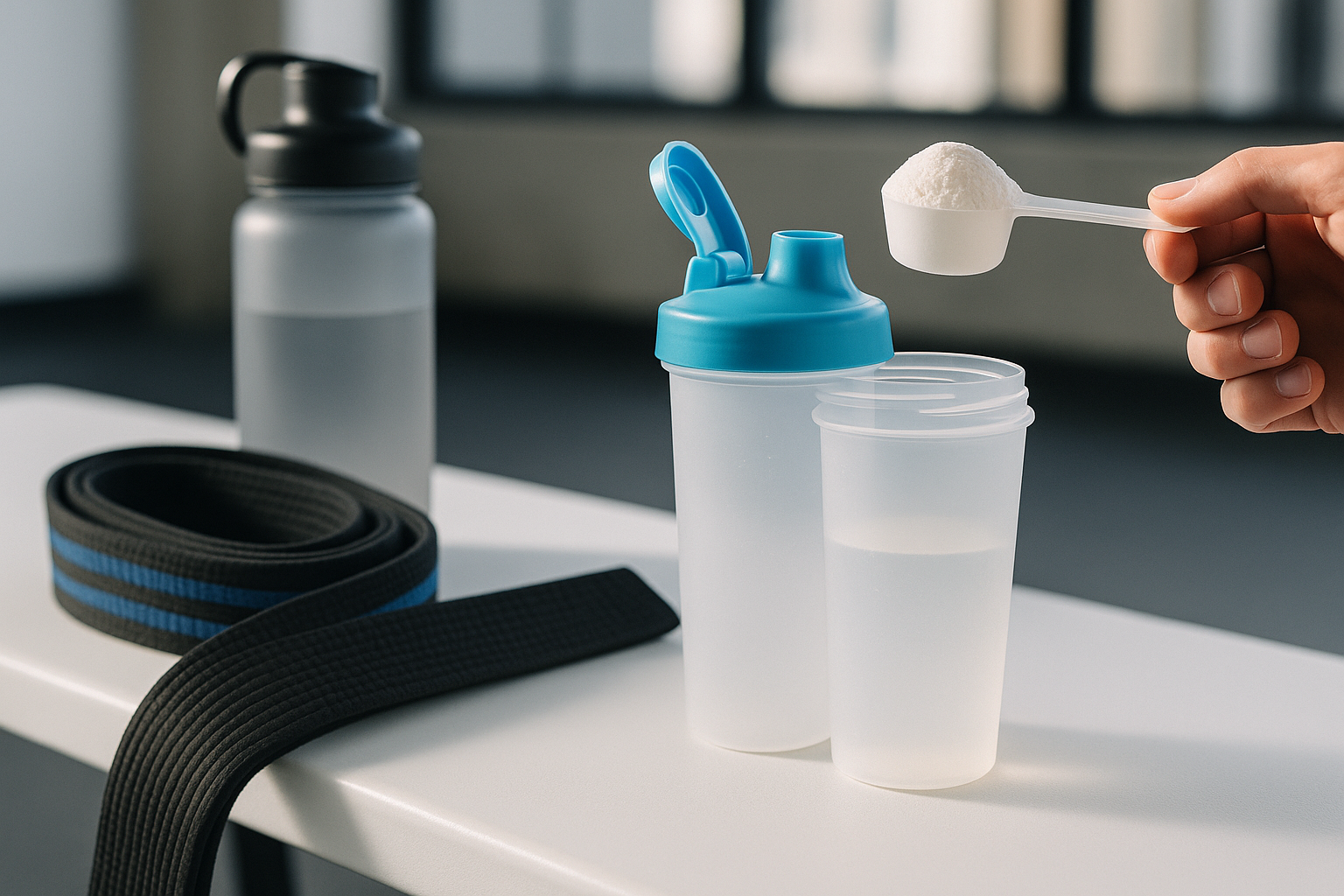
The best way to take creatine for judo is simple: use creatine monohydrate every day, hit a consistent full dose, and keep taking it through training days and rest days. Consistency beats complexity.
- Choose creatine monohydrate. It is the most studied, most cost-effective, and best-supported form. Do not pay extra for weaker evidence and bigger claims.
- Pick your dose strategy. Either take 3 to 5 g daily from day one, or use a loading phase of 20 g/day split into 4 doses for 5 to 7 days, then switch to 3 to 5 g/day.
- Take it at a time you will remember. After training, with breakfast, or with your post-training shake are all fine.
- Mix it in water or a shake. It can be taken with protein, juice, or a meal. Convenience matters more than minor absorption differences.
- Stay on it daily. You do not need to cycle creatine. Missing an occasional day is not a disaster, but daily use is how saturation is maintained.
- Track body weight and performance. This matters more in judo than in open-weight sports because of competition classes.
For most judoka, the easiest protocol is:
- Training days: 3 to 5 g after practice or lifting.
- Rest days: 3 to 5 g with any meal.
If you want results faster—for example during an off-season strength block—a loading phase can saturate muscles sooner. If you are prone to stomach upset, skip loading and use the steady approach. You will still get there; it just takes longer.
Helpful execution tips for judo athletes:
- Use a digital scale or a scoop you have checked for accuracy.
- If your stomach is sensitive, split 5 g into 2 smaller servings.
- Micronized powders can mix a bit more smoothly, but regular monohydrate works just as well.
- Take it alongside habits already anchored in your day, like breakfast or your post-randori shake.
If you want personalised numbers, use our creatine dosage calculator. For more setup help, read how to take creatine style guidance through our site architecture via guides like creatine myths debunked and creatine brand reviews. The key idea is straightforward: judo supplements creatine works when you make it boringly consistent.
Creatine dose for judo by body weight, goal, and competition phase
The right creatine dose for judo is usually 3 to 5 g/day for maintenance, with optional loading if you want faster saturation. Body weight can help fine-tune the decision, but most adults still land in that familiar range.
Here is a practical dosing table for judoka:
| Judoka profile | Daily approach | Best use case | Notes |
|---|---|---|---|
| Smaller athlete, not loading | 3 g/day | Steady long-term use | Good for lighter weight classes and cautious starters |
| Average to larger athlete, not loading | 5 g/day | Most common maintenance plan | Simple and evidence-based |
| Any athlete wanting faster saturation | 20 g/day for 5-7 days, split into 4 x 5 g | Off-season or training camp | Then drop to 3-5 g/day |
| Weight-class athlete near competition | Usually 3 g/day or delay use based on scale needs | When avoiding extra water weight matters | Individualise with coach and weigh-in schedule |
| Athlete with stomach sensitivity | 2-3 smaller doses totalling 3-5 g/day | Better tolerance | Avoid large single boluses |
A few useful examples:
- 57 kg judoka in regular training: 3 g/day is a sensible starting point.
- 73 kg judoka in a hard randori and lifting block: 5 g/day is entirely standard.
- 100 kg judoka pushing strength and power: 5 g/day is still the mainstream practical dose, with optional loading if desired.
Goal also matters:
- For better training output and repeat power: 3 to 5 g/day.
- For faster short-term saturation before a training camp: load first, then maintain.
- For cautious body-weight management: use the no-loading route and monitor scale trends.
There is little evidence that exotic dosing protocols beat simple daily monohydrate use for real-world judo outcomes. More is not better once muscle stores are saturated. Overshooting the dose mainly raises the chance of stomach upset and wastes powder.
If you want a more exact estimate, start with our creatine dosage calculator and pair it with the broader guide cluster around best creatine rankings. For judo athletes, the smartest dosing question is not just “how much?” but “how much given my weight class, next weigh-in, and current training block?”
Timing, loading, and what judo athletes should expect week by week
Creatine timing matters far less than daily consistency, and the fastest way to feel its effects in judo training is to saturate muscle stores either through loading or patient daily use. If you are asking when to take creatine judo training days, the honest answer is: whenever you will reliably take it.
Best timing options:
- After judo practice with a shake or meal.
- After lifting on strength days.
- With breakfast if morning consistency is easiest.
Loading vs. no loading:
- Loading: 20 g/day split into 4 doses for 5 to 7 days, then 3 to 5 g/day. Best if you want faster saturation.
- No loading: 3 to 5 g/day from the start. Best if you want simplicity and fewer digestive issues.
What to expect week by week:
- Days 1 to 7 with loading: body weight may rise quickly from water stored in muscle; do not mistake this for fat gain.
- Week 1 to 2 without loading: usually little dramatic “feeling,” but saturation is building.
- Week 2 to 4: many athletes notice better repeat efforts in lifting, circuits, and randori rounds.
- Week 4 to 8: training quality improvements become clearer, especially in total volume, power maintenance, and less drop-off late in sessions.
- Beyond 8 weeks: the real payoff is often the cumulative training effect—better strength, lean mass, and high-intensity work capacity over time.
How do you know it is working in judo? Look for:
- Less fade in later randori rounds.
- Better pop on repeated entries or throw drills.
- More reps or better bar speed in pulling and lower-body lifts.
- Improved recovery between hard sets and exchanges.
What you should not expect is a stimulant hit, tunnel vision, or instant technical gains. Creatine is not pre-workout. It is a saturation supplement.
If timing details matter to your routine, see the related guide cluster around when to take creatine and how long does creatine take to work. The summary for judoka is simple: choose a schedule you can follow for months, not days.
The judo-specific catch: body-weight gain, weigh-ins, and how to use creatine without sabotaging your class
The main downside of creatine for judo is not safety for most healthy athletes; it is scale management in a weight-class sport. Creatine can increase body mass, mostly through water retained inside muscle, and that can be either helpful or inconvenient depending on your category and weigh-in schedule.
For judoka, this is the key strategic question: Is the extra training benefit worth the temporary or ongoing increase in body weight?
Often the answer is yes when:
- You are far from competition.
- You are moving up a class or naturally sitting comfortably under your limit.
- You need more power and repeatability in training.
- You are in a strength or hypertrophy phase.
The answer may be more cautious when:
- You walk around close to the top of your category.
- You already cut aggressively.
- Your weigh-in is near and your margin is small.
- You have never used creatine before and do not know your body’s response.
Practical weight-class strategies:
- Test creatine in the off-season first. Learn your typical body-weight response before using it in season.
- Use no-loading if scale sensitivity is high. A slower saturation plan may reduce sudden jumps on the scale.
- Track morning body weight daily for 2 weeks. Use trend lines, not one-off fluctuations.
- Do not start creatine right before a major weigh-in. That is poor risk management.
- Discuss with your coach or sports dietitian if cutting is frequent.
Many athletes fear creatine because they hear “weight gain” and assume softness or fat. That is usually the wrong frame. For many judoka, fuller muscles and improved repeated power are exactly the point. The issue is not whether the weight is “bad”; it is whether the weight is practical for your division.
For same-day or close weigh-ins, the calculus can change. For distant weigh-ins with time to refuel, creatine may still fit well. But the best answer is individual, because body-class strategy is personal and technical. If this is your big concern, also read related guidance on does creatine make you gain weight and creatine for MMA-style weight-cut logic through our combat-sport coverage. In judo, creatine and body-weight management should be planned together, not separately.
Safety, side effects, and what Canadian judoka should look for on the label
Creatine monohydrate is widely considered safe for healthy people when used at recommended doses, and the strongest evidence base supports its long-term use in sport nutrition. The 2021 JISSN review on common questions and misconceptions addressed many persistent fears and reinforced that many popular warnings are not supported by the totality of evidence.
Common side effects and realities:
- Water-weight gain: common, especially early on.
- Stomach upset: possible, especially with large single doses or sloppy loading.
- Bloating: some athletes report it, often reduced by splitting doses or choosing plain monohydrate carefully mixed.
- Kidney fear in healthy users: often overstated; creatine can raise creatinine on bloodwork because creatinine is a metabolite, not necessarily a sign of kidney damage.
Who should be cautious?
- People with pre-existing kidney disease or significant renal concerns should speak with their physician before supplementing.
- Anyone on medications affecting kidney function or fluid balance should get medical guidance first.
- Pregnant or breastfeeding athletes need individual medical advice because sport-supplement decisions are not routine cases.
For Canadian buyers, quality matters. Useful checkpoints include:
- NPN: a Natural Product Number, which indicates the product is licensed by Health Canada as a natural health product.
- Third-party testing: especially important for tested athletes; look for NSF Certified for Sport or Informed Sport where available.
- Plain ingredient panel: ideally creatine monohydrate and little else if your goal is purity.
- Reputable seller: buy from established retailers and brands, not mystery marketplace listings.
Because judoka may compete in tested environments, contamination risk matters as much as the ingredient itself. A product can contain legal creatine and still be a bad choice if manufacturing quality is weak. That is why many athletes are better served by a boring, plain, well-documented monohydrate than a flashy “combat performance matrix.”
For Canada-specific buying help, compare options through best creatine rankings, creatine brand reviews, and creatine product catalog. If you need the broader safety context, pair this guide with the internal explainers on creatine myths debunked and kidney-related topics in our safety cluster.
Common creatine mistakes in judo—and the myths that still confuse athletes
The biggest creatine mistakes in judo are usually not about the supplement itself; they are about inconsistent use, poor weigh-in planning, and expecting the wrong kind of effect. If you know what creatine actually does, most of the noise disappears.
Common mistakes:
- Taking it only before training. Creatine is not an acute stimulant; daily saturation matters most.
- Skipping rest days. That slows or undermines muscle saturation.
- Using fancy forms instead of monohydrate. Better marketing does not equal better evidence.
- Starting right before competition. Especially risky in a weight-class sport.
- Taking huge doses long term. This does not improve results after saturation and raises the chance of digestive issues.
- Judging success by “feeling energy.” That is not how creatine works.
Myths worth debunking:
- “Creatine is a steroid.” False. Creatine is a naturally occurring compound involved in energy metabolism, not an anabolic steroid.
- “Creatine is bad for the kidneys in healthy people.” The evidence does not support that blanket claim at recommended doses in healthy users, though existing kidney disease warrants medical guidance.
- “Creatine causes dehydration and cramps.” This has long been repeated, but it is not well supported by the evidence base; hydration habits still matter because judo training is sweaty and intense.
- “Creatine makes you fat.” No. Early scale gain is usually water in muscle, not fat tissue.
- “Women should avoid creatine.” False. Women can benefit from creatine just as men can, and the usual doses are similar.
- “You need to cycle on and off.” No. Routine cycling is not required for most users.
The best mindset is boring professionalism: choose monohydrate, dose it correctly, stay consistent, and monitor body weight if you compete by class. That is it. Judo athletes often overcomplicate creatine because combat sports already involve so much nuance around scale weight, hydration, and peaking. But the supplement itself is one of the simplest parts of the plan.
For deeper myth busting, see creatine myths debunked. If you are comparing products or forms, start with best creatine rankings before spending more on claims that do not outperform standard monohydrate.
Best creatine for judo: monohydrate vs capsules, gummies, HCL, and flashy blends
The best creatine for judo is plain creatine monohydrate because it has the strongest evidence, the best value per gram, and the most predictable results. For most judoka, the only real question is format preference, not whether a premium form works better.
| Form | Best for | Pros | Cons | Bottom line for judoka |
|---|---|---|---|---|
| Monohydrate powder | Most athletes | Best studied, cheapest, flexible dosing | Needs mixing | First choice |
| Micronized monohydrate | Athletes who dislike grittiness | Mixes a bit easier | Sometimes costs more | Fine if price is close |
| Capsules | Travel and convenience | No mixing, easy packing | More expensive, many capsules needed | Useful but less economical |
| Gummies | Taste-first users | Easy to take | Often pricier and lower dose efficiency | Convenient, but check cost and serving size |
| HCL or specialty forms | Marketing-sensitive buyers | Claims of better absorption | Less robust evidence, higher cost | Usually not worth the premium |
| Proprietary blends | Athletes wanting all-in-one products | Convenience | Opaque dosing, contamination risk, poor value | Usually skip |
Why monohydrate still wins:
- The ISSN position stand identifies creatine monohydrate as the most effective and most studied form.
- Most alternative forms have more marketing than comparative evidence.
- Combat-sport athletes benefit from precise, transparent dosing, which plain monohydrate makes easier.
If you compete often, convenience does matter. Capsules can be useful for travel to tournaments, but most judoka still do best with powder at home and in training camp. If you are unsure what to buy in Canada, prioritise ingredient simplicity, batch transparency, and reputable distribution.
Good next steps are our best creatine rankings, creatine brand reviews, and the related guide on best type of creatine. The short answer is refreshingly unsexy: for creatine judo performance, the gold standard remains plain monohydrate.
Bottom line: how to decide if creatine belongs in your judo training right now
Creatine belongs in many judo athletes’ nutrition plans because it supports the exact physical qualities the sport repeatedly demands: short-burst power, repeated high-intensity effort, and better training output over time. If you train hard and can manage body weight intelligently, it is one of the highest-confidence supplements you can add.
The practical decision is simple:
- If your priority is better randori output, strength training, gripping endurance in repeated exchanges, and recovery between bursts, creatine is likely worth it.
- If your priority is making a very tight weight class in the near term, delay or test it first in a lower-risk phase.
For most judoka, the best protocol is:
- Buy a reputable creatine monohydrate product.
- Take 3 to 5 g every day.
- Use loading only if you want faster saturation and can tolerate it.
- Monitor body weight for the first 2 to 3 weeks.
- Judge results by repeated power and training quality, not by an instant sensation.
What the evidence supports strongly in 2026 is this: creatine is one of the most established sports supplements for high-intensity performance support. What the evidence does not support is the idea that more expensive forms, aggressive dosing, or complicated timing produce meaningfully better results for judo athletes than basic monohydrate used correctly.
If you want to start today, use our creatine dosage calculator, compare options in creatine product catalog, and narrow down trusted picks through best creatine rankings. If you are still hesitant, read creatine myths debunked first. For most healthy judoka, creatine for judo is not a gimmick—it is a simple, evidence-based tool that helps you train harder for the parts of the sport where power fades fastest.
Creatine for Judo: The Numbers That Matter
- 3-5 g/day Standard daily maintenance dose — Best-fit range for most adult judoka using creatine monohydrate
- 20 g/day Optional loading dose — Usually split into 4 doses for 5-7 days, then reduced to maintenance
- 5-7 days Typical loading timeline — Fastest mainstream route to raise muscle creatine stores
- 2-4 weeks Common timeline to notice training benefits without loading — Most athletes notice improved repeat output rather than a stimulant-like feeling
Frequently Asked Questions
Does creatine help judo performance?
Yes, creatine can help judo performance mainly by improving repeated high-intensity efforts such as gripping exchanges, throw attempts, scrambles, and hard randori rounds. It works by increasing muscle phosphocreatine stores, which helps regenerate ATP faster during short explosive efforts. The biggest benefits usually show up in training quality and repeat power, not in technique itself.
Is creatine good for grappling sports like judo?
Yes, creatine is a strong fit for grappling sports because they rely on repeated bursts of force with incomplete recovery. Judo, wrestling, BJJ, and similar sports all demand fast ATP turnover during explosive actions. Creatine does not replace conditioning, but it can help athletes maintain output better across rounds, drills, and strength sessions.
What is the best creatine for judo athletes?
The best creatine for judo athletes is plain creatine monohydrate. It is the most studied form, the most cost-effective form, and the one most consistently supported by sports-nutrition position stands. Judoka who compete should also prefer products with clear labelling, an NPN in Canada where applicable, and ideally third-party testing for contamination control.
How much creatine should a judoka take per day?
Most judoka should take 3 to 5 g of creatine monohydrate per day. Smaller athletes or very weight-conscious users often start at 3 g/day, while many average and larger athletes use 5 g/day. A loading phase of 20 g/day split into 4 doses for 5 to 7 days is optional if faster saturation is the goal.
When should I take creatine for judo training?
You can take creatine before or after judo training, but the most important factor is taking it consistently every day. Many athletes find post-training easiest because it pairs well with an existing shake or meal. Creatine works through muscle saturation over time, so timing is far less important than total daily intake.
Will creatine make a judo athlete gain weight?
Yes, creatine can increase body weight, usually because it pulls more water into muscle cells rather than because it adds fat. That can be helpful for training performance but inconvenient in a weight-class sport like judo. Athletes close to a category limit should test their response well before competition and consider skipping a loading phase.
Should judo athletes stop creatine before weigh-ins?
Sometimes, but not always. If a judoka is very close to the top of a weight class, stopping creatine before a weigh-in may be part of a broader body-weight strategy. If the athlete has enough margin or competes at a comfortable class, staying on creatine may be fine. This is a practical decision, not a universal rule.
Is creatine safe for women who do judo?
Yes, creatine is generally considered safe for healthy women at standard doses, and women can benefit from it for the same reasons men do: better training output, strength support, and repeated-effort performance. It does not act like a steroid and does not inherently cause unwanted masculinising effects. Body-weight management still matters in weight-class competition.
Can beginners in judo take creatine?
Yes, beginners in judo can take creatine if they want a simple, evidence-based supplement to support hard training. In fact, beginners often benefit because creatine can help them tolerate and progress their strength and conditioning work more effectively. The basics are still the priority: regular training, enough protein, good sleep, and daily consistency.
Do I need to cycle creatine for judo?
No, most judo athletes do not need to cycle creatine. Daily use is the standard approach because creatine works by keeping muscle stores saturated over time. Cycling on and off is usually unnecessary unless a specific weight-class strategy or individual preference makes a temporary pause practical.