Buying Creatine in Bulk: How to Save Money Without Sacrificing Quality
By The Creatine Canada Research Team — Evidence-based supplement analysts
Buying creatine in bulk is usually the smartest way to save money if you choose plain creatine monohydrate, verify Canadian compliance and testing, and compare cost per gram rather than tub size alone. For most Canadians, a 500 g to 1 kg unflavoured monohydrate powder offers the best balance of price, purity, shelf life, and daily convenience.
Evidence-based · Cites 4 sources · Editorial standards
Key Takeaways
- Bulk creatine is worth it when you buy plain creatine monohydrate, not flashy premium forms.
- Compare products by cost per gram of creatine monohydrate, not by scoop count or container size.
- A typical maintenance dose is 3-5 g daily, so 1 kg lasts roughly 200-333 days.
- Look for a Natural Product Number (NPN) in Canada and prefer third-party tested products when possible.
- Large tubs save money only if you will finish them before moisture, clumping, or habit drop-off becomes an issue.
- Most people do not need a loading phase; daily consistency matters more than timing.
- Bulk creatine powder is usually the best-value format, while capsules, gummies, and blends cost much more per effective dose.
What buying creatine in bulk actually means — and when it is the right move
Buying creatine in bulk means purchasing a larger supply of creatine powder, usually in a 500 g, 1 kg, or similarly high-count format, to reduce your cost per gram without changing the ingredient itself. In practice, the best bulk creatine Canada shoppers can buy is usually plain, unflavoured creatine monohydrate powder rather than capsules, gummies, pre-workouts, or proprietary blends.
The key idea is simple: creatine works because your muscles build up higher stores of phosphocreatine, the stored form of creatine that helps regenerate ATP, your cells' fastest energy currency during short, hard efforts. That benefit does not improve because a tub is bigger, more colourful, or branded as "advanced." What changes with a bulk buy is economics. If the powder is the same ingredient and purity standard, a larger bag or tub usually lowers packaging cost, shipping cost per serving, and retailer margin per gram.
For most healthy adults, a large supply creatine purchase makes sense if you:
- Already know you tolerate creatine well.
- Plan to take it daily for months, not just sporadically.
- Want the cheapest effective format.
- Can store it dry and sealed.
A creatine bulk buy is less ideal if you are unsure you will use it consistently, prefer flavoured products, travel often, or are comparing a suspiciously cheap product with no clear Canadian label information. In those cases, a smaller tub from a trusted brand may be the better first purchase.
If you are brand-new to supplementation, start by understanding which creatine types are actually worth buying and use a creatine dosage calculator to estimate how long a bulk tub will last at your body weight and goal. That instantly tells you whether 1 kg creatine Canada options are a bargain or just a larger commitment than you need.
The direct answer is this: buying creatine in bulk is smart when the product is plain monohydrate, correctly labelled, tested, and priced well per gram, and when you will actually use enough of it to realise the savings.
Why creatine monohydrate is still the only bulk form most people should buy
Creatine monohydrate is the bulk form most people should buy because it is the most studied, most consistently effective, and usually the most cost-effective version on the market. The 2017 ISSN position stand concluded that creatine monohydrate is the most effective ergogenic nutritional supplement currently available for increasing high-intensity exercise capacity and lean body mass during training.
That matters when you are buying creatine bulk monohydrate because bulk purchasing amplifies your good or bad decision. If you buy 1 kg of a proven ingredient, you lock in months of low-cost, evidence-based supplementation. If you buy 1 kg of a fancier form with weaker evidence, you lock in months of overspending.
Mechanistically, monohydrate works by increasing intramuscular creatine and phosphocreatine stores. Those fuller stores help your muscles resynthesise ATP faster between repeated bouts of intense work such as heavy sets, sprints, jumps, and explosive intervals. Over time, that tends to support better training quality, more total work, and greater gains in strength and lean mass than training alone.
What about HCl, buffered creatine, nitrate, gummies, or liquid versions? They may be more convenient or easier to market, but they have not displaced monohydrate as the evidence standard. The 2021 JISSN review on common creatine questions and misconceptions reinforces that monohydrate remains the reference form for efficacy and safety. For a fuller breakdown, see creatine brand reviews and our guide to creatine product catalog options.
Bulk buyers should especially favour:
- Unflavoured creatine monohydrate because every gram you pay for is mostly the active ingredient.
- Micronized monohydrate only if the price premium is small and you value easier mixing.
- Single-ingredient labels because they make dose math and purity checks straightforward.
Bulk buyers should usually avoid:
- Capsules and gummies if value is the priority.
- Blends with caffeine or pre-workout ingredients.
- "Proprietary" formulas that hide exact amounts.
For source-level evidence, review Kreider et al. (2017), ISSN Position Stand: Safety and Efficacy of Creatine — JISSN and Antonio et al. (2021), Common questions and misconceptions about creatine supplementation — JISSN. The short version is blunt: if your goal is bulk creatine powder that works, monohydrate is still king.
How bulk creatine works in your body — and why a bigger tub does not change the biology
Bulk creatine works exactly the same way as any other creatine serving because the effect depends on the daily dose and muscle saturation, not on how much powder is sitting in your cupboard. A large container is a purchasing strategy, not a different physiological strategy.
Once you ingest creatine monohydrate, it is absorbed and transported into muscle, where some of it is stored as phosphocreatine. Phosphocreatine donates a phosphate group to help regenerate ATP during short-duration, high-intensity effort. That matters most in activities like heavy lifting, repeated sprinting, hockey shifts, CrossFit intervals, and explosive team-sport efforts.
The practical concept is saturation, which means raising and maintaining your muscle creatine stores near their upper useful range. You can get there quickly with a loading phase of about 20 g per day split into 4 doses for 5-7 days, or more gradually with 3-5 g per day for roughly 3-4 weeks. Once saturated, maintenance intake keeps stores elevated.
That is why a 1 kg creatine Canada purchase can be such good value. The ingredient is not meant to be cycled aggressively or timed like a stimulant. It is meant to be taken consistently enough that your muscles stay topped up. If you want the deeper physiology, our companion guides on what creatine is, how much creatine per day, and how to take creatine cover the basics in more detail.
What should you expect once your muscles are saturated?
- A small increase in body mass for many users, often from increased intracellular water stored inside muscle.
- Better performance in repeated high-effort training bouts.
- Gradual training-based improvements in strength, power, and lean mass over weeks to months.
What should you not expect?
- Instant visible muscle gain after one scoop.
- Fat loss from creatine alone.
- A stimulant-like energy buzz.
Examine's evidence summary notes that creatine's best-supported benefits are in strength, power, lean mass, and repeated high-intensity performance rather than endurance magic or instant transformation. See Examine.com — Creatine evidence summary for a broad overview. The message for bulk buyers is reassuring: if the product is real creatine monohydrate, a cheap bulk tub can work every bit as well as a premium small tub.
The Canadian bulk creatine checklist: how to buy safely, legally, and intelligently
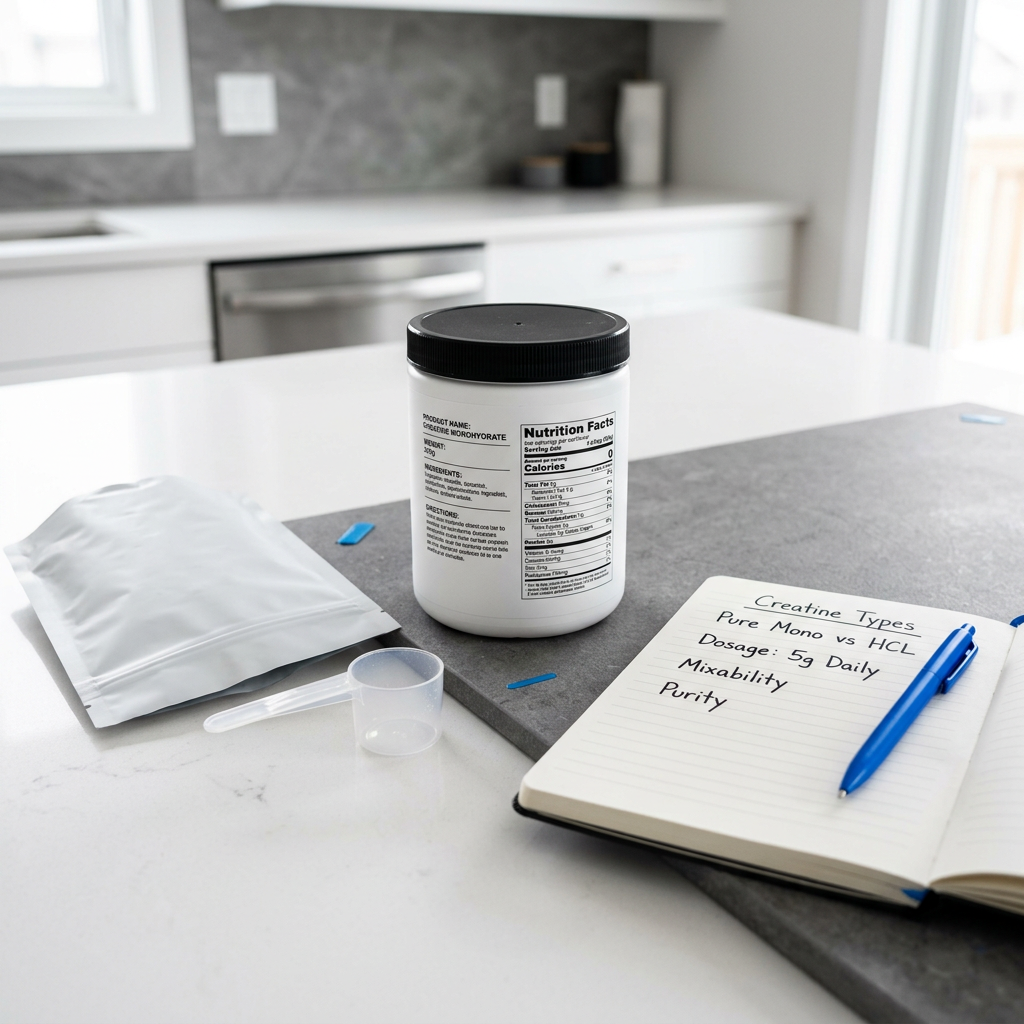
In Canada, the safest way to buy bulk creatine is to verify the label, the ingredient, the regulatory status, and the seller before you compare price. Cheap creatine is only a good deal if it is authentic, compliant, and handled properly.
Start with the label. In Canada, most legal natural health products should carry an NPN, or Natural Product Number, which is the product licence number issued under Health Canada's natural health product framework. An NPN does not guarantee elite quality, but it is a useful legitimacy signal that the product is being sold within the Canadian system.
Next, verify the ingredient line. For a creatine wholesale Canada or bulk creatine Canada purchase meant for personal use, you want something close to:
- Creatine monohydrate
- Minimal or no added ingredients
- Clear serving size in grams
- Lot number and expiry or best-before information
Then check for quality signals that matter more when you are buying a large supply:
- Third-party testing for purity or banned substances where relevant.
- Sport certifications such as NSF Certified for Sport or Informed Sport if you are a tested athlete.
- Brand transparency on manufacturing, testing, and ingredient sourcing.
Finally, vet the seller. Marketplace listings can be fine, but bulk items are more vulnerable to poor storage, repackaging, or stale stock. A direct brand storefront or established Canadian retailer is often lower risk than a random reseller. If you are comparing options, our best creatine rankings and creatine brand reviews can narrow the field.
Use this quick 6-step filter before buying creatine in bulk:
- Confirm it is creatine monohydrate.
- Check the grams per serving.
- Look for an NPN if sold as a natural health product in Canada.
- Prefer third-party tested products, especially for competitive athletes.
- Compare cost per gram, not retail hype.
- Buy only from a seller you trust to store and ship powders properly.
This is also where many people overcomplicate things. You do not need luxury packaging, an influencer label, or a "transport matrix" to get good creatine. You need the right molecule, the right dose, and a trustworthy supply chain.
The only comparison that matters: cost per gram, days of supply, and true bulk value
The best way to compare bulk creatine powder is by cost per gram and days of supply, because tub size alone can mislead you. A larger container is not automatically better value if the serving size is small, the formula is blended, or flavouring inflates the price.
Here is the simplest way to judge a creatine bulk buy:
- Find the total grams of creatine monohydrate in the container.
- Divide the price by total grams to get cost per gram.
- Divide total grams by your daily dose to estimate days of supply.
If two products contain the same ingredient quality, the cheaper cost per gram is usually the better buy. This one habit instantly cuts through most supplement marketing.
| Container size | Daily dose | Approximate days of supply | Who it suits best |
|---|---|---|---|
| 300 g | 3 g/day | 100 days | Beginners testing tolerance or occasional users |
| 300 g | 5 g/day | 60 days | Short-term trial or travel backup |
| 500 g | 3 g/day | 166 days | Most recreational lifters |
| 500 g | 5 g/day | 100 days | Daily users who want moderate bulk savings |
| 1 kg | 3 g/day | 333 days | Committed long-term users and multi-person households |
| 1 kg | 5 g/day | 200 days | Athletes and heavier daily users |
As a rough rule, 1 kg creatine Canada options make the most sense when you have already used creatine successfully and know you will stay consistent for at least 6-10 months. If adherence is uncertain, 500 g is often the sweet spot.
Do not forget format costs. Capsules can require swallowing several pills to equal one 5 g dose, and gummies often provide lower creatine per serving while charging for flavouring and convenience. Blended pre-workouts may include creatine, but the price reflects caffeine, flavour systems, and marketing more than the standalone creatine dose.
If you want help evaluating price with more nuance, compare against our creatine product catalog and learn the label math in creatine myths debunked, especially the myth that more expensive always means more effective. For bulk buyers, the winning formula is boring but powerful: proven ingredient, trustworthy seller, low cost per gram.
How to buy creatine bulk step by step without getting fooled by marketing
How to buy creatine bulk is straightforward once you use a repeatable checklist. The fastest path is to decide your dose, estimate your supply length, screen for quality, and only then compare price.
- Choose the form. Pick plain creatine monohydrate powder unless you have a specific reason not to.
- Choose the size. Beginners should usually start with 300-500 g. Experienced daily users can move to 1 kg creatine Canada formats.
- Set your dose. Most people will use 3-5 g daily. Heavier athletes and those who simply prefer a full 5 g scoop can buy larger sizes sooner.
- Estimate duration. A 500 g tub at 5 g daily lasts about 100 days. A 1 kg tub lasts about 200 days at the same dose.
- Read the label carefully. Confirm single-ingredient monohydrate, clear grams per serving, and Canadian labelling details.
- Check testing. Prefer brands that disclose purity testing or use reputable sport certifications if that matters for your context.
- Compare cost per gram. This is the deciding metric after quality is confirmed.
- Buy from a trustworthy seller. Avoid sketchy listings with incomplete labels, broken seals, or inconsistent reviews.
Here are three practical examples:
- 60 kg beginner, general fitness: Start with 300-500 g, take 3 g daily, and see how your routine holds for 2-4 months.
- 80 kg lifter, training 4-5 times weekly: A 500 g or 1 kg tub at 5 g daily is sensible, depending on budget and consistency.
- 95 kg athlete, year-round use: A 1 kg bulk creatine powder purchase is often the most economical if storage is not an issue.
Timing is lower priority than adherence. You can take creatine with water, in a shake, or with a meal. If you want a complete timing breakdown, see when to take creatine. If you need help turning label claims into real doses, use the creatine dosage calculator.
The most common buying error is getting seduced by claims like "better absorption" without first asking whether the product contains enough plain creatine and whether the price per effective dose still makes sense. For most buyers, the smart creatine wholesale Canada mindset is not buying the biggest bag possible. It is buying the largest amount of proven creatine you will actually use consistently.
Exact dosing for bulk users: by body weight, goal, and how fast you want results
The right bulk creatine dose for most adults is still 3-5 g daily, but the best container size depends on your body weight, training goal, and whether you want rapid saturation or a slower ramp-up. Buying a large tub makes more sense when you know your real intake pattern.
There are two mainstream evidence-based ways to use creatine monohydrate:
- Loading approach: about 20 g per day, split into 4 doses of 5 g, for 5-7 days, then 3-5 g per day.
- No-loading approach: 3-5 g per day from the start, with saturation building over about 3-4 weeks.
The ISSN position stand supports both approaches, with loading simply reaching saturation faster. If you dislike stomach fullness or want simpler daily use, skip loading and stay consistent.
Practical body-weight examples:
- Under 60 kg: 3 g daily is often sufficient for maintenance.
- 60-90 kg: 3-5 g daily is the standard range.
- Over 90 kg: 5 g daily is a practical default for most users.
Goal-based guidance:
- General fitness: 3 g daily is often enough.
- Muscle and strength focus: 5 g daily is the common practical dose.
- Athletes wanting faster performance support: consider a 5-7 day loading phase, then maintain.
- Older adults lifting for function and muscle retention: 3-5 g daily is commonly used alongside resistance training.
What to expect week by week:
- Week 1 with loading: fuller muscles, small scale increase in some people, possibly better repeated-effort performance.
- Weeks 2-4 without loading: gradual saturation, subtle training benefits emerging.
- Weeks 4-8: better training quality often becomes more noticeable than day-to-day sensations.
- Months 2-3: strength, work capacity, and lean-mass support become clearer if training and protein intake are solid.
Bulk buying becomes easy once you connect dose to duration. A 1 kg creatine in bulk purchase could last nearly a year at 3 g daily, but only about 7 months at 5 g daily. If you also load, subtract another 100-140 g during that first week.
For personalised dose math, use the creatine dosage calculator and compare with our detailed guide on how much creatine per day. The right bulk purchase is the one that matches your real protocol, not the one that just looks cheapest at first glance.
Who should buy a large supply creatine tub — and who should start smaller
A large supply creatine purchase is best for people who are likely to take creatine daily for many months, because long-term consistency is what turns bulk savings into real savings. If you are inconsistent, even the cheapest kilo becomes wasted money.
The groups most likely to benefit from a bulk creatine Canada purchase are:
- Recreational lifters training three or more times per week.
- Team-sport athletes who need repeated high-intensity efforts.
- Strength and power athletes such as powerlifters, sprinters, weightlifters, and CrossFit athletes.
- Vegetarians and vegans, who often start with lower baseline creatine intake from diet and may notice clear benefits.
- Older adults using resistance training to support muscle and function.
- Multi-person households where two or more adults use the same plain monohydrate product.
Women can absolutely buy bulk creatine. Creatine is not a male-only supplement, and women do not need a separate "women's creatine" formula for the ingredient to work. In many cases, the pink tax makes gendered products worse value than standard bulk creatine powder. If this is a concern, read more on creatine for women.
Who should start smaller instead?
- Complete beginners who are not sure they will stick with daily use.
- People with a history of digestive sensitivity who want to test tolerance at 3 g daily first.
- Travellers who prefer capsules or smaller tubs for portability.
- Athletes in strict tested sport who need to confirm certification and trust the exact product before committing to a large quantity.
Also remember that creatine is appropriate for many healthy adults, but not every context is automatic. If you have kidney disease, are pregnant or breastfeeding, or take medications that could matter for renal monitoring or fluid balance, speak with a qualified clinician before supplementing. The Mayo Clinic and the JISSN review both support creatine's favourable safety profile in healthy users, but individual medical context still matters.
The easiest rule is this: buy big when your habit is proven, your product is trusted, and your goal is long-term performance or body composition support. Buy smaller when you are still testing the waters.
Safety, side effects, storage, and shelf life: what matters more when you buy in bulk
Bulk creatine is generally safe for healthy people when used at standard doses, but storage and tolerance matter more when you buy a bigger supply. The good news is that plain creatine monohydrate has one of the strongest safety records in sports nutrition when used appropriately.
The 2017 ISSN position stand and the 2021 JISSN misconceptions paper both support creatine's safety in healthy populations at recommended intakes. Common side effects are usually mild and manageable:
- Water-weight increase: often a normal sign of greater intracellular water in muscle, not fat gain.
- Stomach upset or loose stools: more likely with large single doses, especially during loading.
- Transient bloated feeling: often improved by splitting doses or skipping a loading phase.
How to reduce side effects:
- Use 3-5 g once daily instead of very large single doses.
- During loading, split 20 g into 4 smaller doses.
- Mix thoroughly and take with a meal if your stomach is sensitive.
- Stay reasonably hydrated, especially if you train hard or sweat heavily.
Now the bulk-specific issue: storage. A large bag or tub is exposed to more opening-and-closing cycles over time, which increases its chance of pulling in moisture. Creatine can clump when exposed to humidity. Clumping does not automatically mean the product is ruined, but heavy moisture exposure is not ideal.
Store bulk creatine like this:
- Keep the lid tightly sealed.
- Store it in a cool, dry cupboard, not above the stove or in a damp bathroom.
- Use a dry scoop only.
- Do not leave the tub open while making shakes.
- If the original bag is flimsy, transfer it to an airtight container and keep the label information.
If you want a deeper dive, read our guide on how to store creatine and related explainers on does creatine expire and why creatine clumps.
One more safety note for Canadian buyers: very cheap creatine wholesale Canada listings can look appealing, but powders with poor traceability or unclear storage history create avoidable uncertainty. Saving money is smart. Saving money by buying an unsealed or poorly documented product is not.
The biggest bulk-buy mistakes and creatine myths that cost people money
The biggest mistakes in buying creatine in bulk are choosing the wrong format, trusting buzzwords over evidence, and buying more than you will realistically use. Most bad bulk purchases are not caused by creatine itself. They are caused by poor buying logic.
Here are the most common mistakes:
- Buying a premium form instead of monohydrate. More expensive does not mean more effective.
- Comparing tubs by scoop count only. Scoop sizes vary and can hide weak value.
- Ignoring cost per gram. This is the simplest way to overpay.
- Choosing blends. Flavours, stimulants, and extras usually raise price without improving creatine's core effect.
- Buying a 1 kg tub before proving consistency. Good bulk strategy still depends on habit.
- Using oversized doses forever. More is not necessarily better once muscle stores are saturated.
Now for the myths.
Myth: Bulk creatine is lower quality than small tubs.
Reality: Bulk size says nothing by itself about quality; ingredient identity, testing, and seller reliability matter.
Myth: You must load creatine or it will not work.
Reality: Loading works faster, but daily 3-5 g without loading still works.
Myth: Creatine causes fat gain.
Reality: Any early weight gain is usually water retained inside muscle, not body fat.
Myth: You need to cycle creatine.
Reality: Routine cycling is not required for most healthy users.
Myth: Creatine is a steroid.
Reality: Creatine is a naturally occurring compound involved in energy metabolism, not an anabolic steroid.
Myth: A flavoured or designer creatine absorbs better.
Reality: Marketing claims often overstate differences that matter far less than daily adherence and total dose.
If you want the full evidence-based breakdown, visit creatine myths debunked. This matters even more for creatine in bulk because every mistaken assumption gets multiplied by a much larger purchase.
A good rule: if the sales pitch focuses more on novelty than on exact grams of creatine monohydrate, Canadian compliance, and testing transparency, it is probably not the best bulk buy.
How to use your bulk creatine daily: timing, mixing, travel, and routine-building
The best way to use bulk creatine is to take the same effective dose every day at a time you will reliably remember, because consistency matters more than precise timing. Creatine is a saturation supplement, not a stimulant, so your daily habit is the main driver of results.
For most people, the easiest protocol is 3-5 g once daily mixed into water, juice, or a protein shake. Some users prefer post-workout because it anchors the habit to an existing routine, but morning, lunch, evening, and rest-day use can all work. If you want the detailed timing evidence, see when to take creatine.
Simple daily-use options:
- Mix 3-5 g into your post-workout shake.
- Take it with breakfast on training and rest days.
- Keep a travel scoop at work or in your gym bag.
- Pre-portion a week's worth into small containers if you travel often.
Mixing tips for bulk powders:
- Use a dry scoop and level it carefully if no gram scale is available.
- Warm or room-temperature liquid may dissolve it more easily than ice-cold water.
- If some powder settles, swirl and drink the remainder; perfect dissolution is not required for effectiveness.
What if you miss a day? It is not a disaster. Just resume your usual dose the next day. Creatine works through long-term muscle saturation, so one missed serving does not erase your progress.
What if you are loading from a bulk tub? Split doses across the day instead of slamming all 20 g at once. That reduces digestive complaints and makes the process much more tolerable.
Travel is the only place where bulk creatine is inconvenient. Large tubs are not ideal for flights, gym commutes, or office use. Many people solve this by keeping the large supply at home and filling a small secondary container for the week.
Beginners often ask how to tell if creatine is working. The first signs are usually not dramatic. You may notice slightly better repeat performance, better training volume, or a small increase in body weight and muscle fullness over the first few weeks. Clearer changes in strength and lean mass typically emerge later through improved training quality rather than a sensation from the supplement itself.
Bottom line: the smartest bulk creatine strategy for Canadians in 2026
The smartest way to buy creatine in bulk in 2026 is to choose a trusted creatine monohydrate powder with clear Canadian labelling, compare cost per gram, and buy only as much as you will realistically use within months of consistent daily intake. For most people, that means 500 g to 1 kg of unflavoured monohydrate from a reputable seller.
If you want the shortest possible decision tree, use this:
- Pick plain creatine monohydrate.
- Check for Canadian-compliant labelling and preferably an NPN.
- Prefer transparent brands and third-party testing, especially for athletes.
- Compare cost per gram, not marketing claims.
- Buy 500 g if you are newer; buy 1 kg if you already know you are consistent.
- Take 3-5 g daily and store it dry.
This advice satisfies nearly every version of the search intent around bulk creatine Canada, creatine bulk monohydrate, bulk creatine powder, creatine in bulk, and how to buy creatine bulk. The reason is that the answer is not complicated once you strip away the noise. The best creatine wholesale Canada choice for personal use is rarely the most exotic product. It is usually the most boring one: plain, proven, affordable creatine monohydrate.
If you want the next step after reading this page, compare options in our creatine product catalog, check our best creatine rankings, and use the creatine dosage calculator to decide whether a 500 g or 1 kg purchase fits your body weight, goal, and training schedule.
The final takeaway is simple: bulk buying is the right move when it lowers your cost without lowering your standards. In creatine, that usually means more monohydrate, fewer gimmicks, and a better long-term routine.
Bulk Creatine by the Numbers
- 3-5 g/day Standard maintenance dose — The mainstream evidence-based daily intake for most adults using creatine monohydrate.
- 20 g/day Typical loading dose — Usually split into 4 doses for 5-7 days to saturate muscle faster.
- 200 days How long 1 kg lasts at 5 g/day — A simple way to judge whether a bulk buy matches your routine.
- 3-4 weeks Time to saturate without loading — Daily 3-5 g works even if you skip a loading phase.
Frequently Asked Questions
Is buying creatine in bulk worth it?
Yes, buying creatine in bulk is usually worth it if you choose plain creatine monohydrate and know you will take it consistently for months. The main benefit is lower cost per gram, not better performance than smaller tubs. Bulk becomes poor value only when the product is low quality, badly stored, or too large for your actual habits.
What is the best bulk creatine Canada buyers should choose?
The best bulk creatine Canada buyers should choose is usually unflavoured creatine monohydrate powder from a reputable brand with clear Canadian labelling and, ideally, an NPN. If you are a tested athlete, third-party testing or sport certification matters even more. Monohydrate remains the best-supported form for efficacy, safety, and value.
Is 1 kg creatine too much for one person?
No, 1 kg creatine is not too much for one person if you use creatine daily and store it properly. At 5 g per day, 1 kg lasts about 200 days, and at 3 g per day it lasts about 333 days. For experienced users, that can be excellent value, but beginners may prefer 300-500 g first.
How do I compare bulk creatine prices properly?
You should compare bulk creatine prices by cost per gram of actual creatine monohydrate, not by tub size, scoop count, or branding. Divide the total price by the total grams in the container, then estimate how many days of supply you get at your intended daily dose. That method exposes overpriced formats quickly.
Should I buy creatine wholesale in Canada for personal use?
For personal use, you usually do not need true wholesale creatine in Canada; you just need a large retail tub or bag with good pricing and reliable quality. Wholesale-style listings can look cheap, but they may have weaker traceability or less consumer-friendly packaging. Most individuals are better served by reputable bulk retail options.
Does bulk creatine powder go bad?
Bulk creatine powder can degrade in quality if it is repeatedly exposed to moisture, heat, or poor storage, but dry, sealed creatine monohydrate is generally stable for a long time. Clumping alone does not always mean it is unusable, though it does suggest moisture exposure. Keep it sealed, dry, and away from humid environments.
Is bulk creatine powder as effective as premium branded creatine?
Yes, bulk creatine powder can be just as effective as premium branded creatine if both products contain authentic creatine monohydrate at the proper dose and acceptable purity. The performance effect comes from muscle creatine saturation, not from luxury packaging or designer branding. Quality control and label accuracy matter more than marketing tier.
How much bulk creatine should a beginner buy?
A beginner should usually buy 300-500 g of creatine monohydrate rather than jumping straight to a kilogram. That amount is enough to confirm tolerance, build the habit, and still get decent value. Once you know you will use 3-5 g daily consistently, moving up to larger tubs makes more sense.
What is the best daily dose when using creatine in bulk?
The best daily dose when using creatine in bulk is usually 3-5 g of creatine monohydrate per day. A smaller 3 g dose often suits general fitness users, while 5 g is a common practical choice for lifters and larger athletes. Loading is optional and mainly useful if you want faster saturation.
Do I need to cycle bulk creatine?
No, you do not need to cycle bulk creatine if you are a healthy user taking standard doses. Creatine works by maintaining elevated muscle stores, so continuous daily use is a normal and evidence-based approach. Cycling is mostly a preference or budgeting choice, not a requirement for effectiveness or safety.