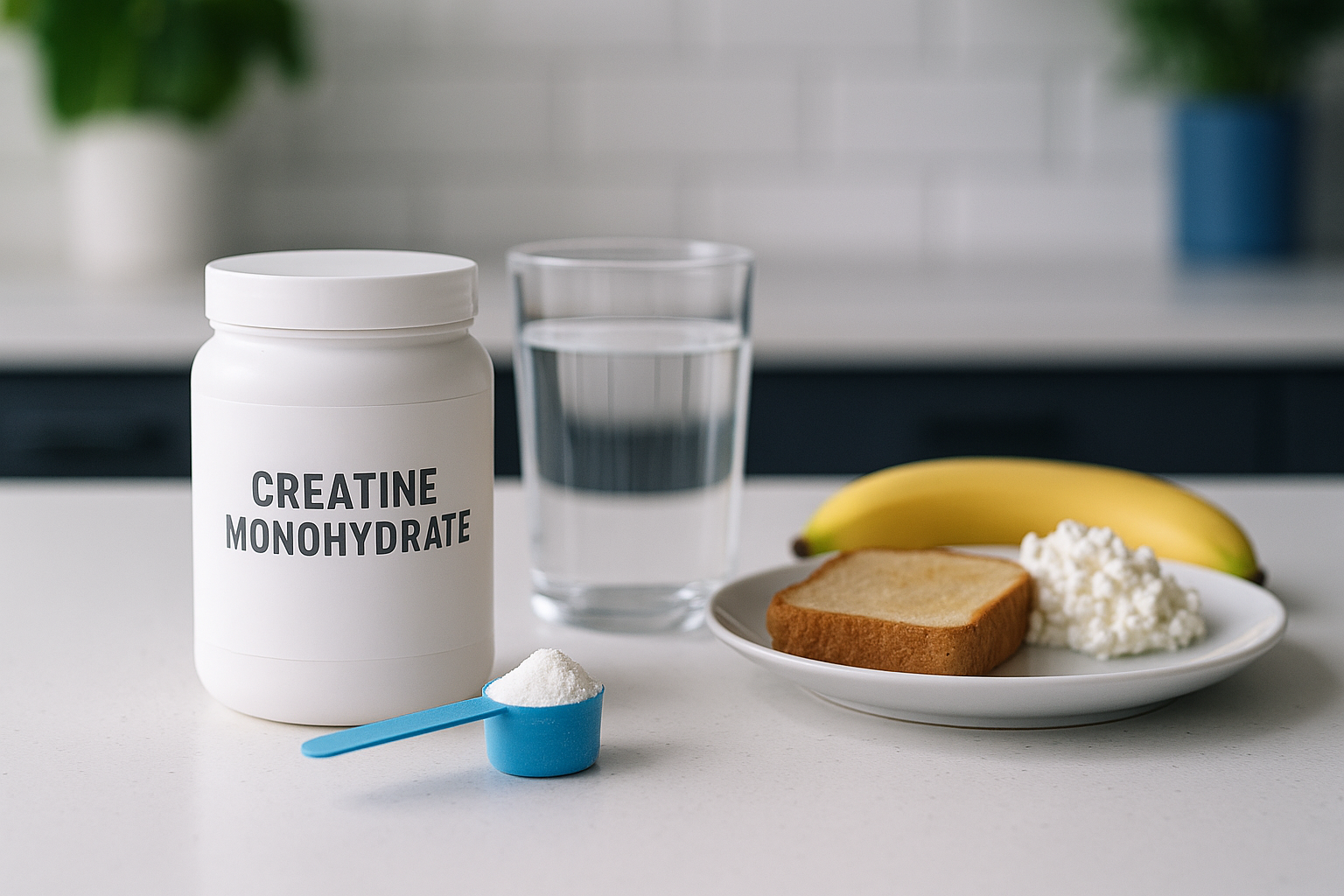
Creatine and Gut Health: Does It Help or Harm Your Digestive Microbiome?
By The Creatine Canada Research Team — Evidence-based supplement analysts
Creatine does not appear to harm gut health in healthy people when taken at evidence-based doses, and there is not yet strong human evidence that it meaningfully improves the gut microbiome either. The practical takeaway is simple: creatine monohydrate is usually digestive-safe at 3–5 g/day, while stomach upset is most often a dosing, mixing, or loading problem rather than a sign that creatine is damaging your gut flora.
Evidence-based · Cites 4 sources · Editorial standards
Key Takeaways
- Current evidence does not show that creatine monohydrate damages the gut microbiome in healthy adults.
- There is also no strong human proof that creatine directly boosts gut bacteria or gut flora in a clinically meaningful way.
- Most creatine digestive side effects come from taking too much at once, especially during aggressive loading.
- A daily maintenance dose of 3–5 g is the simplest gut-friendly protocol for most people.
- If creatine causes bloating or diarrhea, split the dose, take it with food, and use plain monohydrate rather than a flashy blend.
- Creatine can be used alongside probiotics, but they do different jobs and one does not replace the other.
- In Canada, choose a plain creatine product with an NPN and preferably third-party testing for purity and label accuracy.
Does creatine affect gut health? Here is the direct answer
Creatine does affect the digestive tract in the simple sense that you swallow it, dissolve it, absorb it, and sometimes feel it in your stomach, but current evidence does not show that creatine harms gut health or disrupts the microbiome in healthy people at standard doses. That is the short answer to “does creatine affect gut health?” and it matters because many people confuse temporary GI discomfort with actual damage to the gut lining or gut bacteria.
Creatine is a naturally occurring compound made from the amino acids arginine, glycine, and methionine, and the form with by far the best evidence is creatine monohydrate. Its main role is not digestive; it helps replenish phosphocreatine, the stored form of creatine used to rapidly regenerate ATP, your cells’ immediate energy currency, during short high-intensity efforts. The 2017 ISSN position stand concluded that creatine monohydrate is the most effective ergogenic nutritional supplement available for increasing high-intensity exercise capacity and lean mass, and it has a strong safety profile when used appropriately. See Kreider et al. (2017), ISSN Position Stand.
What the evidence does support is this: creatine can cause digestive symptoms in some users, especially when they load with about 20 g/day, take large single scoops, mix poorly, or use products with extra sweeteners and fillers. Those symptoms can include bloating, loose stools, cramping, or a heavy stomach. That is a tolerability issue, not proof of microbiome damage.
What the evidence does not yet support is a confident claim that creatine improves gut bacteria, acts like a prebiotic, heals leaky gut, or treats IBS, IBD, reflux, constipation, or dysbiosis. There are mechanistic reasons scientists are interested in creatine and intestinal health, but as of 2026, this remains an emerging area rather than settled human evidence.
If you are brand new to supplementation, the most gut-friendly starting point is plain monohydrate at 3–5 g once daily. If you want help setting a dose, use our creatine dosage calculator, and if you want the broader beginner primer first, read what is creatine and creatine for beginners.
What science says about creatine and the microbiome, gut bacteria, and intestinal health
The best evidence-based answer is that creatine and the microbiome have a plausible biological relationship, but human data are still too limited to say creatine reliably improves gut bacteria or gut flora. This is where nuance matters: “possible mechanism” is not the same as “proven outcome.”
Mechanistically, creatine could matter to digestive health in at least three ways. First, intestinal cells have large energy demands, and creatine helps buffer cellular energy through the phosphocreatine system. In plain English, cells in the gut lining need constant ATP to maintain barrier integrity, transport nutrients, and support normal turnover. If creatine availability supports cellular energy handling, it is reasonable to study whether that could influence barrier resilience under stress.
Second, creatine affects water movement into tissues because it is osmotically active. Inside muscle, that usually means more intracellular water. In the gut, high amounts left unabsorbed in the intestinal lumen can pull water into the bowel and cause diarrhea. That is why a dose that is too large for your immediate absorption capacity can feel rough on digestion even though the compound itself is not “toxic” to the gut.
Third, there is growing interest in crosstalk between exercise, inflammation, immunity, and the gut environment. Since creatine may influence training quality, recovery, and cellular energetics, researchers are exploring whether there could be indirect effects on intestinal health. But indirect does not mean guaranteed, and most of the stronger established benefits of creatine still relate to performance, muscle, and in some cases brain energetics rather than microbiome modulation.
The 2021 JISSN review on common creatine questions reinforced that creatine is one of the most studied supplements and many popular fears are overstated, but it did not claim that creatine is a proven microbiome supplement. See Antonio et al. (2021). The safest conclusion today is that creatine does not seem to harm gut bacteria in healthy users, while any direct microbiome benefit remains an interesting but not yet well-established frontier.
If you want a deeper grounding in how creatine actually works before worrying about niche mechanisms, our guides on creatine and ATP and the creatine phosphate energy system are useful next reads.
Digestive side effects are real, but they are not the same as gut damage

Creatine can cause digestive side effects in some people, but temporary bloating, gas, or loose stools are not evidence that creatine is harming your microbiome or intestinal lining. In practice, most GI issues come down to dose size, product format, or user error.
The classic example is loading. A common loading protocol is about 20 g/day split into four 5 g doses for 5–7 days, followed by 3–5 g/day. That protocol can saturate muscle stores faster, but it also raises the odds of digestive complaints because each bolus is larger and the total daily intake is much higher. The ISSN position stand and mainstream sports nutrition guidance both accept loading as effective, but effective does not always mean most comfortable.
Why does this happen? When too much creatine sits in the gut at once, it can increase the osmotic load, meaning it draws water into the intestines. That can produce urgency or diarrhea. Poor dissolution can also leave gritty sediment, which some people find irritating. Flavoured blends can add sugar alcohols, gums, acids, or caffeine that muddy the picture; many users blame creatine when the real culprit is the formula around it.
Beginners should also know that “bloating” gets used loosely. True creatine-related water retention is usually intracellular, meaning water is pulled into muscle cells, not trapped under the skin or in the bowel. A puffy, sloshy stomach after a big shake is usually a mixing, meal-size, or dose issue rather than a meaningful change in gut flora.
Red flags are different. If you have severe abdominal pain, ongoing vomiting, black stools, blood in stools, persistent diarrhea, or symptoms that continue even after stopping creatine, treat that as a medical issue and speak to a clinician. Creatine should not be used to self-treat unexplained digestive symptoms.
For a full troubleshooting guide, see creatine digestive side effects, does creatine cause bloating, and creatine myths debunked. Those pages help separate normal tolerability issues from things that actually need medical attention.
The most gut-friendly way to take creatine: a simple step-by-step protocol
The most gut-friendly way to take creatine is to skip aggressive loading, use plain monohydrate, and take 3–5 g daily with enough fluid and, if needed, with food. That simple protocol works for most people and minimizes the digestive complaints that get mistaken for microbiome problems.
- Choose plain creatine monohydrate. It is the most studied, most cost-effective, and usually the easiest to troubleshoot because there are fewer extra ingredients. If you are shopping, compare options in our best creatine rankings, creatine brand reviews, and creatine product catalog.
- Start with 3 g/day for the first week if you have a sensitive stomach. This is a conservative on-ramp that lets you test tolerance without the GI hit of loading.
- Move to 3–5 g/day as maintenance. Most adults do well at 5 g/day, while smaller users or highly sensitive users may prefer 3 g/day.
- Take it with 250–500 mL of water. Good mixing improves the drinking experience and may reduce grit-related discomfort.
- Take it with a meal if you get stomach upset on an empty stomach. A meal slows gastric emptying and often makes creatine easier to tolerate.
- If needed, split the dose. Instead of 5 g once daily, try 2.5 g twice daily.
- Stay consistent for at least 3–4 weeks. Without loading, creatine works through gradual saturation, not a single acute hit.
Here is a realistic week-by-week expectation. In week 1, most people notice nothing dramatic except possibly slight scale changes if they respond quickly. By weeks 2–4, muscle stores are moving toward saturation and training performance may begin to feel more repeatable, especially in short bursts or later sets. By weeks 4–8, many users notice better strength progression, improved training volume, or a fuller muscle look. None of those are gut effects, but they help you tell the supplement is doing what it is supposed to do.
If you want exact day-by-day instructions, read how to take creatine and how long creatine takes to work.
Best creatine dose for digestion, body weight, and training goal
The best creatine dose for both results and digestive comfort is usually 3–5 g/day, with loading reserved for people who want faster saturation and know they tolerate it well. More is not better for gut health; it mostly increases the chance of GI distress.
Mainstream sports nutrition uses two common approaches. The first is loading: about 20 g/day split into four 5 g doses for 5–7 days, then 3–5 g/day. The second is steady dosing: 3–5 g/day from the start, which reaches saturation more slowly over roughly 3–4 weeks. If your priority is comfort and simplicity, steady dosing wins.
| Body weight / goal | Gut-friendly daily dose | When to use it | Notes |
|---|---|---|---|
| Under 60 kg | 3 g/day | Beginners, lighter users, sensitive stomachs | Often enough to maintain saturation over time |
| 60–90 kg | 3–5 g/day | Most recreational lifters and active adults | 5 g/day is the standard practical choice |
| Over 90 kg | 5 g/day | Larger athletes, high lean mass | Some use slightly more, but higher doses are not usually necessary |
| Fast saturation goal | 20 g/day for 5–7 days, split into 4 doses | Competition prep or wanting quicker results | Higher GI risk; not required for long-term benefits |
| Very sensitive digestion | 2.5 g twice daily | Anyone who gets bloating or loose stools from 5 g once daily | Same total dose, gentler delivery |
Examples help. A 55 kg beginner who mainly wants general strength support can start at 3 g/day. A 75 kg gym-goer trying to maximize training quality can take 5 g/day. A 105 kg power athlete can still start at 5 g/day and only consider a loading phase if they specifically want faster saturation and know their stomach handles it.
If you miss a day, do not double the next dose. Creatine works through muscle-store saturation over time, so doubling up only raises the odds of stomach upset without materially improving results.
For a more detailed dosing breakdown, use our creatine dosage calculator and see how much creatine per day, creatine maintenance dose, and creatine loading phase.
Timing, food, and probiotics: how to combine creatine without upsetting your stomach
Creatine timing matters far less than daily consistency, and the easiest digestion-friendly rule is to take it at a time you will actually remember, often with food if your stomach is sensitive. There is no strong evidence that creatine needs a special gut-health timing window.
You can take creatine in the morning, pre-workout, post-workout, or on rest days at lunch; what matters most is that total daily intake stays consistent enough to keep muscle stores saturated. The International Olympic Committee consensus on supplements supports creatine as one of the few supplements with strong sport evidence, but practical implementation still comes down to adherence rather than timing perfection. See IOC consensus on dietary supplements.
If creatine bothers your stomach, taking it with a meal is often the first fix worth trying. Food can make the dose feel gentler, and many users find breakfast or a post-workout meal easier than taking creatine dry or on an empty stomach. Warm or room-temperature liquid can also improve dissolution compared with dumping powder into a tiny amount of cold water and swallowing the sludge.
What about creatine and probiotics? In healthy people, there is no known reason you cannot use both. They simply have different roles. Creatine supports cellular energy and exercise performance; probiotics are live microorganisms intended to affect the gut ecosystem. Creatine is not a probiotic, not a prebiotic, and not a replacement for fibre, fermented foods, or clinical gut care.
If you already take probiotics, there is no evidence-based need to separate them by hours from creatine. The more important variable is overall tolerability. If a shake contains creatine, whey, sweeteners, and probiotics all at once and your stomach feels off, isolate variables by simplifying the stack for a week.
For more on timing and stomach comfort, see when to take creatine, creatine with or without food, and creatine on an empty stomach.
Who should use creatine if gut health is a concern: beginners, women, older adults, and athletes
Creatine is appropriate for most healthy beginners, women, older adults, and athletes even if they are careful about digestive health, provided they use a sensible dose and stop if symptoms do not settle. The groups most likely to benefit are not always the same groups most likely to get stomach upset.
Beginners often do best with the simplest protocol: 3–5 g/day of monohydrate, no loading, and taken with food if needed. This avoids the common mistake of copying an advanced lifter’s 20 g/day loading phase and then assuming creatine “wrecked” their gut.
Women can use creatine safely under the same basic evidence-based dosing framework as men. Women do not need a “pink” or gendered creatine product, and digestive tolerance usually comes down to total dose and formula quality, not sex. If you want more detail, read creatine for women.
Older adults may benefit meaningfully from creatine for strength, muscle function, and healthy ageing support, especially when combined with resistance training. Because some older adults are on more medications or have more health conditions, it is smart to review use with a clinician if there is kidney disease, complex medication use, or chronic GI disease. Our guide on creatine for older adults goes deeper.
Athletes in sprint, team, power, and repeated-effort sports are classic creatine users because the performance upside is strongest there. Endurance athletes can still use creatine, but if body mass changes affect performance, a slower low-dose protocol is often easier on both the gut and the scale.
Vegetarians and vegans may respond especially well because baseline dietary creatine intake is often lower. That is a performance point more than a gut point, but it helps explain why some people notice clearer results. See is creatine vegan and creatine for vegetarians.
If you have IBS, IBD, chronic diarrhoea, recurrent reflux, or unexplained abdominal pain, creatine is not automatically off-limits, but it deserves a more cautious trial and, ideally, clinician input. In those cases, the question is less “does creatine harm gut bacteria?” and more “can my current digestive condition tolerate this supplement routine?”
Creatine and digestion long term: safety, side effects, and when to be cautious
Long-term creatine use at standard doses appears safe for healthy people, and there is no established evidence that it progressively damages digestion, intestinal health, or the microbiome over time. That is important because “creatine and digestion long term” is a common fear, especially among people who plan to take it year-round.
The broad safety picture is strong. The ISSN position stand and the 2021 JISSN review both emphasize that many common creatine fears are myths or exaggerations, including the idea that routine use is inherently dangerous in healthy users. Mayo Clinic similarly notes that creatine seems to be safe when used for up to several years at appropriate doses in healthy adults, while also advising caution in people with pre-existing kidney concerns or certain medications. See Mayo Clinic — Creatine.
Digestively, the side effects that matter most are still the simple ones: nausea, stomach upset, loose stools, and bloating. These tend to appear early, not after years of silent gut injury, and they usually improve when the user lowers the dose, splits it, changes the formula, or stops loading.
Be more cautious if any of the following apply:
- You have known kidney disease or are being evaluated for kidney problems.
- You have a chronic gastrointestinal disease and flare easily with supplements.
- You take medications that can affect kidney function or hydration status.
- You are pregnant or breastfeeding and want individual medical guidance.
- You are an adolescent athlete and your parent, coach, or clinician wants a structured evidence-based discussion first.
None of those points mean creatine is necessarily unsafe for you; they mean the margin for casual experimentation is smaller. If you want a full risk review, read is creatine safe, who should not take creatine, and creatine and medication interactions.
The bottom line on long-term gut health is reassuring: if creatine agrees with your stomach in the first few weeks, there is no good evidence that a standard maintenance dose quietly harms your gut later.
How to choose a creatine product in Canada if you care about digestive tolerance
If gut comfort matters to you, the best creatine to buy in Canada is usually a plain, single-ingredient creatine monohydrate with a Natural Product Number, or NPN, and ideally third-party testing. Simpler formulas are easier to tolerate and easier to troubleshoot.
An NPN is Health Canada’s product licence number for approved natural health products. It does not guarantee that a product will be perfect for your stomach, but it does tell you the product is regulated within the Canadian natural health product framework. For athletes and cautious buyers, third-party testing such as NSF Certified for Sport or Informed Sport adds another layer of confidence around contamination and label accuracy.
From a digestion standpoint, the biggest practical choice is often plain versus flavoured. Plain monohydrate contains one ingredient. Flavoured creatines can still work, but added acids, sweeteners, colours, gums, caffeine, or electrolyte blends can complicate digestion and make it hard to tell what is causing discomfort.
| What to look for | Why it helps gut tolerance | Best practical choice |
|---|---|---|
| Creatine form | Monohydrate has the strongest evidence and easiest dosing | Plain creatine monohydrate |
| Ingredient list | Fewer extras means fewer possible GI triggers | Single-ingredient formula |
| NPN on label | Shows the product is licensed in Canada | Yes, when available |
| Third-party testing | Reduces contamination and label-accuracy concerns | Preferably yes |
| Format | Powder lets you adjust dose precisely | Powder over gummies or blends for most users |
| Price metric | Fancy forms rarely outperform monohydrate | Compare cost per gram, not marketing claims |
Do not assume HCl, buffered, gummy, or “stomach-friendly” creatines are automatically better. Some people prefer certain formats, but monohydrate remains the gold standard on evidence and value. If you want help comparing products, start with best creatine monohydrate in Canada, third-party tested creatine in Canada, and how to choose creatine.
Common myths about creatine and gut flora, plus the mistakes that actually cause problems
The biggest myth is that if creatine upsets your stomach once, it must be harming your gut bacteria, but that conclusion is not supported by evidence. In reality, a handful of predictable mistakes explain most bad first experiences with creatine.
- Myth: Creatine ruins the microbiome. There is no established human evidence that standard-dose creatine damages gut bacteria in healthy users.
- Myth: If it causes bloating, it is inflaming your intestines. Most bloating complaints are due to large doses, poor mixing, or taking it on an empty stomach.
- Myth: Fancy forms are necessary for digestion. Monohydrate is still the benchmark; many “advanced” forms lean more on marketing than superior outcomes.
- Myth: More creatine means more results. Once daily needs are met, extra powder mostly increases the chance of GI distress.
- Myth: You need to cycle off to protect your gut. There is no gut-health reason healthy users must cycle creatine.
The most common real-world mistakes are equally straightforward:
- Taking 10–20 g in one hit. Large single doses are far more likely to trigger loose stools.
- Dry scooping. This increases the chance of gagging, coughing, poor dissolution, and stomach discomfort.
- Using a flavoured blend with multiple actives. If your stomach reacts, you will not know whether the issue is creatine, caffeine, sweeteners, or something else.
- Not measuring accurately. A heaped scoop can be much more than you think.
- Quitting too early. People often stop after one uncomfortable loading day rather than switching to a steadier protocol.
If creatine is “not working,” remember that the intended signal is better training output over time, not a dramatic digestive sensation or stimulant-like buzz. If you feel nothing in your gut and nothing in your head, that can actually mean you are taking it correctly.
For more myth-busting and troubleshooting, see creatine myths vs. facts, common creatine mistakes, and why creatine might not be working.
Bottom line: should you worry about creatine and gut health?
You probably do not need to worry that creatine is harming your gut health if you are a healthy adult using plain creatine monohydrate at 3–5 g/day. The evidence-based middle ground is that creatine is generally digestive-safe, but it is not a proven microbiome supplement either.
If your only question is “creatine and gut health: help or harm?”, the fairest answer is usually neither in a major direct sense. Creatine’s established job is to support phosphocreatine stores, ATP regeneration, strength, power, training volume, and lean mass gains. Its relationship to gut bacteria, gut flora, and intestinal health is currently more of an emerging research topic than a practical reason to take it.
For most people, the smart move is simple:
- Use plain creatine monohydrate.
- Take 3–5 g/day consistently.
- Take it with food or split the dose if your stomach is sensitive.
- Avoid assuming temporary GI discomfort equals microbiome damage.
- Choose a regulated, quality-tested product in Canada.
If you have a chronic digestive condition, recurring GI symptoms, or medication concerns, use a more cautious trial and involve a clinician. And if your goal is better gut health specifically, prioritize the basics first: adequate fibre, a varied diet, enough fluid, exercise, sleep, and condition-specific medical care when needed. Creatine can fit into that bigger picture, but it should not replace it.
If you are ready to start, compare plain options in our best creatine rankings, calculate your ideal intake with the creatine dosage calculator, and build your routine with the complete creatine guide.
Creatine and Gut Health: The Numbers That Matter
- 3–5 g/day Standard maintenance dose — The simplest and most gut-friendly daily protocol for most adults.
- 20 g/day Typical loading dose — Usually split into 4 doses for 5–7 days; more likely to cause GI upset.
- 5–7 days Common loading duration — Used to saturate muscle stores faster, but not required.
- 3–4 weeks Time to near saturation without loading — A steady 3–5 g/day approach reaches full effect more gradually.
Frequently Asked Questions
Does creatine affect gut health?
Yes, creatine can affect digestion in the short term, but current evidence does not show that standard-dose creatine harms gut health in healthy adults. The effect most people notice is tolerability, such as bloating or loose stools from taking too much at once, rather than damage to the gut lining or microbiome.
Does creatine harm the microbiome or gut bacteria?
No strong human evidence shows that creatine harms the microbiome or gut bacteria when taken appropriately. Research interest exists because creatine influences cellular energy and may interact indirectly with intestinal function, but the best current conclusion is that harm to gut flora has not been established.
Can creatine improve gut health or gut flora?
Creatine is not a proven gut-health supplement, and there is not yet strong evidence that it meaningfully improves gut flora in humans. Any direct microbiome benefit remains emerging and should be viewed as speculative compared with creatine’s well-established performance benefits.
Why does creatine upset my stomach?
Creatine usually upsets the stomach because the dose is too large, the powder is poorly dissolved, or the formula contains other irritating ingredients. Large single doses can draw water into the intestines and trigger bloating or diarrhea, especially during loading phases.
Is creatine safe for digestion long term?
Yes, creatine appears safe for digestion long term in healthy people at evidence-based doses such as 3–5 g/day. There is no established evidence that long-term maintenance dosing progressively damages the gut, although people with chronic GI disease should be more cautious.
Can you take creatine and probiotics together?
Yes, you can take creatine and probiotics together because they work through different mechanisms and there is no known harmful interaction in healthy users. Creatine supports cellular energy and training performance, while probiotics are intended to influence the gut microbial environment.
Should I take creatine with food if I have a sensitive stomach?
Yes, taking creatine with food is often the easiest fix if you have a sensitive stomach. A meal can make the dose easier to tolerate, and many people find that splitting 5 g into two smaller servings helps even more.
What is the best creatine dose for gut-friendly use?
The best gut-friendly dose for most people is 3–5 g of creatine monohydrate per day. That amount is enough to maintain saturation over time without the higher GI stress that often comes with aggressive loading or oversized scoops.
Does creatine cause bloating because it affects the intestines?
Not usually in a harmful way; creatine-related bloating is more often a dosing or mixing issue than an intestinal-damage issue. Many users also confuse normal intracellular water retention in muscle with stomach bloating, even though those are different things.
Who should be cautious with creatine if they have digestive issues?
People with IBS, IBD, chronic diarrhoea, unexplained abdominal pain, complex medication use, or kidney disease should be more cautious with creatine. It is not automatically unsafe, but those users should start conservatively and consider getting medical guidance before routine use.