PVL Creatine Review: Pure Sports Nutrition Quality, Testing & Value
By The Creatine Canada Research Team — Evidence-based supplement analysts
PVL Creatine is a solid, sensible buy for Canadians if you want plain creatine monohydrate from an established sports-nutrition brand, but the real question is not hype — it is purity, testing, dose accuracy, and price per gram. In this PVL creatine review, the short answer is yes: it is likely a good option if the label is simple, the Natural Product Number is present, and the cost stays competitive with other monohydrate powders.
Evidence-based · Cites 4 sources · Editorial standards
Key Takeaways
- PVL creatine is worth considering because creatine monohydrate is the gold-standard form, not because of flashy branding.
- A good PVL creatine product should list only creatine monohydrate, a clear serving size, and a Canadian NPN.
- The evidence-based dose is 3-5 g daily, with optional loading at 20 g daily split into 4 doses for 5-7 days.
- NSF certification is not the same thing as general third-party testing, so check the exact claim on the specific PVL product.
- For most buyers, value comes down to cost per gram, scoop accuracy, and whether the powder mixes well enough to use daily.
- PVL can be a good fit for beginners, women, older adults, and strength athletes because the benefits come from creatine itself, not a niche formula.
- If you are comparing PVL creatine vs Allmax, compare monohydrate source, certification, and price per 100 g rather than marketing language.
PVL Creatine Review Verdict: Is PVL Creatine Good for Canadian Buyers?
Yes, PVL creatine is generally a good option if the product is a straightforward creatine monohydrate powder with compliant Canadian labelling, a clear dose, and a competitive price. That is the direct answer most people want from a PVL creatine review, and it matters because creatine quality is usually decided more by formula simplicity, manufacturing standards, and testing transparency than by brand storytelling.
PVL, or Pure Vita Labs / PVL Pure Sports Nutrition, is a familiar name in the Canadian supplement market, and that alone gives many buyers some confidence. Still, brand familiarity is not enough. The right way to judge PVL Pure Sports Nutrition creatine is to ask five practical questions:
- Is it creatine monohydrate, the most researched form?
- Does the label clearly show the amount per serving, usually 5 g?
- Does the product carry a Natural Product Number, or NPN, which is Health Canada’s product licence number for approved natural health products?
- Does the brand make a clear claim about quality control or third-party testing?
- Is the price per gram reasonable versus other monohydrate products in Canada?
If the answer to those questions is yes, PVL is likely a sensible buy. If the formula adds proprietary blends, underdoses creatine, or charges a premium without better testing or certification, it becomes harder to recommend over simpler alternatives from our best creatine rankings.
The reason this evaluation framework works is simple: according to the 2017 ISSN position stand, creatine monohydrate remains the most effective ergogenic, meaning performance-supporting, nutritional supplement for increasing high-intensity exercise capacity and lean mass during training. That conclusion is about the ingredient itself, not one particular company. In other words, if PVL delivers pure, accurately dosed monohydrate, it can work just as well as more heavily marketed competitors.
For Canadians, the buying context also matters. A domestically available product with bilingual labelling, an NPN, and easier shipping can be more practical than imported options with weaker retail support. If you are still comparing brands, our broader creatine brand reviews and creatine product catalog can help you place PVL in context rather than judging it in isolation.
What PVL Creatine Actually Is — and Why Monohydrate Still Wins
PVL creatine is only as good as the form of creatine it uses, and for nearly everyone the best form is plain creatine monohydrate. This point is worth stating clearly because many shoppers search PVL creatine monohydrate review or PVL creatine quality when what they really need to know is whether the product sticks to the most proven ingredient.
Creatine monohydrate is a compound made of creatine bound to one water molecule. In the body, creatine is stored largely in muscle, where it helps replenish ATP, or adenosine triphosphate, the immediate energy currency your cells use for short, explosive work. More stored creatine means more phosphocreatine, which is the high-energy form that rapidly helps regenerate ATP during efforts like sprinting, jumping, heavy sets, and repeated intervals.
That mechanism is why monohydrate consistently outperforms trendier forms in real-world usefulness. Fancy variants like HCl, buffered creatine, nitrate, or ethyl ester often promise better absorption or less bloating, but they do not have stronger evidence for better muscle saturation or better results. For a deeper breakdown, see best creatine rankings and related education on creatine myths debunked.
The most important thing to understand in a PVL creatine Canada review is that creatine is not a stimulant and does not work like a pre-workout. You do not “feel” it in one serving. It works by gradually increasing intramuscular creatine stores over days to weeks until you reach saturation, meaning your muscles are holding more creatine than before. Once you are saturated, repeated bursts of effort become easier to sustain, training quality often improves, and over time that can support more strength, performance, and lean mass gains.
Antonio et al. (2021) noted in JISSN that creatine monohydrate is the form with the greatest body of evidence for bioavailability, efficacy, and safety. So if PVL uses monohydrate and does not overcomplicate the formula, that is a point in its favour. A simpler label is often a sign of a better product, not a weaker one.
If you want the one-line takeaway, it is this: PVL creatine is good when it is plain monohydrate because monohydrate, not marketing, is what drives results.
How PVL Creatine Works in Your Muscles, and What Results to Expect Week by Week
PVL creatine works by increasing muscle creatine and phosphocreatine stores, which helps your body regenerate ATP faster during short, high-intensity exercise. That is the mechanism behind almost every meaningful benefit people notice from creatine monohydrate.
Here is what that means in practical terms. During a heavy set of squats, a 10-second bike sprint, or repeated hockey shifts, your muscles burn through ATP quickly. Phosphocreatine donates a phosphate group to help remake ATP rapidly, letting you maintain force output a little longer or recover faster between efforts. The advantage is not magic, but it is meaningful, especially when repeated over months of training.
The benefits you may notice depend on your training and your baseline diet. People with lower habitual creatine intake, including many vegetarians and vegans, often see a stronger response. Strength and power athletes tend to notice the effects more clearly than long-duration endurance athletes, although some team-sport and interval athletes can still benefit.
A realistic timeline looks like this:
- Days 1-7 with loading: you may gain roughly 0.5 to 1.5 kg of scale weight from increased intracellular water, meaning water pulled into muscle cells rather than body fat.
- Weeks 2-4: workouts may feel more repeatable, especially on later sets, repeated sprints, or explosive sessions.
- Weeks 4-8: strength progress and training volume often improve modestly if your program and protein intake are already in place.
- Months 2-3: the compounding value shows up as better lean mass and performance progress than training alone would have produced.
If you skip the loading phase and take 3-5 g daily, expect the same endpoint but slower saturation, often around 3-4 weeks. If you want a full timeline, see creatine dosage calculator and guides such as how long does creatine take to work and does creatine build muscle.
The most reliable signs that PVL creatine is “working” are not a sudden pump or a rush of energy. The real signs are steadier performance on repeated hard efforts, slightly better rep quality, a modest increase in body mass early on, and better training progression over time. If you expect a stimulant-like feeling, you will wrongly assume creatine is doing nothing.
PVL Creatine NSF, Third-Party Testing, and Label Trust: What Claims Actually Mean
PVL creatine NSF is a specific question, and the right answer is: do not assume certification unless the exact product label or official listing says so. Many buyers use “third-party tested,” “lab tested,” and “NSF certified” as if they are interchangeable, but they are not the same thing.
Third-party testing means an outside lab verifies something about the product, such as identity, purity, potency, or contaminants. NSF Certified for Sport is a particular certification program that screens for banned substances and verifies label accuracy under a defined standard. Informed Sport is another sport-focused certification. A product can be third-party tested without being NSF certified, and a brand can have some certified products without every product carrying that status.
This matters for athletes, especially those in tested sport. The International Olympic Committee consensus on dietary supplements emphasized that contamination risk is a real concern in sports supplements, which is why independent certification matters more than marketing reassurance. If you are a varsity athlete, combat-sport athlete, or anyone subject to anti-doping rules, you should verify the certification of the exact tub you are buying rather than relying on retailer copy.
When assessing PVL creatine third party tested claims, use this checklist:
- Look for an explicit statement on the product page or tub, not a vague brand-level promise.
- Check whether the claim is for purity testing, banned-substance screening, or both.
- Confirm the exact product name, lot, and format if the certification database allows it.
- Make sure the serving size and ingredient list are simple and match the intended use.
For general gym-goers, the minimum trust markers in Canada are still meaningful: an NPN, a clean ingredient panel, proper contact information, and a reputable retailer. For drug-tested athletes, the threshold is higher: seek verified sport certification whenever possible. If PVL offers that on a given SKU, that meaningfully strengthens the case for purchase.
If you are unsure how much emphasis to place on testing, read our practical buying guides on creatine brand reviews and best creatine rankings. In short, certification is not mandatory for every recreational lifter, but trustworthy testing is never a bad sign.
Buying PVL Creatine in Canada: NPNs, Labels, Retailers, and Red Flags
If you are buying PVL creatine Canada, the smartest approach is to judge the tub like a regulator and a coach at the same time. In Canada, creatine products sold as natural health products should typically have a Natural Product Number, or NPN, which shows Health Canada has licensed the product based on its formulation, claims, and labelling.
An NPN does not mean a product is automatically the best on the shelf, but it is an important quality and compliance signal for Canadian buyers. It helps you avoid grey-market imports, inconsistent labels, or products sold through channels that do not prioritize Canadian compliance.
Here is the practical checklist we use before recommending a creatine product in Canada:
- NPN present: this is one of the easiest trust markers to verify on the label.
- Ingredient simplicity: ideally just creatine monohydrate, or monohydrate plus a minimal flavour system if flavoured.
- Serving clarity: the label should make it easy to hit 3-5 g per day without guesswork.
- Scoop consistency: vague scoop sizes are annoying; grams matter more than scoop volume.
- Retail reputation: buy from established Canadian supplement stores or direct brand channels when possible.
- Packaging integrity: the seal should be intact and the powder dry, fine, and free-flowing.
Red flags include underdosed “performance blends,” unsupported claims about instant muscle gain, and inflated pricing tied to meaningless adjectives like “advanced” or “ultra-absorption.” Creatine is one of the simplest supplements to formulate properly. Complexity is rarely an advantage.
Another practical tip: compare landed cost, not sticker price alone. A cheap tub with high shipping or weak return support may not be the best deal. If you are shopping across provinces or deciding between domestic and imported products, our resources on creatine product catalog and buying in Canada can help you compare smarter.
The bottom line for Canadian buyers is straightforward: if PVL creatine has an NPN, a clean monohydrate label, and a fair cost per gram, it passes the main quality screen. That does not make it automatically superior to every rival, but it puts it in the serious-consideration tier.
How to Take PVL Creatine Properly: Exact Daily Steps for Best Results
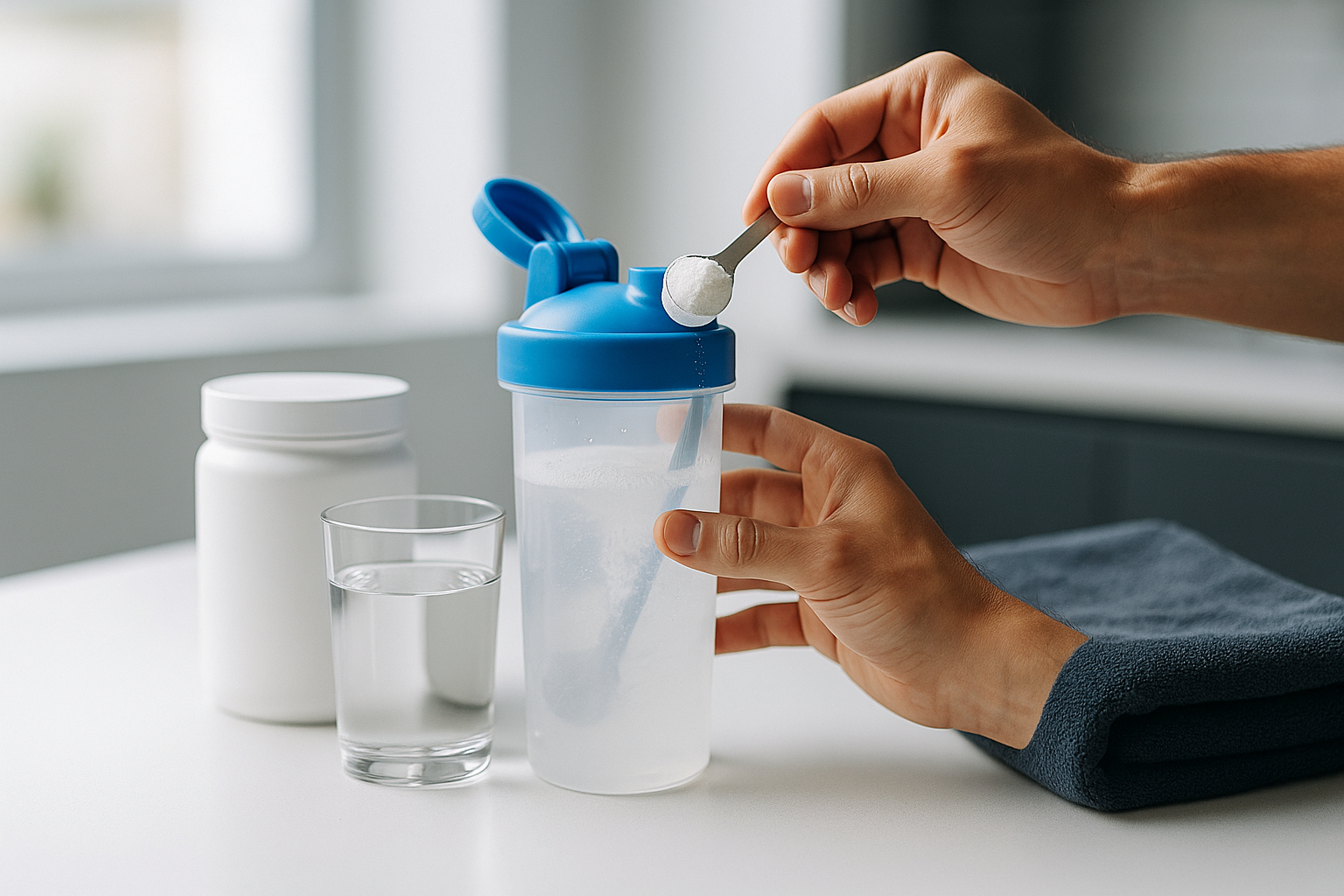
The best way to take PVL creatine is 3-5 g every day, consistently, with or without food, and with enough fluid to make it easy on your stomach. That single habit matters far more than perfect timing.
Here is a simple step-by-step protocol that works for most adults:
- Choose your daily dose. Start with 3 g daily if you are smaller-bodied, cautious, or prone to stomach upset. Use 5 g daily if you are average to larger-bodied or simply want the standard maintenance dose.
- Decide whether to load. If you want faster results, take 20 g per day for 5-7 days, split into 4 doses of 5 g. If you prefer simplicity, skip loading and take 3-5 g daily from day one.
- Mix it in water or a shake. Warm or room-temperature liquid can improve dissolving. If you want better consistency, stir longer or use a shaker. More on technique is covered in how to take creatine.
- Take it daily, including rest days. Creatine works through saturation, so rest-day use matters just as much as workout-day use.
- Track for 4-8 weeks. Watch your scale, training log, and repeated-effort performance, not just how you feel after one serving.
If you have had digestive issues with creatine before, split the dose into smaller servings, take it with meals, and avoid dry scooping. For many people, stomach trouble is caused by taking too much at once rather than by creatine itself. Our creatine dosage calculator and creatine myths debunked pages can help troubleshoot common mistakes.
Do not overcomplicate your routine. You do not need a “cycling” schedule, a sugar-heavy transport drink, or a pre-workout stack to make creatine effective. According to the evidence summary from Examine.com and the ISSN position stand, the main variable that decides success is adequate daily intake maintained long enough to saturate muscle stores.
A beginner-friendly rule is this: pick a time you can repeat every day. After breakfast, after training, or with dinner are all fine. Compliance beats theory. The perfect dose taken inconsistently is worse than the good-enough dose taken daily.
PVL Creatine Dose by Body Weight, Goal, and Timing
The right PVL creatine dose for most people is 3-5 g daily, and timing matters far less than total daily consistency. That is the evidence-based answer whether you are using it for strength, general training, or healthy aging support.
Some people prefer a body-weight approach, especially at very low or high body weights. A commonly used loading protocol is about 0.3 g per kg of body weight per day for 5-7 days, followed by maintenance of roughly 0.03 g per kg per day. In practice, most adults can simply use fixed doses.
| Body weight / goal | Maintenance dose | Optional loading phase | Best practical note |
|---|---|---|---|
| Under 60 kg, general fitness | 3 g/day | 15-20 g/day for 5-7 days, split doses | Start lower if stomach-sensitive |
| 60-90 kg, strength or muscle | 5 g/day | 20 g/day for 5-7 days, split into 4 x 5 g | The standard protocol fits most users |
| Over 90 kg or very high training volume | 5 g/day, sometimes slightly higher in practice | 20-25 g/day for 5-7 days, split doses | Consistency matters more than pushing the dose |
| Older adults | 3-5 g/day | Usually optional rather than necessary | Best paired with resistance training |
| Team-sport athletes | 5 g/day | Useful before demanding training blocks | Monitor small early weight gain |
Timing is often overstated. There is no strong evidence that taking PVL creatine immediately before versus immediately after training changes outcomes in a major way, as long as your total intake is adequate over time. If timing helps you remember it, take it post-workout with your shake or a meal. If mornings are easier, take it then.
Who benefits most? Beginners can absolutely use creatine because better recovery between sets helps skill and strength practice. Women respond to creatine too; the myth that it is only for men or only for bodybuilding is false. Older adults may benefit when creatine is combined with resistance training. Athletes in sports that rely on repeated bursts of power often get the clearest performance payoff.
If you want a more tailored plan, use our creatine dosage calculator or see how much creatine per day and when to take creatine for deeper guidance.
Safety, Side Effects, and Who Should Think Twice Before Using PVL Creatine
Creatine monohydrate is one of the best-studied sports supplements, and for healthy adults it is generally considered safe at recommended doses. That applies to PVL creatine too if it is a standard monohydrate product used as directed.
The biggest reason people worry about creatine is confusion between creatine and creatinine. Creatinine is a breakdown product measured on blood tests, and creatine supplementation can increase creatinine levels somewhat without meaning kidney damage is occurring. Antonio et al. (2021) specifically addressed this misconception and noted that creatine does not appear to harm kidney function in healthy individuals when used appropriately.
The most common side effects are practical rather than dangerous:
- Temporary water-weight gain: this is usually intracellular water in muscle, not fat gain.
- Stomach upset: more likely with large single doses, poor mixing, or loading too aggressively.
- Mild bloating perception: often overreported, and usually improved by smaller split doses.
According to the Mayo Clinic, creatine has been used safely in research at recommended doses, though people with pre-existing kidney disease or those taking potentially kidney-stressing medications should speak with a healthcare professional first. That is sensible advice, especially for anyone with a history of renal disease, significant hypertension under active treatment, or medication combinations that warrant caution.
Who should be more careful?
- People with known kidney disease or unexplained kidney-related bloodwork changes
- People who are pregnant or breastfeeding, because evidence is still limited for routine supplementation decisions
- People taking medications where a clinician has advised caution with supplements
- Athletes in tested sport if the product lacks verified contamination safeguards
Who is often fine to use it? Healthy beginners, recreational lifters, women, older adults, and many athletes, provided the product is reputable and the dose is appropriate. If your stomach is sensitive, start at 3 g daily with food and build from there. If your scale jumps in week one, that is expected and not a sign of fat gain.
For more detailed myth-busting on kidneys, bloating, and water retention, see creatine myths debunked. The key point is simple: PVL creatine safety mostly depends on using normal doses of a clean monohydrate product, not on brand magic.
PVL Creatine vs Allmax and Other Canadian Options: Quality, Testing, and Value Compared
If you are comparing PVL creatine vs Allmax, the right winner is the one that gives you verified monohydrate quality, trustworthy testing, and the best cost per gram for your needs. For most users, the difference in results between reputable creatine monohydrate powders is small to nonexistent when the actual ingredient is the same.
That means your comparison should focus on buying criteria, not imagined performance differences. Use this framework:
| Buying factor | Why it matters | PVL: what to check | Allmax or another rival: what to check |
|---|---|---|---|
| Form | Monohydrate has the strongest evidence | Confirm plain monohydrate | Confirm plain monohydrate |
| Purity / certification | Reduces contamination and label-risk concerns | Look for exact testing claims | Look for exact testing claims |
| NPN / Canadian compliance | Important for Canadian buyers | Verify on label | Verify on label |
| Mixability | Affects daily compliance, not efficacy | Micronized may feel smoother | Micronized may feel smoother |
| Price per gram | The main value metric | Calculate total grams vs price | Calculate total grams vs price |
| Retail access in Canada | Shipping, returns, and availability matter | Check local and online stock | Check local and online stock |
Allmax has historically been well known in Canada for creatine, which is why many shoppers compare the two directly. But broad reputation does not remove the need to inspect the exact tub. The same principle applies to any competitor in our creatine brand reviews. Two monohydrate products can be equally effective yet differ meaningfully in certification, texture, and value.
If PVL is cheaper per 100 g and offers equally strong trust signals, it may be the better buy. If another brand offers verified sport certification and you are a tested athlete, that may justify paying more. If a competitor uses highly polished marketing to sell the same monohydrate at a large premium, it is usually not worth it.
For broader context, compare PVL against the market using our best creatine rankings rather than relying on one-to-one brand hype. The evidence does not support paying substantially more for ordinary monohydrate unless certification or convenience genuinely matters to you.
Common PVL Creatine Mistakes, Myths, and Troubleshooting When It ‘Doesn’t Work’
Most complaints about creatine come from poor expectations, inconsistent use, or dosing mistakes rather than from the product failing. If you think PVL creatine is not working, the first step is to troubleshoot your protocol before blaming the brand.
Here are the most common mistakes:
- Taking it only on workout days: this slows or prevents full saturation.
- Expecting an immediate buzz: creatine is not a stimulant.
- Underdosing: tiny “half scoops” often leave people below an effective maintenance range.
- Stopping after a week: without loading, many people need several weeks to notice performance changes.
- Using poor training and expecting muscle gain anyway: creatine amplifies productive training; it does not replace it.
- Confusing water retention with fat gain: early scale increases are usually normal fluid shifts into muscle.
Now the myths. Creatine is not a steroid. It does not need to be cycled. It does not inherently damage healthy kidneys. It does not only work for men. It does not require sugar to “activate” it. These myths persist because supplement marketing and gym folklore often travel faster than evidence.
If you feel bloated or get stomach upset, the fix is usually simple:
- Reduce to 3 g daily for a week.
- Take it with food.
- Split larger doses into two servings.
- Use more water and mix thoroughly.
- Avoid dry scooping.
If you have used PVL creatine correctly for 4-6 weeks and notice little change, consider your baseline. People who already eat a lot of meat or naturally have higher intramuscular creatine stores may see subtler effects. Also ask whether your training actually includes high-intensity repeated efforts where creatine shines. A low-effort routine will not reveal much benefit.
When in doubt, track three things: body weight, top-set performance, and repeat-set drop-off. Those tell you more than mirror checks alone. For deeper troubleshooting, visit creatine myths debunked and our tools in the creatine dosage calculator. The biggest myth of all is that creatine should feel dramatic. In reality, the best creatine results are often subtle day to day and obvious only in hindsight after better weeks of training.
Bottom Line: Should You Buy PVL Creatine?
Yes, you should buy PVL creatine if the specific product is plain creatine monohydrate, clearly dosed, properly labelled for Canada, and priced competitively against other reputable monohydrate powders. That is the fairest bottom-line answer to the question behind every PVL creatine review.
PVL does not need a gimmick to be good. If it offers a straightforward monohydrate product with transparent quality signals, it can be every bit as effective as more famous or more aggressively marketed brands. Creatine effectiveness comes from getting enough monohydrate into your system consistently enough to saturate muscle stores. The tub that helps you do that reliably at a good price is usually the right buy.
Here is who PVL creatine makes the most sense for:
- Beginners who want one supplement with strong evidence and low complexity
- Canadians who prefer a product with an NPN and easier domestic availability
- Strength and team-sport athletes who benefit from repeated high-intensity performance support
- Women and older adults who want a simple, evidence-based daily supplement alongside training
- Value-focused buyers who care about cost per gram more than branding
Here is when to pause or choose more carefully:
- If you are a drug-tested athlete and need sport-specific certification
- If the product page is vague about testing or ingredient specifics
- If the price is materially higher than comparable monohydrate powders without offering better verification
For most people, the winning protocol is still boring in the best possible way: 3-5 g daily, every day, for months, while training hard and eating enough protein. If that is your plan, PVL can absolutely be a good fit.
If you want to compare before buying, start with our best creatine rankings, browse the creatine product catalog, and use the creatine dosage calculator to dial in your intake. The best review conclusion is also the simplest: PVL creatine is good when it stays what creatine should be — pure, proven, and priced fairly.
PVL Creatine Review: The Numbers That Actually Matter
- 3-5 g/day Standard maintenance dose — Enough for most adults to maintain saturated muscle creatine stores.
- 20 g/day Typical loading dose — Usually split into 4 doses for 5-7 days to saturate faster.
- 5-7 days Fast saturation timeline — Expected when using a standard loading protocol.
- 3-4 weeks Saturation without loading — Typical timeline when taking 3-5 g daily from the start.
Frequently Asked Questions
Is PVL creatine good?
Yes, PVL creatine is generally good if the product is plain creatine monohydrate with a clear dose, a Canadian NPN, and reasonable pricing. The main reason is that creatine monohydrate itself is the most proven form, so a simple, accurately labelled PVL product can be just as effective as more expensive competitors.
Is PVL creatine monohydrate the best form to buy?
Yes, creatine monohydrate is still the best form for most people because it has the strongest evidence for effectiveness, safety, and value. If PVL’s product is a straightforward monohydrate powder, that is a positive, not a limitation, because trendier forms have not shown superior real-world results.
Is PVL creatine NSF certified?
Maybe, but you should verify the exact product rather than assuming all PVL creatine products are NSF certified. NSF is a specific third-party certification standard, and it is not interchangeable with generic terms like lab tested or quality tested, so always confirm the certification on the product label or official listing.
Is PVL creatine third-party tested?
It may be, but the correct answer depends on the exact product and the claim made by the brand or retailer. Third-party tested can mean purity testing, potency testing, contaminant screening, or banned-substance testing, so buyers should look for a precise statement rather than a vague marketing phrase.
How much PVL creatine should I take per day?
Most adults should take 3-5 g of PVL creatine per day. You can also use a loading phase of 20 g per day split into 4 doses for 5-7 days if you want faster saturation, but it is optional because daily maintenance dosing reaches the same endpoint more gradually.
When should I take PVL creatine?
You can take PVL creatine at any time of day because daily consistency matters more than timing. Many people take it after training or with a meal simply because that routine is easy to repeat, and repeatability is what makes creatine work over time.
Does PVL creatine cause bloating or weight gain?
PVL creatine can cause a small early increase in body weight, but that is usually water drawn into muscle cells rather than fat gain. Some people also describe mild bloating, especially with large single doses, which is why smaller doses and better mixing often solve the problem.
PVL creatine vs Allmax: which is better?
Neither is automatically better if both products are pure creatine monohydrate, because the performance ingredient is the same. The smarter comparison is price per gram, Canadian labelling, mixability, and whether one product has stronger third-party testing or sport certification for your needs.
Is PVL creatine safe for women and beginners?
Yes, PVL creatine should be suitable for women and beginners if it is a standard creatine monohydrate product used at normal doses. Creatine is not a male-only supplement, and beginners can benefit because improved high-intensity performance and training consistency support early progress.
Can I buy PVL creatine easily in Canada?
Yes, PVL creatine is generally aimed at the Canadian market, so it is often easier to find through Canadian supplement retailers than some imported alternatives. Buyers should still check for an NPN, compare total shipped cost, and make sure the exact product matches their preferred dose and testing requirements.