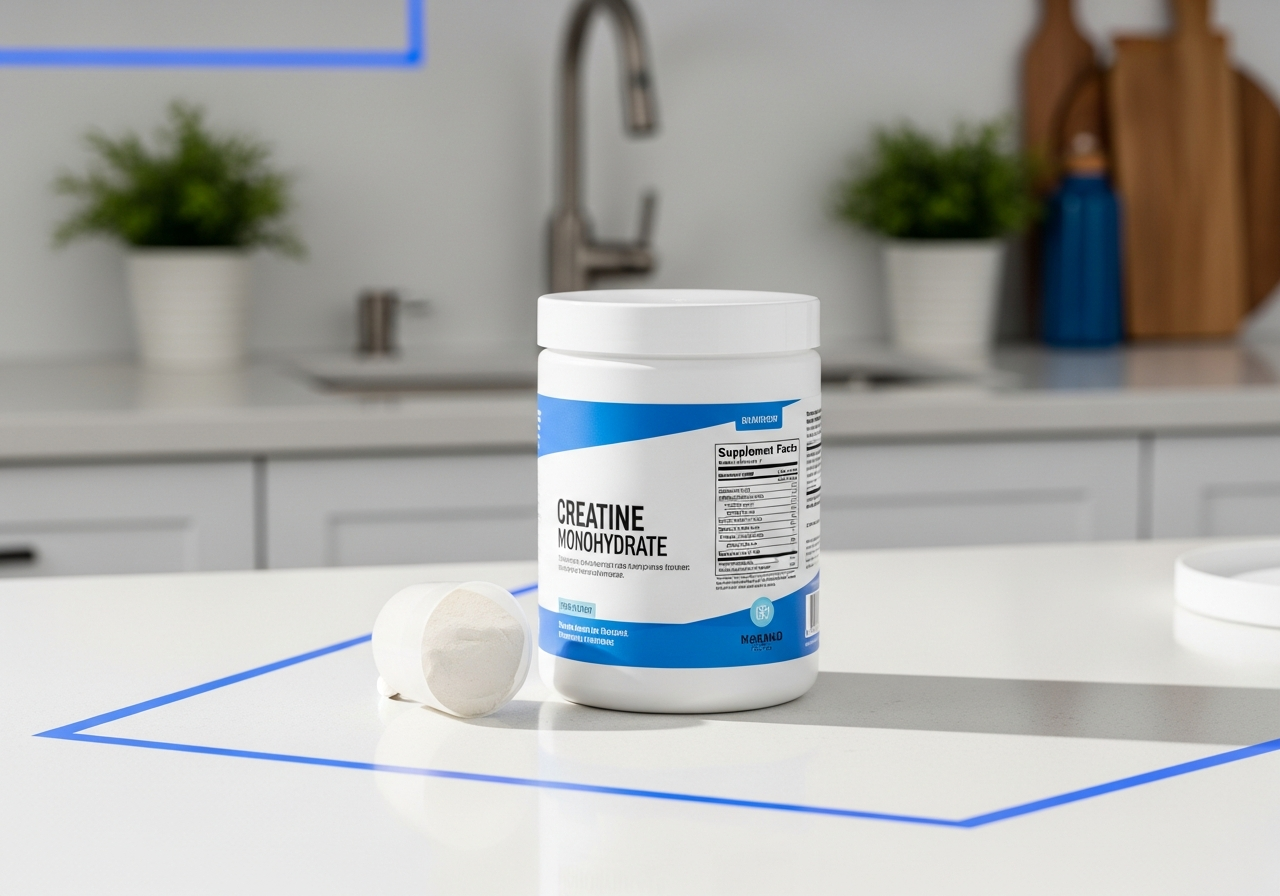
Is Creatine Approved in Canada? Health Canada, NPNs, and the FDA
By The Creatine Canada Research Team — Evidence-based supplement analysts
Yes—creatine is legal and approved for sale in Canada when it is marketed as a licensed natural health product, which means the product should carry a Health Canada Natural Product Number (NPN) on the label. Creatine is also widely legal in the United States, but it is not “FDA approved” like a drug; in both countries, the key issue is how the product is regulated, labelled, and manufactured.
Evidence-based · Cites 4 sources · Editorial standards
Key Takeaways
- Creatine is legal in Canada, and legitimate retail products should typically display a Health Canada NPN.
- In Canada, creatine is regulated as a natural health product, not as a prescription drug.
- In the United States, creatine is generally sold as a dietary supplement and is not FDA-approved as a drug.
- Creatine monohydrate is the most-studied, most evidence-based, and usually the best-value form.
- A standard maintenance dose is 3 to 5 g per day; loading is optional at about 20 g per day split into 4 doses for 5 to 7 days.
- When buying in Canada, prioritize an NPN, plain ingredient panels, reputable brands, and third-party testing where available.
Yes, creatine is approved for sale in Canada—but the approval you should look for is a Health Canada NPN
Yes, creatine is approved in Canada in the sense that it can be legally sold when it complies with Canadian natural health product rules and carries a valid Natural Product Number (NPN), which is the eight-digit licence number Health Canada assigns to approved natural health products. If you are asking, “is creatine approved in Canada?” the practical answer is: yes, legal Canadian creatine products are generally sold as licensed natural health products.
That distinction matters because many shoppers mix up three different questions: is creatine legal, is creatine regulated, and is creatine FDA approved? In Canada, creatine is legal and regulated. In the United States, creatine is also legal, but it is typically sold as a dietary supplement rather than an FDA-approved drug. “Approved” does not mean the same thing in both countries.
For Canadian buyers, the fastest legitimacy check is the label. A compliant product should typically show:
- An NPN somewhere on the package.
- Recommended use or purpose, such as supporting exercise performance.
- Recommended dose in grams per day.
- Risk information, including any cautions or known side effects.
- Ingredient details, ideally identifying creatine monohydrate clearly.
If a creatine product is marketed to Canadians but has no NPN, vague labelling, or exaggerated claims, that is a reason to slow down and verify what you are buying. This is especially important when buying from cross-border marketplaces or third-party sellers.
Creatine itself is one of the best-supported sports supplements in the literature. The 2017 ISSN position stand concluded that creatine monohydrate is the most effective nutritional supplement currently available for increasing high-intensity exercise capacity and lean mass during training. That science is separate from regulation, but it explains why creatine is so common in Canadian sports nutrition.
If you are brand shopping, compare plain monohydrate options in our best creatine rankings, browse the creatine product catalog, and use the creatine dosage calculator to match the label dose to your body size and goal.
What a Health Canada NPN actually means on creatine labels
A Health Canada NPN means the product has been licensed as a natural health product for sale in Canada and has met Canadian requirements for permitted ingredients, label claims, dosing instructions, and risk information. For the search query “Health Canada creatine NPN”, that is the core answer.
An NPN is not the same thing as a prescription-drug approval, and it is not a guarantee that every scoop is superior to every non-NPN product sold elsewhere. What it does mean is that the product has entered the Canadian regulatory system under a defined category. In practical terms, that gives Canadian consumers a cleaner paper trail and a clearer label standard than many shoppers realise.
When you inspect a creatine label in Canada, the NPN helps answer four buyer questions:
- Is this product legally marketed in Canada? An NPN strongly suggests yes.
- Are the claims constrained? The seller cannot legally market it with unlimited disease or drug-like promises.
- Is the dose disclosed? The label should tell you how much to take.
- Are cautions listed? The label should include relevant warnings or conditions of use.
What an NPN does not mean is that one creatine form has suddenly become better than the evidence says it is. A flashy product can still carry an NPN while using trendy positioning, blended formulas, or less cost-effective servings. That is why the best buying process is to pair regulatory legitimacy with evidence-based selection.
For most people, the shortest high-confidence checklist is:
- Choose creatine monohydrate.
- Look for a visible NPN if buying in Canada.
- Prefer a product with few ingredients, ideally just creatine monohydrate.
- Consider third-party testing for purity or banned-substance screening if you compete.
- Check the cost per 5 g serving, not just the tub price.
If you want help sorting label quality from marketing noise, our creatine brand reviews and creatine myths debunked guides are a useful next step. If you want the deeper regulation context, the related guide on Canadian supplement rules is also worth reading once published.
The bottom line is simple: in Canada, the NPN is the quickest real-world signal that a creatine product is regulated for legal sale as a natural health product.
Is creatine FDA approved? Not as a drug—and that wording is where many people get confused
No, creatine is generally not FDA approved as a drug, because in the United States it is usually sold as a dietary supplement, and dietary supplements are regulated differently from prescription or over-the-counter drugs. If someone asks, “is creatine FDA approved?”, the most accurate answer is: creatine is legal in the U.S., but it is not FDA-approved in the drug sense.
This matters because “FDA approved” has become internet shorthand for “safe” or “real,” but that is not how supplement regulation works. Drug approval requires manufacturers to prove safety and efficacy for a specific medical indication before marketing. Dietary supplements follow a different route: they are sold under supplement law, with rules around ingredients, labelling, manufacturing, and claims, but without the same pre-market drug approval process.
Canada works differently. Here, many sports supplements including creatine are sold under the natural health product framework, which is why Canadian shoppers commonly see an NPN where U.S. shoppers would not.
That difference produces a useful rule of thumb:
- Canada: ask whether the product has a valid NPN.
- United States: ask whether the brand follows good manufacturing practices, uses transparent labelling, and preferably offers third-party testing.
From a user perspective, this does not mean U.S. creatine is inherently inferior, nor does it mean every Canadian product is automatically better. It means the regulatory proof point differs by country.
The science supporting creatine is much more important than the “FDA approved” phrasing. According to Antonio et al. (2021) in JISSN, many common creatine fears and misconceptions are not supported by the totality of evidence, and creatine monohydrate remains the reference form because it is the most extensively studied. For athletes, the 2018 International Olympic Committee consensus lists creatine among the few supplements with strong evidence for certain performance applications.
If you train seriously, the right question is not “is creatine FDA approved?” but rather: is this exact product legal where I live, properly labelled, correctly dosed, and sourced from a trustworthy manufacturer?
Is creatine regulated and legal in Canada? Yes—and it is not a steroid, drug, or banned substance
Yes, creatine is regulated and legal in Canada, and no, creatine is not a steroid. Creatine is a naturally occurring compound made from amino acids and stored in muscle, where it helps regenerate adenosine triphosphate (ATP), the cell’s immediate energy currency during short, intense efforts.
That single mechanism explains both its legality and its popularity: creatine is not a hormone, not an anabolic steroid, and not a doping agent by itself. It works by helping your muscles restore energy faster between high-output contractions such as sprinting, lifting, jumping, and repeated intervals.
When people ask “is creatine regulated?”, the answer depends on the country, but in Canada the product category is clear enough for buyers: it sits within a natural health product framework rather than being treated like an illicit performance enhancer. That is why creatine is sold openly in Canadian supplement stores, pharmacies, and e-commerce channels.
For competitive athletes, legality has two layers:
- Civil or retail legality: can the product be sold to consumers? In Canada, yes, when compliant.
- Sport-governing-body legality: is the ingredient banned in competition? Creatine itself is generally not prohibited by major sport anti-doping codes.
That said, competitive athletes still need to care about contamination risk. A legal ingredient can be sold in a contaminated product if the manufacturer has poor quality control. That is why athletes in tested sport should strongly prefer brands with robust quality systems and, where possible, third-party testing for banned substances.
Common myths to dismiss immediately:
- “Creatine is basically a steroid.” False. Steroids alter hormone signalling; creatine supports rapid energy recycling.
- “If it improves performance, it must be banned.” False. Many legal supplements improve performance.
- “Natural means unregulated.” False. In Canada, natural health products are regulated.
If you want the mechanism explained from first principles, read what creatine is and what it does. If you want the myth-by-myth version, see creatine myths debunked. The practical conclusion is straightforward: creatine is legal and regulated in Canada, but product quality still matters because regulation does not remove the need for smart brand selection.
Why creatine works so well: the phosphocreatine system in plain English
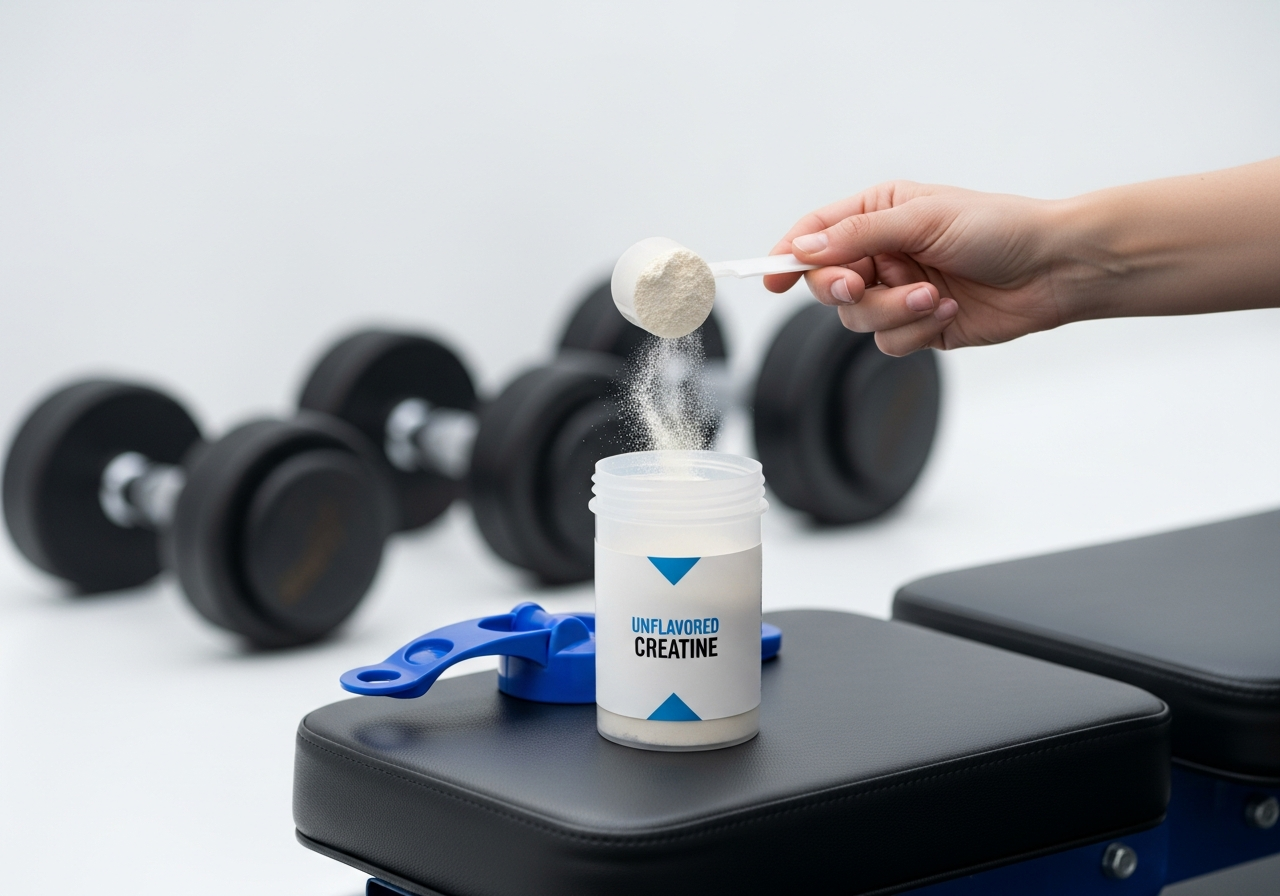
Creatine works because it helps your muscles replenish ATP faster during short, intense activity, which is why it reliably benefits strength, power, sprinting, and repeated high-effort exercise. That is the mechanism behind almost every evidence-based creatine benefit.
Your body stores creatine in muscle mostly as phosphocreatine, which is creatine bound to a phosphate group. During maximal or near-maximal effort, ATP is broken down rapidly to release energy. Phosphocreatine can donate its phosphate to help remake ATP quickly. In plain English: creatine helps your muscles recharge their fastest energy source.
That extra buffering matters most when the effort is brief and intense, such as:
- Heavy sets of 3 to 10 reps
- Sprinting
- Repeated jumps or explosive efforts
- High-intensity intervals with short recovery
- Team-sport bursts such as hockey shifts or soccer accelerations
Supplementing with creatine increases intramuscular creatine stores toward saturation. Saturation means your muscles are carrying near-maximal useful stores, so you have more phosphocreatine available when work gets hard. That does not make one set feel magically easy. What many people notice instead is the ability to get one more rep, maintain power a little longer, or recover better between efforts. Over weeks and months, those small performance advantages can translate into more training volume and better long-term gains.
The ISSN position stand remains the landmark summary here: creatine monohydrate is the most effective supplement for increasing high-intensity exercise capacity and lean mass during training. Examine’s creatine evidence summary reaches a similar practical conclusion.
Two useful beginner expectations:
- You may not “feel” creatine acutely the first day. It works by building muscle stores, not by acting like a stimulant.
- The visible benefits are indirect. Better training quality now can become more strength and muscle later.
This is also why monohydrate keeps winning. The mechanism is not mysterious, and the basic molecule does the job. More expensive forms often market around solubility, stomach comfort, or convenience, but they have not clearly outperformed plain creatine monohydrate in the evidence. For more on that, see our guide to best creatine rankings and the related piece on why monohydrate still wins.
How to buy creatine in Canada without getting fooled by labels, blends, or marketplace junk
The best way to buy creatine in Canada is to choose a plain creatine monohydrate product with a visible NPN, simple labelling, sensible dosing instructions, and a brand reputation you can independently verify. That one sentence will steer most people away from 90 percent of buying mistakes.
Use this step-by-step process:
- Start with the ingredient line. Look for creatine monohydrate as the main and ideally only active ingredient.
- Check for an NPN. This is the clearest Canada-specific legitimacy signal on-pack.
- Read the serving size in grams. A serving should make sense relative to the standard 3 to 5 g daily maintenance target.
- Watch for underdosed blends. “Performance matrix” or “pump complex” products often hide how much actual creatine you get.
- Calculate cost per 5 g. Cheap-looking tubs can be poor value if the serving is tiny.
- Prefer established brands. Reputable companies usually provide clearer lot, manufacturing, and contact information.
- If you compete, favour third-party testing. This helps reduce contamination risk.
Here is the most useful quick comparison for Canadian shoppers:
| What to compare | Better choice | Why it matters |
|---|---|---|
| Creatine form | Monohydrate | Most studied, most cost-effective, strongest evidence base |
| Canadian label status | NPN present | Signals the product is licensed for sale as a natural health product |
| Formula style | Single-ingredient | Makes dosing and value easier to judge |
| Testing | Third-party testing if available | Adds confidence in purity and contamination control |
| Format | Powder for value, capsules for convenience | Powder is usually cheaper per effective dose |
Be cautious with imported products sold through large marketplaces. Some are perfectly legitimate, but the odds of stale inventory, relabelled stock, or weak customer support are higher than with direct-from-brand or specialised Canadian retailers. If the seller cannot clearly explain what is in the tub, what the dose is, and why there is no NPN, keep moving.
To compare formats and brands, browse our creatine product catalog, our creatine brand reviews, and our guide to the best creatine rankings. If your main question is local availability, the related guides on where to buy creatine in Canada and provincial buying guides will be the most relevant.
The right creatine dose in Canada is the same as elsewhere: 3 to 5 g daily for most people, with optional loading
The evidence-based creatine dose does not change just because you are in Canada: 3 to 5 g of creatine monohydrate per day is the standard maintenance range for most adults, and loading at about 20 g per day split into 4 doses for 5 to 7 days is optional if you want faster saturation.
Those numbers come from mainstream creatine science and are consistent with major evidence summaries. The purpose of loading is not to make creatine work better overall; it is to fill muscle stores faster. If you skip loading and take 3 to 5 g daily, you still get there—just more gradually.
Use this practical table:
| Body weight / goal | Simple daily plan | What to expect |
|---|---|---|
| Under 60 kg, general fitness | 3 g daily | Steady saturation over several weeks |
| 60 to 90 kg, strength or muscle | 3 to 5 g daily | Best all-purpose approach for most people |
| Over 90 kg, strength or power focus | 5 g daily | Practical upper end of standard maintenance |
| Any body weight, want faster results | 20 g daily in 4 x 5 g doses for 5 to 7 days, then 3 to 5 g daily | Faster saturation, but more chance of stomach upset if taken all at once |
Beginner rule: pick consistency over perfection. The most common reason people think creatine “doesn’t work” is that they forget doses, switch products constantly, or expect stimulant-like effects in the first few workouts.
Week-by-week, a realistic timeline looks like this:
- Days 1 to 7 with loading: muscle stores rise quickly; some people notice a small body-weight increase from intracellular water.
- Weeks 2 to 4 without loading: saturation builds gradually; gym performance effects become more noticeable.
- Weeks 4 to 8: better training quality can start showing up as improved strength, rep performance, or lean-mass progress.
If you want a personalised estimate, use our creatine dosage calculator and see the related guide on how much creatine per day. If you want the exact loading protocol, the related guide on the creatine loading phase goes deeper.
For nearly everyone, there is no need to cycle creatine. Daily maintenance is the evidence-based default.
How to take creatine properly: timing matters less than daily consistency
The best time to take creatine is the time you will remember to take it every day, because total daily intake and long-term muscle saturation matter more than precise timing. If you are wondering whether to take creatine before or after a workout, the real answer is that consistency beats clock-watching.
Here is the simplest step-by-step method for most people:
- Measure 3 to 5 g of creatine monohydrate.
- Mix it in water, a shake, or another drink you already use regularly.
- Take it daily, including rest days.
- If doing a loading phase, split 20 g into 4 smaller 5 g doses through the day.
- Drink to thirst and maintain normal hydration habits; you do not need to force extreme water intake.
Good mixing options include water, whey shakes, smoothies, or a meal-adjacent drink. Creatine monohydrate has no calories and generally pairs well with common sports nutrition staples. If you dislike grit, warm liquid can improve dissolving, and micronized powder often mixes more easily.
Common timing questions, answered directly:
- Before workout? Fine.
- After workout? Fine.
- On rest days? Yes, still take it.
- With food? Optional, but some people tolerate it better that way.
- With coffee? Usually fine.
If creatine upsets your stomach, the fix is usually practical rather than dramatic:
- Take smaller divided doses.
- Take it with food.
- Use plain monohydrate rather than a busy pre-workout blend.
- Make sure you are not accidentally taking much more than the label says.
Helpful next reads include how to take creatine, how to mix creatine, and the related guides on when to take creatine, creatine with or without food, and creatine on rest days.
The short version: take the right dose every day, in any routine you can stick to, and do not overcomplicate timing.
Who creatine is actually for: beginners, women, older adults, vegetarians, and serious athletes
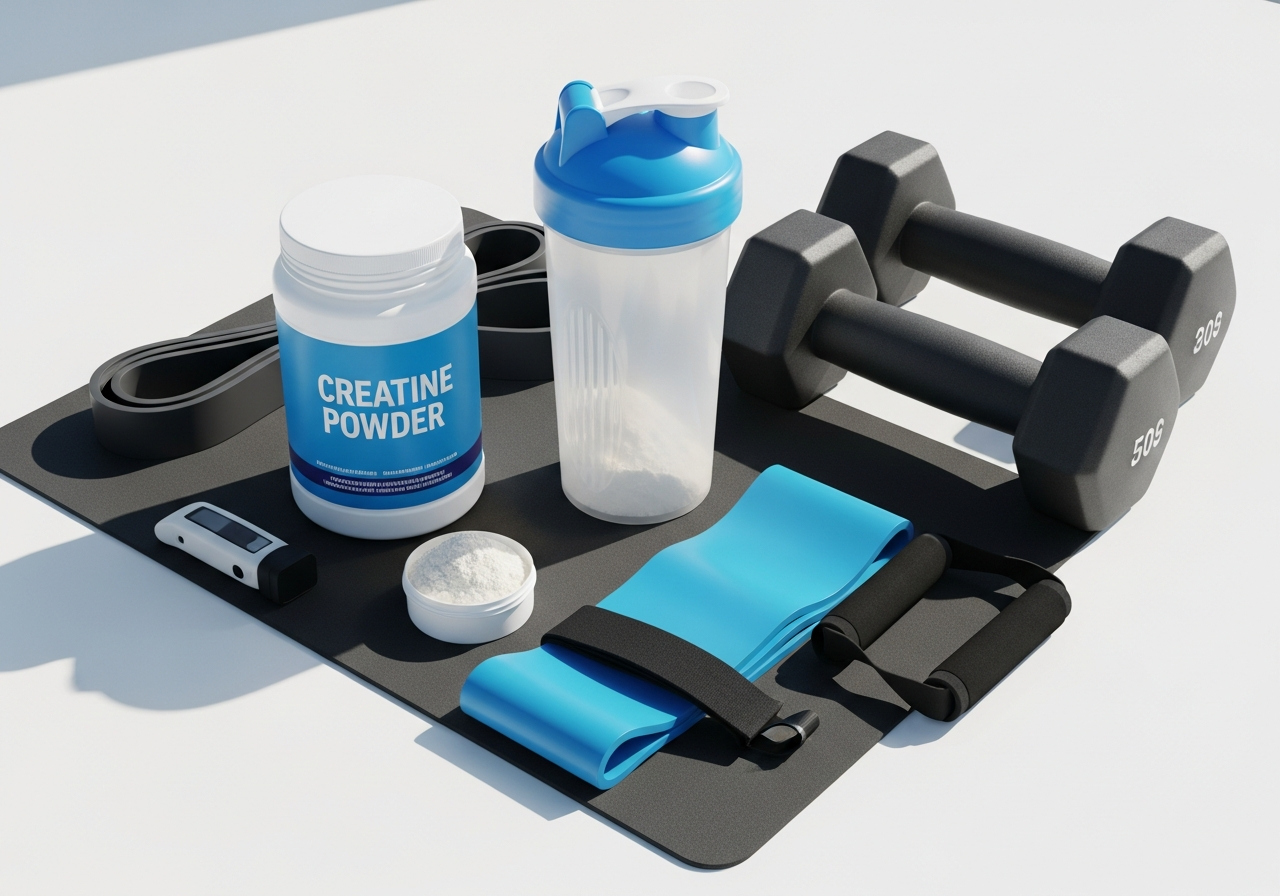
Creatine is for far more than bodybuilders: it is one of the few supplements that makes sense for many beginners, women, older adults, vegetarians, and athletes in power- and sprint-dependent sports. The strongest evidence is still in exercise performance and training adaptation, but the practical user base is broad.
Beginners can absolutely use creatine. In fact, beginners often benefit because better recovery between hard efforts can help them accumulate quality training sooner. A beginner does not need a complicated stack—just plain monohydrate and consistency.
Women can use creatine safely under the same general dosing framework as men. Creatine does not “bulk women up” by itself. What some women notice early is a small increase in scale weight from water being drawn into muscle, not from fat gain. That is one reason the related guide on creatine for women matters.
Older adults may also benefit, especially when creatine is paired with resistance training. The mechanism is still energy support inside muscle, but the real-world goal is often preserving strength, function, and lean tissue rather than chasing a bigger bench press.
Vegetarians and vegans often respond especially well because their baseline dietary creatine intake is usually lower than that of regular meat eaters. Lower starting stores can mean a bigger response to supplementation.
Athletes in hockey, football, rugby, sprinting, CrossFit, basketball, soccer, swimming, and other repeated-effort sports are classic strong-fit users. The IOC consensus recognises creatine among the better-supported performance supplements in sport nutrition.
Who should pause and ask a clinician first?
- People with known kidney disease
- People who have been told to follow special medical fluid or renal protocols
- Pregnant or breastfeeding individuals, because evidence is still limited for routine supplementation guidance in those contexts
- Anyone taking medication or managing a chronic condition who wants personalised advice
For population-specific guidance, see related guides on creatine for beginners, creatine for women, creatine for older adults, creatine for vegetarians, and who should not take creatine. The practical message is that creatine is not just for advanced lifters; it is one of the most broadly useful evidence-based supplements when used appropriately.
Is creatine safe? For healthy people, the evidence is reassuring—but side effects and cautions still matter
Yes, creatine is generally considered safe for healthy people at standard doses, and this is one of the best-supported conclusions in sports nutrition. That said, “safe” does not mean “side-effect free for every person” or “appropriate in every medical situation.”
The evidence base is unusually strong compared with most supplements. The ISSN position stand and the 2021 JISSN review on common misconceptions both support creatine’s overall safety profile in healthy users when consumed in recommended amounts.
Most side effects are mild and manageable:
- Stomach upset or loose stools: more likely if you take too much at once.
- Temporary weight gain: often from water moving into muscle during saturation.
- Grittiness or poor dissolving: a comfort issue, not a safety issue.
Myths worth debunking directly:
- “Creatine damages healthy kidneys.” Current evidence does not support this claim in healthy people at normal doses, but people with existing kidney disease should get medical advice first.
- “Creatine causes dehydration or cramps.” The popular myth is not well supported by the evidence.
- “Creatine causes fat gain.” It can increase body weight, but typically through water retention in muscle and, over time, potentially more lean mass—not body fat by itself.
- “You need to cycle off creatine.” Routine cycling is not required.
One lab-related nuance matters: creatine use can increase creatinine, which is a breakdown product measured on blood tests. That can confuse people into thinking creatine is harming the kidneys when the result may simply reflect supplementation. This is why context matters in lab interpretation.
If you experience side effects, troubleshoot in this order:
- Reduce to 3 to 5 g daily if you were taking more.
- Split the dose or take it with food.
- Switch to a plain monohydrate product without extra stimulants or sugar alcohols.
- Review hydration, overall diet, and whether another supplement is the real issue.
For deeper dives, see the related guides on is creatine safe, creatine digestive side effects, is creatine bad for your kidneys, does creatine cause bloating, and does creatine make you gain weight.
The most common Canadian creatine mistakes—and how to avoid each one
The biggest Canadian creatine mistake is assuming that if a product is listed online, it must be properly regulated, properly dosed, and worth buying. That assumption causes most avoidable problems.
Here are the mistakes we see most often:
- Ignoring the NPN. In Canada, this is one of the fastest quality-screening steps you can take.
- Paying extra for exotic forms. Monohydrate is still the evidence benchmark and usually the value leader.
- Taking random scoop sizes. “One heaping scoop” is not a dosage strategy. Use grams.
- Expecting a stimulant effect. Creatine is not pre-workout. It works through saturation.
- Quitting after a week. Especially without loading, the benefits take time.
- Buying blends instead of plain creatine. Blends make it harder to know your actual dose.
- Confusing water retention with fat gain. Early scale changes are often intracellular water, not body fat.
Fixes are straightforward:
- Choose a plain monohydrate product with an NPN.
- Take 3 to 5 g daily.
- Use a food scale or verified scoop size if needed.
- Stay consistent for at least several weeks.
- Judge success by training performance, recovery, and body-composition trends, not just one morning weigh-in.
A smart buyer mindset is especially important in Canada because shoppers often compare local NPN products with imported marketplace listings that may look cheaper at first glance. Once you factor in shipping, taxes, weaker customer support, and uncertain compliance, the “deal” is often not a deal.
If you are stuck choosing between options, start with our best creatine rankings, browse creatine brand reviews, and use the creatine dosage calculator so you know exactly what dose you are trying to buy. If you are unsure whether a claim is real or just marketing, our creatine myths debunked page is built for that.
The core lesson is simple: the right product and the right routine matter more than hype, flavour, or trend-driven packaging.
Bottom line: creatine is legal and regulated in Canada, but the smartest buyers still verify the label
Yes, creatine is approved in Canada in the practical consumer sense that compliant creatine products can be legally sold as licensed natural health products, and the label signal you should look for is a Health Canada NPN. If you only remember one point from this guide, remember that one.
Here is the concise decision framework:
- Is creatine legal in Canada? Yes.
- Is creatine regulated? Yes, in Canada it is regulated within the natural health product framework.
- Is creatine FDA approved? Not as a drug; in the U.S. it is generally sold as a dietary supplement.
- What form should you buy? Creatine monohydrate.
- How much should you take? Usually 3 to 5 g daily, with optional loading at about 20 g daily split into 4 doses for 5 to 7 days.
- What should Canadian buyers check first? NPN, simple ingredients, reputable brand, and ideally third-party testing if competing.
Creatine’s reputation is stronger than most supplements because the evidence is stronger than most supplements. It works through a clear and well-established mechanism, it has decades of practical use behind it, and it remains one of the best-supported options for improving high-intensity training performance and helping you get more from resistance training over time.
For your next step, the most useful reads are usually how to take creatine, the related guide on how much creatine per day, and our page on the best creatine in Canada. If your main concern is safety, the related guide on is creatine safe should be your next click.
The final takeaway is refreshingly boring in the best way: buy a legitimate monohydrate product, confirm the NPN if you are shopping in Canada, take the correct dose daily, and ignore the marketing circus.
Creatine in Canada: the numbers that matter
- 3–5 g/day Standard maintenance dose — The evidence-based daily range for most adults using creatine monohydrate.
- 20 g/day Typical loading protocol — Usually split into 4 doses for 5 to 7 days to reach saturation faster.
- 5–7 days Loading timeline — A standard loading phase fills muscle creatine stores more quickly than maintenance-only dosing.
- 8 digits Length of a Canadian NPN — Natural Product Numbers are eight-digit licence numbers shown on compliant natural health product labels.
Frequently Asked Questions
Is creatine approved in Canada?
Yes, creatine is approved for legal sale in Canada when it is licensed as a natural health product and marketed in compliance with Health Canada rules. For most consumers, the practical proof point is a visible Natural Product Number, or NPN, on the label.
Is creatine legal in Canada?
Yes, creatine is legal in Canada. It is commonly sold through supplement retailers, pharmacies, and online stores, provided the product complies with Canadian natural health product requirements and is properly labelled for the Canadian market.
What is a Health Canada NPN on creatine?
A Health Canada NPN is an eight-digit Natural Product Number that shows a natural health product has been licensed for sale in Canada. On creatine, it is one of the clearest signs that the product is being marketed through the proper Canadian regulatory pathway.
Is creatine FDA approved?
No, creatine is not typically FDA approved as a drug. In the United States, creatine is generally sold as a dietary supplement, which means it is regulated differently from prescription and over-the-counter drugs that go through formal FDA approval.
Is creatine regulated in Canada?
Yes, creatine is regulated in Canada. In practice, many retail creatine products are sold under the natural health product framework, which includes licensing, labelling, dosing instructions, and risk information requirements.
Do all creatine products sold online in Canada have an NPN?
No, not every product you see online will necessarily display a valid NPN, especially on large marketplaces or cross-border listings. That is exactly why Canadian buyers should check the label carefully rather than assuming every listing is compliant.
What type of creatine should I buy in Canada?
Creatine monohydrate is the best default choice in Canada. It is the most studied form, the one most consistently supported by sports nutrition evidence, and usually the most cost-effective option per effective daily dose.
How much creatine should I take per day?
Most people should take 3 to 5 g of creatine monohydrate per day. If you want faster saturation, a common loading approach is about 20 g per day split into 4 smaller doses for 5 to 7 days, followed by 3 to 5 g daily.
Can athletes in tested sport use creatine?
Yes, creatine itself is generally not banned in major tested sports. However, athletes should still be careful about product quality and contamination risk, which is why third-party tested products are often the smartest choice for competitive use.
Do you need to cycle creatine in Canada?
No, you do not need to cycle creatine just because you are in Canada or because the product has an NPN. Standard evidence-based use is simple daily supplementation, typically 3 to 5 g per day, without mandatory on-off cycling.