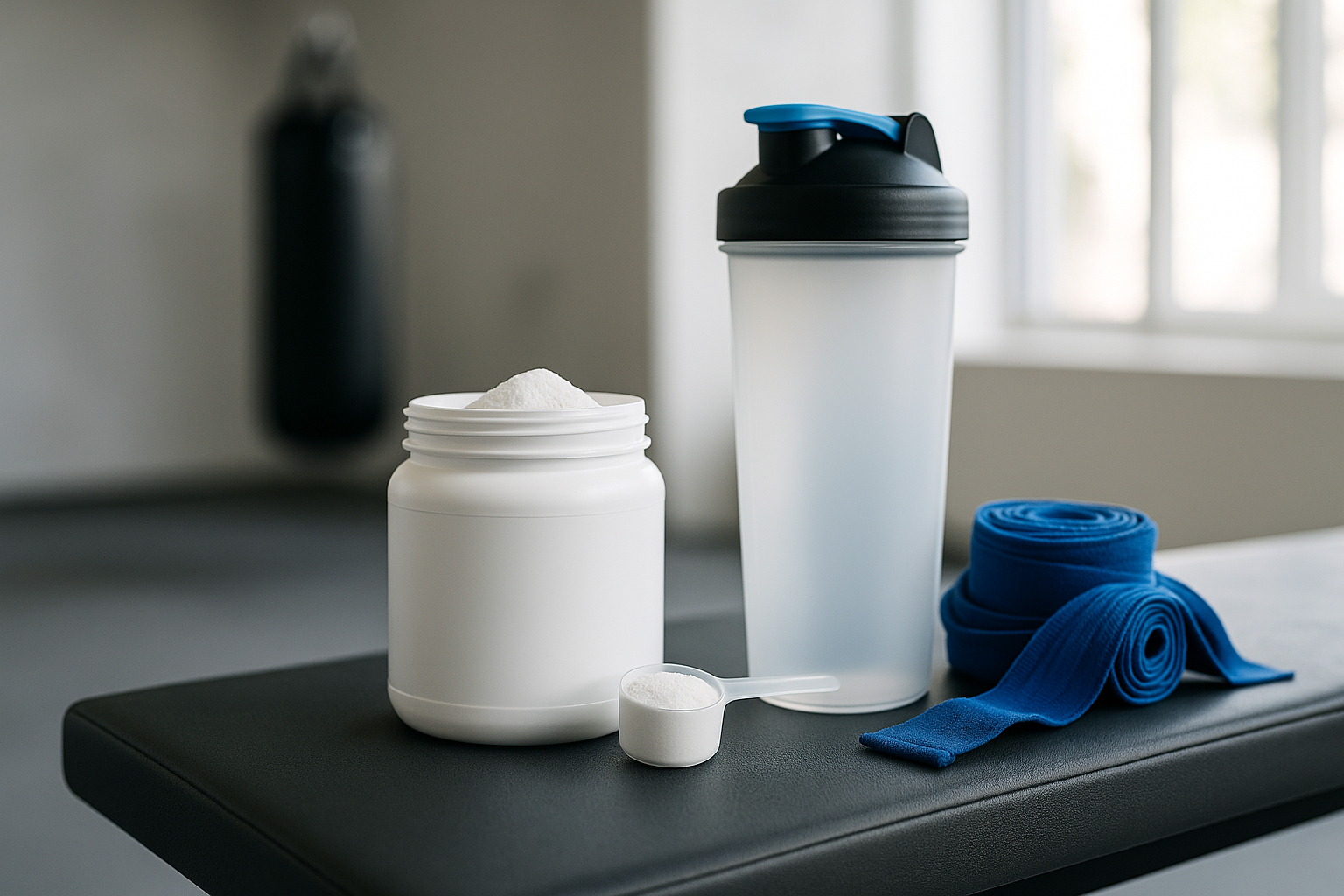
Creatine for Boxing: Power, Recovery, and the Weight Class Question
By The Creatine Canada Research Team — Evidence-based supplement analysts
Yes—creatine can help boxing, especially for repeated explosive efforts, hard pad rounds, sprint-style conditioning, and strength work, but its biggest downside for boxers is temporary water-weight gain that can matter in strict weight classes. For most boxers, 3 to 5 g of creatine monohydrate daily is the evidence-based sweet spot, with loading used only when faster saturation is worth the scale trade-off.
Evidence-based · Cites 4 sources · Editorial standards
Key Takeaways
- Creatine helps boxers most in repeated high-intensity efforts, not in pure aerobic endurance.
- Creatine monohydrate is the most studied, most effective, and usually the best-value form.
- A standard maintenance dose is 3-5 g daily; loading is optional, not required.
- Expect possible early scale gain from water stored inside muscle, not body fat.
- If you compete by weight class, avoid starting creatine right before weigh-ins.
- Take it every day, including rest days, because muscle saturation matters more than timing.
- Choose Canadian products with an NPN and, ideally, third-party sport testing if you compete.
Does creatine help boxing? Yes—if your boxing depends on repeat power, not just steady-state cardio
Yes, creatine for boxing can be genuinely useful because boxing is a repeated-explosive sport, not just an endurance sport. Every hard combination, counter, burst on the bag, scramble in the clinch, and sprint between exchanges relies heavily on the phosphagen system—the body's fastest energy system—which uses phosphocreatine, the stored form of creatine in muscle, to rapidly regenerate ATP, the immediate fuel for contraction.
That matters because boxing performance is rarely about one isolated punch. It is about producing high force again and again across rounds while fatigue builds. Creatine tends to help most when training or competition includes:
- short explosive combinations
- repeated flurries late in rounds
- heavy bag intervals and pad rounds
- sprint-based roadwork or assault bike intervals
- strength and power sessions in the gym
- high-intensity sparring with incomplete recovery
The evidence base on creatine is strongest for strength, power, repeated sprint ability, and lean mass support rather than for direct punch-speed studies in boxers specifically. That means the best evidence-backed claim is this: creatine helps the physical qualities that underpin boxing performance, even if not every boxing-specific outcome has been measured directly in elite fighters.
The 2017 International Society of Sports Nutrition position stand concluded that creatine monohydrate is the most effective nutritional supplement available for increasing high-intensity exercise capacity and lean body mass during training. That finding is highly relevant to boxing, where repeated high-output work decides rounds and training quality. See Kreider et al. (2017), ISSN Position Stand.
Where boxers need more nuance is weight class management. Creatine commonly increases body mass early on because it pulls more water into muscle cells as stores rise. That is not fat gain, and for many athletes it can improve training quality, muscle fullness, and recovery. But if you are a boxer trying to make a tight number on the scale, even a small bump in body weight can become a real problem.
So the short answer is simple: creatine boxing training makes sense for many athletes, especially in off-season, skill-plus-strength blocks, and for fighters who are not cutting aggressively. If you want the wider basics first, read best creatine rankings and our creatine dosage calculator.
How creatine works in a boxer’s body: faster ATP recycling, better repeat efforts, and more quality work
Creatine helps boxing by increasing intramuscular phosphocreatine stores, which lets your muscles regenerate ATP faster during short, intense efforts. In plain English, that means you can often hit hard, explode, and repeat demanding efforts with slightly less drop-off.
Here is the mechanism that matters most for combat athletes boxing:
- You supplement creatine. Over days to weeks, muscle creatine stores rise toward saturation.
- More phosphocreatine becomes available. Phosphocreatine donates a phosphate to help remake ATP quickly.
- ATP is restored faster during intense work. That supports brief maximal or near-maximal efforts.
- You maintain output a little better across repeated bouts. Think later reps, later sprints, later exchanges, and later rounds in hard training.
- Over time, you may train harder or recover better between efforts. That indirect effect is one reason creatine often improves strength and lean mass over weeks and months.
For boxing, the practical takeaway is that creatine is usually not a "magic punch-power powder." It is more like a training-capacity tool. It can support more quality in the sessions that build boxing performance: explosive bag rounds, medicine-ball throws, Olympic-lift variations, trap-bar pulls, jumps, and repeated sprint intervals.
Creatine may also help with glycogen-related training capacity and cell hydration, and some research suggests it can support recovery from hard training. The evidence for direct reductions in soreness is mixed, but enough athletes notice better session-to-session readiness that it remains one of the few supplements the International Olympic Committee consensus on dietary supplements recognises as evidence-based for certain performance goals.
There is also interest in creatine for brain and neuroprotection, which is relevant in fight sports, but that area remains more emerging than the established evidence for muscle performance. It is reasonable to be interested in that possibility without overstating it.
If you want the broader science foundation, start with creatine product catalog for formats, then pair this page with guides on creatine brand reviews and creatine myths debunked.
A self-contained summary: creatine and boxing performance fit well together because boxing repeatedly taxes the high-energy phosphate system, and creatine improves the speed at which that system can restore immediate muscular energy.
Who should use creatine for boxing—and who should think twice before adding it
Creatine for boxers makes the most sense for athletes who need more power, better repeated-effort capacity, or more productive strength training, and it makes less sense when making weight is the only priority in the next one to three weeks. Your context matters more than the headline.
Boxers who often benefit most include:
- Beginners who are starting a proper strength and conditioning plan and want a simple, proven supplement.
- Amateur boxers in hard training blocks who do repeated bag work, pads, sparring, and gym work.
- Athletes moving up a class or not cutting aggressively, where small water-weight increases are less problematic.
- Women boxers, who can use the same evidence-based dosing as men; the main difference is body size and personal tolerance, not a fundamentally different supplement.
- Vegetarian or vegan athletes, who may start with lower baseline creatine stores and sometimes notice stronger benefits.
- Masters and older combat athletes, who may value support for strength, training quality, and lean mass retention.
Boxers who should be more cautious include:
- fighters already close to a difficult weight cut
- athletes with a weigh-in only hours before competing
- anyone with kidney disease or a clinician-advised reason to avoid it
- athletes who regularly get stomach upset from supplements and need a slower introduction
The 2021 JISSN review on common questions and misconceptions about creatine notes that many fears about safety, dehydration, and cramping are overstated or unsupported in healthy people. See Antonio et al. (2021). That does not mean every boxer should take it; it means the decision should be strategic, not fear-based.
For a boxer in camp, the best question is not "Is creatine good or bad?" The best question is "Does creatine help my current phase?" In an off-season or skill-strength phase, the answer is often yes. In the final days before weigh-in, the answer is often no.
If you are totally new, a sensible next read is the related beginner framework on dosage and timing, especially if you also train strength: creatine dosage calculator and best creatine rankings.
How to take creatine for boxing: the simplest step-by-step plan that actually works
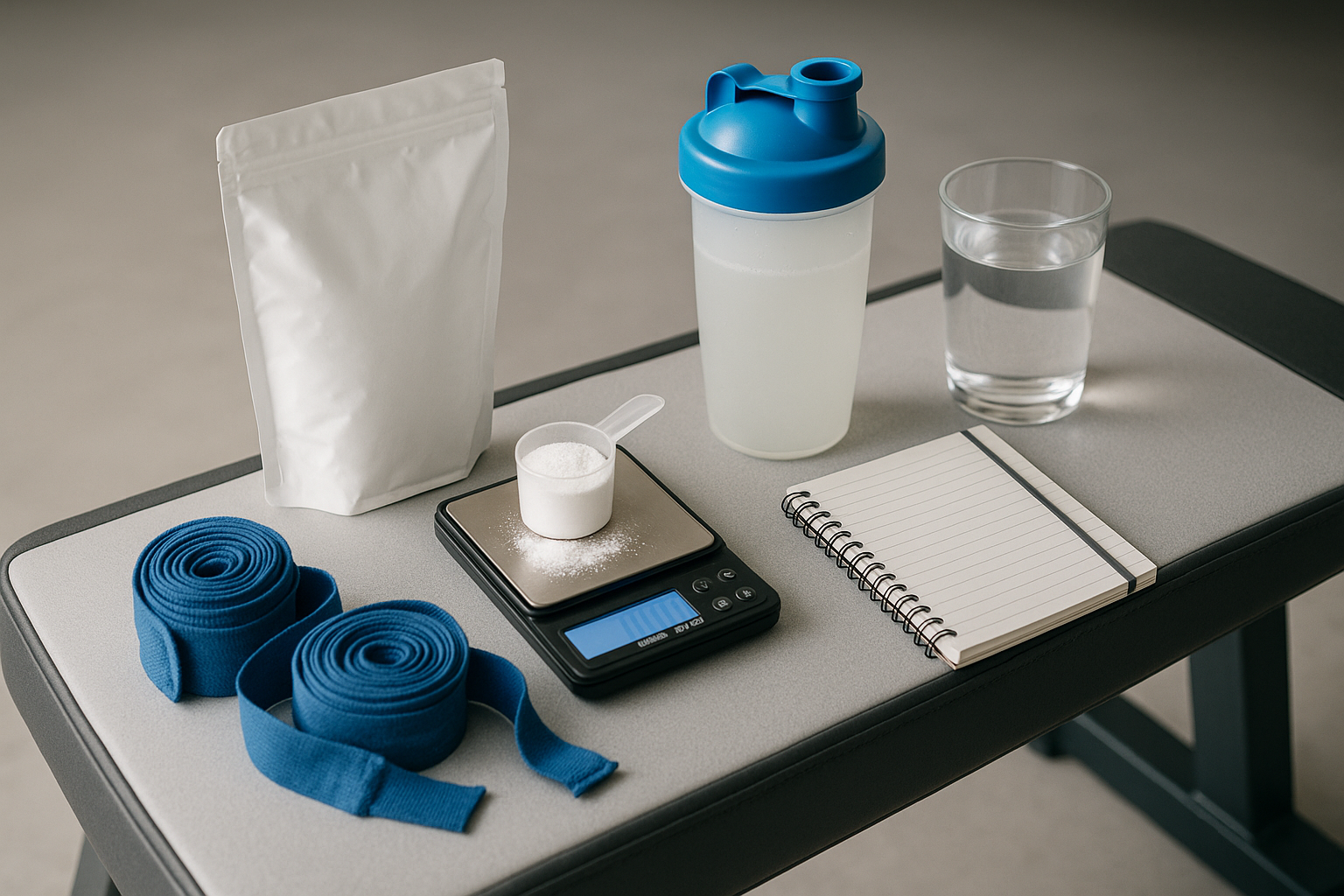
The best way to take creatine for boxing is simple: use creatine monohydrate, take 3 to 5 g every day, and keep taking it consistently through training days and rest days. Consistency matters more than fancy timing.
- Choose creatine monohydrate. It is the most studied and usually the most cost-effective form.
- Pick your dose. Most boxers do well with 3 to 5 g daily. Lighter athletes often use 3 g; larger athletes or athletes doing heavy strength work often use 5 g.
- Decide whether to load. Loading means about 20 g per day split into 4 doses for 5 to 7 days, then switching to maintenance. It saturates muscles faster, but it is more likely to increase scale weight quickly and can bother digestion.
- Take it with water or a meal. It can go in a shaker, smoothie, or protein shake. It does not need to be taken pre-workout to work.
- Keep taking it on rest days. Creatine works by building and maintaining muscle stores, not by giving a same-day stimulant effect.
- Track body weight and training output. Watch your morning scale weight, round quality, sprint repeatability, and gym numbers.
Good boxing-specific use cases:
- Off-season: easiest time to start, because minor scale fluctuations matter less.
- 8+ weeks out from a bout: enough time to test your response before the serious cut begins.
- Strength-focused phase: likely one of the highest-return periods for creatine.
Less ideal times to start:
- the final 7 to 14 days before weigh-in
- during a severe calorie cut when you are already stressed by water manipulation
- the week of travel if you have never used it before
Micronized creatine may mix a bit more smoothly, but standard monohydrate works just as well. If you want a more detailed protocol, use the creatine dosage calculator, compare formats in the creatine product catalog, and review shortlists in the best creatine rankings.
A practical one-sentence answer: for creatine boxing training, the best protocol for most athletes is 3 to 5 g of creatine monohydrate daily for weeks to months, started well before competition and adjusted around weight-class demands.
Exact creatine dosing for boxing by body weight, goal, and timeline
The right creatine dose for boxing depends more on body size, timeline, and weight-class pressure than on the sport label alone. For most boxers, 3 to 5 g daily is enough to maintain strong muscle creatine stores once saturation is reached.
| Boxer profile | Primary goal | Suggested protocol | Best use case | Main caution |
|---|---|---|---|---|
| Under 60 kg | General training support | 3 g daily | Skill plus conditioning blocks | Watch scale if making a tight class |
| 60-85 kg | Power, repeat efforts, gym strength | 3-5 g daily | Most amateur and recreational boxers | Minor early water-weight increase possible |
| Over 85 kg | Strength and repeated explosive output | 5 g daily | Heavier boxers or strength-focused phases | Split dose if digestion is sensitive |
| Any body weight | Fast saturation | 20 g daily split into 4 x 5 g for 5-7 days, then 3-5 g daily | Off-season or far from weigh-in | More GI upset and quicker scale increase |
| Any body weight | Lowest-risk gradual approach | 3-5 g daily with no loading | Most boxers, especially weight-conscious athletes | Takes longer to fully saturate |
What timeline should you expect?
- With loading: muscle stores rise quickly, often within about a week.
- Without loading: full saturation commonly takes several weeks, often around 3 to 4 weeks.
Simple examples:
- A 57 kg amateur boxer in a busy technical camp: start with 3 g daily and monitor morning body weight.
- A 71 kg boxer in an off-season power block: 5 g daily is reasonable if body weight is not tightly restricted.
- An 89 kg heavyweight building strength: 5 g daily is the normal evidence-based choice.
The ISSN position stand supports both loading and lower daily dosing strategies, with the practical difference being speed of saturation rather than whether creatine "works." If you want a personalised estimate, the creatine dosage calculator is the easiest place to start.
The important point for fighters is this: higher doses are not better once muscle stores are saturated; they are mostly more likely to waste product or increase stomach issues. For a deeper general dose breakdown, pair this with our related guide on how much creatine per day.
When to take creatine in boxing camp, and when to pause because the weigh-in matters more
The best time to use creatine in boxing is usually during training phases where performance development matters more than short-term scale manipulation. If you are far from a bout, daily use is straightforward; if you are near weigh-in, strategy matters.
Daily timing: take creatine whenever you can be consistent. Post-workout, with breakfast, or with a recovery shake are all fine. There is no strong evidence that a precise minute-by-minute window is necessary. Long-term saturation is what drives results.
Camp timing by phase:
- Off-season or general prep: excellent time to start or continue.
- Strength and power block: high-value use case because gym work, sprints, and explosive intervals can benefit most.
- Technical/sparring-heavy phase: still useful if body weight is under control.
- Final cut phase: many boxers reduce or pause creatine if every bit of water-weight matters.
A practical weigh-in framework:
- If you are comfortably under your class, creatine may be worth keeping in.
- If you are a few kilos over and need a real cut, creatine may become more trouble than benefit.
- If your weigh-in is same day or only a few hours before competing, be especially conservative.
This is where creatine for fight sports differs from generic gym advice. A bodybuilder or rugby player may welcome extra intracellular water and training volume. A boxer trying to scrape into a class may not.
Also remember that stopping creatine does not instantly remove stored water or reset muscle stores overnight. If you plan to pause, do it with enough time to observe how your body weight trends. That response is individual.
For many boxers, the best compromise is: use creatine throughout the majority of camp, then reassess in the last 2 to 3 weeks based on body-weight trajectory, weigh-in timing, and coach input. This is especially relevant for athletes searching creatine for combat athletes boxing because weight-class sports always require a different level of planning.
If you need a deeper timing explainer, see the related guides on when to take creatine and creatine on rest days, and use our creatine dosage calculator to keep the day-to-day protocol simple.
What results boxers can realistically expect, week by week
Creatine works gradually, and the first thing many boxers notice is not a dramatic punch-power spike but better repeatability in hard training. If you want realistic expectations, think in terms of weeks, not a single scoop.
Week 1: If you load, you may notice body weight rise quickly and muscles feel a bit fuller. Some athletes also notice improved gym performance or better pop in repeated efforts. Without loading, changes may be subtle.
Weeks 2 to 4: This is when many non-loading users begin to feel the supplement "kick in." Common signs include less drop-off across bag intervals, better repeat sprint quality, an extra rep or two in strength work, or slightly better explosiveness late in the session.
Weeks 4 to 8: The bigger benefit is usually cumulative. Because creatine supports higher-quality training, strength and lean mass improvements can become more noticeable. In boxing, that may show up as:
- stronger shots late in combinations
- less fade across pad or bag rounds
- better output in hill sprints, bike intervals, or sled work
- small but meaningful progress in lifts, jumps, or medicine-ball throws
Months 2 to 3: This is where the indirect value becomes clearest. Creatine rarely transforms performance in isolation, but it can help you stack more productive weeks of training.
How to tell if creatine is working for boxing:
- your round quality stays higher deeper into sessions
- your strength numbers improve faster than before
- your body weight rises slightly without visible fat gain
- you feel less "flat" during high-intensity conditioning
How to tell if it may not be worth it right now:
- scale weight increase creates weight-cut problems
- you notice no training benefit after several consistent weeks
- stomach issues persist despite splitting the dose
The Examine evidence summary and the ISSN position stand both support creatine’s broad benefits for high-intensity performance and training adaptation, but individual response still varies. See Examine.com — Creatine evidence summary.
The honest bottom line is this: does creatine help boxing? Usually yes, but mainly by improving the repeated high-intensity training qualities that boxing relies on, not by acting like an instant stimulant or skill enhancer.
Safety, side effects, hydration, and kidney confusion: what boxers actually need to know
Creatine monohydrate is widely considered safe for healthy adults when taken at evidence-based doses, but boxers should still understand the real side effects and the common misunderstandings. The most common issue is mild water-weight gain, not organ damage.
Likely and normal:
- Scale weight increase: often due to more water stored inside muscle.
- Fuller muscles: usually part of the same intracellular water shift.
- Occasional stomach upset: more common with loading or taking too much at once.
Less supported than people think:
- dehydration
- muscle cramps
- kidney damage in healthy users at normal doses
The 2021 JISSN misconceptions paper directly addresses many of these claims, and the broader research record does not support the idea that creatine is inherently harmful to kidneys in healthy people using recommended doses. Where confusion arises is bloodwork: creatine use can increase creatinine, a breakdown marker often used in kidney tests, without that necessarily meaning kidney injury. That is why context matters.
Who should speak with a clinician first?
- people with known kidney disease
- people on medications where a clinician advises caution
- pregnant or breastfeeding athletes
- anyone with a medical condition requiring lab monitoring
Hydration for boxers: creatine does not "dehydrate you" in the usual sense, but boxing training already causes heavy sweat losses. Drink normally to thirst plus training needs, and be extra organised during hot sessions, hard sparring, and sauna-heavy cut periods. Creatine is not a substitute for proper fluids and electrolytes.
How to reduce side effects:
- skip loading if you are sensitive
- split 5 g into two smaller servings
- take it with food or after training
- use plain monohydrate from a reputable brand
For deeper safety reading, pair this article with related guides such as is creatine safe, does creatine make you gain weight, and creatine digestive side effects. On-site, our creatine myths debunked page also covers the biggest misconceptions clearly.
Boxing creatine myths and mistakes: what fighters get wrong most often
The biggest creatine mistake in boxing is treating it like either a miracle or a disaster. In reality, it is a useful tool with a clear upside for training and a clear trade-off for weight classes.
Myth 1: Creatine is only for bodybuilders.
False. Creatine is best known for gym performance, but the mechanism—faster ATP regeneration during repeated explosive efforts—fits boxing and other fight sports very well.
Myth 2: Creatine makes you fat.
False. Early weight gain is usually water retained inside muscle, not body fat. If calories are controlled, creatine itself does not make you gain fat.
Myth 3: Creatine ruins cardio.
Too simplistic. Creatine is not an endurance supplement first, but it can support repeated high-intensity efforts within a mixed sport like boxing. The real issue is whether extra water weight offsets the benefit for your specific class and style.
Myth 4: You must load or it will not work.
False. Loading saturates faster, but a daily 3 to 5 g maintenance-style protocol still works.
Myth 5: You need to cycle creatine.
False for most healthy users. There is no evidence-based requirement to cycle on and off if you tolerate it well.
Myth 6: Creatine is banned or steroid-like.
False. Creatine is not a steroid and is widely used in sport. Still, competitive athletes should care about contamination risk, which is different from creatine itself being prohibited.
Common boxer mistakes:
- starting creatine the week of weigh-in
- using high doses indefinitely instead of dropping to maintenance
- buying flashy blends instead of plain monohydrate
- judging it after only a few inconsistent days
- blaming creatine for every scale change during a cut
A smart boxing-specific mindset is this: use creatine to support training adaptation, then decide whether to continue based on how tightly your competition weight must be managed. That is a much better framework than blanket yes-or-no advice.
If you want the full evidence-backed rebuttals, our creatine myths debunked and creatine brand reviews pages are useful follow-ups.
What to buy in Canada: the best type of creatine for boxers, labels to check, and what to avoid
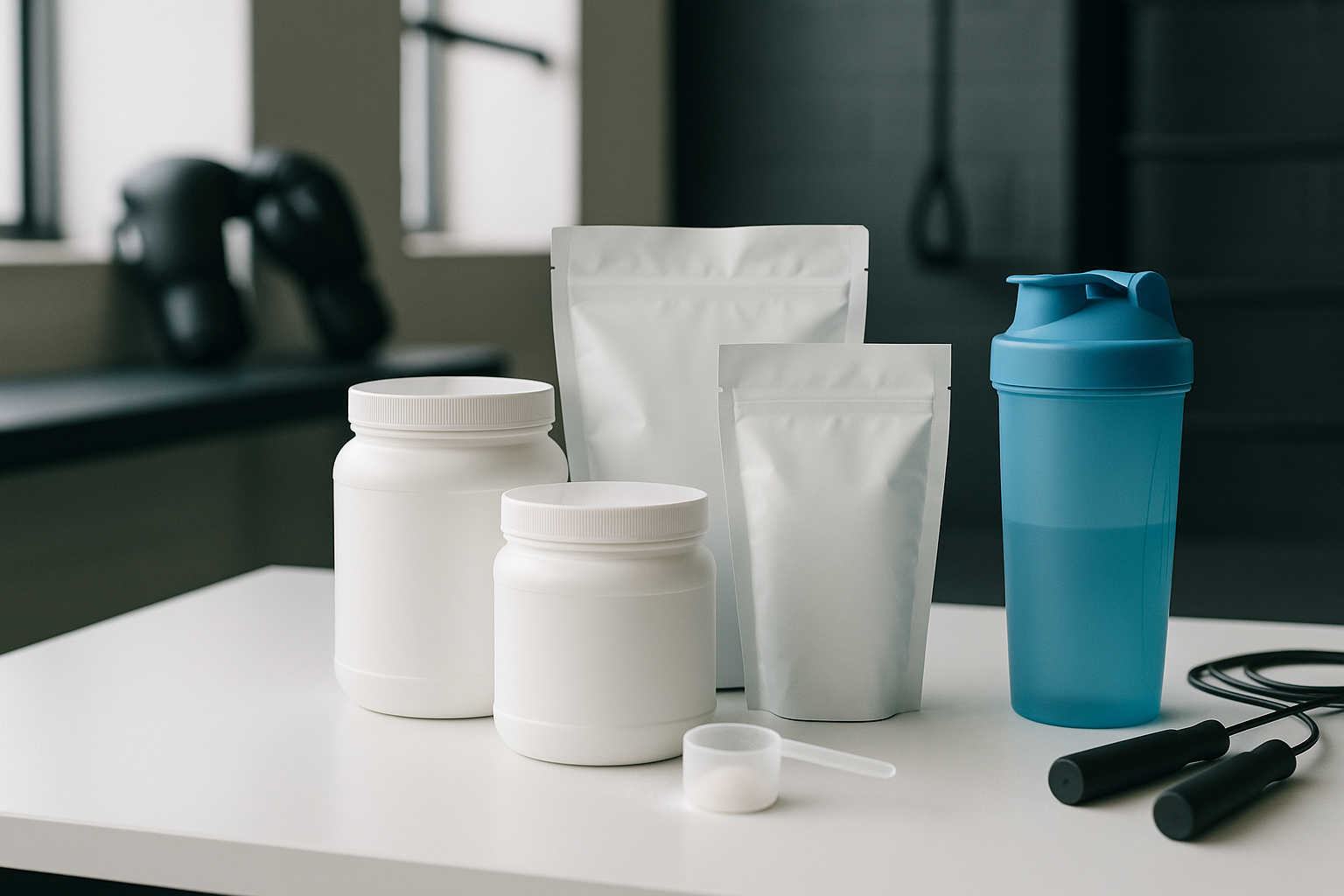
The best creatine for boxing is almost always a plain creatine monohydrate product from a reputable brand, ideally with transparent testing and, for tested athletes, third-party sport certification. For most Canadian buyers, simpler is better.
What to prioritise:
- Creatine monohydrate as the only active ingredient, unless you specifically want a flavoured product.
- NPN on the label, which means the product has a Natural Product Number under Health Canada rules.
- Third-party testing if you compete in drug-tested sport; look for sport-focused certification where available.
- Cost per gram, not just tub price.
- Micronized powder if you care about easier mixing, though it is not required for effectiveness.
| Option | Best for | Pros | Cons |
|---|---|---|---|
| Unflavoured monohydrate powder | Most boxers | Best evidence, lowest cost, easy to dose | Can feel gritty in cold water |
| Micronized monohydrate | Boxers who hate texture | Mixes better, same core ingredient | May cost a bit more |
| Capsules | Travel convenience | No mixing, tidy for gym bags | Usually pricier and require many capsules for full dose |
| Gummies or novelty formats | Convenience-first buyers | Easy to take | Often more expensive and sometimes underdosed per serving |
| Blended pre-workouts with creatine | People already using pre-workout | Convenient stack | May not provide full daily creatine dose consistently |
What to avoid:
- proprietary blends that hide exact creatine amount
- marketing claims that newer forms are automatically superior
- products without clear labelling or sourcing transparency
In Canada, the practical buying checklist is straightforward: check the NPN, check the ingredient panel, check the dose per serving, and check whether the brand discloses meaningful quality controls. Our best creatine rankings, creatine brand reviews, and creatine product catalog can help narrow the field.
A boxer’s buying rule in one sentence: if your goal is proven performance rather than marketing theatre, buy plain creatine monohydrate from a reputable Canadian-legal product with clear labelling and realistic cost per gram.
Bottom line: should boxers take creatine?
Yes, many boxers should at least consider creatine, because it can improve the repeated high-intensity work that boxing training depends on, but whether you should use it depends mainly on your weight-class situation. That is the real answer to the weight class question.
If you are a boxer in off-season, building strength, doing hard interval conditioning, or trying to keep your output high across rounds, creatine is one of the few supplements with a strong enough evidence base to be worth your money. It is especially attractive because the protocol is simple, the product is inexpensive, and the research base is deep relative to most sports supplements.
If you are cutting hard for a fight, especially with a close or same-day weigh-in, creatine may still help training earlier in camp but become less attractive near competition if the water-weight trade-off makes the scale harder to manage. That is not because creatine is bad for boxing. It is because boxing is a weight-class sport.
The simplest decision framework is:
- Use it if performance development is the priority and body weight is manageable.
- Use it carefully if you are in camp but still comfortably on weight.
- Pause or skip it if every fraction of body weight matters for an aggressive cut.
The simplest protocol is:
- buy creatine monohydrate
- take 3 to 5 g daily
- skip loading unless you need fast saturation
- monitor morning body weight and training quality
- reassess before the final cut phase
That is the clearest evidence-based answer to searches like creatine boxing, does creatine help boxing, and creatine for fight sports: it helps the engine behind explosive repeat performance, but the best boxers use it strategically rather than automatically.
To act on this today, use the creatine dosage calculator, compare options in the creatine product catalog, and shortlist vetted options with our best creatine rankings.
Creatine for Boxing at a Glance
- 3-5 g/day Standard daily dose for most boxers — Creatine monohydrate maintenance protocol
- 20 g/day Typical loading dose — Usually split into 4 doses for 5-7 days
- 5-7 days Approximate loading timeline — Faster muscle saturation, but more likely to affect scale weight quickly
- 3-4 weeks Typical no-loading saturation timeline — Daily 3-5 g approach reaches saturation more gradually
Frequently Asked Questions
Does creatine help boxing performance?
Yes, creatine can help boxing performance when the limiting factor is repeated explosive output, hard conditioning, or strength work. It is most likely to improve the physical engine behind combinations, sprint-style efforts, and gym performance rather than directly improving technical skill, timing, or ring IQ.
Is creatine good for boxers cutting weight?
Creatine can be useful earlier in camp, but it is often less useful during an aggressive final cut. Because creatine can increase intracellular water and slightly raise body weight, many boxers either avoid starting it late in camp or reassess whether to keep using it close to weigh-in.
Will creatine make a boxer slower?
Not inherently, and for many athletes the opposite is more likely in training because creatine supports repeated high-intensity efforts. The real concern is whether added water weight changes how you feel at a given body mass, which is more of a weight-class issue than a direct speed-limiting effect.
What is the best creatine for boxing?
The best creatine for boxing is plain creatine monohydrate from a reputable brand with clear dosing and quality controls. For Canadian buyers, an NPN on the label and, for tested athletes, third-party sport testing are useful signs of a more trustworthy product.
Should boxers load creatine?
Most boxers do not need to load creatine unless they want faster saturation and are not worried about short-term scale changes. A daily 3 to 5 g protocol works well for most fighters and is usually the more practical option when weight management matters.
When should a boxer take creatine?
A boxer can take creatine at any time of day, because consistency matters more than timing. Taking it with a meal or after training is often easiest, but the main goal is simply to take it daily for long enough to build and maintain muscle creatine stores.
Does creatine increase punching power?
Creatine may help support punching power indirectly by improving the strength, explosiveness, and repeated-effort capacity that contribute to hard punching. It is not a direct technique enhancer, so the real benefit shows up best when boxing practice and strength training are already well programmed.
Can amateur boxers take creatine safely?
Yes, healthy adult amateur boxers can generally take creatine monohydrate safely at standard doses, provided they do not have a medical reason to avoid it. The main practical issues are mild water-weight gain and occasional stomach upset, not the kidney myths many people hear online.
Does creatine affect boxing cardio?
Creatine is not primarily a cardio supplement, but it can still help boxing because boxing includes repeated high-intensity efforts layered onto an aerobic base. It usually helps the explosive intervals inside the sport more than it improves long, steady endurance by itself.
Should fighters stop creatine before a fight?
Some fighters do, especially if they are tight on weight, but it is not mandatory for everyone. The right call depends on how much body weight you carry above the class limit, how your body responds to creatine, and whether your weigh-in is the day before or only a few hours before competing.