MyProtein Creatine Monohydrate Review: Value for Canadian Buyers?
By The Creatine Canada Research Team — Evidence-based supplement analysts
Yes—MyProtein Creatine Monohydrate is generally a good, standard creatine option if the price lands low enough after discounts, but for Canadian buyers it is not automatically the best value once shipping, duties risk, stock swings, and local alternatives are factored in. If you want simple, evidence-based creatine, the real question is not whether MyProtein works, but whether its landed cost and quality signals beat easier-to-buy Canadian options.
Evidence-based · Cites 4 sources · Editorial standards
Key Takeaways
- MyProtein creatine is typically plain creatine monohydrate, the most studied and most cost-effective form.
- If the ingredient is only creatine monohydrate, it should work as well as any other pure monohydrate at the same daily dose.
- Canadian buyers should compare final cost per gram, not sale banners, because shipping and import friction can erase the apparent deal.
- A standard maintenance dose is 3 to 5 g daily; loading is optional at 20 g daily split into 4 doses for 5 to 7 days.
- The best signs of quality are a simple label, clear lot and expiry details, seller legitimacy, and ideally third-party testing or strong manufacturing transparency.
- MyProtein can be a smart buy in Canada when heavily discounted, but it is rarely worth overpaying for versus local monohydrate options.
- If stomach upset happens, reduce the dose per serving, take it with food, and use consistent daily intake rather than chasing perfect timing.
The direct verdict: is MyProtein creatine good for Canadians?
Yes, MyProtein creatine is usually a perfectly acceptable creatine monohydrate product, but it is only a strong buy in Canada when the final delivered price per gram is competitive and the listing clearly shows a simple monohydrate formula. That is the short answer to the common searches myprotein creatine review, is myprotein creatine good, and myprotein creatine canada.
Here is the key point most reviews miss: creatine monohydrate is a commodity ingredient when it is pure, correctly manufactured, and accurately dosed. If a product contains only creatine monohydrate and gives you a true 3 to 5 g daily dose, it should raise muscle creatine stores and support performance the same way any other pure monohydrate does. The 2017 ISSN position stand concluded that creatine monohydrate is the most effective ergogenic, or performance-enhancing, nutritional supplement currently available for increasing high-intensity exercise capacity and lean mass gains during training.
That means the real buying decision is not about a magical brand effect. It is about:
- Ingredient simplicity: ideally just creatine monohydrate.
- Price in Canada: sale price, shipping, taxes, and possible import friction together.
- Quality signals: sealed packaging, lot code, expiry, transparent manufacturing, and preferably third-party testing.
- Convenience: shipping speed, returns, and whether you can reorder reliably in Canada.
For many Canadians, a local product from our best creatine rankings or broader creatine brand reviews can be easier to justify if the cost per gram is similar. MyProtein can still win on value during aggressive promotions, especially if you buy multiple items and reduce shipping impact across the order.
If you are a beginner, do not overcomplicate this. MyProtein creatine monohydrate should work if it is genuine monohydrate and you take 3 to 5 g every day for long enough to saturate your muscles. If you are an athlete or a buyer who cares deeply about testing standards, push harder on documentation, seller legitimacy, and product traceability before you click buy.
What MyProtein Creatine Monohydrate actually is—and what it is not
MyProtein creatine is, in most listings, simply creatine monohydrate powder, which is the gold-standard form of creatine and the benchmark against which newer forms are compared. For the search query my protein creatine monohydrate, that is the essential answer.
Creatine is a naturally occurring compound made from amino acids and stored mostly in muscle, where it helps regenerate ATP, or adenosine triphosphate, the immediate energy currency your muscles use during short, hard efforts. Supplementing increases muscle creatine and phosphocreatine stores; phosphocreatine is the stored form that donates phosphate to rapidly rebuild ATP during explosive exercise.
What it is not:
- It is not a steroid.
- It is not a pre-workout stimulant; you should not expect a caffeine-like buzz.
- It is not inherently better because of branding alone.
- It is not required to be fancy to be effective; plain unflavoured monohydrate is often the smartest buy.
If MyProtein offers flavoured versions, blends, gummies, or capsules, judge those separately. The evidence base overwhelmingly supports plain monohydrate first. The review standard should therefore be simple: does the label deliver enough pure creatine monohydrate per serving, and does the total cost make sense in Canada?
Micronized powder can improve mixing feel because the particles are smaller, but it does not fundamentally outperform regular monohydrate in muscle saturation or results. If a MyProtein tub dissolves only moderately well, that is a convenience issue, not necessarily a performance issue. You can learn more in our creatine product catalog and related explainers on creatine dosage calculator use.
For Canadian buyers, also check the package details. A legitimate supplement sold in Canada may display a Natural Product Number, or NPN, which is Health Canada’s product licence identifier for many supplements sold legally in Canada. Not every cross-border listing will present information the same way, so if labelling seems incomplete or inconsistent, treat that as a cue to verify before buying.
In other words, MyProtein creatine quality should be judged less by marketing language and more by the boring details that actually matter: ingredient identity, serving accuracy, packaging integrity, and trustworthy retail channel.
Why creatine works so reliably—and why brand matters less than purity
Creatine works by increasing intramuscular phosphocreatine stores, which helps you regenerate ATP faster during repeated high-intensity efforts, and that mechanism is why pure creatine monohydrate from one reputable brand should perform similarly to another. This is the scientific backbone of any honest MyProtein creatine review.
During hard sets of 5 to 30 seconds—think sprints, jumps, heavy sets, repeated hockey shifts, or high-output intervals—your muscles burn through ATP rapidly. More phosphocreatine lets you restore ATP a little faster between contractions. That can translate into:
- a few more reps at a given load
- slightly better sprint repeatability
- higher training volume over weeks
- better long-term strength and lean mass gains when training is in place
The effect is not magic in one workout. The benefit compounds because better training quality, repeated over time, leads to better adaptation. That is why creatine is fundamentally a saturation supplement, not a stimulant. What matters most is total muscle creatine levels, not whether the powder came from a trendy tub.
The evidence is strong here. The 2017 ISSN position stand and the 2021 JISSN review on common creatine questions both support creatine monohydrate as the most studied form, with a strong safety and efficacy profile in healthy people when used appropriately.
So why can one product still be better than another? Because brand differences show up more in quality control and buying experience than in the molecule itself. A better brand may offer cleaner documentation, better batch consistency, stronger testing, better scoop accuracy, faster Canadian shipping, and fewer stockouts. Those are real advantages. But they do not mean the creatine molecule itself suddenly builds more muscle.
If you are comparing MyProtein to alternatives, ask four practical questions:
- Is it plain monohydrate?
- Can I verify the seller and packaging?
- What is the actual cost per gram delivered to my province?
- Do I trust the quality signals enough for regular use?
If the answers are yes, yes, acceptable, and yes, then MyProtein creatine should work exactly as good creatine should. If not, compare against our best creatine rankings or read more on creatine myths debunked before assuming a more expensive form is superior.
MyProtein creatine quality: how to judge purity, testing, and legitimacy in Canada
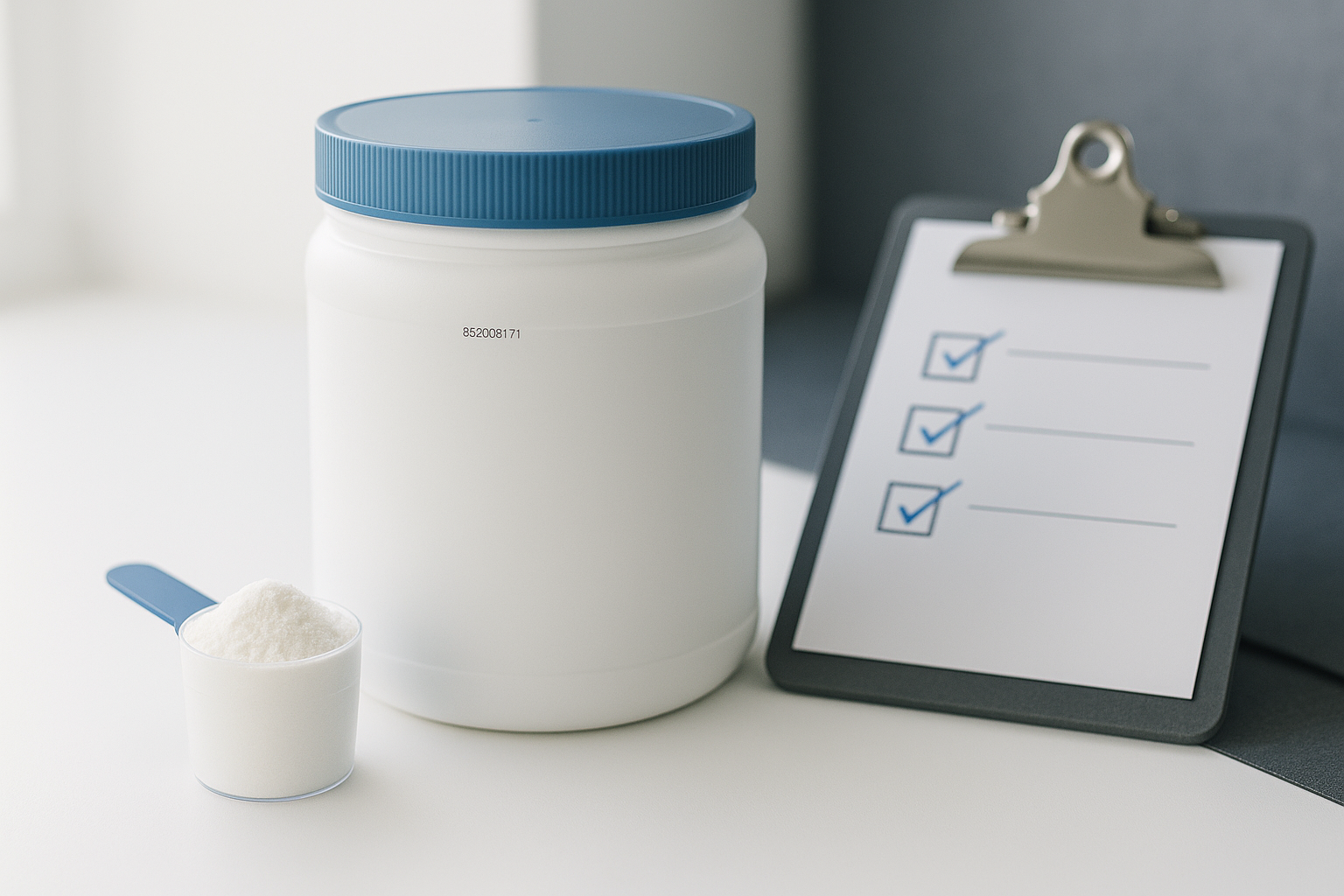
MyProtein creatine quality is best judged by label simplicity, packaging traceability, seller legitimacy, and testing transparency—not by hype terms like advanced absorption or ultra-performance matrix. For Canadian buyers, that quality check matters because imported supplement deals can look better on-screen than they do in your hand.
Start with the label. The cleanest version should list only creatine monohydrate as the medicinal or active ingredient, with a clear serving size in grams. Avoid getting distracted by flavour systems, proprietary blends, or micro-dosed add-ons that reduce the actual creatine per scoop.
Then check packaging and traceability:
- Lot number and expiry: basic but important signs of normal supplement manufacturing control.
- Tamper seal: a simple integrity marker that should not be missing.
- Scoop and serving accuracy: useful, but the best practice is still weighing your serving if you want precision.
- Storage condition on arrival: severe moisture exposure, broken seals, or obvious clumping from poor warehousing are red flags.
Third-party testing matters most for competitive athletes or anyone highly risk-averse about contamination. The International Olympic Committee consensus on supplements notes that contamination risk varies across products and that athlete supplement selection should account for manufacturing quality and testing status. If you compete in tested sport, you should prefer products with strong certification or equivalent testing documentation when available.
Canadian context adds another layer. If a product is sold through a Canadian channel, look for standard local compliance signals, including an NPN when applicable. An NPN is Health Canada’s evidence that the product has been licensed for sale as a natural health product under specified conditions. The absence of an easily visible NPN on a cross-border listing does not automatically prove a product is bad, but it should prompt more scrutiny, especially if the seller information is vague.
Use this practical quality checklist before buying MyProtein creatine in Canada:
- Confirm the ingredient is just creatine monohydrate.
- Check who is actually selling and shipping the item.
- Inspect for lot code, expiry, and intact seal on arrival.
- Prefer unflavoured powder unless you specifically want convenience over value.
- For tested athletes, favour stronger certification or documented screening.
If you want a broader framework, see our guides on creatine brand reviews and creatine product catalog. For athletes, quality assurance is not paranoia; it is part of buying smart.
MyProtein creatine price in Canada: the only comparison framework that matters
For Canadians, MyProtein creatine is a good deal only if the landed cost per gram beats comparable monohydrate products after discounts, shipping, and taxes. That is the most useful answer to myprotein creatine price canada.
Too many shoppers compare headline tub prices or discount codes without calculating the amount of actual creatine they receive. Since plain monohydrate should perform similarly across reputable brands, the fairest value metric is cost per gram of creatine delivered to your door.
Use this simple formula:
(Product price + shipping + estimated taxes + any duty/import friction) ÷ total grams of creatine = real cost per gram
Then weigh that number against practical factors like shipping speed and returns. A product that is slightly more expensive per gram may still be the better buy if it arrives faster, avoids border hassles, and is easier to repurchase consistently.
| Buying factor | Why it matters | How to assess MyProtein in Canada |
|---|---|---|
| Cost per gram | Best apples-to-apples value metric for monohydrate | Calculate using final checkout cost, not sale price alone |
| Shipping cost | Can erase a discount quickly | Check threshold for free shipping and remote-area surcharges |
| Taxes and import friction | Affects the true landed cost and convenience | Review final checkout estimate and retailer shipping origin |
| Product size | Larger tubs often lower cost per gram | Compare total grams, not serving count alone |
| Quality signals | Low price is not worth sketchy sourcing | Look for transparent ingredient listing, lot code, seal, seller legitimacy |
| Reorder reliability | Consistency matters more than chasing one-time deals | Watch for stock volatility and shipping time to your province |
As a rule, MyProtein tends to be most attractive when you stack a strong promotion with a larger order. If you are buying a single tub and paying substantial shipping, the value can deteriorate fast. That is why many Canadians end up better served by products listed in our best creatine rankings or practical guides such as creatine product catalog.
One more tip: if two products are both plain monohydrate and the price difference is small, choose the one with better transparency and easier Canadian fulfilment. Saving a tiny amount per gram is not worth delayed shipping, unclear seller identity, or uncertain support.
In short, MyProtein creatine value is situational, not automatic. If the final delivered price is excellent, it can be a smart buy. If the delivered price only looks good before shipping and taxes, it usually is not.
How to take MyProtein creatine properly for results you can actually notice
The correct way to take MyProtein creatine is simple: take 3 to 5 g of creatine monohydrate every day, including rest days, and keep doing it long enough to saturate your muscles. If you want faster saturation, use an optional loading phase of 20 g per day split into 4 doses for 5 to 7 days.
Here is the practical step-by-step method most people should use:
- Pick your protocol. Choose either 3 to 5 g daily from day one, or load with 20 g daily as 4 doses of 5 g for 5 to 7 days, then switch to 3 to 5 g daily.
- Use a consistent time. Take it whenever you will remember it. Timing matters far less than daily consistency. For more, see our guide on creatine dosage calculator use and related timing resources.
- Mix it in water or a shake. Creatine monohydrate can be mixed into water, juice, or protein. It does not need a special transport system.
- Take it with food if your stomach is sensitive. Splitting doses can also help.
- Keep taking it on rest days. Creatine works by saturation, not only by acute pre-workout use.
What to expect week by week:
- Days 1 to 7 with loading: some people notice fuller muscles, slight scale gain from intracellular water, and better training output by the end of the week.
- Weeks 2 to 4 without loading: this is when many people begin to notice the same effects from a steady 3 to 5 g daily approach.
- Weeks 4 to 12: the real payoff is usually improved training quality and better long-term strength or lean mass progress.
How do you know it is working? The best markers are subtle but useful:
- slightly better rep performance or repeat sprint quality
- improved training volume over time
- fuller muscle feel
- a modest increase on the scale from water stored in muscle, not fat
Do not dry scoop it. Do not take random mega-doses. Do not cycle it unless you simply prefer stopping. The 2021 JISSN review notes that many common fears about creatine are overstated or unsupported in healthy users.
If you are new to supplementation, keep it boring: plain monohydrate, daily consistency, realistic expectations. That is how MyProtein creatine—or any solid monohydrate—does its job.
Best dose by body weight, goal, and who should consider it
The best MyProtein creatine dose for most adults is still 3 to 5 g daily, but body size, training goal, and user type can help you choose where in that range to land. The main point is that bigger people and heavier training loads often justify the higher end.
A practical framework:
- Smaller adults under roughly 70 kg: 3 g daily is often enough.
- Most adults around 70 to 100 kg: 3 to 5 g daily is the standard sweet spot.
- Larger athletes over 100 kg or those doing very high training volumes: 5 g daily is a sensible default.
If you prefer loading, use 20 g daily split into 4 doses for 5 to 7 days regardless of brand, then move to maintenance. If you do not load, expect saturation to take longer, often roughly 3 to 4 weeks at 3 to 5 g daily.
Who is MyProtein creatine for?
- Beginners: yes, if you already train and want one of the few supplements that reliably works. Read more in creatine brand reviews and beginner-focused guides before buying.
- Women: yes. Women use the same evidence-based monohydrate dosing; the old bulking fear is mostly confusion about temporary water retention versus fat gain.
- Older adults: potentially very useful, especially alongside resistance training, because maintaining muscle and strength becomes more important with age.
- Athletes in power and team sports: often excellent fit because repeated high-intensity efforts are exactly where creatine shines.
- Vegetarians and vegans: often strong responders because baseline dietary creatine intake is lower.
Who should pause and ask a clinician first? Anyone with known kidney disease, unusual medical complexity, or medication concerns should get individualized advice before starting. That is prudence, not fearmongering.
Your goal also shapes expectations:
- Strength and muscle: strongest evidence.
- Repeated sprint performance: strong evidence.
- Endurance-only sport: mixed value; useful in some contexts, less central than for explosive sport.
- Body recomposition or fat loss: creatine does not directly burn fat, but it can support training quality while dieting.
If you want a precise starting point, use our creatine dosage calculator. But do not let precision theatre slow you down. In practice, most people do very well by taking 5 g daily if they are average-sized or larger and 3 g daily if they are smaller and training recreationally.
Timing, mixing, and realistic results: what MyProtein creatine can and cannot do
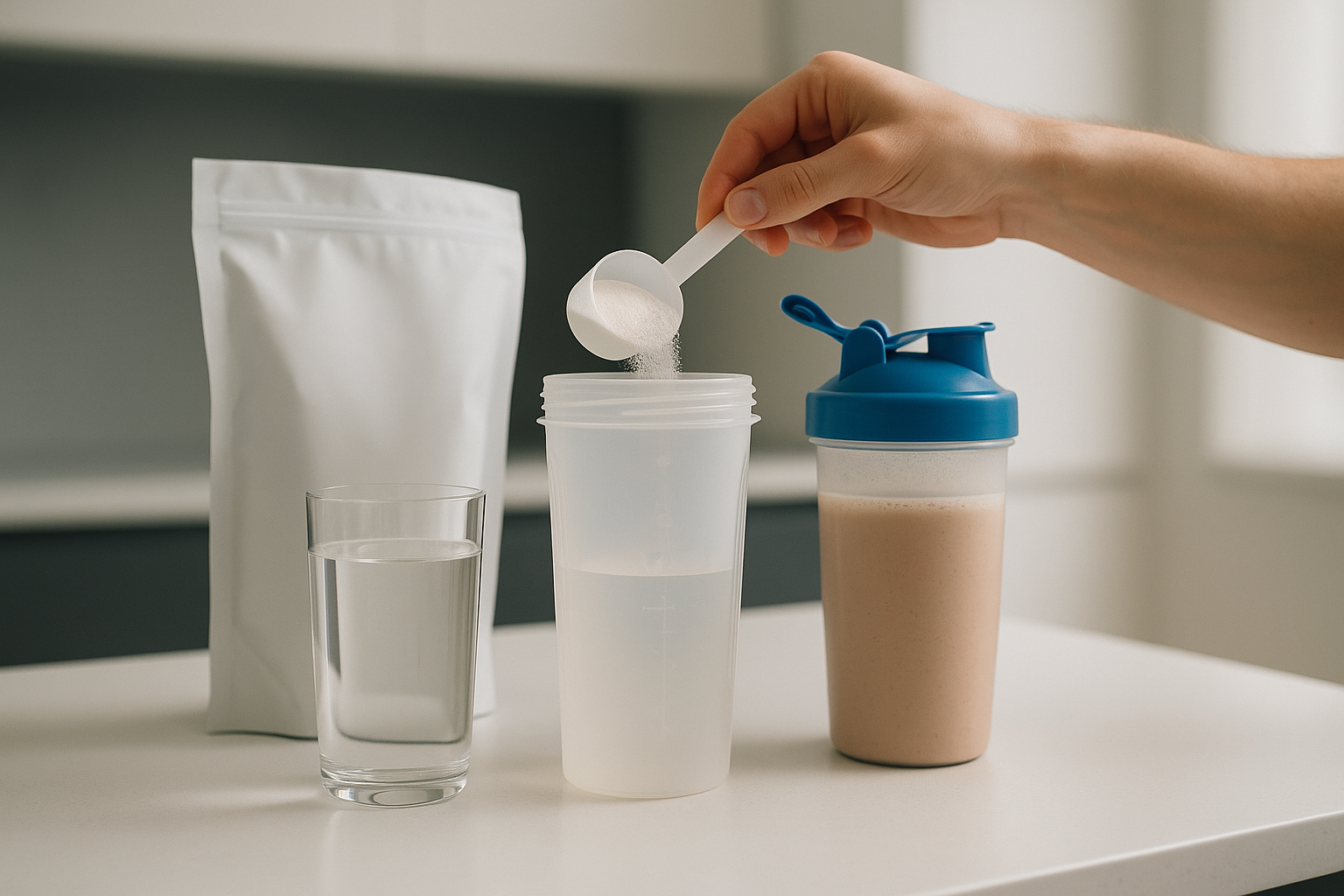
The best time to take MyProtein creatine is the time you will consistently remember, because daily saturation matters far more than taking it at the perfect minute. That is the evidence-based answer for anyone wondering whether morning, pre-workout, post-workout, or rest-day timing changes everything.
Creatine is not like caffeine. You do not feel an immediate hit because its main job is building up muscle stores over time. Some small timing differences have been explored in the literature, but for real-world users the difference is minor compared with simply taking the supplement every day. If you want a dedicated timing deep-dive, see our related guide choices such as creatine product catalog and other timing resources on-site.
How to mix it well:
- Use water, juice, or a protein shake.
- Warm liquid can help solubility if you dislike gritty texture.
- Stir or shake thoroughly, then drink it soon after mixing.
- If your stomach is sensitive, pair it with a meal.
What results are realistic?
MyProtein creatine should improve your ability to perform repeated high-intensity work once your muscles are saturated, and over weeks to months that can help you gain more strength and lean mass from training. It will not replace progressive overload, enough protein, or adequate calories for your goal.
Realistic expectations include:
- modest increase in body mass early on from water stored inside muscle
- better top-end training quality or an extra rep here and there
- improved repeat power in sprints or intervals
- better long-term progress if your training and diet are solid
Unrealistic expectations include:
- instant visible muscle gain in a few days without training
- dramatic fat loss from creatine alone
- a stimulant rush or pump-only effect proving it works
The Examine.com creatine evidence summary is useful for reviewing where the evidence is strongest and where it is more mixed, especially outside classic strength and power outcomes. For most gym-goers, the message is straightforward: if the MyProtein product is genuine monohydrate and you use it consistently, the expected benefits are reliable but not flashy.
That is exactly why creatine remains one of the few supplements worth discussing seriously: the effects are modest per day, meaningful over time, and backed by decades of data rather than marketing creativity.
Safety, side effects, and the biggest myths about MyProtein creatine
For healthy adults, MyProtein creatine monohydrate is generally considered safe when taken at standard doses, and the most common side effects are mild digestive discomfort or temporary water-weight gain—not kidney damage, dehydration, or steroid-like hormonal effects. That is the evidence-based answer to most creatine fears.
The strongest recurring myths are worth addressing directly:
- Myth: creatine is bad for healthy kidneys. Current evidence does not support kidney harm in healthy individuals using recommended doses, though people with existing kidney disease should get medical guidance first.
- Myth: creatine causes dehydration or cramps. The literature does not support this as a general effect, and some data run against the myth.
- Myth: creatine is a steroid. It is not; its mechanism is cellular energy support, not anabolic hormone mimicry.
- Myth: you must cycle creatine. You do not need to cycle it to maintain effectiveness.
- Myth: women should avoid it because it makes them bulky. The same evidence-based dosing applies to women; any early weight gain is usually water in muscle, not fat.
Common side effects and fixes:
- Stomach upset or loose stool: usually from taking too much at once. Split the dose, take it with food, or skip loading.
- Bloating sensation: more likely during loading or if very large doses are taken at once. Lower the single-serving size.
- Scale increase: expected in many users due to intracellular water retention, especially early.
The Mayo Clinic overview and the 2021 JISSN misconceptions paper align on a key point: much of the public fear around creatine comes from outdated claims, confusion with creatinine blood tests, or poor anecdotal interpretation.
One nuance matters for Canadians who train hard in summer, in hockey rinks year-round, or in remote work settings: creatine does not excuse poor hydration habits. It is not dehydrating by default, but normal hydration still matters for performance and comfort.
If you want the safest practical protocol, do this:
- Use plain monohydrate.
- Take 3 to 5 g daily.
- Take it with fluid and optionally with food.
- Do not stack unnecessary high-stim products just because a brand sells them together.
In short, MyProtein creatine side effects are usually manageable and boring, which is exactly what you want from a supplement you plan to use for months.
The most common mistakes Canadians make with MyProtein creatine
The biggest mistakes with MyProtein creatine are overpaying after shipping, using inconsistent dosing, expecting a stimulant effect, and assuming brand marketing matters more than plain monohydrate purity. Fix those four issues and most users get far better results.
Mistake one is a buying mistake: judging value by the sale banner instead of final delivered cost. For Canadians, a product can look cheap until shipping and taxes hit checkout. Always compare landed cost per gram against local options and the picks in our best creatine rankings.
Mistake two is a usage mistake: taking creatine only on workout days. Because creatine works through saturation, skipping rest days slows or undermines the whole point.
Mistake three: under-dosing because the scoop is vague. Many people estimate badly. If you care about accuracy, use a scale at least for a few servings so you know what your 3 g or 5 g portion looks like. If you are unsure where to start, use our creatine dosage calculator.
Mistake four: taking huge single doses. More is not better. Large one-off servings mainly increase the chance of digestive side effects.
Mistake five: switching products constantly because you think one brand is not “hitting.” Creatine is not pre-workout. If a pure monohydrate product seems not to be working, the usual reasons are poor consistency, not enough time, or unrealistic expectations. Our creatine myths debunked content helps on this point.
Mistake six: ignoring athlete-specific testing needs. If you are drug-tested, contamination risk matters more than influencer popularity. Investigate quality systems before buying.
Mistake seven: blaming creatine for any short-term scale gain. A small increase in body mass early on often reflects water being stored inside muscle, which is part of how the supplement works.
Here is the simple “do it right” version:
- Buy plain monohydrate from a trustworthy seller.
- Compare delivered cost per gram.
- Take 3 to 5 g daily for at least several weeks.
- Take it on rest days too.
- Adjust serving size if your stomach is sensitive.
That may sound unexciting, but with creatine, boring consistency beats supplement theatre every time.
MyProtein vs. other creatine options in Canada: when to buy it and when to pass
MyProtein creatine is worth buying in Canada when it offers a clearly lower delivered cost per gram than comparable monohydrate products without sacrificing quality confidence, and it is worth passing on when local products match the price with easier fulfilment and stronger transparency. That is the most practical review conclusion for Canadian shoppers.
Compared with many competitors, MyProtein’s main strength is often promotional pricing. Its main weakness for Canadians can be inconsistency in the full buying experience: shipping costs, timing, stock availability, and the occasional uncertainty that comes with cross-border or marketplace-style fulfilment. Those factors may not matter to every buyer, but they matter a lot if you want a supplement you can reorder easily month after month.
Choose MyProtein if:
- the product is plain creatine monohydrate
- the final delivered price is meaningfully better
- the seller and packaging details check out
- you are not giving up important athlete-specific certification you need
Choose a Canadian alternative if:
- the cost per gram is close enough that shipping convenience wins
- you want easier returns or customer support in Canada
- you prefer stronger local labelling clarity, including NPN visibility when applicable
- you compete in tested sport and want a product with very clear testing credentials
If you are comparison shopping right now, the smartest next step is to cross-check our creatine brand reviews and creatine product catalog. Even among plain monohydrate products, convenience and confidence can justify choosing the second-cheapest option instead of the absolute cheapest.
A subtle but important point: good creatine is not about finding the most exotic form; it is about removing friction so you actually take it daily. If buying MyProtein means delayed shipping, hesitation about reordering, or constantly waiting for the next code, that friction can outweigh a small price advantage.
For many Canadians, the winning product is the one that combines three things: pure monohydrate, dependable access, and fair cost per gram. Sometimes that will be MyProtein. Sometimes it will not. The molecule is not the issue; the purchase context is.
Bottom line: our MyProtein Creatine Monohydrate review for Canadian buyers
MyProtein Creatine Monohydrate is a solid but not automatically standout option for Canadians: it should work well if it is genuine plain monohydrate, but whether it is worth buying depends almost entirely on landed price, seller trust, and quality transparency versus Canadian alternatives.
On effectiveness, the verdict is easy. Plain creatine monohydrate is the most studied form, and MyProtein’s version should support the same core benefits—better high-intensity training capacity, improved strength progress, and potential lean mass support over time—when taken at 3 to 5 g daily. The science here is mature and well-established.
On quality, the verdict is conditional. The product can be entirely fine, but Canadian buyers should still verify basics like ingredient simplicity, lot and expiry details, intact packaging, and legitimate sales channel. Competitive athletes should set an even higher bar for testing and traceability.
On value, the verdict is mixed. MyProtein can be an excellent buy during real discounts, especially on larger orders. But once shipping and taxes are included, it is often less of a slam-dunk than it first appears. That is why we do not recommend buying it blindly just because the brand is well known.
If you want the shortest possible recommendation:
- Buy it if it is plain monohydrate, the delivered cost per gram is truly low, and the seller is trustworthy.
- Skip it if the savings are tiny, the shipping is slow or expensive, or a Canadian alternative gives you equal monohydrate quality with less hassle.
For your next step, compare it against our best creatine rankings, browse additional creatine brand reviews, or use the creatine dosage calculator to dial in your daily intake. If you keep the decision grounded in purity, dose, and cost per gram, you will make a better choice than most supplement shoppers.
That is the honest conclusion to this MyProtein creatine review: good product, potentially good value, but only when the Canadian buying math actually works.
MyProtein Creatine Review: the numbers that matter
- 3–5 g/day Standard maintenance dose — The mainstream evidence-based daily amount for most adults using creatine monohydrate.
- 20 g/day Optional loading protocol — Typically split into 4 doses for 5–7 days to saturate muscles faster.
- 5–7 days Fast saturation timeline — Approximate timeline when using a standard loading phase.
- 3–4 weeks No-loading saturation timeline — Approximate timeline when taking 3–5 g daily without loading.
Frequently Asked Questions
Is MyProtein creatine good?
Yes, MyProtein creatine is generally good if it is plain creatine monohydrate from a legitimate seller and the price makes sense after Canadian shipping and taxes. It should work like any other pure monohydrate at the same dose, so the real differences are usually value, packaging confidence, and fulfilment convenience rather than performance.
Is MyProtein creatine monohydrate the best form?
Yes, creatine monohydrate is still the best-supported form for most people. It is the most studied, the most consistently effective, and usually the most cost-effective, which is why a plain monohydrate product is usually a smarter buy than pricier alternative forms.
Can Canadians buy MyProtein creatine easily?
Yes, Canadians can often buy MyProtein creatine online, but ease depends on shipping origin, checkout costs, and stock reliability. Before buying, check the final delivered price, expected transit time to your province, and whether a comparable Canadian option gives you the same monohydrate quality with less friction.
How much MyProtein creatine should I take per day?
Most adults should take 3 to 5 g of MyProtein creatine per day. An optional loading phase is 20 g per day split into 4 doses for 5 to 7 days, then 3 to 5 g daily after that.
When should I take MyProtein creatine?
You should take MyProtein creatine whenever you can do it consistently every day. Timing matters much less than total daily intake because creatine works by gradually increasing muscle stores rather than by producing an immediate stimulant effect.
Does MyProtein creatine cause bloating or weight gain?
MyProtein creatine can cause a small increase in body weight, especially early on, but that is usually water stored inside muscle rather than fat gain. Some people describe this as bloating, although true stomach bloating is more often linked to taking too much at once or using a loading phase.
Is MyProtein creatine safe for women?
Yes, MyProtein creatine is generally safe for healthy women when used at standard monohydrate doses. Women use the same evidence-based dosing as men, and the common fear that creatine causes unwanted bulk is usually a misunderstanding of temporary water retention versus actual fat gain.
How do I know if MyProtein creatine is working?
You know MyProtein creatine is working when training quality gradually improves after saturation, not because you feel an instant buzz. Common signs include slightly better reps, stronger repeat efforts, fuller muscles, and sometimes a modest early increase on the scale from water stored in muscle.
Why is MyProtein creatine sometimes not the best value in Canada?
MyProtein creatine is not always the best value in Canada because sale pricing can be offset by shipping, taxes, and ordering friction. Since plain monohydrate should work similarly across reputable brands, Canadians should compare final cost per gram and convenience rather than relying on the advertised discount.
Should I choose MyProtein creatine or a Canadian brand?
You should choose whichever product gives you pure creatine monohydrate, trustworthy quality signals, and the best delivered value. If MyProtein is clearly cheaper after all costs, it can be a strong choice; if a Canadian brand is close in price and easier to buy repeatedly, the local option often wins.