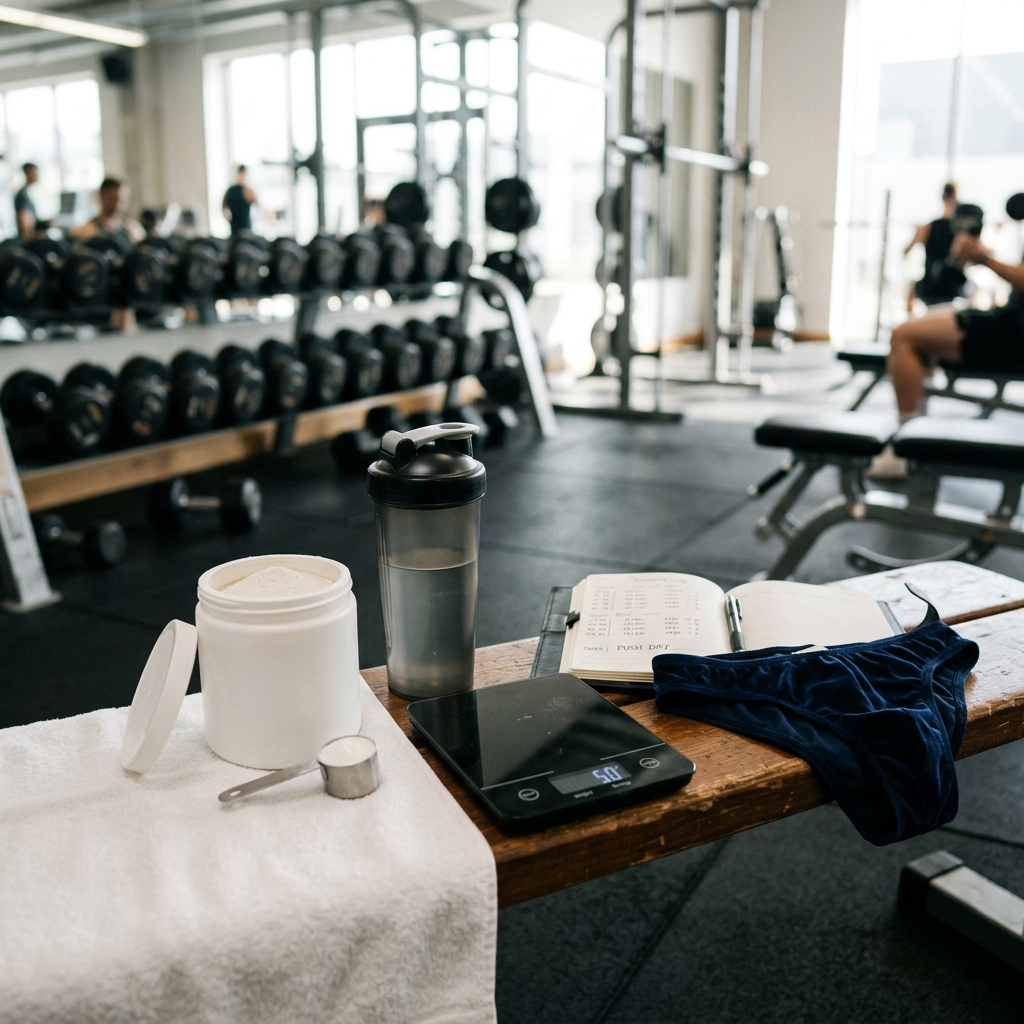
Creatine for Natural Athletes: Drug-Tested Competition and Maximum Natural Gains
By The Creatine Canada Research Team — Evidence-based supplement analysts
Yes—creatine is allowed in natural bodybuilding and drug-tested sport, and for most healthy natural athletes it is one of the safest, most effective, and most evidence-backed supplements for improving strength, training quality, and lean mass. Creatine monohydrate is not a steroid, is not on standard banned-substance lists, and works by increasing muscle phosphocreatine so you can perform more high-intensity work and recover faster between efforts.
Evidence-based · Cites 4 sources · Editorial standards
Key Takeaways
- Creatine monohydrate is permitted in natural bodybuilding and drug-tested sport; it is not an anabolic steroid or a standard banned substance.
- The proven daily maintenance dose for most natural athletes is 3-5 g/day, taken every day including rest days.
- A loading phase of 20 g/day split into 4 doses for 5-7 days saturates muscles faster, but it is optional.
- Creatine helps natural bodybuilders mostly by improving repeated high-intensity performance, which supports more total training volume and lean mass gains over time.
- Expect a small increase in body mass early on from extra water stored inside muscle, not body fat.
- For tested athletes, product quality matters as much as the ingredient: choose simple creatine monohydrate with strong third-party testing and clear Canadian labelling.
- If creatine upsets your stomach, reduce the dose per serving, take it with food, and use plain monohydrate powder rather than flashy blends.
Is creatine allowed in natural competitions? The direct answer for tested athletes
Yes, creatine is allowed in natural bodybuilding and in drug-tested sport, and it is widely regarded as a legitimate performance supplement rather than a prohibited drug. If you are a creatine natural athlete competing in a tested federation, the main issue is usually not whether creatine itself is banned, but whether the specific product you buy is pure and free from contamination.
Creatine is a compound your body already makes from amino acids and stores largely in muscle tissue. Supplemental creatine simply increases those existing stores. That matters because natural bodybuilding federations test for prohibited substances, not for normal dietary compounds that support energy production. Creatine is not an anabolic steroid, not a prohormone, and not a testosterone booster. The International Olympic Committee consensus on dietary supplements recognises creatine as one of the few supplements with strong evidence for performance benefits, which is one reason it remains common in high-level sport.
For practical purposes, here is the rule natural competitors should follow: creatine monohydrate is allowed, but products can still be risky if they contain extra ingredients, proprietary blends, or accidental banned-substance contamination. That is why a natty athlete should prefer a single-ingredient product over a pre-workout or muscle-building blend. If you want a broader evidence primer first, see creatine product catalog options and compare them against our best creatine rankings.
Three key distinctions matter:
- Creatine the ingredient: generally permitted in tested sport.
- A creatine blend: may include stimulants or botanicals that raise avoidable risk.
- A contaminated supplement: may create a doping problem even if the label looks harmless.
Natural athletes often ask, “creatine and drug testing: will it show up?” In standard anti-doping testing, creatine is not the target. What gets athletes in trouble is poor supplement sourcing, not the molecule itself. In Canada, look for products with a Natural Product Number, or NPN, where applicable, and prioritise brands that disclose third-party testing for purity or banned substances. That combination is the most practical way to use creatine for tested athletes without unnecessary risk.
How creatine actually works for natural athletes who have to earn every kilo
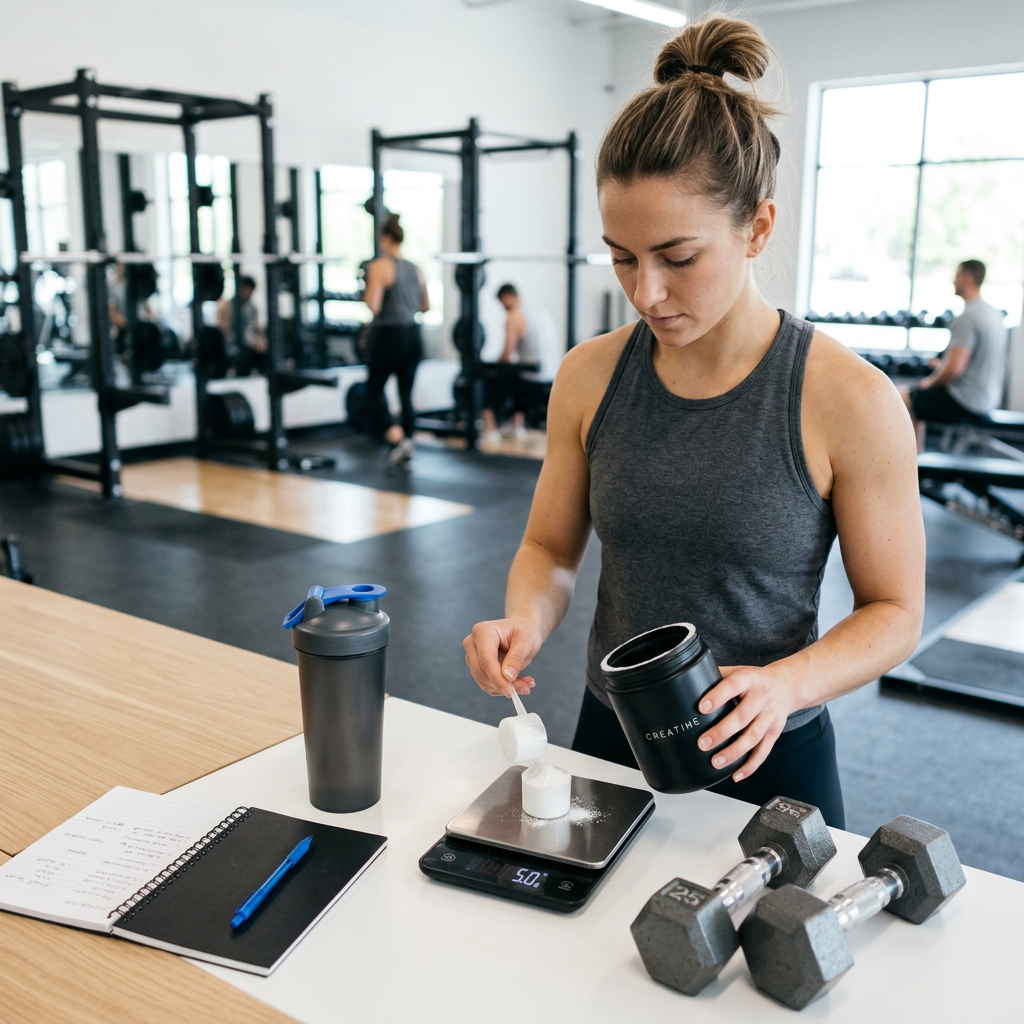
Creatine helps natural bodybuilders by increasing muscle phosphocreatine, which lets the body regenerate ATP faster during short, hard efforts such as heavy sets, sprints, jumps, and repeated explosive contractions. ATP, or adenosine triphosphate, is the immediate energy currency your muscles spend during high-intensity work, and phosphocreatine acts like a rapid backup system to restore it.
That mechanism matters more for natural athletes than many people realise. Creatine does not directly force muscle growth the way anabolic drugs can alter protein turnover and recovery capacity. Instead, creatine improves the quality of training you can perform inside a natural physiology. More reps at a given load, slightly better repeat power, a little more bar speed late in a session, and better maintenance of performance across sets can add up to greater training volume over weeks and months. That is the real pathway from creatine to muscle gain.
The 2017 ISSN position stand concluded that creatine monohydrate is the most effective nutritional supplement currently available for increasing high-intensity exercise capacity and lean body mass during training. In plain English, the evidence is strongest when creatine is paired with resistance training rather than taken in isolation. Read more on the foundational science in our guides to creatine dosage calculator planning and creatine myths debunked.
Natural bodybuilding is especially dependent on accumulative progress, so creatine tends to help in four overlapping ways:
- More total reps and volume: especially in sets that rely on repeated near-maximal effort.
- Better training density: you may maintain output with shorter rest or later in the workout.
- Greater cellular hydration: creatine pulls water into muscle cells, which often improves muscle fullness and may support training performance.
- Lean-mass support over time: the performance effect helps create more stimulus for hypertrophy.
What creatine does not do is instantly build slabs of muscle without hard training, food, and sleep. It also does not replace progressive overload or an intelligent off-season plan. For a creatine natty lifter, think of it as a high-probability amplifier of good training rather than a shortcut around it. That distinction is why the supplement has stood up so well under evidence-based scrutiny for decades.
Why creatine monohydrate is still the best choice for drug-tested competitors
Creatine monohydrate is still the best form for natural bodybuilding because it is the most studied, the most consistently effective, and usually the most cost-effective form on the shelf. Fancy forms often promise better absorption or less water retention, but they have not beaten monohydrate in the evidence that matters.
The safest buying framework for a creatine natural athlete is simple: choose single-ingredient creatine monohydrate, ideally from a brand with strong manufacturing transparency and third-party testing. The 2021 JISSN review on common questions and misconceptions about creatine reinforced that monohydrate remains the reference form against which others are judged. If you want help comparing options, start with our creatine brand reviews and best creatine rankings.
| Form | Evidence for performance | Typical practical verdict | Best for tested athletes? |
|---|---|---|---|
| Creatine monohydrate | Strongest evidence base | Best default choice | Yes |
| Micronized monohydrate | Same active ingredient, different particle size | May mix a bit easier | Yes |
| Creatine HCl | Less evidence than monohydrate | Often pricier, not proven superior | Usually unnecessary |
| Buffered or pH-altered forms | Weak evidence of superiority | Mostly marketing-driven | Usually unnecessary |
| Blends/pre-workouts with creatine | Depends on the full formula | Higher contamination and ingredient-risk profile | Less ideal |
For drug-tested sport, simplicity is a feature. A plain monohydrate powder gives you fewer variables: no underdosed extras, no mystery stimulants, and no “anabolic matrix” nonsense. The fewer ingredients, the easier it is to audit the product and to know what you are actually taking.
Canadian buyers should also look for practical quality signals:
- Single-ingredient label: creatine monohydrate only.
- Clear lot or batch information.
- Third-party testing or sport certification where relevant.
- NPN labelling where applicable in Canada.
- A reputable seller with proper storage and sealed packaging.
If your goal is maximum natural gains with minimum compliance risk, the answer is boring on purpose: plain monohydrate wins. It is not the flashiest tub in the store, but it is still the benchmark because the evidence keeps pointing back to it.
Exactly how to start creatine as a natural bodybuilder: the simplest evidence-based protocol
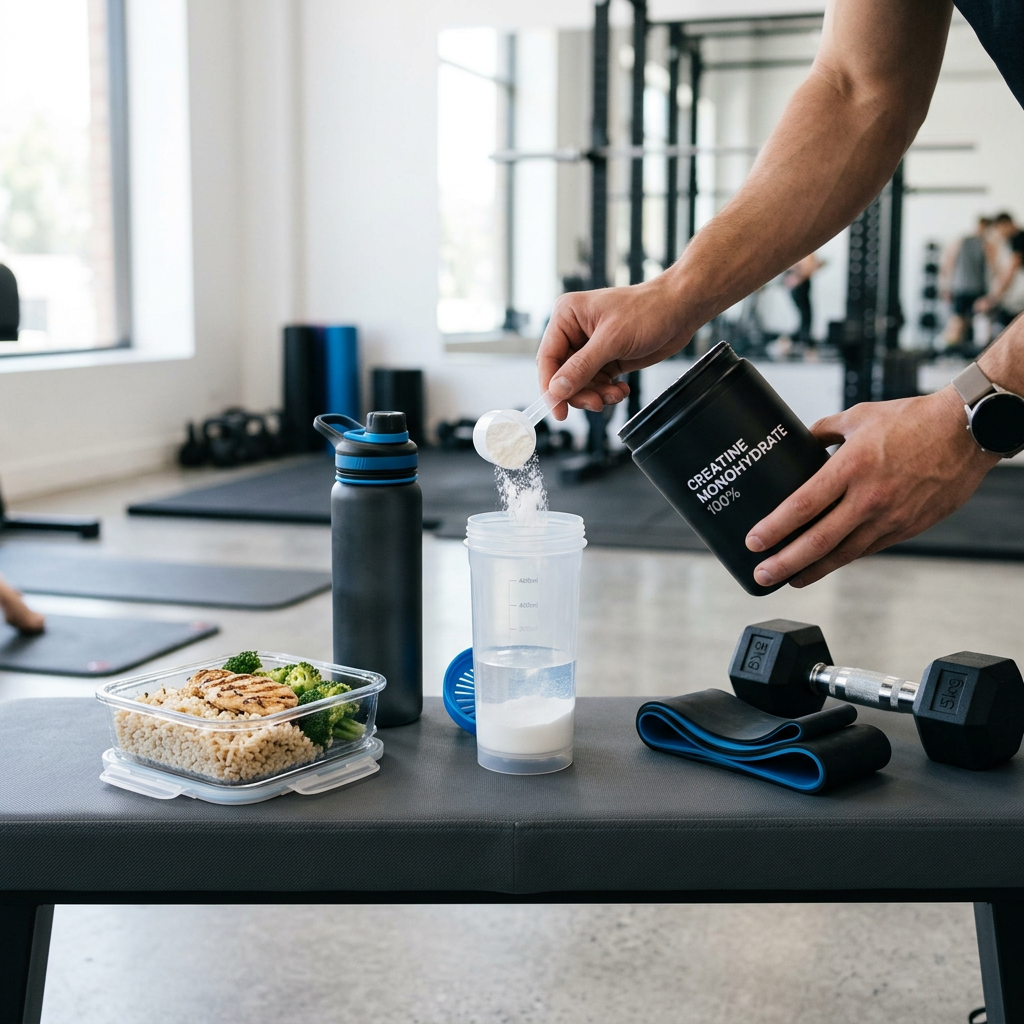
The simplest effective way to take creatine for natural bodybuilding is to use 3-5 g of creatine monohydrate every day, including rest days, and keep doing it consistently. If you want faster saturation, use a loading phase of 20 g/day split into 4 doses for 5-7 days, then drop to 3-5 g/day.
- Choose plain creatine monohydrate. Avoid multi-ingredient “mass” blends if you compete in tested sport.
- Decide whether to load. Loading works faster but is optional. Daily maintenance alone also works; it just takes longer.
- Measure accurately. Use the scoop only if it states gram weight clearly; better yet, use a small scale.
- Take it every day. Consistency matters more than precise timing.
- Mix with water, a shake, or a meal. Whatever helps you remember it is fine.
- Stay patient. Training improvements often become clearer after saturation, not after one dose.
Here is what that looks like in practice for a tested athlete:
- Option 1: No loading. Take 5 g once daily. Expect full muscle saturation in roughly 3-4 weeks.
- Option 2: Standard loading. Take 5 g, four times per day, for 5-7 days, then 3-5 g/day after that. Expect faster saturation within about a week.
If you are new to the supplement, our creatine dosage calculator and creatine product catalog can make the setup easier. Pair creatine with a sensible natural bodybuilding plan: enough protein, hard progressive training, and regular sleep. Without that base, you will still saturate creatine stores, but your visual and performance payoff will be smaller.
What should you expect week by week?
- Days 1-7 with loading: some athletes notice fuller muscles and a small scale increase from intracellular water.
- Weeks 2-4: better repeat performance in training often becomes more obvious.
- Weeks 4-8: if training and nutrition are solid, improved volume tolerance and strength progression may show up in your logbook.
- Months 2-3: the cumulative lean-mass benefit is usually easier to appreciate than the day-to-day effect.
The best sign creatine is working is not a magical feeling. It is a slow pattern: one more rep here, slightly stronger later sets, better maintenance of output through a mesocycle, and fuller muscles without added fat. That is exactly how creatine for tested athletes should look when it is doing its job.
Creatine dosing by body weight, training phase, and natural bodybuilding goal
Most natural athletes do well with 3-5 g/day of creatine monohydrate, but body size, diet, and goal can influence where you land in that range. Larger lifters, very muscular athletes, and people with lower baseline creatine intake from food often prefer the upper end.
| Athlete profile | Loading option | Maintenance dose | Practical note |
|---|---|---|---|
| Smaller athlete under about 60 kg | 20 g/day split into 4 doses for 5-7 days if desired | 3 g/day | Often enough if consistency is high |
| Most athletes about 60-90 kg | 20 g/day split into 4 doses for 5-7 days if desired | 3-5 g/day | Most common evidence-based range |
| Larger athlete over about 90 kg | 20 g/day split into 4 doses for 5-7 days if desired | 5 g/day | Upper end is often the simplest choice |
| Vegetarian or vegan athlete | Loading can be useful for faster saturation | 3-5 g/day | May notice a stronger response due to lower baseline stores |
| Contest-prep athlete monitoring scale weight closely | Usually skip loading close to show day | 3-5 g/day | Consider timing relative to physique presentation goals |
For a creatine natural bodybuilding plan, match the dose to the objective:
- Off-season growth phase: 5 g/day is a straightforward default.
- Beginner just starting out: 3-5 g/day is enough; do not overcomplicate it.
- Cutting phase: keep 3-5 g/day to support training performance and lean mass retention.
- Contest prep: continue using it unless your individual look or scale management suggests otherwise.
Some people cite body-weight formulas for maintenance, but for real-world use, fixed daily dosing works well for most gym athletes. More is not automatically better once stores are saturated. Taking 10 g/day long term does not reliably produce better natural bodybuilding results than 5 g/day if you are already saturated.
If you want a personalised number, use our creatine dosage calculator and compare it with the deeper guidance in best creatine rankings and product labels. The key is to choose a dose you can repeat daily. A perfect dose used inconsistently loses to a good dose used every single day.
The only time I would push a natural competitor away from loading is when they are extremely sensitive to stomach upset or are close to a weigh-in or physique check and want to avoid a rapid early increase in scale weight. Otherwise, loading is a convenience choice, not a requirement.
When should a natural athlete take creatine? Timing, rest days, and peak-week nuance
For most natural athletes, creatine timing matters far less than daily consistency, so the best time to take it is the time you will actually remember every day. Taking creatine before a workout, after a workout, or with a meal can all work if your total daily intake is consistent.
This is because creatine is not a stimulant that works acutely from one dose. Its main benefit depends on raising and maintaining muscle creatine stores over time. Once stores are elevated, what matters is keeping them there. That is why you should still take creatine on rest days. Skipping weekends or deload weeks slows the steady-state approach that makes the supplement effective.
For simplicity, natural bodybuilders can use one of these routines:
- After training: add 3-5 g to your post-workout shake or meal.
- With breakfast: ideal for people who train at different times of day.
- Split dose: if 5 g at once bothers your stomach, take smaller amounts across the day.
If timing questions matter to your routine, see creatine product catalog for format choices and our related guide on timing at best creatine rankings resources that point you to plain, easy-to-dose options.
Contest prep is where nuance matters. Creatine often increases intracellular water, meaning water inside the muscle cell, not under the skin. For many athletes that improves fullness rather than blurring condition. Still, peak-week decisions are individual. A natural bodybuilder who has used creatine consistently through prep usually should not make last-minute changes without trialling them beforehand. Dropping creatine suddenly in peak week does not guarantee a harder look, and unpredictable changes close to stage day are rarely smart.
For athletes in weight-class sports or federations with strict weigh-ins, loading close to weigh-in day is usually unnecessary because the temporary rapid increase in body mass can be inconvenient. In those cases, daily maintenance without loading is cleaner.
The practical rule is simple:
- Take creatine every day.
- Take it at a convenient time.
- Do not chase “anabolic windows.”
- Do not panic about missing exact workout timing.
- Do not make peak-week experiments unless you have rehearsed them.
For most lifters asking about creatine for natural bodybuilders, the biggest timing win is boring consistency. That is what keeps muscles saturated and performance support steady through an entire training block.
Who should use creatine in natural bodybuilding: beginners, women, masters, and plant-based athletes
Creatine is useful for far more than advanced male bodybuilders; beginners, women, older adults, and plant-based natural athletes can all benefit from it when training hard. The evidence is especially strong for resistance training and repeated high-intensity exercise, which makes creatine relevant across most natural physique and strength goals.
Beginners: Creatine can be worth using from the start because early-stage lifters benefit from any legal tool that helps them train with more quality and consistency. It does not replace beginner gains; it helps you make the most of them.
Women: Women can use the same evidence-based dosing as men, typically 3-5 g/day. Creatine does not “bulk women up” in a masculine sense; it supports strength, training performance, and lean mass just as it does in men. For more on sex-specific questions, our related coverage on creatine product catalog and educational resources can help steer you toward plain, low-risk formats.
Older adults and masters athletes: Creatine is relevant beyond aesthetics because preserving muscle and strength becomes more important with age. When combined with resistance training, it can support strength maintenance and training quality in older populations too.
Vegetarian and vegan athletes: These groups may respond especially well because dietary creatine intake is lower when you avoid meat and fish. If you are a plant-based competitor, creatine is one of the most logical supplements you can take.
Cutting natural bodybuilders: Creatine is often underrated during a cut. Even when calories are lower, maintaining training performance is crucial for holding onto muscle, and creatine can help you keep more quality in the gym.
Who should be more cautious? People with pre-existing kidney disease, complex medical conditions, or medication issues should speak with a qualified clinician before starting. That is not because creatine is inherently dangerous for healthy people, but because clinical context matters.
One important mindset point for the “creatine natty” crowd: using a legal, evidence-based supplement does not make your results less natural. Natural bodybuilding has always included strategy—sleep, protein, programming, caffeine, and supplement hygiene. Creatine belongs in that same category. It helps honest athletes express their training more effectively within the rules, which is exactly why it has remained so popular in drug-tested sport.
Safety, side effects, and drug-testing risk: what natural competitors actually need to worry about
Creatine is well-supported as safe for healthy people at standard doses, but tested athletes still need to distinguish between ingredient safety and supplement-quality risk. The evidence-backed concern is usually not that creatine harms healthy kidneys or fails a drug test on its own; it is that a poor-quality supplement could contain something you did not intend to take.
The ISSN position stand and the 2021 JISSN misconceptions review both support creatine monohydrate as safe and effective in healthy populations when used appropriately. The Mayo Clinic also notes that creatine appears to be safe for many people when used as directed. Common, manageable side effects are mostly practical rather than dangerous.
- Early weight gain: usually from water stored in muscle, not fat.
- Stomach upset: more likely with large single doses, poor mixing, or loading too aggressively.
- Bloating complaints: often overstated, and often improved by smaller doses and plain monohydrate.
Natural athletes should also understand the creatinine issue. Creatinine is a breakdown product related to creatine metabolism and is commonly measured on blood tests. Supplemental creatine can affect interpretation of lab values, but that is not the same thing as causing kidney damage in a healthy person. If you ever get bloodwork, tell your clinician you take creatine.
To reduce risk in drug-tested sport:
- Buy single-ingredient creatine monohydrate.
- Prioritise third-party testing and sport certification when possible.
- Avoid “hardcore,” “anabolic,” or proprietary-blend products.
- Keep product photos, receipts, and batch information.
- Do not borrow tubs from training partners before a show.
In Canada, practical quality signals include clear labelling, sealed packaging, reputable retail channels, and NPN information where applicable. You can compare cleaner options through our creatine brand reviews and use our creatine myths debunked resource to separate real risks from internet folklore.
The bottom line for creatine and drug testing is straightforward: creatine itself is not the red flag; careless supplement sourcing is. Natural athletes should treat supplement quality control as part of competition prep, not as an afterthought.
Why creatine seems not to work: the biggest mistakes, myths, and fixes for natty lifters
If creatine seems not to be working, the usual reasons are inconsistent use, unrealistic expectations, poor training, or buying the wrong product—not that your body is immune to it. Most “creatine for natural bodybuilders” problems are execution problems.
Here are the most common mistakes:
- Taking it only on workout days. Creatine works by saturation, so off-day use matters.
- Expecting a pre-workout buzz. Creatine is not a stimulant and usually has no immediate feel.
- Stopping after one week without loading. Daily dosing without loading often needs several weeks.
- Using underdosed gummies or blends. Convenience formats can make full dosing harder.
- Confusing water gain with fat gain. Early scale movement is usually intracellular water.
- Switching products constantly. The key variable is consistent creatine monohydrate intake, not brand hopping.
Now the biggest myths:
Myth: Creatine is a steroid.
Fact: Creatine is a naturally occurring compound involved in energy metabolism, not an anabolic hormone or drug.
Myth: Creatine causes kidney damage in healthy athletes.
Fact: Standard-dose creatine is well-supported as safe in healthy people, though medical supervision is sensible if you have kidney disease or relevant health issues.
Myth: Creatine makes you puffy and soft.
Fact: Most water retention occurs inside muscle, which often improves fullness rather than ruining physique appearance.
Myth: You must cycle creatine.
Fact: Routine cycling is not required for most healthy users.
Troubleshooting is usually simple:
- If your stomach is off, switch from one 5 g dose to smaller doses.
- If you feel “nothing,” give it 3-4 weeks of consistent intake or use a proper loading phase.
- If the scale jumps quickly, remember that this is usually not fat.
- If you are tested, replace flashy blends with plain monohydrate.
For deeper troubleshooting, our guides at creatine dosage calculator, best creatine rankings, and creatine myths debunked cover dosing, quality, and common misconceptions in more detail. A natural athlete rarely needs a new hack. They usually need fewer variables, better consistency, and enough time for the supplement to do its actual job.
How to buy creatine in Canada if you compete tested: labels, NPNs, and quality control
If you are buying creatine in Canada for drug-tested competition, the safest move is to choose a plain monohydrate product with transparent labelling, reputable distribution, and strong quality testing. For a natural athlete, quality control is not optional; it is part of the supplement itself.
Canadian shoppers will often see NPN, which stands for Natural Product Number, on natural health products regulated by Health Canada. An NPN is not a magic guarantee of sports purity, but it does show that the product falls within Canada’s natural health product framework. For tested athletes, that should be one checkpoint among several, not the only one.
Use this buying checklist:
- Ingredient list: ideally just creatine monohydrate.
- Dose clarity: a serving should state actual grams of creatine monohydrate.
- Third-party testing: especially valuable for competitive athletes.
- Seller quality: buy from reputable Canadian retailers or direct from established brands.
- Packaging integrity: sealed tub, intact lot code, no moisture damage.
Here is the easiest comparison framework:
| Buying factor | What you want | Why it matters for tested athletes |
|---|---|---|
| Ingredient profile | Single-ingredient monohydrate | Lower contamination and compliance risk |
| Testing transparency | Third-party purity or sport testing disclosed | Extra layer of trust |
| Canadian compliance | Clear label, importer/manufacturer info, NPN where applicable | Better accountability |
| Format | Powder over proprietary blends | Simpler, cheaper, easier to verify |
| Value | Cost per gram, not flashy claims | Monohydrate should not be overpriced |
If you are not sure where to begin, browse our creatine product catalog, compare our creatine brand reviews, and use our best creatine rankings to narrow to simple, credible options. Avoid imported mystery brands sold through unreliable marketplaces if you are close to competition. Saving a few dollars is not worth increasing your contamination risk.
The practical Canadian bottom line is this: for creatine and drug testing peace of mind, buy boring. Plain, sealed, well-labelled, tested creatine monohydrate from a reputable seller is exactly what a serious natural competitor should want.
Bottom line: should natural bodybuilders take creatine?
Yes—most natural bodybuilders should take creatine monohydrate because it is legal in tested sport, well supported by research, and highly practical for improving training quality, strength, and lean-mass gains over time. If you are trying to maximise results without drugs, creatine is one of the few supplements that genuinely earns its place.
The strongest case for creatine natural bodybuilding is not that it produces dramatic overnight change. It is that it consistently improves the little pieces that drive long-term progress in honest training: an extra rep, better repeated effort, slightly more total volume, and better maintenance of performance across a hard block. Those small wins compound, especially for athletes who do not have pharmacological shortcuts.
If you want the shortest possible action plan, do this:
- Buy plain creatine monohydrate from a reputable, well-tested source.
- Take 3-5 g every day.
- Use a 5-7 day loading phase only if you want faster saturation.
- Keep taking it on rest days.
- Track your training log, body weight, and physique photos over 8-12 weeks.
You do not need to cycle it. You do not need an expensive form. You do not need a special anabolic stack. You do need patience, consistency, and a product you trust if you compete in drug-tested sport.
For your next step, the most useful resources are our creatine dosage calculator if you want a personalised starting point, our best creatine rankings if you need a vetted shortlist, and our creatine myths debunked if you are still sorting fact from forum noise.
For a natural athlete, that is the real verdict: creatine is not a loophole or a gimmick. It is a legal, evidence-based tool that helps you get more from the work you were already willing to do.
Creatine for Natural Bodybuilders: The numbers that matter
- 3-5 g/day Standard maintenance dose — The proven everyday range for most healthy lifters after saturation.
- 20 g/day Typical loading dose — Usually split into 4 doses for 5-7 days to raise muscle stores faster.
- 5-7 days Time to saturate with loading — A loading phase speeds up the onset compared with maintenance-only use.
- 3-4 weeks Time to saturate without loading — Daily maintenance alone works; it just takes longer.
Frequently Asked Questions
Is creatine allowed in natural bodybuilding competitions?
Yes, creatine is allowed in natural bodybuilding competitions because it is a legal dietary supplement rather than a banned anabolic drug. The bigger concern for tested competitors is buying a clean product, since contamination or undeclared ingredients in a supplement blend can create avoidable risk even when creatine itself is permitted.
Does creatine show up on a drug test?
No, creatine is not what standard anti-doping tests are looking for, so creatine itself is not the usual problem in drug testing. The real risk is using a contaminated or poorly formulated supplement that includes banned substances or impurities not clearly disclosed on the label.
Is creatine a steroid or does it make you less natural?
No, creatine is not a steroid and taking it does not make you “not natural” under normal drug-tested sport rules. Creatine is a naturally occurring compound involved in energy production, and supplementing it is more like using protein powder or caffeine than using an anabolic drug.
What is the best creatine for tested athletes?
The best creatine for tested athletes is plain creatine monohydrate from a reputable brand with strong quality control and, ideally, third-party testing. Single-ingredient monohydrate reduces the risk that comes with proprietary blends, flashy pre-workouts, or products packed with unnecessary extras.
How much creatine should a natural bodybuilder take?
Most natural bodybuilders should take 3-5 g of creatine monohydrate per day, every day, including rest days. If you want faster results from saturation, you can use a loading phase of 20 g/day split into 4 doses for 5-7 days, then return to 3-5 g/day.
Should natural athletes load creatine?
Natural athletes can load creatine if they want faster saturation, but loading is optional rather than mandatory. A loading phase of 20 g/day for 5-7 days can saturate muscles within about a week, while 3-5 g/day without loading usually gets you there in roughly 3-4 weeks.
Will creatine make a natural bodybuilder look bloated?
Creatine usually does not make a natural bodybuilder look generally bloated, because most of the extra water is stored inside muscle cells rather than under the skin. Many athletes actually look fuller on creatine, although some people may prefer to avoid aggressive loading close to a weigh-in or stage appearance.
Can you take creatine during a cut or contest prep?
Yes, you can take creatine during a cut, and many natural athletes should continue it to help preserve training quality and lean mass. During contest prep, the main caution is to avoid last-minute experiments; if you plan to change creatine use near stage day, test that strategy well in advance.
Who responds best to creatine?
People with lower baseline creatine stores, such as vegetarians and vegans, often respond especially well to creatine supplementation. Beginners, women, older adults, and experienced lifters can all benefit too, especially when creatine is paired with regular resistance training.
What if creatine is not working for me?
If creatine seems not to be working, the most likely issues are inconsistent use, too little time, or expecting an immediate sensation rather than gradual training improvements. Take 3-5 g daily for several weeks, track your performance in the gym, and make sure your product is plain creatine monohydrate from a reliable source.