Preferred Nutrition Creatine Review: Canadian-Made Purity & Value
By The Creatine Canada Research Team — Evidence-based supplement analysts
Preferred Nutrition creatine is a solid, no-frills creatine monohydrate option for Canadians if the label provides a full 3 to 5 g daily dose, a valid Natural Product Number, and straightforward purity details. In practical terms, Preferred Nutrition creatine is likely “good” if it is plain monohydrate at a fair cost per gram, because monohydrate is still the most studied, effective, and cost-efficient form of creatine in 2026.
Evidence-based · Cites 4 sources · Editorial standards
Key Takeaways
- Preferred Nutrition creatine is most worth buying if it is plain creatine monohydrate with no underdosed serving size tricks.
- For performance and muscle gain, the evidence-based target is 3 to 5 g of creatine monohydrate per day.
- A loading phase of 20 g/day split into 4 doses for 5 to 7 days works faster, but it is optional.
- In Canada, check for an NPN, full ingredient transparency, and ideally third-party testing or raw-material quality disclosure.
- If Preferred Nutrition uses monohydrate and prices it competitively, results should be similar to other good monohydrate brands.
- Timing matters far less than consistency; daily use is what saturates muscle creatine stores.
- The main downside to watch for is poor value, vague quality claims, or digestive upset from taking too much at once.
Preferred Nutrition Creatine Review: the short answer for Canadian buyers
Preferred Nutrition creatine is a good buy if it is simply creatine monohydrate, dosed properly at 3 to 5 g per serving or per daily protocol, and sold at a competitive cost per gram. That is the most important conclusion in any Preferred Nutrition creatine review, because for creatine, the form and dose matter far more than flashy branding.
Creatine monohydrate is the reference standard in sports nutrition. The 2017 ISSN position stand concluded that creatine monohydrate is the most effective ergogenic nutritional supplement currently available for increasing high-intensity exercise capacity and lean mass during training. In plain English, if Preferred Nutrition is selling genuine monohydrate, it does not need exotic claims to be effective.
So, is Preferred Nutrition creatine good? Usually, the answer comes down to five checks:
- Form: plain creatine monohydrate is the benchmark.
- Dose: enough to deliver an evidence-based daily intake, usually 3 to 5 g.
- Label quality: a short ingredient list, ideally just creatine monohydrate.
- Canadian compliance: a Natural Product Number, or NPN, which is the licence number used on many legal natural health products sold in Canada.
- Value: a reasonable price per effective gram, not per scoop or per tub.
If those boxes are ticked, Preferred Nutrition creatine monohydrate should perform much like any other competent monohydrate product. That means helping replenish phosphocreatine, the stored form of creatine in muscle that helps regenerate ATP, the cell’s immediate energy currency, during short, hard efforts like lifting, sprinting, jumping, or repeated intervals.
If you are comparing it against other products, start with our best creatine rankings, browse broader creatine brand reviews, or scan the creatine product catalog to check serving sizes, formats, and price positioning. The useful mindset is simple: do not ask whether a brand is exciting; ask whether the label proves it is a clean, correctly dosed monohydrate sold at fair value.
What Preferred Nutrition creatine monohydrate should contain — and what matters on the label
The best version of Preferred Nutrition creatine is a one-ingredient powder: creatine monohydrate. That is what most shoppers looking for “Preferred Nutrition creatine Canada” or “Preferred Nutrition creatine quality” actually want: not a gimmick, but a clean and legal product that delivers the proven form.
Creatine monohydrate is a small compound your body makes from amino acids and stores mainly in muscle. Supplementing with it increases total muscle creatine and phosphocreatine stores, which improves the speed at which your muscles can regenerate ATP during repeated bursts of hard work. This is why monohydrate supports strength, power, training volume, and, over time, muscle gain.
When reviewing any tub, bag, or capsule product from Preferred Nutrition, look for these label details:
- Ingredient list: ideally only creatine monohydrate, or monohydrate plus a capsule shell if it is in capsules.
- Serving size: a serving should make it easy to reach 3 to 5 g per day.
- No underdosing: avoid products that rely on a tiny scoop and expect you to guess how much you really need.
- NPN: in Canada, an NPN helps confirm the product has been licensed as a natural health product.
- Lot details and manufacturer info: serious brands make tracing the product easier.
- Testing language: “third-party tested” is useful only if the claim is specific and credible.
What matters less than marketing suggests? Micronized versus regular monohydrate, unflavoured versus lightly flavoured, and “advanced transport systems.” Micronized powder can improve mixability, but it does not reliably outperform regular monohydrate for actual muscle creatine saturation. Transport blends are usually more sales copy than meaningful science.
If Preferred Nutrition uses plain monohydrate, that is already a major positive. If it adds sweeteners, flavours, or extra ingredients, those are not inherently bad, but they can reduce value if you are paying more without getting a better creatine dose. For a deeper framework, see our guides on best creatine rankings and the creatine dosage calculator so you can judge the label against your real daily needs rather than the brand’s marketing story.
The bottom line here is straightforward: in a Preferred Nutrition creatine review, ingredient simplicity is a strength, not a weakness.
Why it works: the mechanism that makes creatine monohydrate effective
Preferred Nutrition creatine works for the same reason any good monohydrate works: it increases muscle phosphocreatine stores, which helps your muscles remake ATP faster during high-intensity exercise. That one mechanism explains most of creatine’s real-world benefits.
ATP, or adenosine triphosphate, is the immediate energy molecule your muscles spend when you squat, sprint, jump, or grind out a hard set. The problem is that ATP stores are tiny; they are depleted quickly during maximal or near-maximal effort. Phosphocreatine acts as a rapid reserve by donating a phosphate group to help regenerate ATP. More stored phosphocreatine means a better ability to sustain repeated short bursts of work.
That matters in training because the gain is not magic “energy” in the stimulant sense. Creatine does not feel like caffeine. Instead, it usually shows up as slightly more reps, slightly better sprint repeatability, slightly better power maintenance, and better training quality over weeks. Those small session-by-session improvements can accumulate into more strength and muscle over time.
The 2021 JISSN review on common questions and misconceptions about creatine reinforced that creatine monohydrate remains the form with the strongest evidence for efficacy and safety. Newer forms often promise better absorption, but the practical question is not absorption in the bloodstream; it is whether muscle stores become saturated reliably, and monohydrate already does that very well.
Creatine can also draw more water into muscle cells, which may contribute to the fuller look many users notice early on. That is not “bloating” in the body-fat sense. It is mostly intracellular water, meaning water held inside muscle tissue rather than under the skin or around the stomach in most users. Over time, resistance training plus creatine can support lean mass gains beyond that initial water shift.
This is why a product like Preferred Nutrition creatine monohydrate does not need an exotic formula to be effective. If the powder is pure, the dose is adequate, and you take it consistently, the physiology is already on your side. If you want the broader science foundation, read creatine myths debunked and then compare it with our beginner-level breakdown in the related guide on what creatine is and what it does.
How to take Preferred Nutrition creatine properly, step by step
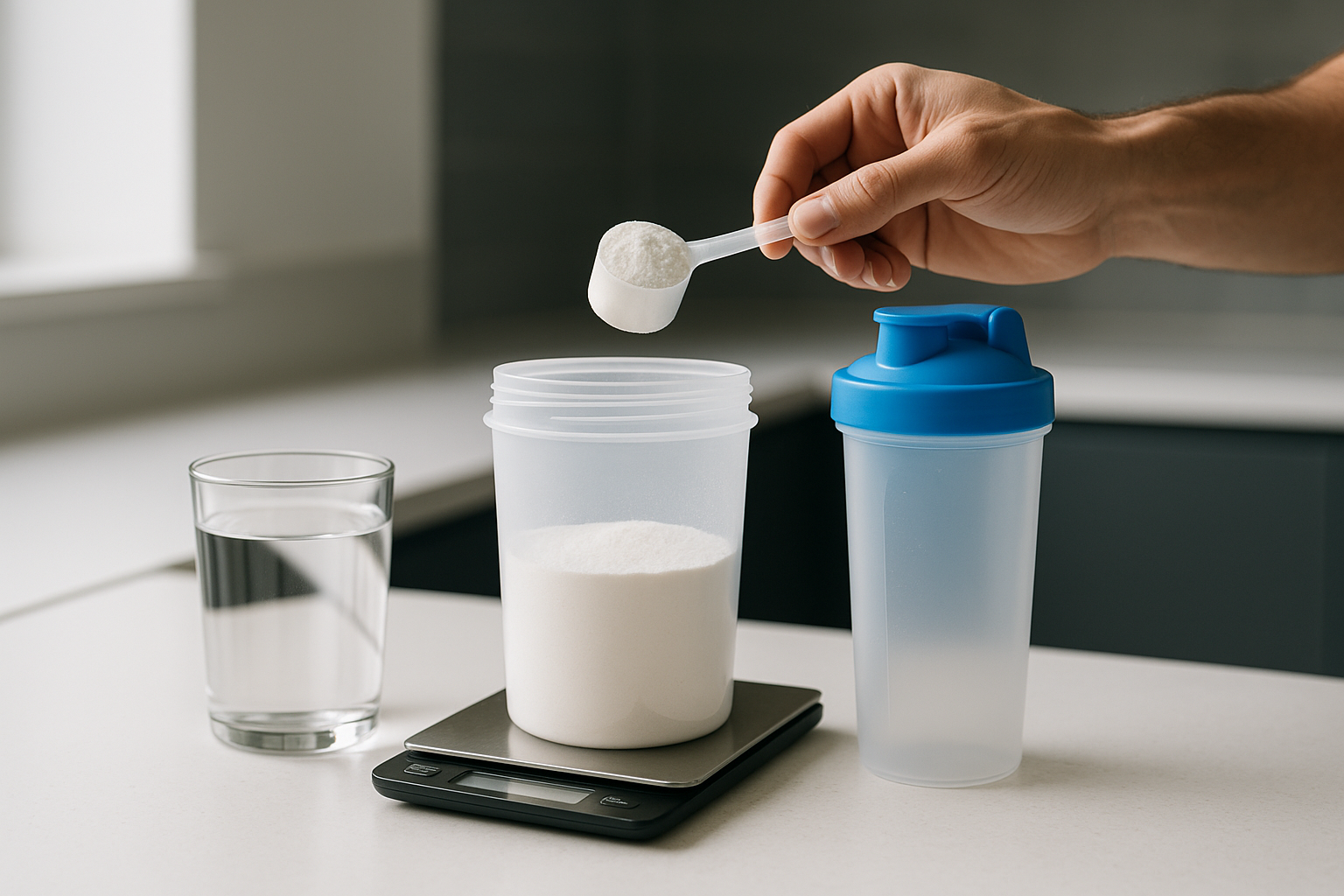
The simplest effective way to use Preferred Nutrition creatine is to take 3 to 5 g every day, including rest days, for long enough to saturate your muscles. If you want faster results, use a loading phase first; if you prefer comfort and simplicity, skip loading and just be consistent.
- Choose your protocol. Pick either maintenance-only or loading plus maintenance. Maintenance-only means 3 to 5 g daily from day one. Loading means 20 g per day, split into 4 doses of 5 g, for 5 to 7 days, then 3 to 5 g daily.
- Measure accurately. Use the scoop only if it clearly corresponds to grams on the label. Better yet, use a kitchen scale if you want precision.
- Mix it in a practical liquid. Water, juice, a protein shake, or a smoothie all work. Warm liquid can improve dissolving, but it is not required.
- Take it once daily, or split if needed. If 5 g at once upsets your stomach, split it into 2 smaller doses.
- Keep taking it on rest days. Muscle saturation depends on regular intake, not only workout-day intake.
- Stay patient and train hard. Creatine supports performance; it does not replace progressive overload, protein, or sleep.
Here is what most people can expect:
- With loading: fuller muscles and performance effects often begin within about 1 week.
- Without loading: noticeable benefits often build over roughly 3 to 4 weeks.
- Over 6 to 12 weeks: the main payoff is usually better training output and, if your program and diet are in order, more lean mass and strength than training alone.
If you are brand new, do not overcomplicate this. Preferred Nutrition creatine Canada shoppers often assume there is a special “brand-specific” timing trick. There is not. The best routine is the one you will actually repeat every day. For most people, that means keeping the tub beside a shaker or coffee mug and taking it with the first meal or post-workout shake.
Useful companions: our creatine dosage calculator helps match your daily intake to body size and goal, and if you want a full beginner walkthrough, see the related guides on how to take creatine, how much creatine per day, and how long creatine takes to work.
Exact dosing by body weight, goal, and training style
Most adults do well with 3 to 5 g of Preferred Nutrition creatine monohydrate per day, but body size and goal can help you fine-tune where you land in that range. The key is that your daily dose should be large enough to maintain muscle saturation once stores are built.
A more individualized evidence-based loading strategy is about 0.3 g per kg of body weight per day for 5 to 7 days, followed by a maintenance intake of about 0.03 g per kg per day. In practice, most labels simplify that into 20 g/day loading and 3 to 5 g/day maintenance because it is easier to follow.
| Body weight | Maintenance dose | Optional loading dose | Best for |
|---|---|---|---|
| 50-60 kg | 3 g/day | 15-18 g/day split into 3-4 doses | Smaller adults, beginners, many women |
| 60-80 kg | 3-5 g/day | 18-24 g/day split into 4 doses | Most recreational lifters and field-sport athletes |
| 80-100 kg | 5 g/day | 24-30 g/day split into 4-5 doses | Larger lifters, power athletes, bigger men |
| 100 kg+ | 5 g/day, sometimes slightly higher by protocol | 30 g/day split into multiple doses | Very large athletes using body-weight-based loading |
Goal also matters:
- Strength and hypertrophy: 3 to 5 g daily is the classic long-term dose.
- Fast saturation before a phase or event: use the loading protocol.
- Older adults: 3 to 5 g daily is common, especially alongside resistance training.
- Vegetarians and vegans: 3 to 5 g daily is still standard, but some may notice stronger response because baseline muscle creatine stores can be lower.
- Athletes in weight-sensitive sports: consider skipping loading if you want to avoid faster short-term scale increases.
If a Preferred Nutrition creatine label provides less than an effective daily amount per serving, that is not a deal-breaker if you can simply use more scoops, but it can distort the apparent value. Always calculate price by total grams of creatine, not by number of servings printed on the front label.
If you want a personalized shortcut, use the creatine dosage calculator. You can also compare whether Preferred Nutrition is priced competitively against other monohydrates in the creatine product catalog.
When to take it, how fast it works, and how to tell if it is working
You can take Preferred Nutrition creatine at any time of day, because consistency matters more than timing, and most people can tell it is working by better training performance and slightly fuller muscles over the first few weeks. This is one of the easiest creatine myths to clear up: there is no universally superior minute of the day for creatine.
Research does not show a meaningful practical difference between morning, pre-workout, post-workout, or evening dosing for most users as long as total daily intake is consistent. Taking it near training is fine because it helps habit formation, not because creatine acts like an acute stimulant. Creatine works by raising muscle stores over time.
Here is a realistic timeline:
- Days 1-7 with loading: you may notice a small body-weight increase, muscle fullness, and better repeat performance in hard sets or intervals.
- Weeks 2-4 without loading: this is when many users first notice clearer workout benefits if they started at 3 to 5 g/day.
- Weeks 4-8: the most obvious effect is often being able to maintain output better across sets.
- Weeks 8-12: if training and diet are solid, creatine’s cumulative value shows up in better strength progress and lean mass support.
How do you know Preferred Nutrition creatine is working?
- You recover a bit better between repeated hard efforts.
- You maintain rep quality deeper into a workout.
- Your top working sets feel slightly more repeatable.
- You may gain roughly 1 to 2 kg early, often from water held inside muscle rather than fat.
If you feel nothing after a month, the most likely explanations are not that monohydrate “doesn’t work.” More often, the issue is one of the following: inconsistent daily use, underdosing, weak training stimulus, or expecting a stimulant-like feeling. Some people also respond less dramatically because their baseline muscle creatine stores were already relatively high.
For deeper timing and troubleshooting, see the related guides on when to take creatine, how long creatine takes to work, and why creatine may seem not to be working. The key takeaway for this Preferred Nutrition creatine review is simple: take it daily, track gym performance, and judge it over weeks, not hours.
Who Preferred Nutrition creatine is for — beginners, women, older adults, and athletes
Preferred Nutrition creatine monohydrate is appropriate for most healthy adults who want better strength, power, training quality, or lean-mass support, including beginners, women, older adults, and many athletes. The evidence for creatine is strongest in resistance training and repeated high-intensity effort, but its usefulness is broader than bodybuilding.
Beginners often benefit because creatine helps them get more quality work out of the training they are already doing. It is not necessary before day one in the gym, but it is one of the few supplements that is both well studied and actually worthwhile. If your routine is basic but consistent, creatine fits well.
Women can use the same evidence-based dosing as men in most cases. Creatine does not “bulk women up” in some unique hormonal way; it supports the same phosphocreatine and training-volume mechanisms. Body-weight changes early on are usually water in muscle, not fat gain. For many women, especially those lifting or doing repeated sprint work, monohydrate is one of the best-value supplements available.
Older adults may benefit from creatine paired with resistance training because maintaining muscle, function, and training capacity becomes more important with age. The 2021 JISSN review also notes growing interest in creatine beyond young male athletes, although effect size depends on the person and the context.
Athletes in sports involving sprints, collisions, jumps, repeated bursts, or strength work are classic candidates. Hockey, football, lacrosse, rugby, CrossFit, powerlifting, and sprint-based team sports are obvious fits. Endurance athletes can still use creatine, but the decision is more context-specific because any short-term weight increase may help or hurt depending on the event.
Vegetarians and vegans are often especially good candidates because dietary creatine intake is typically lower. That can make the benefits more noticeable for some users.
Who should pause and ask a professional first? Anyone with known kidney disease, those who are pregnant or breastfeeding, or those using medications where medical oversight is sensible. Creatine is widely considered safe for healthy people, but health context matters more than internet bravado.
If you are just getting started, our creatine brand reviews can help you compare options, and our creatine myths debunked page clears up the most common misconceptions beginners hear first.
Safety, side effects, and the myths that confuse most creatine reviews
Creatine monohydrate is well supported for safety in healthy people when used at recommended doses, and the most common side effects are mild digestive upset or short-term water-weight gain rather than anything dramatic. That is the evidence-based answer to concerns about Preferred Nutrition creatine quality and safety.
The Mayo Clinic overview and the ISSN position stand both reflect the mainstream view that creatine is generally safe for healthy adults when used appropriately. The biggest real-world issue is usually too much at once, especially during loading, which can cause stomach discomfort, loose stools, or a heavy feeling if the dose is not split up.
Common myths worth debunking directly:
- “Creatine is a steroid.” False. Creatine is not an anabolic steroid and does not work through steroid hormone pathways.
- “Creatine damages healthy kidneys.” Evidence does not support routine kidney harm in healthy users at recommended intakes, though people with kidney disease need medical guidance.
- “Creatine causes dehydration or cramps.” This is not supported by the broader evidence base; the 2021 JISSN review specifically addresses this misconception.
- “Creatine makes you fat.” False. Initial scale gain is usually water stored in muscle, not body fat.
- “You need to cycle off.” No. There is no established requirement to cycle creatine in healthy users.
Potential side effects you might actually notice:
- Temporary scale increase from intracellular water
- Gritty texture if the powder does not dissolve fully
- Stomach upset if taken in large single doses
The best fixes are practical: take smaller split doses, mix thoroughly, use enough fluid, and avoid dry scooping. If Preferred Nutrition creatine is flavoured or part of a blend, sweeteners or extra ingredients could also be the real reason for stomach issues rather than creatine itself.
If safety is your main concern, a plain monohydrate with a Canadian-compliant label is the least complicated route. For a fuller safety deep dive, explore the related guides on whether creatine is safe, kidney concerns, digestive side effects, bloating, and weight gain.
Preferred Nutrition creatine quality in Canada: what to check before you buy
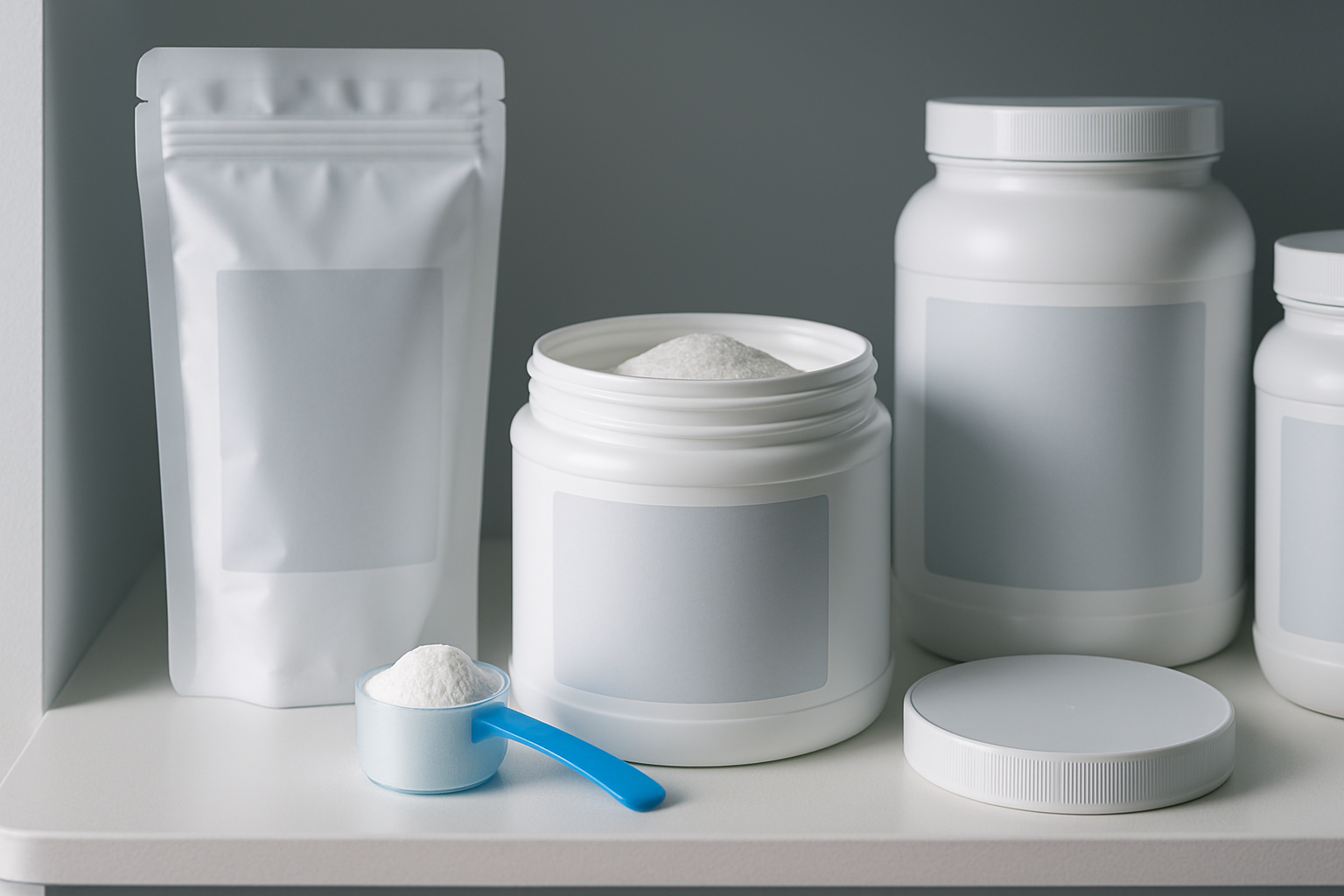
The best way to judge Preferred Nutrition creatine quality is to ignore hype and verify form, licensing, testing, and value per gram. For Canadians, this section matters as much as the science, because two creatine tubs can promise the same thing while offering very different confidence and value.
Start with Canadian compliance. An NPN, or Natural Product Number, is one useful signal that a product has gone through the natural health product licensing process in Canada. An NPN is not a guarantee of athletic superiority, but it does help separate regulated retail products from vague marketplace listings.
Then assess quality indicators:
- Does the product clearly say creatine monohydrate?
- Is the ingredient list minimal?
- Is there any mention of third-party testing, lot testing, or raw-material sourcing?
- Is the serving size honest enough to reach 3 to 5 g/day without tricks?
- Is the packaging sealed well and easy to store dry?
For competitive athletes, independent sport certification matters more than generic purity language. The IOC consensus on dietary supplements emphasizes contamination risk and the importance of choosing products carefully, especially in tested sport. If Preferred Nutrition does not offer a sport-specific certification, recreational users may still find it perfectly acceptable, but elite athletes should be stricter.
| Buying factor | Why it matters | What to look for on Preferred Nutrition |
|---|---|---|
| Form | Monohydrate has the strongest evidence | “Creatine monohydrate” clearly stated |
| NPN | Canadian regulatory legitimacy | Visible licence number on label |
| Purity claims | Reduces guesswork about fillers | Simple formula, specific testing claims |
| Dose honesty | Ensures effective daily intake | Easy path to 3-5 g/day |
| Value per gram | Best way to compare products fairly | Competitive cost versus other monohydrates |
If you are shopping around, compare Preferred Nutrition against our best creatine rankings, browse the creatine product catalog, and consult broader creatine brand reviews. A good Canadian creatine should be boring in the best possible way: legal, simple, properly dosed, and fairly priced.
Why some people think a creatine is bad when the real issue is how they used it
Many negative takes in a Preferred Nutrition creatine review are really user-error stories, not evidence that the product itself is ineffective. Creatine is one of the most reliable supplements in sports nutrition, but it still fails when people underdose it, take it sporadically, or expect immediate stimulant effects.
The most common mistakes are simple:
- Not taking it daily. Creatine works by saturation, so skipping most rest days slows or blunts results.
- Using too little. A tiny half-scoop taken inconsistently is often not enough to maintain optimal stores.
- Stopping after a week without loading. If you skipped loading, you often need about 3 to 4 weeks to reach noticeable saturation.
- Judging it by how it feels in the moment. Creatine is not a buzz, pump, or crash supplement.
- Taking large doses at once and blaming the product for stomach upset. Split the dose instead.
- Comparing by serving count, not grams. A cheaper-looking tub can actually cost more per effective dose.
There are also quality-perception traps. For example, some users assume a gritty powder is low quality. In reality, ordinary monohydrate often does not dissolve perfectly in cold water, and that says little about effectiveness. Others assume a more expensive “advanced” form must work better than monohydrate. The evidence does not support that conclusion.
If Preferred Nutrition creatine seems not to be working, ask these practical questions first:
- Have you used at least 3 to 5 g daily for long enough?
- Did you train hard enough to notice the difference in repeated effort?
- Are you sleeping and eating enough to support progress?
- Did the product actually contain monohydrate, or was it a blend with less creatine than you assumed?
Beginners especially benefit from keeping the process boring and repeatable. Put the tub where you make your morning shake, track your lifting numbers for a month, and evaluate with data rather than vibes. If you want a checklist for avoiding every major beginner error, our creatine myths debunked page and the related guides on loading, rest days, and common creatine mistakes are worth reading before you blame the brand.
How Preferred Nutrition compares with other creatine options and forms
Preferred Nutrition creatine should be compared first against other plain monohydrate products, not against flashy alternative forms that often cost more without better results. If it is a straightforward monohydrate at fair value, it is already in the right lane.
Here is the practical hierarchy most Canadian buyers should use:
- Best evidence: creatine monohydrate powder
- Best convenience: capsules, but usually worse value per gram
- Best taste experience: flavoured powders, but often pricier and less pure by formula simplicity
- Most overmarketed category: HCl, buffered, ethyl ester, and proprietary “transport” versions
The reason monohydrate keeps winning is not inertia; it is evidence. The 2017 ISSN position stand and later reviews continue to support monohydrate as the best-studied and most cost-effective form. Alternative forms may dissolve differently or market smaller scoop sizes, but they have not displaced monohydrate as the standard recommendation.
| Type | Pros | Cons | Best use case |
|---|---|---|---|
| Monohydrate powder | Most studied, effective, cheapest per gram | Can be slightly gritty | Most Canadians |
| Micronized monohydrate | Better mixability | May cost a bit more | Users who hate texture |
| Capsules | Convenient, portable | Higher cost, many capsules needed | Travel or no-shaker users |
| HCl or specialty forms | Good marketing, sometimes easier mixing | Less evidence, often worse value | Only if you strongly prefer them |
So where does PN creatine review logic land? If Preferred Nutrition is selling monohydrate powder with a clean label, it should be judged mainly on value, Canadian compliance, mixability, and trust signals, not on whether it has an exotic angle. If it costs materially more than similar monohydrate products with better transparency, it becomes harder to recommend.
To benchmark it properly, compare it with other entries in our best creatine rankings and the broader creatine brand reviews. A good product does not need to be unique; it needs to be reliable.
Bottom line: should you buy Preferred Nutrition creatine?
Yes, Preferred Nutrition creatine is worth buying if it is a plain, properly dosed creatine monohydrate with an NPN, a clean label, and competitive cost per gram. That is the clearest bottom line for anyone searching “preferred nutrition creatine review,” “is preferred nutrition creatine good,” or “preferred nutrition creatine Canada.”
The reason this answer is not more dramatic is that creatine should not be dramatic. Good creatine is a commodity-like performance supplement where the winning formula is simplicity plus quality control. If Preferred Nutrition gives you genuine monohydrate, enough grams per day, and no nonsense on the label, it should help with the same core outcomes supported across the literature: better repeated high-intensity performance, improved training capacity, and stronger lean-mass support when paired with consistent lifting.
Buy it when these are true:
- You want evidence-based creatine, not a flashy form.
- You can confirm a practical 3 to 5 g daily intake.
- You prefer buying within Canada and want a regulated-looking label.
- The price per gram is as good as or better than comparable monohydrate products.
Skip or reconsider it when these are true:
- The label is vague about form or dose.
- The product uses filler-heavy blends that dilute value.
- The price is high relative to better-documented monohydrates.
- You are a tested athlete and need stronger certification than the product offers.
If you want the shortest possible recommendation: Preferred Nutrition creatine monohydrate is likely good if it is plain monohydrate sold transparently and at a fair price, because the science supports monohydrate itself more than any brand story around it.
Next steps: compare it against the best creatine rankings, use the creatine dosage calculator to confirm your intake, and browse the creatine product catalog if you want to see how it stacks up on value and format against other Canadian options.
Preferred Nutrition Creatine Review: the numbers that matter
- 3-5 g/day Standard maintenance dose — The usual evidence-based daily intake for creatine monohydrate after saturation.
- 20 g/day Optional loading protocol — Typically split into 4 doses for 5 to 7 days to saturate muscles faster.
- 5-7 days Fast saturation timeline — What many users need to notice earlier effects when loading correctly.
- 3-4 weeks No-loading timeline — A common window to build saturation when taking only 3 to 5 g per day.
Frequently Asked Questions
Is Preferred Nutrition creatine good?
Yes, Preferred Nutrition creatine is good if it is plain creatine monohydrate, correctly dosed, and sold with clear Canadian-compliant labelling. What matters most is not the brand name but whether the product provides an evidence-based 3 to 5 g daily intake, minimal unnecessary ingredients, and a fair price per gram.
What type of creatine is Preferred Nutrition creatine?
The best version to buy is Preferred Nutrition creatine monohydrate, because monohydrate is the most studied and most cost-effective form. If the product is a blend or a specialty form, check whether it still provides the same effective daily dose and whether you are paying extra for marketing rather than better evidence.
How much Preferred Nutrition creatine should I take per day?
Most adults should take 3 to 5 g of Preferred Nutrition creatine per day. If you want faster saturation, you can use a loading phase of 20 g per day split into 4 doses for 5 to 7 days, then continue with 3 to 5 g daily.
Do I need to load Preferred Nutrition creatine?
No, you do not need to load Preferred Nutrition creatine, but loading works faster. A loading phase saturates muscle stores in about 5 to 7 days, while taking 3 to 5 g daily without loading usually takes about 3 to 4 weeks to produce similar saturation.
When should I take Preferred Nutrition creatine?
You can take Preferred Nutrition creatine whenever it is easiest to be consistent. Morning, post-workout, or with a meal are all fine, because creatine works by increasing muscle stores over time rather than by giving an immediate stimulant effect.
Does Preferred Nutrition creatine cause bloating or weight gain?
Preferred Nutrition creatine can cause a small early increase in body weight, but that is usually water stored inside muscle rather than body fat. Some people describe this as bloating, though true digestive bloating is more often caused by taking too much at once or by added ingredients in flavoured formulas.
Is Preferred Nutrition creatine safe?
Preferred Nutrition creatine should be safe for most healthy adults if it is standard creatine monohydrate used at recommended doses. People with kidney disease, those who are pregnant or breastfeeding, or anyone with relevant medical concerns should speak with a qualified clinician before using it.
How long does Preferred Nutrition creatine take to work?
Preferred Nutrition creatine usually starts working within about 1 week if you use a loading phase, or within about 3 to 4 weeks if you take 3 to 5 g per day without loading. The first signs are often better repeat performance in the gym and slightly fuller muscles, not a stimulant-like feeling.
Is Preferred Nutrition creatine better than creatine HCl or other forms?
Preferred Nutrition creatine is not automatically better just because of the brand, but if it is monohydrate, it likely has better evidence behind it than many specialty forms. Creatine monohydrate remains the benchmark because it is the most studied, reliably effective, and usually the cheapest per useful gram.
What should Canadians check before buying Preferred Nutrition creatine?
Canadians should check that Preferred Nutrition creatine lists creatine monohydrate clearly, shows a valid NPN when applicable, provides an effective daily dose, and offers reasonable value per gram. If you are a tested athlete, look beyond basic label claims and prioritize stronger third-party sport certification when possible.