Buying Creatine in Newfoundland and Labrador: Local and Online Options
By The Creatine Canada Research Team — Evidence-based supplement analysts
Yes—you can buy creatine in Newfoundland and Labrador both locally and online, and for most people the smartest choice is a plain creatine monohydrate powder from a reputable Canadian seller with clear labelling, fair shipping to NL, and ideally third-party testing. If you are shopping in St. John’s, elsewhere in Newfoundland, or in Labrador, focus less on flashy formulas and more on monohydrate, cost per gram, and trustworthy Canadian compliance.
Evidence-based · Cites 4 sources · Editorial standards
Key Takeaways
- The best creatine to buy in Newfoundland is usually plain creatine monohydrate powder.
- A standard maintenance dose is 3 to 5 g daily; loading is optional.
- Online ordering often gives NL buyers better value and selection than local shelves.
- Check for Canadian-compliant labelling and, when possible, third-party testing.
- Micronized monohydrate can mix more easily, but regular monohydrate works just as well.
- Take creatine every day, including rest days, to keep muscle stores saturated.
- Avoid overpaying for blends, gummies, or exotic forms that do not beat monohydrate in evidence.
Where to buy creatine in Newfoundland and Labrador: the direct answer
You can buy creatine in Newfoundland and Labrador from local supplement retailers, some pharmacies and fitness-focused nutrition shops, but many buyers in NL get the best mix of price, selection, and convenience by ordering online from Canadian stores that ship reliably to the province. If your goal is simply to get an effective product, buy creatine monohydrate, which is the most studied, most cost-effective, and most consistently recommended form.
That answer matters because creatine is not a niche or experimental supplement. The 2017 ISSN position stand concluded that creatine monohydrate is the most effective nutritional supplement currently available for increasing high-intensity exercise capacity and lean mass during training. In practice, that means the product type matters more than whether you buy it in St. John’s, central Newfoundland, western Newfoundland, or Labrador.
If you are searching for creatine Newfoundland, buy creatine St John’s, supplements Newfoundland creatine, creatine NL Canada, creatine Labrador, or creatine delivery Newfoundland, the buying framework is the same:
- Prioritize monohydrate over HCL, buffered, nitrate, or flashy blends.
- Read the serving size carefully so you know how many grams of actual creatine you get per scoop.
- Compare cost per gram, not just tub price.
- Check shipping terms to Newfoundland and Labrador, especially for remote postal codes.
- Prefer reputable Canadian sellers with clear return policies and lot information.
For many Newfoundland buyers, the simplest path is to compare options in a vetted creatine product catalog or start with evidence-backed best creatine rankings before choosing a brand. If you want a local purchase today, stores in larger centres such as St. John’s may have common monohydrate tubs in stock, but local inventory can be inconsistent compared with online stock depth.
The key point is straightforward: the best creatine in Newfoundland is not a special regional product; it is a reputable creatine monohydrate that arrives fresh, accurately labelled, and priced fairly after shipping.
Why creatine works so well: the mechanism behind the supplement
Creatine works by increasing your muscle stores of phosphocreatine, a stored high-energy compound that helps your body rapidly regenerate ATP, the immediate energy currency used during short, hard efforts. That is why creatine is most useful for lifting, sprinting, repeated intervals, jumping, and other high-intensity work.
Your body already makes creatine from amino acids, and you also get some from animal foods. Supplementation matters because muscle creatine stores are not always fully saturated, and topping them up can improve performance where rapid energy turnover is the limiting factor. When you supplement consistently, you increase the pool of phosphocreatine available to donate a phosphate group to ADP and rebuild ATP during explosive effort. More available ATP, recycled faster, often means you can squeeze out an extra rep, maintain power a little longer, or recover a bit better between repeated bursts.
That might sound small, but the training effect compounds. If creatine helps you do slightly more quality work over weeks and months, the result can be more strength and lean mass over time. The ISSN position stand and the Examine creatine evidence summary both reflect a broad evidence base showing benefits for high-intensity performance and training adaptations.
Creatine also pulls water into muscle cells, which partly explains the early body-weight increase many people notice. This is intramuscular water, meaning water held inside muscle tissue, not fat gain. That fuller cell environment may also support training quality and muscle-building signalling, although the strongest evidence still points to performance support as the main driver.
For Newfoundland lifters, runners doing intervals, hockey players, CrossFit athletes, and beginners just starting resistance training, the practical takeaway is simple: creatine is not a stimulant and does not give a jittery feeling. It works by gradually increasing muscle creatine stores until they are closer to saturation. If you want a full beginner overview, see creatine dosage calculator for your daily amount and pair it with a plain monohydrate product.
One sentence summary: creatine helps your muscles recycle energy faster during hard, short efforts, and that improves training quality enough to matter over time.
The best type of creatine to buy in NL: monohydrate still wins
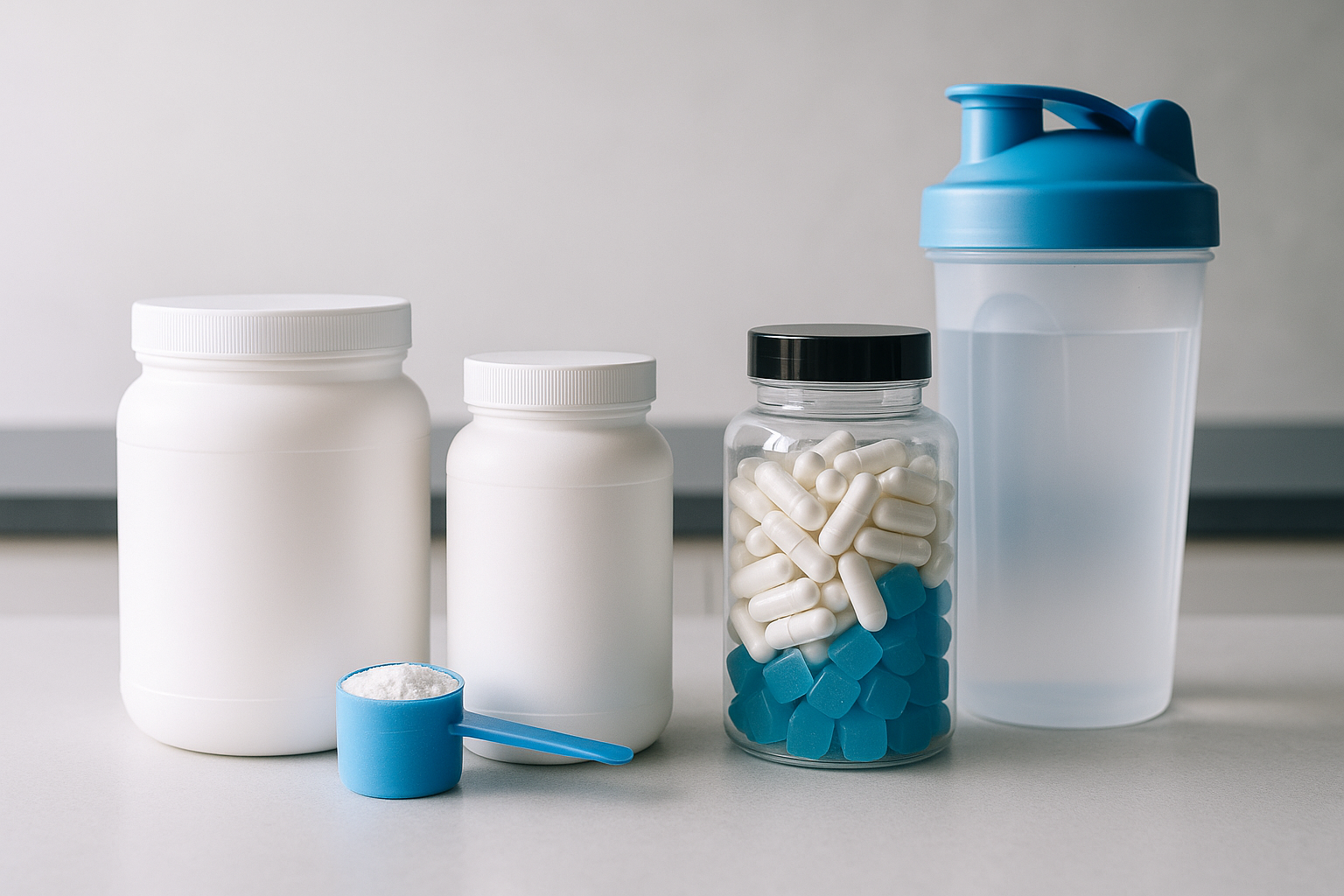
The best type of creatine to buy in Newfoundland and Labrador is plain creatine monohydrate because it has the strongest evidence, the lowest usual cost per effective dose, and no proven disadvantage in real-world results versus newer forms. If a label tries to sell you on HCL, buffered creatine, ethyl ester, or a proprietary matrix, you should assume the marketing is ahead of the evidence.
This is one of the clearest points in sports nutrition. Creatine monohydrate has been studied for decades, while many alternative forms are supported mainly by marketing claims about absorption, bloating, or smaller doses. The problem is that these claims generally have not translated into better outcomes than monohydrate in the research. The 2021 JISSN paper on common questions and misconceptions about creatine explains that many fears and marketing narratives around standard monohydrate are overstated or unsupported.
When Newfoundland buyers compare options, these are the main formats you will see:
- Unflavoured monohydrate powder: usually the best value and simplest ingredient list.
- Micronized monohydrate: same active ingredient, finer particles, often mixes more easily.
- Capsules: convenient for travel, but more expensive per gram and less practical at 3 to 5 g daily.
- Gummies or chewables: convenient, but often pricier and sometimes underdosed per serving.
- Pre-workouts with creatine: can work, but many underdose creatine or make daily consistency harder.
If you are unsure where to start, use this rule: buy the product with the fewest moving parts. A single-ingredient tub of monohydrate makes dosing simple and cost transparent. You can browse creatine brand reviews or compare options in our best creatine rankings if you want help separating quality from branding.
For Canadian context, look for compliant packaging and clear lot information. Some buyers also prefer products with independent certification or transparent testing. That matters even more for tested athletes. The International Olympic Committee consensus on dietary supplements emphasizes supplement quality and contamination risk as practical issues for athletes, even when the ingredient itself is legal and evidence-based.
The shortest honest advice is this: buy the boring tub. Plain monohydrate is usually the smartest creatine purchase in Newfoundland, St. John’s, and Labrador alike.
How to buy creatine smartly in St. John’s, Newfoundland, and Labrador
The smartest way to buy creatine in St. John’s or elsewhere in Newfoundland and Labrador is to compare local convenience against online value, then choose the product that gives you a full effective dose, trustworthy quality, and a reasonable delivered price. Most mistakes happen when people buy based on hype, not label details.
Use this step-by-step buying process:
- Choose the form: start with creatine monohydrate powder unless you have a strong reason to prefer capsules.
- Check the ingredient panel: ideally one active ingredient, with serving size listed clearly in grams.
- Confirm the actual dose per serving: you want a practical path to 3 to 5 g daily.
- Review seller credibility: established Canadian retailer, clear contact details, realistic shipping policy, and visible batch or lot information when available.
- Estimate cost per effective day: divide the total grams in the tub by your daily dose.
- Check delivery terms to NL: Newfoundland and Labrador shipping may take longer than central Canada, and remote Labrador addresses may have fewer expedited options.
- Look at testing claims carefully: third-party testing is useful, but vague words like “premium” or “lab grade” without details do not prove much.
If you are buying locally in St. John’s, the advantage is speed: you can start today and inspect the package in person. The downside is narrower brand choice and sometimes a higher shelf price. If you are buying online for creatine delivery Newfoundland, you usually gain more choice and easier price comparison, but you should account for shipping thresholds and delivery timelines.
Good signs on a label or product page include:
- “Creatine monohydrate” listed plainly
- grams per serving shown clearly
- number of servings stated transparently
- Canadian-compliant supplement information
- testing or certification described specifically rather than vaguely
Bad signs include proprietary blends, hidden dosages, exaggerated promises, or a formula that bundles many underdosed ingredients. If you want a stronger buyer framework, our creatine product catalog and creatine brand reviews can help you narrow options before checking out.
For most NL buyers, the winning purchase is the one that makes daily compliance easy for the next two to three months. A cheap tub you dislike using is worse than a slightly pricier one you take consistently.
Exactly how much creatine to take: dosing by goal, body weight, and speed
The standard creatine dose for most adults is 3 to 5 g per day, and that dose works whether you live in Newfoundland, Labrador, or anywhere else in Canada. If you want results faster, you can do an optional loading phase of about 20 g per day split into 4 doses for 5 to 7 days, then switch to 3 to 5 g daily.
The reason both methods work is that creatine depends on muscle saturation, meaning how full your muscles are with stored creatine. Loading gets you there faster; steady daily use gets you there more gradually. Neither method is mandatory.
| Body weight | General maintenance | Optional loading phase | Best for |
|---|---|---|---|
| Under 60 kg | 3 g/day | ~20 g/day split into 4 doses for 5-7 days | Beginners, smaller athletes, general fitness |
| 60-90 kg | 3-5 g/day | ~20 g/day split into 4 doses for 5-7 days | Most adults lifting or training hard |
| Over 90 kg | 5 g/day | ~20 g/day split into 4 doses for 5-7 days | Larger athletes, strength-focused trainees |
Here is a practical way to choose:
- Beginner who just wants simple: take 3 to 5 g daily, every day.
- Lifter starting a training block: optional loading for 5 to 7 days, then 3 to 5 g daily.
- Woman concerned about bloating: skip loading and take 3 g daily to reduce the chance of stomach upset or abrupt scale changes.
- Older adult training for strength and function: 3 to 5 g daily alongside resistance exercise.
- Athlete chasing repeated sprint or power output: loading can make sense if you want saturation sooner.
Consistency matters more than dose timing. Missing one day is not a disaster, but taking it only on workout days is a common mistake because creatine works through accumulated muscle stores, not acute pre-workout stimulation. Use our creatine dosage calculator if you want a quick personalized estimate, and see creatine myths debunked if conflicting advice online has you second-guessing basics.
If you are wondering whether 10 g is better than 5 g for most healthy gym-goers, the answer is usually no. Once muscle stores are saturated, more is not automatically more effective and is more likely to cause digestive issues or waste money.
When to take it, how to mix it, and what results to expect week by week
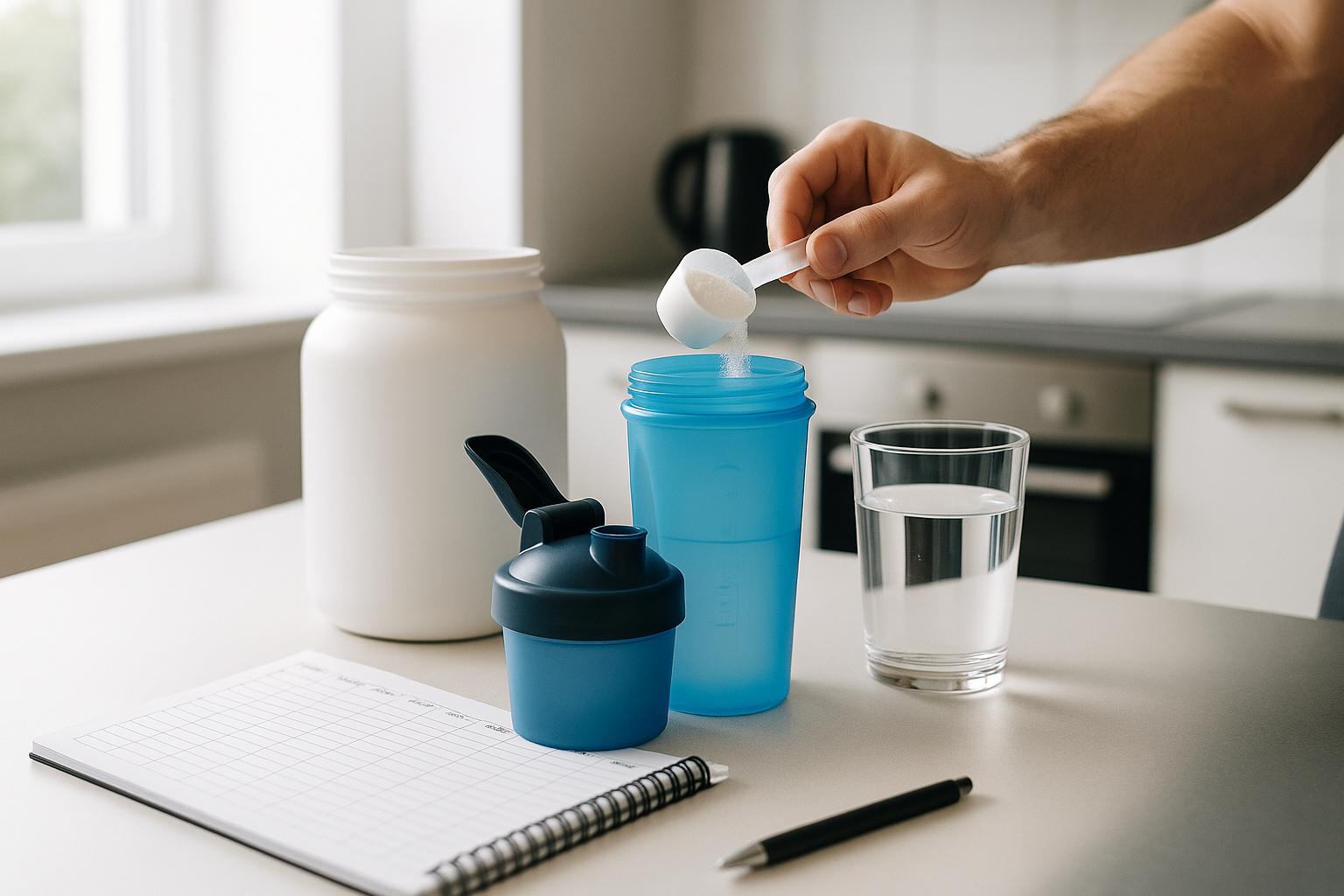
The best time to take creatine is the time you will remember to take it every day, because total daily consistency matters more than precise timing. Taking creatine before or after a workout is fine, taking it on rest days is important, and mixing it in water, a shake, or another beverage is usually a matter of preference.
Creatine is not like caffeine. You do not take a scoop and feel an instant surge. You are building up muscle stores over time. Here is the realistic timeline:
- Days 1-7 with loading: faster rise in muscle creatine stores; some people notice a slight body-weight increase and a fuller muscular feel.
- Weeks 2-4 without loading: saturation builds more gradually; performance changes may show up as an extra rep, slightly better repeat efforts, or less drop-off across sets.
- Weeks 4-8: the benefit is often clearer in training logs, bar speed, sprint repeatability, or workload tolerance.
- Weeks 8-12: body composition and strength differences are usually the result of better training quality compounded over time.
How to take it in practice:
- Measure 3 to 5 g with a scale or scoop.
- Mix it into water, juice, or a protein shake.
- Drink it once daily.
- Repeat on training days and rest days.
If the powder feels gritty, use more water, stir longer, or choose a micronized monohydrate next time. If you train early, taking it after training with breakfast is fine. If you lift at night, taking it with dinner is also fine. The best routine is the one you can automate.
Want more detail on daily use? Pair this page with guidance on related basics like creatine product catalog for format choice and consistent measuring habits. The 2021 JISSN misconceptions paper also makes the broader point that many popular rules around creatine timing are overcomplicated compared with the simple reality that saturation is what drives the effect.
How do you know it is working? The cleanest signs are better training output, a small early increase in scale weight from intramuscular water, and improved tolerance for repeated hard efforts. If you are expecting a dramatic subjective feeling, you may miss the real effect, which usually shows up in performance data first.
Who creatine is for: beginners, women, older adults, and athletes in NL
Creatine is a good fit for far more people than bodybuilders, including beginners, women, older adults, vegetarians, and many competitive or recreational athletes in Newfoundland and Labrador. The right question is not “am I hardcore enough for creatine?” but “would better high-intensity performance, training quality, or muscle support help my goal?”
Beginners often benefit because they are starting a new resistance-training habit and can use creatine to support early progress. You do not need to “earn” creatine by training for years first. If you are new, simplicity matters: buy monohydrate, take it daily, and track your workouts.
Women can use creatine just as men can. Creatine is not a steroid, and it does not automatically make women “bulky.” It supports the same core mechanism: better phosphocreatine availability for repeated high-quality effort. Women doing strength training, team sport, interval conditioning, or active aging work are all valid candidates. If concerns about scale weight are high, skipping the loading phase is a practical option.
Older adults may benefit when creatine is paired with resistance training, because maintaining muscle mass and strength becomes more important with age. Creatine is not a substitute for training, but it can support the work.
Athletes in sports common across Newfoundland and Labrador, such as hockey, rugby, sprint-based field sports, and strength sports, are strong candidates because creatine is especially useful for repeated short bursts of high effort. The IOC consensus recognises creatine as one of the few supplements with a strong evidence base for certain performance goals.
Vegetarians and vegans may sometimes respond particularly well because dietary creatine intake is lower when you do not eat meat or fish.
Who should pause and ask a professional first? People with known kidney disease, people under medical supervision for a relevant condition, and anyone taking medications where their clinician wants to review supplement use. For deeper safety reading, combine this page with our broader educational content through the site and use plain products rather than stimulant-heavy stacks.
The practical Newfoundland takeaway is simple: if you live in St. John’s, Corner Brook, Gander, Happy Valley-Goose Bay, or elsewhere in NL and you train with effort, creatine is not just for advanced lifters. It is a mainstream, evidence-based supplement for a wide range of active people.
Safety, side effects, and what Canadian buyers should check on the label
Creatine monohydrate is considered safe for healthy people when taken at recommended doses, and the most common side effects are mild and practical, such as temporary stomach upset, water-related weight gain, or grittiness if the powder does not mix well. The big internet fears around kidney damage, dehydration, and cramping are not supported for healthy users by the overall evidence base.
The ISSN position stand states that creatine monohydrate is not only effective but also safe, including longer-term use in healthy individuals at recommended intakes. The 2021 JISSN misconceptions review specifically addresses common myths such as kidney harm, dehydration, hair loss panic, and the idea that creatine is somehow unsafe for women or older adults by default.
What you may notice in the real world:
- Scale weight increase: often an early increase from water being stored inside muscle.
- Digestive upset: more likely with large single doses, poor mixing, or loading too aggressively.
- No “feeling” from it: normal, because creatine is not a stimulant.
How to reduce side effects:
- Use 3 to 5 g daily instead of loading if you have a sensitive stomach.
- Split doses if loading.
- Mix thoroughly and drink enough fluid through the day.
- Take it with a meal if that feels better on your stomach.
For Canadian buyers, also pay attention to label credibility. Clear Supplement Facts-style information, actual grams of creatine per serving, lot transparency, and retailer legitimacy matter more than dramatic marketing copy. In Canada, buyers often look for compliant natural health product labelling, including an NPN, which stands for Natural Product Number, when applicable under Canadian regulations. Exact packaging can vary by product category and seller, but clear Canadian-facing compliance information is a good sign.
If you are buying online into Newfoundland or Labrador, especially from outside Canada, be extra careful about seller legitimacy and imported stock. For a safer starting point, stick with known brands and compare them through creatine brand reviews before purchasing.
The short version is this: for healthy adults, recommended-dose creatine monohydrate has one of the strongest safety profiles in sports supplementation.
Common buying mistakes and creatine myths Newfoundland shoppers should ignore
The most common creatine mistakes in Newfoundland are buying the wrong form, taking it inconsistently, expecting a stimulant-like feeling, and overpaying for fancy products that do not outperform plain monohydrate. Most creatine frustration comes from misunderstanding how it works, not from the ingredient failing.
Here are the big mistakes to avoid:
- Buying a proprietary blend instead of straight monohydrate: this makes it harder to know your real dose.
- Only taking it on workout days: daily use matters because saturation matters.
- Stopping after one week because you “feel nothing”: creatine often shows up first in training output, not sensation.
- Confusing water weight with fat gain: early scale changes are usually intramuscular water.
- Assuming expensive forms are better: evidence does not show HCL or other trendy forms consistently beating monohydrate.
- Ignoring shipping and stock realities in NL: a deal is not a deal if the final delivered cost is poor or replacement stock is unreliable.
Now the myths:
Myth: Creatine is a steroid.
False. Creatine is a naturally occurring compound involved in cellular energy, not an anabolic steroid.
Myth: Creatine ruins your kidneys.
False for healthy users at recommended doses, based on the mainstream evidence. It can raise creatinine on some blood tests, but creatinine is a breakdown marker and not the same thing as kidney injury.
Myth: Creatine is only for men who bodybuild.
False. Women, older adults, team-sport athletes, and beginners can all use it appropriately.
Myth: You must cycle creatine.
False. Routine cycling is not required for most healthy users.
Myth: Creatine causes dehydration and cramps.
The evidence does not support that as a general effect in healthy users.
If you want a myth-by-myth breakdown, our creatine myths debunked page goes deeper. If you think creatine is “not working,” the fix is usually simple: verify you bought actual monohydrate, confirm your dose, take it every day, and give it enough time. Newfoundland buyers especially should also avoid panic-buying novelty formats when a plain tub does the job better.
Creatine is one of the rare supplements where the least glamorous choice is usually the most evidence-based one.
Local shop or online order? A practical Newfoundland creatine buying comparison
For most people in Newfoundland and Labrador, online creatine buying wins on selection and often value, while local buying wins on immediacy. The right choice depends on whether you need creatine today or want the widest range of reputable monohydrate options at the best delivered price.
| Buying route | Main advantages | Main drawbacks | Best for |
|---|---|---|---|
| Local supplement shop in St. John’s or another larger NL centre | Same-day purchase, inspect package in person, no wait | Less selection, possible higher shelf price, stock may vary | People who need creatine immediately |
| Canadian online retailer shipping to Newfoundland | Better selection, easier price comparison, stronger chance of finding plain monohydrate and tested products | Shipping wait, free-shipping thresholds, remote-delivery limitations | Value-focused and brand-specific buyers |
| Large marketplace seller | Convenience and fast checkout | Quality control and seller consistency can vary more | Experienced buyers who verify listings carefully |
If you are in St. John’s, local buying may be completely adequate if you find a plain monohydrate at a fair price. If you are in smaller Newfoundland communities or in Labrador, online shopping often becomes more attractive simply because shelf availability may be narrower. That is why searches like creatine Labrador and creatine delivery Newfoundland often point people toward reputable Canadian ecommerce options rather than trying to hunt down the perfect local tub.
When comparing online options, do not stop at the list price. Check:
- shipping cost to your postal code
- estimated delivery window
- whether the seller ships from within Canada
- return policy for damaged or opened containers
- subscription or multi-buy discounts if you plan to use creatine long term
If you are price-sensitive, calculate the number of days a tub lasts at your dose. A larger tub may look expensive up front but be the better buy over two or three months. If you want help narrowing products first, start with our best creatine rankings or use the creatine product catalog to compare format and value before you buy.
Bottom line: local is fine for convenience, but online is often the smarter play for creatine NL Canada shoppers who want better selection and cleaner price transparency.
Bottom line: the best way to buy and use creatine in Newfoundland
If you want the simplest correct answer on buying creatine in Newfoundland and Labrador, buy a reputable creatine monohydrate, take 3 to 5 g daily, and stay consistent for at least several weeks. That approach covers the needs of most beginners, lifters, women, older adults, and athletes better than chasing premium formulas or perfect timing.
Here is the no-nonsense Newfoundland action plan:
- Pick plain creatine monohydrate, ideally unflavoured powder.
- Decide local or online: local if you need it now, online if you want more choice and often better value.
- Check the label for grams per serving, total servings, and trustworthy Canadian-facing packaging.
- Start with 3 to 5 g daily; loading is optional, not required.
- Take it every day, including rest days.
- Track training performance rather than waiting for a dramatic subjective feeling.
What should you expect? A possible early increase in body weight from water in the muscle, a gradual improvement in repeated hard efforts, and better long-term training output if your program is solid. What should you not expect? Instant energy, magic fat loss, or a special “Newfoundland creatine” formula that outperforms monohydrate.
If you want to go one level deeper before buying, these are the most useful next reads: a creatine dosage calculator for your daily amount, creatine brand reviews for quality comparison, and creatine myths debunked if internet noise has made the topic confusing. Together, those tools help you shop with confidence whether you are looking for buy creatine St John’s, supplements Newfoundland creatine, or creatine delivery Newfoundland.
The final takeaway is deliberately boring because boring is usually correct: the best creatine in Newfoundland is the same best creatine almost everywhere else in Canada—a reliable monohydrate product you will actually take every day.
Buying and Using Creatine in Newfoundland: The Numbers That Matter
- 3-5 g/day Standard daily maintenance dose — Works for most healthy adults using creatine monohydrate.
- ~20 g/day Optional loading dose — Usually split into 4 doses for 5-7 days to reach saturation faster.
- 5-7 days Typical loading timeline — Gets muscle creatine stores up faster than maintenance-only use.
- 4-8 weeks Common window to clearly notice training benefits — Especially when using a 3-5 g daily maintenance approach without loading.
Frequently Asked Questions
Where can I buy creatine in Newfoundland and Labrador?
You can buy creatine in Newfoundland and Labrador from local supplement stores, some pharmacies, and online Canadian retailers that ship to NL. For most people, the best option is a reputable online seller with plain creatine monohydrate, clear grams per serving, and reasonable shipping to your postal code.
Can I buy creatine in St. John’s locally?
Yes, you can usually buy creatine in St. John’s from supplement-focused retailers and some larger health or fitness shops. Local buying is best if you want a tub the same day, but online shopping often gives you more brand choice and easier cost-per-gram comparison.
What is the best creatine to buy in Newfoundland?
The best creatine to buy in Newfoundland is usually plain creatine monohydrate powder. It has the strongest research support, is typically the most affordable effective form, and does not get beaten consistently by HCL, buffered, or other premium-priced alternatives.
Is creatine delivery to Newfoundland worth it?
Yes, creatine delivery to Newfoundland is often worth it because online stores usually offer better selection and sometimes better final value than local shelves. The main thing to check is the delivered price after shipping, plus the estimated timeline to your address in Newfoundland or Labrador.
How much creatine should I take per day?
Most adults should take 3 to 5 g of creatine per day. If you want faster saturation, you can use an optional loading phase of about 20 g per day split into 4 doses for 5 to 7 days, then continue with 3 to 5 g daily.
Do I need a loading phase when starting creatine?
No, you do not need a loading phase to make creatine work. Loading simply fills muscle stores faster, while taking 3 to 5 g daily reaches the same destination more gradually with less chance of stomach discomfort or abrupt water-weight changes.
Is creatine safe to take every day?
Yes, creatine monohydrate is generally considered safe for healthy people when taken daily at recommended doses. The strongest evidence supports daily use, and the most common downsides are mild issues like temporary digestive upset or a small increase in body weight from water in the muscle.
Does creatine make you gain fat?
No, creatine does not directly make you gain fat. What many people notice early is a small increase in body weight from water stored inside the muscle, which is different from fat gain and is one of the normal effects of rising muscle creatine stores.
Should I buy creatine capsules or powder in NL?
Powder is usually the better buy in NL because it is more cost-effective and makes it easier to hit a full 3 to 5 g dose daily. Capsules are convenient for travel or convenience-focused users, but they usually cost more per gram and require more pills to reach an effective dose.
How do I know if a creatine product in Canada is legitimate?
A legitimate Canadian creatine product should clearly list creatine monohydrate, show grams per serving, state total servings, and come from a reputable seller with transparent contact and shipping information. Canadian-facing compliance details and specific testing claims are also good signs, while vague marketing language is not.