Creatine and Cholesterol: Does It Raise LDL or Affect Your Lipid Panel?
By The Creatine Canada Research Team — Evidence-based supplement analysts
Creatine does not appear to raise LDL cholesterol or worsen your lipid panel in healthy people when used at standard doses. The best current evidence says creatine monohydrate is primarily an energy-support supplement for muscle and high-intensity performance, not a supplement known to increase total cholesterol, LDL, or triglycerides in a consistent, clinically meaningful way.
Evidence-based · Cites 4 sources · Editorial standards
Key Takeaways
- Standard creatine monohydrate use is not known to raise LDL cholesterol in healthy adults.
- Creatine works through the phosphocreatine energy system, not by directly altering blood lipids.
- If your cholesterol changed after starting creatine, diet, body-weight changes, training, genetics, or timing of bloodwork are more likely explanations.
- Typical dosing is 3-5 g daily, or a loading phase of 20 g daily split into 4 doses for 5-7 days followed by 3-5 g daily.
- Creatine can slightly increase body water and may raise blood creatinine, which is not the same thing as raising cholesterol.
- If you have known kidney disease, complex medical conditions, or major lipid abnormalities, review creatine use with your physician before starting.
- For Canadians, choose plain creatine monohydrate with clear dosing, an NPN where applicable, and preferably third-party testing.
Does creatine raise cholesterol? The short answer is no, not in any consistent way
Creatine does not appear to raise cholesterol levels in a consistent or well-supported way, and there is no strong evidence that standard creatine supplementation increases LDL, total cholesterol, or triglycerides in healthy users. That direct answer matters because many people see a lipid-panel change after starting creatine and assume the supplement caused it, when the more likely drivers are changes in diet, body mass, training volume, alcohol intake, genetics, or simple test-to-test variation.
Creatine is a naturally occurring compound made from amino acids and stored mainly in muscle as phosphocreatine, which is a rapidly available energy reserve used to regenerate ATP, the cell's immediate energy currency. Because creatine's main job is energy buffering during short, intense effort, it does not have an obvious direct mechanism for raising blood cholesterol the way a saturated-fat-heavy diet, some medications, or certain metabolic conditions can.
The broad research consensus remains that the 2017 ISSN position stand found creatine monohydrate to be effective and generally safe, while the 2021 JISSN review on common questions and misconceptions did not identify cholesterol elevation as an established concern. That does not mean every individual lab result will stay unchanged, but it does mean creatine is not recognised as a usual cause of worsening lipids.
If your goal is to support strength and training performance, the evidence-based starting point is still simple: take 3-5 g of creatine monohydrate daily. If you want a personalised estimate, use our creatine dosage calculator. If you are new to supplementation, our guides on creatine product catalog options and best creatine rankings can help you compare straightforward monohydrate products without paying extra for weak marketing claims.
The practical takeaway is this: creatine and cholesterol are not strongly linked in the research, so an abnormal lipid panel should be interpreted in full context rather than blamed on creatine by default.
Why creatine usually does not affect your lipid panel: the mechanism is energy, not fat transport
Creatine usually does not affect cholesterol because it works in the phosphocreatine energy system, whereas cholesterol markers reflect lipoprotein transport, liver production, diet, genetics, and whole-body metabolic health. In other words, creatine and blood lipids operate in different physiological lanes.
After you ingest creatine, it is absorbed and transported into muscle, where some of it is stored as phosphocreatine. During hard efforts like sprinting, lifting, jumping, or repeated intervals, phosphocreatine donates a phosphate group to help regenerate ATP. That is why creatine can improve repeated high-intensity performance, training quality, and over time, lean mass gains when paired with resistance training.
LDL cholesterol, by contrast, is a lipoprotein particle that carries cholesterol through the bloodstream. Your LDL, HDL, triglycerides, and total cholesterol are shaped by factors such as energy balance, body fat distribution, insulin sensitivity, dietary fat quality, fibre intake, genetics, thyroid function, some medications, and the timing and fasting status of the blood test. Creatine does not directly feed into hepatic cholesterol synthesis in the way people often imagine.
Indirect effects are still worth understanding. Creatine can increase intracellular water inside muscle cells, which may shift body weight upward by roughly 1-2 kg in the early phase for some users, especially with loading. Creatine can also help people train harder and recover better, which over months can improve body composition. Better body composition and better training habits could theoretically support a healthier lipid profile in some people, but that is an indirect lifestyle effect rather than a guaranteed cholesterol-lowering effect of creatine itself.
The evidence summary at Examine.com and the broader literature both support this bigger picture: creatine is well studied for performance and muscle outcomes, while lipid effects are not a headline benefit or a headline risk. That is exactly why seeing "creatine and LDL" searched so often can be misleading; the question is reasonable, but the mechanistic case for harm is weak.
If you want the deeper fundamentals before going further, read what is creatine and creatine and ATP to understand why this supplement behaves very differently from supplements that influence appetite, hormones, or fat metabolism more directly.
What the research actually shows on creatine, LDL, HDL, and triglycerides
The research does not show that creatine reliably raises LDL cholesterol, and lipid changes reported in studies are generally small, inconsistent, or not the primary outcome. That is the fairest evidence-based summary for anyone asking whether creatine affects cholesterol levels.
Creatine is one of the most studied sports supplements on the market, but most high-quality trials focus on strength, power, lean mass, muscle creatine saturation, and safety markers such as kidney-related lab interpretation. Cholesterol outcomes are much less commonly the main target, which means the evidence on lipids is more limited than the evidence on performance.
Still, the available big-picture guidance is reassuring. The ISSN position stand concluded that creatine monohydrate is the most effective ergogenic nutritional supplement currently available for increasing high-intensity exercise capacity and lean body mass during training, and it did not identify cholesterol elevation as a consistent safety signal. The Mayo Clinic overview similarly describes creatine as likely safe for healthy adults when used appropriately, without listing high cholesterol as an established expected effect.
That does not mean creatine has been proven to improve your lipid profile either. The honest answer is that evidence for a meaningful cholesterol benefit is not strong enough to make that a primary reason to supplement. Some individual studies or subgroups may show neutral or modestly favourable movement in triglycerides or cholesterol fractions, especially when training improves alongside supplementation, but those changes are neither universal nor robust enough to call creatine a lipid-management tool.
So if you are googling “creatine lipid profile” or “creatine and triglycerides,” the balanced conclusion is: no strong evidence of harm, no reliable evidence of a major direct benefit, and a lot of room for other variables to explain lab changes. For people who want proven cardiometabolic change, the heavy hitters remain diet quality, sustained weight management, aerobic fitness, resistance training, sleep, alcohol moderation, and medical care when needed.
If your main interest is whether creatine is safe overall, not just for cholesterol, our guides on creatine myths debunked and creatine brand reviews cover the most common confusion points and label-quality issues.
Why your cholesterol may change after starting creatine even if creatine is not the cause
If your cholesterol went up after starting creatine, creatine may be coincidental rather than causal. Lipid panels are influenced by many factors that often change at the same time people begin supplementation.
The most common real-world explanation is a phase change in lifestyle. Many people start creatine when they also start bulking, increase calories, eat more red meat, restaurant food, egg yolks, butter-heavy “clean bulk” meals, or ultra-processed convenience calories. A caloric surplus can help muscle gain, but the food choices used to create that surplus can absolutely nudge LDL or triglycerides upward.
Body-weight changes also matter. Early creatine use can increase scale weight through water stored inside muscle. That water gain itself does not mean worse cholesterol, but it often overlaps with a mass-gain phase, reduced cardio, or less precise eating. Likewise, training hard can temporarily affect some blood markers depending on when you test, and fasting status matters for triglycerides in particular.
Here are common reasons a lipid panel changes around the same time creatine is introduced:
- Diet shifted: more saturated fat, more total calories, less fibre, or more alcohol.
- Body composition changed: fat gain during a bulk affects lipids more than creatine does.
- Training pattern changed: less aerobic work and more pure lifting can influence health markers indirectly.
- Testing conditions differed: non-fasting vs fasting, illness, recent hard training, or different lab timing.
- Genetics or age-related drift: cholesterol often changes over time regardless of supplement use.
A smart troubleshooting approach is to compare your routines, not just your supplement list. Ask yourself what changed in the 4-12 weeks before the blood draw. If you began creatine, increased calories by several hundred per day, cut cardio, gained waist circumference, and drank more on weekends, creatine is the least likely culprit on that list.
For beginners, this is a good reminder that supplements sit on top of fundamentals. Creatine can support performance, but it cannot outvote a poor diet pattern. If you are starting from scratch, our step-by-step guides on creatine for beginners and how to take creatine show how to build a simple routine without accidentally complicating your health picture.
How to take creatine if you are worried about cholesterol: a simple step-by-step plan
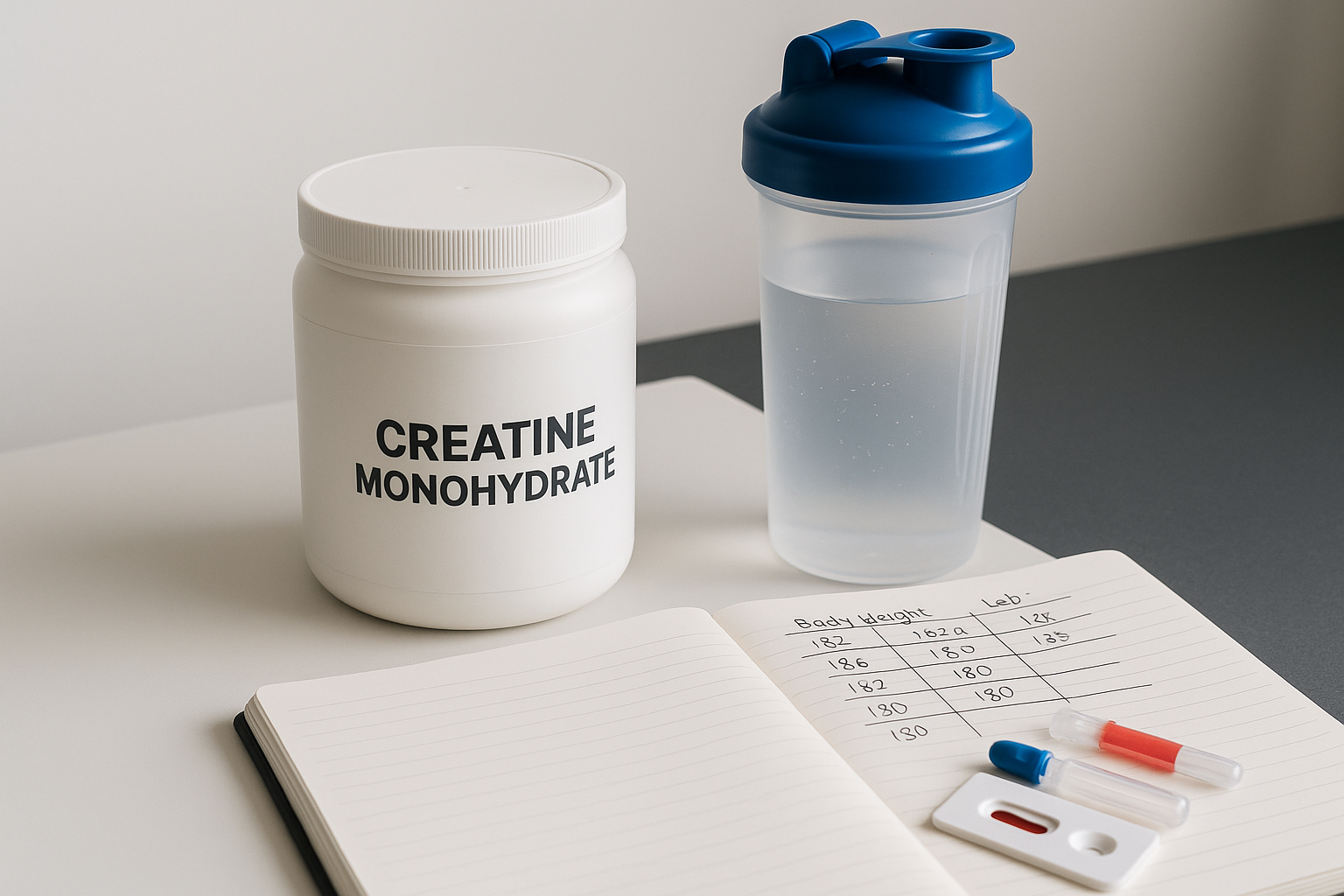
If you are concerned about cholesterol, the safest practical approach is to use plain creatine monohydrate at evidence-based doses while keeping the rest of your diet and testing conditions stable. That lets you separate the supplement from the variables most likely to affect your lipid panel.
- Choose plain creatine monohydrate. Avoid proprietary blends, sugar-loaded formulas, or mass-gainer products that can muddy the picture. Plain monohydrate is the gold standard for both research and value.
- Start with 3-5 g daily. You do not need a loading phase if you prefer to keep things simple. Daily consistency matters more than exact timing.
- Take it with water or a regular meal. Timing is not critical for cholesterol or for most results. Pick the time you will actually remember every day. If you want timing detail, see when to take creatine.
- Keep your diet stable for 6-8 weeks. Do not simultaneously launch a dirty bulk if you want to know whether creatine affects your labs.
- Track more than scale weight. Record waist measurement, training performance, body weight, and how your diet has changed.
- Repeat bloodwork under similar conditions. Try to match fasting status, time of day, hydration, and training the day before.
- Review the whole panel. Look at LDL, HDL, triglycerides, non-HDL cholesterol, and total cholesterol with your clinician rather than fixating on one number in isolation.
What should you expect week by week?
- Week 1: little to no visible change without loading; possibly mild water-weight increase with loading.
- Weeks 2-4: improved gym performance in repeated sets, sprints, or explosive efforts becomes more noticeable.
- Weeks 4-8: training quality improvements may start showing up as better strength progression and lean-mass support.
- Weeks 8-12: if diet and training are dialled in, creatine's indirect body-composition benefits are easier to appreciate.
Creatine is working when repeated efforts feel stronger, you sustain performance deeper into a session, or your progression improves over several weeks. It is not working because you “feel stimulated” like caffeine. Creatine is subtle day to day and more obvious over time.
If you want exact dosage help, use our creatine dosage calculator or go deeper with how much creatine per day.
Best creatine dose by body weight and goal, including a practical table
The standard creatine dose for most adults is 3-5 g per day, and that amount is appropriate whether your goal is strength, muscle gain, or general training support. Larger athletes or those using body-weight-based formulas may sit toward the higher end, but most people do not need complicated dosing.
The two evidence-based approaches are straightforward. A maintenance-only approach uses 3-5 g daily from day one and reaches near-full muscle saturation in about 3-4 weeks. A loading approach uses about 20 g daily, split into 4 doses of 5 g, for 5-7 days, then drops to 3-5 g daily; this saturates muscles faster but can cause more stomach upset in some people.
| Body weight / goal | Simple daily dose | Optional loading phase | Best for |
|---|---|---|---|
| Under 60 kg | 3 g/day | 20 g/day split into 4 doses for 5-7 days, then 3 g/day | Smaller adults, beginners, cautious starters |
| 60-90 kg | 3-5 g/day | 20 g/day split into 4 doses for 5-7 days, then 3-5 g/day | Most gym-goers and team-sport athletes |
| Over 90 kg | 5 g/day | 20 g/day split into 4 doses for 5-7 days, then 5 g/day | Larger athletes, higher muscle mass |
| General health / older adults | 3-5 g/day | Usually not necessary | Consistency and simplicity |
| Rapid saturation desired | 3-5 g/day after loading | 20 g/day split into 4 doses for 5-7 days | People wanting faster performance benefits |
For cholesterol concerns specifically, there is no evidence-based reason to use a special “low-cholesterol creatine dose.” The lipid question is mostly independent of the dose ranges normally used in sports nutrition, as long as you stay within mainstream protocols.
Timing is flexible. Take creatine when you will remember it. Post-workout with a meal, in a morning shake, or with lunch all work. If creatine upsets your stomach, split the dose into smaller amounts or take it with food. If you want all the dosing nuance, see creatine maintenance dose, creatine loading phase, and how to measure creatine.
The best dose is the one you can hit every day for months, because muscle creatine levels depend on consistent intake, not on fancy timing or megadoses.
Who should monitor bloodwork more closely: beginners, women, older adults, athletes, and people with medical conditions
Most healthy adults can use creatine without expecting cholesterol problems, but some groups should be more deliberate about monitoring labs and discussing supplementation with a healthcare professional. The key point is not that creatine is uniquely risky for these groups; it is that their broader health context matters more.
Beginners often over-attribute every body change to the newest supplement. If you are new to training, your diet, body weight, activity level, and sleep may all be shifting at once. That makes it especially important to interpret cholesterol changes carefully instead of assuming “creatine and heart cholesterol” are directly linked.
Women can absolutely use creatine, and there is no good reason to think women face a special LDL-raising effect from monohydrate. However, women navigating perimenopause or menopause may already be watching changes in body composition and cardiometabolic risk, so it makes sense to track diet quality and fasting labs consistently. For more, read creatine for women.
Older adults may benefit from creatine for preserving strength and muscle function, particularly when paired with resistance training. Because lipid issues become more common with age, older adults should review the entire prevention plan: protein intake, fibre, aerobic exercise, medications, and regular bloodwork. Creatine belongs in that larger context, not at the centre of it.
Athletes in weight-sensitive sports need to remember that short-term water gain is normal and not the same thing as a worsening cardiovascular marker. Competitive athletes should also prioritise product quality and banned-substance risk management.
People with kidney disease, complex chronic illness, or multiple medications should discuss creatine with their physician first. This is partly because creatine can raise blood creatinine, which may complicate interpretation of kidney labs, and partly because any supplement should be reviewed when medical management is already complex. See is creatine bad for your kidneys and who should not take creatine for a fuller risk framework.
The bottom line for all groups is the same: creatine is not a known cholesterol-raiser, but your individual health picture still matters.
Safety, side effects, and blood-test confusion: creatinine is not cholesterol
The most important blood-test confusion around creatine is that creatinine is not cholesterol, and a mild rise in creatinine after supplementation does not automatically mean kidney damage or worsened heart risk. Many people mix up these terms because they sound similar on lab reports.
Creatinine is a breakdown product related to creatine metabolism. If you supplement with creatine, blood creatinine may rise somewhat, which can make a kidney panel look different even when kidney function is normal. This is why clinicians sometimes need more context or alternative measures when interpreting labs in creatine users.
Common creatine side effects at standard doses are usually mild and manageable:
- Water-weight gain: often noticeable early, especially with loading.
- Stomach upset: more likely with large single doses.
- Bloating sensation: often improved by smaller doses or avoiding aggressive loading.
What creatine is not known for is causing a predictable increase in LDL, HDL collapse, or major triglyceride spikes in healthy users. The 2021 JISSN review specifically addressed several widespread misconceptions around creatine safety, and cholesterol elevation is not one of the classic evidence-backed concerns.
If you are checking labs while using creatine, these tips help:
- Tell your clinician you are taking creatine and how much.
- Keep testing conditions consistent from draw to draw.
- Avoid very hard training immediately before routine bloodwork if your clinician agrees.
- Interpret results in trends, not single isolated numbers.
For Canadians buying creatine, this is also where label quality matters. Look for a clean ingredient list, sensible serving size, and ideally third-party testing if you are an athlete or simply want extra assurance. If sold as a regulated natural health product in Canada, an NPN, or Natural Product Number, indicates the product has been licensed by Health Canada under the applicable framework. If you want help comparing reliable options, start with our best creatine rankings and creatine brand reviews.
Used correctly, creatine's main risks are usually practical and manageable, not cholesterol-related.
Common myths about creatine and cholesterol, debunked clearly
Most myths linking creatine and cholesterol come from confusion, coincidence, or mixing creatine up with other products. The fastest way to get this topic right is to separate what creatine does from what gym diets and bad supplement formulas do.
Myth 1: Creatine raises LDL because it makes you gain weight.
False. Early weight gain from creatine is mostly water pulled into muscle cells, not body fat. Water-weight gain is not the same thing as a worsening lipid profile.
Myth 2: Creatine is hard on the heart because it changes blood chemistry.
Misleading. Creatine changes muscle energy handling and can influence creatinine labs, but that is not the same as harming cardiovascular health or raising blood cholesterol.
Myth 3: If your cholesterol went up after starting creatine, creatine caused it.
Not necessarily. Correlation is not causation. Check calorie intake, saturated fat, fibre, alcohol, training changes, and whether you were bulking.
Myth 4: Loading is dangerous for cholesterol.
No evidence supports that. Loading may increase the chance of stomach discomfort, but it is not known to uniquely worsen lipids.
Myth 5: Fancy forms like HCL are safer for cholesterol than monohydrate.
Unsupported. Monohydrate remains the most studied form, and there is no solid evidence that premium forms provide a cholesterol advantage.
Myth 6: Creatine-rich foods prove creatine affects cholesterol.
This mixes up the supplement with the food matrix. Red meat can influence diet quality and saturated fat intake depending on the cut and pattern, but isolated creatine monohydrate powder is not the same as eating more high-fat animal foods.
A final myth is that “natural” means every product is equal. Some creatine products include sugars, stimulants, or filler ingredients that can complicate digestion, calories, and overall diet adherence. If your concern is a clean lipid-friendly routine, plain unflavoured monohydrate is hard to beat. For deeper myth-busting, see creatine myths vs. facts and creatine monohydrate vs. HCL.
When people ask “does creatine affect cholesterol levels,” the cleanest evidence-based answer is still: not in a consistent harmful way, and certainly not enough to override the bigger influence of diet and lifestyle.
How to choose a creatine product in Canada if you care about health markers and label quality
If you care about cholesterol, bloodwork, and overall health, the best creatine to buy in Canada is usually a plain creatine monohydrate powder with transparent labelling and no unnecessary extras. Simpler is better because it reduces the chance that sugars, stimulants, underdosed blends, or mystery ingredients are what actually change your routine.
Use this buying framework:
- Choose monohydrate first. It is the most studied, most cost-effective, and the form used in the bulk of safety and efficacy research.
- Check the ingredient list. Ideally it says only creatine monohydrate.
- Verify the dose. A serving should clearly tell you how many grams of creatine you get.
- Look for third-party testing. Especially useful for athletes and anyone wanting extra confidence about purity.
- Check Canadian compliance. Where applicable, look for an NPN and a professional-looking label with importer or manufacturer information.
- Avoid paying for hype. “Advanced delivery systems” rarely beat simple monohydrate.
| Feature | Best choice for most Canadians | Why it matters |
|---|---|---|
| Creatine form | Monohydrate | Most studied and best value |
| Ingredients | Single-ingredient powder | Cleaner routine, easier troubleshooting |
| Dose clarity | 3-5 g clearly labelled | Prevents underdosing and confusion |
| Testing | Third-party tested if possible | Extra assurance for purity and sport use |
| Canadian label | NPN where applicable | Helpful sign of regulatory compliance |
| Value | Cost per gram | Most meaningful price comparison |
This matters for the cholesterol question because many people do not actually buy pure creatine; they buy a flavoured pre-workout, muscle builder, or bulk formula that includes creatine. If that product also contains calories, sugars, or ingredients that change your diet habits, blaming creatine alone becomes impossible.
To compare clean options, see best creatine rankings, creatine product catalog, and creatine brand reviews. If you want a more detailed buyer's framework, the related guide how to choose creatine is the next step.
Bottom line: what to do if you take creatine and care about your cholesterol
Creatine is not known to raise LDL cholesterol in a consistent, clinically meaningful way, and for most healthy people it can be used without expecting a worse lipid panel. If you care about both gym performance and long-term health, the right move is not to fear creatine but to use it correctly and keep the bigger cholesterol drivers under control.
Here is the practical bottom line:
- Use plain creatine monohydrate.
- Take 3-5 g daily, consistently.
- Do not confuse creatinine with cholesterol.
- Keep your diet, fibre intake, and alcohol habits in check.
- Interpret lipid labs in context, not in isolation.
- Talk to your clinician if you have kidney disease, major cardiometabolic disease, or complex medications.
If your LDL or triglycerides rise after starting creatine, first review the obvious suspects: you started bulking, your saturated fat intake increased, you stopped doing cardio, your body fat went up, or your test conditions changed. Those explanations are more plausible than creatine itself.
On the performance side, expect creatine to help most with repeated high-intensity efforts, strength progression, training quality, and lean-mass support over time. It is a saturation supplement, not a stimulant, so patience and consistency matter. If you miss a day, it is not a disaster; just resume your normal dose. If you skip loading, results simply take longer to fully develop.
For most readers, the answer to “creatine and blood cholesterol” is reassuringly boring: creatine is not a recognised cholesterol problem. The better question is whether your total routine supports both performance and cardiometabolic health. If you want to build that routine properly, the next smart reads are is creatine safe, how long does creatine take to work, how much water should you drink with creatine, and the complete guide to creatine.
That is the evidence-based answer: creatine is generally neutral on cholesterol, useful for performance, and best judged as one small part of a much bigger health picture.
Creatine and Cholesterol: The Numbers That Matter
- 3-5 g/day Standard creatine maintenance dose — Appropriate for most healthy adults using creatine monohydrate.
- 20 g/day Typical loading dose — Usually split into 4 doses for 5-7 days before dropping to maintenance.
- 5-7 days Time to saturate with loading — Loading speeds up muscle creatine saturation compared with maintenance-only use.
- 3-4 weeks Time to saturate without loading — Daily maintenance dosing works well even if you skip the loading phase.
Frequently Asked Questions
Does creatine raise LDL cholesterol?
No, creatine is not known to raise LDL cholesterol in a consistent or clinically meaningful way in healthy people using standard doses. If your LDL increased after starting creatine, diet changes, weight gain, reduced cardio, genetics, or differences in blood-test conditions are more likely explanations than creatine itself.
Does creatine affect cholesterol levels at all?
Creatine does not appear to affect cholesterol levels in a predictable harmful way. The overall evidence suggests creatine is largely neutral on total cholesterol, LDL, HDL, and triglycerides, although individual lab values can still move for many other reasons happening at the same time.
Can creatine raise triglycerides?
Creatine is not established as a cause of high triglycerides. Triglycerides are usually more sensitive to calorie excess, refined carbohydrate intake, alcohol, insulin resistance, and fasting status before the test than to plain creatine monohydrate supplementation.
Is creatine bad for your heart because of cholesterol?
There is no strong evidence that creatine is bad for your heart because it raises cholesterol. Creatine mainly supports the phosphocreatine energy system in muscle, and current evidence does not identify it as a supplement that predictably worsens lipid-related heart-risk markers in healthy users.
Should I stop creatine before a cholesterol blood test?
You usually do not need to stop creatine before a cholesterol blood test just because of cholesterol concerns. More important than stopping creatine is keeping fasting status, diet, hydration, alcohol intake, and recent exercise as consistent as possible so your results are easier to interpret.
Why did my cholesterol go up when I started creatine?
Your cholesterol may have gone up after starting creatine because other parts of your routine changed at the same time. The most common reasons are a bulking diet, higher saturated fat intake, weight gain, lower cardio volume, alcohol, or different testing conditions rather than creatine itself.
Does creatine affect HDL cholesterol?
Creatine is not known to consistently lower or raise HDL cholesterol in a meaningful way. HDL tends to be influenced more by overall activity, body composition, genetics, smoking status, and diet pattern than by creatine supplementation alone.
Is creatinine the same as cholesterol on bloodwork?
No, creatinine is not the same as cholesterol. Creatinine is a breakdown product related to creatine metabolism and kidney-lab interpretation, while cholesterol markers such as LDL and HDL reflect lipid transport and cardiovascular risk assessment.
What is the safest form of creatine if I have high cholesterol?
The safest and most evidence-based form for most people with cholesterol concerns is plain creatine monohydrate. It has the strongest research base, the simplest ingredient profile, and the least marketing clutter compared with blends that may add sugar, stimulants, or unnecessary extras.
Can I take creatine if I am on cholesterol medication?
You may be able to take creatine while on cholesterol medication, but you should review it with your physician or pharmacist first. The main reason is not a proven creatine-cholesterol interaction, but the need to consider your full medical history, kidney labs, and medication plan together.