The Complete Guide · Strong evidence
Creatine Monohydrate: The Complete Guide
Creatine monohydrate is the single most researched sports supplement on the planet. This is the complete, evidence-based guide to what it is, how it works, how to take it, and why it beats every other form of creatine.
If you only ever buy one supplement, make it creatine monohydrate. It is the most studied sports-nutrition ingredient in existence, with hundreds of peer-reviewed trials backing its effects on strength, power, muscle growth, recovery, and even cognition. It is also the cheapest form of creatine you can buy, which makes the value almost unmatched.
Despite dozens of flashy alternatives on store shelves - hydrochloride (HCl), buffered (Kre-Alkalyn), ethyl ester, liquid, gummies - none has ever been shown to beat plain monohydrate for building muscle or strength. This guide walks through exactly what monohydrate is, the science of how it works, how to dose it, whether it is safe, how it stacks up against every other form, and how to pick a quality product in Canada.
Key takeaways
- Creatine monohydrate is the most researched, most proven, and least expensive form of creatine.
- It works by rapidly regenerating ATP, letting you train harder, plus it hydrates muscle cells to support growth.
- A simple 3-5 g per day, taken consistently, is all most people need - loading is optional.
- It is safe for healthy people; it does not damage the kidneys and does not cause hair loss.
- No other form - HCl, buffered, ethyl ester, liquid, or gummies - has been shown to outperform it for muscle and strength.
- For quality, look for Creapure or a third-party-tested micronized monohydrate and compare cost per serving.
What is creatine monohydrate?
Creatine is a compound your body makes naturally from the amino acids arginine, glycine, and methionine, mostly in the liver and kidneys. You also get it from red meat and fish. Around 95% of the creatine in your body is stored in skeletal muscle as phosphocreatine, where it acts as a rapid energy reserve.
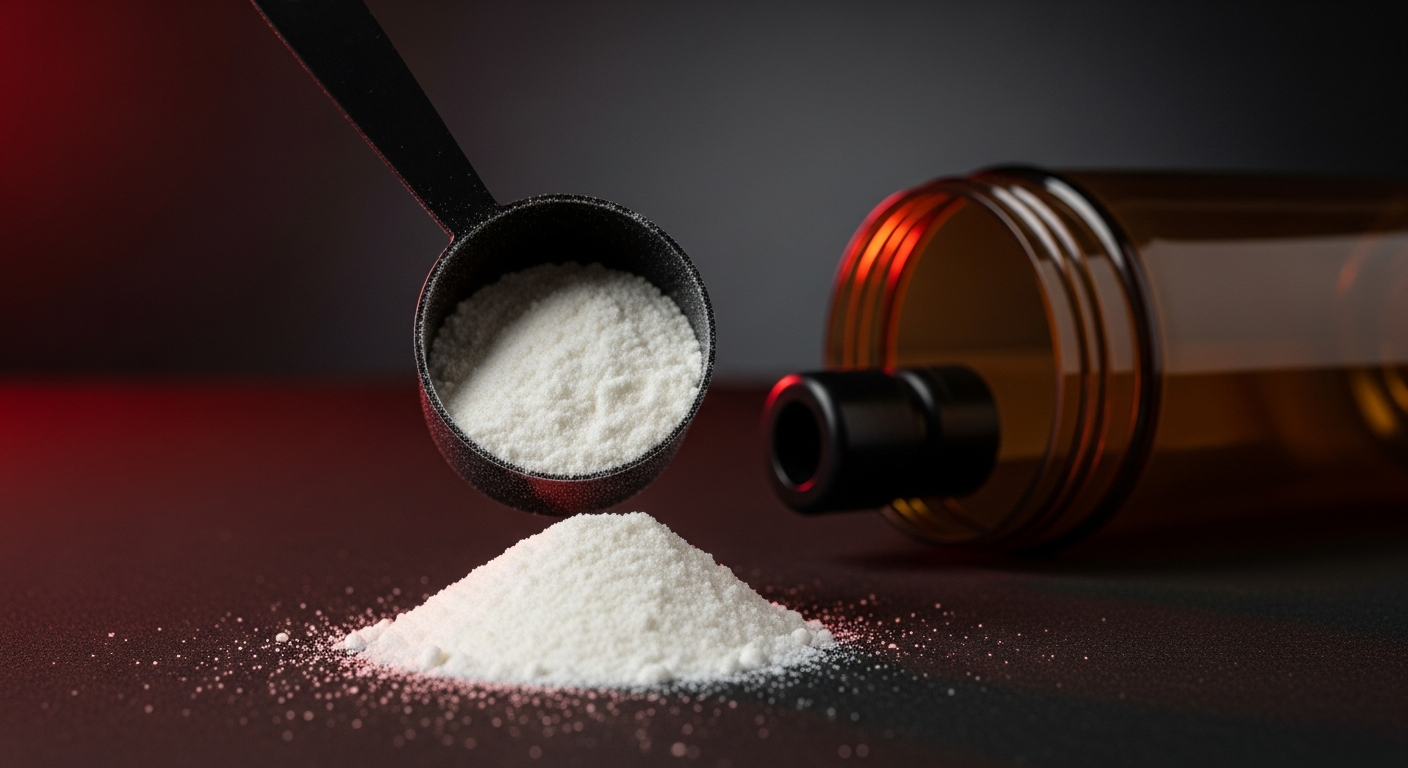
Creatine monohydrate is simply a creatine molecule bound to one molecule of water ("mono" = one, "hydrate" = water). It is a fine white, odourless, nearly tasteless powder that is about 88% creatine by weight. This is the exact form used in the overwhelming majority of scientific studies, which is why it is considered the gold-standard reference against which every other form is measured.
Micronized monohydrate
Micronized creatine monohydrate is the same molecule, just milled into much smaller particles. This improves how well it mixes into water and can reduce grittiness and stomach discomfort - but it does not change the chemistry or the results. Micronized is still monohydrate.
Why food alone is not enough
To get 5 g of creatine from food you would need to eat roughly 1 kg of raw beef or salmon per day, and cooking degrades some of it. Vegetarians and vegans start with lower muscle creatine stores because they get almost none from their diet, which is one reason they often respond especially well to supplementation.
How creatine monohydrate works in the body
Creatine builds performance through a few overlapping mechanisms rather than one single effect.
1. Rapid ATP regeneration
Your muscles run on ATP (adenosine triphosphate). During short, intense efforts - a heavy set, a sprint, a jump - ATP is used up in seconds. Phosphocreatine donates a phosphate to quickly turn spent ADP back into ATP, refilling your energy tank. Supplementing raises muscle phosphocreatine stores, so you can sustain a few more high-quality reps or a touch more power before fatigue sets in.
2. Cell volumization
Creatine draws water into muscle cells. This cellular hydration makes muscles look fuller and, importantly, acts as an anabolic signal that can support protein synthesis and reduce protein breakdown.
3. Greater training volume over time
The biggest long-term driver of muscle and strength gains is doing more quality work over weeks and months. By letting you add a rep here and a little load there, creatine increases the total effective training you accumulate - and that compounds into meaningful results.
4. Beyond the gym
Because the brain also uses phosphocreatine for energy, research points to possible cognitive benefits, especially under stress, sleep deprivation, or in older adults and vegetarians who start with lower stores.
Proven benefits of creatine monohydrate
Few supplements have benefits this well documented. Here is a summary of the most strongly supported effects.
| Benefit | Strength of evidence | What it means for you |
|---|---|---|
| Strength & power | Very strong | Reliably improves 1-rep-max, power output, and performance in short, intense efforts. |
| Lean muscle mass | Very strong | Builds more lean mass than the same training without it, over a training block. |
| High-intensity capacity | Strong | More reps, better sprint and interval performance, less mid-set fatigue. |
| Recovery | Moderate | May reduce muscle damage markers and speed recovery between sessions. |
| Brain & cognition | Emerging | Possible benefits for memory and mental fatigue, strongest under stress or in low-creatine groups. |
| Healthy aging | Strong | Combined with resistance training, helps older adults preserve muscle and strength. |
For a deeper dive on any single benefit, see our dedicated guides on creatine for muscle growth and all creatine benefits.
Creatine monohydrate vs other forms
This is where most of the marketing money is spent - and where the science is clearest. Newer, pricier forms are almost always sold on the promise of better absorption or fewer side effects. In head-to-head studies, none has been shown to build more muscle or strength than plain monohydrate.
| Form | Claim | What the evidence shows | Verdict |
|---|---|---|---|
| Monohydrate | The original, well studied | Gold standard - proven for strength, muscle, and safety | Best overall |
| Micronized monohydrate | Mixes better, gentler on the gut | Same molecule, same results; just finer powder | Great choice |
| Hydrochloride (HCl) | More soluble, smaller dose | Dissolves better, but no proven performance edge over monohydrate | Fine, not superior |
| Buffered (Kre-Alkalyn) | Higher pH, more "stable" | Direct study found it no better than monohydrate | Overpriced |
| Ethyl ester | Better absorption | Actually performed worse than monohydrate in research | Avoid |
| Liquid | Convenient, pre-dissolved | Creatine degrades in liquid over time; unreliable | Avoid |
| Gummies | Tasty, convenient | Can work if the dose and quality are right, but cost more per gram | Convenience pick |
Monohydrate vs HCl
HCl (creatine hydrochloride) is the most common "upgrade" you will see. It is more water-soluble, so you can dissolve a smaller volume, and some people find it easier on the stomach. But solubility is not the same as effectiveness - monohydrate already saturates your muscles fully at 3-5 g/day. There is no good evidence HCl builds more muscle or strength, and it usually costs several times more per effective gram.
Monohydrate vs buffered (Kre-Alkalyn)
Buffered creatine claims a higher pH prevents conversion to "useless" creatinine in the stomach. A controlled study comparing it directly to monohydrate found no advantage in muscle creatine content, body composition, or performance - and monohydrate is far cheaper.
Monohydrate vs gummies
Creatine gummies are genuinely convenient and can deliver real creatine if the label dose is accurate and the product is stable. The catch is cost per gram (usually much higher) and the need to trust the manufacturing. For most people, plain monohydrate powder remains the better value. See our full breakdown on the creatine forms compared page.
How to take creatine monohydrate
The protocol is refreshingly simple, and consistency matters far more than timing.
| Approach | Dose | Time to full saturation | Best for |
|---|---|---|---|
| Daily maintenance | 3-5 g every day | ~3-4 weeks | Almost everyone |
| Loading, then maintenance | ~20 g/day (split into 4) for 5-7 days, then 3-5 g/day | ~1 week | Those who want faster results |
Do you need to load?
No. Loading simply saturates your muscles faster. Taking 5 g per day consistently reaches the exact same level in a few weeks, usually with fewer digestive complaints. Loading is optional and purely about speed.
Timing
Any time of day works. Take it whenever you will remember it consistently, including on rest days. Some evidence slightly favours taking it around your workout, but the effect is small compared with simply taking it every day.
With food and water
Taking creatine with a meal containing carbs and/or protein may modestly improve uptake. Stir it into water, juice, or a shake. Drink normal amounts of fluid throughout the day.
Do you need to cycle it?
No. There is no need to cycle on and off creatine. It is safe for continuous long-term use, and cycling just lets your muscle stores drop back to baseline. Try our dosage calculator to personalize your intake.
Who should take creatine monohydrate?
Almost anyone who trains can benefit, but some groups see especially strong results:
- Strength and physique athletes - the classic use case, for more strength, power, and lean mass.
- Team-sport and power athletes - better repeated-sprint ability and high-intensity output.
- Older adults - paired with resistance training, it helps preserve and build muscle and strength, and may support bone and brain health.
- Vegetarians and vegans - they start with lower muscle stores and often see a bigger jump.
- Women - respond just as well as men for strength and lean mass, and creatine alone does not cause bulkiness.
If you have a pre-existing kidney condition or are pregnant, check with your doctor first. For everyone else, it is one of the safest supplements available.
Is creatine monohydrate safe? Side effects and myths
Creatine monohydrate is among the most thoroughly safety-tested supplements in the world. Studies lasting up to five years in healthy people show no harmful effects.
It does not damage healthy kidneys
The kidney myth comes from creatine raising blood creatinine slightly - a normal by-product, not a sign of damage. In people with healthy kidneys, long-term studies show no adverse effect on kidney function.
It does not cause hair loss
This myth traces back to a single small study suggesting a rise in DHT, which was never replicated and never measured actual hair loss. There is no solid evidence creatine causes baldness.
Water retention is intracellular
Early weight gain of 1-2 kg is water drawn into the muscle cell, not bloating under the skin. It makes muscles look fuller, not puffy, and it is harmless.
Minor digestive upset
Taking a very large dose at once (such as aggressive loading) can cause mild stomach upset in some people. Splitting the dose, using micronized powder, and taking it with food usually solves this. Learn more on our creatine safety page and our myths debunked hub.
How to choose a quality creatine monohydrate
Because monohydrate is a simple, well-defined molecule, quality differences come down to purity, particle size, and price rather than exotic formulas.
- Look for Creapure or third-party testing. Creapure is a German-made monohydrate known for high purity. Otherwise, look for products tested by an independent lab (for example NSF Certified for Sport or Informed Sport).
- Choose micronized if you want easier mixing and a gentler experience - same results, nicer to drink.
- Prefer unflavoured powder for the best value; flavoured versions and blends cost more per effective gram.
- Compare cost per serving, not the sticker price. A big tub is usually far cheaper per 5 g dose than gummies or premium "designer" forms.
- Ignore proprietary blends that hide how much creatine you actually get.
Ready to shop? Browse our expert-ranked best creatine picks and creatine products.
Common creatine monohydrate myths
Monohydrate is surrounded by more myths than almost any supplement. Here are the big ones, quickly cleared up:
- "It's a steroid." No. Creatine is a natural compound found in food and made by your body; it has nothing in common with anabolic steroids.
- "You have to load." No. Loading only speeds saturation; daily 3-5 g reaches the same place.
- "Newer forms work better." No. No form has beaten monohydrate for muscle or strength.
- "It causes cramps and dehydration." Evidence actually suggests the opposite - creatine may improve heat tolerance and hydration.
- "It's only for men." No. Women respond just as well and will not "bulk up" from creatine alone.
- "You need to cycle it." No. Continuous long-term use is safe and effective.
What results to expect, and when
Creatine is not an instant stimulant like caffeine - it works by filling your muscle stores and then keeping them topped up. The timeline is predictable:
- Days 1-7: With loading, muscles saturate quickly; you may notice a small bump in scale weight (water) and better training output. Without loading, this happens more gradually.
- Weeks 2-4: On 5 g/day, stores reach full saturation. Reps, power, and recovery improve for most people.
- Weeks 4-12: The extra quality training compounds into visible gains in strength and lean muscle versus training alone.
- Ongoing: Keep taking 3-5 g/day to stay saturated. If you stop, the extra cell water fades over a few weeks, but the muscle you built through training stays.
Frequently Asked Questions
What does creatine monohydrate do?
It raises the phosphocreatine stored in your muscles, which rapidly regenerates ATP during intense effort. In practice that means more strength and power, more quality reps, better recovery, and - combined with training - more lean muscle over time.
Is creatine monohydrate the best form of creatine?
Yes, for almost everyone. It is the most researched and proven form, and no other type - HCl, buffered, ethyl ester, liquid, or gummies - has been shown to build more muscle or strength. It is also the cheapest, making it the best value.
How much creatine monohydrate should I take?
3-5 grams per day, taken consistently including on rest days. You can optionally load with about 20 g/day (split into 4 doses) for 5-7 days to saturate faster, then drop to 3-5 g/day.
Do I need to load creatine monohydrate?
No. Loading only fills your muscle stores faster. Taking 5 g per day reaches the same saturation in about 3-4 weeks, often with fewer digestive complaints.
When is the best time to take creatine monohydrate?
Any time of day works because the benefit comes from staying saturated, not from timing. Take it whenever you will remember it consistently. Around your workout with a meal is a reasonable default, but the effect of timing is small.
Is creatine monohydrate safe?
For healthy people, yes. It is one of the most safety-tested supplements available, with studies up to five years showing no harmful effects. It does not damage healthy kidneys. If you have kidney disease or are pregnant, check with your doctor first.
Does creatine monohydrate cause weight gain?
You may gain 1-2 kg early on, but this is water drawn into your muscle cells, not fat. It makes muscles look fuller rather than bloated, and it is harmless. Additional weight over time reflects real muscle built through training.
Does creatine monohydrate cause hair loss?
There is no solid evidence that it does. The myth comes from a single small study on a hormone marker (DHT) that was never replicated and never measured actual hair loss.
Is creatine monohydrate a steroid?
No. Creatine is a natural compound found in meat and fish and made by your own body. It is not a hormone and has nothing in common with anabolic steroids.
Can women take creatine monohydrate?
Absolutely. Women respond just as well as men for strength and lean mass gains, and creatine alone will not make you bulky.
Do I need to cycle creatine monohydrate?
No. There is no need to cycle on and off. Continuous daily use is safe and keeps your muscle stores saturated. Cycling just lets them drop back to baseline.
What is micronized creatine monohydrate?
It is the same monohydrate molecule milled into smaller particles so it mixes into liquid more easily and is gentler on the stomach. The results are identical to regular monohydrate.
How long does creatine monohydrate take to work?
With daily 5 g dosing, muscles reach full saturation in about 3-4 weeks (or roughly a week if you load). Performance improvements often show within the first few weeks, with visible muscle and strength gains building over 1-3 months.
References
- Kreider, R. B. et al. (2017). ISSN position stand: safety and efficacy of creatine supplementation in exercise, sport, and medicine.. Journal of the International Society of Sports Nutrition.
- Antonio, J. et al. (2021). Common questions and misconceptions about creatine supplementation: what does the scientific evidence really show?. Journal of the International Society of Sports Nutrition.
- Jagim, A. R. et al. (2012). A buffered form of creatine does not promote greater changes in muscle creatine content, body composition, or training adaptations than creatine monohydrate.. Journal of the International Society of Sports Nutrition.
- Spillane, M. et al. (2009). The effects of creatine ethyl ester supplementation combined with heavy resistance training on body composition, muscle performance, and serum and muscle creatine levels.. Journal of the International Society of Sports Nutrition.
- Chilibeck, P. D. et al. (2017). Effect of creatine supplementation during resistance training on lean tissue mass and muscular strength in older adults: a meta-analysis.. Open Access Journal of Sports Medicine.
- Branch, J. D. (2003). Effect of creatine supplementation on body composition and performance: a meta-analysis.. International Journal of Sport Nutrition and Exercise Metabolism.
- Avgerinos, K. I. et al. (2018). Effects of creatine supplementation on cognitive function of healthy individuals: a systematic review of randomized controlled trials.. Experimental Gerontology.
- Kreider, R. B. et al. (2003). Long-term creatine supplementation does not significantly affect clinical markers of health in athletes.. Molecular and Cellular Biochemistry.