Buying Creatine in the Northwest Territories: Best Delivery Options
By The Creatine Canada Research Team — Evidence-based supplement analysts
Yes — you can buy creatine in the Northwest Territories, including Yellowknife, most reliably through Canadian online retailers that ship domestically to the NWT. For most buyers, the best play is plain creatine monohydrate with a Natural Product Number when applicable, transparent third-party testing, and enough tub size to reduce the pain of northern shipping fees and stock outages.
Evidence-based · Cites 4 sources · Editorial standards
Key Takeaways
- The best creatine to buy in the NWT is usually unflavoured creatine monohydrate powder, not a fancy alternative form.
- If you live in Yellowknife or elsewhere in the Northwest Territories, online Canadian sellers are usually more reliable than depending on limited local stock.
- A standard maintenance dose is 3 to 5 g daily; loading at 20 g daily split into 4 doses for 5 to 7 days is optional.
- Creatine works by increasing muscle phosphocreatine stores, which helps regenerate ATP for short, hard efforts like lifting, sprinting, and repeated intervals.
- Check for Canadian-compliant labelling, clear ingredient lists, and third-party testing before you buy supplements in NWT Canada.
- To save money in northern Canada, compare price per gram, buy larger tubs when shelf life allows, and avoid under-dosed gummies or proprietary blends.
- If creatine upsets your stomach, switch to smaller doses, take it with food, and prioritise micronized monohydrate over more expensive forms.
Yes, you can buy creatine in the Northwest Territories — but online Canadian delivery is usually the smartest option
Yes, you can buy creatine in the Northwest Territories, and for most people in Yellowknife and smaller NWT communities, the most reliable option is ordering from a reputable Canadian online supplement retailer. Local availability can be inconsistent in remote markets, so shoppers looking for creatine Northwest Territories, creatine NWT, or creatine Yellowknife usually get better selection, better pricing visibility, and fewer stock surprises online.
The key point is simple: creatine is not a niche bodybuilding product anymore. It is one of the best-studied sports supplements in the world, and the 2017 ISSN position stand concluded that creatine monohydrate is both effective and generally safe for healthy people when used appropriately. That matters for buyers in northern territories because the product you want is boring in the best way: a plain, well-tested, correctly labelled tub of creatine monohydrate.
If you are buying in the NWT, think less about marketing and more about logistics. Northern buyers should prioritise:
- Domestic Canadian shipping, because it usually means fewer customs issues and clearer delivery expectations.
- Larger tub sizes, because freight costs can make tiny formats poor value.
- Plain monohydrate, because it has the strongest evidence and is usually the lowest cost per gram.
- Transparent testing, especially if you compete in sport or simply want cleaner quality control.
- Canadian-compliant labelling, including an NPN when the product is sold as a licensed natural health product in Canada.
For many shoppers, the best workflow is to start with a trusted catalogue rather than a random marketplace listing. You can compare formats and sizes in a dedicated creatine product catalog, then narrow down reputable options using evidence-based best creatine rankings and deeper creatine brand reviews.
If you are brand new to the supplement, do not overcomplicate this. Buy one plain tub, take it every day, and give it a few weeks. Creatine does not need a complicated stack, a pre-workout label, or a flashy flavour to work. For people buying creatine in the Northwest Territories, the winning strategy is not exotic; it is dependable access, low cost per gram, and proven monohydrate.
Why creatine works: it helps your muscles remake ATP faster during hard effort
Creatine works because it increases your muscle stores of phosphocreatine, a stored high-energy compound that helps regenerate ATP, the immediate fuel your muscles use for short, intense effort. That is the core mechanism behind why creatine helps with lifting, sprinting, jumping, repeated intervals, and other high-output training.
Here is the physiology in plain English. Your body stores creatine mostly in skeletal muscle. Some of that creatine exists as phosphocreatine, which donates a phosphate group to help rebuild ATP during the first seconds of high-intensity work. ATP gets used rapidly when you push hard. More phosphocreatine available in muscle means you can restore ATP a bit faster between contractions and between repeated bouts of hard effort.
That is why creatine is especially useful for:
- Strength training sets
- Sprints and repeated sprints
- Explosive team-sport efforts
- HIIT and repeated intervals
- Training volume over time
The benefit is not that one scoop gives you a stimulant-like buzz. Creatine is not caffeine, and it is not a steroid. Instead, creatine gradually raises your muscle creatine saturation level, meaning your muscles hold more of the substrate needed to support repeated high-output work. Over weeks and months, that often translates into better training quality, which then helps support greater strength and lean-mass gains.
Antonio et al. (2021) addressed common misconceptions directly and reinforced that creatine’s effects are best understood through this energy-system mechanism, not through myths about hormones or instant mass gain. The practical takeaway for NWT buyers is important: the cheapest proven form, creatine monohydrate, already does this job extremely well. You do not need HCl, ester, nitrate, or a blend to get the main performance effect.
Creatine may also have broader roles beyond muscle performance, including potential support for cognition in some contexts, but those areas are still more nuanced than the evidence for strength and power. If your goal is to train harder, recover better between intense efforts, and support lean-mass progress, the mechanism is well-established. If you want the complete beginner-level science background, see creatine dosage calculator for practical dosing or explore a broader explainer like our foundational guides linked throughout the site.
In short, creatine helps because it improves high-energy phosphate availability in muscle, and that mechanism is exactly why monohydrate remains the gold standard form to buy in northern Canada.
The best type of creatine to buy in northern Canada is usually plain monohydrate — here is how the options compare
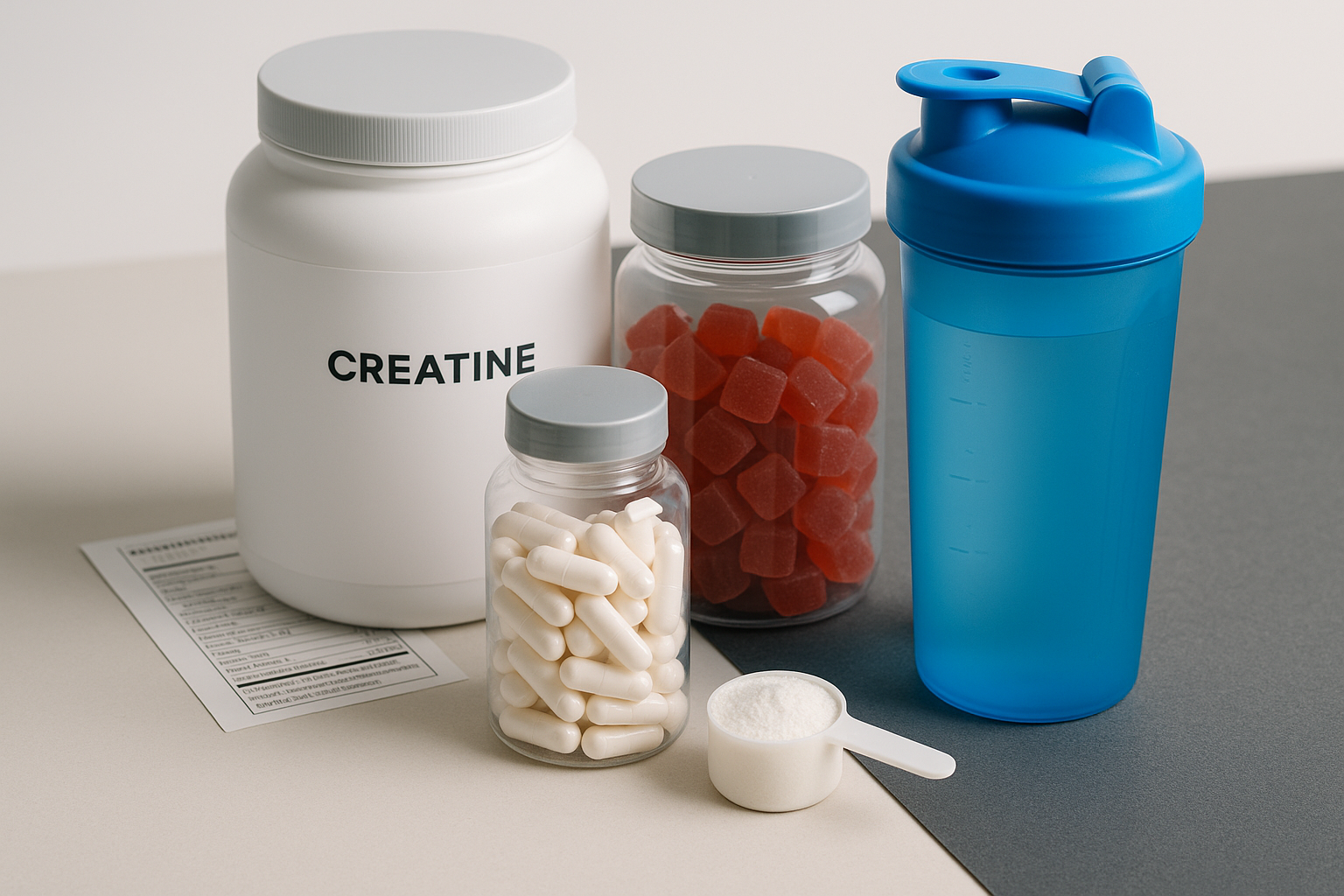
The best creatine to buy in the Northwest Territories is almost always creatine monohydrate powder, because it is the most studied, the most cost-effective, and the easiest format to buy in larger sizes. If you are searching buy creatine north Canada or creatine northern territories, this is the answer that will serve almost everyone best.
Monohydrate has decades of data behind it. The ISSN position stand concluded that creatine monohydrate is the most effective ergogenic form available for increasing high-intensity exercise capacity and lean body mass during training. Other forms are often marketed as better absorbed or easier on the stomach, but they usually cost more without showing superior real-world performance outcomes.
| Form | Best for | Pros | Cons |
|---|---|---|---|
| Creatine monohydrate powder | Almost everyone | Most studied, lowest cost per gram, easy to dose at 3 to 5 g | Can feel gritty if not mixed well |
| Micronized monohydrate | People who dislike texture | Same core ingredient, often mixes a bit better | Sometimes costs more for a minor convenience upgrade |
| Capsules | Travel or no-mess use | Convenient, no mixing | Usually more expensive; may require many capsules to reach 5 g |
| Gummies/chews | Taste-first buyers | Easy to take | Often expensive, often under-dosed, sometimes added sugar |
| HCl or specialty forms | Niche preference only | Marketing appeal, sometimes smaller serving size claims | Higher cost, weaker evidence than monohydrate |
For NWT buyers, powder has another advantage: shipping efficiency. A single plain tub gives far more total doses than trendy single-serve formats. When supplements NWT Canada orders already face longer delivery windows or higher freight thresholds, paying extra for novelty makes even less sense.
When comparing products, look for:
- One active ingredient: creatine monohydrate
- Serving clearly expressed in grams
- Minimal extras unless you specifically want flavouring
- Third-party testing or clear quality claims you can verify
- A licensed Canadian label when sold as a natural health product
If you want help comparing products objectively rather than by branding, use our best creatine rankings and browse the creatine brand reviews. The smartest northern purchase is usually the least exciting label on the shelf: plain monohydrate, enough servings to last, and quality signals you can trust.
How to buy creatine safely in Yellowknife and the NWT: a practical Canadian checklist
If you are buying creatine in Yellowknife or anywhere in the Northwest Territories, the safest approach is to use a simple checklist that prioritises legitimacy, value, and delivery reliability. Canadian supplement shopping gets much easier when you know what to screen for before you click buy.
- Choose a Canadian seller first. Domestic shipping usually means clearer prices, fewer surprises, and less risk of customs complications than importing from abroad.
- Read the label for the exact ingredient. You want creatine monohydrate, ideally as the only active ingredient unless you intentionally want a blend.
- Check for an NPN when applicable. An NPN, or Natural Product Number, indicates the product is licensed for sale in Canada as a natural health product. It is not the only quality marker, but it is a useful compliance signal.
- Look for testing transparency. Third-party testing, NSF Certified for Sport, Informed Sport, or equivalent quality controls can matter even more for athletes and cautious buyers.
- Calculate cost per gram. A tub with a cheap sticker price can still be poor value if servings are tiny or the total grams are low.
- Check shipping policies to the Northwest Territories. Confirm whether the seller ships to postal codes in the NWT, how they handle remote delivery, and whether free-shipping thresholds still apply.
- Avoid proprietary blends. If the label does not tell you exactly how many grams of creatine you get, skip it.
This matters because supplement quality varies more in retail presentation than in raw creatine science. Plain creatine is straightforward, but buyers can still overpay for weak formats, vague blends, or products with poor gram transparency. The International Olympic Committee’s supplement consensus also stresses the importance of product quality assurance and contamination risk management for athletes using supplements at all.
For Canadian context, the buying goal is not merely “is creatine approved?” but “is this exact product properly sold and responsibly made for the Canadian market?” Shoppers in supplements NWT Canada searches should pay attention to both labelling and seller credibility.
Practical tip: once you shortlist a few products, compare them side by side in a saved note using total grams, price per gram, third-party testing, and shipping cost to your NWT address. That one habit filters out most bad buys immediately. To simplify the shortlist stage, start with the site’s creatine product catalog and then narrow to evidence-based options through our creatine brand reviews.
If a product looks flashy but does not clearly tell you the form, grams, or testing status, it is usually not the best choice for a remote buyer paying northern delivery costs.
Exactly how much creatine to take: dosing by body weight, goal, and whether you want to load
The right creatine dose for most adults is 3 to 5 g per day, every day, with an optional loading phase of 20 g per day split into 4 doses for 5 to 7 days if you want faster saturation. That simple rule covers the vast majority of beginners, recreational lifters, women, and athletes in the Northwest Territories just as well as anywhere else in Canada.
There are two evidence-based ways to start:
- No loading: take 3 to 5 g daily and reach full muscle saturation gradually over roughly 3 to 4 weeks.
- Loading: take 20 g daily, split into four 5 g doses, for 5 to 7 days, then continue with 3 to 5 g daily.
A body-weight based loading method commonly used in research is about 0.3 g per kg per day for 5 to 7 days, followed by about 0.03 g per kg per day for maintenance. That said, the practical 3 to 5 g maintenance rule is usually enough and much easier to follow.
| Body weight | Simple daily maintenance | Optional loading phase | Best use case |
|---|---|---|---|
| Under 60 kg | 3 g/day | About 18 g/day split doses | Smaller athletes, cautious beginners |
| 60 to 90 kg | 3 to 5 g/day | 20 g/day split into 4 x 5 g | Most adults |
| Over 90 kg | 5 g/day | About 0.3 g/kg/day split doses | Larger lifters, field athletes |
Goal-specific guidance:
- General fitness: 3 to 5 g/day.
- Strength and muscle gain: 5 g/day is a practical default.
- Faster results: use a loading phase, then 3 to 5 g/day.
- Digestive sensitivity: 3 g/day or split 5 g into smaller servings.
You do not need to cycle creatine. You also do not need to match it to exact workout days to make it work. What matters most is daily consistency. If you want a precise starting point, use the creatine dosage calculator. If you want the full dosing breakdown, see guides such as best creatine rankings for product fit and the linked educational content across the site for deeper dosing context.
For remote buyers in northern territories, daily adherence matters even more than format details. Buy enough supply that you can take the same dose every day for at least a month without running out, because the most common reason people think creatine “did not work” is simply inconsistent use.
When to take creatine, how long it takes to work, and what realistic results look like
The best time to take creatine is the time you will remember to take it daily, because consistent intake matters far more than clock timing. For most people, creatine begins to feel useful within days if they load, or within roughly 3 to 4 weeks if they simply take 3 to 5 g daily.
There is no strong evidence that morning, pre-workout, post-workout, or night dosing creates a huge difference compared with regular daily use. You can mix it with water, a protein shake, or a meal. If taking it with food helps you remember and reduces stomach upset, that is often the best choice.
What to expect:
- Days 1 to 7 with loading: some people notice fuller muscles, slight scale increase from intracellular water, and improved repeat-effort performance quickly.
- Weeks 2 to 4 without loading: muscle stores gradually saturate, and workouts may start to feel more stable across repeated sets or intervals.
- Weeks 4 to 8: you may notice an extra rep here, a bit more power there, or slightly better training quality and recovery between intense efforts.
- Months 2 to 3: the main visible changes, if your training and nutrition are solid, tend to come from improved long-term training output rather than a dramatic immediate body transformation.
The performance effect is often subtle set to set but meaningful over time. Creatine does not bypass training. It makes productive training more available by supporting ATP regeneration during high-intensity work. That is why people often say, “I recover better between sets,” “my sprint repeatability improved,” or “I can hold quality deeper into the workout.”
If you are not sure whether it is working, track simple markers for 4 to 8 weeks:
- Reps at a fixed weight
- Load used for key compound lifts
- Sprint or interval consistency
- Body weight trend
- How you feel on repeated hard efforts
If you want more timing detail, see related guidance like when to take creatine or how long creatine takes to work. But the short answer for creatine Yellowknife or creatine NWT shoppers is this: buy a proven product you can actually keep in stock, take it every day, and judge it over weeks, not one workout.
If you miss a day, do not double up dramatically the next day. Just resume your usual dose. Creatine works through saturation, so consistency over time beats perfection on any single day.
Who creatine is for: beginners, women, older adults, and athletes in the North
Creatine is appropriate for many healthy adults, including beginners, women, older adults, and competitive athletes, provided the product is used as directed and there are no individual medical contraindications. It is not just for bodybuilders, and that misconception still causes many people in northern Canada to overlook one of the most evidence-based supplements available.
Beginners often benefit because creatine supports the kind of training they are trying to improve: repeated sets, progressive overload, and better quality effort. You do not need to “earn” creatine by training for years first. If you are consistently lifting or doing sprint-style conditioning, it can be useful from the start.
Women can use the same evidence-based creatine monohydrate doses as men. Creatine does not inherently make women bulky. It may cause a modest increase in body weight from intracellular water, but that is not body fat. Many women benefit from better training performance, support during cutting phases, and potential advantages across life stages where muscle preservation matters.
Older adults may benefit when creatine is paired with resistance training, especially for maintaining muscle function and supporting healthy ageing. The training piece still matters, but creatine is highly relevant beyond young gym users.
Athletes in hockey, sprinting, football, CrossFit, powerlifting, combat sports, and repeated-effort team sports often benefit the most clearly because their performance depends heavily on rapid ATP turnover. Endurance athletes may also use creatine strategically, though they should weigh any body-mass increase against event demands.
Vegetarians and vegans may sometimes respond particularly well because dietary creatine intake is lower when little or no meat is consumed. That does not mean omnivores do not benefit; it means lower baseline intake can create more room for change.
Who should use more caution? Anyone with kidney disease, serious medical conditions, pregnancy or breastfeeding questions, or medications that affect kidney function should speak with a qualified clinician before starting. For healthy adults, the general safety record is strong, but “safe for most” is not identical to “appropriate for every person in every medical context.”
If you are new, our creatine myths debunked page can help separate fact from social media noise. If you are choosing your first tub, compare plain powders in the creatine product catalog. The big message for the Northwest Territories is that creatine is not a specialist supplement for elite lifters only. It is a broadly useful tool for many active people if bought wisely and taken consistently.
Creatine safety in 2026: what is well-supported, what is overblown, and what to watch for
Creatine monohydrate is generally considered safe for healthy people when taken at standard doses, and the strongest concerns most buyers need to manage are mild digestive side effects, water-weight expectations, and product quality. That is the evidence-based safety picture, not the old gym myths.
Kreider et al. (2017) reviewed extensive literature and concluded that creatine supplementation is not only effective but also safe in healthy populations when used appropriately. Mayo Clinic similarly notes that creatine appears safe for many people when used as directed, while still advising sensible caution in those with specific medical issues.
Common, manageable side effects:
- Temporary water-weight increase: this is usually intracellular water in muscle, not fat gain.
- Stomach upset or loose stools: more likely with large doses, especially during loading, or when poorly mixed.
- Grittiness: a texture issue, not a safety issue, and often improved with micronized powder or more water.
Common myths, corrected:
- “Creatine is bad for healthy kidneys.” Current evidence does not support that claim in healthy people using standard doses, but people with kidney disease should get medical advice first.
- “Creatine dehydrates you.” Evidence does not show that creatine inherently causes dehydration when normal hydration practices are followed.
- “Creatine causes cramps.” This is not supported as a general effect in the research.
- “Creatine is a steroid.” It is not; creatine is a naturally occurring compound involved in cellular energy metabolism.
- “You must cycle it.” You do not need to cycle creatine to maintain effectiveness.
Practical cautions still matter. Do not dry scoop it. Do not take giant doses hoping for faster gains. Do not ignore a product’s label or source quality because creatine’s strong science does not excuse sloppy manufacturing. For athletes subject to testing, third-party certification can add peace of mind beyond basic brand trust.
If you want a deeper myth-by-myth breakdown, see creatine myths debunked. For product quality decisions, start with best creatine rankings. For most NWT buyers, safe use comes down to four basics: choose a legitimate product, take 3 to 5 g daily, drink fluids normally, and adjust the dose format if your stomach objects.
The biggest mistakes NWT creatine buyers make — and how to avoid every one
The biggest mistakes when buying creatine in the Northwest Territories are overpaying for weak formats, underestimating shipping, and abandoning a good protocol before saturation happens. If you avoid those three problems, your odds of a good result go up sharply.
- Mistake 1: Buying the wrong form. Many shoppers pay extra for HCl, gummies, or blends because they sound advanced. In reality, plain monohydrate is usually the better buy.
- Mistake 2: Ignoring total grams. A cheap-looking container may contain very few servings. Always compare cost per gram, not just sticker price.
- Mistake 3: Ordering too little for remote shipping. If you live in Yellowknife or a smaller NWT community, frequent re-orders can make shipping cost and stock risk much worse.
- Mistake 4: Confusing water weight with fat gain. Early scale changes are commonly from increased intracellular water, not body fat.
- Mistake 5: Expecting an instant stimulant effect. Creatine does not feel like pre-workout. Its value appears through saturation and better training over time.
- Mistake 6: Taking giant doses forever. Loading is optional, and standard daily maintenance is enough for most people.
- Mistake 7: Quitting after stomach upset from a loading phase. Smaller divided doses or simple 3 g daily dosing often fix the issue.
For northern buyers, there is a specific logistics mistake worth highlighting: ordering from sellers with poor remote-delivery clarity. Before checkout, verify whether the retailer ships to your postal code, whether oversized parcels cost extra, and how they handle delays. A great product with bad delivery execution is not a great product for the NWT.
Another common error is assuming all supplements NWT Canada listings on big marketplaces are equal. Marketplace convenience can be fine, but product authenticity, batch freshness, and seller quality control may vary more than on a specialist Canadian retailer. This is one reason many buyers prefer to start from curated comparison pages and established Canadian sellers rather than random listings.
If you are troubleshooting whether a product or protocol is the issue, ask four questions:
- Am I actually taking 3 to 5 g every day?
- Has it been at least 3 to 4 weeks without loading?
- Am I using monohydrate from a credible source?
- Am I tracking any performance markers, or just guessing?
Most creatine problems are not creatine problems; they are buying, dosing, or expectation problems. Fix those first, and creatine becomes one of the least complicated supplements you will ever use.
A simple step-by-step plan to buy creatine in the Northwest Territories today
If you want the shortest path to a good creatine purchase in the Northwest Territories, follow this seven-step plan. It is designed for real NWT buying conditions, where shipping, stock consistency, and value matter more than hype.
- Pick the right form. Start with unflavoured creatine monohydrate powder unless you have a specific reason to prefer capsules.
- Decide tub size based on your routine. If you will use 3 to 5 g daily, buy enough to cover at least one to three months so you are not constantly re-ordering to the North.
- Check the label. Look for creatine monohydrate as the active ingredient, serving size in grams, and Canadian-compliant packaging information.
- Screen for quality. Prefer brands with third-party testing or strong quality-control transparency, especially if you are an athlete.
- Compare price per gram. Divide price by total grams, not number of servings alone.
- Confirm NWT delivery details. Make sure the retailer ships to Yellowknife or your community, review timelines, and note whether remote shipping surcharges apply.
- Place the order and set your routine immediately. As soon as it arrives, put the tub beside something you use daily so you actually remember the dose.
Once the tub arrives, starting is easy:
- Measure 3 to 5 g.
- Mix it in water or a shake.
- Take it daily, including rest days.
- Stick with it for at least 4 weeks before judging the outcome if you did not load.
Example setups:
- Beginner in Yellowknife: buy one plain monohydrate tub, take 3 g daily with breakfast.
- Larger lifter in the NWT: buy a larger tub, take 5 g daily after training or with a meal.
- Athlete wanting faster saturation: load for 5 to 7 days with 4 x 5 g doses, then continue with 3 to 5 g daily.
If you are unsure about exact dose sizing, use the creatine dosage calculator. If you are still comparing products, use the creatine product catalog and creatine brand reviews to narrow the field. The point is to reduce decision fatigue: one good tub, one daily dose, one repeatable habit.
For most people searching creatine Northwest Territories or creatine Yellowknife, the optimal buying plan is not fancy. It is simply a reliable Canadian order, a quality monohydrate product, and a routine you can sustain through northern delivery cycles.
Bottom line: the best way to buy creatine in the Northwest Territories
The best way to buy creatine in the Northwest Territories is to order plain creatine monohydrate from a reputable Canadian seller that ships reliably to the NWT, then take 3 to 5 g daily with enough consistency to reach and maintain muscle saturation. That is the short answer, and it is still the right answer after all the nuance.
If you live in Yellowknife, Hay River, Inuvik, or a smaller northern community, your shopping priorities should be slightly different from a major-city buyer’s priorities. You are not just buying a supplement; you are buying dependable access. That means valuing total grams, seller reliability, and quality transparency over flashy flavours or niche forms.
The evidence side is refreshingly clear. Creatine monohydrate is the best-studied form, and it works by increasing muscle phosphocreatine stores to support rapid ATP regeneration during hard effort. The usual maintenance dose is 3 to 5 g daily. Loading at 20 g daily split across 4 doses for 5 to 7 days is optional if you want faster saturation. For healthy people, the safety profile is strong when standard dosing and normal hydration practices are followed.
The buying side is also clear. In supplements NWT Canada and buy creatine north Canada searches, the best product is usually the one that checks five boxes:
- Creatine monohydrate
- Clearly labelled grams per serving
- Canadian-compliant packaging and, where applicable, an NPN
- Credible quality assurance or third-party testing
- Reasonable delivered cost to the Northwest Territories
If you want a fast start, use our best creatine rankings to shortlist trusted products, browse the creatine product catalog for available formats, and confirm your dose with the creatine dosage calculator. If you are still sorting fact from fiction, read creatine myths debunked.
One final practical point: once you buy it, do not treat creatine like a magic powder. Treat it like a routine. The results come from regular daily use layered on top of smart training, enough protein, and enough time. For buyers in the Northwest Territories, the smartest creatine strategy is simple, proven, and boring enough to work every single day.
Buying Creatine in the Northwest Territories: The Numbers That Matter
- 3–5 g/day Standard maintenance dose — The mainstream evidence-based daily dose for most adults.
- 20 g/day Optional loading dose — Usually split into 4 doses for 5 to 7 days to saturate faster.
- 5–7 days Typical loading phase length — After loading, continue with 3 to 5 g daily.
- 3–4 weeks Time to saturate without loading — Daily use still works even if you skip a loading phase.
Frequently Asked Questions
Can you buy creatine in the Northwest Territories?
Yes, you can buy creatine in the Northwest Territories, and the most reliable option is usually ordering from a Canadian online retailer that ships domestically to the NWT. Local stock may exist in larger centres like Yellowknife, but online shopping typically gives you better selection, clearer pricing, and a better chance of finding plain creatine monohydrate in stock.
Where can I buy creatine in Yellowknife?
You can buy creatine in Yellowknife either from local supplement or fitness retailers when available, or more reliably through Canadian online stores that deliver to Yellowknife. For most buyers, online ordering is easier because it allows you to compare price per gram, label quality, and testing claims before paying northern shipping costs.
What is the best creatine to buy in the NWT?
The best creatine to buy in the NWT is usually unflavoured creatine monohydrate powder from a reputable Canadian brand. Monohydrate has the strongest evidence, is normally the cheapest per gram, and is easier to buy in larger tubs that make more sense when Northwest Territories shipping costs are part of the equation.
Is creatine legal and approved in Canada?
Yes, creatine products are sold legally in Canada, and many are marketed under Canadian natural health product rules. When shopping, look for Canadian-compliant labels and, where applicable, an NPN, which stands for Natural Product Number and indicates a licensed natural health product sold in Canada.
How much creatine should I take per day?
Most adults should take 3 to 5 g of creatine per day, every day, as a maintenance dose. If you want faster saturation, an optional loading phase is 20 g per day split into 4 doses for 5 to 7 days, followed by 3 to 5 g daily after that.
How long does creatine take to work?
Creatine typically takes about 3 to 4 weeks to fully build up if you use 3 to 5 g per day without loading. If you do a standard loading phase of 20 g per day split into doses for 5 to 7 days, you may notice performance-related effects sooner because muscle creatine stores rise faster.
Should I buy creatine powder, capsules, or gummies in northern Canada?
In northern Canada, creatine powder is usually the best buy because it offers the best value per gram and is easiest to dose accurately at 3 to 5 g daily. Capsules can be convenient, but they often cost more, while gummies are commonly under-dosed and expensive relative to the amount of creatine you actually receive.
Does creatine cause weight gain?
Creatine can cause a modest increase in body weight, but that early change is typically from increased water held inside muscle cells rather than body fat. Over time, any additional body-mass changes depend more on your training and nutrition than on the creatine itself.
Is creatine safe for women and beginners?
Yes, creatine is generally safe for healthy women and beginners when taken at standard doses and bought from a reputable source. Women use the same evidence-based dosing as men, and beginners do not need to wait years before using it if they are already doing consistent training.
What should I check before ordering supplements to the Northwest Territories?
Before ordering supplements to the Northwest Territories, check that the seller ships to your postal code, confirm total delivered cost, review return and delay policies, and compare total grams rather than just tub price. For creatine specifically, verify that the label clearly states creatine monohydrate and lists the dose in grams.