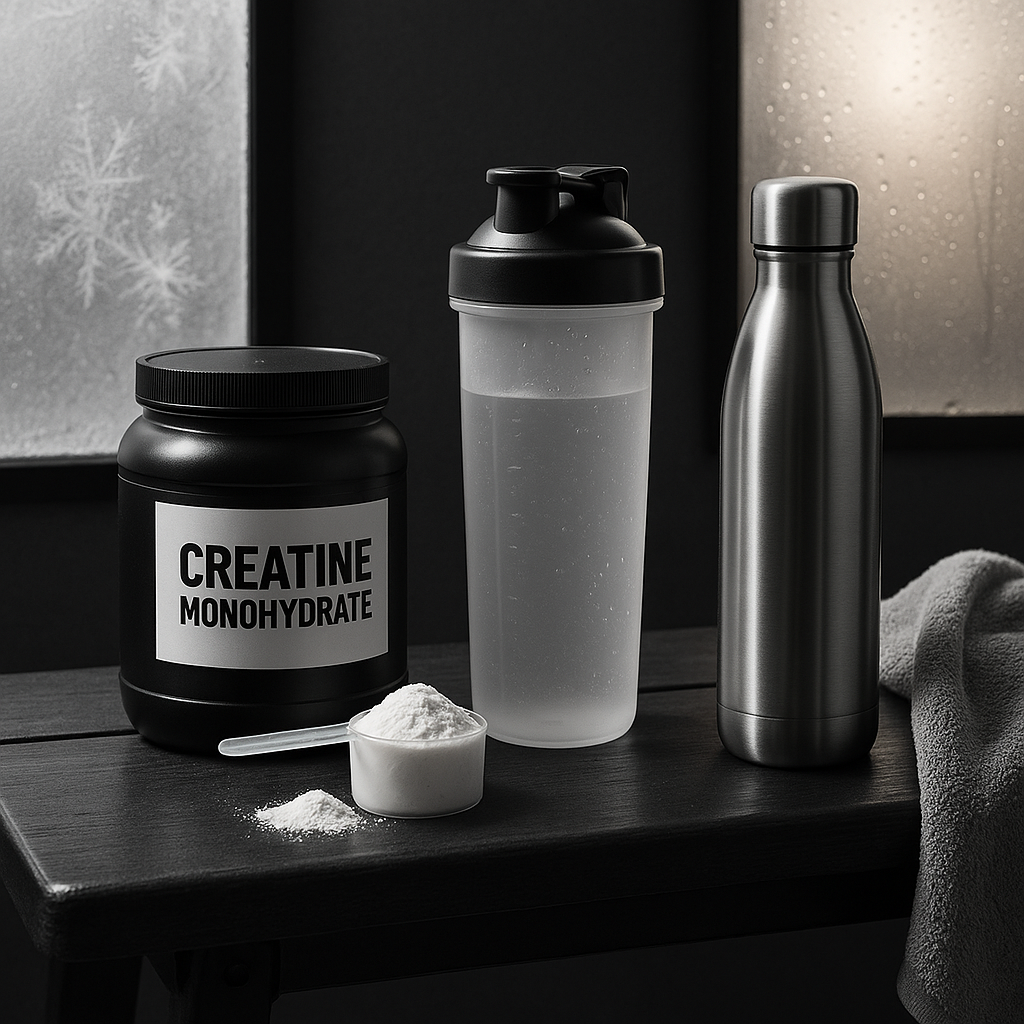
Creatine in Winter vs Summer: Canadian Seasonal Considerations
From -30°C prairie mornings to humid Ontario heat waves, Canada throws every season at your training. Here’s how to keep creatine, hydration, and routine dialled year‑round so you maintain performance and stay safe in the cold and the heat.
Key Takeaways
- Stick to 3–5 g/day of creatine monohydrate year‑round; it’s the research‑backed maintenance dose.
- Cold air, heavy layers, and dry indoor gyms increase winter dehydration risk—sip consistently even if you’re not thirsty.
- In summer heat, prioritize fluids and electrolytes; split creatine into 2–3 smaller doses if large single doses upset your stomach.
- No strong evidence that creatine worsens heat stress when well‑hydrated; focus on your overall hydration plan.
- Monohydrate is the gold standard; choose Canadian‑available, third‑party tested powders and store them dry.
- Time creatine when it fits your routine (pre or post); consistency beats timing. See our when‑to‑take guide.
- Mix with warm water or tea in winter for better solubility; in summer, pair with cold fluids and sodium for long, sweaty sessions.
Why season matters in Canada
Training across Canadian seasons means managing extremes—icy commutes, dry indoor air, humid heat waves, and wildfire smoke days—all of which influence how you use and feel on creatine. The core science doesn’t change: creatine monohydrate remains the gold standard, with a well-supported 3–5 g/day maintenance dose. But your surroundings do change how you hydrate, time doses, and organize your routine.
In winter, thirst signals often lag. You sweat under layers, then step into very dry indoor environments where you keep losing water through breathing. In summer, sweat rates surge, electrolytes matter more, and gut comfort can get touchy if you take large doses before hot, high-intensity sessions. Creatine doesn’t replace fluids or electrolytes; it complements a smart plan.
Below, we break down practical, season-by-season strategies: hydration in the cold, managing summer sweat, whether to adjust dosing, and how to store and mix creatine so it works with your life. For deeper dives on basics and brand picks, see our guides, the best creatine roundup, and our detailed supplement reviews.
Winter training: creatine and hydration
Winter can quietly dehydrate you. Cold blunts thirst, you breathe out more moisture in frigid air, and heavy layers or hard intervals can make you sweat without noticing. Add dry indoor gyms and home heating, and your fluid needs may creep up—especially if you’re on creatine, which slightly increases total body water inside muscle.
What to do:
- Stay consistent at 3–5 g/day of creatine monohydrate. Loading is optional; most Canadians can skip it and still saturate muscle over a few weeks. See the science and options in our loading guide.
- Use routine cues. Keep your scoop by your coffee kettle or morning oatmeal. In the cold, consistency beats perfect timing.
- Mix warmer. Creatine monohydrate dissolves more readily in warm water or herbal tea—handy on dark mornings.
- Hydrate deliberately. Take regular sips across the day and bring a bottle to indoor sessions. Pale‑yellow urine is a practical target.
- Bundle smart. If you’re training outdoors, pack an insulated bottle so fluids don’t freeze mid‑run or ski.
There’s no need to increase creatine dose just because it’s cold. Focus on steady intake, basic hydration, and regular training. For timing specifics, visit when to take creatine.
Summer heat, sweat, and electrolytes
Hot Canadian summers and humid stretches raise sweat losses and sodium needs. Creatine doesn’t inherently dehydrate you; in fact, it generally increases muscle water content. The performance risk in heat comes from insufficient fluids and electrolytes, not creatine itself. Well-hydrated athletes using standard creatine doses perform safely in hot environments according to mainstream sports nutrition evidence.
What to do when it’s sticky outside:
- Keep the dose steady at 3–5 g/day. If a single scoop feels heavy on your stomach before a hot workout, split it into 2–3 smaller servings across the day.
- Elevate your hydration plan. Bring a 1 L bottle to outdoor sessions, and consider an electrolyte mix (sodium is key) for workouts longer than about an hour.
- Chase with cold fluids. Mix creatine into a cool sports drink, diluted juice, or water—whatever helps you drink enough.
- Mind your gut. On very hot days, avoid stacking creatine with lots of fibre or heavy food immediately pre‑session if that upsets your stomach.
Pay attention to body cues: cramping, dizziness, or unusually dark urine are hydration red flags. For personalization, use our creatine calculator to confirm your dose and adjust routines, not the evidence‑based daily amount.
Seasonal dosing: should you adjust?
The short answer: most people don’t need to change creatine dose by season. The well-supported maintenance range of 3–5 g/day of creatine monohydrate works year‑round for strength, power, and lean mass support. If you’re new to creatine and want faster saturation, a classic loading approach (about 20 g/day in split doses for 5–7 days, then 3–5 g/day) is optional and backed by sports nutrition research. Details are in our loading phase guide.
Reasonable tweaks:
- Split dosing in heat. If you’re sensitive to larger servings, use smaller, more frequent doses during hot spells to keep the gut calm.
- Pair with electrolytes on long efforts. Creatine isn’t an electrolyte; support it with sodium and fluids during prolonged summer sessions.
- Stay consistent during winter lulls. Even if you train indoors more, daily intake maintains muscle stores so you’re ready when volume spikes.
There’s no strong evidence that seasonal temperatures change the effective dose for healthy adults. Focus your adjustments on hydration, electrolytes, and routine, not on taking more—or less—creatine itself.
Timing and routine through the seasons
Creatine works by saturating muscle stores over time, so the best timing is the one you’ll stick with—winter or summer. That said, seasonal rhythms can guide easy wins:
- Winter: Take creatine with breakfast or your morning warm drink to build a habit. If you train early outdoors, avoid delaying fluids; sip before you zip.
- Summer: If you lift or run in the heat, many Canadians prefer creatine after sessions when appetite returns and cold drinks go down easier. On double‑days, small doses before and after can feel gentler.
- With carbs or protein? Pairing creatine with a mixed meal or a shake is convenient and may support adherence. It’s not mandatory.
- Missed a dose? Take it later the same day. If you’ve missed several days, just resume your usual 3–5 g/day; loading isn’t required unless you want faster re‑saturation.
For timing myths and nuances (pre vs post, rest days, deloads), see our practical explainer: When to Take Creatine. Consistency over months matters far more than the exact minute on the clock.
Buying, storing, and mixing in Canadian conditions
Choose simple and proven: creatine monohydrate powder, ideally micronized for easier mixing. Look for Canadian‑available options with third‑party testing. Our best creatine picks and in‑depth reviews cover trusted brands, value per gram, and flavour vs unflavoured trade‑offs.
Make it season‑proof:
- Humidity and clumping: Summer humidity can cake powders. Store creatine in a cool, dry cupboard with the lid tight; use a desiccant pack if supplied.
- Cold solubility: In winter, dissolve your scoop in warm water, tea, or a warm milk alternative before adding colder liquids. Stir, then sip.
- On the go: Keep single‑serve packets in your gym bag, ski jacket, or hiking kit so you don’t skip days at the cottage or on the trail.
- Electrolyte pairing: For long, sweaty sessions, mix creatine separately from strong electrolyte drinks if taste or sweetness is a barrier—just drink both.
Finally, check your broader stack (caffeine, pre‑workouts) for total stimulants in the heat, and keep basics first: creatine monohydrate, fluids, electrolytes, food, sleep. Explore more practical how‑tos in our Creatine Guides.
Creatine Through Canadian Seasons
- 3–5 g/day Evidence-based maintenance dose
- Monohydrate Gold-standard form supported by ISSN
- Split doses in heat Gentler on the gut during hot sessions
- Warm water in winter Improves solubility on cold mornings
- Fluids + sodium Essential for long, sweaty summer workouts
Frequently Asked Questions
Do I need to stop creatine in the summer heat?
No. There’s no strong evidence that standard creatine dosing harms thermoregulation when you’re well‑hydrated. Keep your 3–5 g/day, prioritize fluids and sodium during long, hot sessions, and split the dose if a full scoop feels heavy pre‑workout.
Does creatine dehydrate you or cause cramps?
Creatine generally increases total body water within muscle and is not shown to inherently cause dehydration or cramping in healthy users. Most heat‑related issues come from inadequate fluids and electrolytes. Build a hydration plan and keep your daily creatine consistent.
Should I change my dose in winter when I train indoors less?
Usually, no. Keep 3–5 g/day to maintain muscle stores so you’re ready when training ramps back up. If you pause for a few weeks, simply resume your daily dose. Loading is optional if you want faster re‑saturation.
Is creatine monohydrate still the best choice?
Yes. Monohydrate is the most studied, effective, and cost‑efficient form and is supported by the International Society of Sports Nutrition. Micronized monohydrate can mix easier in cold weather.
Can I mix creatine with electrolytes or sports drinks?
Yes. It’s fine to mix creatine with electrolyte drinks, especially in the summer. If taste or sweetness is an issue, take creatine in water and sip your electrolyte drink separately during longer sessions.
What’s the best time to take creatine across seasons?
Any time you’ll remember. In winter, many prefer with a warm drink at breakfast; in summer, post‑workout with a cold beverage can feel better. Consistency over weeks matters more than timing. See our guide at /when-to-take-creatine.