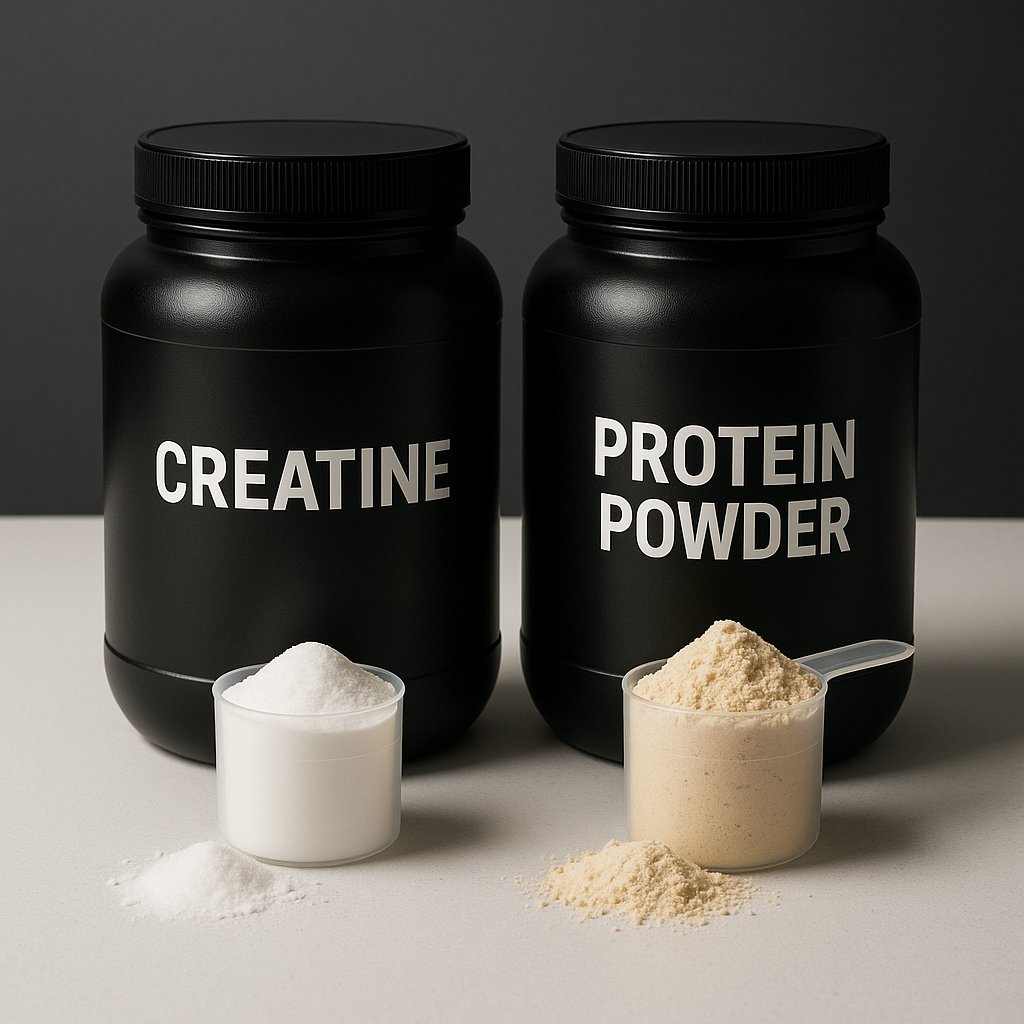
Creatine vs Protein Powder: What's the Difference?
Wondering whether you need creatine or protein powder for your fitness goals? Both are popular, but they work in very different ways. Our guide breaks down what each does, who needs them, and the best ways to use both as part of your Canadian routine.
Key Takeaways
- Creatine and protein powder serve different roles—creatine supports energy and strength, while protein is essential for muscle repair and growth.
- It's safe and often ideal to supplement with both; most athletes benefit from using creatine and protein together.
- A typical creatine monohydrate dose is 3–5 grams per day (as supported by the ISSN), while protein needs will depend on your body weight and training goals.
- Protein comes from food and supplements (e.g., whey, plant-based), while creatine is hard to get in adequate amounts from diet alone.
- Stacking both is easy—use creatine daily, add protein powder post-workout or to meet daily protein targets.
- Health Canada regards both as safe when taken as directed, but consult your healthcare provider for any medical concerns.
- Choosing quality, third-party tested supplements from reputable Canadian brands ensures safety and efficacy.
Creatine vs Protein: Different Mechanisms, Different Benefits
Creatine and protein powder are both foundational supplements in the fitness world, but they work through completely different biological mechanisms. Creatine is a naturally occurring compound found in small amounts in foods like red meat and fish. Supplementing increases your muscles’ stores of phosphocreatine, supporting rapid energy production for short bursts of intense activity—think sprints, heavy lifts, or hockey shifts.
In contrast, protein powder (such as whey, casein, or plant-based blends) provides the building blocks—amino acids—required for muscle repair and growth. When you train, you break down muscle tissue; adequate protein intake is essential for rebuilding and adapting stronger.
- Creatine: boosts strength, power, and high-intensity performance
- Protein: supports muscle recovery, immune health, and daily nutritional needs
For a deeper dive into how creatine works, visit our detailed guides.
Who Needs Creatine? Who Needs Protein Powder?
Nearly everyone who trains with moderate to high intensity can benefit from both creatine and protein, but the reasons differ:
- Creatine: Particularly effective for those doing resistance training, power sports, HIIT, or any activity involving quick bursts of effort. Since dietary creatine is hard to consume in high enough amounts (cooking destroys some and most Canadians don’t eat high daily servings of red meat), supplementation is the most practical route—even for vegetarians and vegans.
- Protein powder: Suited for anyone struggling to hit daily protein targets from whole foods alone—common for busy professionals, athletes, or those with higher protein requirements (1.2–2.0 g per kg bodyweight is typical for active individuals). Vegan or lactose-intolerant? There are Canadian-made plant-based and lactose-free options available.
If you’re unsure how much protein or creatine you need, try our supplement calculator to estimate your optimal intake.
Science-Backed Dosages and Safety for Canadians
Canadian supplement regulations, guided by Health Canada, ensure that products like creatine and protein powder are safe when used appropriately. Here’s what the experts say:
- Creatine Monohydrate: The International Society of Sports Nutrition (ISSN) recommends a maintenance dose of 3–5 grams daily—no need for higher doses once you’re past any loading phase.
- Protein Powder: Your exact requirement will depend on your weight, training intensity, and dietary intake. For muscle building, many Canadians target 20–30 grams post-workout or as needed to reach daily totals. Excess protein for healthy adults is generally not harmful but shouldn’t replace whole foods where possible.
Both supplements have decades of research supporting their safety profiles when following legitimate dosing recommendations. For quality assurance, look for third-party tested products from reputable Canadian companies—check out our reviews of best creatine supplements and top-rated protein powders.
How to Stack Creatine and Protein Powder Effectively
Good news: creatine and protein are safe and often synergistic when taken together. There’s no need to choose between them—in fact, many studies show enhanced muscle and strength gains when both are part of your daily routine.
- Take creatine (3–5 g/day) at any time that’s convenient—timing is not critical, but many take it with a meal or post-workout shake for ease.
- Use protein powder to supplement your total daily protein intake, especially post-workout to jumpstart muscle recovery. Most serve 20–30 grams, but spacing doses through the day is fine.
- You can combine both into a single shake post-workout, or take creatine with your morning meal and protein as needed. Consistency is key for both.
For more details on timing, see our guide: When to Take Creatine.
Choosing Quality Creatine and Protein Products in Canada
With so many options on the Canadian market, picking safe and effective products is crucial. Here’s what to prioritize:
- Creatine: Stick with pure creatine monohydrate—it's the most studied, most effective, and cost-efficient form. Look for products with Informed-Sport or other third-party certification.
- Protein powder: Choose quality sources like whey isolate, casein, or certified plant-based blends for optimal digestion and amino acid profile. Avoid products with unnecessary fillers or proprietary blends.
- Canadian regulations require NPN (Natural Product Number) approval for supplements—look for this on packaging for peace of mind.
Not sure which to choose? Our best creatine and comprehensive supplement reviews can help you make an informed pick.
Frequently Asked Questions
If you’re still unsure how creatine and protein powder fit into your routine, see some quick answers to common beginner questions below—or check out our continually updated complete supplement guides.
Creatine vs Protein Powder: Fast Facts
- 3–5 g Recommended daily creatine monohydrate dose
- 20–30 g Common protein powder serving size
- >90% Canadian supplement users who regularly use protein or creatine
- 0.1 g Average creatine in 100g cooked beef (minimal for performance needs)
Frequently Asked Questions
Can I take creatine and protein powder at the same time?
Absolutely. Creatine and protein serve different roles, and there’s no known interaction that would make them less effective together. Many Canadians simply add their creatine powder to their protein shake for convenience.
Which is better for muscle gain: creatine or protein powder?
Both are helpful, but for different reasons. Protein provides the raw materials for muscle growth, while creatine helps you train harder and recover more quickly. Combining both maximizes results for muscle and strength.
Do I need to cycle off creatine or protein powder?
No. Research shows creatine monohydrate is safe for prolonged use at recommended doses, and protein powder can be used as needed to meet dietary goals. If you have underlying kidney or health issues, consult a Canadian healthcare provider.
Is one better for women or older adults?
Both supplements are safe and effective for adults of all ages and genders when used as directed. In fact, creatine may support muscle health and cognitive function in older adults, while adequate protein is essential for healthy aging.
How do I know if my supplement is safe in Canada?
Look for products with a Health Canada NPN number, third-party testing labels, and transparent ingredient lists from reputable Canadian brands. This helps ensure you’re getting what’s promised on the label.