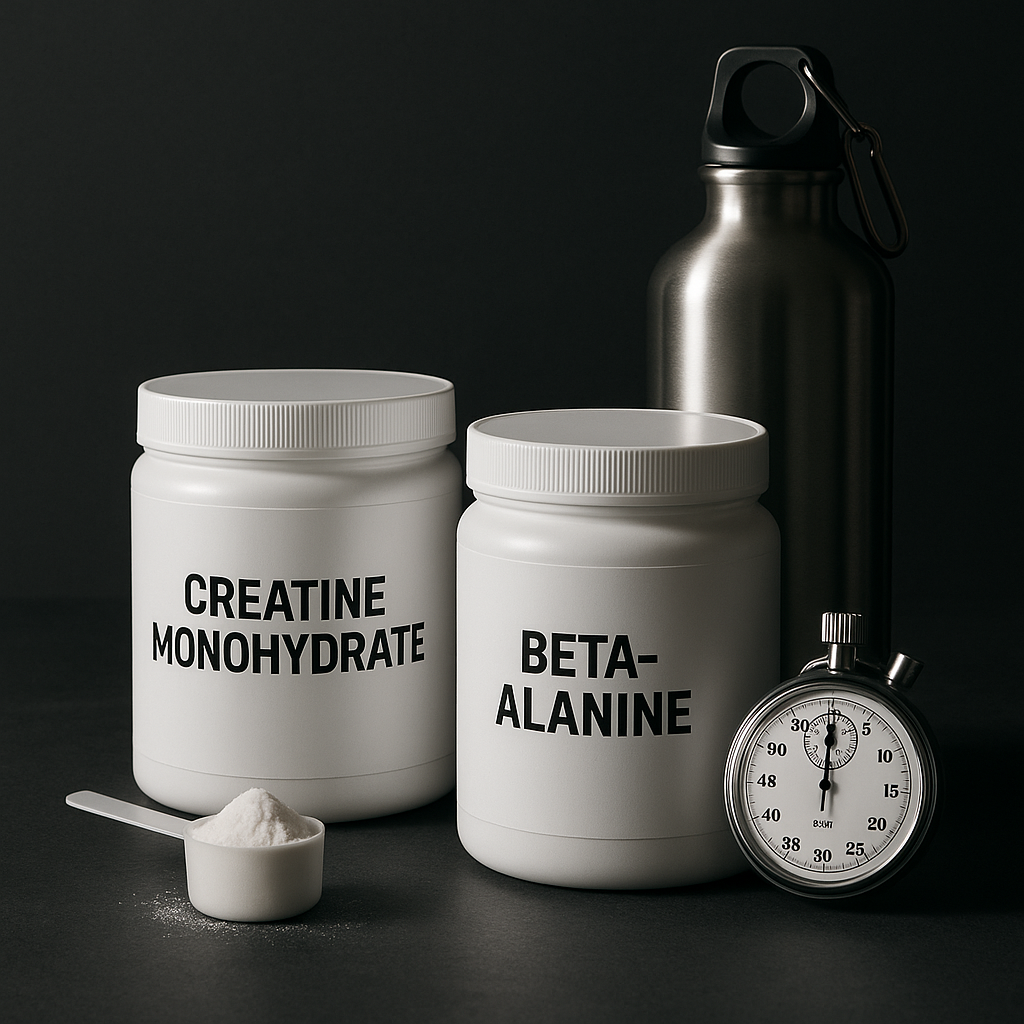
Creatine vs Beta-Alanine: Different Tools, Different Jobs
Creatine fuels explosive efforts; beta-alanine helps buffer burn during sustained high intensity. Here’s how they differ, where they shine, and a simple stack that covers both energy systems—so you can train harder with confidence.
Key Takeaways
- Creatine targets the phosphocreatine system for 0–30 second power; beta-alanine boosts carnosine to buffer acid during 60–240 second efforts.
- For most lifters and sprinters, creatine monohydrate (3–5 g/day) is the gold standard; skip fancy forms.
- Beta-alanine works best when taken daily (4–6 g in split doses) for 2–4 weeks to raise muscle carnosine.
- Serious athletes often use both: creatine for peak power, beta-alanine for repeat bouts and mid-duration intervals.
- Loading creatine is optional (20 g/day for 5–7 days); beta-alanine doesn’t require a formal loading phase.
- Choose Canadian products with an NPN and third‑party testing; avoid proprietary blends that hide dosages.
Two supplements, two energy systems
Creatine and beta-alanine are often mentioned in the same breath, but they support different pieces of the performance puzzle. Creatine replenishes phosphocreatine (PCr) in muscle. That PCr system rapidly donates phosphate to ADP to regenerate ATP—the immediate energy currency for very short, explosive efforts. Think a heavy triple on squats, a 10–30 second all-out bike sprint, or the first burst out of the starting blocks.
Beta-alanine takes another route. It’s the rate-limiting building block for carnosine, a dipeptide that acts as an intracellular buffer. During sustained high intensity, hydrogen ions build up and drop muscle pH—the familiar “burn.” Higher carnosine helps buffer that acidity so you can hold pace longer in the 60–240 second window (e.g., 400–800 m runs, 1–2 km rows, CrossFit-style intervals).
Understanding these systems clarifies why serious athletes often use both: creatine to hit higher peaks from rep one, and beta-alanine to delay the fade when the set or interval drags on. In the sections below, we map the science to practical dosing, timing, and a stack that fits Canadian buyers and busy training schedules. For deeper timing tips, see When to Take Creatine, and for broader guides, explore our Guides.
What creatine actually does (and how to use it)
Creatine monohydrate is one of the most researched sports supplements. By increasing muscle phosphocreatine stores, it helps regenerate ATP during short, intense work. In practice, that often means more reps at a given load, higher peak power, and better quality across repeated sprints. Over weeks, those small training wins can add up to greater strength and lean mass—especially alongside structured programming and nutrition.
Dose: The evidence-based maintenance is 3–5 g/day. A loading phase is optional: ~20 g/day split into 4 doses for 5–7 days, then 3–5 g/day thereafter. Loading fills stores faster; skipping it gets you to the same place in ~3–4 weeks. Use our handy creatine dose calculator if you want numbers personalized to body size and goals.
Form: Stick with creatine monohydrate—the gold standard supported by the International Society of Sports Nutrition (ISSN). Fancy forms cost more without consistently outperforming monohydrate. For product picks, see Best Creatine in Canada and our Creatine Supplements Review.
Timing & tips: Take it daily, any time that ensures consistency. Mix in water or a shake; creatine pairs well with carbs and meals. Some water-weight gain in muscle is normal and often correlates with performance benefits.
What beta-alanine does (and why the tingles)
Beta-alanine elevates muscle carnosine, an intramuscular buffer that helps keep pH in check during hard efforts. The payoff shows up in high-intensity work lasting roughly 1–4 minutes, or in repeated bouts with short rest. Athletes who feel the burn—rowers, 400–800 m runners, combat athletes, hockey players tackling longer shifts, and CrossFitters—are prime candidates.
Dose: 4–6 g/day, ideally split into 2–4 smaller servings, is the common research-backed range. It’s a daily supplement, not a quick pre-workout boost. Expect 2–4 weeks to meaningfully raise carnosine, with continued gains for several more weeks.
Paresthesia (the tingles): A harmless, temporary skin-tingling sensation can occur—especially with large single doses. Minimizing it is simple: use smaller, spread-out servings, take with meals, or choose sustained-release capsules. Unlike caffeine, beta-alanine isn’t about acute stimulation; the benefits come from consistent intake over time.
Quality notes: Look for Canadian products listing a full daily gram amount on-label (avoid proprietary blends) and, ideally, an NPN (Natural Product Number). Third-party certifications (e.g., NSF Certified for Sport, Informed Choice) add peace of mind for tested athletes.
Which one is right for your sport?
Match the tool to the task, then consider overlap. If your sport is dominated by brief, explosive outputs with full or long rest—heavy resistance training, Olympic lifting practice, short sprints—creatine is the first box to tick. Team sport athletes who rely on repeated short sprints (soccer, basketball) also benefit from creatine’s impact on repeated high-power actions.
If your key sessions live in the 60–240 second grind—rowing 1–2 km pieces, mid-distance track intervals, circuit training under short rest—beta-alanine can help you maintain pace and quality as acidity mounts. It’s often useful for hockey players, combat-sport rounds, and CrossFit-style metcons where the burn, not peak power, calls the shots.
Many athletes sit in the middle and will see the best return from both: creatine to raise the ceiling on peak efforts and beta-alanine to extend quality in work intervals. Vegetarians and vegans may particularly benefit from creatine (lower baseline stores), and masters athletes often find creatine supports training quality and recovery. If you’re unsure, start with creatine monohydrate (3–5 g/day), then layer beta-alanine once your training includes sustained high-intensity intervals.
How to stack creatine and beta-alanine
Stacking is straightforward because these supplements work through different mechanisms and do not compete. Here’s a practical template you can adapt:
- Creatine monohydrate: 3–5 g once daily, any time you’ll consistently remember. Optional loading: ~20 g/day split into 4 doses for 5–7 days, then 3–5 g/day. See our Creatine Loading Phase explainer and When to Take Creatine for timing nuance.
- Beta-alanine: 4–6 g/day total, split into 2–4 doses (e.g., 1.6–2 g with meals). Give it 2–4+ weeks before judging results. If tingles bug you, reduce single-dose size or use sustained-release.
- Pre-workout timing: You can include a portion of beta-alanine pre-workout if you like the routine, but the benefits are from saturation over time. Creatine timing is also flexible; some athletes prefer post-workout with a carb/protein meal.
- Hydration and carbs: Hard intervals and heavy lifting both benefit from adequate hydration and carbohydrate availability. Don’t let under-fuelling mask what these supplements can do.
There’s no need to cycle either supplement for safety in healthy adults. If you have kidney, liver, or neurological conditions—or you’re on medications—speak with a healthcare professional before starting.
Buying in Canada: labels, safety, and value
Canadian buyers have a few simple ways to shop smart. First, favor creatine monohydrate with the dose and ingredients clearly listed—ideally just creatine. For beta-alanine, avoid proprietary blends that obscure grams per serving; you want to see ~4–6 g/day recommended on the label. Look for an NPN (Natural Product Number), which indicates the product is licensed for sale as a Natural Health Product in Canada.
Third-party testing (e.g., NSF Certified for Sport, Informed Choice) reduces the risk of contamination—valuable for tested athletes and peace of mind for everyone. Compare cost per gram rather than sticker price; pure powders are often the best value, while capsules are convenient for splitting doses and reducing tingles.
New to these supplements? Start with our Canadian picks in Best Creatine and deep dives in Creatine Supplements Review. For program fit and timing, browse our Guides. And remember: supplements fill gaps—training quality, sleep, and nutrition still move the needle the farthest.
Creatine vs Beta-Alanine at a glance
- 0–30 s Creatine’s sweet spot for peak power efforts
- 60–240 s Beta-alanine’s wheelhouse for buffering the burn
- 3–5 g/day Creatine monohydrate maintenance dose
- 4–6 g/day Beta-alanine daily dose (split servings)
- 2–4 weeks Typical time to feel beta-alanine benefits
Frequently Asked Questions
Can I take creatine and beta-alanine together?
Yes. They work through different mechanisms—phosphocreatine resynthesis versus carnosine buffering—and do not interfere with each other. Many athletes take creatine daily (3–5 g) and split beta-alanine (4–6 g) across meals. The key is consistency over weeks, not precise pre-workout timing.
Do I need to load either supplement?
Creatine loading (about 20 g/day for 5–7 days) fills muscle stores faster but is optional; 3–5 g/day reaches the same level in 3–4 weeks. Beta-alanine does not require a formal loading phase—just take 4–6 g/day consistently. Some brands offer sustained-release forms to minimize tingles if you prefer larger single doses.
Which is better for hockey or team sports?
Both can help for different reasons. Creatine supports explosive plays and repeated short sprints. Beta-alanine can aid during longer shifts and late-period intervals where acidosis builds. If you practice and compete across a mix of bursts and sustained efforts, stacking both is often the most comprehensive approach.
Are creatine and beta-alanine safe and legal in Canada?
For healthy adults using evidence-based doses, both are generally considered safe and are legally sold as Natural Health Products when licensed. Choose products with an NPN and, ideally, third-party certification (e.g., NSF Certified for Sport) to reduce contamination risk. If you have medical conditions or take prescriptions, consult a healthcare professional before use.
Do women need different doses?
No sex-specific adjustments are required in most cases. Typical evidence-based ranges—creatine monohydrate at 3–5 g/day and beta-alanine at 4–6 g/day—apply to both women and men. Individual tolerance (e.g., beta-alanine tingles) and body size can guide small personal adjustments.