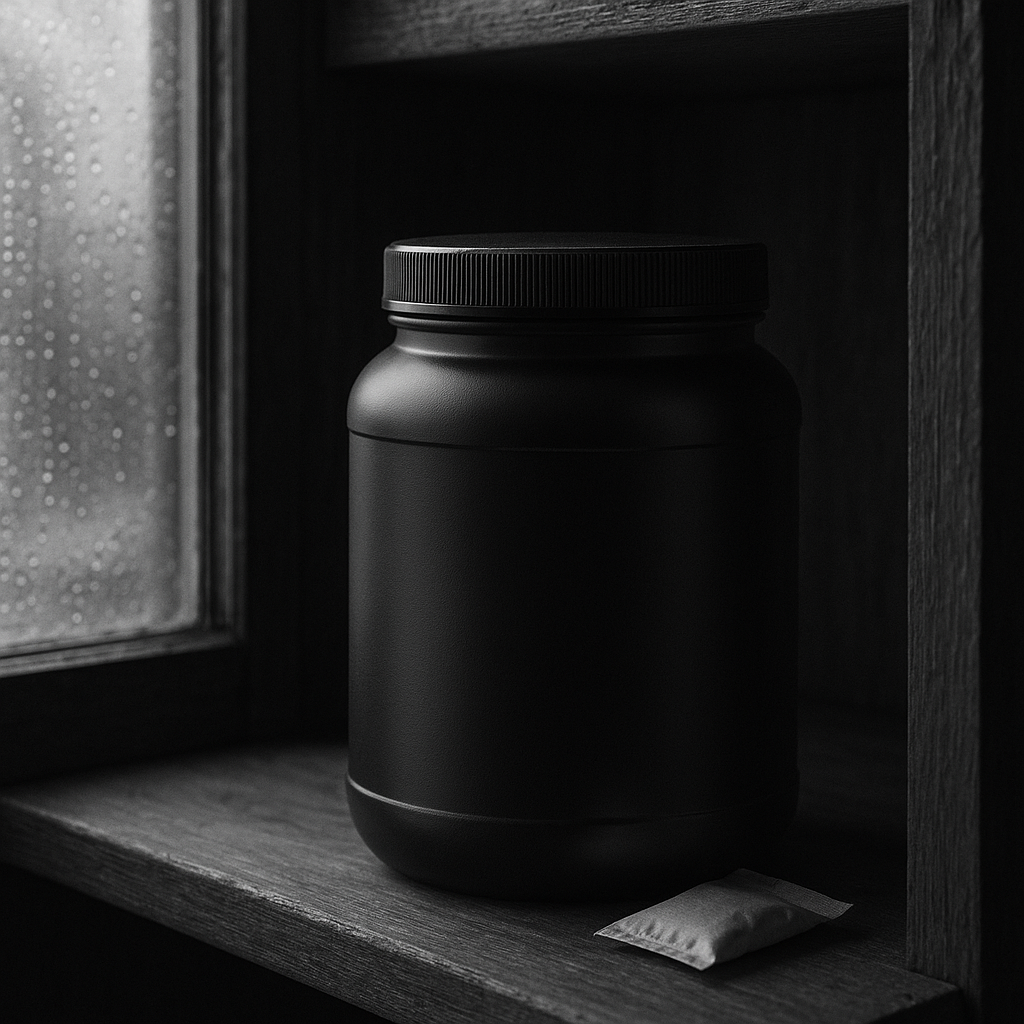
How to Store Creatine So It Doesn't Degrade
Creatine is remarkably stable as a dry powder—but heat, humidity, and light can nudge it toward clumping and, once mixed in liquid, gradual breakdown. Here’s how to keep your creatine potent, whether it lives in your pantry, gym bag, or suitcase.
Key Takeaways
- Store creatine monohydrate in a cool, dry, dark place—pantry over bathroom or hot car.
- Keep the original tub sealed tight and retain the desiccant packet to limit moisture.
- Avoid scooping with wet hands or a damp scoop; moisture accelerates clumping and breakdown once dissolved.
- Dry powder is stable; mixed solutions degrade over time—refrigerate if pre-mixing and drink soon.
- Opaque, airtight containers beat clear jars on a sunny counter.
- Follow the product’s best-before date; stability depends on storage and formulation.
- For Canadians: choose licensed products and see our reviews before you buy.
Why creatine storage matters
Creatine monohydrate is one of the most researched and reliable supplements in sport—supported by the International Society of Sports Nutrition (ISSN) and widely used at 3–5 g per day for maintenance. The good news: as a dry powder, creatine monohydrate is inherently stable. The watch-outs start when moisture, heat, and light enter the picture, and especially when creatine is dissolved in liquid for extended periods. In solution, creatine slowly converts to creatinine over time, and that rate increases with higher temperatures and lower pH (think warm, acidic drinks).
Practical takeaway: protect your creatine from its main stressors—heat, humidity, and light—and you’ll preserve quality right up to the best‑before date. Keep the scoop dry, seal the lid firmly, and if you pre-mix, store it cold and drink promptly. For a refresher on dosing and timing, see our guides on when to take creatine and the optional loading phase.
Not sure which product to use? Stick to plain creatine monohydrate, the gold standard in Canada and globally. Explore our picks at best creatine and our in-depth supplement reviews.
The enemies of stability: heat, humidity, and light
Three environmental factors do most of the damage to supplements: heat, humidity, and light. Creatine powder tolerates room temperature well, but prolonged exposure to high heat (e.g., summer car interiors) isn’t ideal. Humidity is the bigger everyday threat—water in the air encourages clumping and, once powder is wetted, can accelerate conversion to creatinine if it remains damp.
- Heat: Avoid storing tubs near ovens, radiators, dishwashers, or in hot cars. Warmth speeds chemical reactions in general, including creatine’s breakdown in solution.
- Humidity: Bathrooms and steamy kitchens invite moisture into the tub when it’s opened. Moisture doesn’t automatically ruin dry creatine, but it does cause caking and can create pockets of damp powder.
- Light: Bright, direct sunlight can warm containers and degrade some nutrients over time. While creatine is relatively light-stable as a powder, there’s no benefit to leaving it on a sunny counter. Opaque containers help.
Quick checks at home: if your creatine is clumping, ask whether your storage spot is humid or warm, whether you’re opening the lid during/after cooking or showering, and whether the scoop or your hands are fully dry. Small habit shifts go a long way.
Best containers, desiccants, and everyday handling
The simplest strategy is also the best: keep creatine in its original tub with the desiccant packet inside, lid firmly closed. Those tubs are designed to block moisture and light. If you prefer to decant, choose an airtight, opaque container with a reliable gasketed lid (think quality food-storage canister). Avoid clear glass jars on a sunny shelf.
- Desiccants: Leave the silica gel packet in the tub to absorb ambient moisture. Do not ingest; keep away from children and pets.
- Dry tools: Only use a completely dry scoop. Wet scoops and damp hands are the most common source of localized clumping.
- Minimal air exposure: Open the tub briefly, take your scoop, and reseal. The less humid air that enters, the better.
- Labeling: If you decant, transfer the product name, lot number, and best‑before date to the new container so you can track freshness.
Pair these storage habits with evidence-based use: monohydrate at 3–5 g/day works for most adults, with an optional loading phase if you want rapid saturation (learn how). For brand picks that prioritize quality control, see our creatine supplement reviews.
Where to store it: bathroom, kitchen, gym bag, or office?
Location matters. The goal is a place that’s cool, dry, and out of direct light—plus convenient enough that you’ll actually take it daily.
- Bathroom: Not ideal. Post-shower humidity can rush into an open tub. If it’s your only option, keep it in a closed cabinet and avoid opening right after hot showers.
- Kitchen: Often the best choice. Use a closed pantry or cupboard away from stoves, kettles, and dishwashers. A pantry shelf keeps it handy for morning routines.
- Gym bag: Fine for short stints during cool months. Avoid leaving creatine in a hot car or locker room for hours—heat plus humidity is a poor combo.
- Office desk: Good if climate-controlled. Keep it in a drawer, not on a sunny windowsill.
For travel, portion single servings into small, airtight containers. If you pre-mix for the commute, keep the bottle refrigerated at work and drink soon after arrival. For dosing guidance and timing strategies that fit your schedule, see when to take creatine and our creatine guides.
Shelf life reality, pre-mixing, and temperature myths
Most creatine monohydrate powders carry generous best‑before dates when stored properly. As a dry, sealed powder in a cool, low‑humidity environment, creatine is stable. Once mixed in liquid, it gradually converts to creatinine over time; higher temperatures and acidic solutions accelerate that process. Practically, this means:
- Powder vs. solution: Keep creatine dry until you’re close to drinking it. If you like to pre-mix, choose water or a neutral beverage, store it in the fridge, and consume shortly thereafter.
- Fridge and freezer: Refrigeration of sealed powder is acceptable but unnecessary. Freezers can introduce condensation when you move the container in and out, which defeats the purpose. Room‑temperature pantries usually win.
- Clumps: Caking from humidity doesn’t automatically mean it’s unusable. Break up clumps and check for off odours, discoloration, or contamination before continuing use.
- Best‑before: Follow the label. Stability can vary by formulation (e.g., blends with carbs or flavours). When in doubt, choose plain monohydrate and reputable Canadian brands vetted in our best creatine list.
Remember, effectiveness depends more on consistent daily intake (3–5 g) than the exact minute you take it. If you do load, see the practical steps in our loading guide.
Troubleshooting and building a zero-fuss routine
Most storage problems have simple fixes. If your creatine is clumping, move it to a drier, cooler spot, add or retain the desiccant, and avoid opening the tub in humid rooms. If you notice off smells, discoloration, or visible contamination, replace the product. For routine building, anchor creatine to a daily habit that already happens in your chosen storage location.
- Habit hooks: Keep the tub next to your coffee grinder or shaker bottle in a pantry. Take your scoop while the kettle boils or before making breakfast.
- Mixing method: Add creatine to a cold or room‑temperature beverage. Stir or shake vigorously to help it disperse. Plain water works; timing is flexible (details here).
- Preworkout combos: If your preworkout contains creatine, treat that tub the same way—cool, dry, dark. See our reviews to confirm dosing and forms.
- Measuring: For accuracy, especially during loading, use a scale or our creatine calculator. Scoops vary by brand.
With the right storage and a consistent routine, you’ll get the full benefit of a simple, evidence-backed supplement—without worrying about degradation.
Creatine storage at a glance
- 3–5 g/day Evidence-based maintenance dose (ISSN-supported)
- Cool, dry, dark Ideal environment for creatine powder
- Powder > solution Dry creatine stays stable longer than mixed drinks
- Seal it tight Airtight lid + desiccant reduces moisture exposure
Frequently Asked Questions
Can I store creatine in the fridge or freezer?
You can refrigerate sealed powder, but it isn’t necessary and frequent in‑and‑out can cause condensation. Freezing is also unnecessary and risks moisture when the container warms. A cool, dry pantry is usually best; if you pre-mix in liquid, refrigerate and drink soon.
Does clumped creatine mean it’s gone bad?
Not automatically. Clumping often reflects humidity exposure, not loss of potency. Break up the clumps and check for any off odours, unusual colour, or visible contamination. If anything seems off—or it’s past the best‑before date—replace the product.
Is it okay to pre-mix creatine the night before?
Yes—store the mixture in the fridge and consume soon after. Creatine in solution slowly converts to creatinine over time, and the rate increases with heat and acidity. Using cold water and refrigerating helps slow this process for short-term pre-mixes.
Where should I keep my creatine tub at home?
Choose a pantry or cupboard away from heat sources and steam. Avoid bathrooms and sunny windowsills. Keep the lid tightly sealed, leave the desiccant packet in place, and open the container briefly to limit humid air entering.
What’s the safest container for creatine if I decant it?
Use an opaque, airtight container with a good gasketed lid. Transfer the product name, lot number, and best‑before date to the new container. Keep the scoop dry and avoid opening the container in humid environments.
Do I need a loading phase after missing a few days?
No. If you miss a day or two, resume your regular 3–5 g/day. Loading (larger, short-term doses) is optional for faster saturation but not required for long-term benefits.