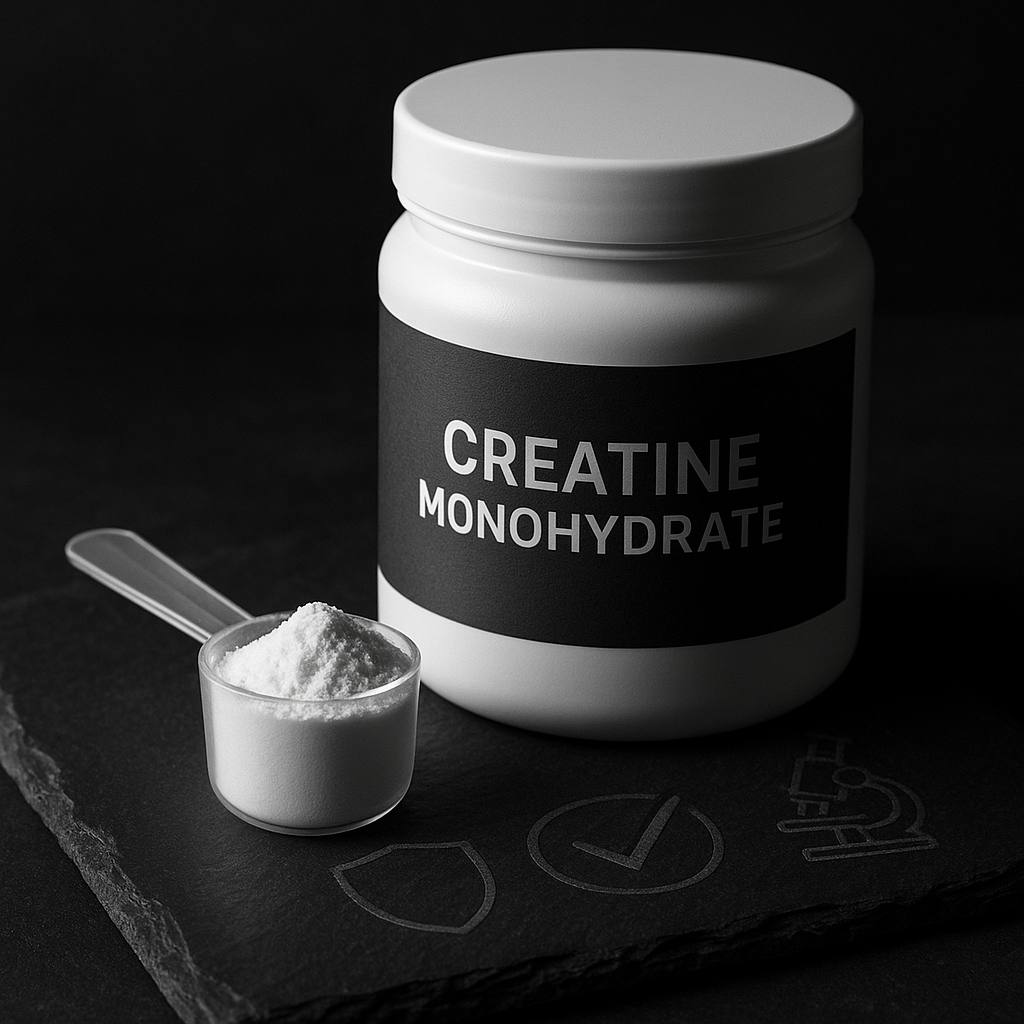
Creatine Certifications in Canada: Creapure, NSF, Informed Sport Explained
Confused by the seals on creatine tubs? This guide breaks down what Creapure, NSF Certified for Sport, and Informed Sport actually test, what they cost brands, and why Canadian athletes in tested sports should insist on batch-tested certification—plus how to spot counterfeit logos online.
Key Takeaways
- For tested Canadian athletes, choose creatine with Informed Sport or NSF Certified for Sport and verify the batch online.
- Creapure is a high-purity German creatine monohydrate ingredient—not an anti-doping certification.
- Certification costs include audits, annual fees, and per-batch testing; expect certified products to be priced modestly higher.
- Look for an 8‑digit NPN on Canadian labels and buy from reputable retailers to avoid grey‑market stock.
- Monohydrate remains the gold standard; a maintenance dose of 3–5 g/day is evidence‑based.
- Check brand pages on NSF or Informed Sport to confirm current certification and lot numbers.
- Beware fake logos, missing lot numbers, and listings that refuse to share lab reports or NPNs.
Why certifications matter in Canada
Creatine is one of the most researched sports supplements, with strong evidence that creatine monohydrate supports strength, power, and lean mass when taken at 3–5 g per day after an optional short loading phase. For healthy adults, creatine monohydrate is well supported by the International Society of Sports Nutrition (ISSN). But in Canada, there’s another piece to the puzzle: choosing a product that is both safe and compliant for your situation.
Under Canadian anti-doping rules and the World Anti-Doping Code, athletes are under strict liability for what they ingest. That’s why third‑party programs that screen supplements for banned substances—such as NSF Certified for Sport and Informed Sport—are so important for athletes in tested sports. Meanwhile, Canada’s Natural Health Products framework means many creatine powders carry an NPN (Natural Product Number), indicating they’re licensed for sale by Health Canada.
In this guide we’ll explain how the main logos you see—Creapure, NSF Certified for Sport, and Informed Sport—actually work, what they test, typical cost drivers for brands, who needs which mark, and practical steps to avoid counterfeits. If you just want picks, see our Canadian round‑ups: Best Creatine and our full Creatine Supplements Review. For timing and dosing help, try our When to Take Creatine guide and Creatine Calculator.
What Creapure is—and what it isn’t
Creapure is a branded form of creatine monohydrate manufactured in Germany by Alzchem. The Creapure quality mark signals that the ingredient came from this facility, using a well‑controlled synthesis and purification process. Brands that use Creapure may place the Creapure logo on the label; some also add their own in‑house testing or third‑party certificates.
What Creapure does represent: a high‑purity creatine monohydrate ingredient with tight specifications for identity and common process impurities, plus quality system certifications at the manufacturing site. What it does not represent: anti‑doping screening of your finished tub. Creapure is not an athlete‑focused, batch‑tested certification like Informed Sport or NSF Certified for Sport. A finished product could contain Creapure yet still lack banned‑substance testing—conversely, a non‑Creapure monohydrate could be fully certified for sport.
Costs for brands: using Creapure typically involves an ingredient premium and brand authorization, but it generally doesn’t include per‑batch anti‑doping lab fees. Expect finished products featuring Creapure to be priced accordingly, though many remain competitively priced in Canada. To verify Creapure claims, check the brand’s website for a supplier statement, compare packaging to Creapure’s current branding, and buy from reputable Canadian retailers. For overall product picks, see our Creatine Supplements Review.
NSF Certified for Sport explained
NSF Certified for Sport is a comprehensive third‑party program designed for athletes and teams. It includes: (1) formulation and label review, (2) GMP compliance at the manufacturing site, (3) testing to verify that what’s on the label is in the bottle, and (4) lot‑by‑lot screening for a broad panel of substances prohibited by sport (e.g., certain stimulants, anabolic agents, SARMs). Certified products are listed on NSF’s searchable database; you can view lots and expiry dates.
What it tests: identity and potency (does the product contain the creatine claimed), contaminants (e.g., heavy metals, microbes per program scope), and prohibited substances against a sport‑relevant panel aligned to the WADA Prohibited List. This is a high‑bar program recognized across North American professional leagues and adopted by many Canadian national teams and universities.
Costs for brands: fees typically include an initial audit and review, annual certification maintenance, and per‑lot banned‑substance testing. Those per‑lot tests are the major driver of ongoing cost, which is why Certified for Sport products may be priced modestly higher. If you’re in a tested sport, that premium often buys meaningful risk reduction. To compare NSF‑certified creatines available here, see our Best Creatine guide.
Informed Sport explained
Informed Sport is a global, athlete‑focused program operated by LGC that tests every batch prior to release for a wide panel of substances prohibited by sport. Each certified batch carries a unique code you can verify on the Informed Sport website. The program also audits manufacturing, reviews formulations, and monitors products in market.
What it tests: finished goods are screened against a sport‑relevant banned‑substance panel and assessed for label integrity. Informed Sport is distinct from Informed Choice (a companion program with periodic retail monitoring); for tested athletes, Informed Sport is the higher bar because of batch‑by‑batch testing before sale.
Costs for brands: similar to NSF’s athlete program, costs include onboarding (facility assessment, documentation), annual licensing, and per‑batch laboratory testing. Brands pass some of this cost into pricing. For Canadian athletes subject to CCES/WADA testing, Informed Sport is widely recommended by practitioners because it provides traceable batch verification. If you’re choosing between two creatines, all else equal, prefer the one with current Informed Sport certification and a verifiable batch code.
How to choose—for your goals and budget
Start with the fundamentals: creatine monohydrate remains the gold standard. For most adults, a maintenance dose of 3–5 g/day is sufficient; a short loading phase is optional. See our Creatine Loading Phase guide, When to Take Creatine, and the Creatine Calculator for personalized help.
If you compete in a tested sport in Canada: insist on Informed Sport or NSF Certified for Sport. Verify the exact product, lot number, and expiry on the program’s website before use, and keep receipts. This doesn’t guarantee zero risk, but it meaningfully reduces it under strict liability rules.
If you do not compete in a tested sport: you may prioritize simplicity and value. A single‑ingredient creatine monohydrate with a Health Canada NPN, transparent label, and basic third‑party testing is often enough. Creapure‑sourced products are a solid option if you want an ingredient pedigree; some also carry Informed Sport/NSF for added assurance.
Budget tips: certifications add legitimate costs (audits, batch tests). Stretch your dollar by buying larger tubs, watching for sales from authorized Canadian retailers, and choosing unflavoured powders. See our current picks in Best Creatine and deeper comparisons in Creatine Supplements Review.
How to spot fakes and grey‑market stock
The biggest risks with creatine aren’t the ingredient itself—they’re counterfeits, mislabelled imports, and expired or tampered stock. Here’s a quick Canadian checklist to protect yourself:
- Verify certification: for Informed Sport or NSF Certified for Sport, enter the product name and lot/batch number on the program’s website. If the lot isn’t listed, don’t use it until the brand resolves it.
- Look for an NPN: Canadian‑labelled Natural Health Products display an 8‑digit NPN. Absence doesn’t automatically mean fake (e.g., some cross‑border sales), but it’s a red flag for domestic retail.
- Packaging details: bilingual labelling, clean batch/expiry stamps, intact seals, and consistent fonts/colours. Beware poor print quality, misspellings, or stickers covering critical info.
- Source matters: buy from the brand’s Canadian site or authorized retailers/marketplace stores. Be cautious with third‑party sellers offering unusually low prices or no returns.
- Creapure claims: check the brand’s site for confirmation they are a Creapure licensee and compare the logo to current artwork. Remember: Creapure ≠ anti‑doping certification.
- Ask for proof: reputable brands will share up‑to‑date certificates and testing summaries on request.
When in doubt, choose a simpler formula (pure monohydrate), stick to known Canadian channels, and consult our buying guides: Best Creatine and Creatine Supplements Review.
Quick checks before you buy creatine in Canada
- 3–5 g/day Evidence‑based maintenance dose of creatine monohydrate (ISSN)
- Monohydrate Gold‑standard form for efficacy and value
- Informed Sport / NSF Batch‑tested options for athletes in tested sports
- 8‑digit NPN Health Canada Natural Product Number on Canadian labels
- Verify lot online Check batch numbers on certification sites before use
Frequently Asked Questions
Do I need Informed Sport or NSF Certified for Sport if I’m not a tested athlete?
Not necessarily. If you don’t compete in a tested sport, a simple, single‑ingredient creatine monohydrate with an NPN and transparent quality info is usually sufficient. Athlete‑focused certifications add cost because of per‑batch testing. That said, some non‑tested consumers still prefer certified products for extra assurance.
Is Creapure better than regular creatine monohydrate?
Creapure is a high‑purity, German‑made creatine monohydrate ingredient from a reputable manufacturer. It’s a good option, but the key is that it’s still creatine monohydrate—the form with the strongest evidence. Non‑Creapure monohydrate from quality manufacturers can be equally effective. If you’re in a tested sport, look for Informed Sport or NSF on the finished product regardless of the ingredient source.
Does certification change how I should take creatine?
No. Certification speaks to product quality and anti‑doping risk control, not dosing. Typical protocols are a maintenance dose of 3–5 g/day, with an optional 5–7 day loading phase before returning to maintenance. For timing and options, see our guides: When to Take Creatine and Creatine Loading Phase.
Is creatine allowed in sport under WADA/CCES rules?
Creatine itself is not on the WADA Prohibited List, and many athletes use it. The risk is contamination or mislabeling in some supplements. CCES advises choosing third‑party certified, batch‑tested products and verifying lots online to reduce the risk of an inadvertent violation.
How do I verify a batch number for Informed Sport or NSF?
Go to the program’s official website, search the product name, and match the lot/batch number and expiry printed on your tub. Only use the product if the details match an active listing. Screenshot or save the page and keep your receipt as part of your documentation.