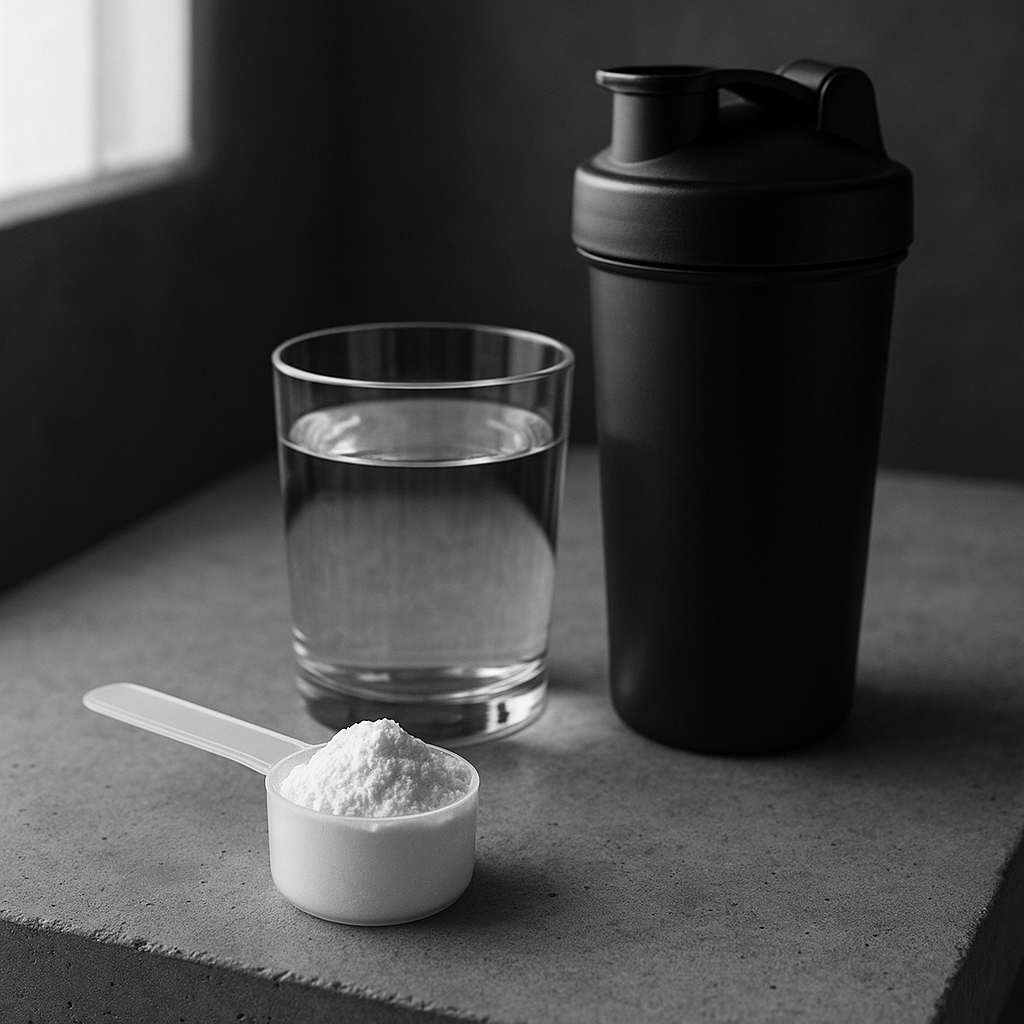
10 Creatine Myths Debunked With Actual Science
Think creatine is a steroid, ruins kidneys, or causes hair loss? We unpack the 10 most persistent myths using mainstream research Canadians can trust—plus practical tips on dosing, timing, and product choice.
Key Takeaways
- Creatine monohydrate is the gold standard; 3–5 g per day covers most people.
- In healthy individuals, creatine has not been shown to harm kidneys or liver.
- Creatine draws water into muscle but does not dehydrate you—stay on top of fluids.
- No direct evidence links creatine to hair loss; one small DHT study is not causation.
- Women and teens can benefit, but teens should use it with healthcare/guardian guidance.
- Loading is optional; timing is flexible—consistency matters most.
- Choose Canadian-available, third-party tested monohydrate; check our reviews and calculator.
What Creatine Is (And Isn’t): It’s Not a Steroid
Myths #1–2: Creatine is a steroid; creatine is only for bodybuilders. Creatine is a naturally occurring compound synthesized from amino acids and stored primarily in skeletal muscle to help regenerate ATP—the energy currency your muscles use during high-intensity efforts. It’s found in foods like beef and fish, and your body makes it in small amounts. Anabolic steroids are hormones (or hormone-like) that act on androgen receptors; creatine is not a hormone and does not act like one. That’s why it’s legal in sport and not on the WADA Prohibited List.
For Canadians who sprint, skate, lift, or simply want to maintain muscle with age, creatine can support performance and training quality. The gold standard form is creatine monohydrate, supported by decades of research and the International Society of Sports Nutrition (ISSN). Typical maintenance is 3–5 g per day.
- New to creatine? Our practical guides and creatine calculator can help you personalize your dose.
- Shopping? See Canadian-available picks in Best Creatine and deeper brand analysis in our Reviews.
- Curious about timing? We break down options in When to Take Creatine.
Kidneys, Liver, and Lab Results: What the Evidence Shows
Myths #3–4: Creatine hurts your kidneys or liver. In healthy individuals using recommended doses, peer-reviewed evidence has not shown creatine to impair kidney or liver function. The ISSN’s position stand concludes creatine is safe when used responsibly. One common confusion: creatine can modestly raise serum creatinine, a lab marker used to screen kidney function. That rise can reflect increased intake—not kidney damage—so clinicians sometimes interpret it in the context of supplementation.
Where caution applies: if you have pre-existing kidney or liver disease, are on nephrotoxic medications, or are pregnant/breastfeeding, speak with a healthcare professional before use. In Canada, creatine sold as a natural health product is regulated under Health Canada’s framework, so look for products with clear dosing, ingredient identity (monohydrate), and third-party testing.
- Stick to 3–5 g/day for maintenance; loading is optional (see Loading Guide).
- Choose established brands available in Canada—see our supplement reviews.
- If you’re monitoring labs, inform your provider that you supplement with creatine so results are interpreted appropriately.
Hydration, Cramps, and Heat: Does Creatine Dehydrate You?
Myths #5–6: Creatine dehydrates you and causes cramps. Creatine increases intracellular water—pulling fluid into muscle cells. That’s different from systemic dehydration. Across studies, athletes using creatine under normal conditions do not show higher rates of dehydration, cramping, or heat illness compared to controls. In fact, by improving training quality and buffering high-intensity efforts, some athletes report fewer late-session cramps.
The practical takeaway: keep doing what good athletes already do—hydrate proactively, especially for summer sport, hockey tournaments with back-to-back games, or heavy lifting days. Consider electrolytes for long, sweaty sessions, and don’t confuse an initial 0.5–1.5 kg rise in scale weight (mostly water in muscle) with harmful fluid shifts.
- Time your dose whenever you’ll remember it; pairing with a meal can aid consistency. See When to Take Creatine.
- Track your intake and training response over 3–4 weeks before judging effects.
- If you’re weight-class or aesthetics-focused, adjust sodium and fluid to manage early water retention while keeping performance first.
Hair Loss and DHT: What We Actually Know
Myth #7: Creatine causes hair loss. The claim largely traces to a small study in male rugby players that reported higher dihydrotestosterone (DHT) after a short loading phase. Importantly, it did not measure hair outcomes, involved few participants, and hasn’t been robustly replicated. Broad reviews—including the ISSN position stand—do not identify creatine as a cause of hair loss in healthy people.
What’s reasonable? If you have a strong family history of androgenic alopecia and you’re concerned, you can choose a conservative approach—use the lowest effective dose (3 g/day), monitor over months, and discuss any changes with your clinician. But current evidence does not show a causal link between creatine and hair loss.
- Focus on proven variables for hair health: stress management, adequate protein/iron, and medical options evaluated by your physician if needed.
- If you pause creatine to troubleshoot cosmetics, reintroduce later and track objectively (photos, comb test, timelines).
Women and Teens: Who Can Safely Use Creatine?
Myths #8–9: Creatine is only for men; teens shouldn’t use creatine. Women respond to creatine similarly to men, with potential benefits for strength, power, training volume, and even support during high-stress phases of the menstrual cycle. Concerns about being ‘bulky’ are overstated; the early scale increase is mostly water in muscle, not fat gain.
For adolescents, creatine is not a shortcut—coaching, nutrition, sleep, and skill development come first. That said, evidence in young athletes and clinical populations suggests potential benefits when used responsibly. In Canada, best practice is that teens use creatine under guidance from a qualified healthcare professional and with parent/guardian consent, following label directions and sport policies. Creatine is legal in amateur and professional sport, but always verify your organization’s guidelines.
- Women and teens alike can begin with 3 g/day of monohydrate and reassess after 3–4 weeks.
- Need help tailoring intake? Try our creatine calculator and practical how-to guides.
- Choose reputable Canadian-available monohydrate—see Best Creatine.
Dosing, Loading, Timing, and Forms: Clearing Up the Rest
Myth #10 (and friends): You must load, time it perfectly, cycle it, or buy exotic forms. The essentials are simple: 3–5 g/day of creatine monohydrate works for most people. Loading (about 20 g/day split for 5–7 days) can saturate muscle faster but is optional—consistent daily dosing reaches the same destination in a few weeks. Timing is flexible; many prefer post-workout with a meal, but pick any time you’ll reliably take it.
Cycling (on/off) isn’t required for safety or efficacy in healthy users. As for product types, monohydrate remains the gold standard on cost, evidence, and real-world results. Other forms (HCl, nitrate, buffered) haven’t consistently outperformed monohydrate in head-to-head trials. Mix powder in water, juice, or a shake; warm liquids help dissolve. If caffeine is part of your routine, most evidence suggests it can coexist with creatine—monitor your own response.
- Get the step-by-step in our Loading Guide and Timing Guide.
- Compare products and third-party testing notes in supplement reviews.
- Use the calculator to match dose to body size, then stick with it for 4+ weeks.
Creatine: Fast Facts for Canadians
- 3–5 g/day Evidence-based maintenance dose
- Optional Loading phase (reach saturation faster, not required)
- ≈95% Creatine stored in skeletal muscle
- Monohydrate Gold standard form backed by ISSN
Frequently Asked Questions
Is creatine a steroid or banned in sport?
Creatine is not a steroid; it’s a non-hormonal compound that helps regenerate ATP in muscle. It is legal and not on the WADA Prohibited List. Many Canadian athletes in tested sports use it within their sport organization’s guidelines.
Does creatine damage kidneys or liver?
In healthy people using recommended doses, research has not shown harm to kidneys or liver. Creatine can raise the blood marker creatinine without indicating damage. If you have existing kidney/liver disease or take nephrotoxic medications, ask your healthcare provider first.
Will creatine make me lose my hair?
There’s no direct evidence that creatine causes hair loss. A small study noted higher DHT after loading, but it did not assess hair and hasn’t been robustly replicated. If you’re concerned, use 3 g/day, monitor over months, and consult your clinician.
Do I have to load or time creatine perfectly?
Loading (around 20 g/day for 5–7 days) just speeds saturation; it’s optional. Timing is flexible—consistency matters more. Many people take it with a meal or post-workout for convenience.
What form should I buy and how do I take it?
Choose creatine monohydrate from a reputable brand available in Canada. Take 3–5 g/day mixed in water or a shake; warm liquids dissolve powder more easily. See our reviews and picks for third-party tested options.