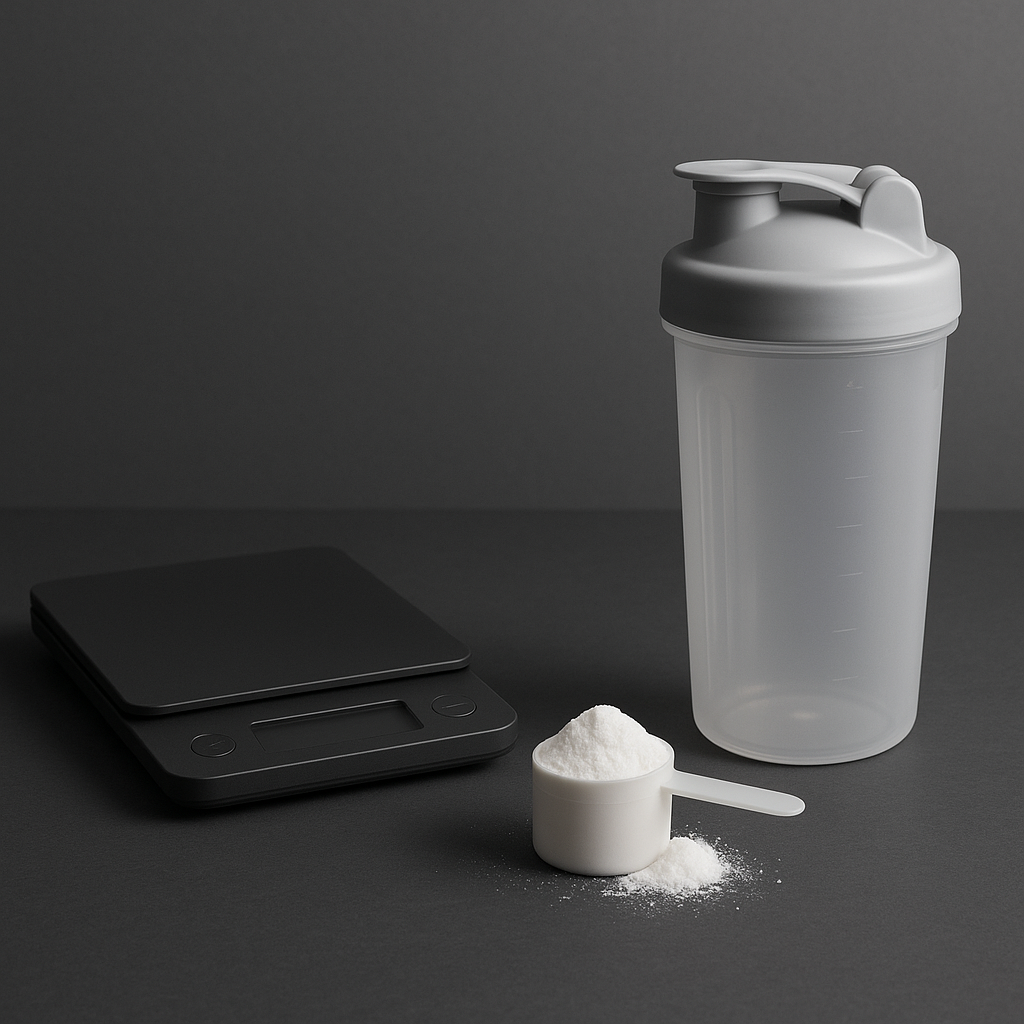
Creatine Monohydrate Dosage: Exactly How Much to Take
Choosing the optimal creatine monohydrate dosage isn’t one-size-fits-all—your weight, health goals, and loading preference all matter. This guide breaks down the science-backed recommendations, including maintenance calculations, loading vs. no-loading options, and what really happens if you miss a dose.
Key Takeaways
- The gold standard creatine monohydrate dose is 3–5 g per day after loading.
- A short loading phase can saturate muscles faster, but it’s optional for most.
- Maintenance dosing can be tailored by body weight: 0.03 g/kg daily.
- Missing a day isn’t a disaster—resume as usual, no need to double up.
- Canadian Health Canada regulations confirm creatine’s safety at recommended doses.
- Choose third-party tested Canadian brands for quality and purity.
- Use a creatine dosage calculator for personalized recommendations.
Why Creatine Monohydrate Dosage Matters
Getting your creatine monohydrate dosage right impacts both the speed and magnitude of muscle saturation, athletic benefits, and even your wallet. Creatine is among the most studied sports supplements, supported by Health Canada and the International Society of Sports Nutrition (ISSN). It’s inexpensive, safe at recommended dosages, and readily available through Canadian retailers.
- Under-dosing can mean slower (or no) results, especially if you skip early loading.
- Over-dosing brings no extra benefit, and just wastes money—or can potentially cause minor digestive upset for sensitive individuals.
This guide will help Canadians tailor their approach—based on science—for everything from the classic loading phase to minimalist daily dosing, and clear up what really happens if you miss a day.
Standard Creatine Dosage Guidelines
For most healthy adults, the traditional creatine monohydrate dosing protocol involves two stages: an optional loading phase and a maintenance phase. The International Society of Sports Nutrition supports the following standard guidelines:
- Loading phase (optional): 20 g per day, split into 4 x 5 g doses, for 5–7 days. This rapidly saturates muscle creatine stores.
- Maintenance phase: 3–5 g per day, taken in a single daily dose, is sufficient to maintain elevated muscle creatine.
Canadian supplement labels typically list 5 g as a serving size. According to Health Canada, this is both safe and effective for adults.
No need to cycle on and off creatine; ongoing use at a maintenance dose is well supported.
Body Weight-Based Creatine Dosing
One size doesn’t always fit all. For a more precise approach—especially for those who are heavier, lighter, or competing at a high level—creatine dosing can be calculated per kilogram of body weight.
- Recommended maintenance dose: 0.03 g of creatine monohydrate per kg of body weight (use our creatine calculator for your exact number).
For example, a 70 kg (154 lb) person would use:
70 kg × 0.03 g = 2.1 g/day.
But given daily life variability and differences in absorption, most Canadians find that 3–5 g/day is a practical and science-backed range for maintenance.
Going above 5 g/day offers no added benefit unless you’re unusually large or use heavy training volumes. For most, sticking to the ISSN-recommended range ensures both effectiveness and safety.
To Load or Not to Load: A Decision Guide
The classic loading phase (20 g/day for a week) saturates muscle stores more quickly, leading to faster performance and muscle-size benefits. But it’s not strictly necessary.
- You should load creatine if:
- You want results as soon as possible (within 7-10 days).
- You’re beginning a training cycle where early gains matter.
- You can skip loading if:
- Stomach sensitivity is a concern.
- There’s no rush—results still arrive after 3–4 weeks at 3–5 g/day.
- You prefer a lower, steadier approach.
However you start, timing over the day matters far less than consistency. And after the first month, all users converge at full muscle saturation—with or without loading.
What If I Miss a Day? Resetting Your Routine
It happens to everyone: you miss a scoop. The good news? Missing a single day (or even a couple) of creatine supplementation does not dramatically affect your muscle creatine levels, as it takes weeks for stores to decline significantly.
- Do not double your next dose to catch up—just resume your regular schedule.
- Longer gaps (more than a week) may begin to reduce saturation, but even then, simply restart your maintenance dose.
This reassuring safety margin is backed by clinical studies and echoed by Health Canada. Consistency is the goal, but a missed day won’t erase your progress.
Curious about timing? Read our full advice on when to take creatine.
Creatine Dosage Tips for Canadian Buyers
Canadians are fortunate: creatine monohydrate is regulated as a safe natural health product by Health Canada, and high-quality options are widely available.
- Look for third-party tested Canadian brands (NSF, Informed Sport) for purity and dosing accuracy.
- Use a digital kitchen scale if your scoop isn’t precise; even small errors can add up over time.
- Filtered tap water is fine, but creatine can also be mixed with juice for better taste—and potentially increased uptake due to insulin response.
- For best results, take at the recommended daily dose for your weight and goals.
Still confused about options? See our creatine supplements review for trusted Canadian picks.
Summary and Next Steps
Creatine monohydrate dosage doesn’t have to be complicated. For most Canadians, a maintenance dose of 3–5 g per day, after an optional week-long loading phase, delivers full benefits backed by decades of research. Adjust by weight if you want extra precision, but ultimately, consistency wins out.
- Start with a loading phase if you want rapid effects—it’s safe and supported, but entirely optional.
- Use our creatine dosage calculator for a personalized number.
- Missed a dose? Don’t stress, just get back on track.
To dive deeper into every aspect—from optimal timing to best Canadian products—explore our full creatine guides.
Creatine Monohydrate Dosage Quick Facts
- 3–5 g/day Standard maintenance dose
- 0.03 g/kg Personalized body-weight dose
- 20 g/day for 5–7 days Classic loading phase
- Over 95% Creatine monohydrate's market share globally
Frequently Asked Questions
Is it safe to take creatine monohydrate every day?
Yes. Clinical research and Health Canada regulations both support daily creatine use at the recommended 3–5 g dose for healthy adults. Long-term studies show no negative health effects in those without pre-existing kidney issues.
Should I use a loading phase, or just stick to daily maintenance?
A loading phase lets your muscles fill up with creatine more quickly, usually within a week. However, skipping it and simply taking 3–5 g daily achieves the same results over a slightly longer period (about 3–4 weeks).
Do I need to adjust my dose if I gain or lose a lot of weight?
For significant weight changes (10 kg or more), recalculating your dose using 0.03 g per kg of body weight can help tailor your supplementation, but most people are perfectly safe using the standard 3–5 g daily.
What if I miss more than one day of creatine?
Missing several days will slowly begin to lower your muscle creatine stores, but it takes weeks of absence to lose most benefits. Simply resume your normal daily dose—there’s no need to load or double up.
Can I take creatine with protein powder or a pre-workout?
Yes, creatine monohydrate mixes well with protein shakes, pre-workouts, or other supplements. There’s no evidence that stacking impairs absorption or safety, as long as you follow recommended dosing for each supplement.