The Creatine Maintenance Phase: How to Stay Saturated Year-Round
Creatine works best when your muscles stay saturated — not just for a week, but all year. Here’s the evidence-backed guide to 3–5 g/day maintenance, how long saturation really lasts, and simple ways to track it with your training.
Key Takeaways
- Maintain saturation with 3–5 g/day of creatine monohydrate; timing is flexible.
- Expect 3–4 weeks to reach saturation without loading, or 5–7 days with loading.
- Saturation typically fades back toward baseline over ~4–6 weeks after stopping.
- Use training logs (strength, sprint times, volume) to monitor saturation benefits.
- Choose creatine monohydrate with a Health Canada NPN and third‑party testing.
- If you miss a day, resume your usual dose — no need to double up.
- Vegetarians/vegans often respond strongly; 3–5 g/day still suits most adults.
What creatine maintenance really means
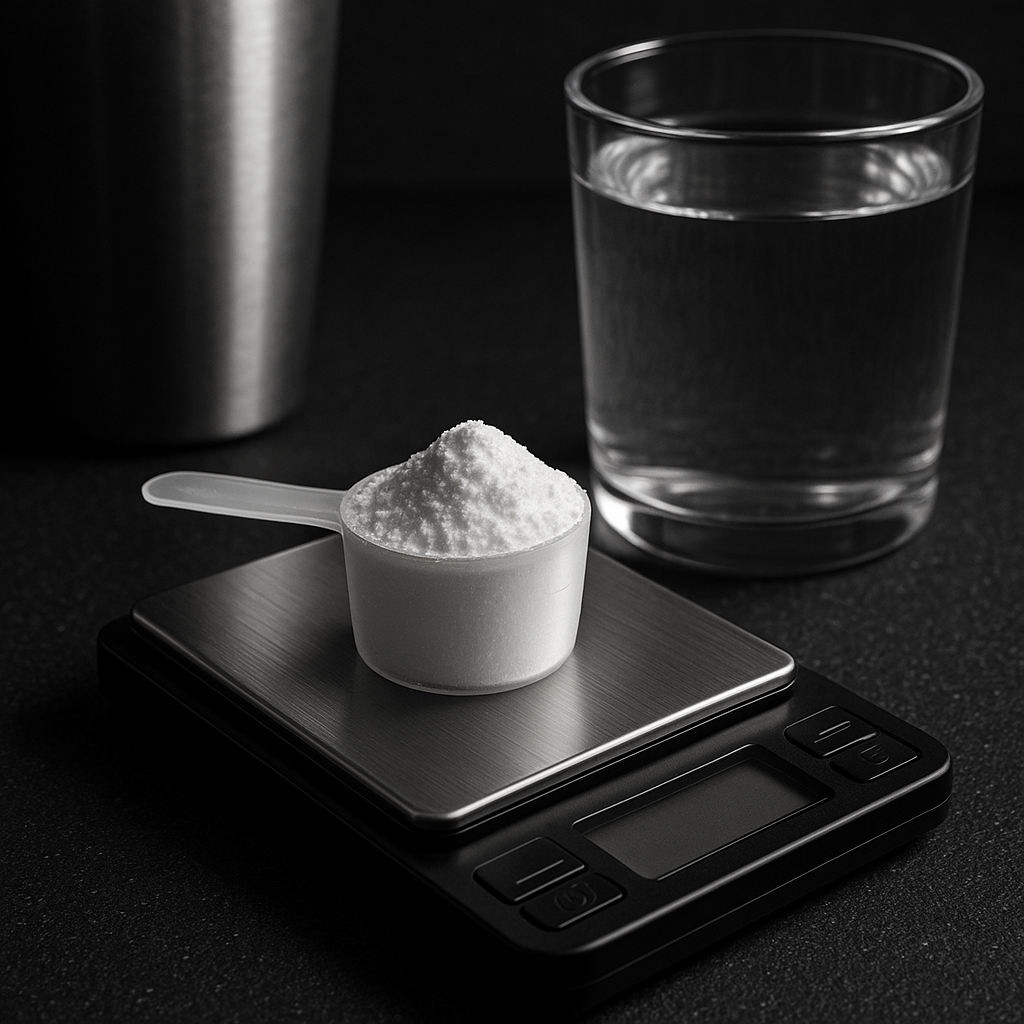
Creatine “maintenance” is about keeping your muscles topped up so you keep reaping the benefits — better high‑intensity performance, more quality reps, and support for lean mass. Once your intramuscular creatine stores are saturated, the goal is to replace what you naturally use and excrete each day. For most adults, that means a steady 3–5 g/day of creatine monohydrate, the gold‑standard form supported by the International Society of Sports Nutrition (ISSN).
Think of it like a phone battery on a trickle charger: you don’t need big surges after you’re full; you need a small, consistent top‑up. Maintenance doesn’t require special timing or complex stacks. You can take creatine with or without food, morning or night — the key is consistency. If you prefer structure, many Canadians take it with a daily meal or post‑workout shake.
For buyers in Canada, look for straightforward labels: “creatine monohydrate,” no fillers, and a Natural Product Number (NPN) issued under Health Canada’s Natural Health Products Regulations. If you’re comparing powders and capsules, check cost per 5 g serving and look for third‑party testing. For product guidance and value picks, see our Best Creatine and in‑depth Supplements Review.
How much and when: the evidence-backed maintenance dose
The most widely supported protocol is simple: 3–5 g/day of creatine monohydrate. The ISSN notes this range is sufficient to maintain saturation in most healthy adults once stores are full. Heavier athletes, very high training volumes, or those with above‑average muscle mass may prefer the upper end (5 g/day). Smaller athletes often do well at 3 g/day. You can fine‑tune within this range using our quick Creatine Calculator.
Timing is flexible. You can take creatine at any time of day; consistency matters more than the clock. Pairing creatine with a meal or your workout nutrition can make adherence easier and may improve comfort if you’re prone to an empty‑stomach slump. If you ever experience mild GI upset, try splitting the dose (e.g., 2–3 g twice daily), using warm water, or adding it to yogurt or a smoothie.
Hydration habits don’t need to be complicated either — simply meet your normal daily fluid targets. For more on practical timing choices and routines, visit When to Take Creatine, and if you’re still building toward full saturation, read our walkthrough of the Creatine Loading Phase.
How long it takes to reach — and lose — saturation
You can reach saturation two main ways:
- Without loading: Take 3–5 g/day. Most people saturate in roughly 3–4 weeks.
- With loading: Take ~20 g/day split into 4 doses for 5–7 days, then 3–5 g/day. This typically saturates muscle within about a week.
Both approaches are supported by mainstream research. Loading just gets you there faster; it’s optional. Once saturated, your normal daily top‑up maintains that steady state.
What if you stop entirely? Muscle creatine gradually returns toward baseline over roughly 4–6 weeks without supplementation. The exact rate varies by diet (vegetarians often start lower and respond more), muscle mass, and training. If you pause for a short trip or a busy week, don’t stress. Just resume your usual dose when you’re back. There’s no need to “catch up” with a big bolus — you’ll be re‑saturating with regular, consistent dosing.
For readers who prefer a structured on‑ramp, our step‑by‑step loading explainer is here: Creatine Loading Phase. If you’d rather set it and forget it, 3–5 g/day from day one works — it just takes a few extra weeks to fill the tank.
Monitoring saturation with performance, not lab tests
There’s no consumer blood or urine test that tells you your muscle creatine saturation in real time. Instead, the most practical way to gauge your maintenance phase is to monitor performance trends. Once saturated, many athletes notice small but meaningful changes that accumulate over weeks:
- Strength and power: Extra reps at a given load, a smoother final rep, or slightly higher bar speeds.
- High‑intensity capacity: Better repeat sprints, shorter rest between sets, or less drop‑off in later intervals.
- Training volume: A subtle uptick in total work per session or per week.
- Body mass and look: A modest increase in scale weight and muscle “fullness” from water drawn into the muscle, which is normal and often welcome.
Keep a simple log: top sets, total reps, RPE, and session notes. If your trends hold during maintenance and dip after time off, that’s a real‑world signal of saturation benefits. Not every week will be a personal best — sleep, stress, and nutrition still rule the day — but steady maintenance supports better training over time. For more practical routines and checklists, explore our performance Guides.
Choosing and using creatine in Canada
In Canada, creatine is sold as a Natural Health Product. When comparing options, focus on creatine monohydrate — it’s the gold standard for efficacy, safety, and value. Fancy derivatives are typically more expensive without clear performance advantages. Look for:
- NPN on label: A Natural Product Number indicates authorization under Health Canada’s Natural Health Products Regulations.
- Third‑party testing: Certifications from reputable labs can add quality assurance.
- Transparent dosing: Each serving clearly lists grams of creatine monohydrate.
- Good value: Check cost per 5 g serving; unflavoured powders usually offer the lowest cost.
Capsules vs. powder is a personal choice. Powders mix into water or shakes; capsules are handy for travel. If you’re shopping, our Canadian‑focused Best Creatine and independent Creatine Supplements Review compare purity, price per serving, and practical features like scoop size and dissolvability. Remember: once you’re saturated, the maintenance win is simply taking it daily.
Troubleshooting and special cases
If you miss a day: Just resume your usual 3–5 g the next day. No need to double dose. Missing a single day won’t meaningfully dent saturation. Short travel? Toss a small baggie or a few capsules in your kit — creatine is stable and easy to bring along.
Vegetarians/vegans: Because baseline stores are often lower, you may notice a pronounced response once saturated. The same 3–5 g/day maintenance applies. GI upset? Split the dose, use warm water, or take with a meal. Micronized monohydrate can improve mixability for some.
Endurance and team sports: Benefits show up in repeat sprints, accelerations, and hard surges. Some athletes prefer 3 g/day to minimize any transient scale increase; others maintain at 5 g/day without issue.
Safety: Creatine monohydrate has an excellent safety profile in healthy individuals when used as directed, as summarized by the ISSN and other major sport science bodies. If you have kidney disease or are under medical care, consult your clinician before starting any supplement. For deeper dives into protocols and timing, bookmark When to Take Creatine and our practical Guides.
Creatine Maintenance At‑a‑Glance
- 3–5 g/day ISSN‑supported maintenance dose
- 5–7 days Time to saturate with a loading phase
- 3–4 weeks Time to saturate without loading
- 4–6 weeks off Approximate return to baseline after stopping
Frequently Asked Questions
Do I need to cycle creatine during the maintenance phase?
No. Major sport nutrition bodies report no need to cycle creatine for healthy adults. Continuous daily intake of 3–5 g/day safely maintains saturation. If you choose to pause for personal reasons, expect levels to drift toward baseline over several weeks and re‑saturate when you resume.
Is creatine monohydrate still the best form for maintenance?
Yes. Creatine monohydrate remains the gold standard for effectiveness, safety, and value. Other forms haven’t consistently shown superior outcomes. Look for a simple monohydrate product with an NPN in Canada and, ideally, third‑party testing.
What if I forget a dose or miss a few days?
Just restart your regular 3–5 g/day. Don’t double up. Missing one day barely moves the needle; a few days may cause a small dip that normal dosing will correct. Consistency over weeks and months, not perfection every day, maintains saturation.
Can I take creatine at night or on rest days?
Absolutely. Timing is flexible, and rest days count. Many people anchor their dose to a daily habit (e.g., with breakfast) to keep adherence high. Performance benefits come from long‑term saturation, not from taking it at a precise hour.
How can I tell if I’m staying saturated without lab tests?
Track training: reps at a given load, repeat sprint performance, total volume, and perceived exertion. When saturated and well‑recovered, you’ll often see steadier output and less drop‑off across sets. If those trends fade after a long break and return when you resume, that’s a good practical indicator.