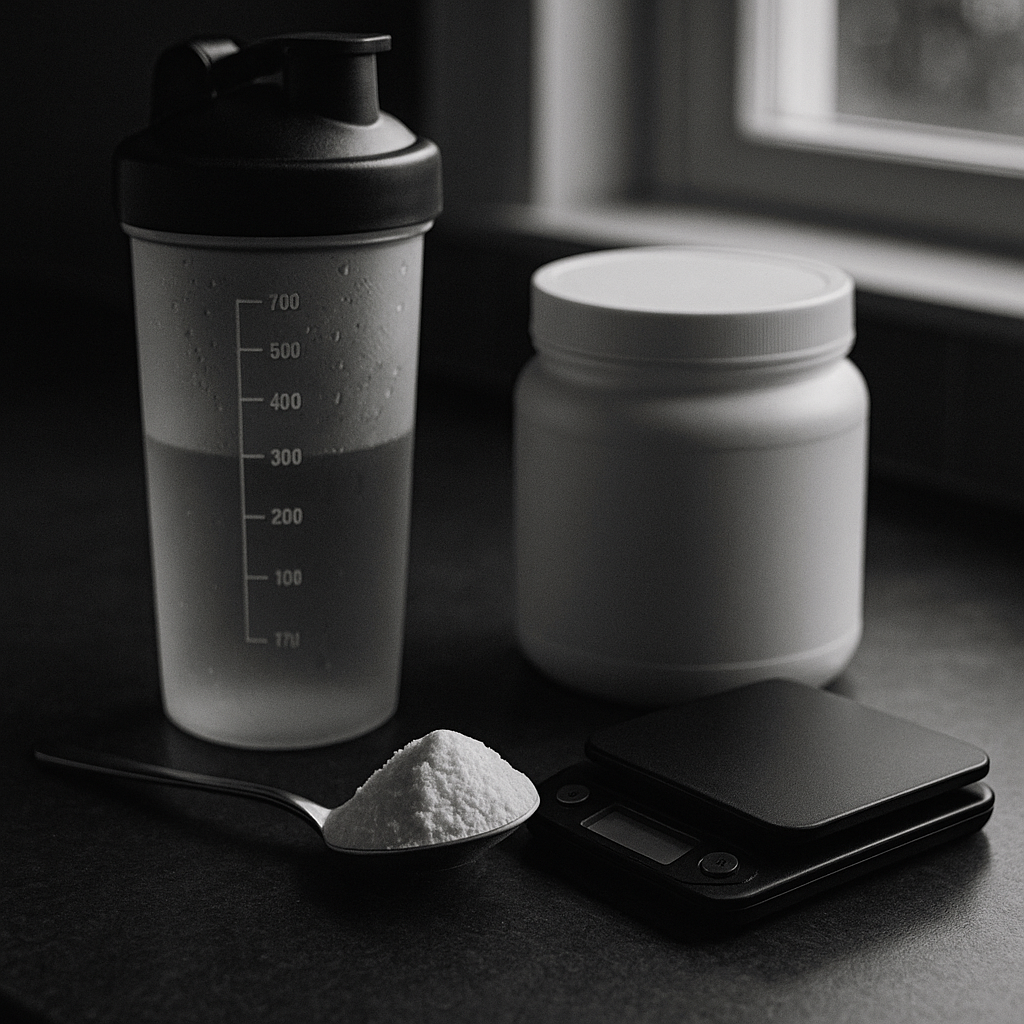
An Honest Review of Creatine After 6 Months of Daily Use
I logged six months on 5 g/day of creatine monohydrate—no loading, no gimmicks—tracking strength, body weight, and day-to-day feel. Here’s the plain-English, Canadian perspective on what changed by 2 weeks, 1, 3, and 6 months, what didn’t, and how I’d start if I were you.
Key Takeaways
- Creatine monohydrate remains the gold standard; 3–5 g/day works for most.
- Expect small water-weight increases first (muscle water), not fat gain.
- Performance bumps showed by ~2–4 weeks; clearer progress by 1–3 months.
- No timing magic: consistency > timing; I take it with a meal I never skip.
- Loading (20 g/day for ~1 week) is optional; I skipped it and still saturated.
- Stomach comfort improved when I used 2–3 smaller servings and warm water.
- Buy simple, third-party-tested monohydrate; avoid overpriced fancy forms.
How I set this up
I ran a straightforward, real-world trial: 5 g/day of creatine monohydrate, taken once daily, for six months. No loading phase. I trained 4–5 days per week (strength focus, some conditioning), kept protein around 1.6–2.0 g/kg, and didn’t deliberately change calories. I tracked body weight, lift performance, and notes on sleep, digestion, and day-to-day feel. For simplicity and evidence alignment, I chose creatine monohydrate—the gold standard supported by the International Society of Sports Nutrition (ISSN).
Brand-wise, I used an unflavoured, micronized monohydrate sold in Canada (think options you’ll find from Canadian retailers like Sport Chek, Amazon.ca, and local supplement shops). You don’t need bells and whistles: a plain powder that’s third-party tested (e.g., Informed Choice/Informed Sport) is ideal. If you want help shopping, see our roundups: Best Creatine in Canada and our independent Creatine Supplements Review.
I took most doses with a meal I never skip (breakfast), which improved consistency and stomach comfort. Hydration was normal (roughly 2–3 L/day). If you prefer faster saturation, read our guide to the optional protocol: creatine loading. If you’re unsure about dose, plug your details into our creatine calculator. My aim here is a clear, first-person record—what changed at 2 weeks, 1 month, 3 months, 6 months, and what didn’t.
Two weeks: what I noticed first
Within the first two weeks, my scale crept up by just under a kilogram, with no noticeable change in waist measurement. That’s consistent with creatine drawing water into muscle cells—intramuscular water, not bloating under the skin. Clothes fit the same; I felt a touch fuller in trained muscle groups. In the gym, the earliest change was subtle: slightly better pop on the last reps and less drop-off set to set during short rest periods.
Digestion: day 3 and 4 felt a bit off when I dry-scooped (don’t recommend). Swapping to warm water and splitting the dose into 2–3 mini-servings across the day removed any stomach grumbles. If your stomach is sensitive, pair it with food. For timing questions, we break down the pros and cons here: when to take creatine.
No headaches, no cramps, no sleep changes. I did increase water a bit on heavy training days out of habit. The take-home for week two: small scale uptick, modest endurance feel, and calmer digestion when not dry-scooping. Nothing dramatic—just a nudge in the right direction.
One month: clearer performance signals
By the end of month one, the performance signal was clearer. On core lifts (bench press, squat, weighted pull-ups), I was typically adding 2–3 reps at the same load compared to baseline, and back-off sets felt steadier. That tracks with creatine’s role in rapidly regenerating ATP for short, high-intensity efforts. It didn’t turn light into heavy, but it helped heavy feel repeatable—especially across multiple sets.
Body weight held about 0.8–1.0 kg over baseline, again without belt-tightening changes. Muscles felt denser post-training; pumps hung around a bit longer. Day-to-day, recovery between hard sessions felt a notch better (less "legs of lead" the day after squats). I still wasn’t chasing timing windows; the best timing was simply the one I stuck to consistently.
If you want faster early changes, a short loading phase is an option (often 20 g/day split over a week), but it’s not required—the ISSN notes a simple 3–5 g/day approach reaches the same saturation over a few weeks. For most Canadians, a plain monohydrate powder remains affordable and easy to find. Our best creatine list compares value and testing, and the broader guides library covers practical tips.
Three months: steady compounding
Month three is where consistency paid off. Strength gains continued—not explosive, but steady. The big difference was repeatability: hitting the same quality across sets with less drop-off. Accessory work (rows, dips, split squats) benefited most; I moved from hovering at maintenance loads to inching them up week to week.
Muscle-wise, I looked a bit fuller in shoulders and back in good lighting, likely a mix of training progress and muscle water. My scale trend was +1.2–1.5 kg over baseline, still with steady waist measurements. That’s not fat gain so much as water and small lean tissue changes driven by real training.
Practicalities for Canadians: travel with the original tub or pre-measured baggies in a labelled container when flying; it keeps security simple. Cost-wise, monohydrate runs roughly cents per serving in Canada, and large tubs stretch far. If your stomach ever acts up, try half-doses with meals, or dissolve in warm liquids. If you want a sanity check on dose by body weight, use the calculator. And if you’re shopping, keep it simple: creatine monohydrate, ideally third-party tested.
Six months: what changed and what didn’t
At six months, the picture is balanced and honest. What changed: my training log is measurably better than baseline. Key lifts are up in reps and/or load, and I sustain quality deeper into sessions. I recover between sets a bit faster and show up to the next session feeling more "ready." Visual changes are modest but real—slightly fuller look in trained muscle groups.
What didn’t change: creatine didn’t melt fat, fix a missed program, or overcome poor sleep. The scale increase from early weeks largely stuck (muscle water), and I didn’t notice any aesthetic downside. No cramps, no hair changes, no mood swings. I kept my dose at 5 g/day and stayed consistent rather than fussing about pre vs. post timing. When life got busy, the habit that worked was pairing it with breakfast or my first coffee at home.
From a health perspective, mainstream sports nutrition bodies consider creatine safe for healthy adults at recommended intakes. If you have diagnosed kidney disease or are taking medications, speak with your clinician first. Otherwise, the biggest pitfalls I see are overpaying for fancy forms and underperforming on consistency.
The verdict—and how to start
Verdict: If you lift, sprint, skate, or do any repeated high-intensity work, creatine monohydrate is still the best-value, evidence-backed supplement I’ve used. Over six months, it didn’t transform me—but it made hard training add up faster and made tough sets feel more repeatable. That’s the kind of edge that matters across seasons, not days.
How to start:
- Choose a simple, third-party tested monohydrate powder. See our best creatine and full supplements review.
- Take 3–5 g/day. Loading is optional; read the pros/cons in our loading guide.
- Pair it with a meal you never miss; consistency beats timing. More on this in when to take creatine.
- If sensitive, split into 2–3 mini-doses and dissolve in warm water.
- Train on a sound program, sleep enough, and keep protein adequate (roughly 1.6–2.2 g/kg) to give creatine something to amplify.
Canada-specific tip: stick to brands that disclose testing and plain ingredients. If you’re unsure about dose or body size, our calculator can help. For deeper dives, browse our practical guides. My six-month experience aligns with the science: small, reliable advantages that compound when the basics are in place.
My 6-Month Creatine Snapshot
- 5 g/day Daily creatine monohydrate dose (no loading)
- +0.9 kg Typical scale change by week 3 (muscle water)
- +2–3 reps Average rep increase on key lifts by month 1
- 4 missed doses Total missed across 6 months (made up next day)
Frequently Asked Questions
Do I need to load creatine to see results?
No. A loading phase (around 20 g/day for ~5–7 days) saturates muscles faster, but taking 3–5 g/day from day one reaches the same saturation over a few weeks. I skipped loading and saw clear improvements by weeks 2–4. If you want the fastest early bump and your stomach tolerates it, loading is optional. See our step-by-step guide in /creatine-loading-phase.
Will creatine make me gain fat or look bloated?
Creatine increases water stored inside muscle cells, which can raise body weight slightly without adding fat. In my case, the scale went up under a kilogram early on, with no change in waist size or ‘puffy’ look. Most people notice a fuller muscle appearance rather than subcutaneous bloating.
What’s the best time to take creatine?
The most important factor is consistency. Take it at a time you never miss—many people pair it with breakfast or a post-workout meal. Some prefer pre- or post-workout, but head-to-head differences are small. If you want timing nuances and practical tips, see /when-to-take-creatine.
Is creatine safe long-term for healthy adults?
Mainstream sports nutrition organizations, including the ISSN, consider creatine monohydrate safe for healthy adults at recommended intakes (3–5 g/day). If you have kidney disease, are pregnant, or take medications, consult a healthcare professional first. Expect routine blood creatinine to reflect supplementation—it doesn’t necessarily indicate kidney harm.
I’m vegetarian or vegan—will I benefit more from creatine?
Possibly. People with lower baseline dietary creatine (common in vegetarian and vegan diets) may experience a slightly larger response in some performance or cognitive measures once muscles are saturated. The practical approach is the same: 3–5 g/day of creatine monohydrate, consistently.