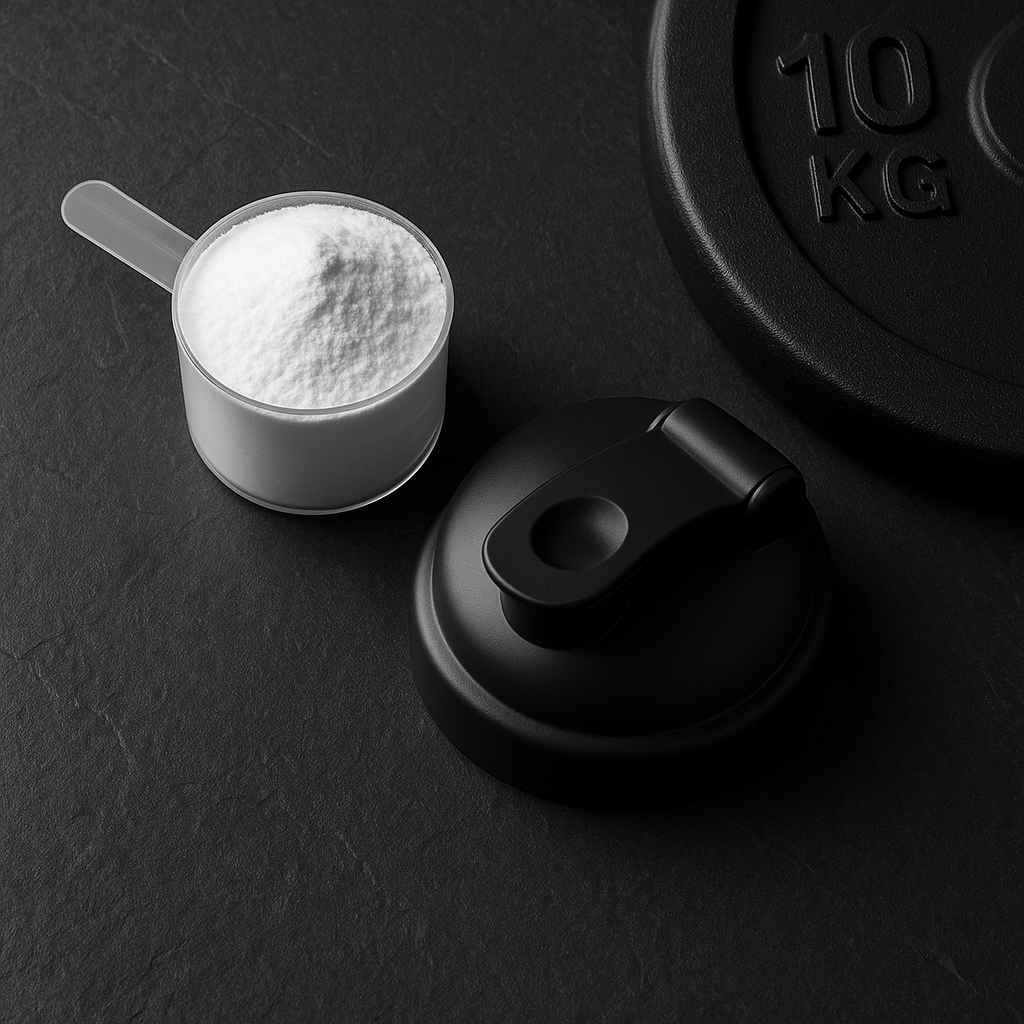
Creatine for Women Building Strength: A Research-Based Guide
Women see meaningful strength and lean mass gains with creatine—without “bulking.” This guide translates the research into practical steps for training, dosing, and buying creatine in Canada.
Key Takeaways
- Creatine monohydrate is the gold-standard form—effective, safe, and affordable.
- Most women do best with 3–5 g per day; loading is optional, not required.
- Expect strength to improve more than training alone; scale weight may rise slightly from muscle hydration, not fat.
- Pair creatine with progressive resistance training for best results.
- Take it when it’s convenient—daily consistency matters more than timing.
- Choose Canadian-licensed products (NPN on label) and third-party tested options.
- Vegetarian/vegan women may respond more due to lower baseline creatine stores.
Why creatine makes sense for women
Creatine is one of the most studied sports supplements in the world, and the evidence applies to women as much as men. For strength and lean mass, creatine helps your muscles recycle energy (ATP) during high-effort lifting, enabling a few extra reps or slightly heavier loads over time. Those small training wins compound into meaningful progress—especially when you’re focused on getting stronger, not just lighter.
Two points women often ask about: weight and "bulk". Creatine can nudge the scale up a little at first because your muscles store extra water alongside creatine. That’s intramuscular water, not bloat around the midsection, and it often pairs with increases in training volume. Over weeks to months, women typically see improved strength and modest increases in lean mass (muscle), not body fat.
The gold-standard form is creatine monohydrate—effective, safe, and affordable. The common maintenance dose is 3–5 g per day. You can take it with any meal or shake, and you don’t need fancy add-ons or blends to see benefits. If you want a deeper dive on timing, see our guide on when to take creatine, and for a bird’s-eye overview, browse our guides hub.
What the research in women shows
Women respond to creatine in very similar ways to men: greater strength gains and small increases in lean mass when combined with resistance training. Reviews and position stands from sports nutrition organizations conclude that creatine reliably improves performance in high-intensity, short-duration efforts and supports training adaptations over time. Research that includes female participants shows improvements in exercises like leg press and bench press, with some evidence that women with lower baseline creatine stores (for example, vegetarian or vegan women) may see larger benefits.
A common concern is that creatine will make women look puffy or bulky. The initial weight change some people notice is mostly intramuscular water, which contributes to better training quality and does not translate to a swollen or puffy appearance. Over 8–12 weeks, the combination of progressive resistance training + creatine generally yields stronger lifts and modest lean mass gains, the very adaptations most women seek for performance, bone support, and metabolic health.
The bottom line from consensus statements: creatine monohydrate is effective and safe for healthy adults, including women, when used at recommended doses. For a science-backed overview, see the International Society of Sports Nutrition position stand.
How much creatine should women take?
The simplest, evidence-based plan for most women is 3–5 g of creatine monohydrate daily. Take it any time of day with water or a meal—consistency matters more than timing. If you prefer faster saturation, you can follow a short loading phase (for example, ~20 g/day split as 5 g × 4 for 5–7 days), then drop to 3–5 g/day. Loading is optional; daily low-dose works just as well over a few weeks.
- Body size: Smaller women often do well at 3 g/day; larger athletes may choose 5 g/day.
- Diet pattern: Vegetarian/vegan women can consider the higher end (5 g/day) since baseline creatine stores may be lower.
- Training block: You don’t need to cycle off; creatine is typically taken continuously during strength phases.
If you track numbers closely, our creatine calculator can help you pick a dose based on your goals. For more on timing, see when to take creatine. Remember: the form matters more than flavour—choose creatine monohydrate from a reputable brand.
Training plus creatine: a strength-forward plan
Creatine works best when your training asks your muscles to do hard work. Pair it with a progressive strength plan built around compound lifts (squat variations, deadlifts/hinges, presses, rows, pull-ups) 2–4 days per week. Aim for 3–5 sets of 3–8 reps at a challenging load, leaving 1–2 reps in reserve. Over time, increase total work—more weight, more reps, or another set. Creatine helps you eke out those small improvements that add up.
- Warm-up: Ramp-up sets to your working load; include mobility where needed.
- Main work: 2–3 big lifts + 1–3 accessories (single-leg work, pulldowns, core).
- Rest: 1.5–3 minutes between heavy sets supports power output.
- Fuel: Protein in the 20–30 g range around workouts and adequate carbs help you train hard.
Timing creatine isn’t critical. Many women take it with breakfast or a post-workout shake for convenience. If you want a deeper dive on the pros and cons of different schedules, see our timing guide. For brand picks that mix well and dose correctly, explore the best creatine in Canada and our independent creatine supplements review.
Safety, side effects, and the Health Canada context
Creatine monohydrate has an excellent safety profile in healthy adults when used as directed. The most common hiccup is mild gastrointestinal upset if you take a large dose all at once—splitting doses or taking it with food usually solves this. Staying hydrated supports training and may help with early-phase water shifts in muscle. For healthy kidneys, standard doses of creatine are considered safe by sports nutrition organizations; if you have kidney disease or any medical condition, speak with your health care provider first.
In Canada, creatine monohydrate is sold as a Natural Health Product. Look for an NPN (Natural Product Number) on the label, which means the product is licensed by Health Canada. You can verify ingredients in the Natural Health Products Ingredients Database (NHPID). For extra assurance, prefer brands with third-party testing (e.g., Informed Choice, NSF Certified for Sport) and simple formulas: 100% creatine monohydrate, no proprietary blends.
For more on common myths—dehydration, cramping, hair loss—the JISSN Q&A review addresses what the evidence actually shows.
How to buy creatine in Canada (and what to skip)
To get the benefits you’re after, you don’t need an expensive blend—just creatine monohydrate. Here’s a quick checklist tailored for Canadian buyers:
- Label: 100% creatine monohydrate; 3–5 g per serving; look for an NPN.
- Form: Unflavoured powder mixes easily; capsules are convenient but cost more per gram.
- Quality: Consider Creapure-branded or third-party tested products for extra assurance.
- Price: Creatine is affordable; compare cost per 100 g, not just tub price.
- Additives: Skip proprietary blends and unnecessary stimulants or fillers.
Need help deciding? Start with our curated picks in best creatine, then read our hands-on creatine supplements review for mixability, taste, and value. When your routine is set, keep daily dosing simple—and if you’re optimizing around training, our guide on when to take creatine breaks down options. For more learning, browse our practical how-to guides.
Creatine for Women: Quick Facts
- 3–5 g/day Typical maintenance dose for women
- 20 g/day × 5–7 d Optional loading phase (split into 4 doses)
- 0 kcal/5 g Creatine adds energy capacity, not calories
- Monohydrate Most-studied, gold-standard form
Frequently Asked Questions
Will creatine make me bulky or puffy?
Creatine draws water into muscle cells, which can nudge scale weight up slightly at first. This is intramuscular water, not body fat, and it supports better training. Over time, women generally see strength improvements and modest lean mass gains—not a puffy look.
Do women need a creatine loading phase?
No. Loading (about 20 g/day for 5–7 days) saturates muscles faster, but taking 3–5 g/day reaches the same point over a few weeks. Choose the approach you’ll stick with consistently.
When should I take creatine for best results?
Timing is flexible. Take 3–5 g whenever it’s easiest—many women choose post-workout or with breakfast. Consistency matters more than timing. See our guide on when to take creatine for details.
Is creatine safe for women?
In healthy adults, creatine monohydrate at recommended doses is well supported for safety by major sports nutrition groups. If you have kidney disease, are pregnant, or have other medical conditions, speak with a health professional before using.
What form of creatine should I buy?
Creatine monohydrate is the most researched and cost-effective form. Look for an NPN on Canadian labels and consider third-party tested products. Avoid proprietary blends and unnecessary additives.
I’m vegetarian/vegan—will I respond differently?
You may see a slightly larger benefit because baseline creatine stores are often lower in plant-based diets. The same 3–5 g/day dose applies; consider the higher end (5 g) for convenience.