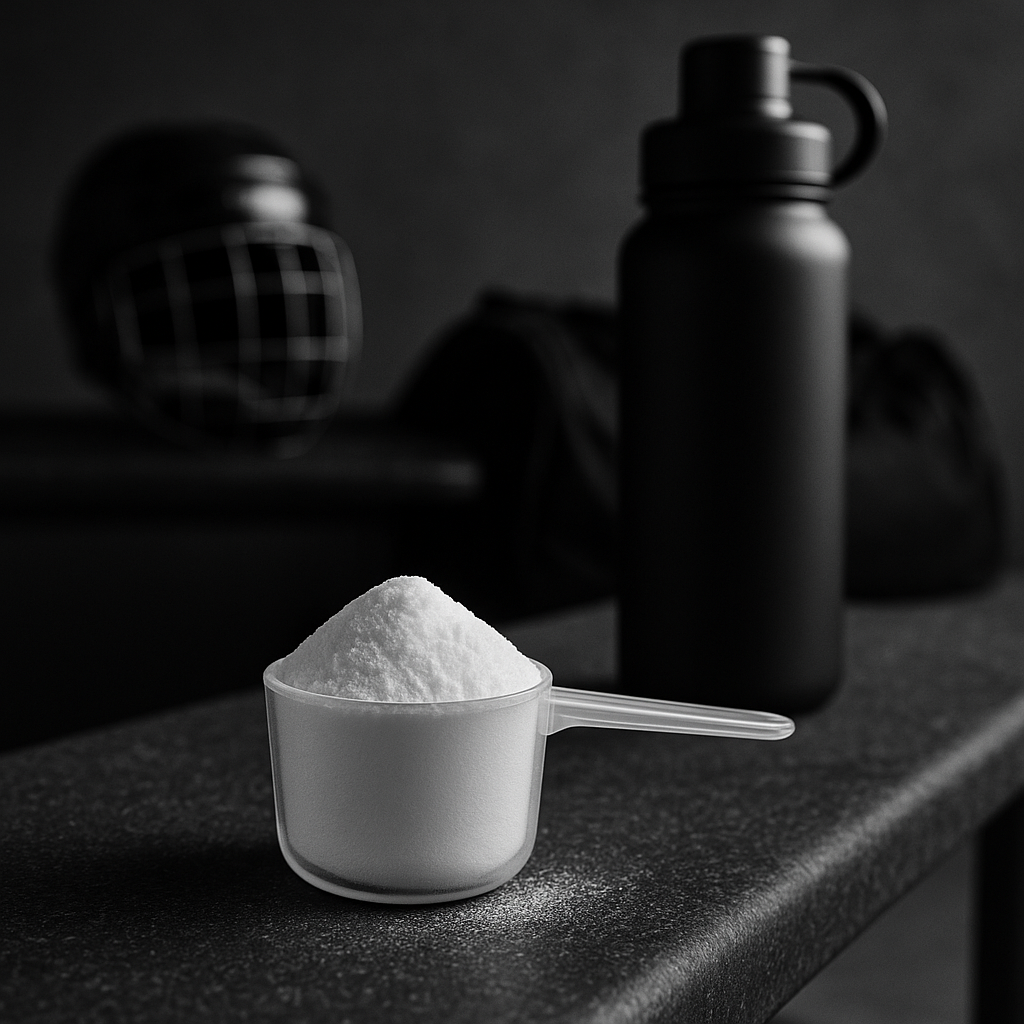
Creatine for Teenage Athletes: What Parents and Coaches Should Know
Many Canadian teens ask about creatine for hockey, football, sprinting, and the gym. Here’s a clear, evidence-based guide for parents and coaches on safety, dosing, and when it’s appropriate—grounded in the ISSN position and Canadian sport context.
Key Takeaways
- Creatine monohydrate is the gold standard; typical maintenance is 3–5 g/day.
- For minors, use only with parental consent and professional guidance; start after fundamentals (nutrition, sleep, coaching) are in place.
- Best justified in short, high-intensity, repeat-sprint or strength-dominant sports (e.g., hockey, football, sprint events).
- Avoid loading in teens; steady daily dosing is sufficient and simpler.
- Choose simple, tested products (creatine monohydrate powder) and check for a Canadian NPN on the label.
- Creatine is not on WADA’s Prohibited List, but supplement contamination is a separate risk—buy reputable brands.
- Screen for kidney issues, dehydration risk, or relevant medications; when in doubt, consult a physician or sport dietitian.
Why teens and parents ask about creatine
Creatine sits near the top of the supplement list for Canadian high school athletes. It’s inexpensive, well-studied in adults, and most useful in sports that rely on short, explosive efforts: think hockey shifts, football plays, rugby scrums, sprints, and heavy lifts. Understandably, parents and coaches want to know whether creatine is appropriate—and safe—for teenagers.
At Creatine Canada, our stance is practical and evidence-based: create a strong foundation first (food, sleep, coaching, hydration), then decide whether creatine adds something meaningful for a given athlete and sport. For most youth, that foundation delivers the biggest gains at the lowest risk and cost.
Two points are essential for minors: supervision and simplicity. If creatine is considered, choose creatine monohydrate (the gold standard) at a conservative daily dose, combined with education, parental consent, and a coach or healthcare professional who can monitor training, hydration, and recovery. For help with timing, see When to Take Creatine, and for an overview of product options, visit Best Creatine in Canada.
What the science and guidelines say
The International Society of Sports Nutrition (ISSN) concludes that creatine monohydrate is safe and effective for performance and recovery when used as directed. While most research involves adults, the ISSN notes creatine may be considered for younger athletes who are dedicated to serious training, have parental consent, and are supervised by qualified professionals.
Other professional bodies are more cautious. The American Academy of Pediatrics advises against most performance supplements in adolescents, emphasizing food-first strategies and the need to ensure training, nutrition, and sleep are optimized before any supplement is considered. Both viewpoints underline the same priorities: safety, supervision, and fundamentals first.
From a Canadian perspective, creatine is regulated as a Natural Health Product by Health Canada. Products should display a Natural Product Number (NPN), indicating assessment for quality and safety within labeled use. Creatine is not on the World Anti-Doping Agency’s (WADA) Prohibited List; however, contamination is a separate concern with any supplement. Choosing simple, reputable products reduces that risk. For brand insights, see our Creatine Supplements Review and beginner-friendly Guides.
Who might benefit: sport-specific considerations
Creatine supports the phosphocreatine energy system, which fuels short, intense efforts and repeated sprints. It’s most justified for teen athletes in:
- Hockey, football, rugby: frequent high-intensity bursts, contact, and short recoveries.
- Track sprints, jumps, throws; basketball and volleyball: power, repeated jumps, and quick changes of direction.
- Strength and power training: progressive overload in the weight room.
Where it’s less justified: steady-state endurance (e.g., long-distance running) where added body mass from increased muscle water could be neutral or slightly counterproductive. Weight-class or aesthetic sports (e.g., wrestling, rowing lightweights) deserve extra caution because early water retention can nudge body mass upward. If your athlete competes in a strict class, plan ahead, monitor body weight, and prioritize health.
Bottom line: match the tool to the task. If the sport demands explosive, repeated efforts, creatine is more likely to help. If you’re unsure, map needs with the athlete’s coach, a registered dietitian, or a CSEP-certified practitioner. Our simple intake-to-dose walkthrough and body-mass math are in the Creatine Dose Calculator.
Safe and simple dosing for teens
For teenagers who choose to supplement under supervision, keep dosing conservative and consistent:
- Form: plain creatine monohydrate powder. Avoid proprietary blends and stimulants.
- Dose: 3–5 g once daily is the standard maintenance approach supported by the ISSN. An alternative is ~0.1 g/kg/day for a body-mass–adjusted dose.
- No loading needed: Teens do not need a loading phase; steady daily intake saturates muscle over a few weeks. If you’re curious about adult loading protocols, see Creatine Loading Phase.
- Timing: Any time of day works; pairing with a meal or post-workout routine can improve adherence. Details here: When to Take Creatine.
- Hydration: Encourage regular fluid intake, especially around practices and games.
Start at the lower end (e.g., 3 g/day) for 1–2 weeks to assess tolerance, then adjust if needed. Consistency beats clever timing. If the athlete experiences unexpected symptoms (e.g., persistent GI upset), pause and consult a healthcare provider.
Safety checklist and red flags
Creatine monohydrate has a strong adult safety record within recommended doses, and there’s no credible evidence it harms healthy kidneys. Still, teens are not small adults. Add structure and screening:
- Health screen: Discuss with a physician or sport dietitian if there’s any history of kidney disease, recurrent dehydration, heat illness, or medications that affect kidneys (e.g., frequent NSAID use).
- Product quality: In Canada, look for an NPN on the label. Choose single-ingredient creatine monohydrate from reputable brands. See our Best Creatine and Reviews.
- Doping risk: Creatine is not banned by WADA, but contamination is possible with any supplement. Favour companies that provide batch testing.
- Weight changes: Expect a small, early increase in body mass from higher muscle water. Plan accordingly in weight-class or endurance contexts.
- Education and supervision: Require parental consent, coach awareness, and a simple, written plan (dose, timing, how to pause if issues arise).
If signs of illness, unusual fatigue, or poor heat tolerance show up, stop the supplement and focus on hydration, rest, and medical assessment as appropriate.
A practical plan for parents and coaches
Before considering creatine, complete a quick fundamentals audit: three balanced meals plus snacks, 7–9 hours of sleep, consistent training, and hydration habits. If those boxes are checked and the sport fit is strong, build a simple, time-limited trial:
- Consent and roles: Parent approves; coach is informed; a healthcare professional is available for questions.
- Product and dose: Plain creatine monohydrate; 3 g/day for 2 weeks, then 3–5 g/day if needed.
- Timing: Tie to an anchor habit (e.g., post-practice snack) to improve adherence.
- Tracking: Log body mass weekly, perceived recovery, training quality, and any GI or heat issues.
- Review point: After 6–8 weeks, evaluate: keep, adjust, or discontinue. Remember, it’s optional—food-first remains primary.
Keep communication open and judgment-free. The goal is to channel curiosity about supplements into safe, supervised habits and evidence-based decisions. For more primers and buyer’s guides, browse our Guides.
Creatine for Teen Athletes at a Glance
- 3–5 g/day Typical maintenance dose of creatine monohydrate
- ≈0.1 g/kg/day Common body-mass–based alternative dosing
- No Creatine is not on WADA’s Prohibited List
- Monohydrate Gold-standard form backed by ISSN
Frequently Asked Questions
Is creatine safe for teenage athletes?
Creatine monohydrate has a strong adult safety record within recommended doses. For minors, the ISSN advises that use be considered only after fundamentals are in place, with parental consent and professional supervision. If there’s a kidney history, dehydration risk, or relevant medications, consult a physician first.
Do teens need a creatine loading phase?
No. A simple 3–5 g daily dose saturates muscles over several weeks and is easier to manage. Loading can increase the chance of GI upset and is unnecessary for adolescents.
Will creatine cause weight gain or cramps?
Creatine can increase muscle water content, leading to a small, early rise in body mass. Cramps and dehydration are not supported by high-quality evidence when hydration is adequate. Encourage steady fluid intake, especially during hot-weather practices.
Is creatine allowed in Canadian school sports?
Creatine is not on the World Anti-Doping Agency’s Prohibited List, which underpins Canadian anti-doping policy. However, some schools or teams may have their own supplement rules. Check team policies and keep coaches informed.
What type of creatine should a teen buy in Canada?
Choose plain creatine monohydrate powder from a reputable brand. Look for a Natural Product Number (NPN) on the label, avoid stimulant blends, and stick to one daily dose. See our curated picks in Best Creatine and our in-depth Reviews.