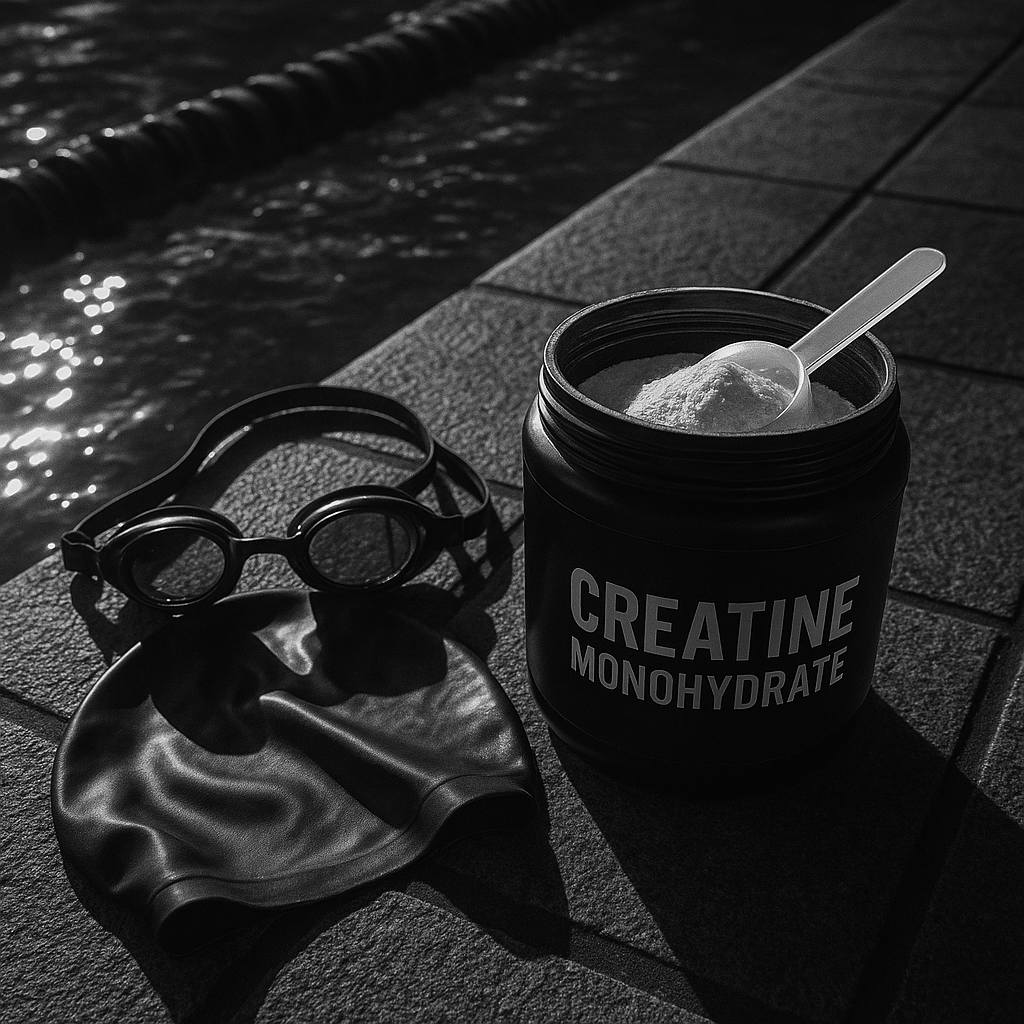
Creatine for Swimmers: Sprint Starts, Turns, and Burst Speed
Canadian swimmers face unique challenges—explosive starts, sharp turns, and the need for high-intensity bursts. Learn how creatine monohydrate can enhance sprint performance and speed between the blocks and wall, with evidence-based advice tailored to the needs of competitive swimmers in Canada.
Key Takeaways
- Creatine supports high-intensity, short-duration efforts like starts, turns, and sprint finishes in swimming.
- Monohydrate is the gold standard: safe, affordable, effective, and widely available in Canadian stores.
- 3–5 g/day is ideal for ongoing performance benefits—no need for exotic blends.
- Loading can help saturate muscles quickly but isn’t required; maintenance dosing works as well.
- Creatine is permitted under current Canadian and international sport anti-doping rules.
- Careful hydration and awareness of dosage are important for optimal results in the pool.
- Swimmers should consult with a coach or sport dietitian before starting supplementation.
Why Creatine Matters for Swimmers
Swimming isn’t simply endurance or finesse—it's about powerful moments: off the block, into the wall, racing down the final metres. These short, explosive efforts rely on your muscle’s phosphocreatine stores for quick energy in events from the 50-metre sprint to the 400-metre IM.
Creatine monohydrate is one of the few supplements proven to boost those same stores. By increasing intramuscular creatine, swimmers can potentially improve performance in short sprints, faster turns, and swift underwater phases. This is directly relevant to nearly every competitive stroke and distance. For swimmers in Canada, where split-second time drops can qualify you for provincial or national events, the edge from creatine is worth exploring.
- See our guides for full basics on creatine science.
- ISSN position: Creatine supports short, repeated high-intensity exercise—exactly the kind of demands seen in swim training and racing.
The Physiology of Swimming: Explosive Power
Elite swimming pushes muscles to deliver peak power rapidly: from the starting block, through each turn, and in any all-out finish. These moments tap into the phosphagen energy system, which depends on stored phosphocreatine to regenerate ATP—your cells’ main energy currency—within seconds.
Supplementing with creatine means you can increase your body’s reservoir of phosphocreatine. The result is more fuel for:
- Start block launches: Explosive takeoffs require maximal force in under 0.7 seconds.
- Underwater dolphin kicks: The fastest segment of almost every race.
- Flip and open turns: Power through tight transitions—key to shaving milliseconds.
- Sprint segments/workouts: Repeated all-out efforts in training and relay events.
For Canadian swimmers training indoors or in open water, these advantages hold at all competition levels. Research consistently finds creatine supplementation improves maximal strength, power, and repeated sprint performance—see our supplement reviews for top Canadian options.
Evidence for Creatine in Swimming Performance
Multiple high-quality studies and position papers, including from the International Society of Sports Nutrition (ISSN), affirm creatine’s role in sports involving repeated bursts of maximal effort—like competitive swimming.
- Swim Sprints: Creatine has been shown to enhance performance in distances up to 100 m and repeated sprint sets by boosting power output and recovery between heats.
- Turns and Underwater Phases: Faster, more powerful turns and underwater kicks can make a decisive difference in close races.
- Training Adaptation: With improved capacity for high-intensity intervals, you may recover faster between sets and accumulate more quality work in a typical swim session.
Importantly, swim coaches and sport dietitians in Canada support creatine as a safe and legal ergogenic aid for youth, university, and Masters athletes when used according to evidence-based protocols. For more on dosing, see our creatine dosage calculator.
How to Take Creatine for Swimming
Canadian swimmers benefit most from using 3–5 g/day of creatine monohydrate. This dose is supported by Health Canada, the Canadian Society for Exercise Physiology, and the ISSN as safe and effective for ongoing benefits—there's no requirement to buy “designer” forms or fancy blends.
- Loading phase: You may saturate your muscles more quickly by taking 20 g daily (split in 4 doses) for 5–7 days, then drop to 3–5 g daily. Loading is optional; most swimmers see results within 2–4 weeks on a standard dose.
- Consistency matters: Take creatine every day, with or without food. Some swimmers prefer timing around high-intensity training (learn more about timing), but steady daily intakes are what build up muscle levels over time.
Look for third-party tested Canadian brands and stick to monohydrate form for reliability and safety. For our curated picks, see best creatine in Canada.
Safety, Hydration, and Anti-Doping for Canadian Swimmers
Creatine is one of the most researched sports supplements globally, with a decades-long safety profile when used as recommended. For swimmers, keep these points in mind:
- Hydration: While creatine doesn’t cause dehydration, it increases water retention in muscle tissue; so ensure you’re drinking enough fluids, especially during hard sets or two-a-days.
- Anti-doping: Creatine is permitted by Health Canada and not banned by the World Anti-Doping Agency (WADA).
- Kidney health: No evidence supports kidney issues in healthy athletes at standard doses; consult a physician if you have pre-existing kidney concerns.
- Youth and teens: With guidance from a registered dietitian or certified coach, older youth can safely supplement if engaged in structured, supervised training.
Stick to products that list creatine monohydrate as the only ingredient, and avoid blends with undisclosed ingredients or “proprietary” formulas.
Practical Tips for Swimming Success
Ready to integrate creatine into your training?
- Start after a training block: Consider beginning creatine to coincide with high-intensity sets or key race prep cycles for the greatest impact.
- Pair with nutrition: Take creatine alongside a meal or post-workout shake to support absorption and muscle growth.
- Track your results: Monitor training logs for improvements in sprint sets, turn speeds, and finishing strength, rather than expecting massive changes in endurance distances.
- Discuss with your coach: Always clear new supplements with your swimming coach or sport dietitian—especially if you’re on a club, university, or national squad.
For deeper supplement comparisons and user experiences from Canadians across all levels of swimming, check out our creatine supplements review section.
The Bottom Line for Canadian Swimmers
Creatine monohydrate is a proven, practical supplement for enhancing sprint power, quick turns, and explosive moments—all crucial in racing and training. It’s safe, legal, affordable, and easily sourced from reputable Canadian supplement brands.
By understanding the science and following evidence-based dosing, Canadian swimmers—from age-groupers to pros—can gain an edge in performance where it counts. As with any supplement, communication with coaches or sports health professionals ensures maximal benefit and peace of mind.
See our full creatine guide or use our dosage calculator to get started.
Creatine and Competitive Swimming
- 0.7 seconds Average elite block phase duration
- 3–5 g/day ISSN-recommended daily dose for swimmers
- Up to 5% Average power output increase in swim sprints (research estimate)
- 100% Creatine monohydrate: gold standard for safety and efficacy
Frequently Asked Questions
Will creatine help with endurance swimming?
Creatine’s primary benefits are for brief, high-intensity efforts—not for long-endurance swimming. However, sprinters or swimmers doing repeated short races or interval sets will see the most benefit. Endurance athletes may still use creatine, but the performance effect is less pronounced.
Is creatine allowed by Canadian swim organizations and WADA?
Yes. Creatine is not on the World Anti-Doping Agency (WADA) prohibited list and is permitted by all major Canadian swim governing bodies. As always, choose third-party tested products to avoid inadvertent contamination.
Do I need to load creatine as a swimmer?
A loading phase (20 g/day for 5–7 days) can saturate muscles more rapidly, but is optional. Most swimmers get full benefits from regular, daily 3–5 g doses after a few weeks without loading.
Are there side effects for swimmers using creatine?
Creatine is well studied and safe for healthy individuals. The most common side effect is mild water weight gain. GI discomfort is rare and can be minimized by dividing doses and using high-quality, pure creatine monohydrate.
Can youth and teen swimmers use creatine in Canada?
Older youth can supplement safely if they’re engaged in structured, intensive training and with a registered dietitian or coach’s guidance. Routine use in younger children isn’t recommended except under medical supervision.