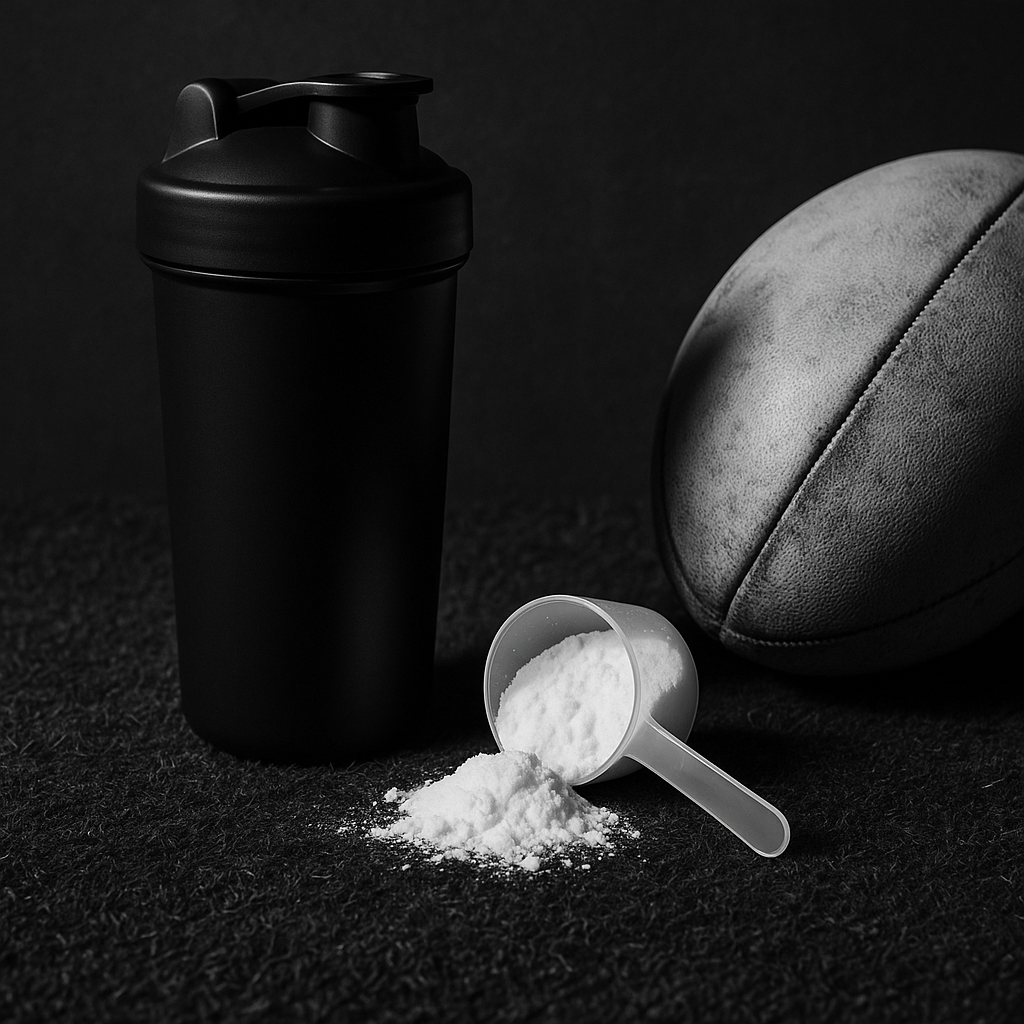
Creatine for Rugby Players: Power, Recovery and Timing
Rugby is repeated sprints, collisions and scrums — a perfect match for creatine’s rapid energy system. Here’s how Canadian players can use 3–5 g/day effectively, when to take it, and what to expect in-season and off-season.
Key Takeaways
- Monohydrate is the gold standard; take 3–5 g/day consistently.
- Loading (20 g/day for 5–7 days) speeds results but isn’t required.
- Expect 1–2 kg early water gain; plan by position (forwards vs backs).
- Timing matters less than consistency; anchor to a daily routine.
- Hydrate well; creatine does not increase cramps when fluids are adequate.
- Choose Canadian products with an NPN and third‑party testing when possible.
Why creatine fits rugby
Rugby asks for short, all-out efforts — accelerations off the line, collisions, scrums and repeated sprints — separated by brief recovery. Those actions primarily draw on phosphocreatine, the body’s fastest energy system. Supplementing creatine increases muscle creatine and phosphocreatine stores, allowing you to regenerate ATP more rapidly between explosive efforts. That can support hard carries late in a phase, more pop in line breaks, or a steadier scrum across repeated engagements.
Creatine’s benefits are most evident in high-intensity, intermittent work. Forwards may notice improvements in scrum, maul and tackle power; backs often report better repeat sprint ability and finishing speed across sets. While individual response varies, creatine is among the most researched sports supplements, with a strong safety profile when used as directed.
On Creatine Canada, we keep it practical and Canadian. Start with our evidence-based guides — including the standard 3–5 g/day approach — and tailor it to your training block. For a broader primer on forms, dosing and timing, see our guides, our best creatine picks, and the in-depth supplements review.
Dosing and timing for rugby weeks
The simplest plan: take 3–5 g of creatine monohydrate daily. Consistency is the driver — timing is secondary. If you want faster saturation (useful before camp or playoffs), you can do an optional loading phase: 20 g/day split into 4 x 5 g servings for 5–7 days, then 3–5 g/day to maintain. Both approaches reach the same end point; loading just gets you there quicker.
- Anchor to routine: Take it with a regular meal or post-training shake to reduce missed doses. See when to take creatine for nuances.
- Game day: No acute boost is required; simply don’t miss your daily dose. If stomach-sensitive, avoid trying anything new pre‑match.
- Hydration: Creatine draws water into muscle; aim for steady fluids and electrolytes, especially in heat.
- Body mass planning: Expect an initial 1–2 kg water increase in some athletes—plan jersey and boots accordingly.
Want a weight-based estimate? Use our creatine calculator. For a deeper dive on protocols, visit the loading phase guide.
Performance: what rugby players can expect
Across trials, creatine monohydrate consistently improves high-intensity performance: more total work, better power in repeated efforts, and small gains in 1–10 second sprints. In rugby terms, that can mean stronger scrum hits, firmer leg drive in contact, improved jump height in lineouts, and the ability to maintain speed deeper into repeated efforts at training.
- Forwards: Expect benefits in scrummaging, mauling, ruck entries, and short accelerations. Additional body mass from early water retention is typically a feature, not a bug.
- Backs: Gains often show up as improved repeat sprint ability and late-phase sharpness. If scale mass matters, use the steady 3–5 g/day approach and monitor bodyweight over 2–3 weeks.
- Strength work: Creatine supports higher quality sets in the gym (e.g., more reps at a given load), helping you accumulate productive volume across the week.
No supplement replaces skill, conditioning or contact readiness. But when the foundations are in place, creatine is a reliable “inch-giver” for explosive work. The International Society of Sports Nutrition (ISSN) recognizes creatine monohydrate as the gold standard with robust evidence of efficacy and safety.
Recovery, hydration and cramp myths
Creatine may support recovery indirectly by allowing higher-quality training and by helping maintain phosphocreatine between bouts. Some studies show reduced markers of muscle damage after strenuous work, though results vary by protocol. Practically, many athletes report feeling fresher across dense training weeks once stores are saturated.
- Hydration: Because creatine increases water content within muscle, ensure day‑to‑day fluid and electrolytes are solid — especially in hot, humid matches.
- Cramping: Large reviews do not support the idea that creatine increases cramps or dehydration when athletes manage fluids appropriately. Keep bottles handy and salt your meals to match sweat losses.
- Digestive comfort: If you get GI upset, split doses (e.g., 2–3 g twice daily) and mix thoroughly in warm water or your post‑training carb‑protein shake.
Remember: creatine is not a treatment for injury or concussion. Use it to support performance and training quality, and coordinate recovery strategies with your S&C coach or therapist.
How to choose and mix creatine in Canada
Creatine monohydrate is the research standard — widely available, cost‑effective, and supported by the ISSN. Look for unflavoured powder with a simple ingredient list. Some brands use branded raw material (e.g., Creapure), but the key is quality control and dose accuracy.
- Canadian compliance: Check for a Natural Product Number (NPN) and a clear label. You can verify licences in Health Canada’s Licensed Natural Health Products Database.
- Third‑party testing: If you compete in sanctioned environments, consider products tested by independent programs to reduce contamination risk. Creatine is legal under WADA rules.
- Mixing tips: Dissolves better in warm water or in a carb‑protein shake. Stir, wait 30–60 seconds, then stir again.
For vetted options and value picks available to Canadians, see our best creatine list and the full supplements review for ingredient breakdowns and pricing.
Season planning, weight management and travel
Off‑season: Great time to start or reload. If you want fast benefits heading into camp, use a 5–7 day loading phase, then maintain 3–5 g/day. Pair with a progressive strength and speed plan.
- In‑season: Prioritize consistency and GI comfort. If you’re a back watching scale weight, stick to 3 g/day and monitor over two weeks; most early mass change is water within muscle.
- Travel weeks: Pack a small tub or pre‑weigh 3–5 g servings in baggies. Time zones matter less than not missing doses. Keep fluids up on flights.
- Anti‑doping: Creatine is not on the WADA Prohibited List. Still, use reputable brands and keep batch records if you compete under testing.
Put it together with your coaching staff: map creatine use onto your training microcycles, game weeks, and body composition goals. For timing nuances, revisit when to take creatine and our practical guides.
Rugby creatine quick-start
- 3–5 g/day Standard daily maintenance dose
- 20 g/day × 5–7 d Optional loading (split 4 doses)
- ~3–4 weeks Time to saturate without loading
- +1–2 kg Typical early water mass in some athletes
- Monohydrate Gold standard form backed by ISSN
Frequently Asked Questions
Will creatine make me too heavy to play my position?
Most early mass change is water stored in muscle (often 1–2 kg). Forwards usually welcome it; backs can manage it by skipping loading and using 3 g/day while monitoring bodyweight for two weeks. If you need to be weight‑sensitive before selection, time your start in the off‑season.
Is creatine safe and allowed in rugby competitions?
Creatine monohydrate is one of the most studied sports supplements with a strong safety profile in healthy adults when taken as directed. It is not on the WADA Prohibited List. Choose reputable Canadian products with an NPN and consider third‑party tested options.
Do I need to cycle off creatine during the season?
There’s no strong evidence that cycling is necessary. Many athletes take it continuously. If you prefer to pause, understand you’ll gradually lose saturation over 3–4 weeks and some performance benefits may diminish accordingly.
What’s the best time to take creatine on training or match days?
Consistency beats timing. Take it at a time you never miss — with breakfast, or post‑training in a shake. On match days, stick to your routine; creatine isn’t an acute stimulant, so there’s no need to take it right before kickoff.
Can teens or U18 players use creatine?
Research in adolescents is more limited than in adults. If considered, involve parents/guardians and coaching or medical staff, focus on food-first nutrition, and use conservative dosing (e.g., 3 g/day). Follow school or sport policies and choose vetted products.