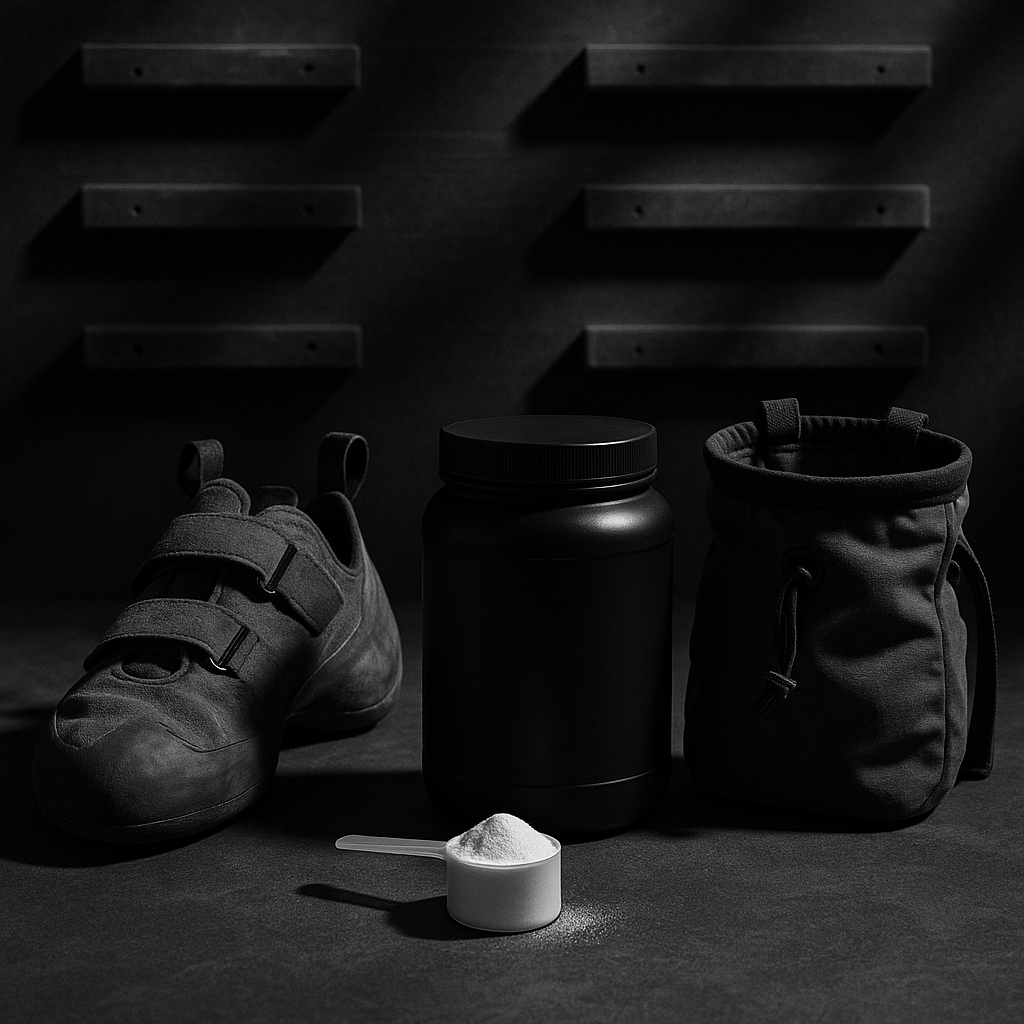
Creatine for Rock Climbers: Grip Strength and Power Endurance
Climbing demands sharp finger strength and explosive power—both of which creatine may enhance. Learn how this gold-standard supplement supports bouldering and sport climbing, from campus board sessions to real rock, all with a Canadian context.
Key Takeaways
- Creatine monohydrate supports short, high-force efforts critical for bouldering and hard moves.
- Supplementation may boost finger strength and campus board power.
- Canadian climbers should target 3–5 g/day for maintenance—no need for megadoses.
- Weight gain from creatine is usually modest and does not impair performance for most.
- Choose Health Canada–licensed brands for safety and quality.
- Creatine works best alongside a balanced diet and progressive climbing training.
- No evidence for increased tendon or injury risk in healthy adults at standard doses.
Why Climbers Should Consider Creatine
Creatine has long been recognized for its benefits in explosive strength sports, but its merits for rock climbers are just being appreciated. Climbing—particularly bouldering and difficult sport routes—demands bursts of power, max finger strength, and repeated short efforts. These are the same capacities shown to improve with creatine supplementation.
- Enhanced ATP regeneration: Creatine increases phosphocreatine stores in muscles, enabling faster and more complete recovery between high-intensity moves.
- Increased max effort: Laboratory research confirms increases in max strength and power output, especially in activities under 30 seconds—think tough lock-offs, deadpoints, and dynamic comp-style moves.
- Campus board and hangboard synergy: Creatine’s effects are most notable during high-intensity intervals, a common feature in fingerboard circuits and campus board drills.
Many Canadian climbers supplement responsibly, starting with the optional loading phase before transitioning to a sustainable maintenance dose. The science is clear: creatine can be a strategic advantage—on plastic or stone.
The Science on Finger Strength and Power
While creatine’s benefits for overall strength and repeated sprints are well-established, what about its impact on finger-specific and pulling strength—the foundation of climbing performance? A growing body of evidence supports creatine’s role here, with studies reporting improvements in grip strength, maximal pulling efforts, and power-endurance intervals lasting 5–30 seconds.
- Grip strength: Several trials show increases in isometric grip strength and handgrip fatigue resistance in recreational and elite athletes using creatine monohydrate (3–5 g/day).
- Pulling and campus power: Explosive pulling movements, like campus training or powerful gastons, rely on rapid ATP turnover—creatine directly supports this energy pathway.
- Recovery between burns: Creatine may aid quick recovery between bouldering attempts or hard redpoint efforts, especially when rest intervals are short.
For climbers, even small increases in peak or repeated-force output can be the difference between sending and falling. Creatine is one of the safest, most studied supplements for these adaptations. For more on products reviewed for efficacy and purity, see our creatine supplements review.
Supplementation Guidelines for Canadian Climbers
When incorporating creatine into your training, simplicity works best. The consensus from international and Canadian experts—including Health Canada’s Natural Health Products Directorate—is clear:
- Supplement type: Choose creatine monohydrate, widely regarded as the gold standard for effectiveness and safety.
- Dosing: 3–5 grams per day for ongoing maintenance. Loading phases (20 grams daily for 5–7 days) are optional, not mandatory.
- Timing: Creatine can be taken any time of day as absorption is not acutely time-sensitive.
- Mixing: Dissolve powder in water or add to a smoothie; avoid hot drinks to preserve potency.
- Legal status: Only use Health Canada–licensed supplements—check for the NPN (Natural Product Number) on the label.
Monitor hydration, and if you have underlying health issues, consult a healthcare provider. For precise dosing tailored to your body weight, try our creatine calculator.
Real-World Results: Perspectives from the Canadian Climbing Community
Canadian climbers—recreational, competitive, and professional—are increasingly experimenting with creatine. What’s the feedback?
- Many report improved repeaters and dynos on the campus board, faster recovery between bouldering problems, and extra “punch” for crux sequences.
- Several coaches recommend trying creatine during phases focusing on power or max strength (not during endurance blocks or weight-targeted phases).
- Most find any water-weight gain negligible once training intensity increases, or after a short adaptation window.
- No increased incidence of finger injury or tendon soreness has been noted at moderate dosing in healthy athletes, in line with international data.
Climbers who supplement consistently, fuel adequately, and allow for proper rest tend to see the most benefit. For detailed ingredient breakdowns and user ratings of top brands, visit our supplements review page.
Creatine and Injury Risk: What Do We Know?
One question that surfaces among climbers is whether creatine use increases risk for muscle pulls, tendon issues, or dehydration. Here’s the latest consensus:
- No evidence for increased injury risk: Recent reviews from the International Society of Sports Nutrition (ISSN) and real-world athlete monitoring confirm that creatine, taken at recommended doses, does not increase the likelihood of muscle strains or overuse injuries.
- Tendon and ligament health: Studies in healthy adults show no negative impact on connective tissue, with some data suggesting faster post-exercise recovery.
- Hydration: While creatine draws some water into muscle, normal fluid intake is sufficient for most climbers.
Safe use boils down to following evidence-based guidelines. For more deep-dive reading, review our full creatine guides and official ISSN statements.
Practical Tips for Integrating Creatine into Your Climbing Routine
Creatine is not a miracle fix, but it’s a powerful tool when blended with smart climbing practice. Here’s how to maximize benefit:
- Pair with training: Focus on fingerboard repeaters, max hangs, and campus intervals for greatest synergy.
- Hydrate well: Aim for 2–3 L/day, especially after intense indoor sessions or summer days at the crag.
- Track your progress: Log improvements in power moves or hang times, not just body weight.
- Stick with it: Effects are gradual—give a minimum of 3–4 weeks for measurable differences in performance.
- Prioritize whole food nutrition: Creatine works best as a supplement to—not a replacement for—a protein- and mineral-rich diet.
As always, experiment during non-critical performance blocks, and choose top-rated Canadian supplements for peace of mind.
How Creatine Supports Rock Climbers
- 3–5 g/day Evidence-based maintenance dose
- 5–15% Typical increase in power output in short, intense efforts
- 1–2% Average weight gain (mainly muscle water) with creatine
- 0 Proven increase in injury or tendon risk at standard doses
Frequently Asked Questions
Will creatine make me too heavy for hard climbing?
Most climbers experience only a small increase (1–2%) in body weight, due mostly to water retained in muscles. Research shows these gains do not offset the strength and power improvements, and many find their climbing performance is enhanced or unaffected.
Is creatine approved for use in Canada?
Yes, creatine monohydrate is legal and available in Canada as a Natural Health Product, provided it has a Health Canada NPN. Always purchase from a reputable source and verify the NPN before use.
Does creatine supplementation increase risk of finger or tendon injuries?
There is no scientific evidence that creatine at recommended doses increases risk of tendon, ligament, or muscle injuries. Ongoing athlete monitoring supports its safety for healthy adults.
Do I need to do a creatine loading phase?
A loading phase (20 g/day for 5–7 days) is optional. You can skip it and begin directly with 3–5 g/day, which will gradually saturate your muscles over a few weeks.
Can I take creatine with coffee or tea?
It’s best to avoid adding creatine to hot beverages, as heat can reduce its potency. Instead, mix creatine powder into water or cold smoothies for best results.