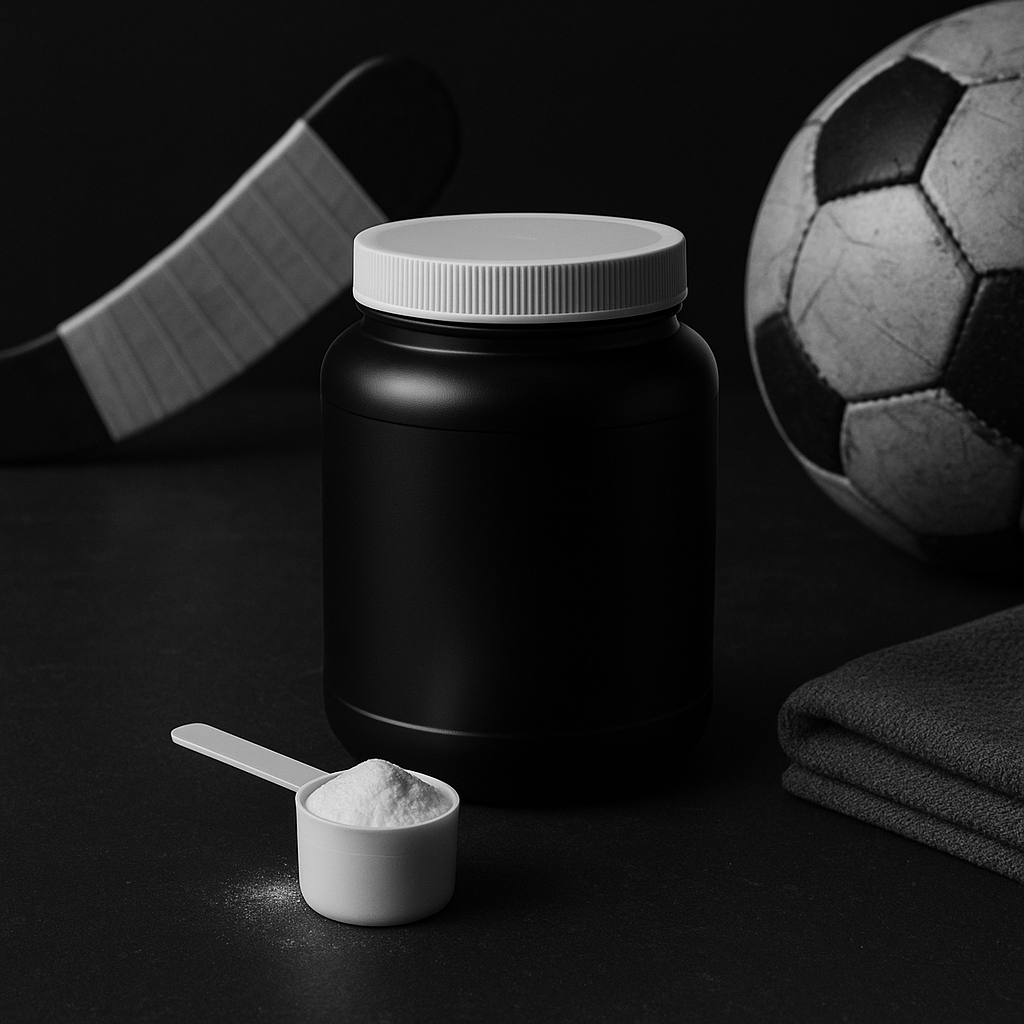
Creatine for Rec League and Weekend Warrior Athletes
If you play beer-league hockey, weeknight soccer, or Saturday hoops, creatine can punch above its weight for you. Here’s why casual athletes often gain more per dose than elites—and exactly how to use it the easy way.
Key Takeaways
- Recreational athletes often see larger, more noticeable gains from creatine than elites because there’s more room to improve repeat‑sprint power and late‑game effort.
- Use creatine monohydrate: 3–5 g per day, anytime. Loading is optional and speeds saturation only.
- Expect benefits in short bursts: quicker first steps, more reps, and better repeat efforts between shifts or rallies.
- Take it daily—even on rest days—for steady muscle creatine levels and fewer “off” nights.
- Look for Canadian products with an NPN on the label and simple ingredients (just creatine monohydrate).
- Minor water‑weight increases are normal and intracellular; reduce GI upset by splitting doses and taking with food.
- Vegetarians, vegans, and older athletes may notice particularly strong benefits due to lower baseline creatine stores.
Why casual athletes may benefit more
Elite athletes already eat, train, sleep, and periodize to squeeze out the last few percentage points. Most of us don’t. That’s exactly why recreational athletes—beer‑league skaters, weeknight soccer strikers, Saturday pickup hoopers—often notice creatine’s impact quickly. It expands your immediate energy reserve (phosphocreatine) for short, hard bursts and helps you repeat them with less drop‑off. When your season is just two skates a week or one weekend tournament, every extra stride in the third period or step on a late breakaway matters.
Think of creatine as a performance buffer for imperfect schedules. You might miss a lift, have a long workday, or sleep light before a game. Saturated muscle creatine can help you maintain pop across shifts, sprints, and rallies despite those real‑life variables. For casual athletes, that proportional gain—feeling fresher on shift three or hitting one more hard push per rally—often translates into meaningful outcomes: keeping possession, winning a loose ball, or finishing a run without your last kilometre falling apart.
Importantly, you don’t need complicated stacks or exotic forms. The gold standard is plain creatine monohydrate. For most healthy adults, a consistent 3–5 g per day is the evidence‑based sweet spot. If you want a refresher on how much to take, try our Creatine Calculator.
What creatine actually does for weekend warriors
Creatine increases your muscles’ stores of phosphocreatine, a rapid energy source your body taps during short, intense efforts—accelerations, faceoff bursts, box‑outs, hill sprints, and heavy sets. With higher muscle creatine, you can generally do slightly more work before fatiguing and recover faster between bouts. Across many trials summarized by the International Society of Sports Nutrition (ISSN), creatine monohydrate consistently supports gains in high‑intensity performance and strength when paired with regular training.
What that looks like on the ground: quicker first steps, more stable power late in a game, and the ability to repeat hard efforts with smaller drop‑offs. In the gym, it often shows up as an extra rep or two on compound lifts or better bar speed. On the field or court, it often means more consistent sprint quality across intervals or rallies—exactly where rec athletes tend to fade.
Creatine also supports training quality. If you can maintain intensity on Tuesday lifts and Thursday tempo runs, your week’s stimulus improves without adding more sessions. Over time, that can compound into better results with the same time commitment. For details on timing and consistency, see When to Take Creatine.
Sport-specific examples you’ll actually feel
If you play for fun, you judge supplements by feel and outcomes—not lab numbers. Here’s where creatine tends to show up for rec athletes:
- Beer‑league hockey: More jump out of corners and stronger third‑period strides. Short recoveries between 30–60 s shifts benefit from higher phosphocreatine stores.
- 5‑a‑side or co‑ed soccer: Better repeat accelerations after turnovers and more consistent pressing late in games.
- Pickup basketball: Sharper first steps, harder closeouts, and less fade in repeated fast breaks or box‑out battles.
- Pickleball/tennis: Quick changes of direction and short rallies demand rapid energy; creatine can help you hold pace across sets.
- 5K fun‑runs or parkrun: While creatine is not an endurance booster per se, many runners find it helps on hills, surges, and final kicks. Be aware of small water‑weight increases.
- Skiing and boarding: Later‑day leg pop on short, intense runs and fewer heavy‑legged turns after lunch.
None of this replaces practice, sleep, or nutrition. But for the time‑crunched, creatine is a low‑maintenance lever to improve repeat‑effort quality. New to creatine? Our starter guides and protocol walkthroughs at Guides can help.
An easy, low‑maintenance protocol for casual use
Form: Choose plain creatine monohydrate. It’s the best‑studied, affordable, and widely available option in Canada. Check our picks at Best Creatine and see real‑world notes at Creatine Supplements Review.
- Daily dose: 3–5 g per day, anytime. Consistency matters more than timing.
- Optional loading: 20 g/day split into 4 x 5 g for 5–7 days, then 3–5 g/day. This just gets you saturated faster. Details: Creatine Loading Phase.
- Timing tips: Take it whenever you’ll remember—after coffee, with lunch, or post‑workout. On rest days, keep the same routine.
- Mixing: Stir into water, a smoothie, or post‑game chocolate milk. Warm liquids dissolve faster; a quick swirl before the last sip works fine.
- Hydration: Drink water as you normally would. Creatine draws water into muscle, not under skin.
- Vegetarian/vegan: You may notice benefits sooner due to lower baseline stores.
Not sure where to start on dose and schedule? Our simple Creatine Calculator personalizes a plan in seconds.
Safety, quality, and Canadian buying tips
For healthy adults, creatine monohydrate is well‑supported as safe and effective when used as directed. The ISSN’s position stand endorses 3–5 g/day for maintenance, with optional short‑term loading for faster saturation. If you have kidney disease, take nephrotoxic medications, are pregnant/breastfeeding, or have specific medical conditions, speak with a healthcare professional before use.
Quality in Canada: Look for a Natural Product Number (NPN) on the label, which indicates the product is licensed for sale by Health Canada. You can verify licences in the Government of Canada’s Licensed Natural Health Products Database. Choose short ingredient lists (just creatine monohydrate), and consider third‑party testing marks like NSF Certified for Sport or Informed Choice if you compete under an anti‑doping code.
What about banned lists? Creatine is not on the World Anti‑Doping Agency (WADA) Prohibited List. Always check current rules for your league or federation, but creatine is widely permitted.
Side effects: Some people notice mild GI upset if they take large single doses. Split into 2–3 smaller servings or take with food. A small increase in scale weight early on is common and reflects more water stored inside muscle.
Budget, habits, and sticking with it
Good news for rec athletes: creatine monohydrate is one of the most cost‑effective supplements. In Canada, typical costs run roughly $0.10–$0.20 CAD per 5 g serving depending on tub size and brand. That’s pennies per day for something you’ll feel in repeat sprints and late‑game efforts.
- Build the habit: Pair your dose with a daily cue—morning coffee, post‑work shake, or after brushing your teeth.
- Travel‑proof it: Keep a small container and scoop in your gym or skate bag. Consistency beats perfect timing.
- Mixing hacks: Dissolves best in warm liquids or smoothies. No need to over‑stir; a few swirls before the last sip work.
- Measure smart: Use the product’s scoop or a small scale. Spoon sizes vary.
- Stacking: Creatine plays well with protein and carbs. Caffeine can be used alongside if you tolerate it.
Want a step‑by‑step starter plan you can save? See our beginner‑friendly walkthroughs in Guides and bookmark When to Take Creatine for timing tips that fit busy weeks.
Creatine at a glance for weekend warriors
- 3–5 g/day Evidence-based maintenance dose
- 20 g/day × 5–7 days Optional loading to saturate faster
- ≈95% in muscle Most body creatine is stored in skeletal muscle
- $0.10–$0.20 CAD Typical cost per 5 g serving in Canada
- Not banned by WADA Permitted under major anti-doping rules
Frequently Asked Questions
Do I need to load creatine if I only play once or twice a week?
No. Loading (about 20 g/day for 5–7 days) just saturates muscles faster. If you’re patient, taking 3–5 g daily will reach the same saturation over a few weeks. Many rec athletes skip loading, start with 3–5 g/day, and notice benefits building across practices and games.
Will creatine make me bloated or puffy?
Creatine draws water into muscle cells, which can nudge the scale up slightly. That’s intracellular water (in the muscle), not under the skin. If your stomach feels off, split the dose and take it with food, or mix it into a smoothie or warm drink for better comfort.
Is creatine safe for my kidneys?
In healthy adults using recommended doses, creatine monohydrate has a strong safety profile according to the ISSN. If you have kidney disease, take medications that affect kidney function, or have other medical concerns, speak with a healthcare professional before using creatine.
What timing works best if I train irregularly?
Consistency matters most. Take 3–5 g at the same time each day so your muscles stay saturated—whether you train or not. If it helps adherence, have it near your workouts or with your most reliable daily routine (e.g., breakfast or post‑game snack).
Is monohydrate still the best, or should I buy creatine HCl or other forms?
Creatine monohydrate remains the gold standard for efficacy, safety, and value. Other forms haven’t consistently outperformed it in well‑controlled studies. Choose a simple monohydrate powder from a reputable Canadian brand with an NPN on the label.