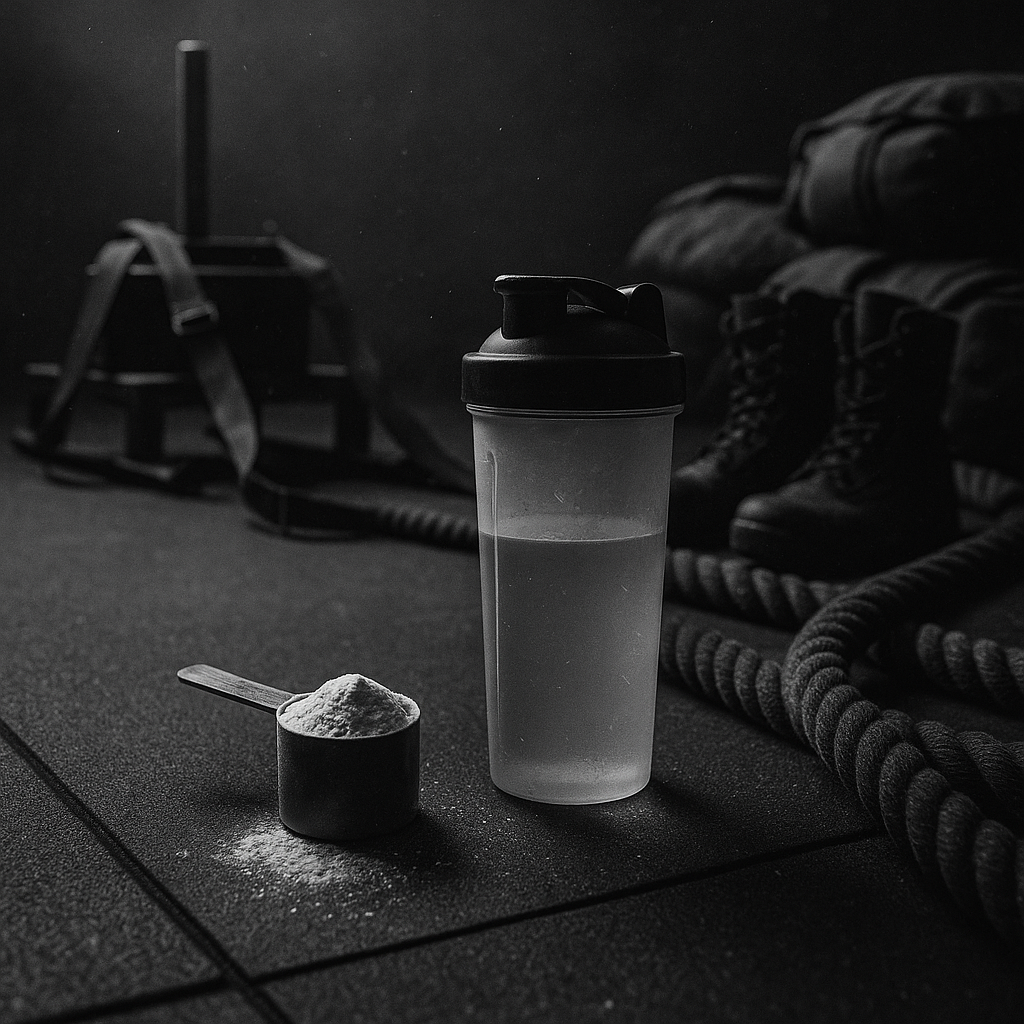
Creatine for Police and Military: Tactical Fitness Applications
Tactical athletes need short-burst power, repeated efforts, and sharp thinking under stress. Creatine monohydrate can support these demands—on shift, on course, and on test day. Here’s how Canadian police and military members can use it safely and effectively.
Key Takeaways
- Use creatine monohydrate: 3–5 g per day is the research-backed maintenance dose.
- Optional loading: 20 g/day for 5–7 days can speed saturation; not required for long-term benefits.
- Time it for consistency, not magic windows—take it when you reliably remember.
- Expect small water-weight increases; plan ahead for kit fit and weigh-ins.
- Hydration matters in heat, cold, and at altitude—creatine increases cellular water needs.
- Pair with training that mirrors your FORCE/PARE demands for best transfer.
- Choose products with an NPN and third-party testing (NSF/Informed Choice) for compliance.
Why creatine matters for tactical athletes
Police and military work demands repeated, high-intensity efforts: sprinting to cover, dragging a casualty or resisting suspect control, and making fast decisions under stress. These tasks rely heavily on the phosphocreatine (PCr) energy system—your body’s first-line, explosive fuel for efforts lasting seconds. Creatine monohydrate increases intramuscular creatine and phosphocreatine stores, helping you regenerate ATP faster between bouts so you can produce more force and maintain it across repeated efforts.
For operational personnel, the appeal is pragmatic: small improvements in peak power, sprint repeatability, and grip/upper-body work capacity can translate to smoother test days and more margin on the job. Beyond muscles, creatine is also present in the brain. Under fatigue or sleep restriction, maintaining phosphocreatine can support certain cognitive tasks—helpful when shifts run long or training cycles get taxing.
Create a simple plan using the evidence-based maintenance dose (3–5 g/day) and pair it with training that reflects your role. We cover protocols, timing, and practical issues like hydration and kit fit below. For more background and how-to articles, explore our Guides hub.
Mapping creatine to Canadian occupational fitness tests
Two common benchmarks for Canadian tactical athletes are the Canadian Armed Forces FORCE Evaluation and the RCMP PARE. Both include short, intense tasks with incomplete recovery—exactly where the ATP–PCr system matters. While no supplement replaces training, creatine can help you express the strength and power you’ve built.
- FORCE Evaluation: includes components like sandbag lifts, 20 m rushes, a sandbag drag, and intermittent loaded shuttles. These demand repeated accelerations, bracing, and grip. More phosphocreatine can aid quick starts, cleaner lifts, and less drop-off across rounds.
- RCMP PARE: combines an obstacle course, a push–pull station, and a bag carry. Creatine supports short-burst speed, upper-body push/pull power, and the ability to repeat efforts with minimal recovery.
To translate supplementation into performance, mirror these elements in training—e.g., short sprints, sled drags, sandbag circuits, and push–pull intervals—while keeping your creatine intake steady. If you’re dialing in body mass or kit configuration for test day, use our Creatine Dose Calculator and plan ahead so any small water-weight increase is predictable and manageable.
Dosing and timing for shifts and deployments
The consensus from mainstream sports nutrition is straightforward: 3–5 g/day of creatine monohydrate is an effective maintenance dose for most adults. An optional “loading” phase of ~20 g/day for 5–7 days (split into 4 doses) saturates muscles faster, after which you return to 3–5 g/day. Loading isn’t required if you’re patient—daily maintenance will reach similar saturation over several weeks.
Timing is flexible. Take creatine at the time you’ll remember most consistently—morning coffee, with a post-training shake, or during a meal on shift. Co-ingesting with carbohydrate and/or protein may modestly support uptake, but consistency outweighs timing minutiae. If your training block is brief, consider a short loading phase; otherwise maintain daily intake and focus on your program. For details, see Creatine Loading Phase and When to Take Creatine.
Field-ready tips: pre-portion 3–5 g into small baggies or a travel pill case; creatine dissolves in water, milk, or a shake and is stable in room-temperature liquids consumed the same day. If you’re unsure about unit policies on supplements, check your chain of command. Need help choosing a product? Start with our Best Creatine guide.
Hydration, heat, and bodyweight considerations
Creatine draws more water into muscle cells as phosphocreatine stores rise. For most people, this is a small, gradual change that can slightly increase scale weight and limb girth. In practice, that means two things for tactical athletes: hydrate deliberately in challenging environments, and plan ahead for kit fit and weigh-ins.
- Hydration: Creatine is not dehydrating, but increased intracellular water means your overall fluid needs may rise, especially in heat, under armour, or at altitude. Build a simple plan: start your day hydrated, sip through long shifts, and include electrolytes during heavy sweating.
- Bodyweight/fit: If your duty gear is tight or you have a weigh-in, introduce creatine well before test day to let your body stabilize. If you notice uncomfortable tightness in boots or gloves, adjust lacing and glove choice during the first 1–2 weeks.
- Gastro comfort: To reduce GI upset, split doses (e.g., 2–3 g twice daily) and take with food. Choose a fine, micronized monohydrate to improve mixing.
Remember, creatine supports training—it doesn’t replace it. Keep your conditioning, strength work, and movement practice aligned with test demands. Our overview of timing and dosing at When to Take Creatine can help you build a routine that fits your shift rhythm.
Cognition under stress and sleep debt
Beyond muscle, the brain also uses phosphocreatine to buffer energy during intense cognitive demand. Research in healthy adults suggests creatine can support aspects of cognitive performance—particularly under conditions of fatigue, hypoxia, or sleep restriction. In a placebo-controlled trial, creatine supplementation improved some measures of working memory and intelligence test performance, consistent with the idea that extra phosphocreatine can help buffer high-demand tasks.
For tactical contexts, this may translate to small, situational benefits: maintaining focus during long evolutions, sustaining decision-making in the back half of night shifts, and reducing perceived effort in mentally draining tasks. It is not a stimulant; don’t expect a caffeine-like effect. Instead, think of creatine as part of the foundation—alongside sleep, nutrition, hydration, and training—that helps you show up with a fuller tank.
If you operate on rotating shifts or in austere environments, keep your creatine routine simple and consistent. Pair it with high-priority basics: a post-shift meal, a short sunlight walk on days off, and steady hydration. For product picks that emphasize purity and value, see our Creatine Supplements Review.
Choosing products and policy in Canada
Creatine monohydrate remains the gold standard: it’s well-studied, cost-effective, and supported by the International Society of Sports Nutrition. In Canada, look for a product with a visible NPN (Natural Product Number) on the label, indicating authorization for sale by Health Canada. While creatine itself is widely recognized as safe when used as directed, institutional policies vary—confirm your unit’s supplement rules before starting.
- What to buy: plain, unflavoured creatine monohydrate powder; micronized for mixability. Third-party certifications like NSF Certified for Sport or Informed Choice add assurance for contamination screening.
- What to skip: expensive blends, proprietary “advanced” forms, and heavy stimulants. They rarely outperform monohydrate and may complicate compliance.
- How much to budget: quality monohydrate is among the most affordable supplements; dose at 3–5 g/day for steady results. Use our dose calculator to dial in your plan.
To compare options side by side, start with Best Creatine in Canada and our in-depth Creatine Supplements Review. If you’re new to supplementation, our curated Guides offer clear, step-by-step help.
Creatine quick facts for tactical athletes
- 3–5 g/day Evidence-based maintenance dose
- 20 g/day × 5–7 days Optional loading to saturate faster
- ~3–4 weeks Typical time to saturate without loading
- ~95% Body’s creatine stored in skeletal muscle
- Not prohibited Legal for sport; check unit policy
Frequently Asked Questions
Is creatine allowed for police and military members in Canada?
Creatine is a legal, over-the-counter supplement in Canada and is not on major anti-doping prohibited lists. That said, individual services or units may have their own policies on supplement use. Check your chain of command or policy manual before starting, and choose third-party tested products to minimize contamination risk.
Will creatine make my body armour or duty belt feel tighter?
Creatine can increase intracellular water in muscle, which may lead to a small, gradual rise in body mass and limb girth. Most users don’t notice significant changes to kit fit, but if your gear is already snug, introduce creatine several weeks before test day or a course. Adjust lacing/straps during the first weeks as your body stabilizes.
What’s the best way to take creatine during shift work or deployment?
Keep it simple: 3–5 g/day, taken whenever you’ll remember—morning coffee, with a meal, or post-training. Pre-portion travel sachets, and mix with water, milk, or a protein shake. Creatine is stable for practical purposes if you drink it the same day. Pair with deliberate hydration, especially in heat or under load.
Does creatine help endurance, or only sprints and lifting?
Creatine’s strongest effects are in short, high-intensity efforts and repeated sprints or heavy tasks with brief rest—common in tactical scenarios and occupational fitness tests. For longer steady-state endurance, effects are smaller and context-dependent, though improved sprint capacity can help with surges and finishes.
Do women in police or the military benefit from creatine the same way?
Yes. Women respond to creatine monohydrate similarly to men when training is matched, especially for strength, power, and repeated high-intensity work. The same dosing (3–5 g/day) and practical considerations apply. As always, align supplementation with your training and operational needs.