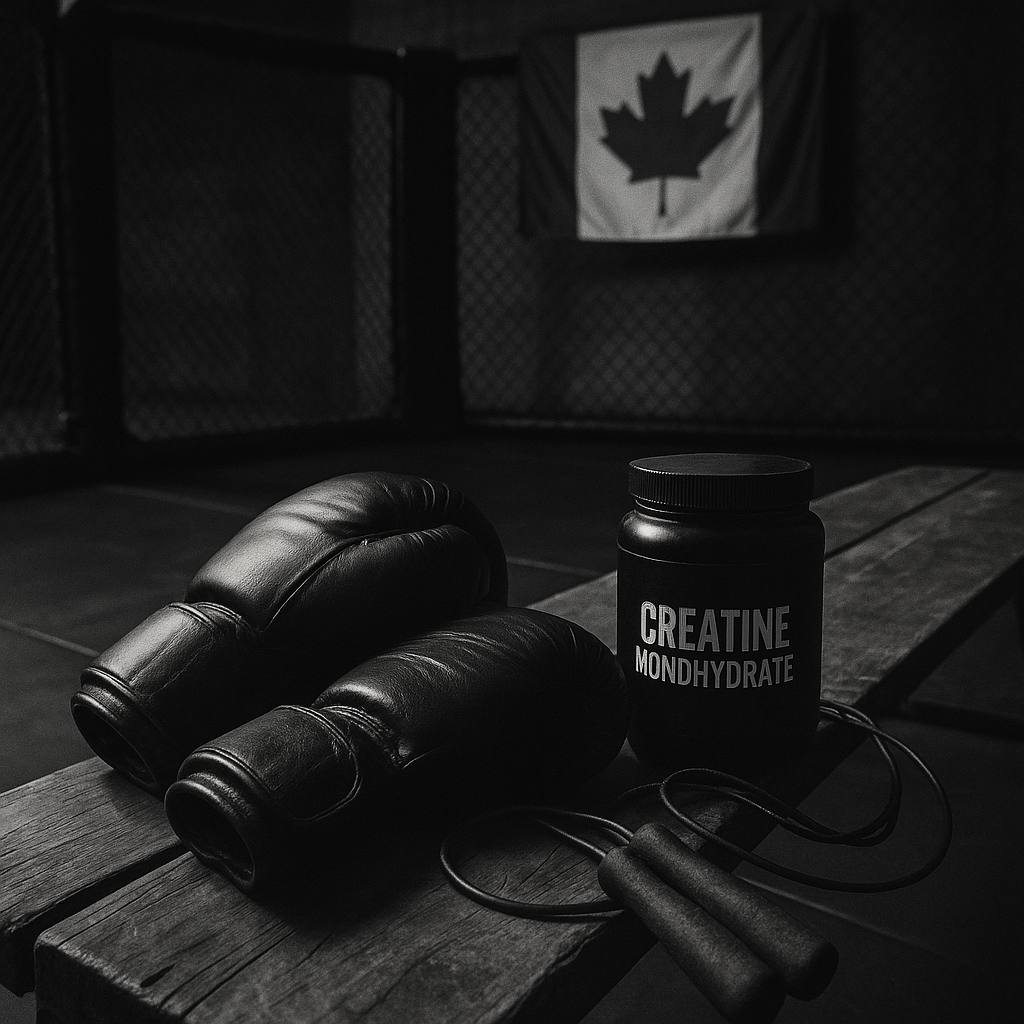
Creatine for Martial Artists: Power, Recovery, and Weight Class
Martial artists are redefining performance with creatine. Explore how this proven supplement can sharpen explosive power, recovery, and support weight-class strategies for MMA, BJJ, and striking sport athletes in Canada.
Key Takeaways
- Creatine monohydrate is safe, effective, and widely used among martial artists for power and recovery.
- 3–5 g daily is the ISSN-recommended maintenance dose for most athletes, with no need to cycle.
- Canadian martial artists can safely use creatine up until a weight cut, with minimal concerns about short-term water gain.
- Creatine supports high-intensity striking and grappling by replenishing ATP faster—leading to quicker bursts of energy.
- Monitoring your body weight and hydration is crucial when supplementing close to competition weight-ins.
- Look for Health Canada-authorized creatine monohydrate for best quality and safety.
Why Martial Artists Use Creatine
In disciplines like MMA, Brazilian Jiu-Jitsu (BJJ), Muay Thai, and wrestling, athletes are always searching for legal and safe ways to gain an edge. Creatine monohydrate—the most studied form—has earned a steady following among martial artists in Canada and globally. Why?
- Power bursts: Both striking and grappling require rapid, high-intensity efforts. Creatine increases phosphocreatine stores, helping you regenerate ATP—the body’s quick-access fuel—for explosive movements.
- Faster recovery: Hard training sessions, back-to-back rounds, and multi-discipline camps demand fast recovery. Creatine may reduce muscle cell damage and accelerate muscle recovery, meaning you’re fresher for the next round.
- Mental edge: Emerging evidence also suggests creatine helps cognitive tasks under fatigue, a potential boon during those last minutes of a grueling round or training binge.
With over 1,000 clinical trials and broad support from groups like the International Society of Sports Nutrition, creatine monohydrate remains the clear leader—no proprietary blends needed.
Does Creatine Work for Explosiveness?
Explosive power is non-negotiable for martial artists—whether launching a double-leg takedown, firing a head kick, or escaping a tight guard. Creatine’s main role is to support this power. Here’s how:
- ATP Regeneration: Creatine boosts intramuscular phosphocreatine, recycling ADP back into ATP. This process enables repeated max-effort sprints, jumps, or scrambles—situations that define combat sports.
- Improved Muscular Endurance: While not an endurance performance supplement per se, creatine delays fatigue in repeated high-power actions, an asset for multi-round bouts.
Meta-analyses—and real-world results among Canadian MMA, BJJ, and striking teams—confirm noticeable improvements in short-burst performance. The gold-standard dose remains 3–5 g daily, with studies consistently showing peak muscular creatine after about a month of steady use (no loading phase required, though some prefer a faster loading approach).
See our creatine supplement reviews for products tested and available in Canada.
Creatine and Weight Management for Fighters
Maintaining a weight class is central to a fighter’s strategy and career—so it’s natural to worry that creatine, known for increasing muscle water, might push you over the limit. What’s the evidence?
- Short-term weight gain: Starting creatine (especially with a loading phase) can add 0.8–1.5 kg of water weight in the first 1–2 weeks. After that, body weight typically stabilizes.
- No ongoing bloat: Maintenance dosing (3–5 g daily) causes little to no further water gain over months.
For Canadian athletes, Health Canada has recognized creatine monohydrate as safe when used as directed. Fighters aiming to cut weight for a competition should consider pausing creatine 5–7 days before weigh-ins, as any excess water is quickly lost once supplementing stops. Learn how to plan your intake with our creatine calculator.
Strategize: Use creatine year-round for performance, then taper before a weight cut to avoid surprises.
Timing Your Creatine Cycle with Fight Camp
Should martial artists use creatine all year, only during fight camp, or pause during the weight cut? Here’s a science-informed approach for Canadians:
- Off-season and base building: Take 3–5 g creatine monohydrate daily to maximize muscle stores and support hard training blocks. This helps build strength and power that will carry over into fight prep.
- Fight camp: Continue use—creatine’s benefits for repeated sprints, drills, and recovery are invaluable. Monitor body weight weekly to spot any minor upward shifts early on.
- Final week before weigh-ins: Consider stopping creatine 5–7 days out, especially if you anticipate a tight cut. Your body naturally excretes extra water over several days.
Remember: There’s no need to cycle creatine for health. It can be a consistent part of your supplement strategy, except during a weight cut. Curious about the best time of day to take it? See our guide on when to take creatine for optimal absorption.
Choosing the Best Creatine in Canada
Not all creatine supplements are created equal. Here’s how Canadian martial artists can shop with confidence:
- Monohydrate is king: Creatine monohydrate has the most clinical backing—avoid fancy, overpriced blends.
- Look for NPN: Buy from brands with a Natural Product Number (NPN) from Health Canada, ensuring quality and accurate labelling. Notable Canadian options include Kaizen, PVL, and North Coast Naturals.
- No loading needed: Unless you need rapid saturation, skip the high-dose loading and stick with 3–5 g per day (see our best creatine picks for Canadian athletes).
- Third-party tested: NSF Certified for Sport or Informed-Sport labels add peace of mind, especially for athletes subject to anti-doping policies.
Quick tip: Pair your creatine with water or carbohydrate-rich fluids post-workout for optimal uptake, but avoid supplements with excessive fillers or artificial colours.
Potential Side Effects and Misconceptions
Despite its robust safety record, creatine is still misunderstood—especially in combat sports circles:
- Dehydration myth: Quality studies show no increased risk of dehydration or muscle cramps with creatine at standard doses.
- Liver/kidney health: In healthy adults, long-term use of creatine monohydrate does not harm kidney or liver function. Caution is warranted only for those with pre-existing medical conditions.
- No masking of doping tests: Creatine is permitted by WADA and does not ‘hide’ banned substances.
Common short-term effects (like mild bloating) usually resolve with consistent, moderate doses. If you’re new to creatine, start on a non-cutting week and monitor your body’s response.
For more myth-busting, see our in-depth creatine guides.
Takeaways for the Canadian Martial Artist
In summary, evidence overwhelmingly supports creatine monohydrate as a safe, legal, and effective supplement for Canadian martial artists:
- Boosts power, speed, and recovery for all combat arts—without harmful side effects.
- Minimal, short-lived weight gain makes it easy to integrate alongside a smart weight cut.
- Pick a reputable, Health Canada-authorized product and stick to the proven 3–5 g daily regimen.
Creatine won’t replace hard work or skill development, but for those seeking a science-backed edge, it’s a proven tool for explosive athletic performance. For more supplement strategies—and reviews of the top-rated Canadian creatine options—visit our review section.
Creatine for Martial Artists: Quick Facts
- 3–5 g Science-backed daily dose for martial artists
- 0.8–1.5 kg Expected temporary water weight gain when first starting creatine
- ~30 days Time to reach peak muscle creatine saturation with daily use
- 0 Banned status—creatine is WADA-legal for all fighters
Frequently Asked Questions
Will creatine make me miss weight before my fight?
If starting creatine for the first time, a small increase in body water is likely during the first 1–2 weeks. For martial artists, stopping creatine about a week before weigh-ins generally returns weight to baseline. Monitor your weight and talk to your coach about timing.
Is creatine safe for daily use by MMA and BJJ athletes?
Yes, decades of research show that creatine monohydrate is safe and effective for healthy adults, including MMA and BJJ athletes. Health Canada recognizes it as a safe supplement when used as directed.
Do I need to load or cycle creatine for best results?
A loading phase is optional—it fills muscle stores faster, but regular daily dosing of 3–5 g achieves the same results in about a month. Cycling is not required. Consistency is key for best results.
Does creatine cause dehydration or muscle cramps?
No, clinical studies show no increased risk of dehydration, heat illness, or muscle cramps with standard creatine doses. Stay hydrated as you normally would for martial arts training.
Which creatine brands are recommended for Canadian martial artists?
Choose creatine monohydrate from Canadian brands with an NPN (Natural Product Number). Look for third-party tested options such as Kaizen, PVL, or North Coast Naturals, and avoid proprietary blends or unnecessary additives.